

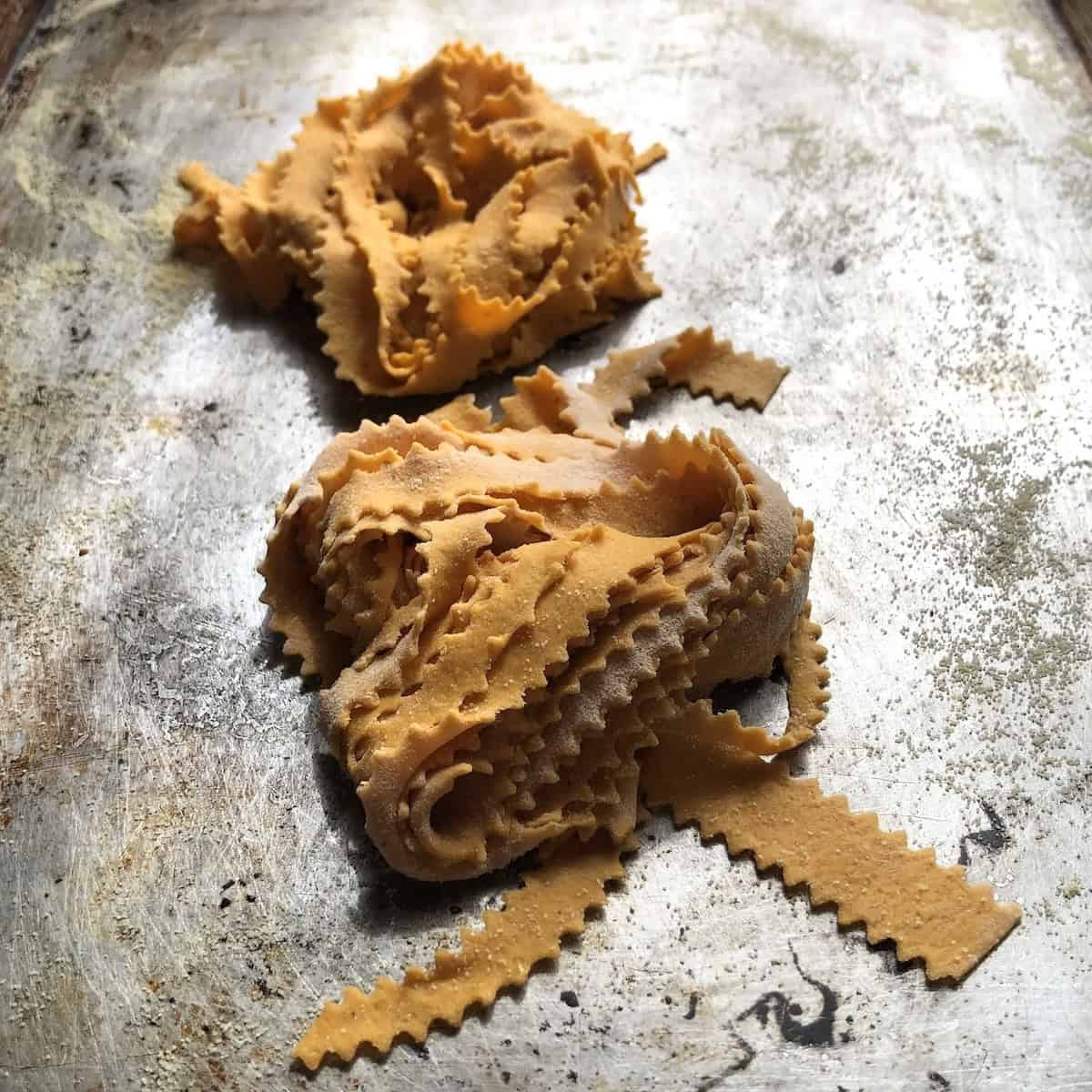
Homemade pumpkin pasta dough (aka pumpkin pasta noodles) is easier than you think, and I'm going to show you exactly how to make it from scratch. With just a few ingredients and a rolling pin or pasta machine, you'll have beautiful orange-tinted fresh pumpkin pasta ready in about an hour! It's perfect for cozy fall pasta bowls or orange pasta for Halloween and Thanksgiving!
Why This Recipe Works
This recipe may seem impressive, but, like so many other Italian pasta recipes, it's surprisingly simple once you see how it's made and learn a couple of really simple techniques.
The beauty of this fresh pumpkin pasta is its delicate flavor. You get the moisture and subtle natural sweetness from the pumpkin without any overpowering taste, making it incredibly versatile for any sauce, filling, or soup you choose.
In fact, anyone who knows Luca knows he's not a big fan of "zucca" ("pumpkin" in Italian), but he loves this pasta (which pretty much says it all)!
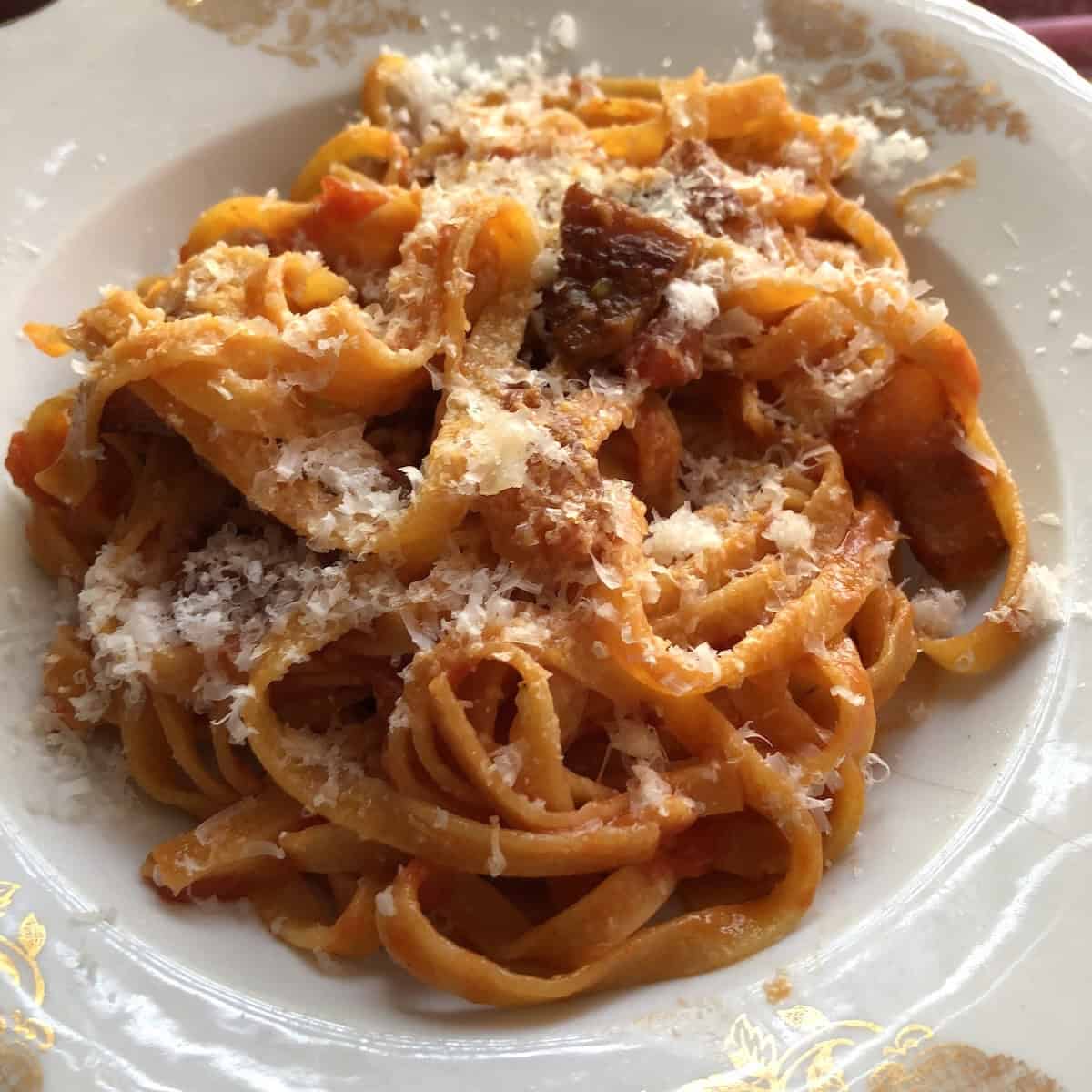
Instead, you get a gorgeous orange-colored pasta and silky texture that pairs perfectly with brown butter sage sauce, sautéed mushrooms, alfredo sauce, classic tomato sauce, spicy Amatriciana, or even the king of ragûs, Bolognese sauce.
Jump to:
- Why This Recipe Works
- Why You'll Love This Pumpkin Pasta Dough
- Ingredients
- How to Make Homemade Pumpkin Pasta
- Why Rest Fresh Pumpkin Pasta Before Cooking
- Substitutions
- Pumpkin Pasta Dough Variations
- Equipment
- Storage & Make-Ahead Instructions
- Serving
- Top Tips
- FAQ
- More Easy Pasta Dough Recipes
- More Easy Pumpkin Recipes
- 📖 Recipe
- Pumpkin Pasta Recipe (Easy Homemade Pasta Dough)
- Food Safety
Why You'll Love This Pumpkin Pasta Dough
- No pasta maker needed-you can roll this by hand with a rolling pin and get beautiful results
- Use canned pumpkin or homemade pumpkin purée-it works great with either variety
- Ready in about 1 hour from start to finish (this includes 30 minutes of hands-off rest time!)
- Precise gram measurements for consistent, foolproof results every time
- Gorgeous natural orange color that kids love (and it's fun to make together!)
- Freezes beautifully for up to 3 months-make a big batch and have fresh pasta anytime
- Subtle pumpkin flavor that never overpowers your favorite sauces
- Works for any pasta shape: fettuccine, ravioli, tortellini, tagliatelle, pappardelle, spaghetti, vermicelli, chitarra, or lasagna sheets
- Perfect noodles for a fall-inspired homemade chicken noodle soup!
- Easier than you think-if you can knead bread dough, you can make this pasta!

Ingredients
Large eggs - Use room temperature eggs so they incorporate more easily into the dough and create a smoother, more pliable texture. Cold eggs can make the dough harder to bring together.
Semolina flour - I use finer twice-milled semolina flour (hard wheat "semola rimacinata"). This helps sauces cling to the pasta a little better and adds structure. Rougher-textured regular semolina flour works well, too, but the finer version creates a smoother dough.
00 flour - This finely milled soft wheat Italian flour creates that silky, tender texture that authentic, fresh egg pasta is known for. All-purpose flour is not recommended, but it can work as a last resort substitute; just know your pasta will not be as delicate.
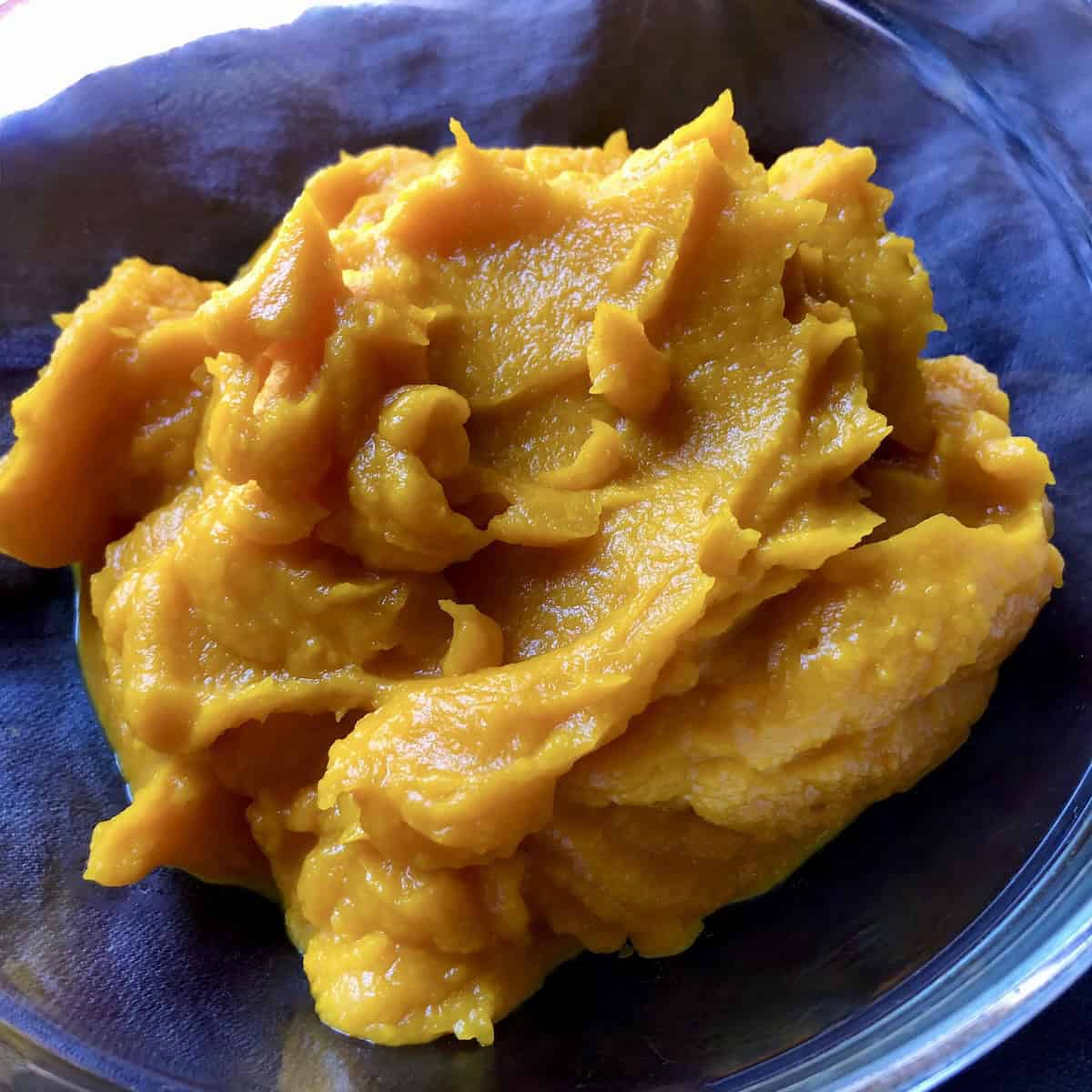
Pumpkin purée - Canned pumpkin works perfectly and gives consistent results (Libby's canned pumpkin is my go-to). If using homemade pumpkin puree, it often has 20-30% more moisture than canned, so you may need to dust the dough with a sprinkle or two of extra flour while kneading it.
Or even better, if your homemade purée looks way too wet, add it to a cheesecloth-lined strainer and let it drain for 30 minutes to 1 hour. However, I've never needed to do this, especially when using Hokkaido or Delica (not to be confused with delicata squash) pumpkins.
Extra virgin olive oil - I don't typically add EVOO to Italian egg pasta dough because the eggs add enough moisture and fat, but for this recipe, it's a perfect addition! It adds fat, richness, and helps keep the dough pliable.
See recipe card for quantities.
Hint
Use a Kitchen Scale: This recipe is best made using a kitchen scale for precise measurements, especially for beginner pasta-makers. Weighing your ingredients using grams gives you the most consistent results.

How to Make Homemade Pumpkin Pasta
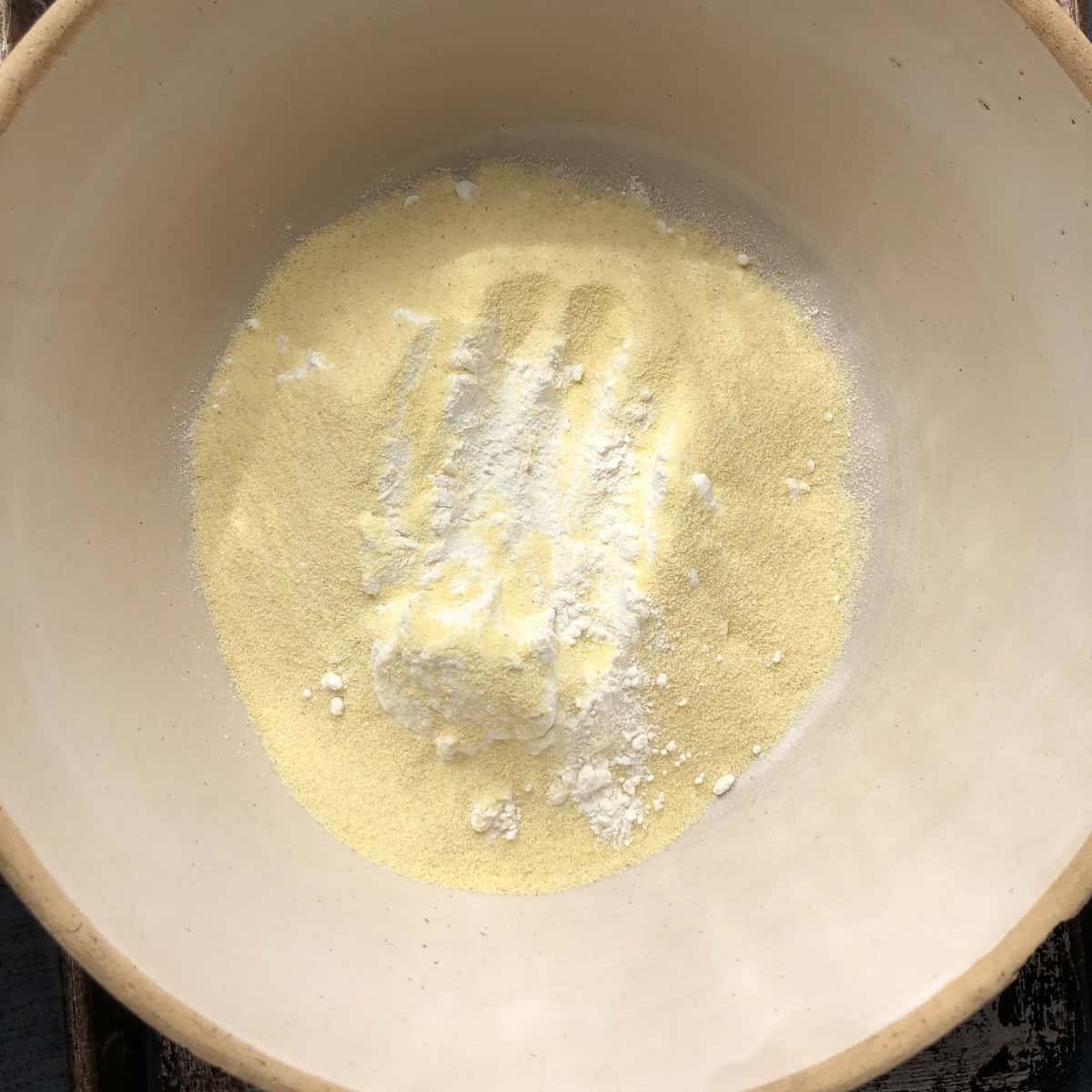
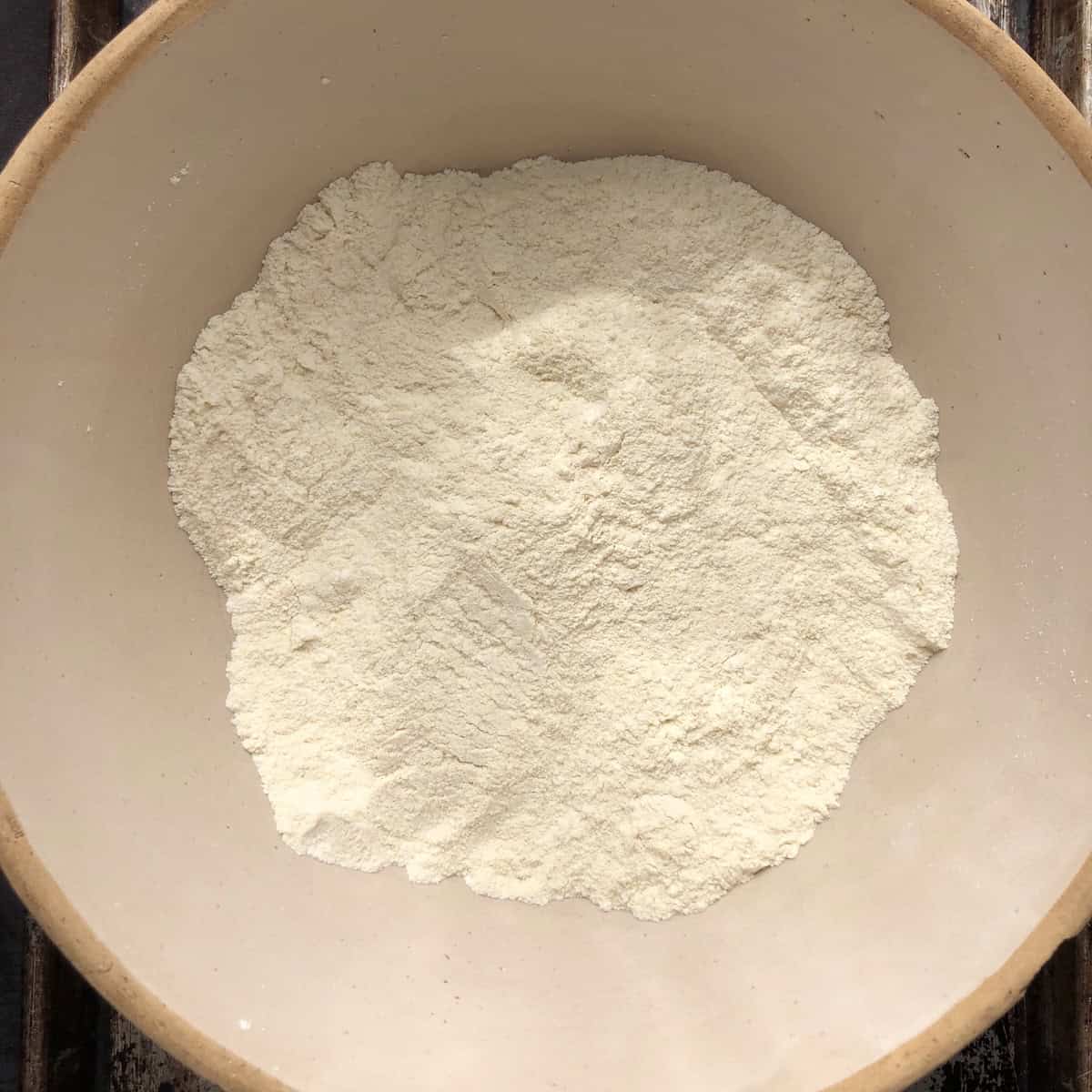
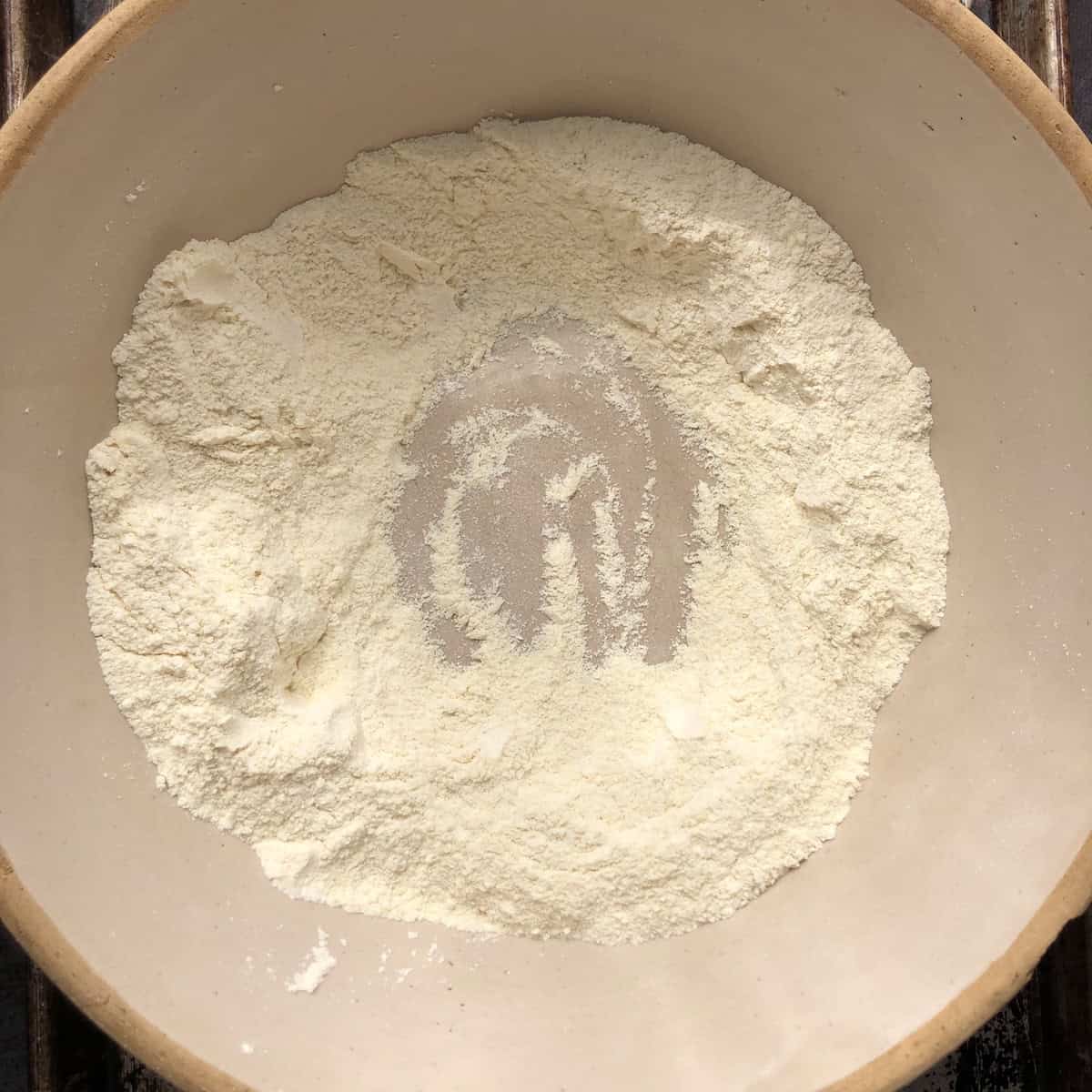
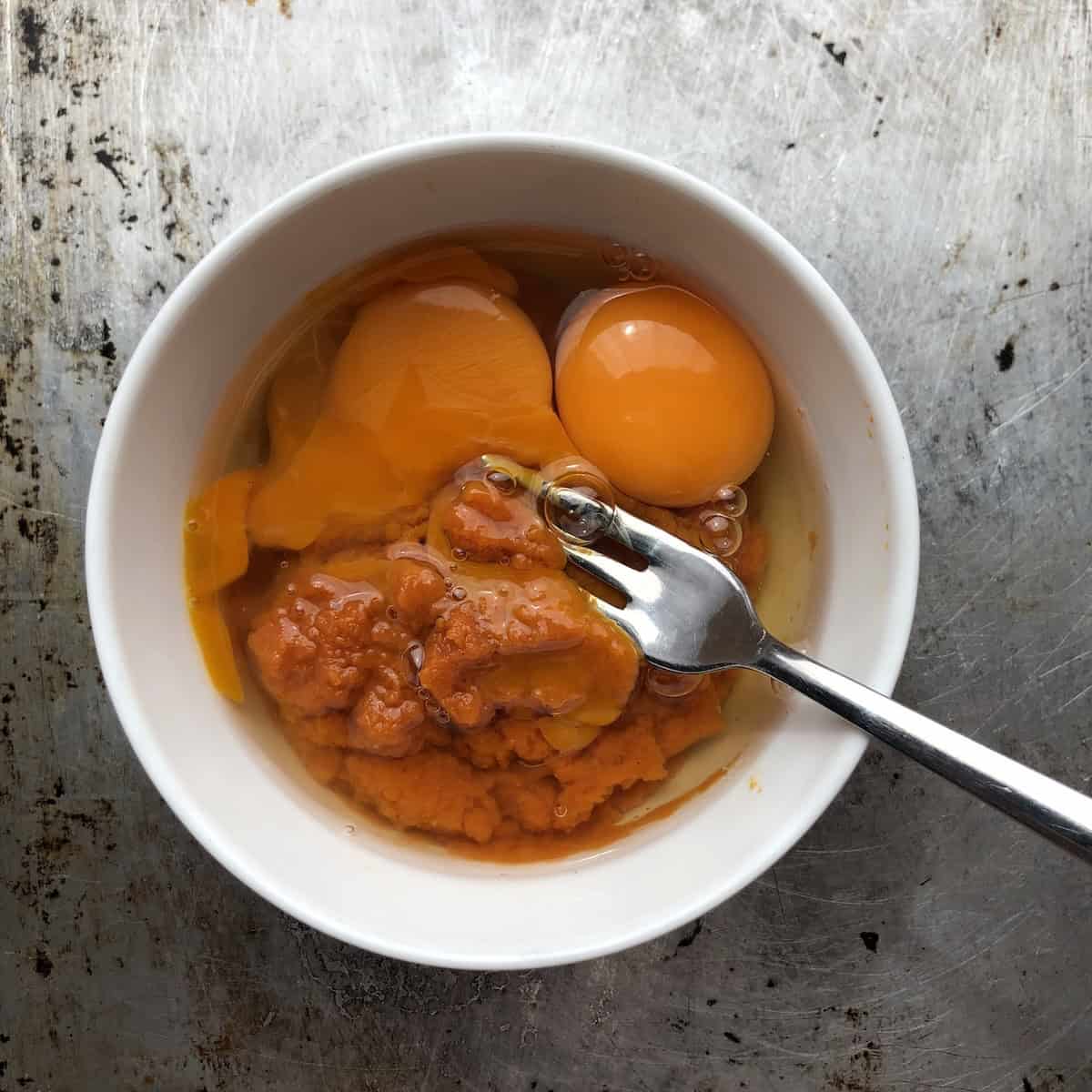
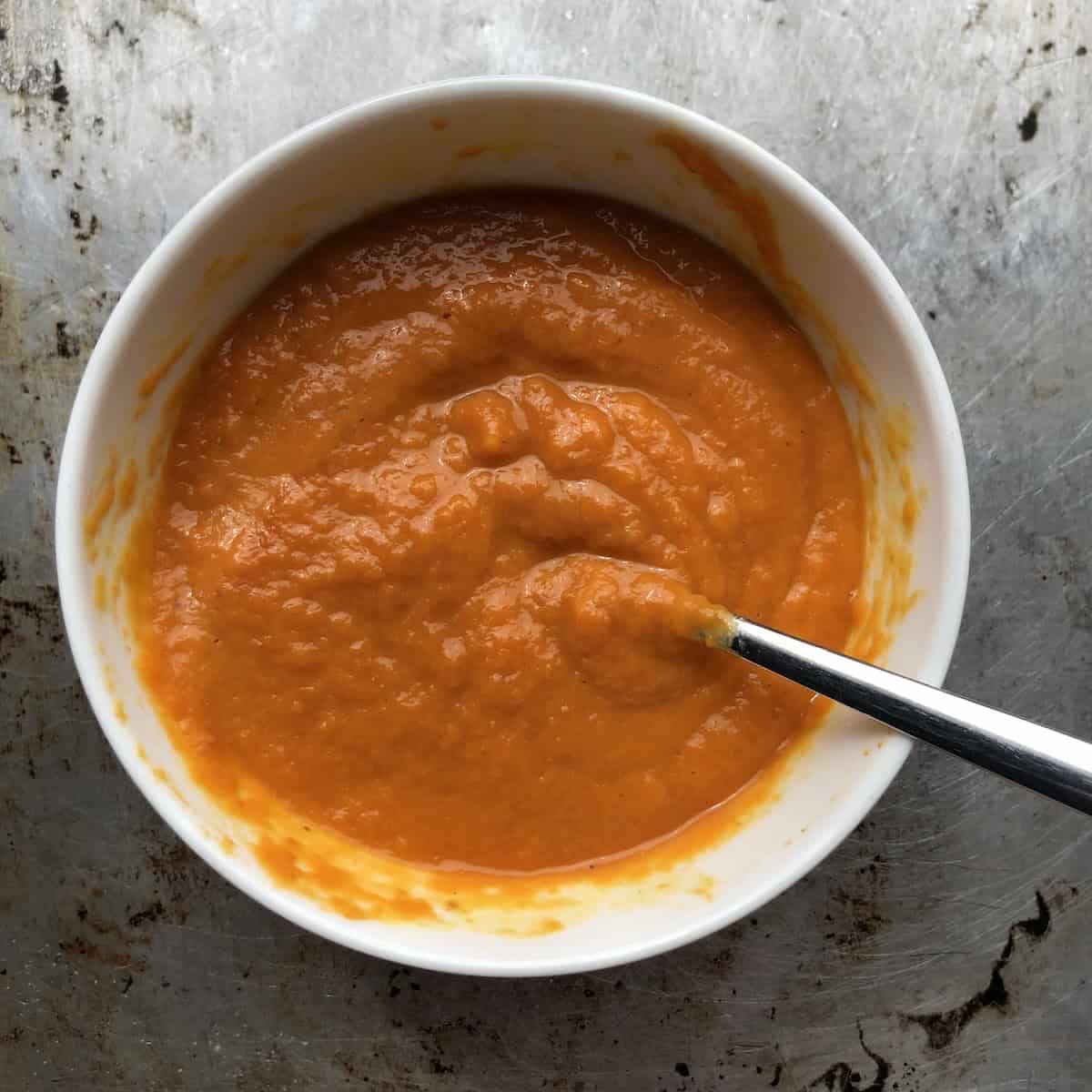
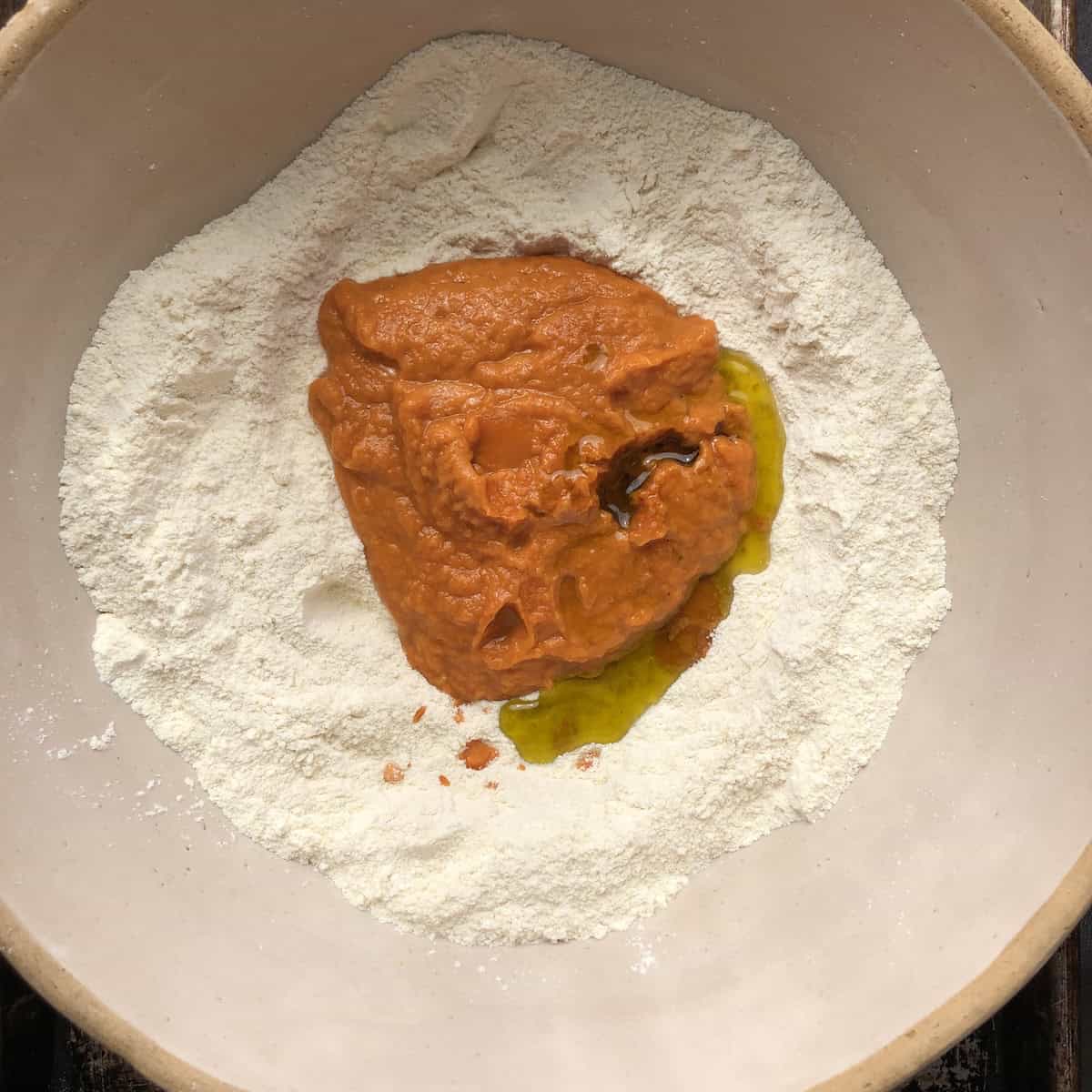
Step 1. Make the dough. Combine flours and whisk well. Make a well in the center. Whisk eggs and pumpkin puree together, then add this and the olive oil into the well.
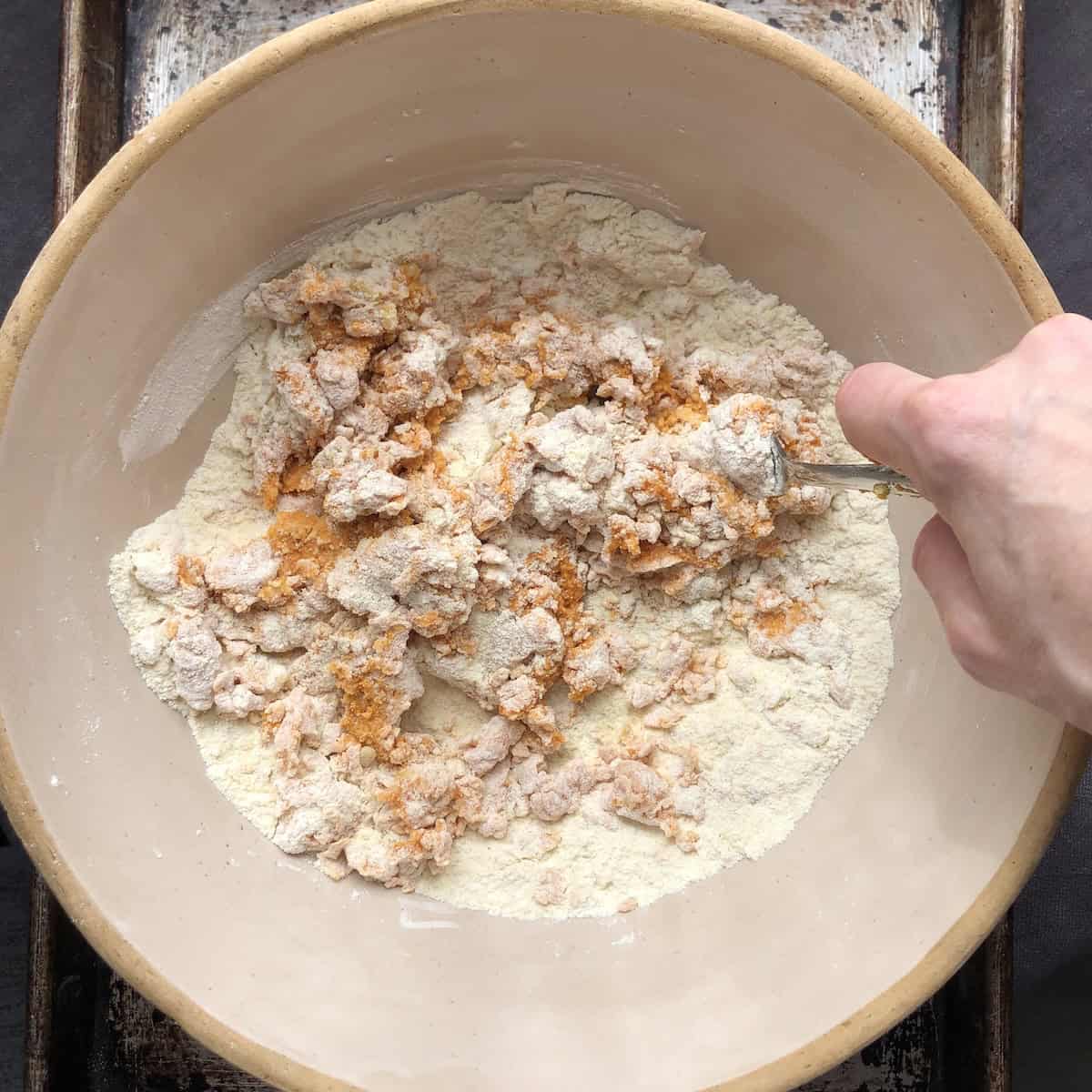
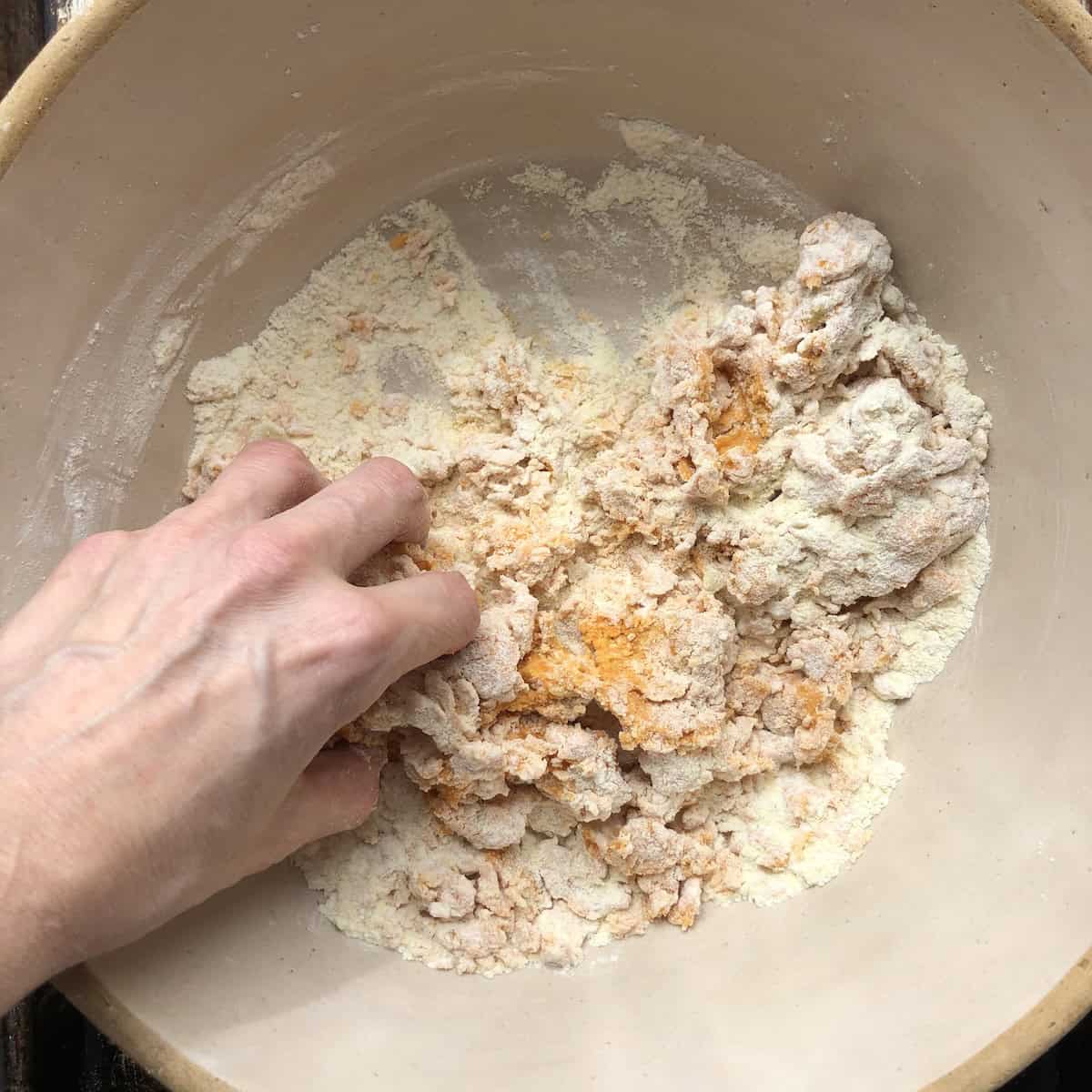
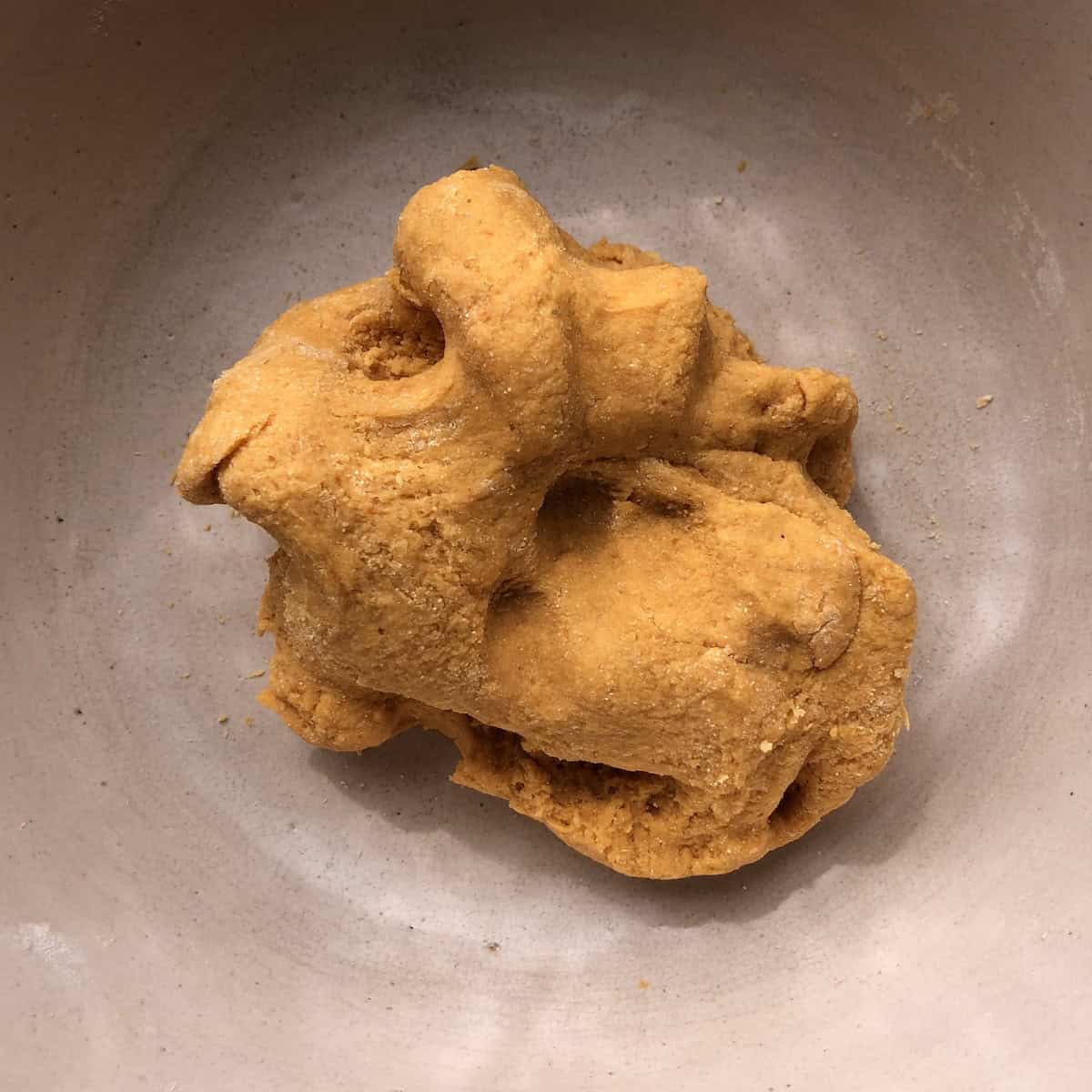
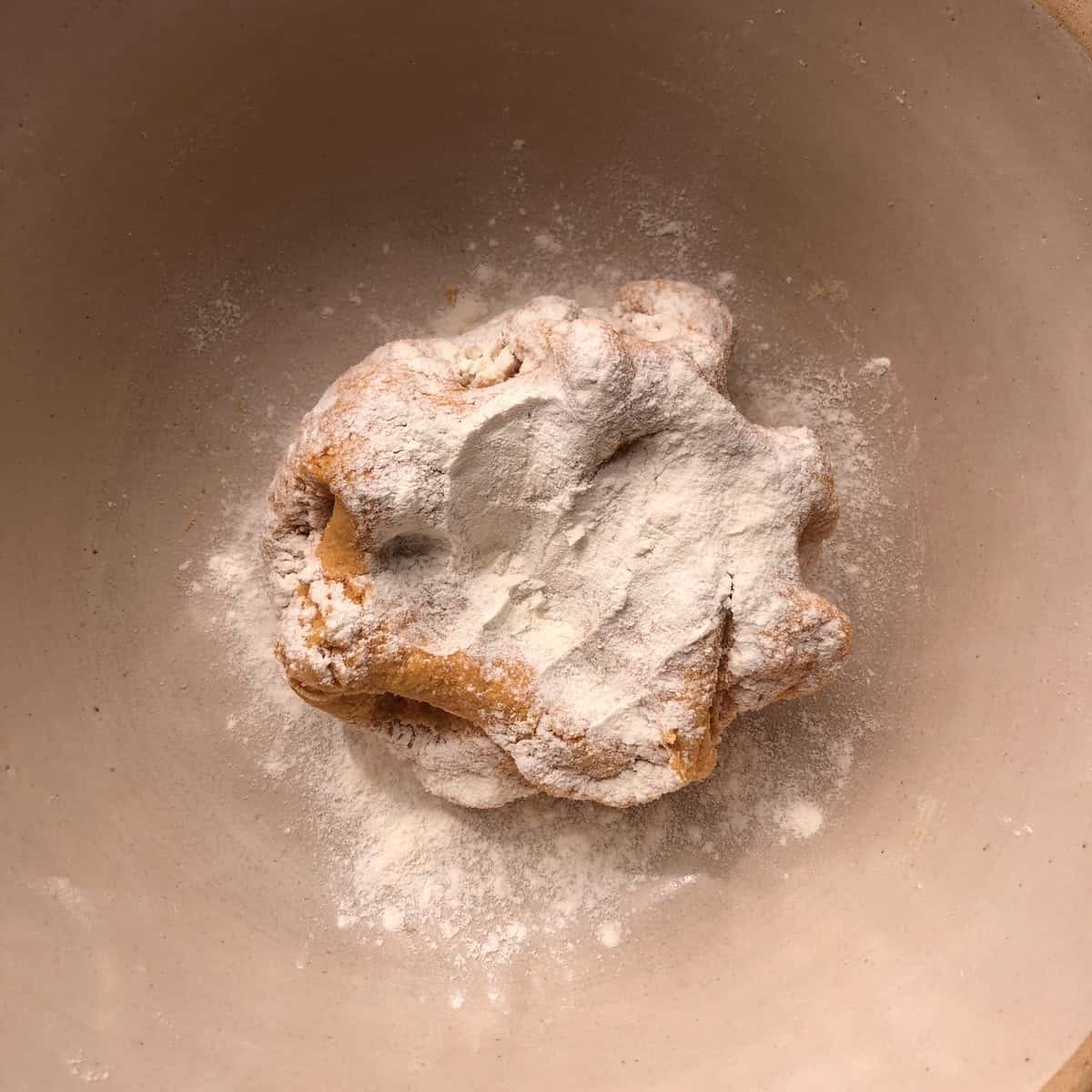
Step 2. Bring it together. Using a fork, start combining wet ingredients, gradually pulling in flour from the sides. When it's too thick to mix with a fork, switch to using your hands to form a shaggy mass of dough. If it's too sticky, dust it lightly with flour and incorporate it.
*Don't add too much flour at this stage, though, because when you knead it, the more cohesive it becomes without sticking to your hands.

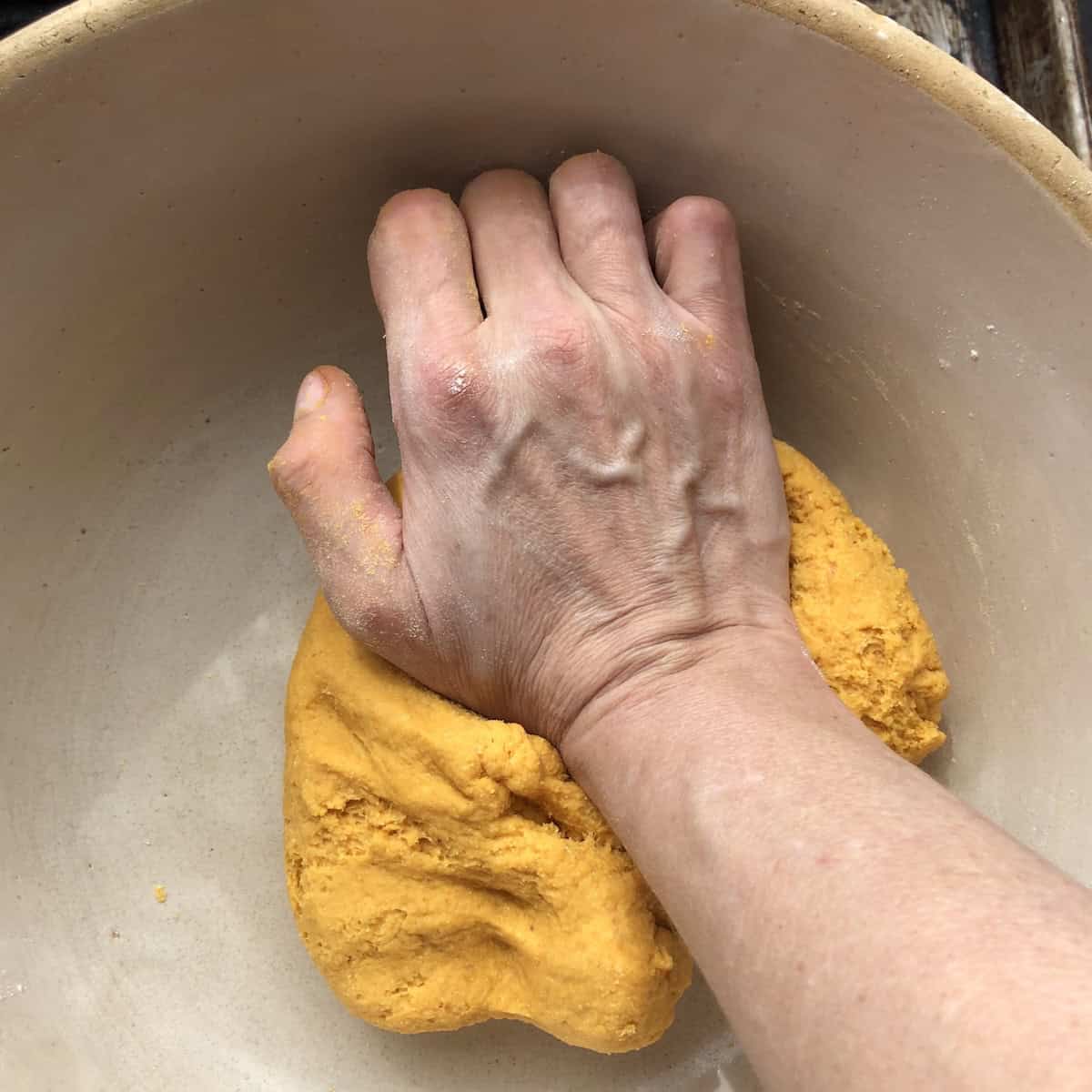
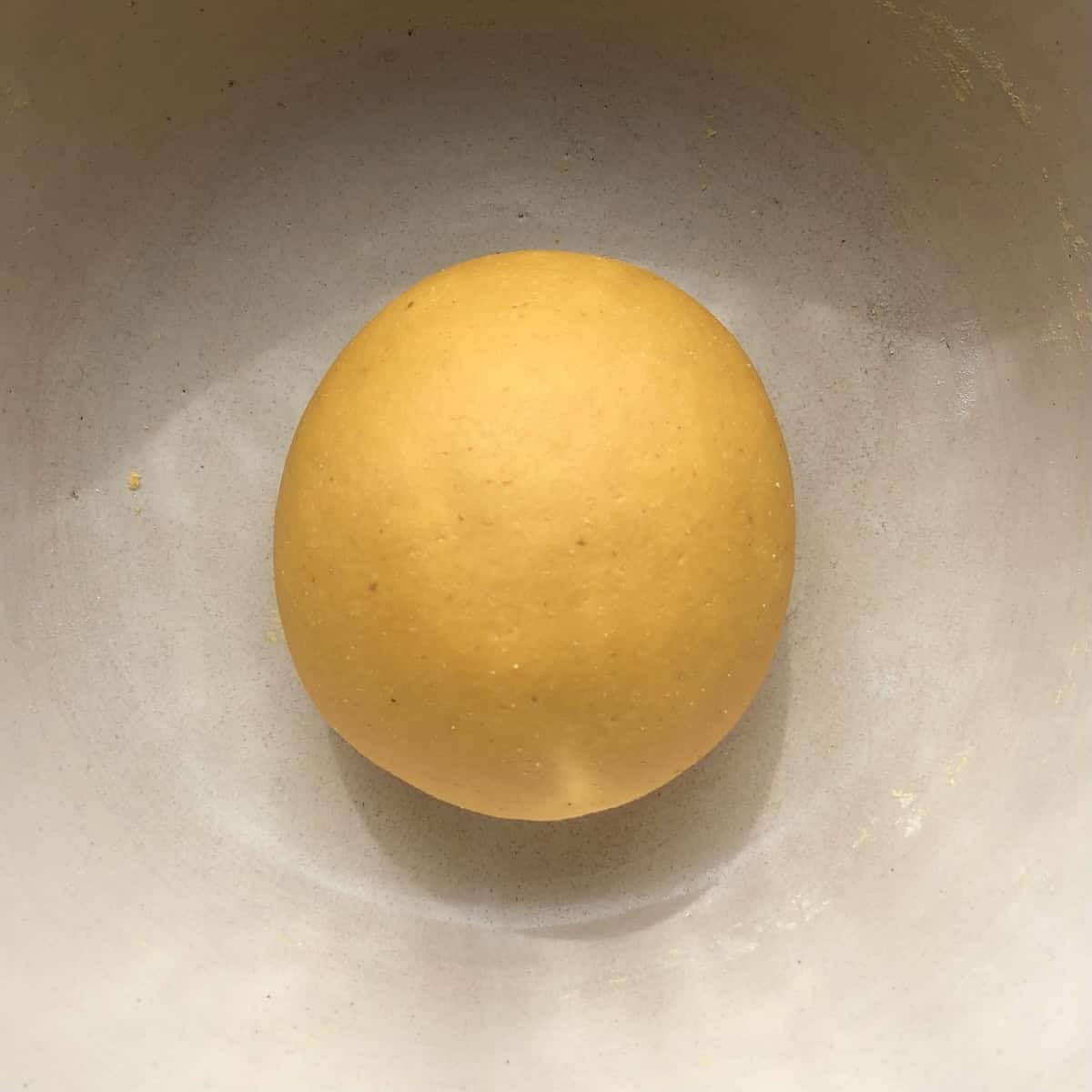
Step 3. Knead the dough. If too dry, wet your hands to add a little water slowly and continue kneading. If it's too wet, sprinkle the minimum amount of flour on it to get it to stop sticking to your hands. Add the dough to a lightly floured work surface and knead for about 10 minutes, or until smooth.
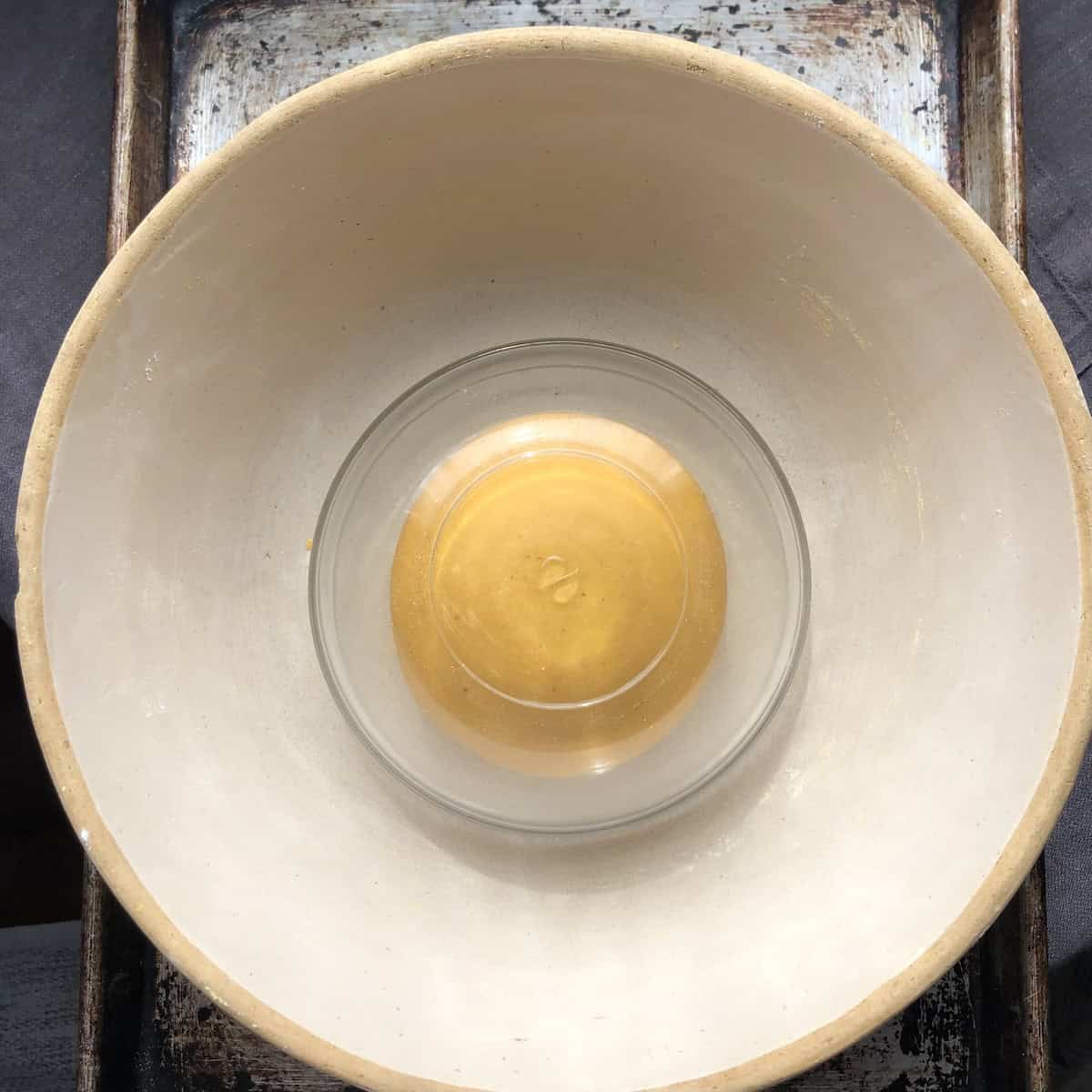
Step 4. Rest the dough. Cover and rest at room temperature for 30 minutes. This is essential for workable dough!
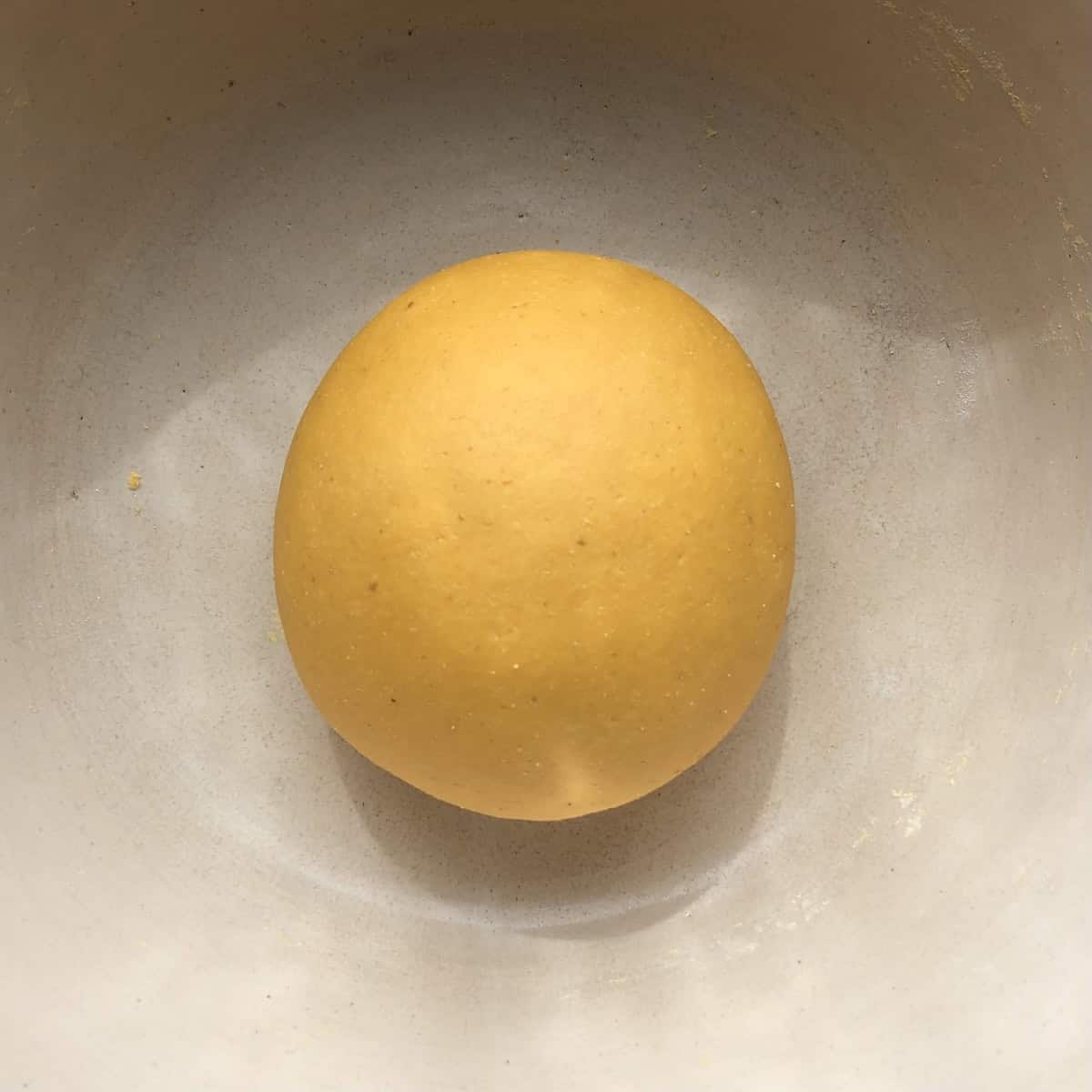
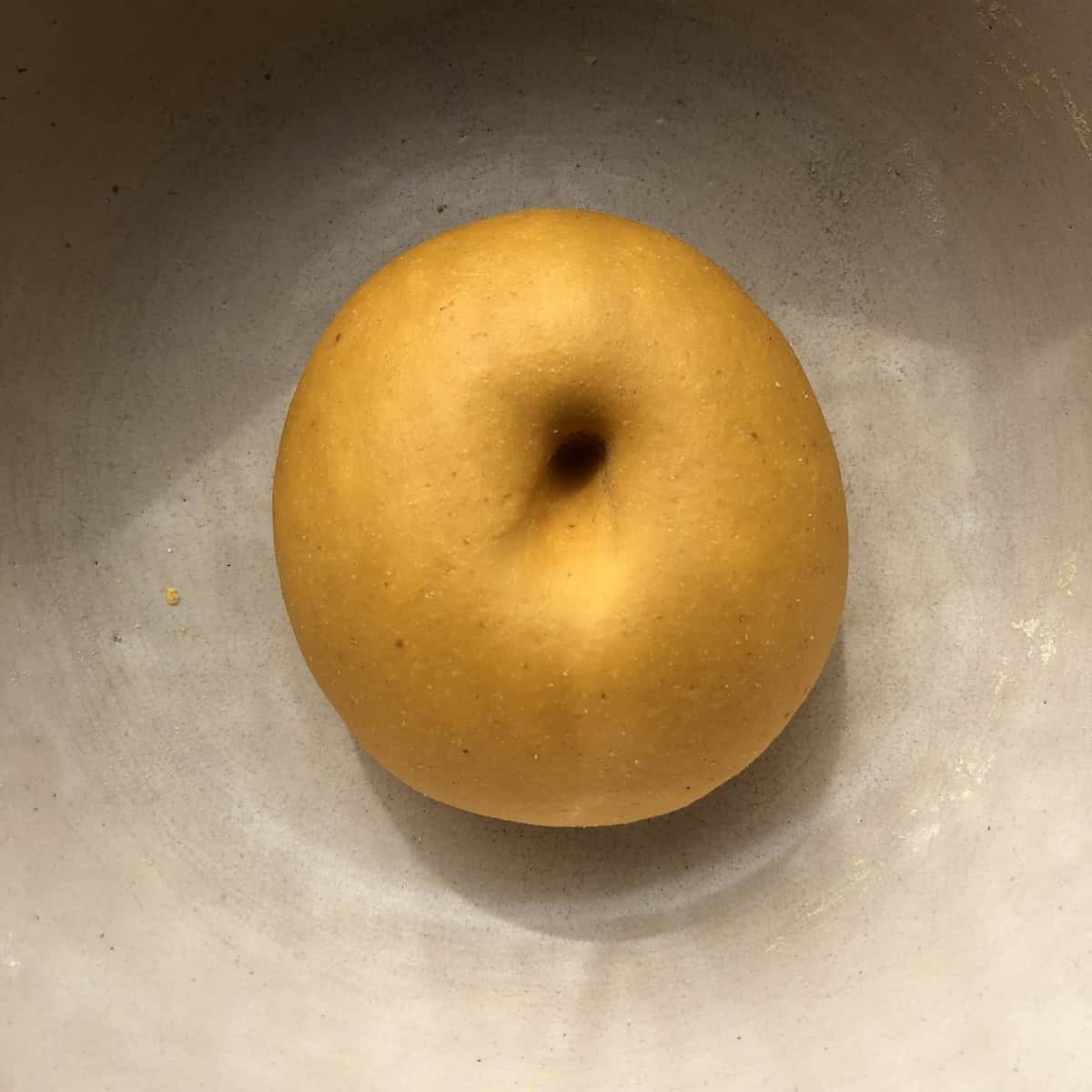
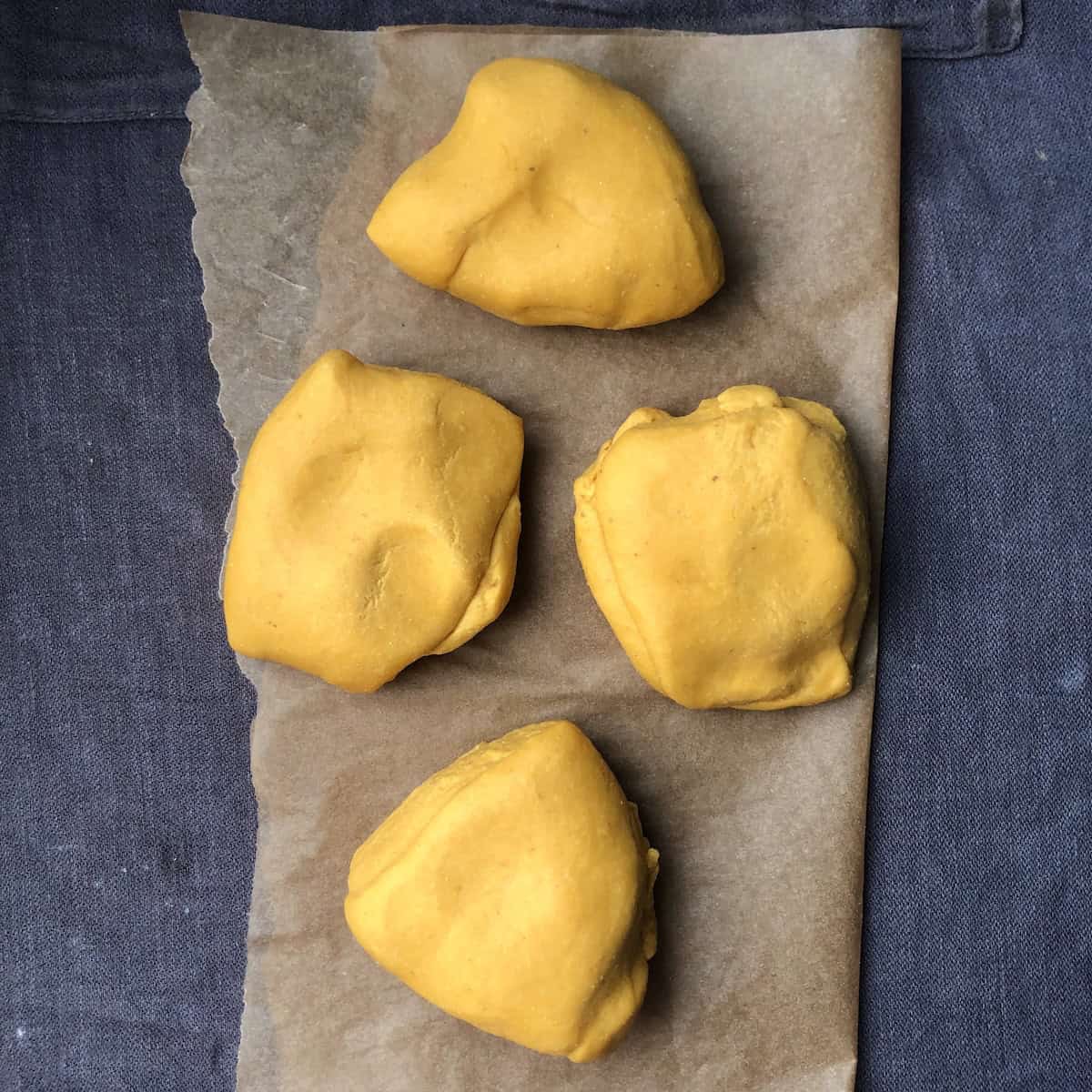
Step 5. Divide. When your dough is well-rested, it will look hydrated, and when you poke a finger into it, the indentation will remain. Divide the dough into 4 equal pieces. Keep unused pieces covered to keep them from drying out.
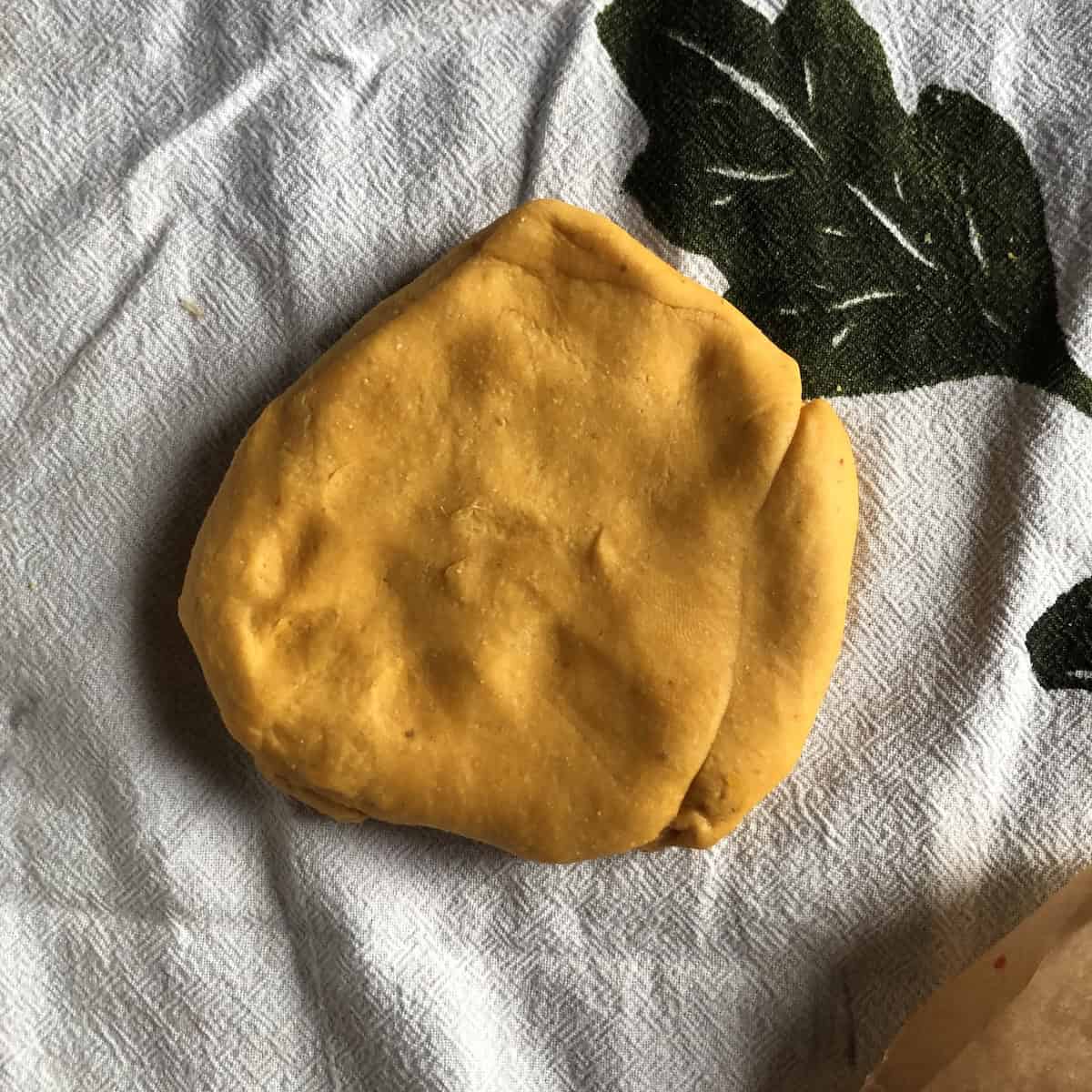
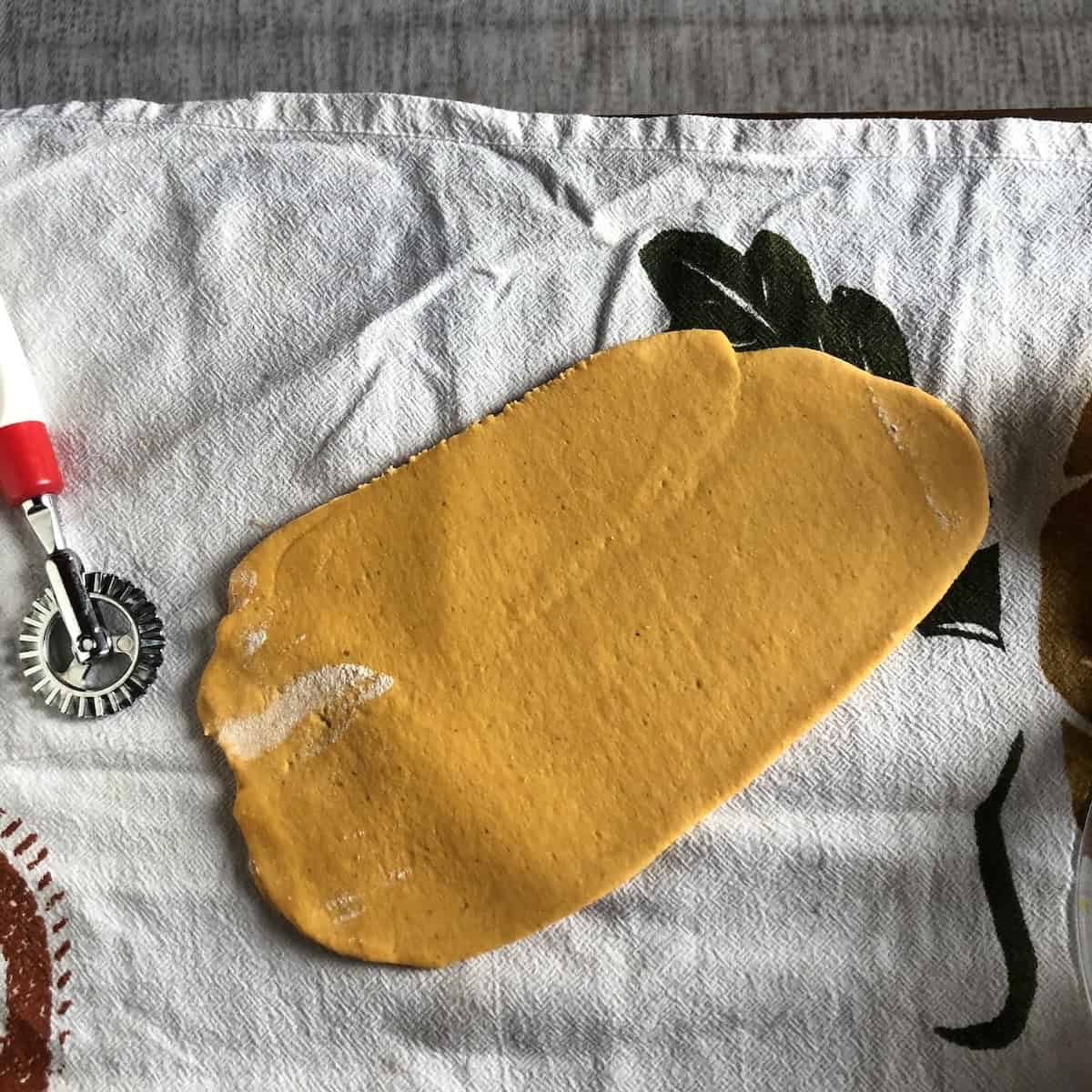
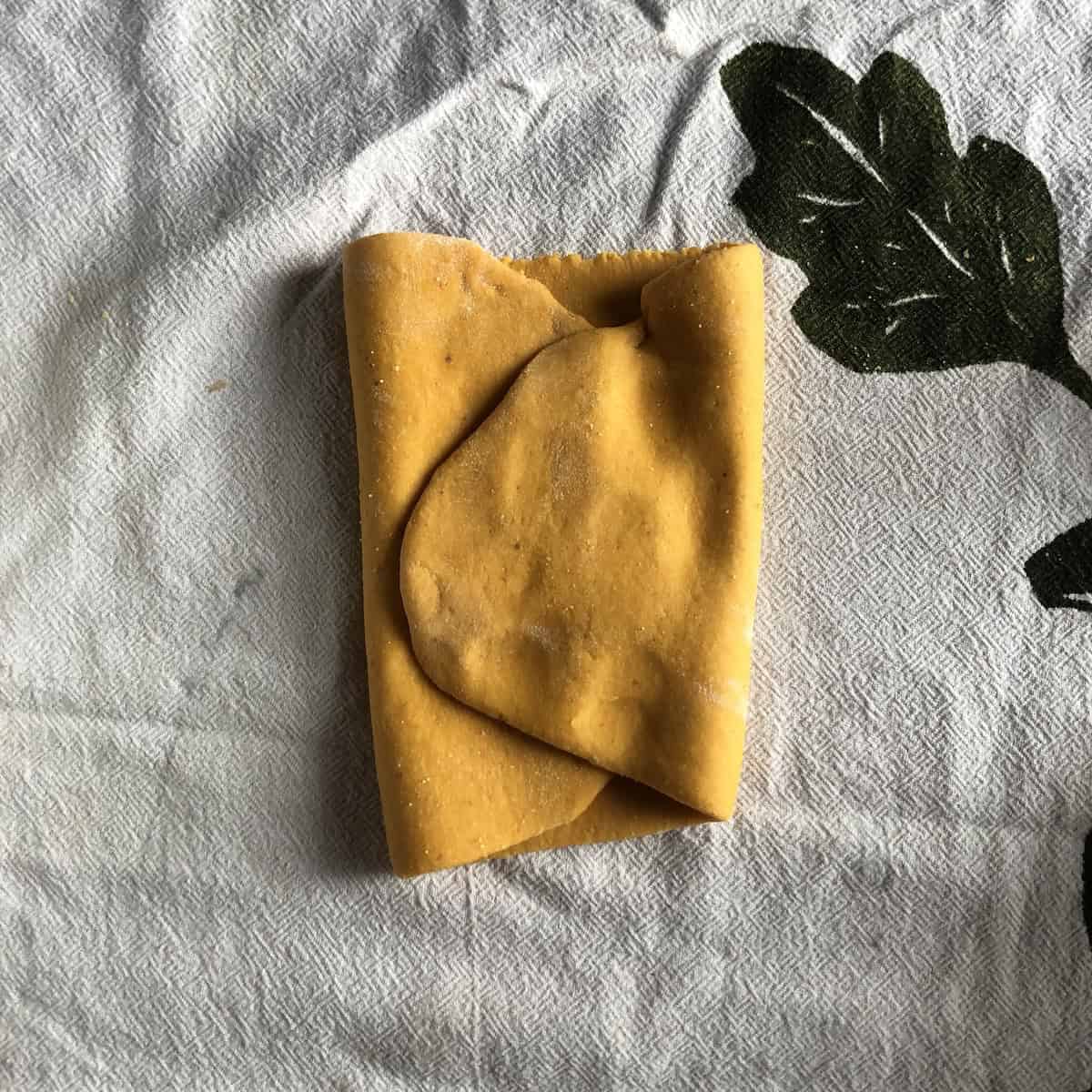
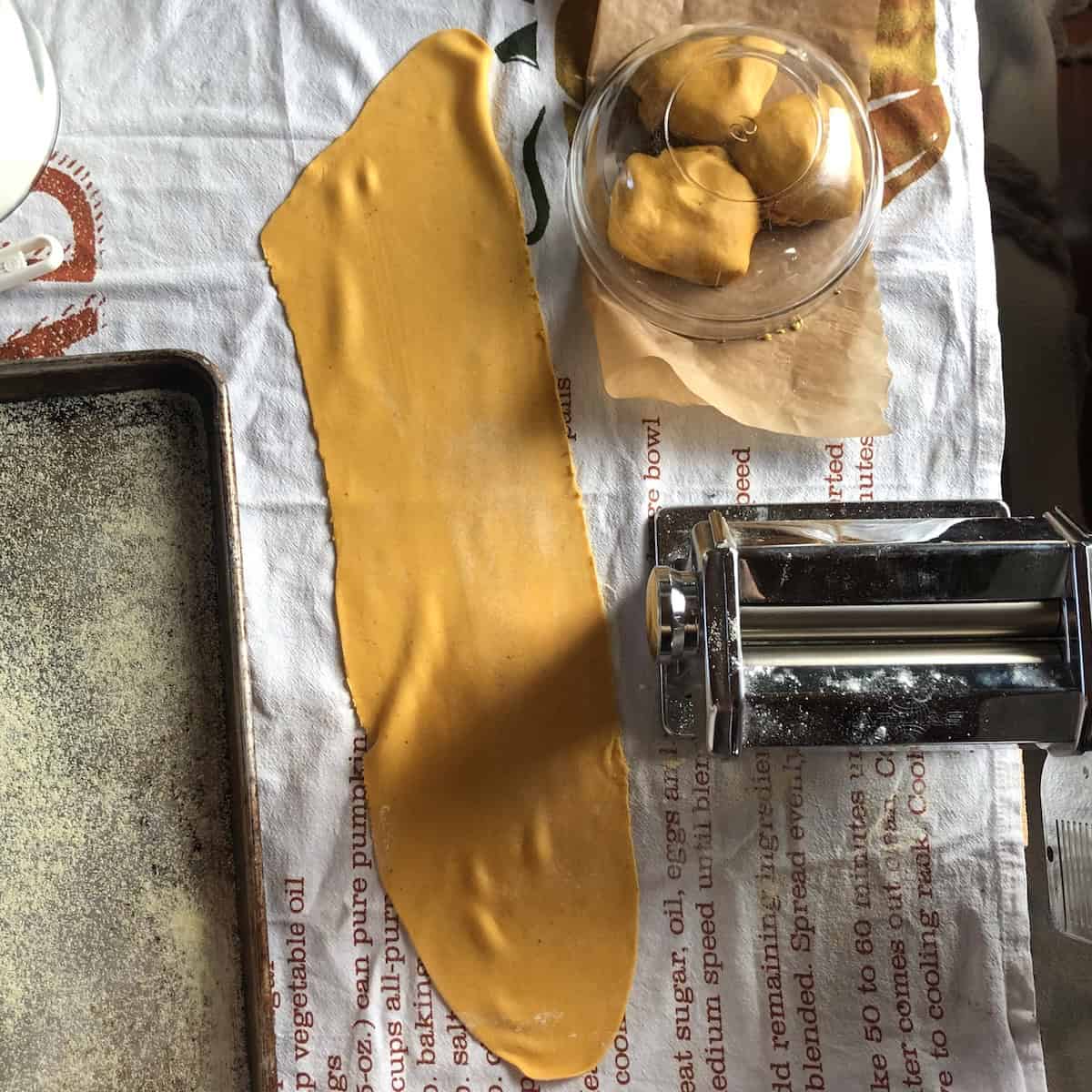
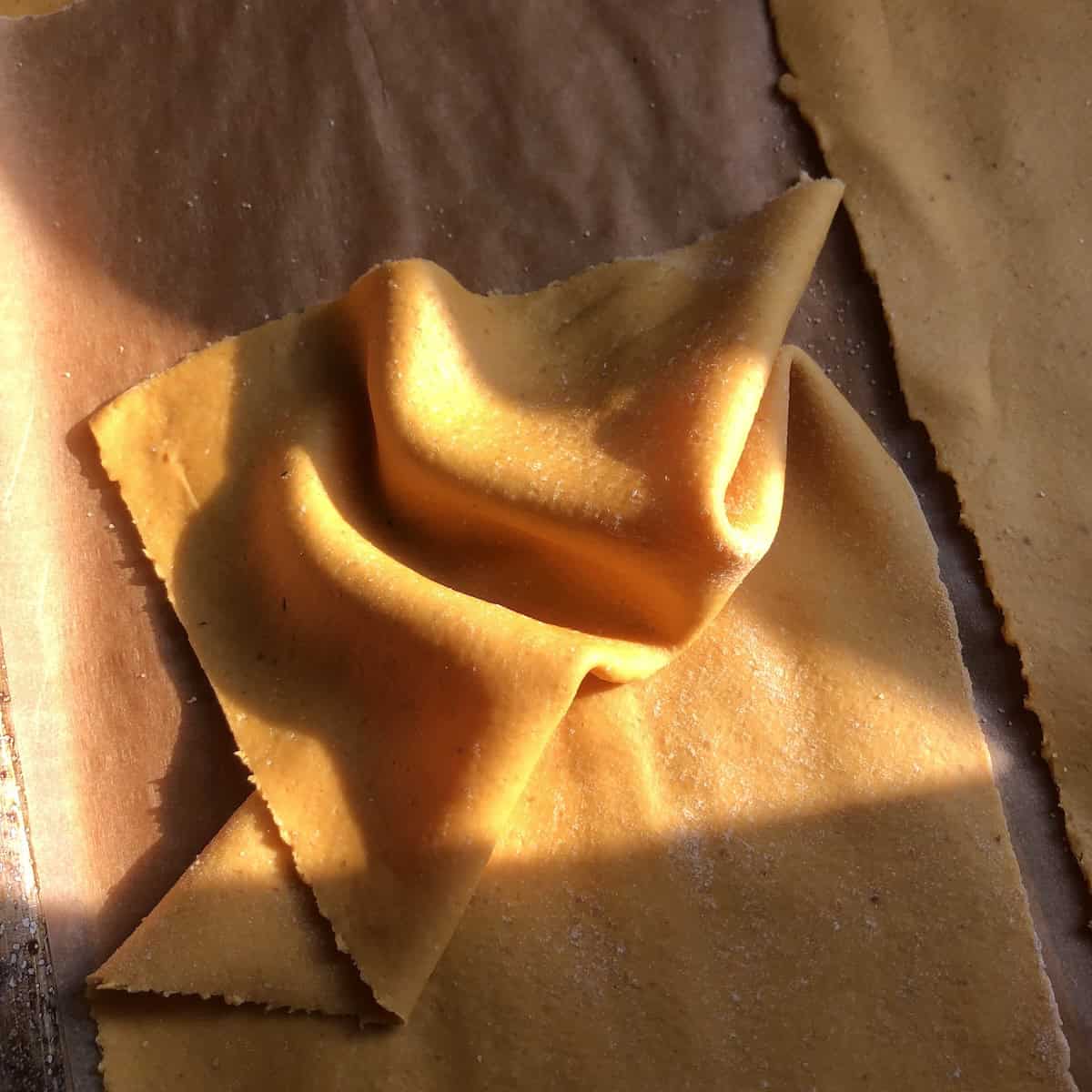
Step 6. Roll out the pasta dough. Working with one piece of dough at a time, flatten it using your hands.
Using a pasta machine: Feed it through the widest setting, fold it into thirds like a business letter, and feed it through again. Then progressively roll thinner through each setting to reach the desired thickness (#6 on my Marcato Pasta machine), dusting with flour occasionally to keep it from sticking to the rollers.
Using a rolling pin: Roll from the center outward until nearly see-through (about 1/16 inch), dusting with extra flour to keep the dough from sticking to the rolling pin or the countertop.
On my Atlast Marcato pasta machine, I most often use setting #6 for fettuccine, pappardelle, tagliatelle, tortellini, and lasagna sheets. For ravioli, I roll to #7 or #8, depending on the filling, and I like to use #5 and #6 for homemade chittara pasta, depending on the sauce pairing and how thick I want the spaghetti noodles.
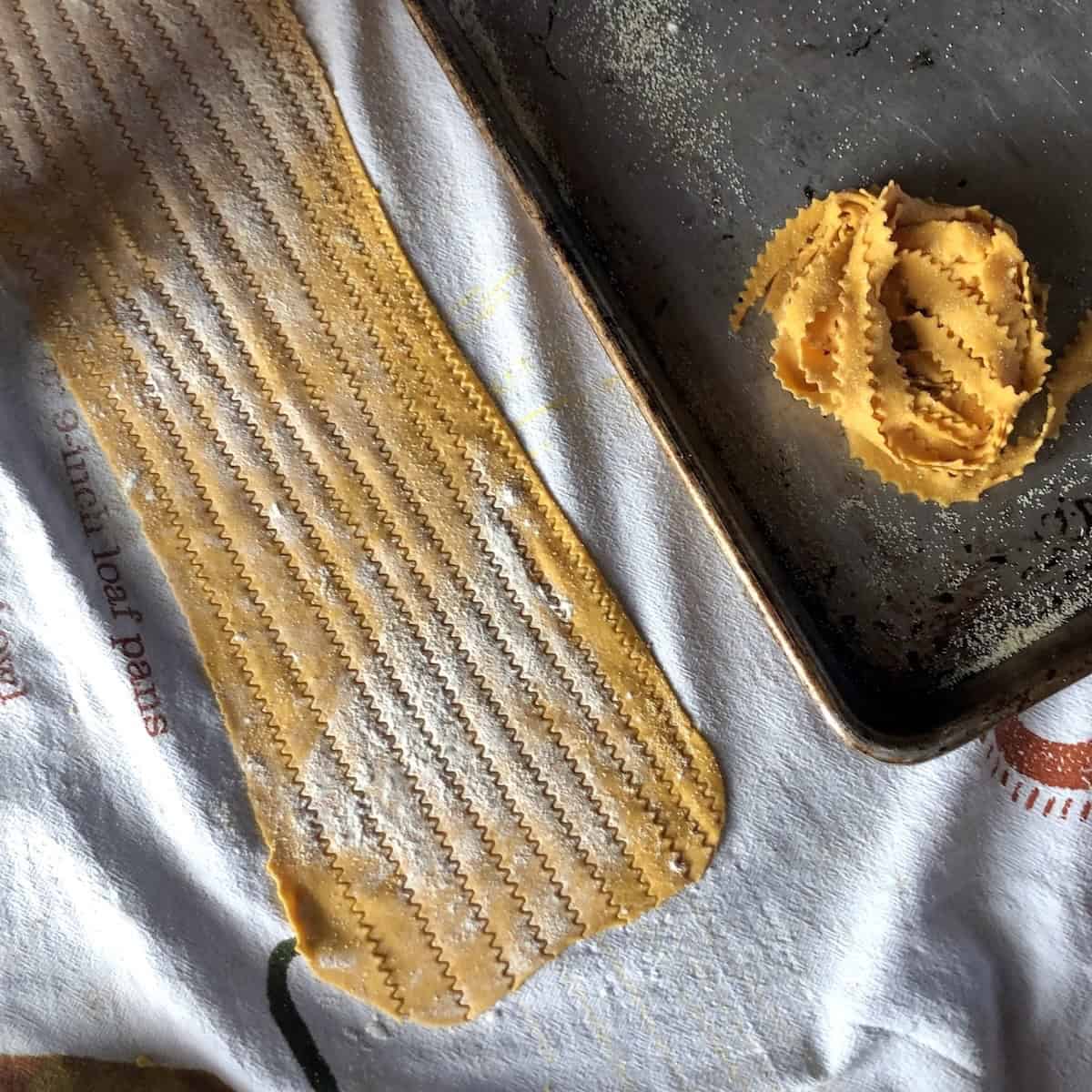
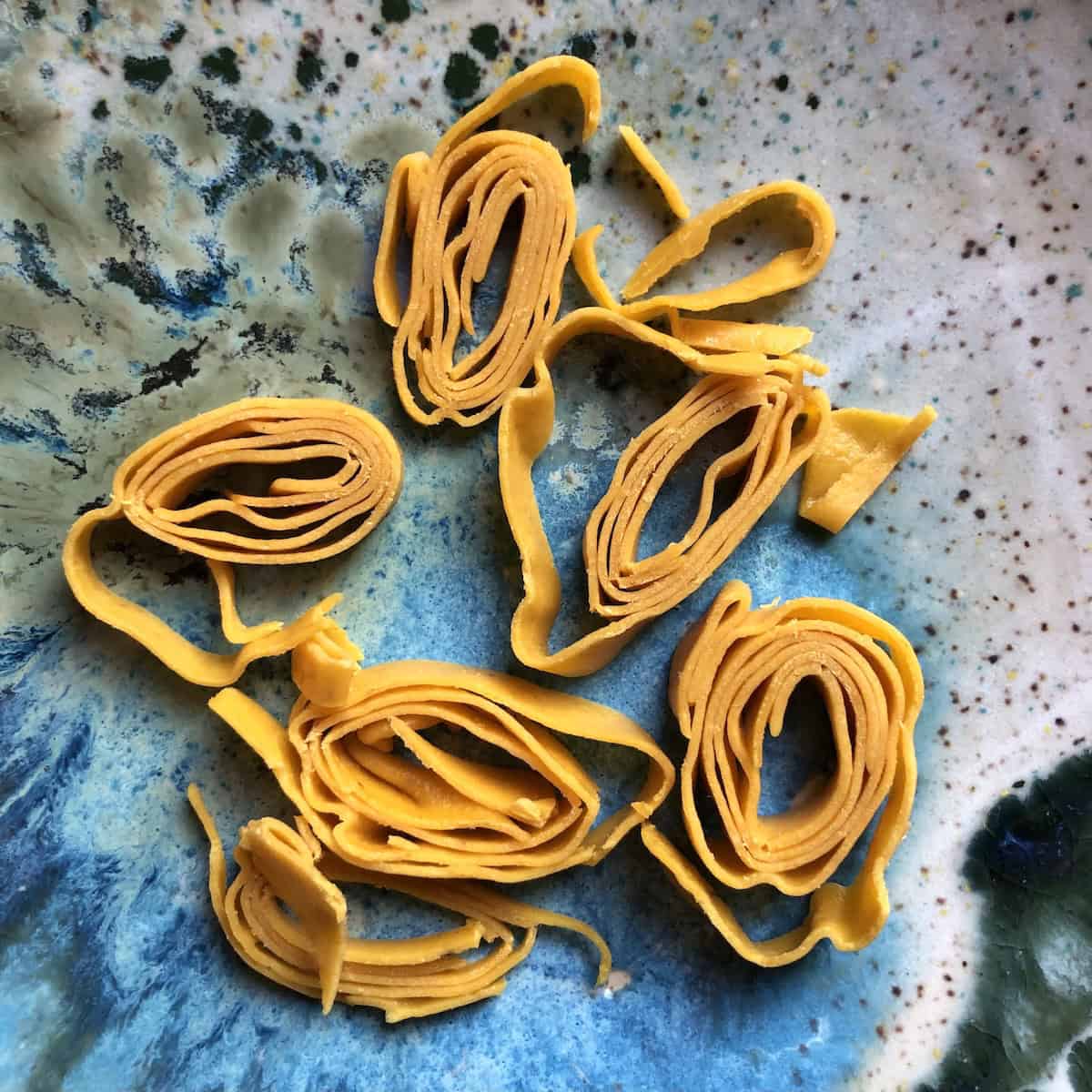
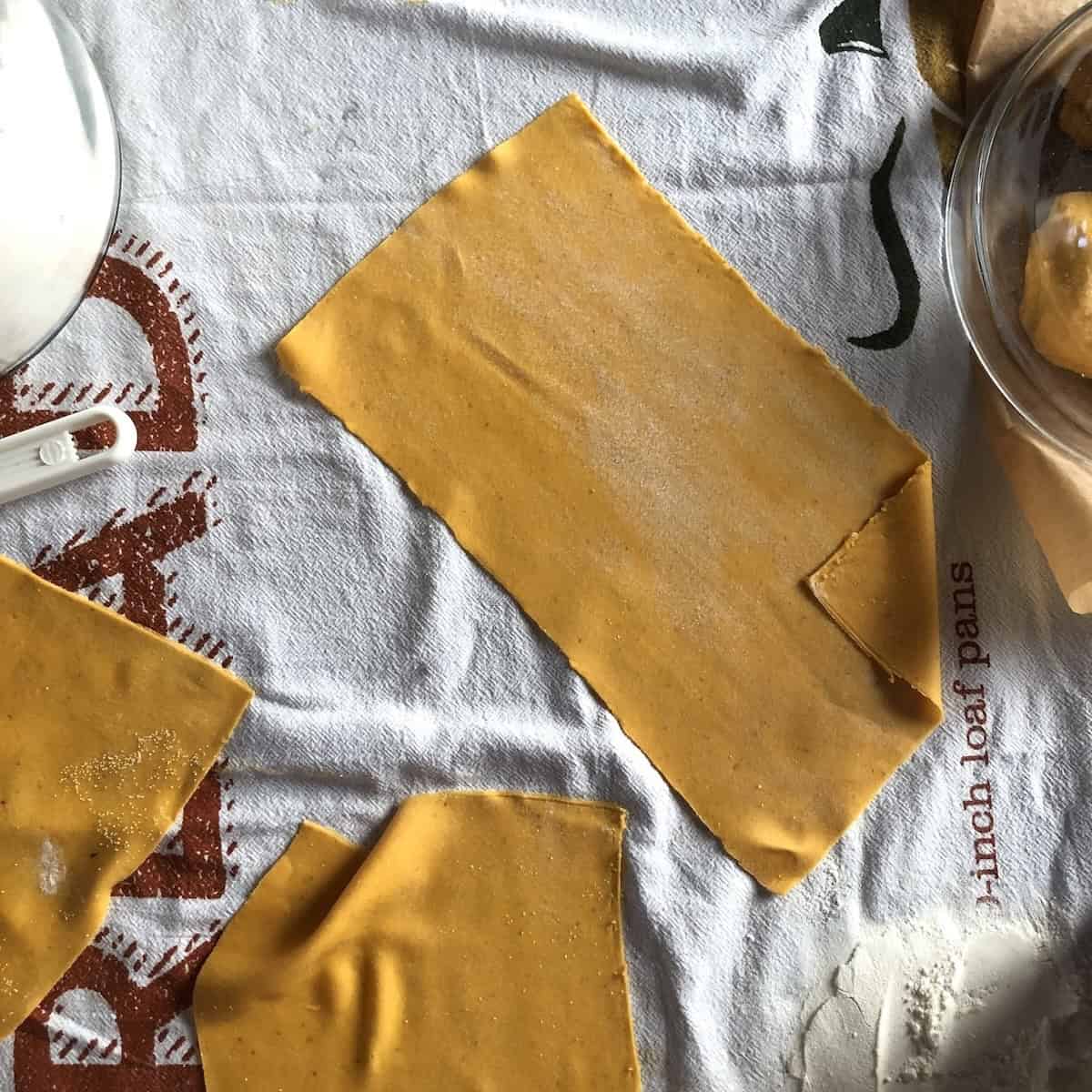
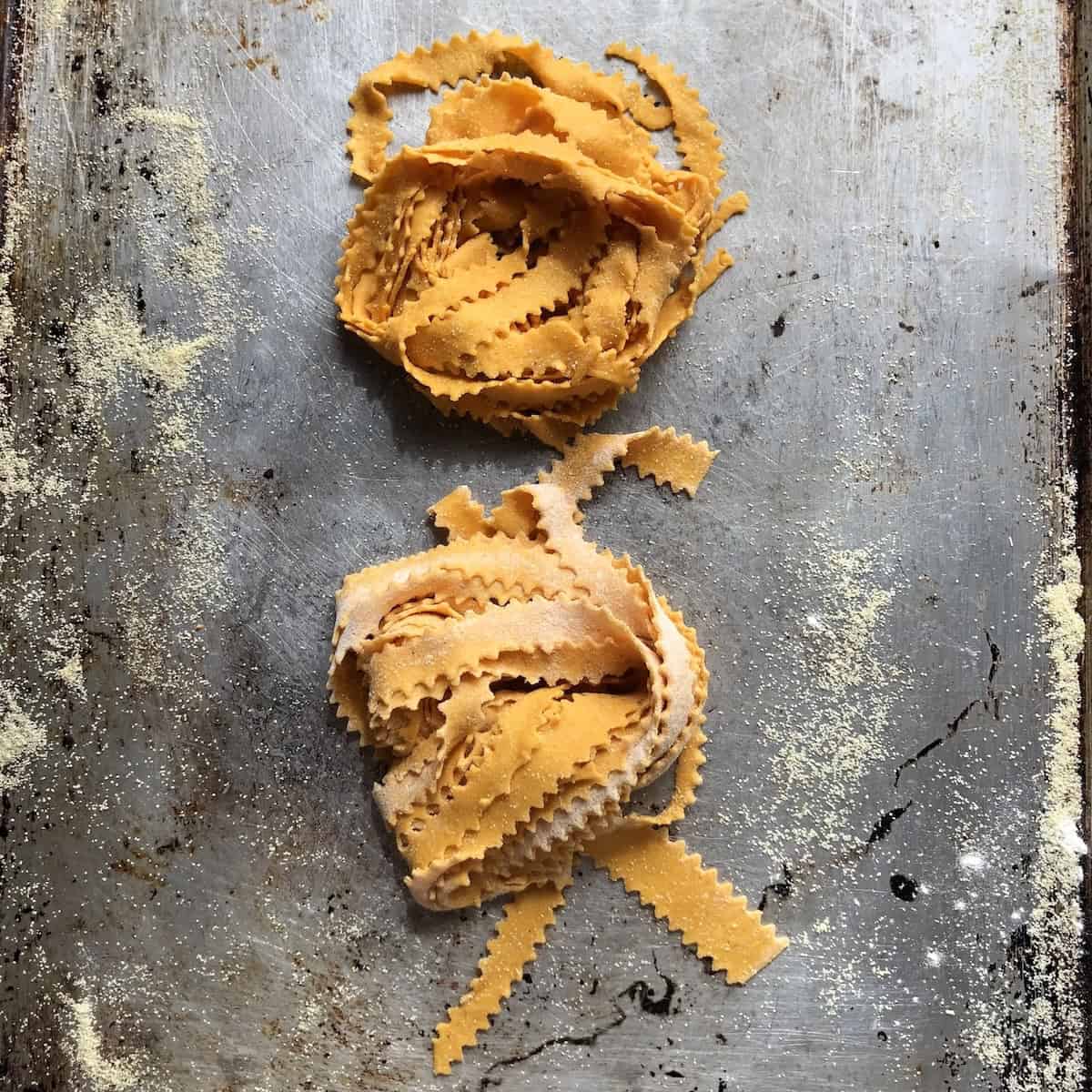
Step 7. Cut your pasta. Cut into desired shape-fettuccine (¼ inch), pappardelle (¾ inch), or use for ravioli, chittara, tortellini, and lasagna. Transfer to a floured baking sheet to rest for at least 10 minutes and up to 30 minutes before cooking.
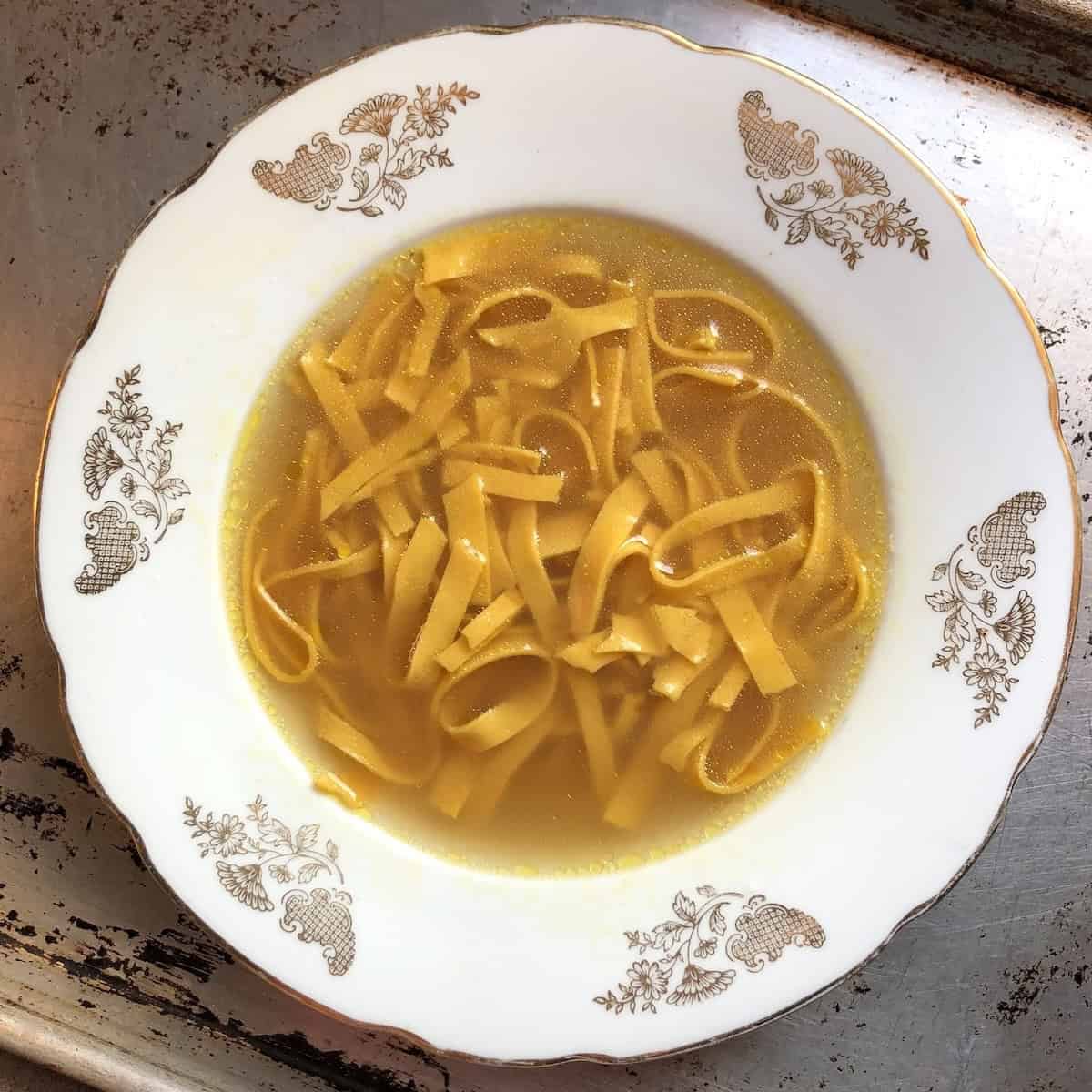
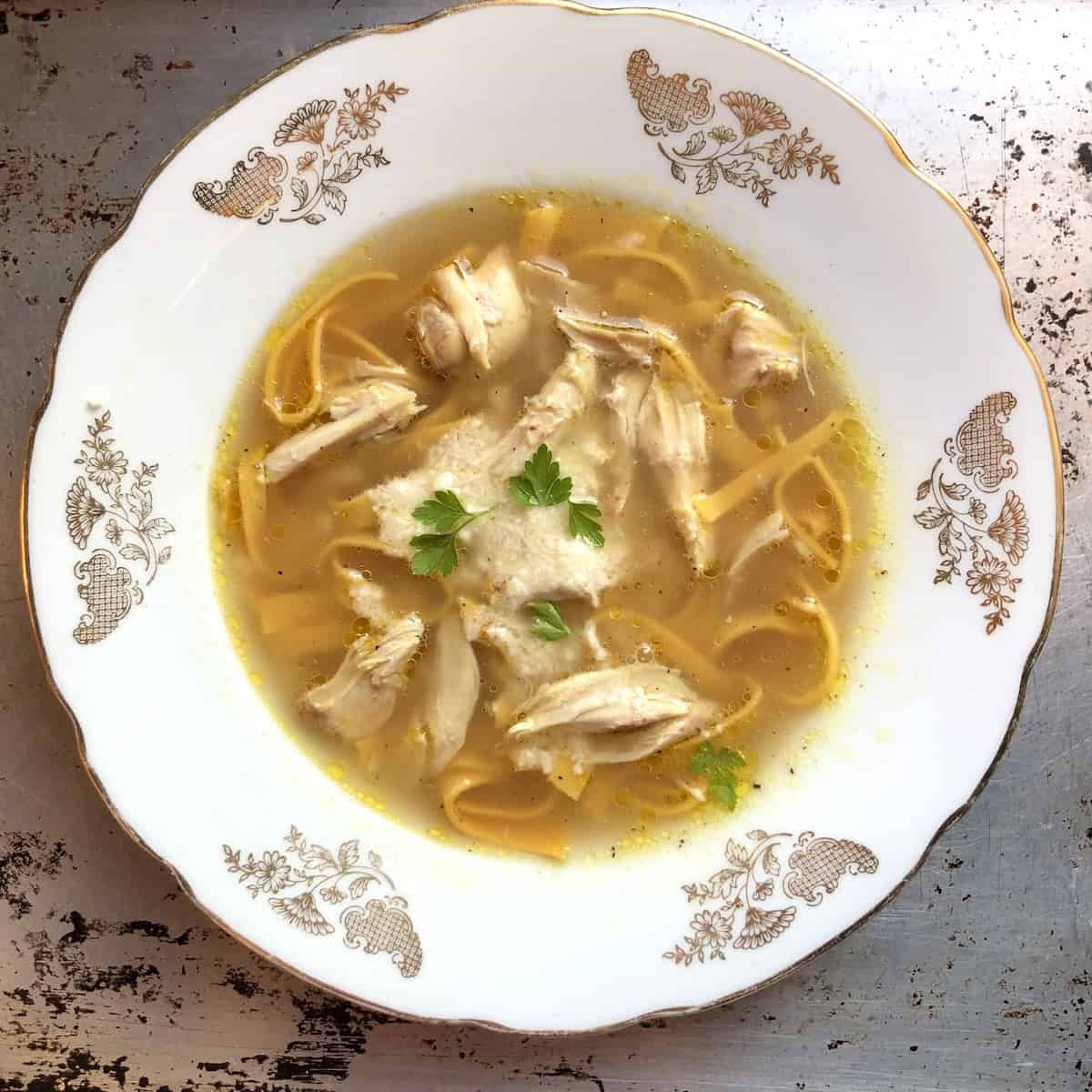
Step 8. Cook. Boil the pasta in salted water for 2 to 3 minutes until al dente. If frozen, add 1 extra minute. For soups, simply add the pumpkin noodles to your boiling vegetable or homemade chicken broth and cook for 2-3 minutes.
Hints
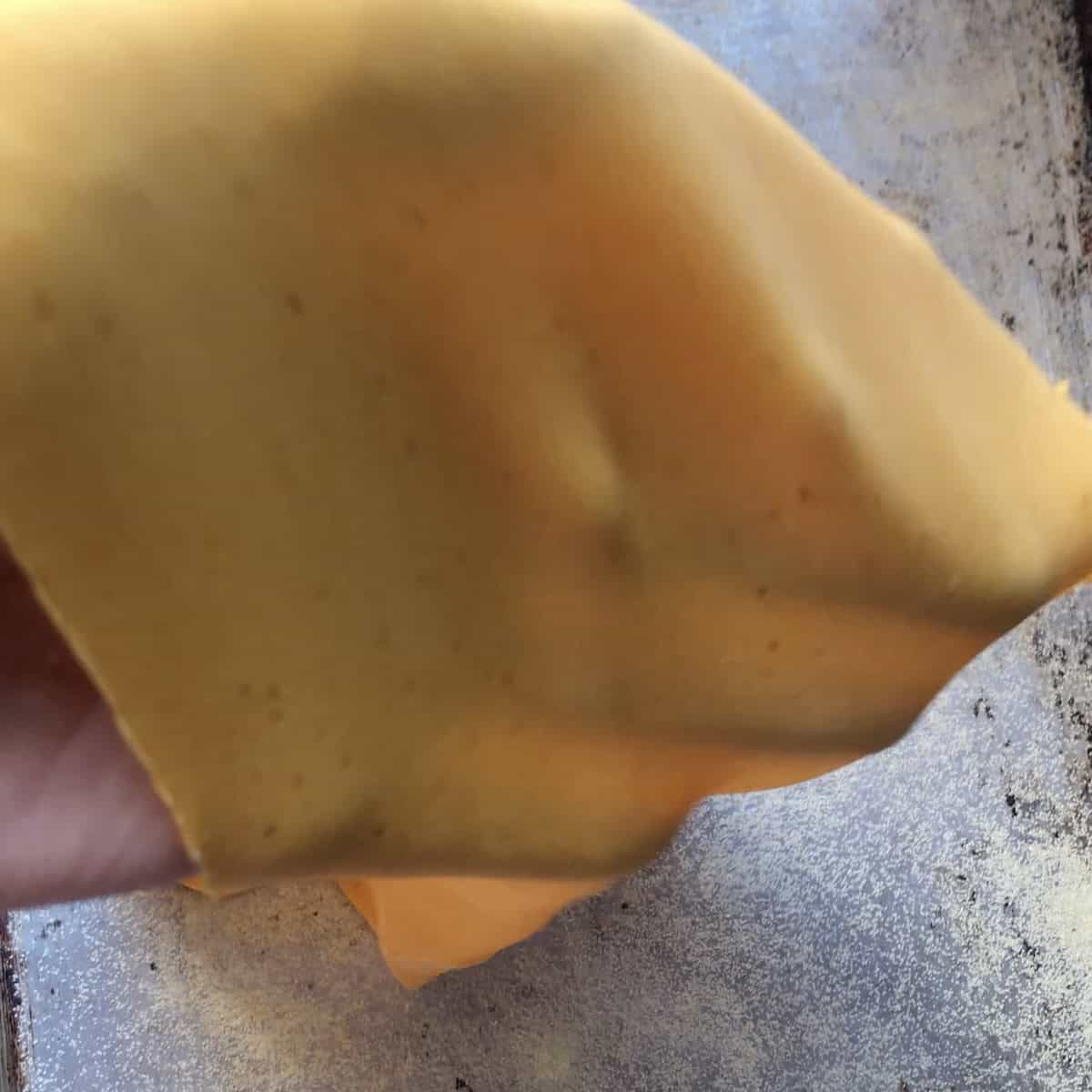
The #1 mistake people make with homemade pasta is not rolling it thin enough! Fresh pasta gets significantly thicker when it cooks, so what looks almost too thin when raw will be perfect once boiled. If you can almost see through the dough when you hold it up, you've nailed it.
Why the 30-minute rest is essential: When you knead pasta dough, you develop gluten strands that make the dough elastic and springy. Without resting, these tight gluten strands cause the dough to shrink back every time you try to roll it thin-it's like fighting a rubber band!
The rest period allows the gluten to relax and the flour to fully hydrate, making the dough soft, pliable, and easy to roll paper-thin without springing back.
Zero waste: Don't discard leftover pasta dough scraps after cutting or trimming. They make excellent add-ins for soup! Instead, freeze them or air-dry them and store them in a glass jar until ready to use!
Find detailed instructions in the recipe card.
Troubleshooting Your Pumpkin Pasta Dough
Dough too sticky and won't stop sticking to your hands? Add flour ½ or 1 tablespoon (about 4g-8g) at a time, kneading thoroughly between additions. Be patient and don't add too much at once, or you'll overcorrect and end up with dry dough. Sometimes stickiness resolves itself with more kneading as the flour hydrates, so don't add too much flour.
Dough too dry, crumbly, and won't come together? Wet your hands with water and knead the dough to gradually work in moisture. You can also add water by the teaspoon (5g), kneading well in between additions. The dough will feel dry at first, but should come together with persistent kneading.
Dough keeps tearing or springing back when you try to roll it? It hasn't rested long enough. Cover it and let it sit for another 10-15 minutes. The gluten needs time to relax, or it will fight you.
Pasta tastes thick and chewy instead of tender? You likely didn't roll it thin enough before cutting. Remember, fresh pasta needs to be rolled thinner than you think-nearly see-through unless you enjoy thicker pasta!
Using fresh pumpkin and the dough is too wet? Most fresh pumpkin has 20-30% more moisture than canned pumpkin. After pureeing your roasted pumpkin, if you think it looks too wet, place it in cheesecloth or between several layers of paper towels set inside a strainer, and let it drain for 30 minutes to 1 hour before using.
Why Rest Fresh Pumpkin Pasta Before Cooking
Always let your homemade pumpkin pasta rest for 10-15 minutes after cutting and shaping and before cooking. This brief drying time does three important things:
- The surface firms up, preventing sticky noodles that clump together
- Your pasta holds its shape better in the boiling water instead of turning mushy
- The gluten network naturally strengthens, giving you that ideal al dente texture
This applies to all fresh pasta, not just pumpkin! For a deeper dive into the science of fresh pasta making and to learn the best (tested) Italian techniques and tips, check out my complete guide on How to Make Homemade Italian Egg Pasta.
You'll find details on resting times, gluten development, and everything you need to know about making perfect fresh pasta from scratch.

Substitutions
Flour Options:
- Using all semolina instead of 00 flour: Texture will be chewier. Add a splash of water if needed to bring the dough together.
- Using Regular semolina instead of twice-milled semolina (150g): More rustic texture, but it works great.
- Using all 00 flour instead of twice-milled semolina (150g): Smoother, more delicate texture, but you may need to adjust the flour and add a bit more or less to accommodate.
Pumpkin Options:
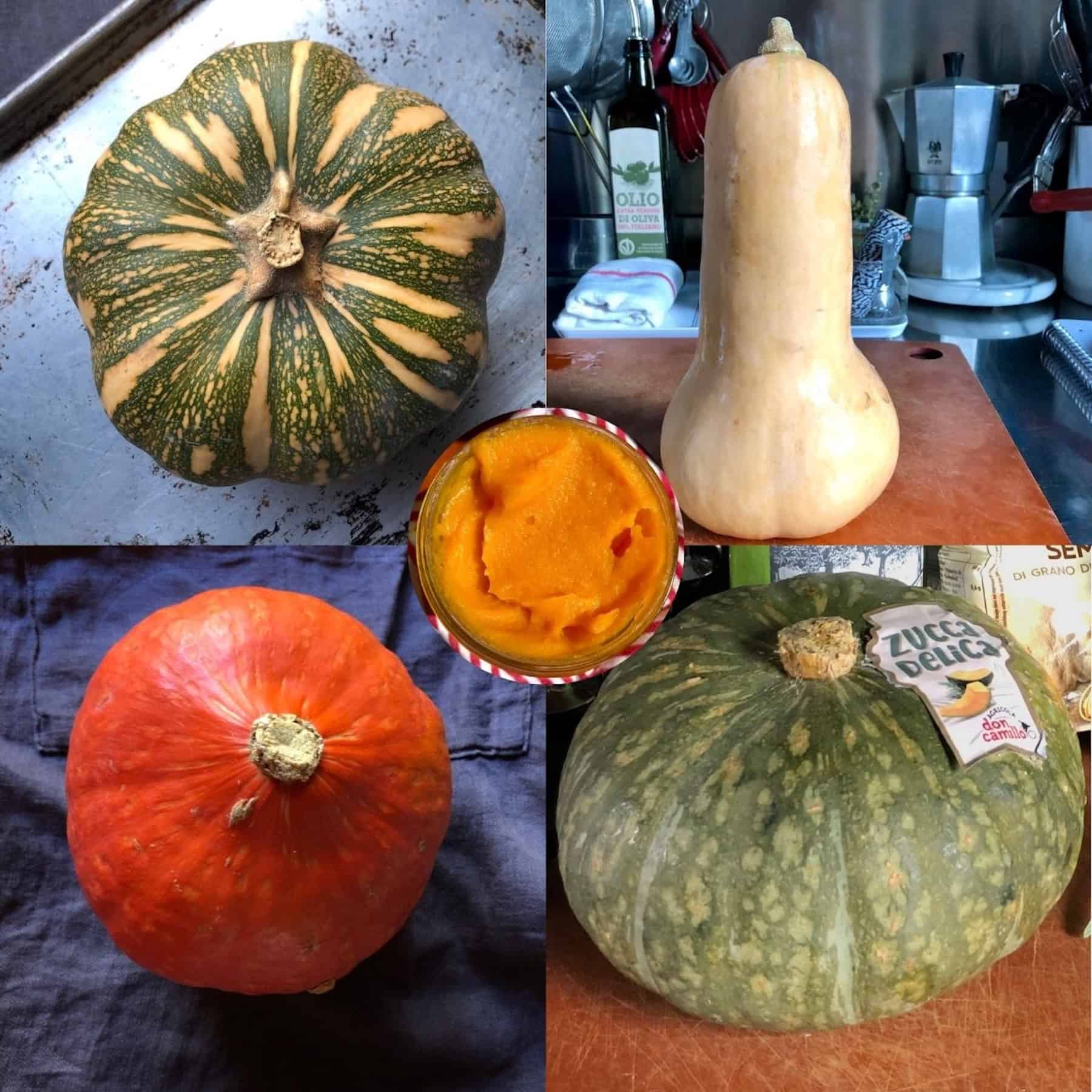
- Fresh pumpkin puree instead of canned: Use Hokkaido, Delica, or sugar pumpkins. Strain excess moisture if it seems really watery (though it's usually unnecessary)
- Butternut squash instead of pumpkin: Works as a 1:1 substitute with similar color and flavor. Strain before using if too wet.
Vegan Option:
- Vegan Pumpkin Pasta Dough: Replace 100g eggs with up to ½ cup (120ml) additional pumpkin puree. Texture will be firmer and less silky (like traditional semolina-water dough). Cooking time may increase slightly.
Pumpkin Pasta Dough Variations
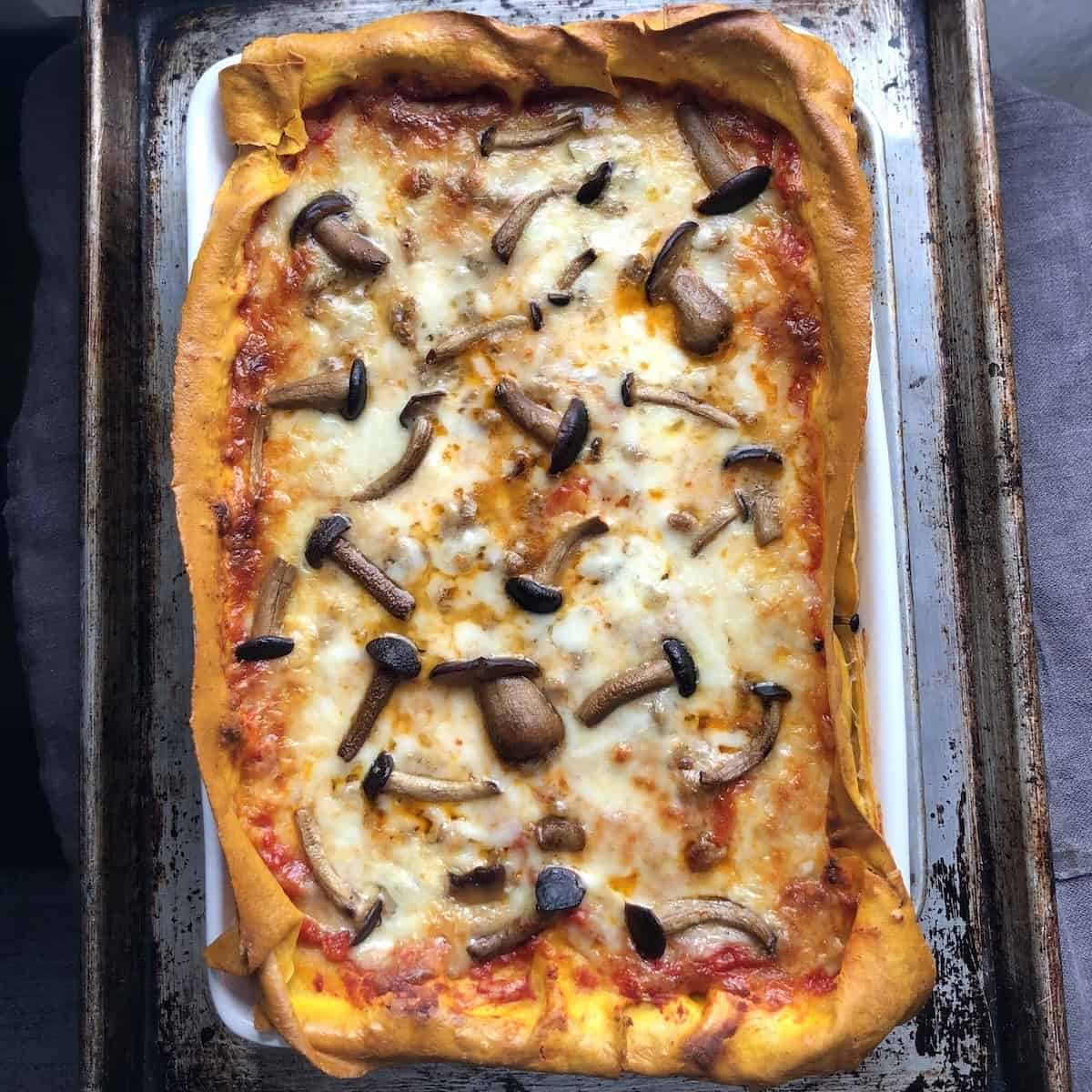
- Pumpkin Lasagna Sheets: Roll the dough thin and cut into rectangles that fit the size of your casserole dish for the most incredible pumpkin lasagna. Layer with porcini mushroom béchamel sauce and mushrooms, and Italian salsiccia or Italian sausage.
- Pumpkin Ravioli: Roll the dough thin (#6 or #7 on Atlas Marcato pasta machine) and cut into circles or squares. Fill with your favorite pumpkin-ricotta ravioli filling, remove any air, and seal the edges well with a fork; cook for 3-4 minutes or until they float to the top.
- Pumpkin Tortellini: Cut the rolled dough into 1-inch (3cm) squares, fill each square with about 5g of traditional tortellini filling, and fold into ring shapes. Traditionally served in Italian meat broth (brodo) for an authentic Emilia-Romagna style tortellini in brodo.
- Pumpkin Tortelli: Cut rolled dough into 2-inch (5cm) squares, fill with ricotta and vegetable filling, and fold into square or rectangular shapes. Delicious tossed in brown butter sage sauce.
- Pumpkin Tortelloni: Cut rolled dough into 2.5-inch (6-7cm) squares or circles, fill with ricotta and spinach (or your favorite vegetarian filling), and fold into larger ring shapes. Perfect with cream-based sauces or butter and sage.
- Herb-Infused Pumpkin Pasta: Knead 1 tablespoon finely chopped fresh sage (or 1 teaspoon dried rubbed sage), or 1 tablespoon of fresh chopped parsley or chives, into the dough for extra fall flavor.
- Pumpkin Pappardelle: Cut the rolled dough into wide ribbons (¾ to 1 inch wide) for a rustic, hearty pasta that pairs beautifully with meat ragù or wild mushroom sauce.
Equipment
- Kitchen scale (highly recommended for accuracy)
- Large work surface or big bread bowl (for kneading and rolling out pasta)
- Rolling pin-no pasta maker required, but a pasta machine, or Kitchenaid Pasta Maker attachments make it a lot easier and quicker to roll out!
- Sharp knife or pizza cutter for cutting
- Baking sheet for holding cut pasta
- Kitchen towels
- Glass bowl or sustainable cling film (to cover extra dough pieces while you work)
- Large pot for boiling
- Optional: pasta machine if you have one (makes rolling easier but not necessary)
- Optional: pasta drying rack for air-drying (cooling racks work well too)
Storage & Make-Ahead Instructions
Use the same day: Fresh pumpkin pasta dough should be rested at least 10 to 30 minutes before cooking. This gives the pasta a little time to slightly dry before hitting the water.
Once cut into shapes, let the pasta dry on a semolina or 00-flour-dusted baking sheet and cook within 2 hours for optimal texture and food safety.
Freezing Pumpkin Pasta Dough (Balls):
Freezing raw, un-rolled dough: You can freeze the pasta dough balls before rolling them out. Flatten the dough into a disc after kneading, wrap it tightly in a layer of parchment paper or sustainable cling film, then place it in a freezer-safe bag.
Freeze it for up to a month for the best results. Thaw the dough overnight in the refrigerator before using, then let it come to room temperature for 30 minutes before rolling it out.
Freezing fresh pasta (recommended for short-term & long-term storage):
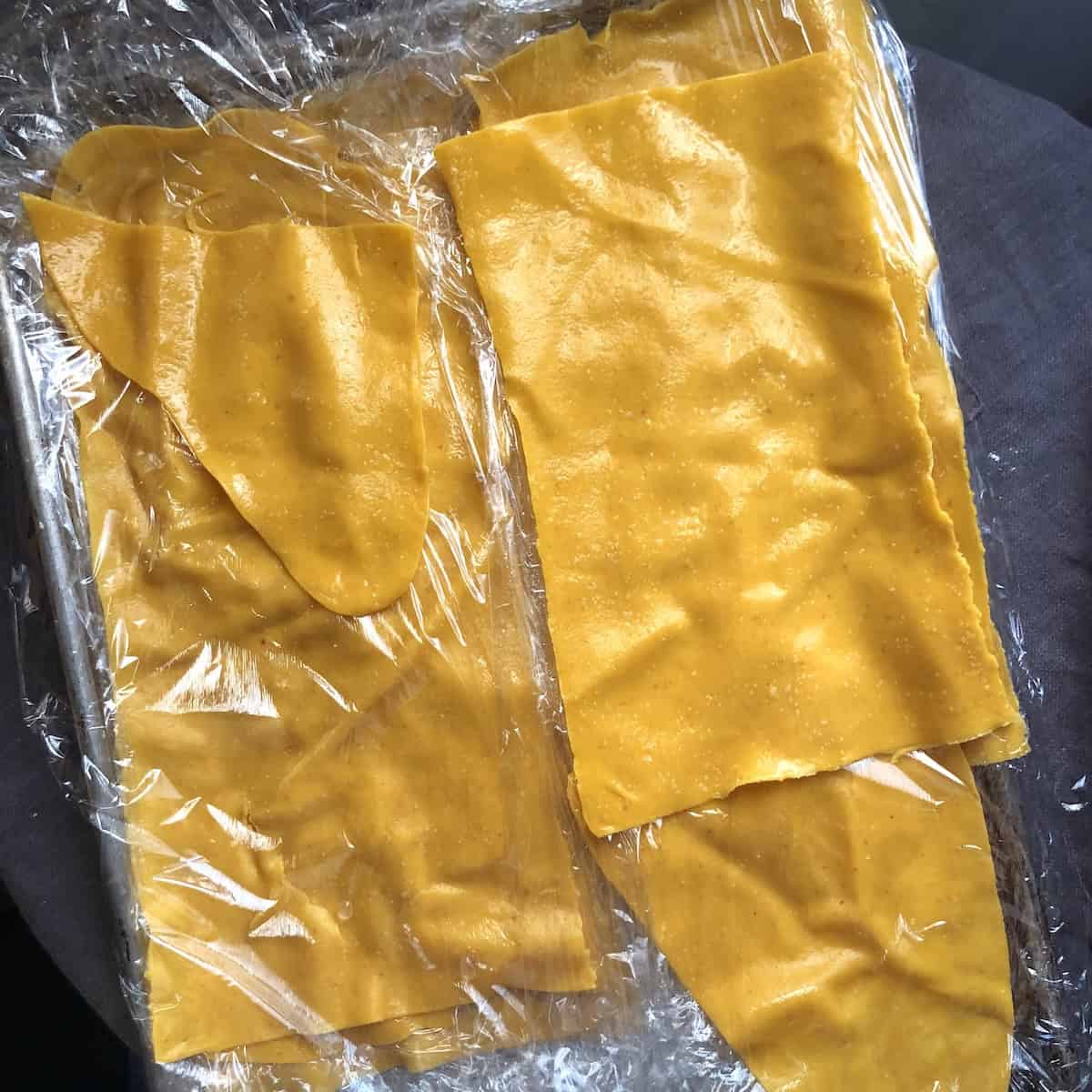
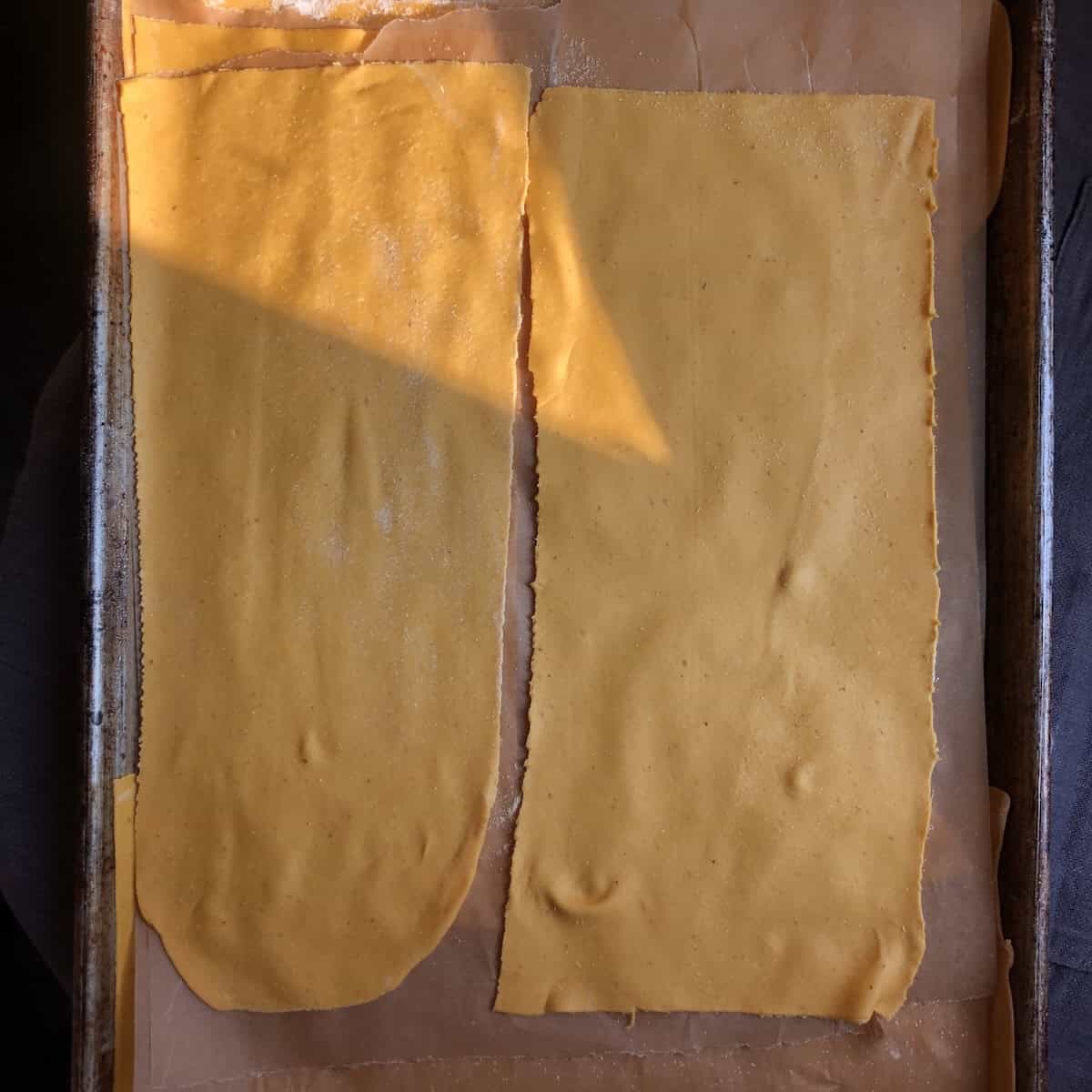
For lasagna noodles: Layer sheets on semolina-dusted parchment paper, stacking multiple layers. Wrap the sheet pan with sustainable cling film and freeze. Frozen pumpkin pasta stays fresh for up to 3 months.
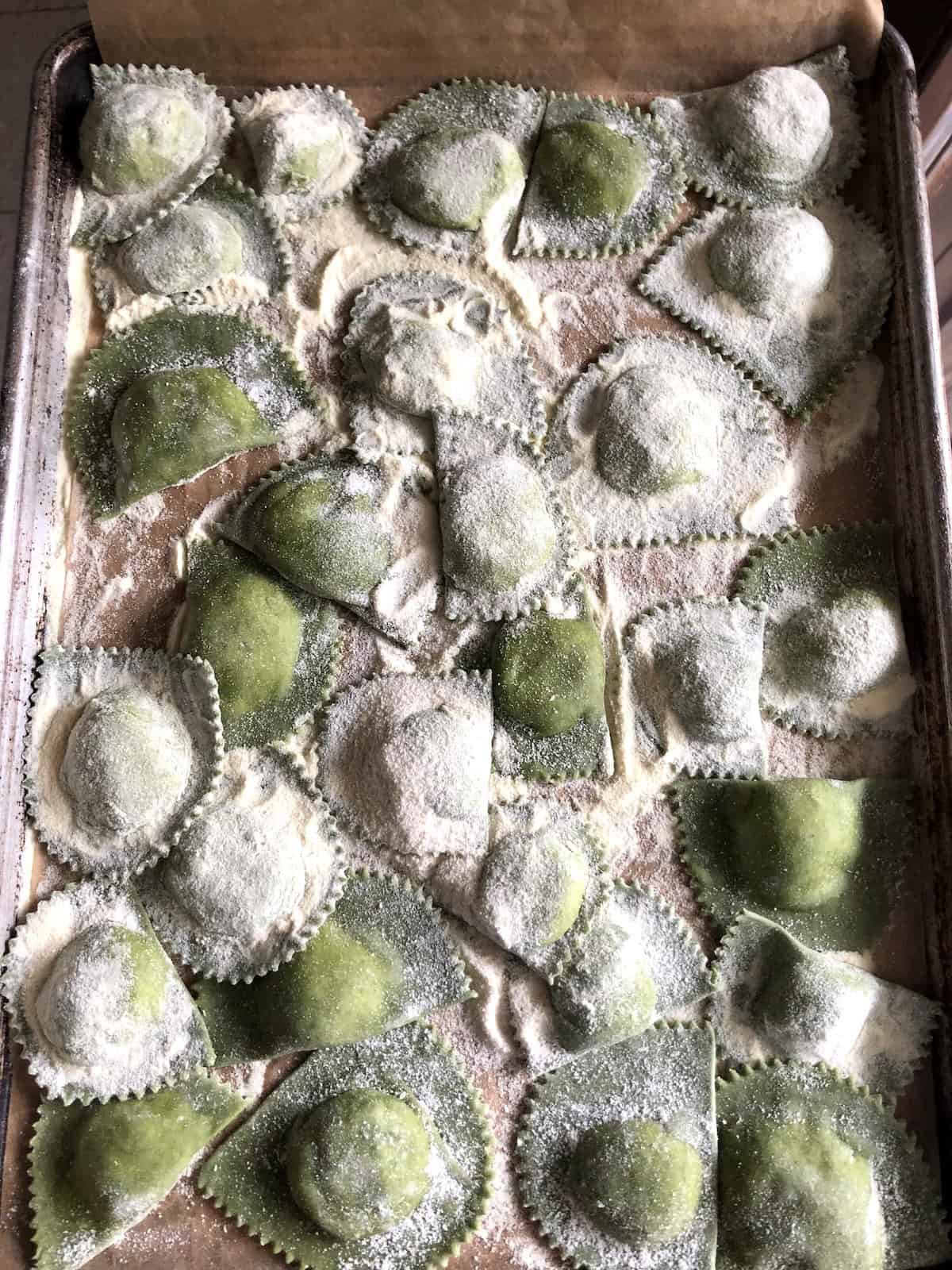
For filled pasta and pasta nests: Arrange in a single layer on a semolina-dusted baking sheet, ensuring pieces don't touch. Freeze uncovered for 1-2 hours until solid, then transfer to an airtight container or freezer bag for up to 3 months.
Once frozen solid, filled pasta and nests can be stacked with parchment paper between layers.
Cook directly from frozen-don't thaw! Just add it to boiling water, and cook it about 1 minute longer than fresh pasta.
Air-drying pasta for pantry storage:
You can dry, cut pasta if you want, shelf-stable noodles. Hang long pasta strands from a drying rack, pasta hanger, the back of a clean chair (like my Dad does), or lay them flat on clean kitchen towels or a baker's cooling rack with good air circulation.
Let the pasta dry completely until it's brittle and completely dry to the touch. It should snap and break, not bend, when it's fully dried.
This process can take 2-4 hours in a dry environment and up to 48 hours or longer in a humid environment. Also, thicker pasta and thicker shapes will need longer drying time.
Store dried pasta in an airtight container (I like using glass jars) at room temperature for up to 6 months in a cool, dry place away from light and moisture. Dried pasta takes a few minutes longer to cook than fresh!
Refrigerating pasta for short-term storage
Try not to refrigerate raw, rolled-and-cut pasta shapes beyond same-day use: While pasta dough balls can easily be refrigerated, rolled-and-cut pasta shapes are best frozen if you're not cooking them the same day.
Technically, cut pasta shapes can be refrigerated for up to 24 hours, but the texture is best when it's used the same day after resting.
When my Italian family (both here in the Veneto and further south in Abruzzo) makes pasta, they portion it into nests and freeze it.
If refrigerating, either leave unwrapped OR loosely cover with parchment paper in an airtight container to prevent condensation. And keep it away from strong odors. For longer storage, freeze it instead-it really does yield the best results!
Serving
The subtle, delicate flavor of pumpkin pasta pairs beautifully with autumn-inspired sauces (or literally any pasta sauce)! Here are my favorite tested combinations:

Authentic Bolognese Ragû/Bolognese Sauce:
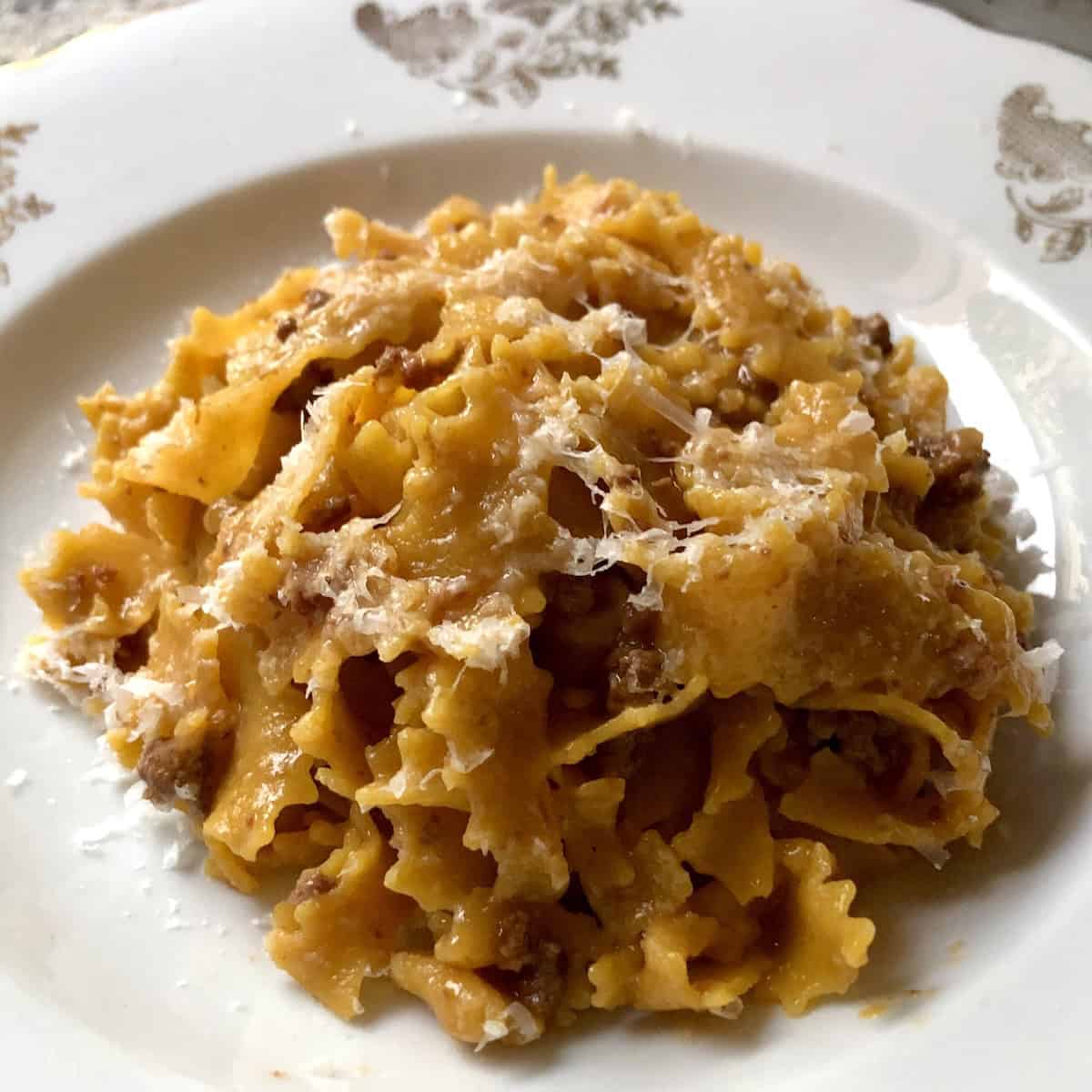
Toss Bolognese sauce with fresh pumpkin pasta, using about ½ cup of sauce per portion. The rich meat sauce pairs beautifully with the subtle sweetness of pumpkin pasta for a delicious, unique take on traditional tagliatelle al ragû.
Creamy Pumpkin Alfredo Sauce:
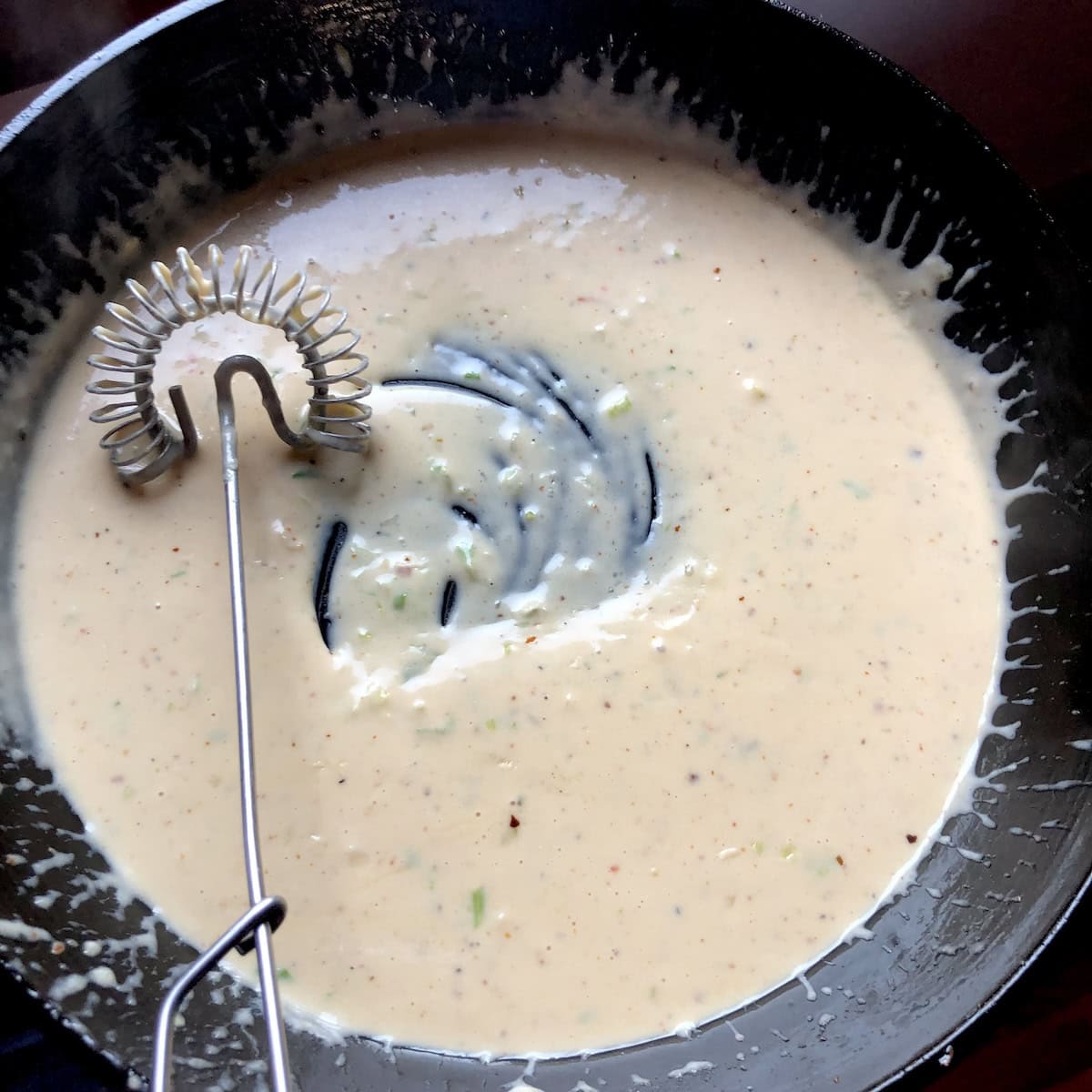
Make your favorite Alfredo sauce and whisk in 2-3 tablespoons of pumpkin puree, a pinch of freshly grated nutmeg (not the bottled stuff if you can help it!), and some chopped fresh chives or parsley to taste. The creamy pumpkin flavor is incredibly comforting!
Brown Butter Sage Sauce (a classic!):
This is a popular pairing for pumpkin pasta. Melt 60g (4 tablespoons) butter in a large skillet over medium heat.
Add 8-10 fresh sage leaves and cook, swirling the pan, until the butter turns golden brown and smells nutty and the sage becomes crispy-about 3-4 minutes.
Watch carefully so it doesn't burn. Toss with hot pasta, a splash of pasta cooking water, and finish with freshly grated Parmesan cheese.
Classic Tomato Sauce:
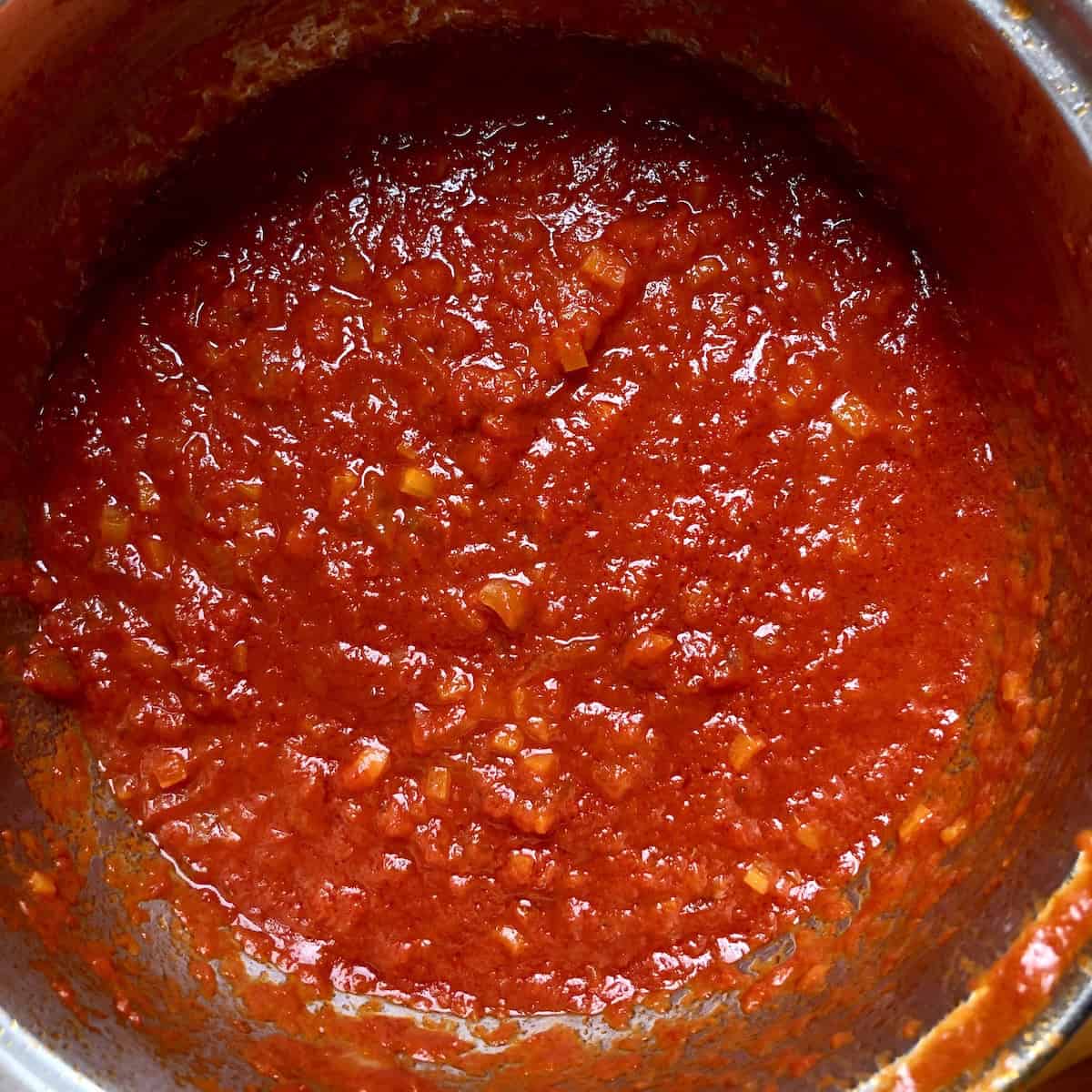
Keep it light with a simple marinara, al pomodoro sauce, or fresh tomato sauce all work beautifully, letting the pasta's delicate pumpkin flavor come through without overwhelming it. Just be sure to sprinkle it generously with Parmesan or Parmigiano-Reggiano!
Simple Butter and Parmesan:
Sometimes the simplest preparations are the best. Toss hot pasta with good quality butter (about 15-30g or 1 to 2 tablespoons per serving) and a few spoonfuls of starchy pasta cooking water to create a light sauce.
Remove it from the heat, and add plenty of freshly grated Parmigiano-Reggiano (and more pasta cooking water as needed) to make a luxuriously extra silky sauce. Season with salt to taste and enjoy! The pasta flavor really shines through this way.
Top Tips
- Use a kitchen scale! Gram measurements give you consistent, professional results every time. Volume measurements can vary significantly depending on your measuring cups, flour, and humidity.
- Roll the dough much thinner than you think you need to-fresh pasta gets considerably thicker when cooked. Aim for nearly see-through.
- If using fresh pumpkin puree instead of canned, strain any excessive moisture in a strainer lined with cheesecloth before using.
- The 30-minute rest is essential-don't skip it! The dough can be difficult to roll thin enough without this rest time.
- Freeze immediately if not using the same day-this preserves texture, and it's better than refrigerating.
- Use minimal flour on your work surface for more tender pasta. Too much bench flour can make the noodles tough and dry.
- Salt your pasta water generously, but NOT until it tastes like the ocean! I can't say this enough, it's the worst pasta cooking advice I see tossed around the internet. And it is not how Italians (here in Italy) cook their pasta. See the next point below for the rationale.
- Always save a little pasta cooking water before draining. The starchy water is liquid gold for helping sauce cling to your noodles. When you add a little (as needed), it also adds a natural creaminess to pasta sauce. So, if you salt your cooking water like the sea, it's going to make your sauce too salty when you add a little to it.
- Kids love making this! The orange dough is like edible Play-Doh. Let them help knead, roll, or cut shapes-it's a fun family activity.
FAQ
No, you absolutely don't need a pasta maker to roll out homemade pasta! A rolling pin works perfectly for making fresh pumpkin pasta. It requires a large work surface and is a bit more arm work than a pasta machine, but the results are just as delicious and authentic.
Roll the dough from the center outward, rotating it frequently to maintain even thickness. The key is rolling it thin enough-about 1/16 inch or nearly see-through. Many Italian nonnas and mammas still make pasta entirely by hand with just a rolling pin and have been doing so for generations.
Yes, you can use homemade pumpkin puree! I recommend Hokkaido, Sugar, or Delica pumpkin varieties for the best flavor and texture. The important thing to know is that fresh pumpkin contains 20-30% more moisture than canned pumpkin.
After roasting and pureeing your pumpkin, if it looks too wet compared to what my photos show, place it in cheesecloth or a paper towel-lined strainer to drain for 30 minutes or 1 hour to remove excess liquid before weighing out your 150g.
I have never had to do this when I use my homemade pumpkin purée recipe though:)
The best storage method for fresh homemade pumpkin pasta (or any pasta) is freezing! The method depends on the pasta shape, and here's that breakdown:
For long pasta (fettuccine, tagliatelle, pappardelle): Shape into loose nests, dust with semolina or 00 flour, and place on a well-floured baking sheet without touching. Freeze uncovered for 1-2 hours until solid, then transfer nests to freezer bags or containers.
For pasta shapes (farfalle, orecchiette, cavatelli, etc.): Spread the shapes out in a single layer on a parchment-lined baking sheet, making sure pieces don't touch. Freeze uncovered for 1-2 hours until solid, then transfer to freezer bags or containers.
For filled pasta (ravioli, tortellini, agnolotti): Use the same method as shapes-lay in a single layer without touching, freeze until solid (1-2 hours), then transfer to storage containers. Also, don't over-fill the pasta because when you freeze it, the filling slightly expands and can break through the delicate pasta dough.
For lasagna sheets: Dust both sides generously with semolina or 00 flour, layer on a baking sheet with parchment paper between each sheet (making sure edges don't touch), freeze for 1-2 hours, then store stacked with parchment between layers.
Properly frozen pasta keeps for up to 3 months (1 month for filled pasta). Cook directly from frozen-don't thaw-by adding straight to boiling water with just 1-2 extra minutes of cooking time. For same-day use, keep cut pasta covered with a kitchen towel and cook within 2 hours. Freezing gives better results than refrigerating for longer storage.
Pumpkin pasta is incredibly versatile and pairs beautifully with both light and hearty sauces! The pumpkin flavor is subtle and delicate, not heavy or overpowering, which means you have lots of delicious options.
For a classic approach: Brown butter and sage sauce is a perfect pairing-the nutty brown butter and earthy sage complement the subtle pumpkin flavor perfectly. Add a few sautéed mushrooms to it and it's eve better! Simple butter with Parmesan also works beautifully, letting the pasta's delicate flavor shine through.
For creamy sauces: Light alfredo, pumpkin alfredo sauce, or a light cream sauce with nutmeg are all excellent choices. Tomato-alfredo sauce is another wonderful autumn option that complements tender pumpkin pasta.
For tomato-based sauces: Al pomodoro (classic tomato sauce), amatriciana, and alla gricia all work great with pumpkin pasta. The acidity of the tomatoes complements the sweetness of the pumpkin nicely.
For heartier options: Don't shy away from richer sauces! Authentic Bolognese ragù works beautifully, as does sausage and mushroom sauce. A simple mushroom and garlic sauce is also delicious.
For pesto lovers: Both traditional basil pesto and pistachio pesto pair wonderfully with pumpkin pasta.
The key is this: if you want to really taste the pumpkin flavor in your pasta, go with lighter sauces like brown butter and sage or simple Parmesan cream sauce.
Or, if you just want a cozy bowl of delicious homemade pasta, feel free to pair it with heartier sauces and meat ragûs-the subtle pumpkin flavor works as a beautiful base for so many different preparations!
This particular recipe relies on eggs for structure and can't be made vegan while maintaining the same texture and workability. However, you can make a simpler 2-ingredient vegan pumpkin pasta using just pumpkin puree and flour (no eggs).
Use about 150g pumpkin puree mixed with 250-300g flour, adjusting until you get a workable dough. The texture will be different-less rich, more tender, and less elastic-and it won't have quite the same silky quality, but it's still delicious. You may need to let it rest a little longer and/or roll it slightly thicker to prevent tearing.
Roll it much thinner than you think you need to-about 1/16 inch thick, which is thinner than pie crust and almost translucent. You should be able to almost see your hand through the dough when you hold it up to the light.
This is the single most common mistake people make with fresh pasta! Fresh pasta gets significantly thicker when it cooks-sometimes almost doubling in thickness-so what looks almost too thin when raw will be perfectly tender once boiled.
If you don't roll it thin enough, your pasta will turn out thick and chewy instead of delicate and silky. And if you roll it too thin, it may not hold up for the sauce you're pair with it.
Pro tip: When you make homemade pumpkin pasta, you get to choose the thickness, and everyone's preferences vary! Before you roll and cut all your pasta, do a simple test with a couple of small pieces rolled at different thicknesses.
Boil them for 2 minutes to see how they cook up and which texture you prefer. This takes the guesswork out of getting the perfect thickness for you and your family-there's nothing worse than rolling and cutting all your pasta just to find out it's not what you wanted!
Some people love ultra-thin, delicate pasta, while others prefer a slightly thicker, more substantial bite. Testing first ensures you'll be happy with your final result.
Absolutely! This dough works beautifully for ravioli, tortellini, tortelli, tortelloni, caramella (candy-shaped filled pasta), mezzelune (half-moon shaped filled pasta), and any other filled pasta shapes.
Roll the dough very thin (I roll all the way through setting #7 or #8 on my Atlas Marcato pasta machine), then cut into circles or squares for filling.
No, the pumpkin flavor is quite subtle and delicate-it's more about the vibrant orange color, extra nutrition, and silky texture than a heavily pronounced pumpkin taste.
In fact, Luca isn't a fan of "zucca" anything (pumpkin), but he loves this pasta! That should tell you all you need to know:)
The pasta has a gentle, slightly sweet, and earthy quality that pairs well with cream-based sauces, tomato-based sauces, and heartier ragûs.
Think of it as adding complexity and moisture to the dough rather than dominating the flavor. Your sauce choice will have the most impact on the overall flavor of the dish than the pumpkin pasta itself.
Using both creates the perfect balance of tenderness and structure. The 00 flour is super finely milled soft wheat Italian flour that gives you that silky, delicate texture authentic Italian pasta is known for.
The semolina flour (especially the finer semola rimacinata) adds structure and a slightly firm bite, helping the pasta hold its shape during cooking without becoming mushy.
Semolina flour also adds texture (roughness to the outside of the pasta), which helps sauces cling to the pasta noodles really well! It gives you that authentic texture where the pasta is tender but still has some tooth to it.
If you can't find one or the other, simply use all 00 flour or all semolina rimacinata (finer grain semolina flour)-your pasta will still be delicious, just slightly different in texture and you may need to adjust the amount of flour you use.
Fresh pumpkin pasta cooks very quickly-usually just 2-3 minutes in boiling salted water. You'll know it's done when the pasta floats to the top and tastes tender with a slight bite (al dente). Start testing at 2 minutes.
If you're cooking frozen pasta, add just 1 extra minute for a total of 3-4 minutes. *Don't thaw frozen pasta before cooking it. Always cook it straight from frozen.
Fresh pasta cooks much faster than dried boxed pasta because it's already hydrated. Watch it carefully-it can go from perfect to overcooked quickly!
I haven't tested this recipe with gluten-free flour, but readers have reported success using a 1:1 gluten-free flour blend. You may need to adjust the liquid amounts, and the dough will be more delicate to work with.
Bob's Red Mill 1-to-1 Gluten Free Baking Flour or King Arthur Gluten-Free All Purpose flour are both good options to try.
Start with less pumpkin puree (about 100g instead of 150g) and add more as needed to reach the right consistency.
More Easy Pasta Dough Recipes


More Easy Pumpkin Recipes
- How to Make Pumpkin Puree (30-Minute Method)
- Easy Pumpkin Seed Milk (Dairy-Free Milk Recipe)
- Pumpkin Pancake Recipe (Easy, Extra Fluffy + Video)
- Pumpkin Walnut Bread (Super Moist, No Mixer + Video)
- Pumpkin Bread Recipe (Easy and Super Moist)
- Pumpkin Pie Spice Recipe (Best McCormick Copycat)
- Pumpkin Cheesecake with Chestnut Graham Cracker Crust
- Bakery-Style Pumpkin Muffins (Super Moist, No Mixer)
- Pumpkin Pecan Pancakes Recipe With Blueberries (+ Video)
- 15 Best Pumpkin Recipes for Fall 2026
- Banana Bread with Pumpkin Seeds Recipe (Pumpkin Spice)





Let's Get Started!
Made this Recipe? I'd love for you to rate ⭐️ it and tell me how it went for you!
📖 Recipe
Pumpkin Pasta Recipe (Easy Homemade Pasta Dough)
- Total Time: 53 minutes
- Yield: 1 pound 7 ounces (23 ounces) 650g
- Diet: Vegetarian
Description
This homemade pumpkin pasta dough recipe makes fresh egg pasta with a beautiful orange color and delicate pumpkin flavor. Perfect for fettuccine, lasagna, ravioli, and more! Ready in under 1 hour (and that includes 30 minutes of hands-off resting time!) with simple ingredients: 00 flour, semolina flour, eggs, canned pumpkin (or puree), and olive oil.
Ingredients
- 150g twice-milled semolina flour (semola rimacinata) (sub regular semolina flour)
- 250g 00 flour
- 150g (5.3 oz / about ⅔ cup) Libby's canned pumpkin (sub homemade Hokkaido or Delica pumpkin purée)
- 2 large eggs, room temperature (100g)
- 15g extra virgin olive oil (1 tablespoon)
 Get Recipe Ingredients
Instructions
- Make the dough. On a clean work surface or in a large bowl, combine the 00 flour and semolina flour and whisk well to combine. Make a well in the center. In a small bowl, whisk together the eggs and pumpkin puree, and add this and the olive oil into the well of the flour.
- Bring it together. Using a fork (or your hands), start combining the wet ingredients, gradually pulling in flour from the sides of the well into the center. Keep mixing in a circular motion, incorporating more flour as you go. When the mixture becomes too thick and shaggy to mix using the fork, switch to using your hands.
- Knead the dough. Bring the dough together into a shaggy mass. The dough should feel slightly soft, like Play-Do,h but not sticky. If it sticks to your hands, dust very lightly with flour (½ tablespoon at a time). If the dough feels too dry and won't come together, wet your hands slightly and continue kneading to add moisture gradually. Knead the dough on your work surface (or in the bowl of a stand mixer fitted with the dough hook attachment on low-medium) for 10-12 minutes until visibly smoother.
- Rest the dough (essential!). Form the dough into a ball, cover with a glass bowl, and let it rest at room temperature for 30 minutes. This resting time allows the gluten to relax, making the dough much easier to roll out thin without springing back. You can rest it for up to 1 hour at room temperature.
- Divide and roll. After resting, divide the dough into 4 equal pieces (about 160g each). Keep the pieces you're not working with covered under a bowl to prevent drying. Working with one piece at a time, flatten it slightly with your hands on a lightly floured surface.
- Roll out the pasta with a machine OR a rolling pin. Using a pasta machine: Flatten one dough piece slightly with your hands and dust it lightly with flour. Set your pasta machine to the widest setting (#1 on a Marcato Atlas). Feed the dough through once. Fold the dough into thirds like a letter, dust lightly with flour again, then feed it through the widest setting again-this creates a uniform rectangular shape. Roll it progressively thinner by feeding it through each narrower setting one time, working your way from setting #2 through #6 or your preferred thickness. Dust with flour as needed between settings to prevent sticking. *See recipe notes if using a rolling pin
- Cut your pasta. Once rolled thin, cut the dough into your desired shape. For fettuccine, cut strips about ¼ inch (6mm) wide. For pappardelle, cut wider strips at ¾ to 1 inch (2-2.5cm) wide; for chitarra pasta, use a chitarra tool. You can also use this dough for ravioli, tortellini, or lasagna sheets. Transfer cut pasta to a floured baking sheet, tossing gently with a bit more semolina or 00 flour to prevent sticking, and let it rest for up to 30 minutes if cooking it the same day. If not using it right away, check out the Storage Section in the main post below for how to freeze it.
- Cook the pasta. Bring a large pot of salted water to a rolling boil, add the pasta, stir gently to prevent sticking, and cook for about 2 minutes until al dente. Fresh pumpkin pasta cooks quickly, usually 2-3 minutes. It's done when the pasta floats to the top and tastes tender with a slight bite (al dente). If cooking from frozen, add just 1 extra minute. Drain immediately, reserving a little pasta cooking water to help your sauce cling to the noodles.
Notes
If using a rolling pin: On a lightly floured surface, roll the dough from the center outward, rotating frequently to maintain even thickness. Dust the dough and surface with flour as needed to prevent sticking. Your goal is to roll it very thin-about 1/16 inch thick, or thin enough that you can almost see your hand through it when you hold it up to the light. This is thinner than pie crust! Don't worry if it feels too thin-fresh pasta thickens considerably when it cooks. Use only as much flour as needed to prevent sticking; too much flour can make the pasta tough.
I typically use setting #6 for fettuccine, pappardelle, tagliatelle, tortellini, and lasagna sheets, #5 or #6 for chitarra pasta, and sometimes #7 for ultra-thin tagliatelle and #7 or #8, or ravioli. The dough should be thin enough to almost see your hand through it, preventing overly thick cooked pasta.
If you're unfamiliar with how thick or thin you want your pasta, test it by rolling and boiling a couple of pieces first before rolling out the entire batch.
- Prep Time: 20 minutes
- Rest Time: 30 minutes
- Cook Time: 3 minutes
- Category: Pasta
- Method: Knead & Roll
- Cuisine: Italian
Nutrition
- Serving Size: 3 ounces/80g
- Calories: 210g
- Sugar: 1g
- Sodium: 18g
- Fat: 4g
- Saturated Fat: 1g
- Unsaturated Fat: 3g
- Trans Fat: 0g
- Carbohydrates: 35g
- Fiber: 2g
- Protein: 8g
- Cholesterol: 45mg

Food Safety
- Always use fresh eggs and check expiration dates before using
- Wash hands thoroughly with soap and water before and after handling raw egg pasta dough
- Don't leave fresh uncooked egg pasta at room temperature for more than 2 hours before cooking or freezing to prevent bacterial growth
- When freezing pasta, ensure it's completely frozen solid before transferring to storage bags to prevent pieces from sticking together
- If air-drying pasta, ensure it's completely dry and brittle before storing to prevent mold growth in storage. If you notice any strange colors or odors, discard it!
- Store dried pasta in an airtight container in a cool, dry place away from moisture
- Always use clean utensils and work surfaces when making fresh pasta
See more guidelines at USDA.gov.



Dannygourmanny says
Excellent recipe. I used fresh roasted kabocha squash instead of canned pumpkin and reduced the moisture by cooking it down a bit in a pan. Paired it with brown butter sage sauce and it was beyond expectations. The only thing I'd suggest is maybe a pinch of nutmeg in the dough itself for extra warmth.
Kelly says
Hey Dannygourmanny! So glad you tried and loved the recipe! And I'm gonna use your nutmeg tip next time I make it...I'm not a fan of pre-ground nutmeg, but I LOVE a hint of freshly grated. This sounds subtle and delicious😋. Thanks
Caitlin_Keepup says
This turned out SO GOOD! I wanted to make a last minute Halloween dish that wasn't the normal chili or soup and this was amazing. I prepped the dough the night before and rolled it out the next day which made everything seem dare I say, easy! I made fettuccine size noodles and paired it with a spicy Italian sausage meat sauce. I'll definitely use these for some Thanksgiving ravioli next❤️. Great recipe😋!