

Pasta all'amatriciana is one of my all-time favorite pasta recipes, and it's ready in under 30 minutes! This authentic amatriciana recipe features crispy yet tender guanciale (or pancetta), sweet tomatoes, spicy red pepper, and a generous sprinkle of pecorino romano. It pairs beautifully with homemade bucatini, spaghetti, rigatoni, penne, and other pasta shapes, all of which I show you in this post.
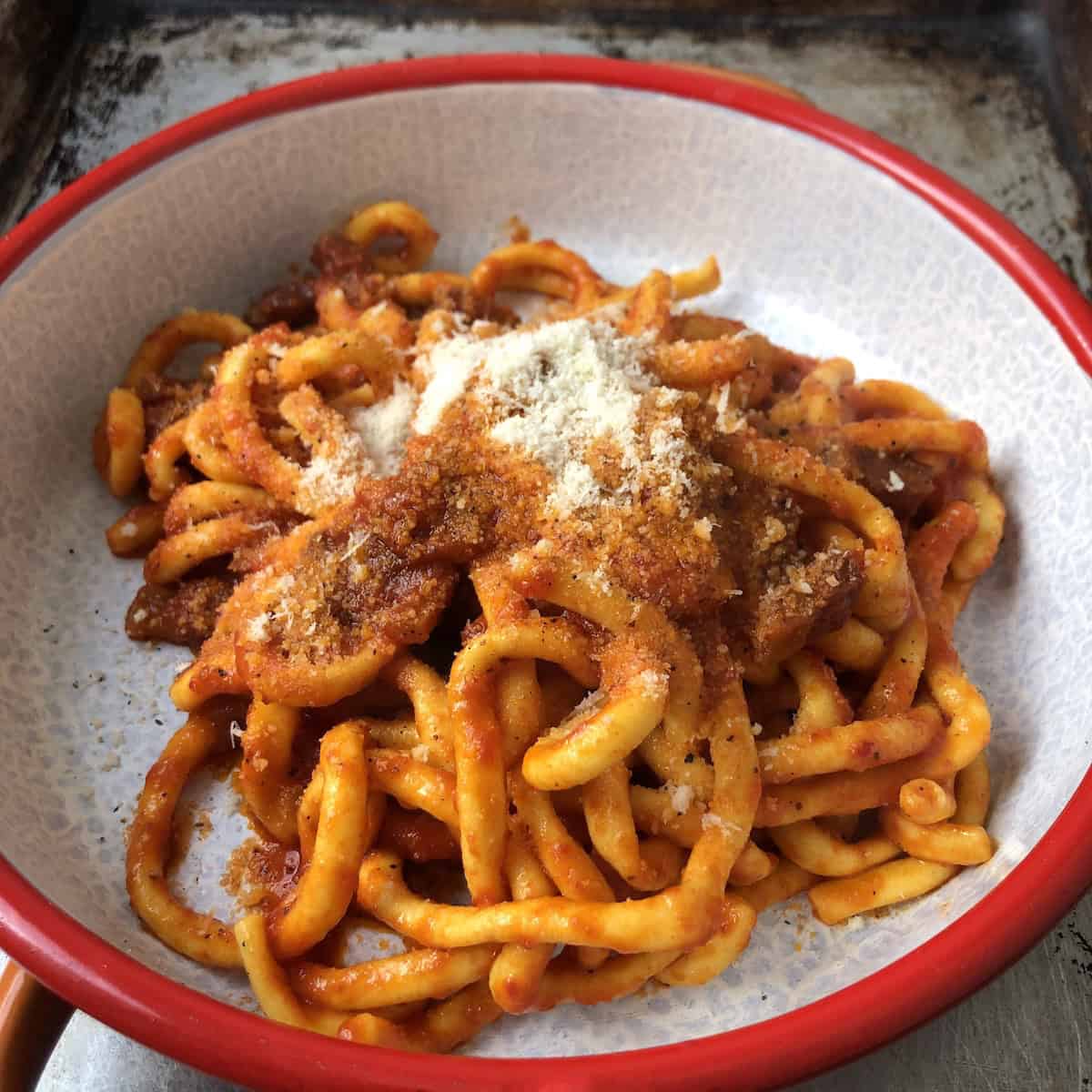
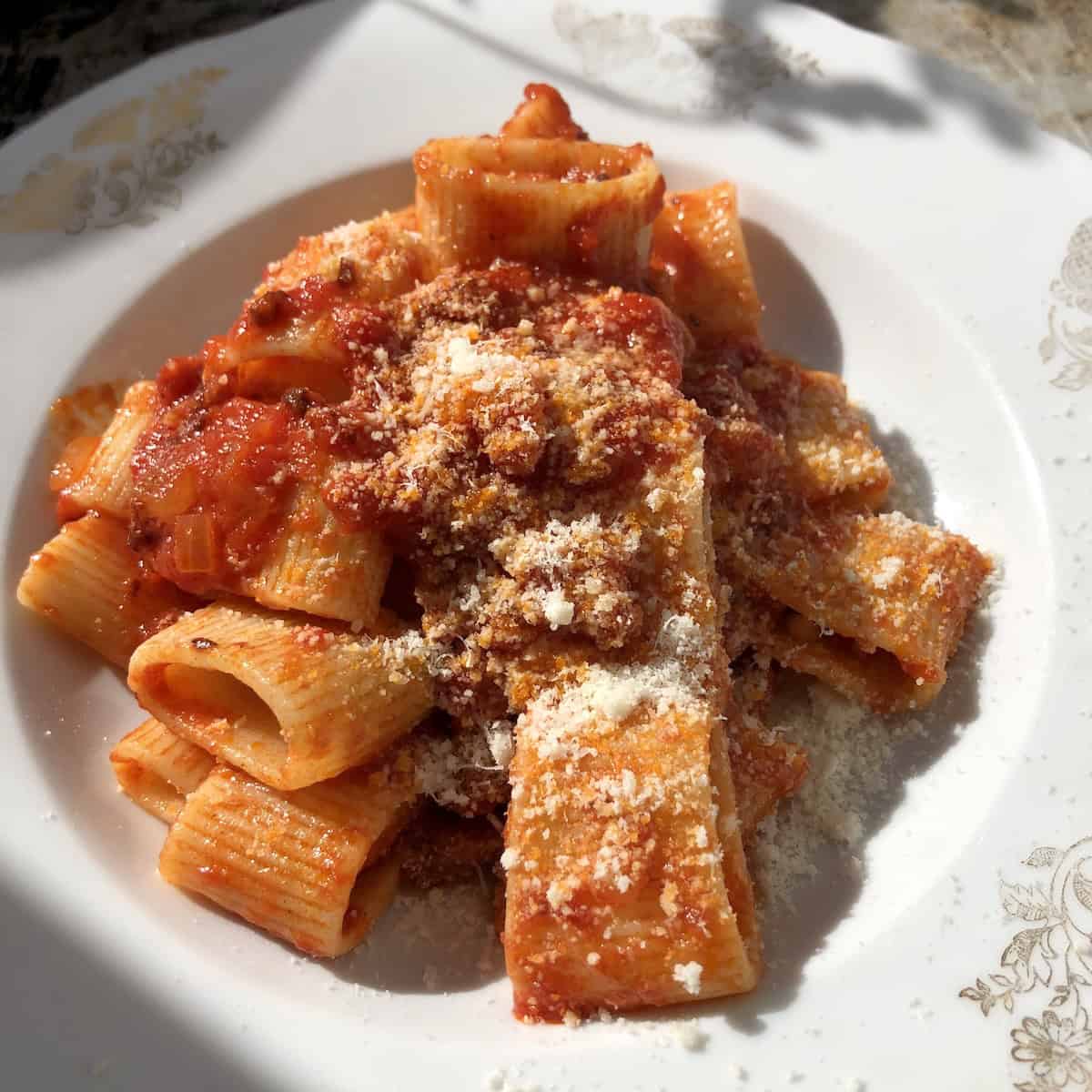
We've enjoyed this pasta in trattorias and restaurants throughout Italy, and one thing is certain, high-quality ingredients and proper technique make all the difference. You'll find everything you need here to make restaurant-quality amatriciana at home, just like they make it here in Italy.
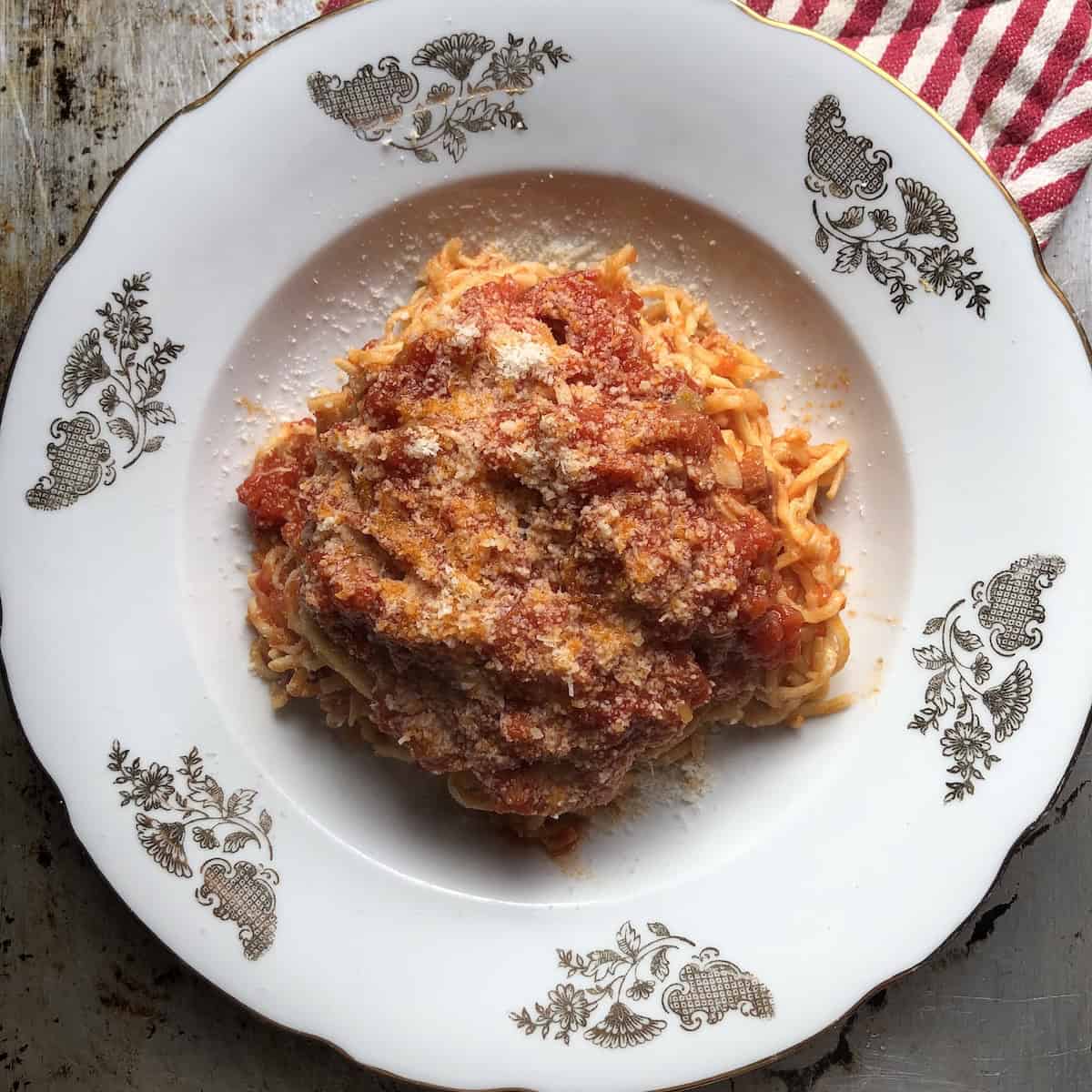
Pasta amatriciana is one of my top 3 favorite meat sauces of all time. If it's on a menu, I'm almost certainly ordering it. But I also make this classic Roman pasta at home whenever I'm craving easy comfort.
With so few ingredients, multiple ways to prepare it authentically, and just minutes from stove to table, amatriciana couldn't be more delicious or easier to make!
Porky, fatty guanciale adds incredible flavor and a silky mouthfeel to this pasta, while the sweetness and acidity from tomatoes and white wine cut through its richness. And with a little heat from spicy peppers, you've got yourself a perfect bowl of cozy pasta!
If you enjoy this recipe, you might also want to try Spaghetti alla Carbonara or Handmade Italian Tortellini.
Jump to:
- What is Pasta all'Amatriciana?
- Why You'll Love This Pasta Amatriciana Recipe
- The Fantastic Four Roman Pastas (Fantastici Quattro)
- Guanciale vs Pancetta
- Best Pasta Shapes for Amatriciana
- Amatriciana and Rome
- Authentic Amatriciana Ingredients
- Amatriciana Sauce Ingredients
- How to Make Pasta all'Amatriciana With Guanciale
- How Do You Make Amatriciana With Pancetta?
- Pasta Amatriciana With Pancetta Step-by-Step Recipe Photos
- Substitutions
- Equipment
- Storage
- Serving Suggestions
- Top Tips for Perfect Amatriciana
- Frequently Asked Questions
- More Authentic Italian Pasta Recipes
- Let's get started!
- 📖 Recipe
- Food Safety
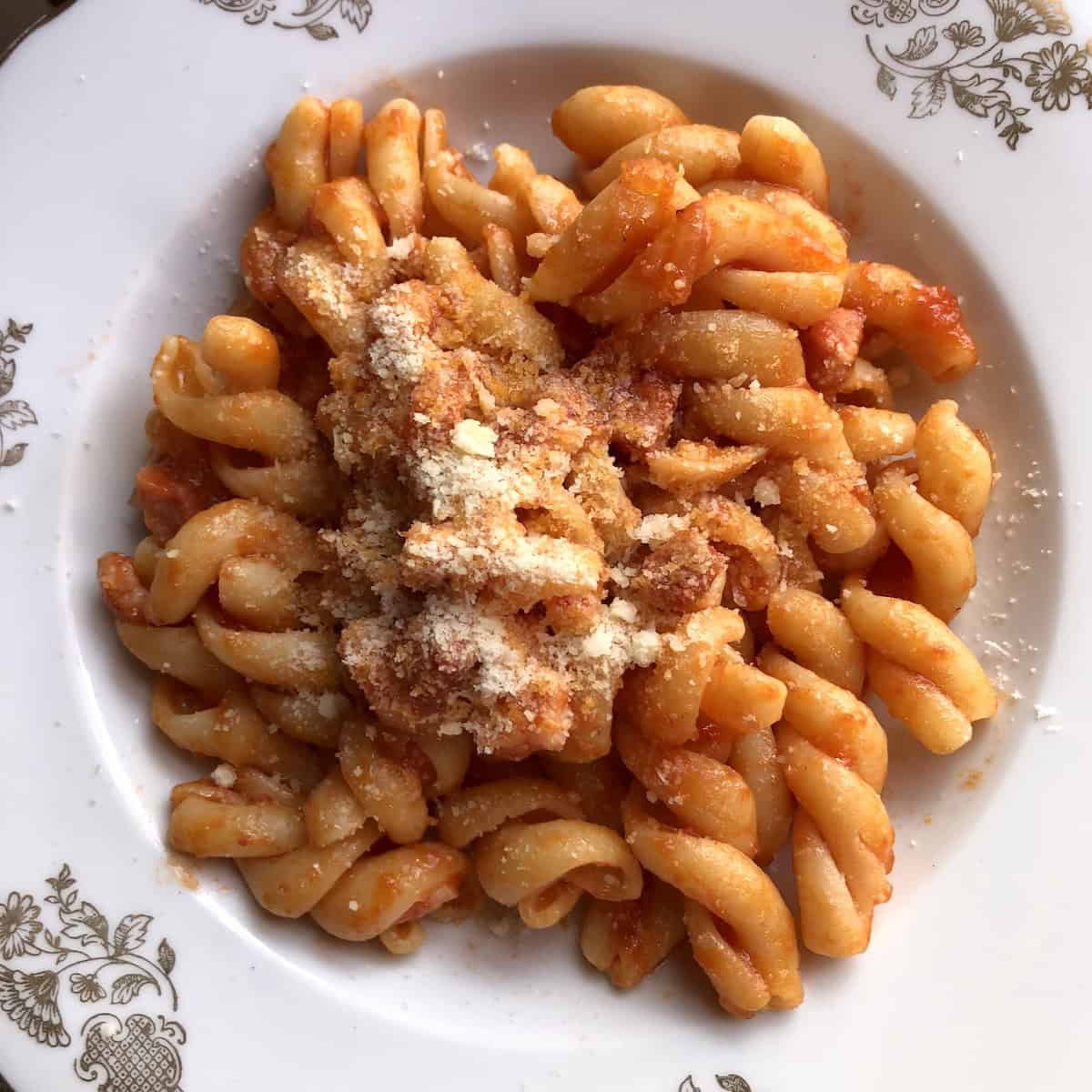

What is Pasta all'Amatriciana?
Pasta Amatriciana (pronounced ah-mah-tree-CHAH-nah) is a spicy tomato sauce made with guanciale (Italian cured pork jowl), a little white wine, Pecorino Romano cheese, dried red chili peppers, and often also onions or shallots. The dish takes its name from Amatrice, a town in central Italy, where it originated.
And it's one of the four iconic Roman pastas that completes the "fantastici quattro" (fantastic four), alongside carbonara, cacio e pepe, and pasta alla gricia. In Rome, you'll also sometimes see it spelled "matriciana" without the "A," which is Roman dialect.
Why You'll Love This Pasta Amatriciana Recipe
- Authentic flavor using real guanciale (or high-quality pancetta), the way it's made in Italy (although pancetta is not truly authentic, it's still widely used here, especially by Italian home cooks, and we love it!)
- Ready in less than 30 minutes for an easy weeknight dinner
- Customizable, as I'll show you how to use fresh tomatoes, canned DOP tomatoes, or even high-quality tomato passata with or without onion.
- Simple high quality ingredients make a genuine restaurant-quality pasta
- Perfectly spicy with whole dried chili peppers that add warmth without overwhelming heat (totally customizable to your spice level preferences)
- Freezer-friendly sauce that scales easily for meal prep for even quicker 15-minute weeknight dinners
- Versatile - works beautifully with more than just bucatini, spaghetti, rigatoni, and penne (I've made it using countless pasta shapes, as you can see in this post!)
- I show you how to adjust for using pancetta instead of guanciale (which is slightly different and requires the addition of EVOO)
The Fantastic Four Roman Pastas (Fantastici Quattro)
What are the four classic Roman pasta dishes?
Amatriciana belongs to an elite group called "i quattro primi romani." Each pasta transforms simple (but extremely high-quality) ingredients through technique, and it's truly difficult to explain just how delicious they each are:
- Cacio e Pepe - The OG of cheesy noodles! Pecorino Romano, black pepper, and starchy pasta cooking water are all you need to enjoy this one. Try it in Italy or your favorite (authentic, not Italian-American) restaurant, since the best versions require a huge hollowed-out cheese wheel to get right!
- Pasta alla Gricia - The "white" ancestor of amatriciana with guanciale and Pecorino Romano, salt, black pepper, and a little starchy pasta water, but no tomatoes. Super easy to make at home and just as delicious as amatriciana (recipe coming soon)!
- Carbonara - Guanciale, egg yolks, Pecorino, black pepper, and a little starchy pasta water. This pasta can be a bit tricky to make for inexperienced cooks, but SO worth it to learn how! It's like bacon mac and cheese on steroids, but better in every way!
- Amatriciana (aka Red Gricia or Gricia Rossa) - Essentially, pasta gricia with tomatoes added, and just as easy to make! Tomatoes arrived in Italy from the Americas in the 1700s. The people of Amatrice added them to their delicious gricia sauce, creating pasta all'Amatriciana.
IMPORTANT NOTE: Contrary to what you'll read about pecorino Romano being the only cheese used for these classic pastas, Italian chefs often use half pecorino and half Grana Padano or Parmigiano-Reggiano cheese to balance out the "wild" sharp flavor of pecorino. If you're unable to find the highest quality (not too wild-tasting or sharp) pecorino-Romano, I recommend substituting aged Grana Padano or Parmigiano-Reggiano cheese.

Guanciale vs Pancetta
What is the difference between guanciale and pancetta?
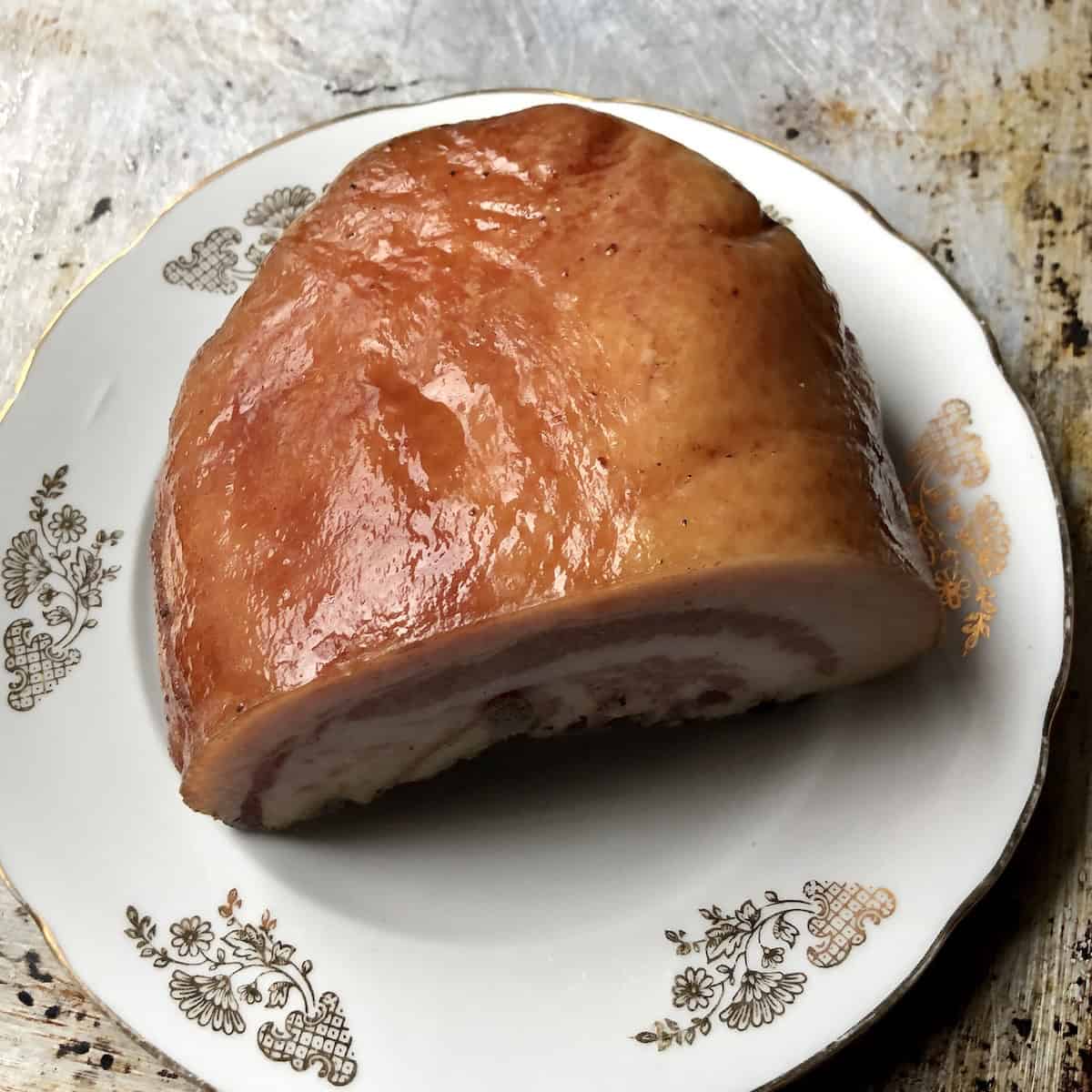
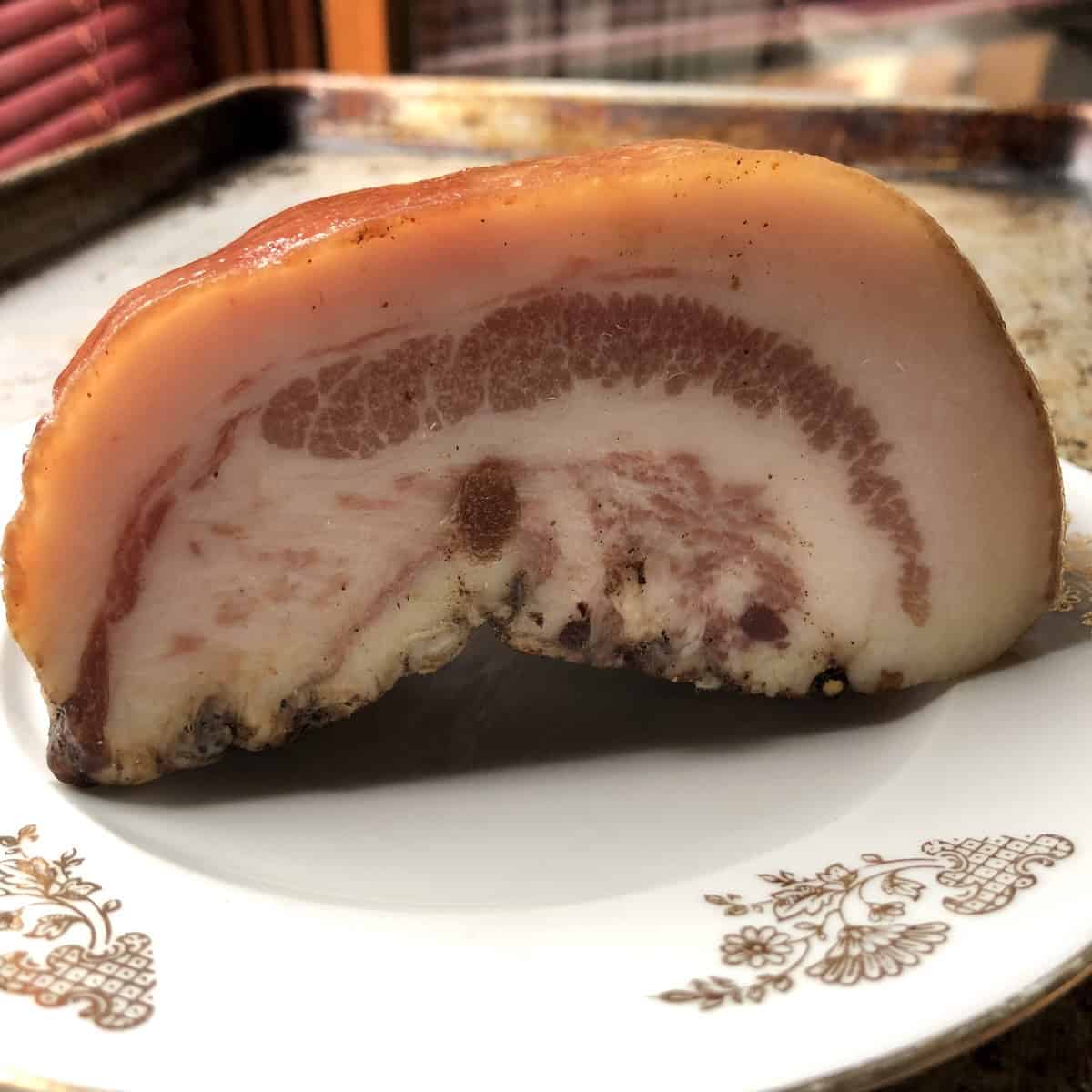
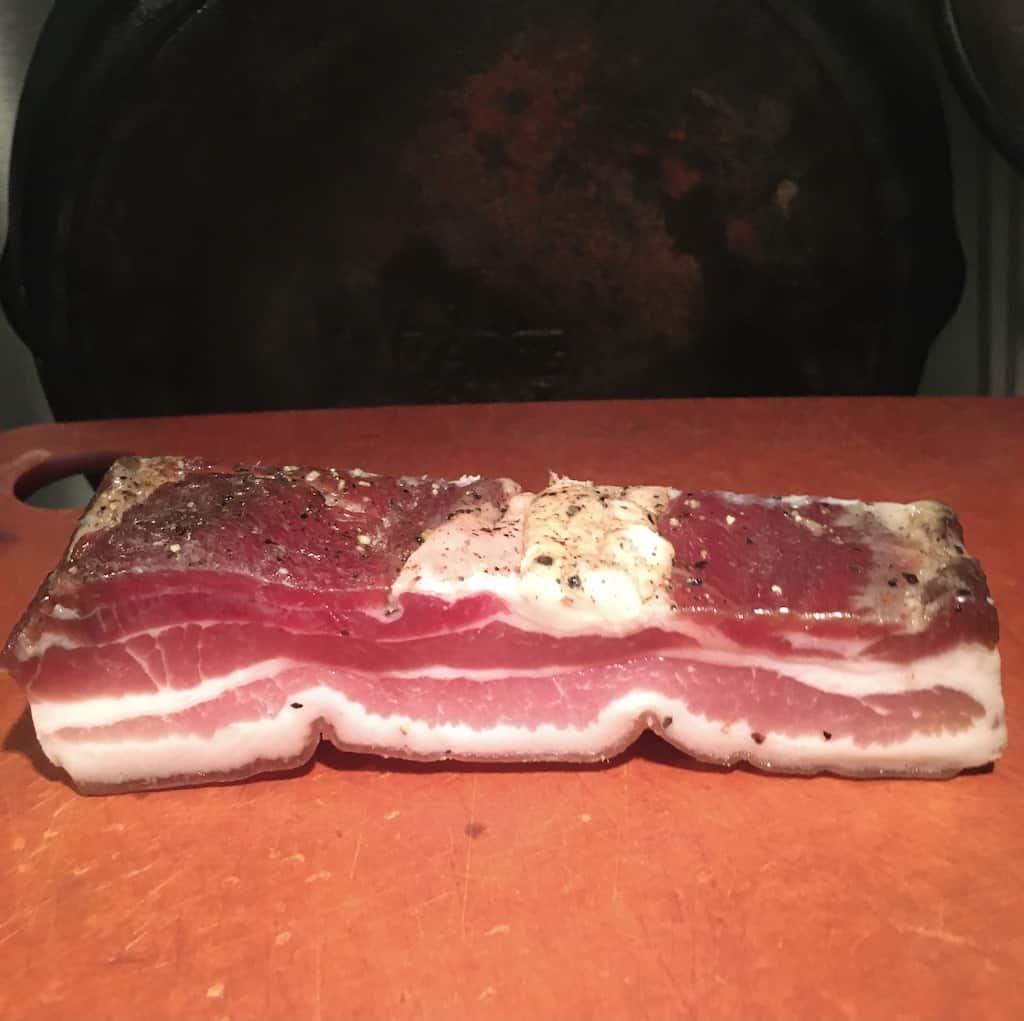
Guanciale (pronounced gwan-CHAH-lay), photographed below, is cured pork jowl or pig cheek. It has roughly 70% fat to 30% meat, which renders beautifully and creates a rich, silky, deeply flavored meat sauce. The flavor can be intense or mild and slightly sweet, depending on the aromatics and seasonings used to cure it.
Guanciale is typically seasoned with sea salt, black pepper, garlic, and aromatics such as rosemary, sage, and bay leaves. Some producers also add juniper berries, although I prefer a less juniper-forward guanciale or none at all, as the juniper can overpower the delicate pork flavor if too much is used. This is the meat that authentic traditional amatriciana calls for.
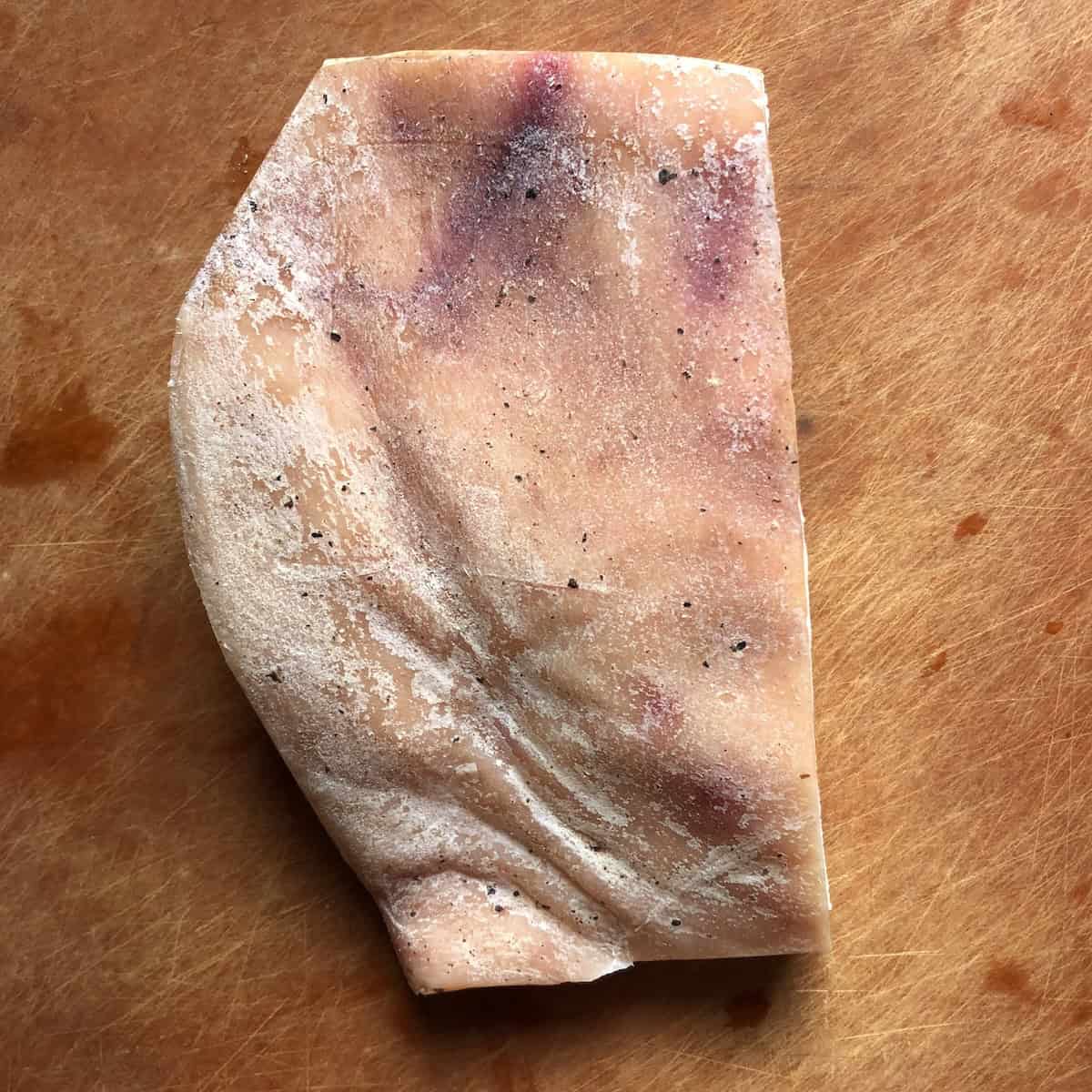
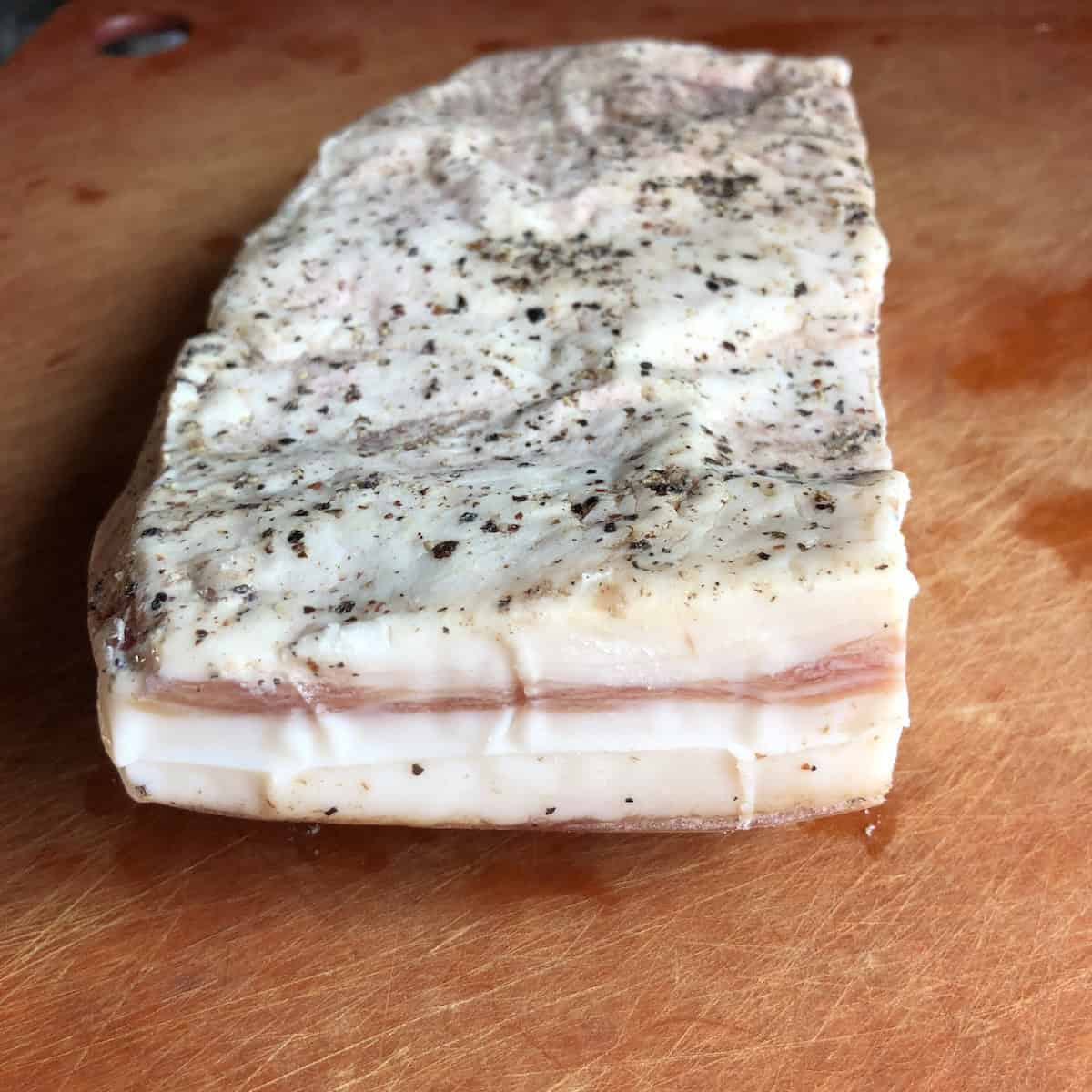
We're lucky enough to be able to purchase our guanciale from premium butchers in Abruzzo and other areas, who craft it the traditional way using only sea salt, spices, aromatics, air, and time. No pink salt, nitrates, or nitrites! This artisanal, all-natural preservation creates a healthier product with pure, unbeatable pork flavor. We bring back whole slabs whenever we visit, then I portion and freeze them to use all year round. Below are a couple for you to see as reference:
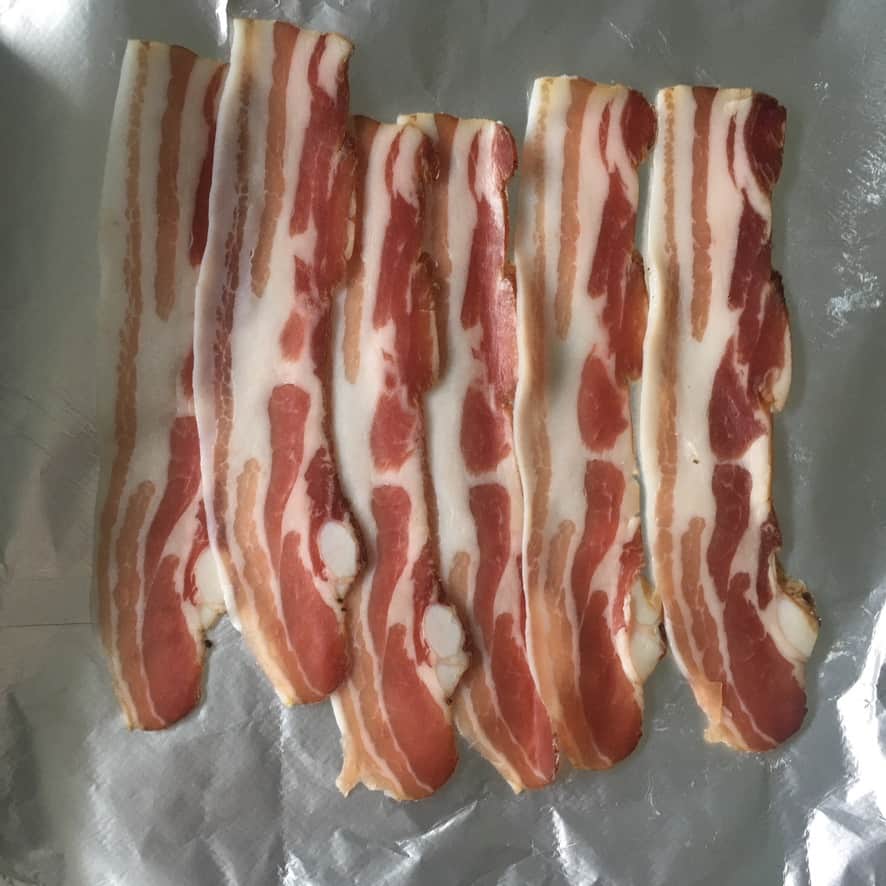
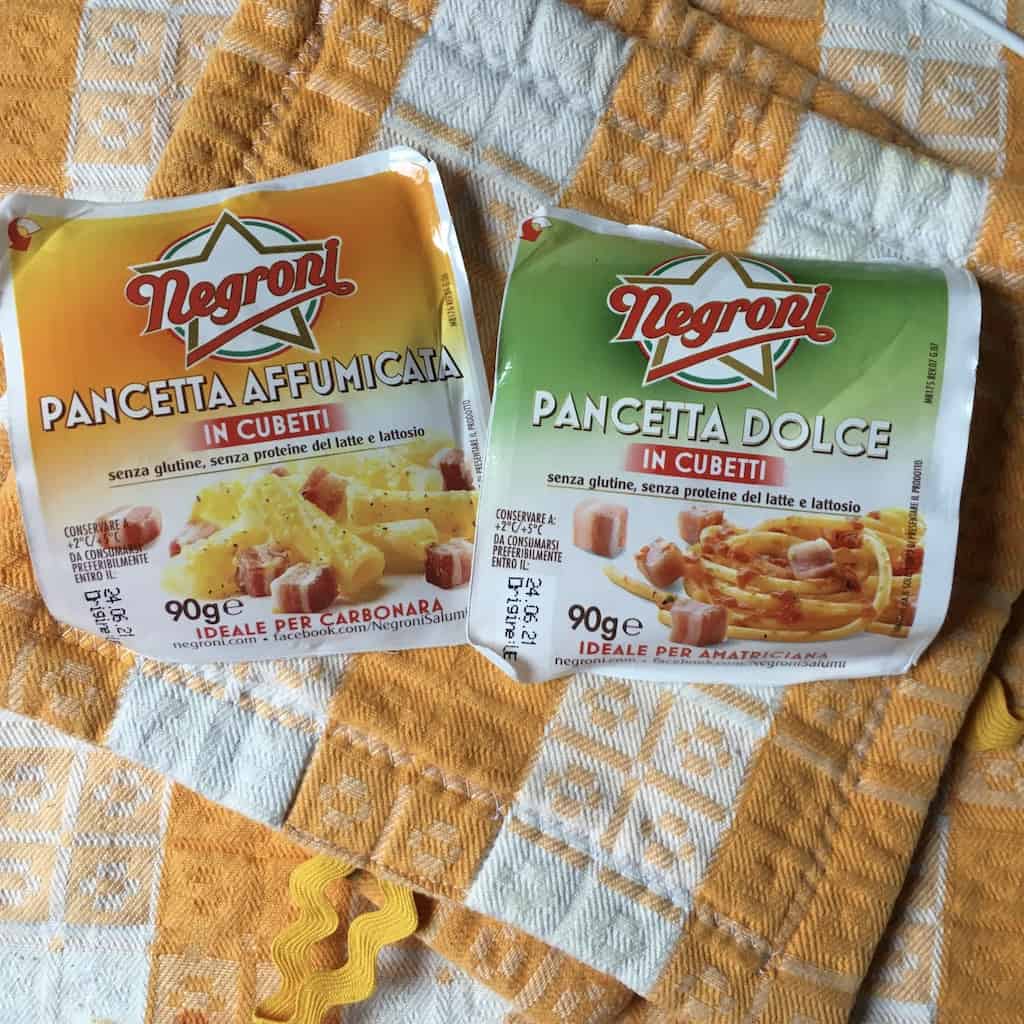
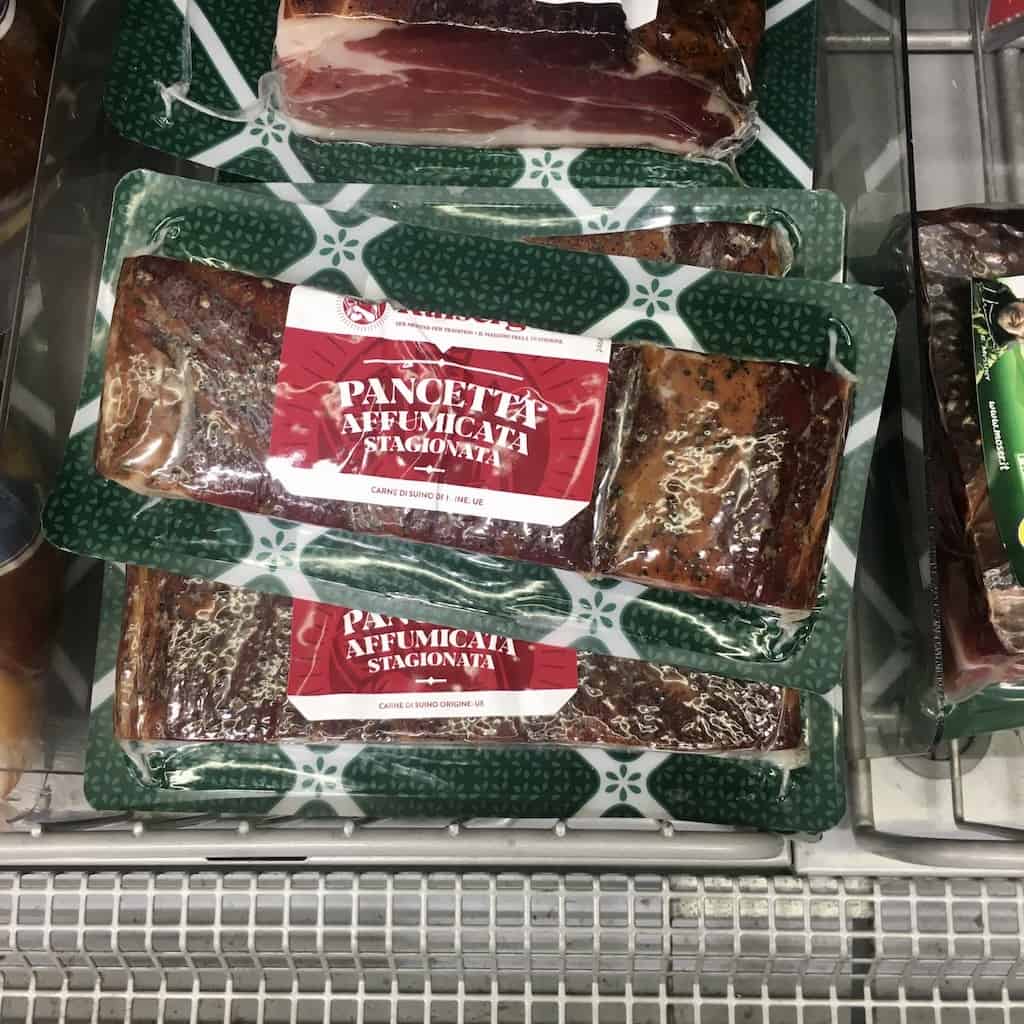
Pancetta (photographed below) is cured pork belly (the same cut as bacon, but it's cured and preserved differently). It has more meat and less fat than guanciale, with a milder but super delicious porky flavor (it's closer to a bacon flavor). It's what many Italians use to make a less fatty amatriciana sauce. Even Rana makes a ready-to-eat, all-natural amatriciana sauce (it's actually pretty tasty) using pancetta instead of guanciale. So, even if it's not official-official, it's still super delicious!
In Italy, you'll find two main types of pancetta:
- Pancetta dolce (sweet, unsmoked) - Cured with salt and aromatics like black pepper, juniper berries, nutmeg, rosemary, sage, garlic, etc.
- Pancetta affumicata (smoked) - Same spice blend and curing process , then cold-smoked for additional flavor

Can you eat pancetta raw?
Yes. Italian pancetta is salt-cured and dried for weeks or months, which removes moisture and inhibits bacterial growth. This makes it safe to eat straight from the package, like prosciutto. The extended curing with salt and spices fully preserves the meat.
Bacon is different. It's only lightly cured (typically using nitrates/nitrites) and then smoked, leaving it essentially a raw pork product. Bacon must be cooked to kill pathogens like Salmonella or Listeria. Even "uncured" bacon requires cooking.
What can I substitute for guanciale?
As mentioned above, if you can't find guanciale and you end up using pancetta instead, you'll need to add up to ¼ cup (60g) of extra virgin olive oil to make up for the loss of fat from the guanciale. Here are the best meats to use for amatriciana:
- Guanciale - First choice, authentic
- Pancetta affumicata + EVOO- Smoked pancetta plus extra virgin olive oil (to add a little extra fat) is an excellent substitute
- Pancetta dolce + EVOO - Unsmoked pancetta plus extra virgin olive oil (to add a little extra fat) is an excellent substitute
- Thick-cut bacon - Last resort, still delicious (see note below)
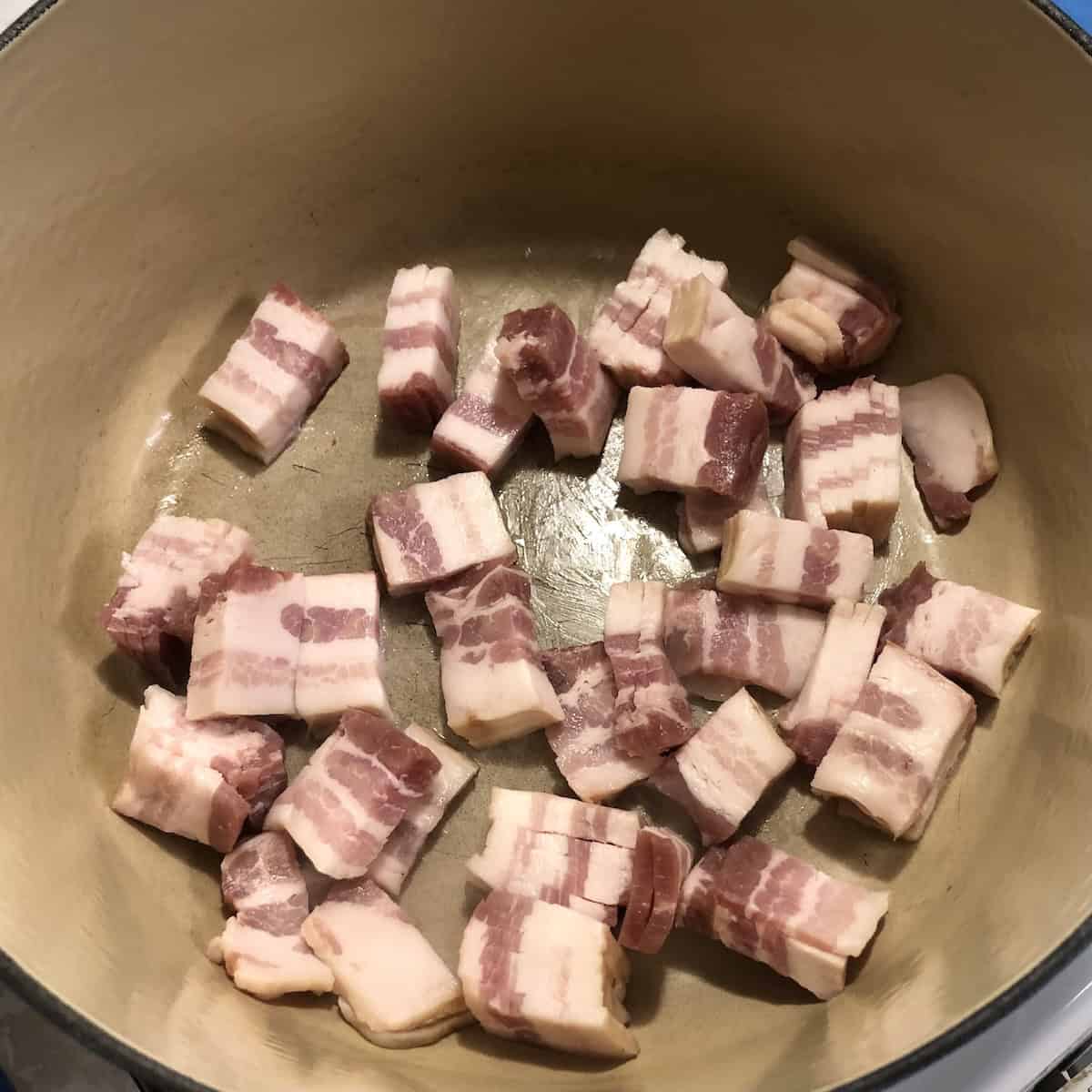
Can I use bacon in amatriciana?
I've used bacon, and it's delicious! But out of respect (even before Italian cuisine received its coveted UNESCO certification), I don't call it "amatriciana" because it's not. And also because it tastes completely different from an authentic amatriciana sauce. Still super tasty, but it isn't amatriciana😉!
Notable Detail: Italy is the first country to have an entire national cuisine recognized by UNESCO (not just a single dish or tradition). Previous food-related recognitions include the French gastronomic meal (2010), Neapolitan pizza makers (2017), and the Mediterranean diet (2013, shared by multiple countries).
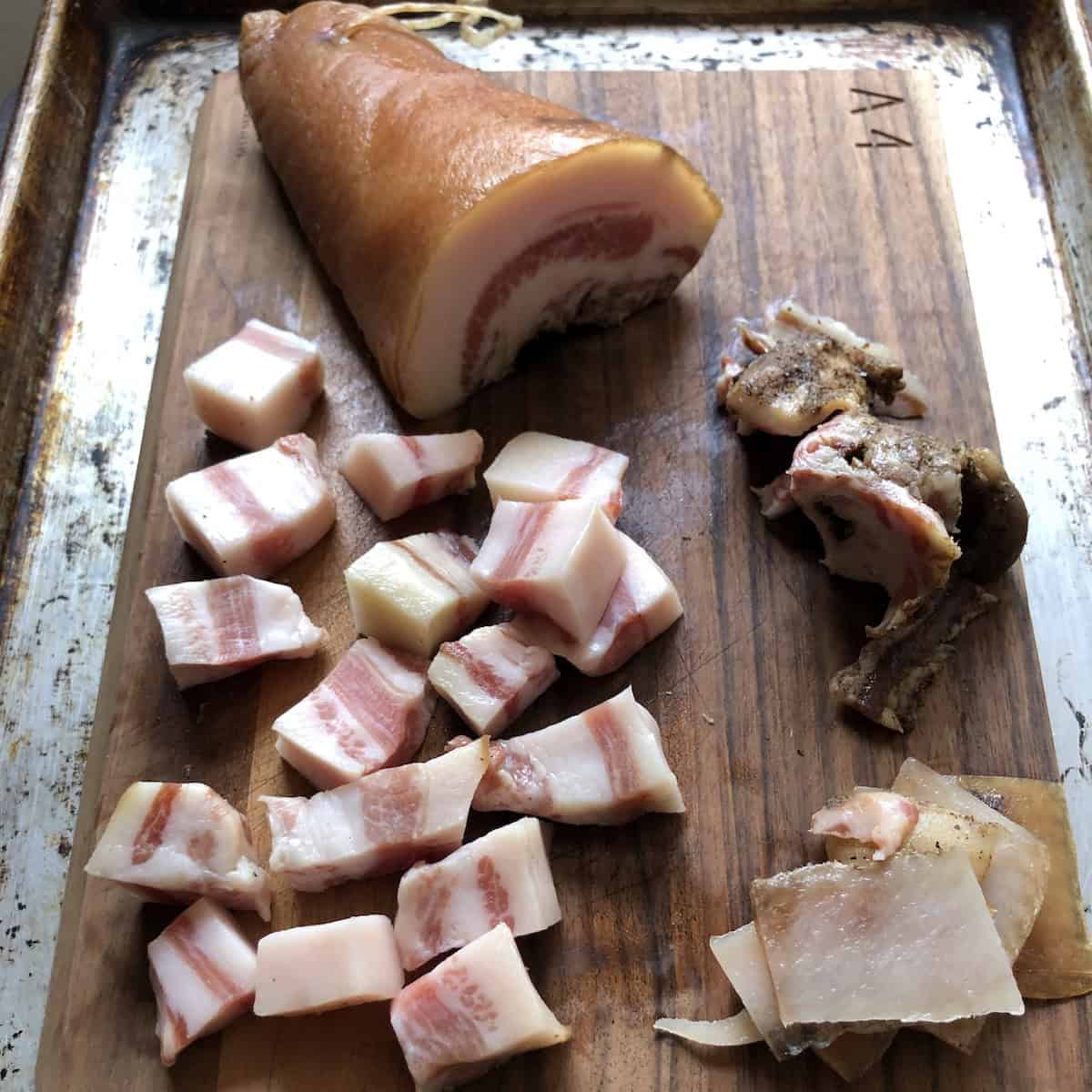
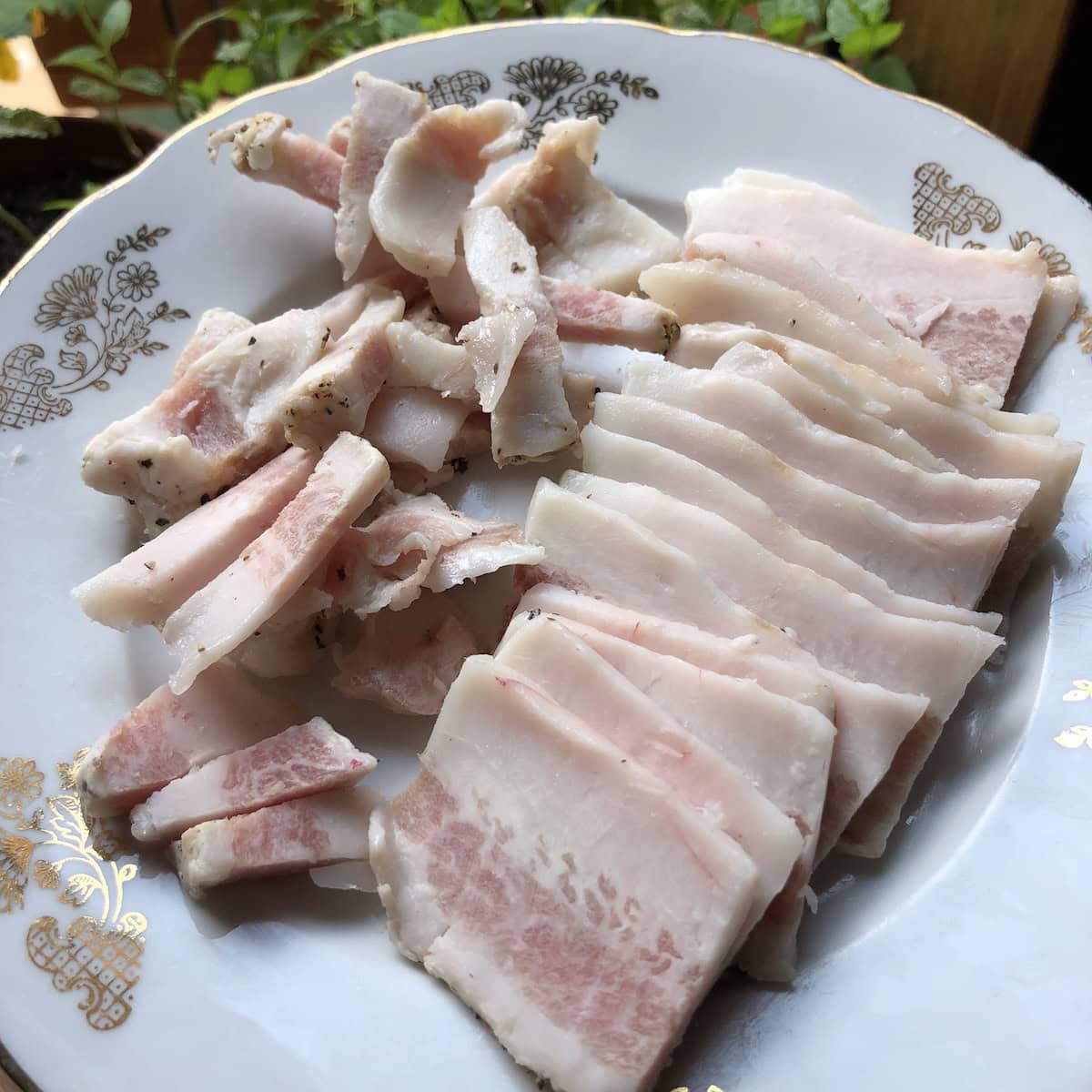
How should I slice and cook guanciale?
How you slice and cook guanciale matters. First, you'll need to remove the layer of skin and any of the seasonings from the underside, as you can see in the left photo above. If you don't trim off the seasonings, your amatriciana sauce will taste overwhelmingly of these aromatics, and you may also end up biting into a whole peppercorn or juniper berry.
Next, you can cut it into cubes (pictured in the left photo above - a more modern interpretation), or cut it into traditional matchsticks, or thin, wide slices (right photo).
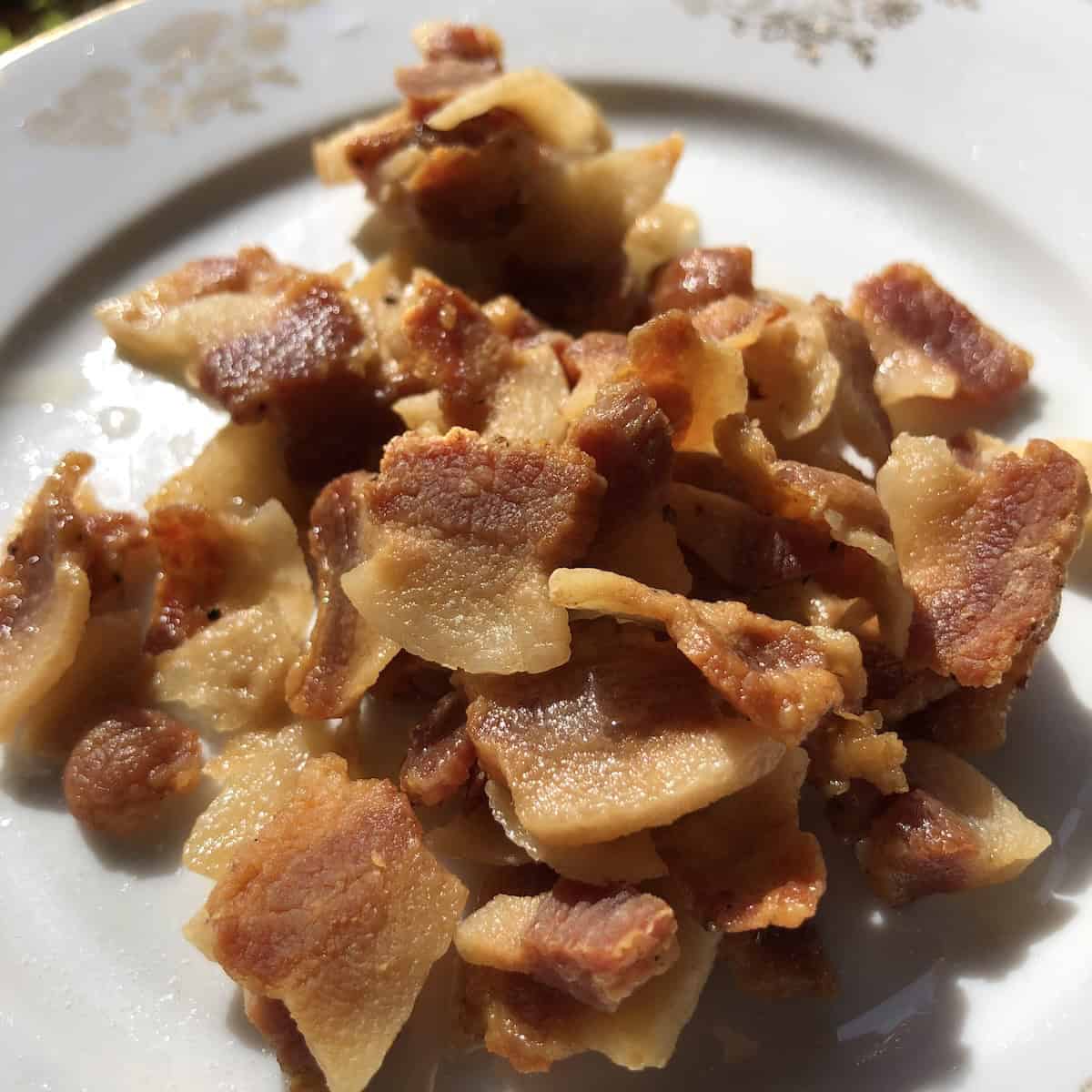
I personally like using a blend of tender golden brown (not totally crispy) matchsticks and wider, thinner slices cooked until totally crispy for the best texture and flavor.
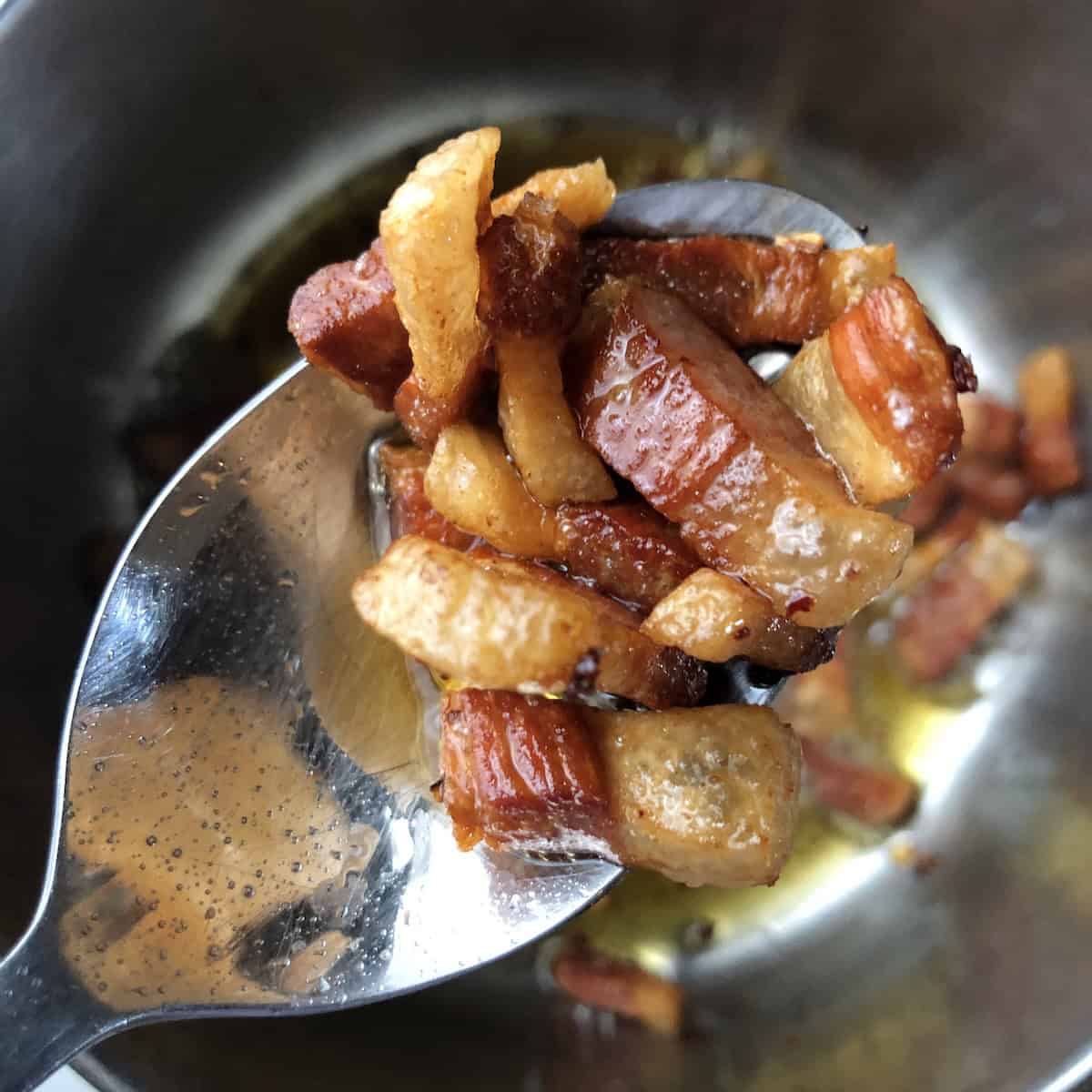
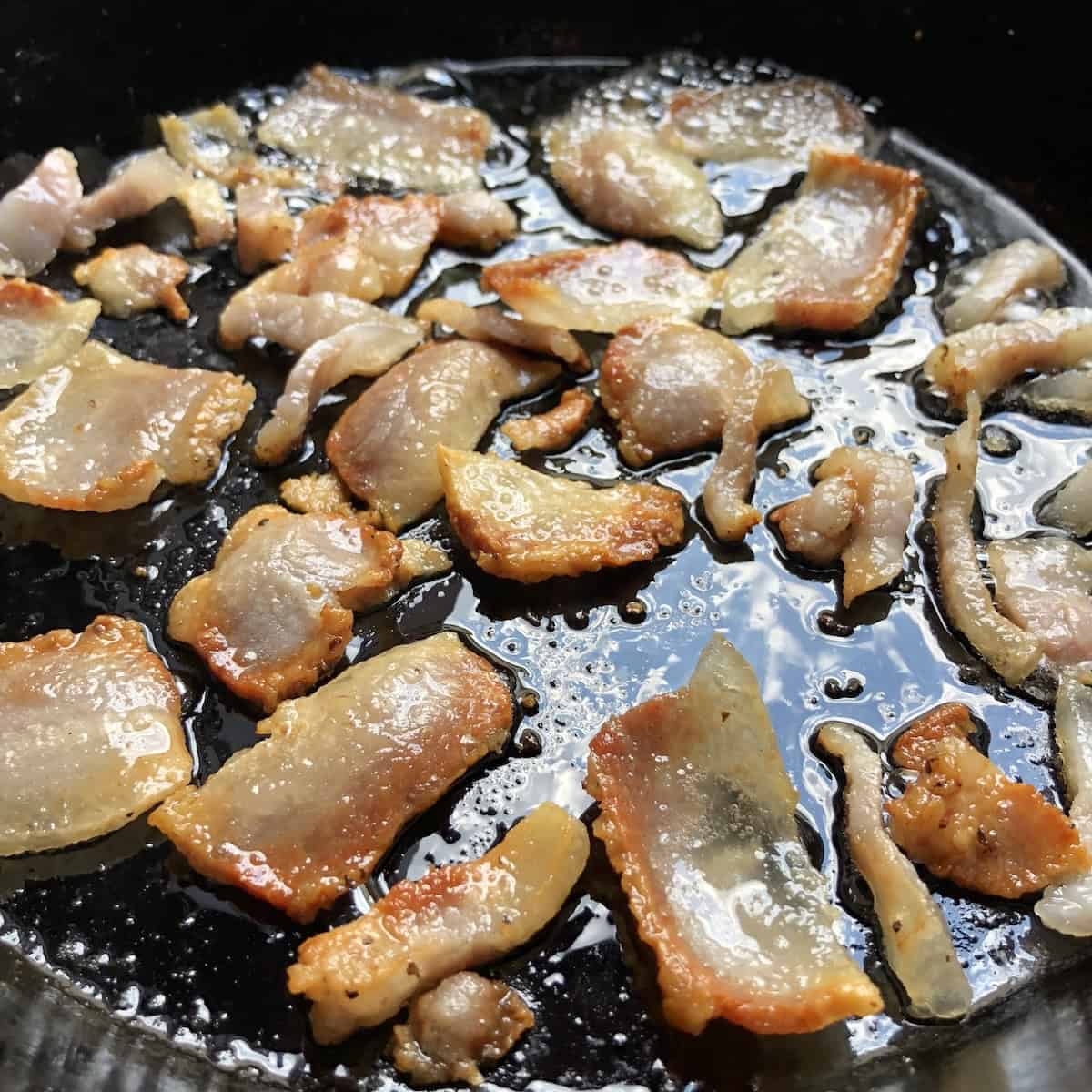
Here's my technique: Slice some pieces into wide, thin strips and others into thicker matchsticks. Cook everything over medium heat for 5-7 minutes, rendering the fat slowly, until the matchsticks are tender, slightly chewy, and cooked through but not totally crispy. Remove them to a plate. Continue cooking the thin strips for another 2-3 minutes, until they're ultra crispy and golden brown. This mix offers the perfect balance of chewy, tender, and crispy textures in every bite.
Best Pasta Shapes for Amatriciana
What is the best pasta for amatriciana?
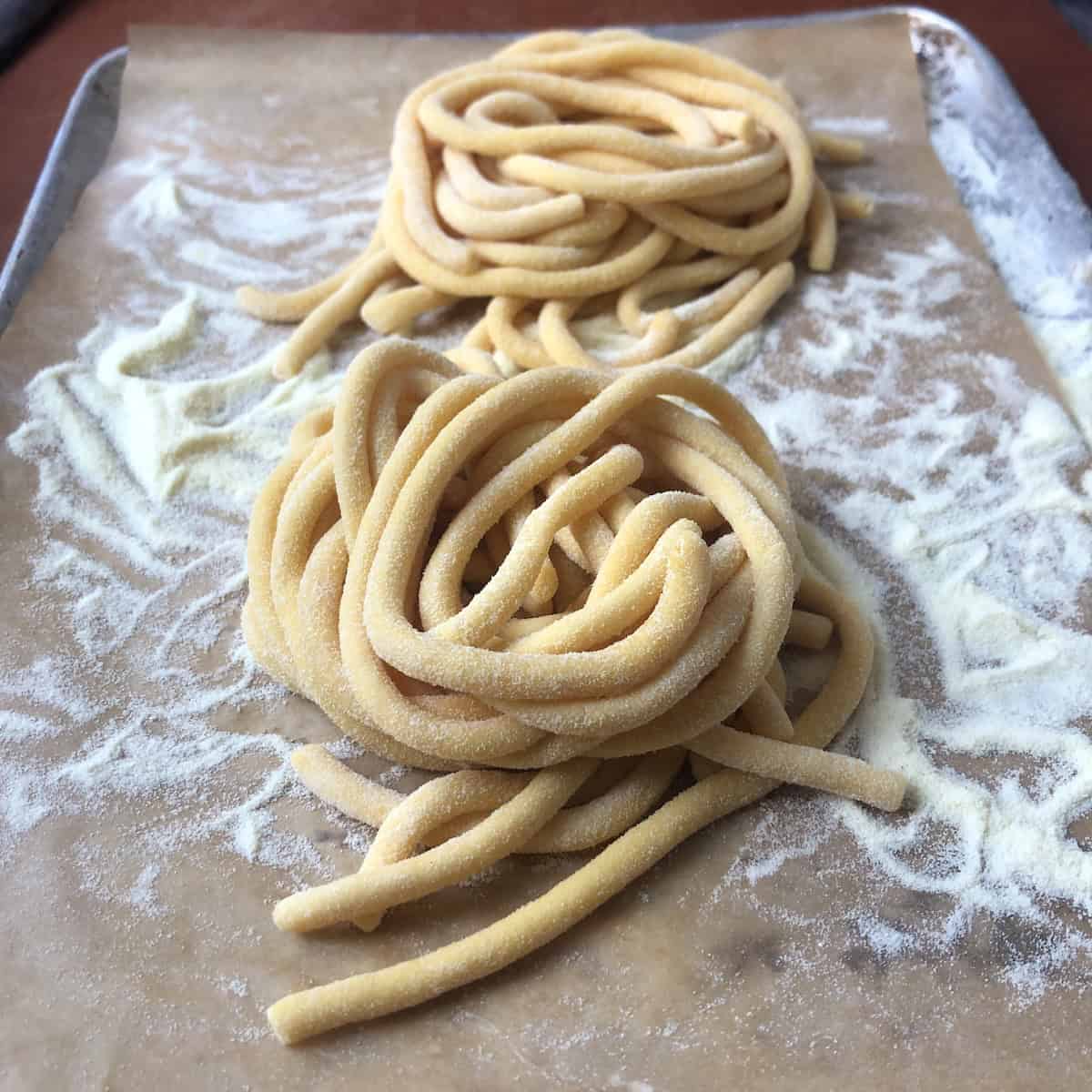
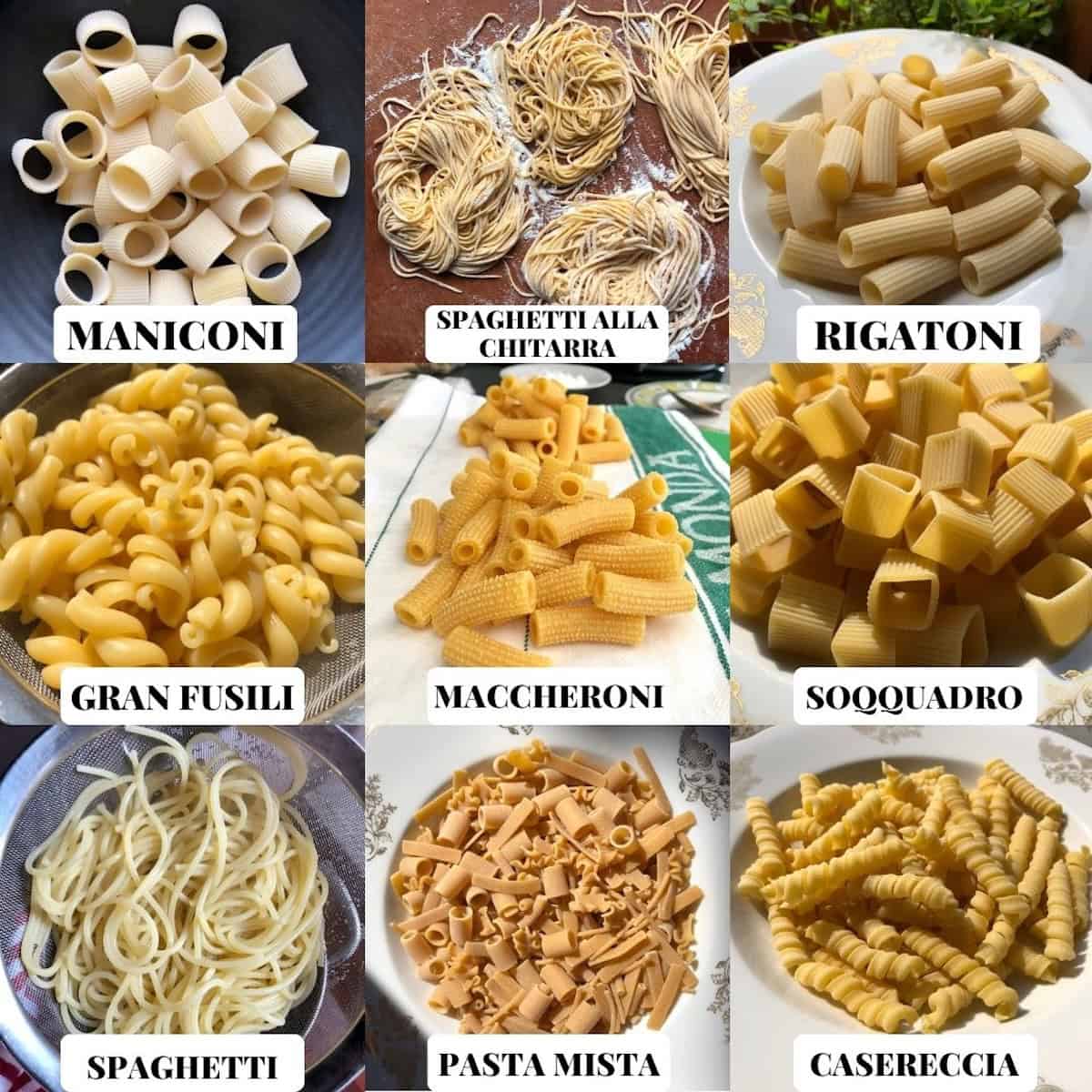
The sauce works with many shapes, but some are more traditional. If I'm not serving it with some type of spaghetti or homemade bucatini (as seen above), I like to choose a noodle that has nooks and crannies where the guanciale and sauce can hide! Here are the top choices:
Spaghetti, Spaghettoni, and homemade Spaghetti alla chitarra are actually more traditional in Amatrice, Italy, and it's what I reach for most often at home.
Bucatini is what you'll find in many Roman trattorias. It's basically thick spaghetti with a hollow center that traps sauce inside each strand. Luca doesn't love bucatini, and honestly, it's not my favorite shape either. I think a lot of people are mostly intrigued by its straw-like pasta shape, but for us, other shapes taste better with amatriciana sauce.
Rigatoni and Mezzi Rigatoni have ridges and tubes that capture chunks of guanciale and pools of amatriciana sauce.
Maccheroni is delicious and one of the traditional pastas originally eaten with this sauce. This is the large fresh egg maccheroni tube pasta (not like elbow macaroni we have in the US).
Strozzapreti is also a common pasta used in Rome to pair with this sauce.
Penne works well and is widely available, but the holes are generally too small to hold any guanciale, so I use this pasta shape less often for amatriciana.
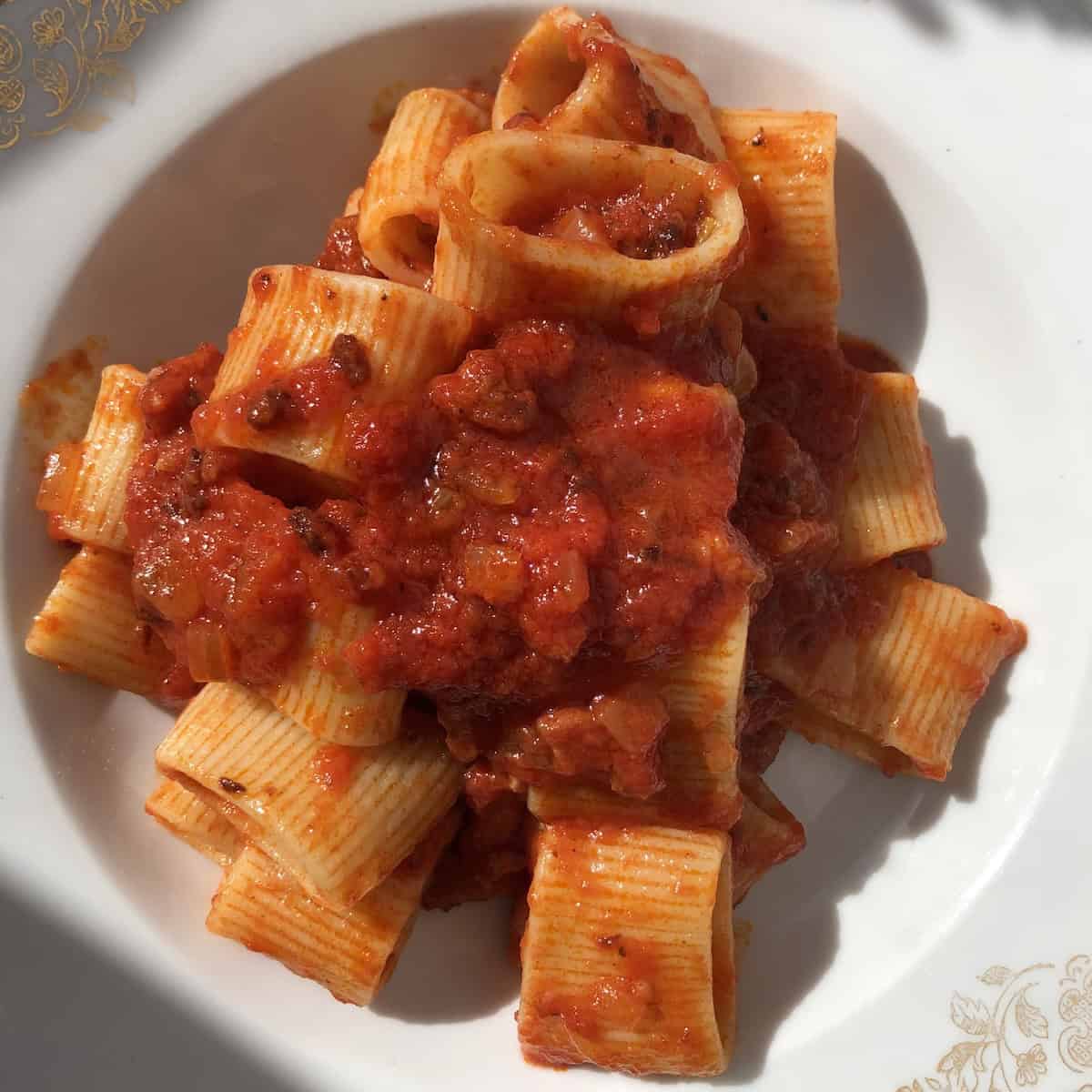
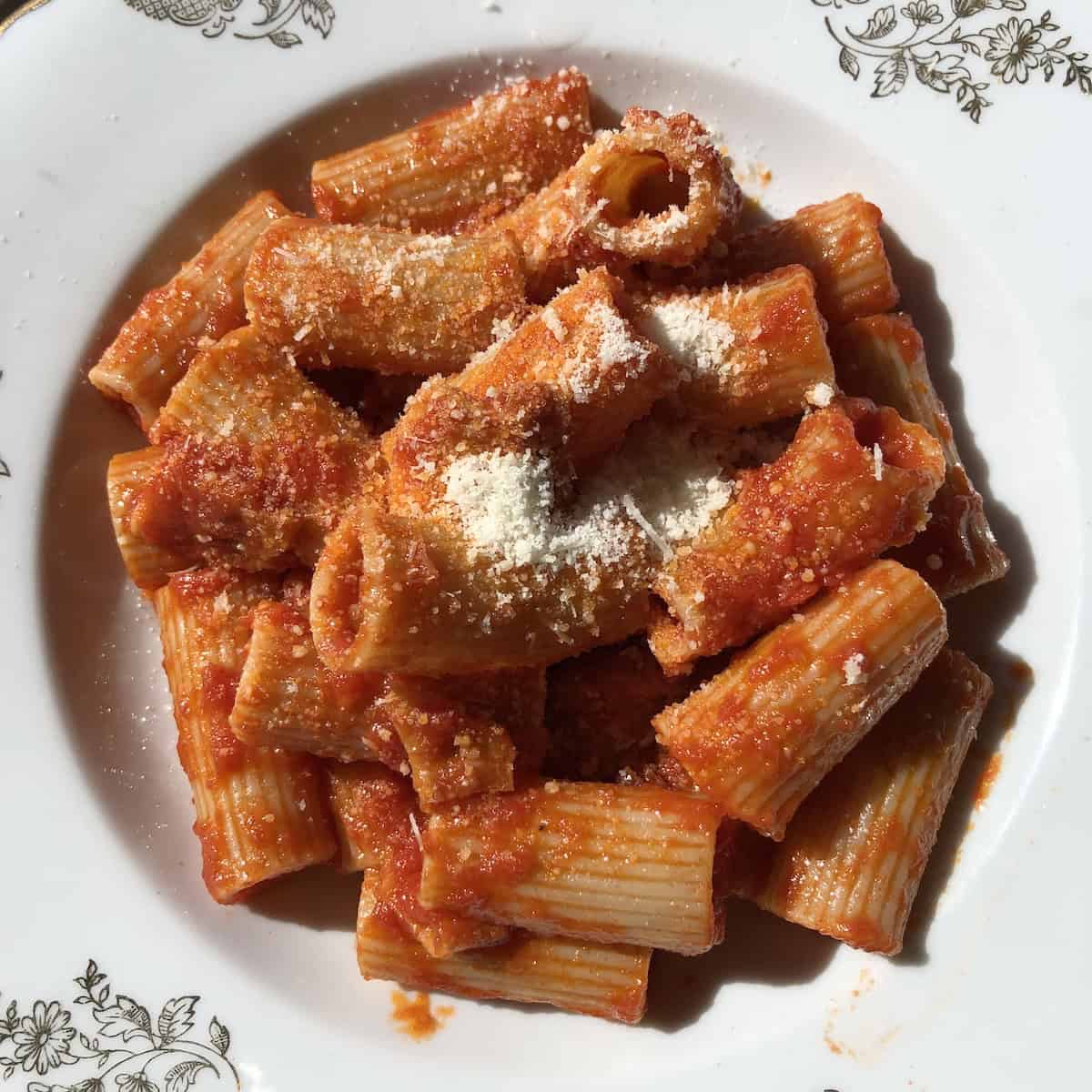
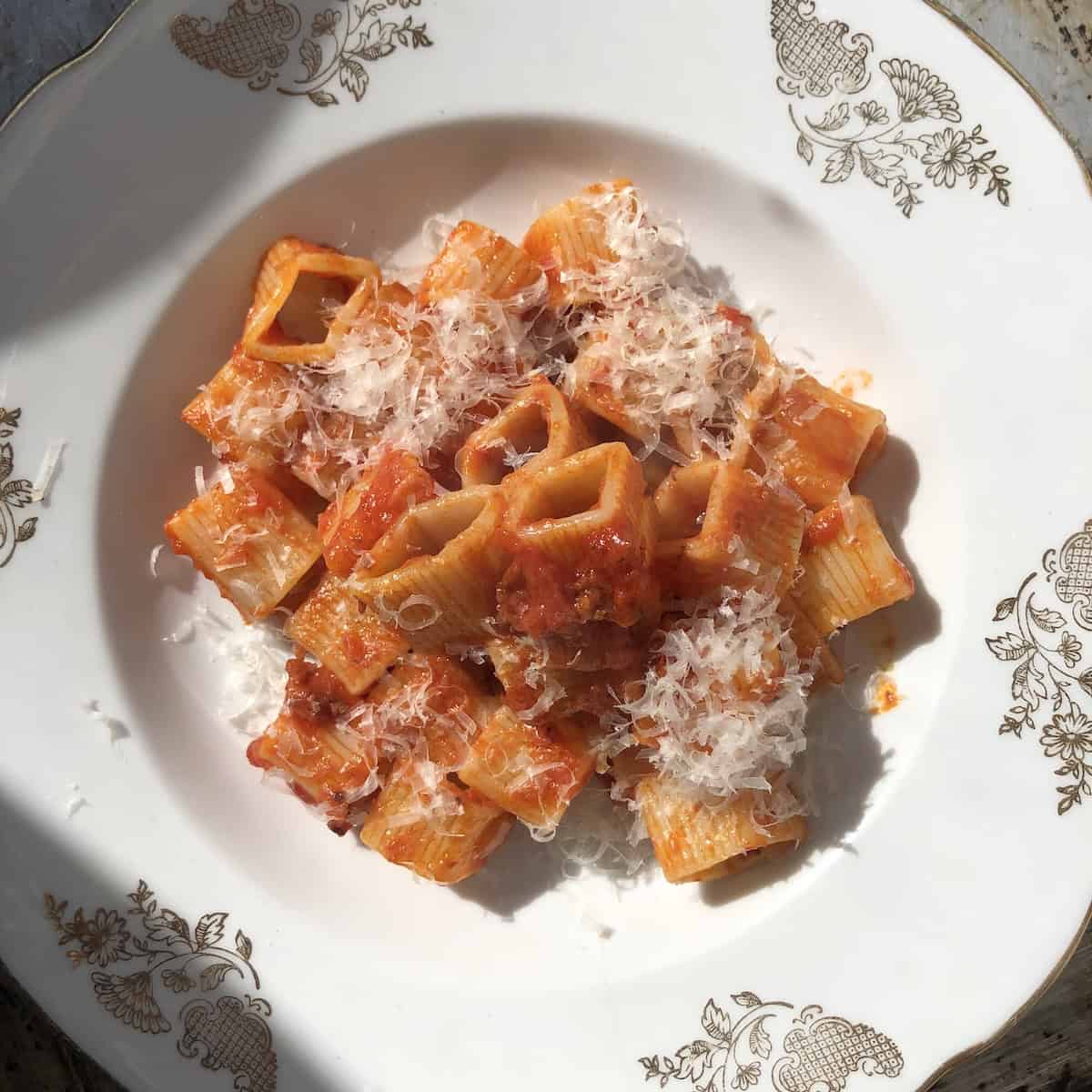
What pasta shapes have I made with amatriciana?
I've made amatriciana with homemade spaghetti alla chitarra (maybe my personal favorite?), spaghettoni, Verrigni's superspaghettoro, rigatoni, Rustichella d'Abruzzo's maniconi rigate, and gran fusilli, quadrato (Abruzzese regional thicker square-shaped spaghetti pasta shape), radiatore, and soqquadro. *some are photographed above so you can see them
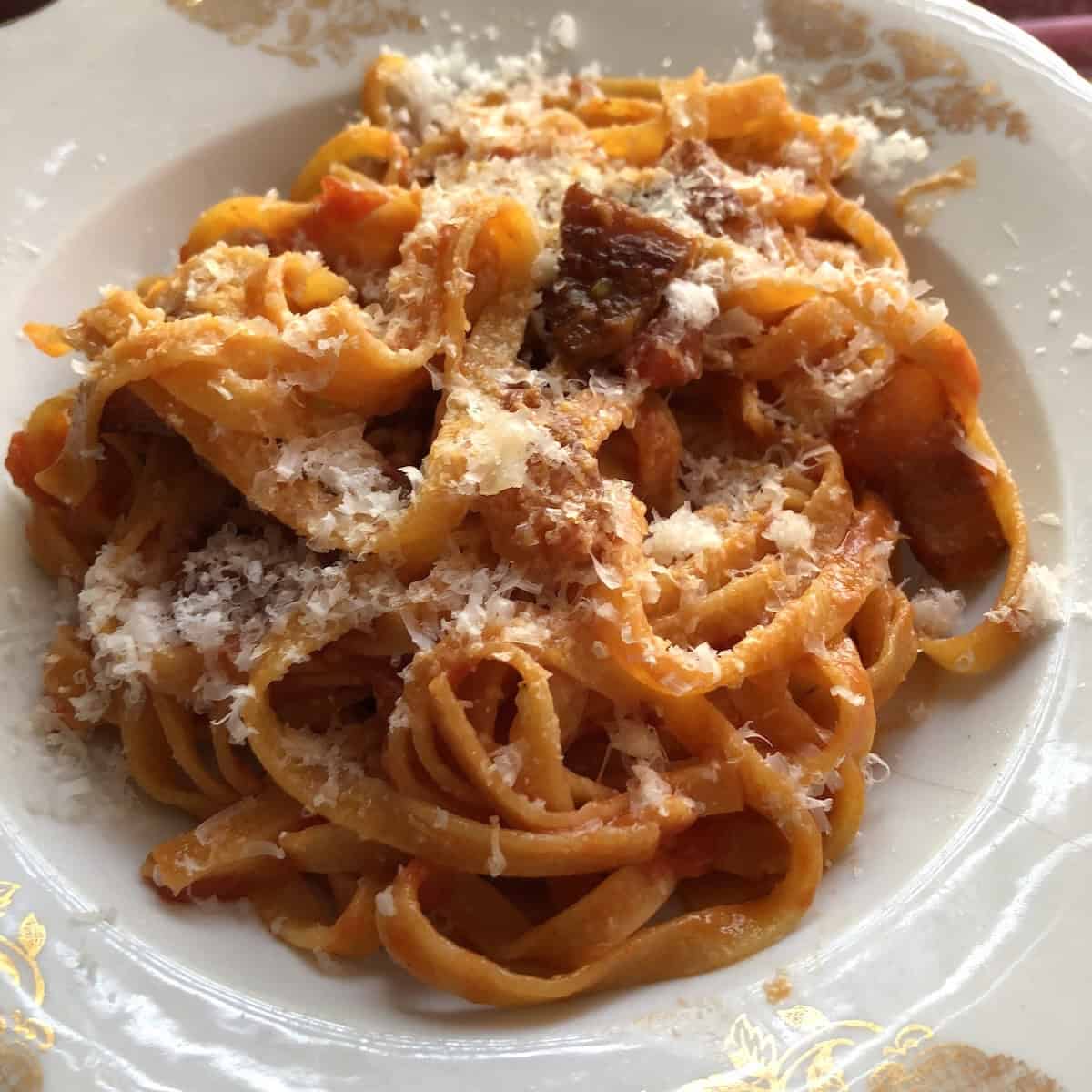
I've even paired it with my homemade pumpkin fettuccine pasta (below) for a spicy fall pumpkin pasta all'Amatriciana. Absolutely delicious!
What is the difference between bucatini and spaghetti?
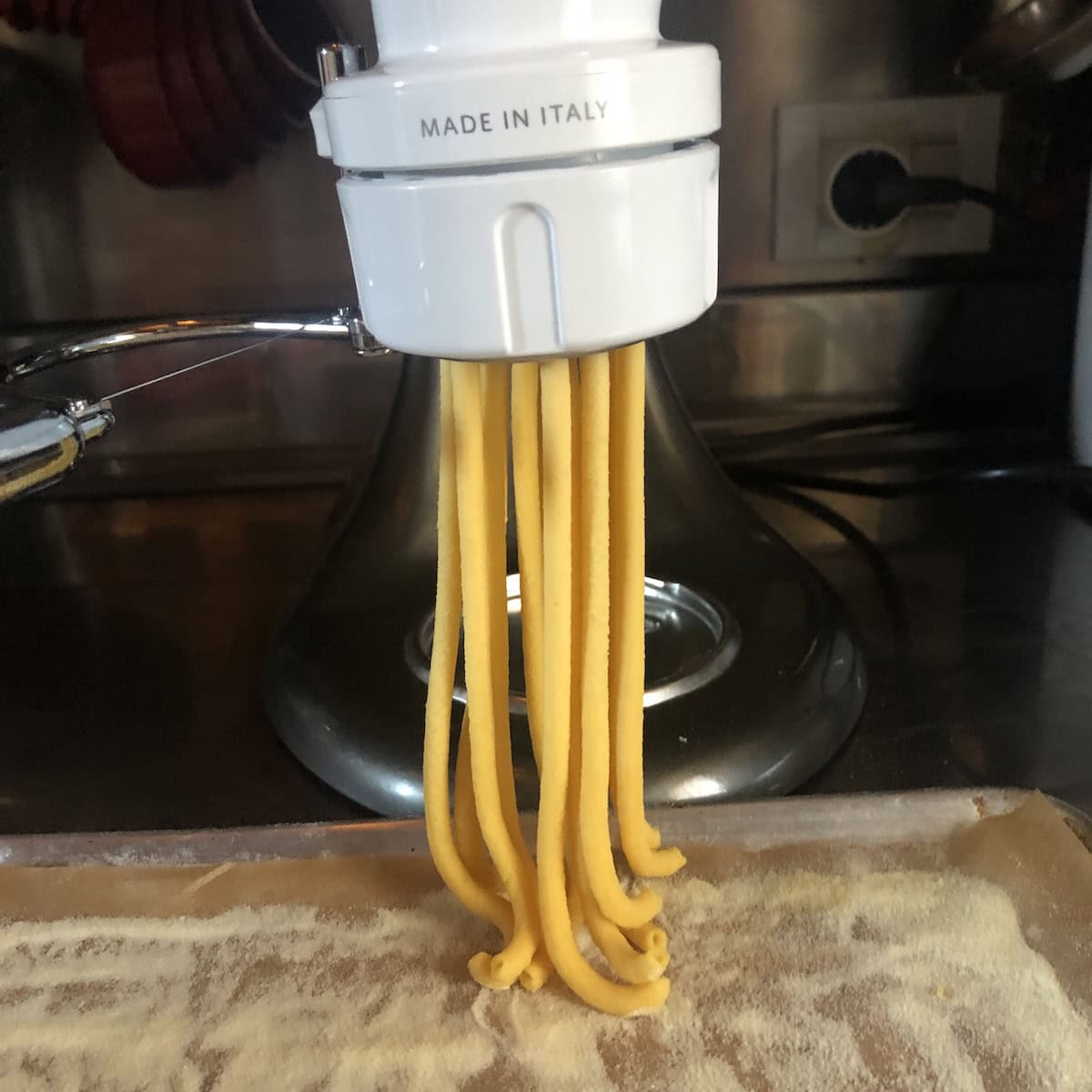
Bucatini has a hollow center running through each strand (see photo below). This makes it slightly thicker than spaghetti and allows the sauce to flow inside. But it also makes it a lot more difficult to twirl up onto your fork.
So, if you're making amatriciana for the whole family (including your kids), I suggest using a different pasta shape that's easier to eat🤗.
Is Amatriciana from Rome or Abruzzo?
Here's a fact that often gets lost in translation: until 1927, Amatrice was part of the L'Aquila province in the region of Abruzzo. Pasta all'Amatriciana is not originally a Roman dish, though Romans have definitely perfected it. Abruzzo is where Luca's family is originally from and where we also have a family home.
It borders the Lazio region (where Rome is located), which explains the overlap in this regional dish and why you'll find it served throughout Abruzzo and Lazio.
In Abruzzo (just 1.5 to 2 hours east of Rome), you'll find amatriciana sauce most often served with hand-made quadrato pasta (photos below), and spaghetti alla chitarra.
The passion and tradition that goes into crafting these precious Italian ingredients create one of the world's most loved pasta dishes.

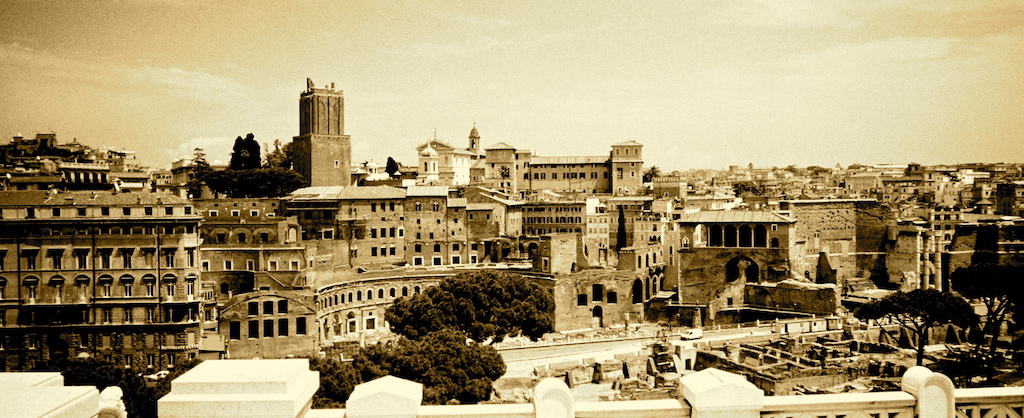
Amatriciana and Rome
Why is amatriciana associated with Rome?
In the 1700s and 1800s, shepherds from Amatrice traveled to Rome to sell cheeses and cured meats. In the 1900s, declining sheep farming caused farmers to migrate to Rome permanently. They opened restaurants and worked in Roman kitchens, making amatriciana a Roman staple.
You'll find the best versions in local trattorias away from tourist attractions. The first time I had it was in Rome. Up to that point, it was the most delicious pasta I'd ever eaten. Spicy, savory, and unforgettable.
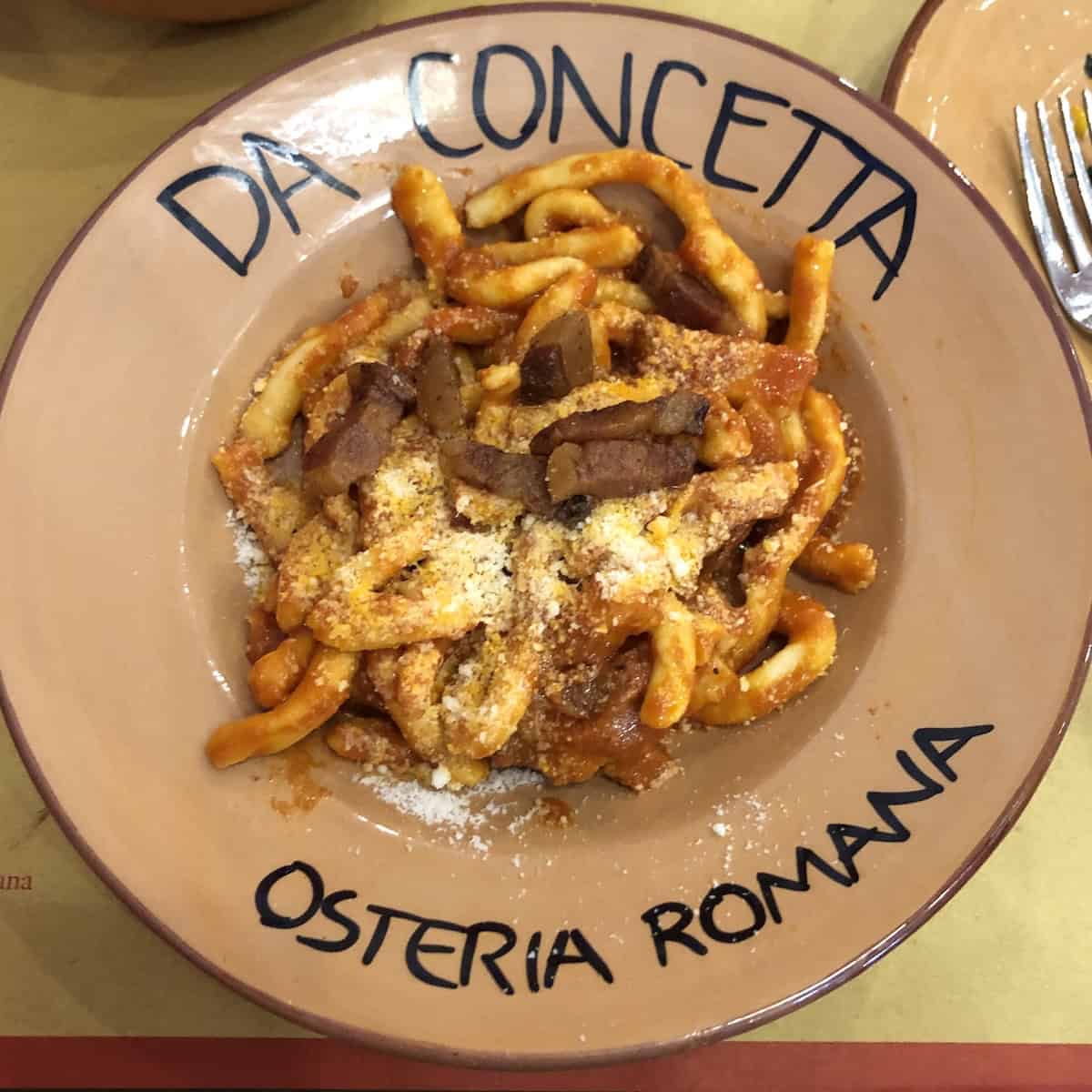
Does authentic amatriciana taste the same everywhere?
We've eaten this pasta in various places around Italy. And every version tastes slightly different depending on the pasta shape used, where the guanciale is produced, the pig's diet, how it's seasoned and cured, how it's cut and cooked, and the type and quantity of tomatoes used.
But much like an authentic Bolognese sauce, authentic amatriciana sauce somehow always tastes unmistakably like "amatriciana" no matter who makes it. The reason for this is that it's made using high-quality traditional ingredients, usually from Amatrice, or the greater Lazio and Abruzzo regions.
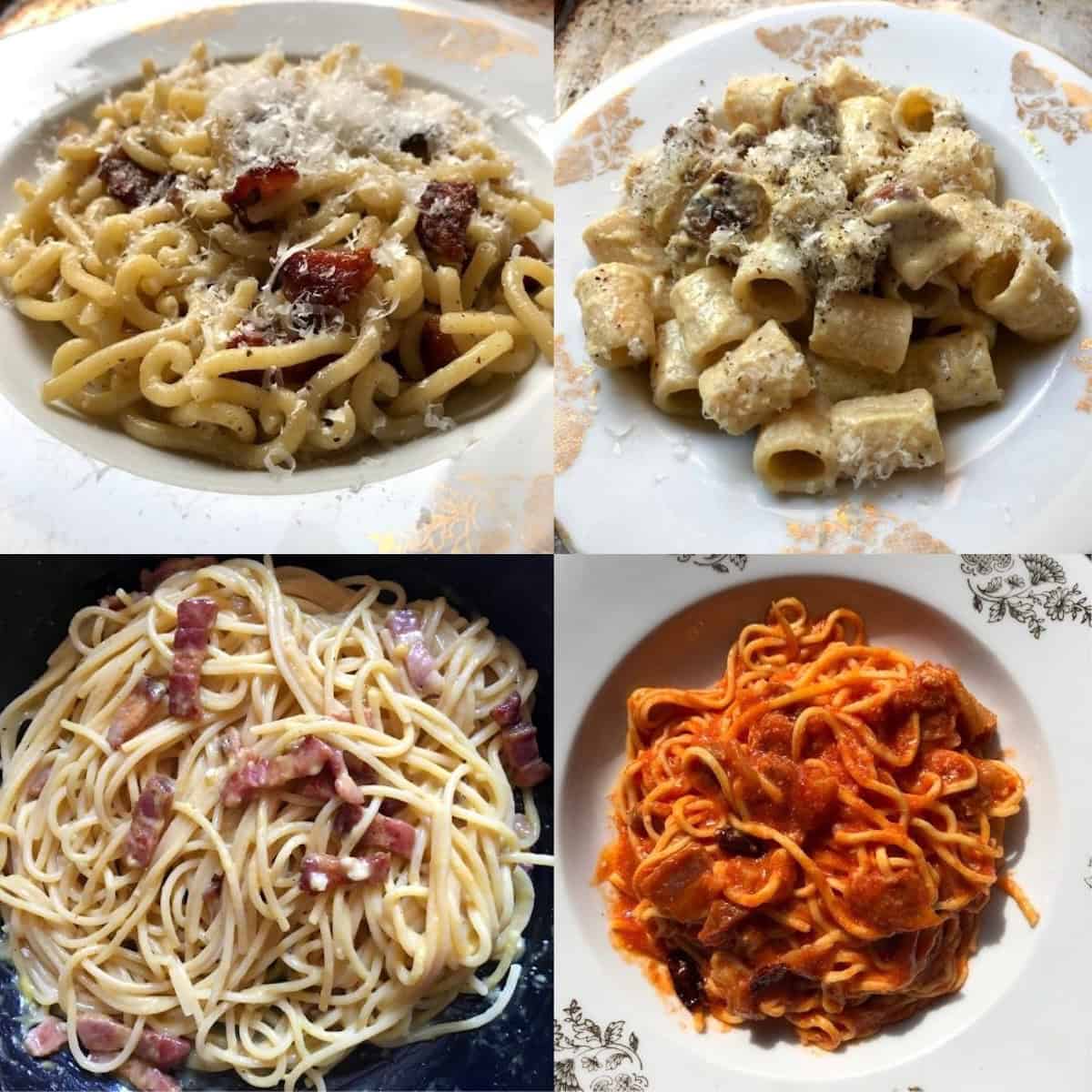
NOTE: The restaurant amatriciana pasta below had way too much tomato, and the tomato pieces were also too large. It drowned the pasta and masked the guanciale flavor.
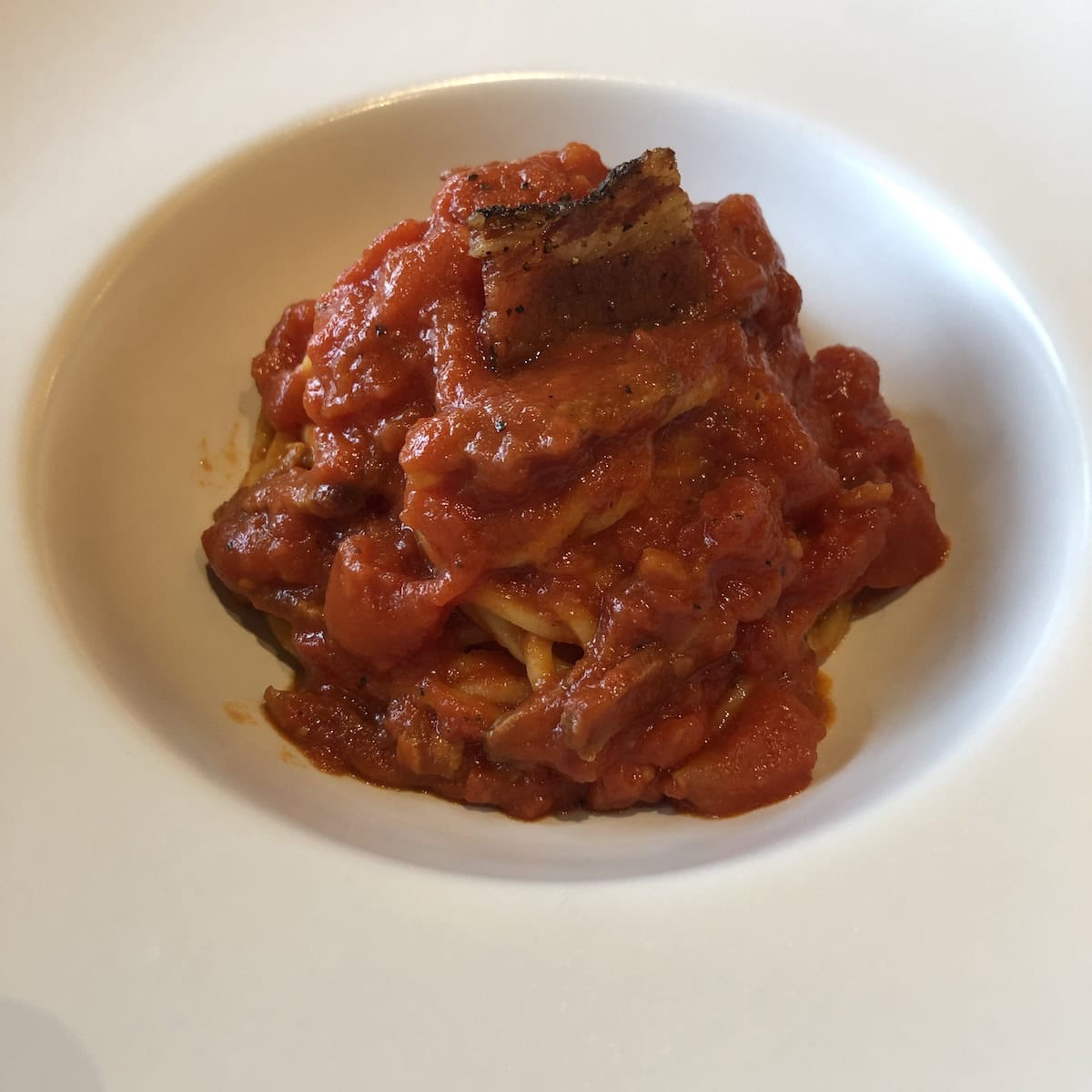
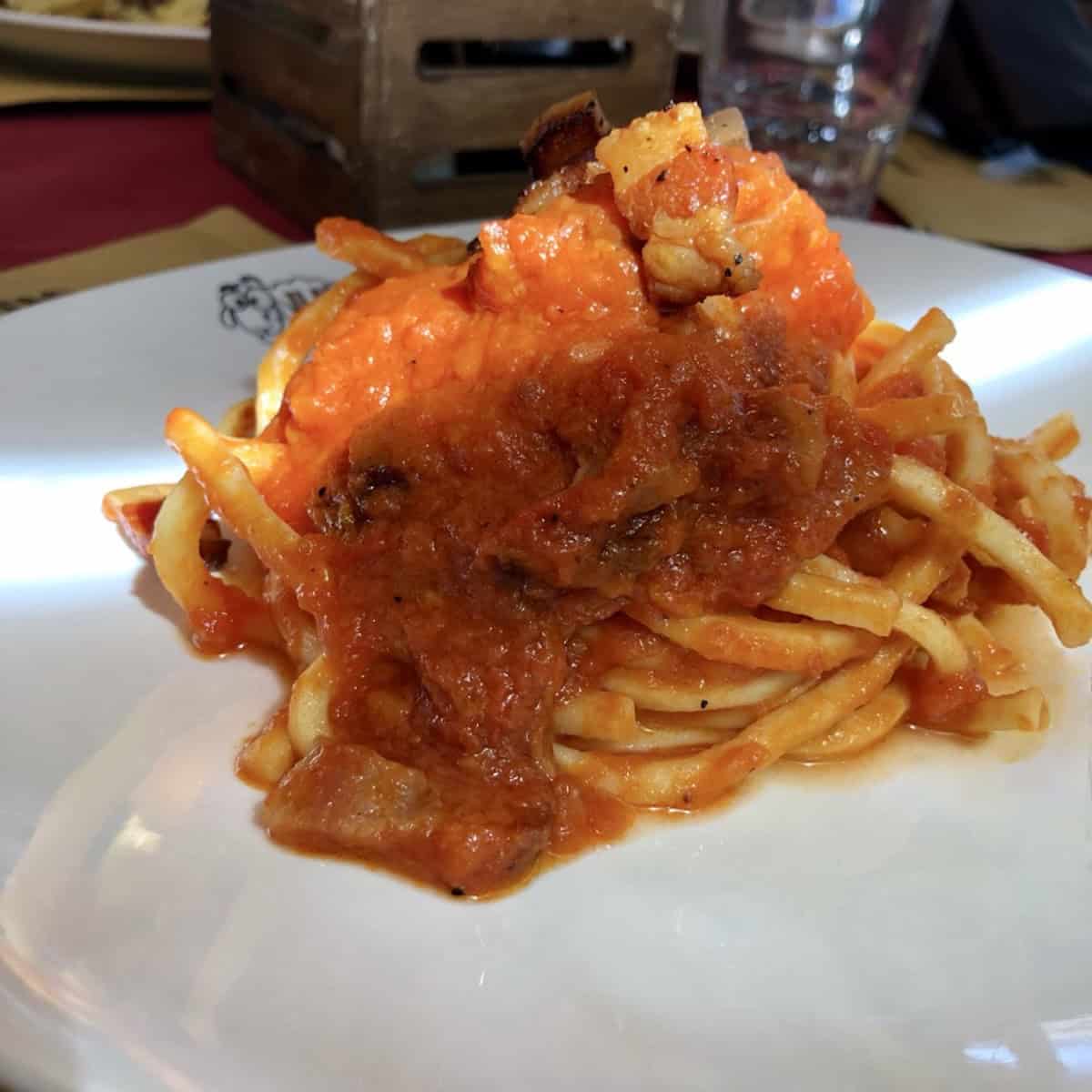
These are a few real photos from some of the restaurants in Italy where we've eaten amatriciana over the years. Luca says this recipe beats the ones I've included here, and he's a tough critic when it comes to Italian food😉.
Coming from someone who grew up eating and loving this dish, it's a huge compliment. But honestly, it really all boils down to how good your ingredients are. It's hard for me to take much credit when I'm working with 5-star ingredients in the first place. The best ingredients will always = the best pasta sauce.


Authentic Amatriciana Ingredients
What is in traditional amatriciana sauce?
The original Pasta all'Amatriciana uses only fresh tomatoes, guanciale, Pecorino Romano cheese, sea salt, and freshly cracked black pepper. Contrary to what you may see online, traditionally, here in Italy, it's actually more often served with fresh egg maccheroni, mezzi rigatoni, or spaghetti instead of bucatini.
Serving bucatini with amatriciana sauce has been popularized by the Romans. But more and more frequently, they're using mezzi rigatoni and spaghettoni for amatriciana. Use whatever you enjoy most, just try to find bronze-drawn or gold-drawn pasta because it holds onto pasta sauce better and just tastes better.
Can I add garlic to amatriciana?
You won't find garlic in amatriciana in Italy. Italians say it changes the tomato flavor too much (and honestly, it does, although it's still amazingly delicious). There was a huge controversy when chef Carlo Cracco was publicly chastised on Italian TV in 2015 for adding garlic! But if you love garlic, go for it, just don't call it amatriciana😉.
Some recipes add shallots or onions (we personally love to add onions when I'm using pancetta instead of guanciale), and some substitute pancetta for guanciale. Not a fan of Pecorino? Use Grana Padano or Parmigiano-Reggiano. It won't be authentic-authentic, but it's delicious (definitely better than using a sub-par pecorino)!
Amatriciana Sauce Ingredients
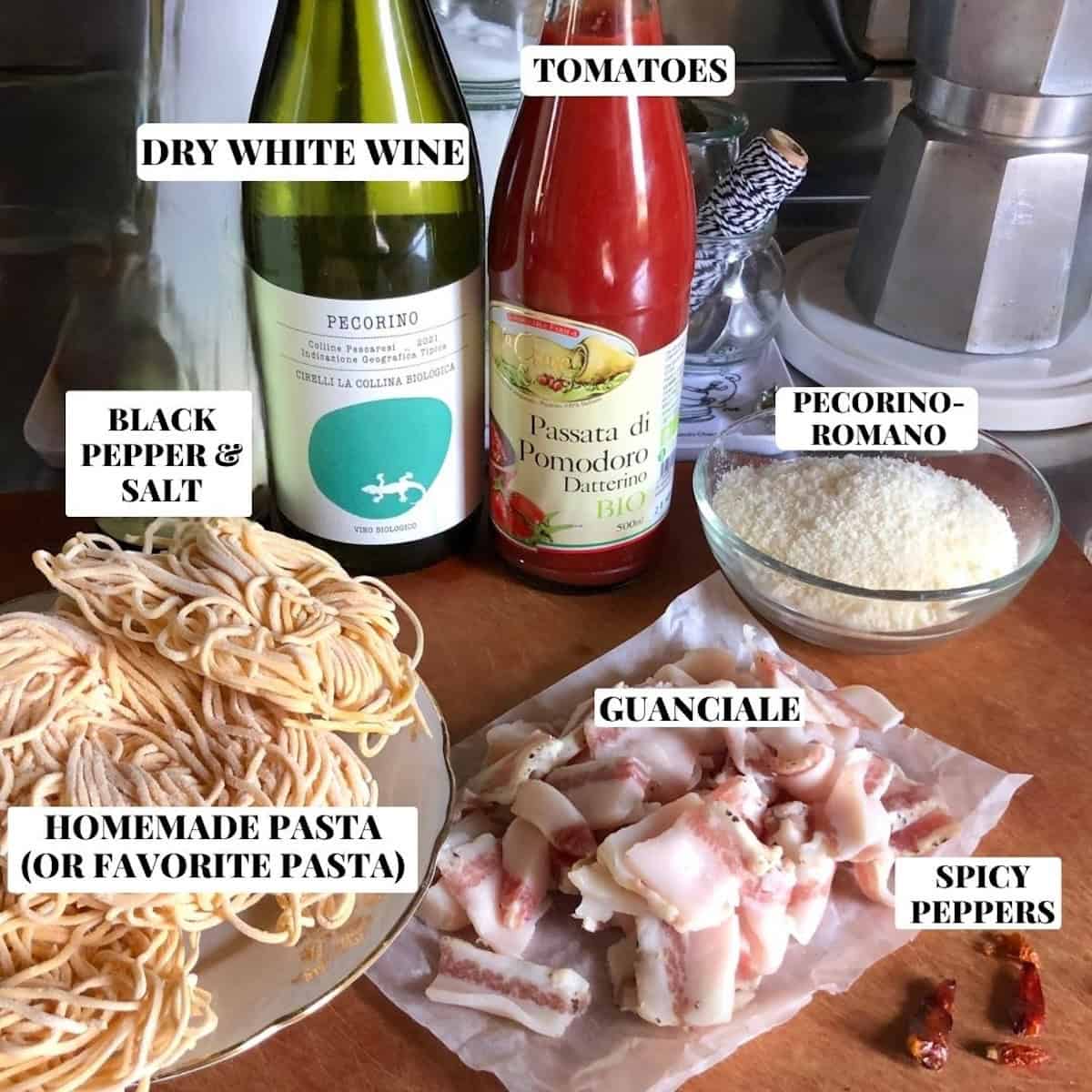
With so few ingredients, quality is everything. Use the highest-quality fresh (or canned) tomatoes, guanciale, and Pecorino you can find, and you're all but guaranteed a truly excellent pasta. This recipe serves four. Double it for a crowd or meal prep amatriciana by portioning the sauce to freeze for 10-minute meals for busier weeks.
- Pasta - Spaghetti, spaghettoni, spaghetti alla chitarra, fresh maccheroni, bucatini, rigatoni, mezzi rigatoni, gran fusilli, or penne all work great
- Guanciale - Cut into wide strips, matchsticks, or a combination of both
- Tomatoes - Whole peeled tomatoes. I use fresh, sweet grape tomatoes (or San Marzano garden-fresh tomatoes) when in season, blanched and peeled. Never cherry tomatoes because they're typically not sweet enough. Canned chopped tomatoes or high-quality Italian tomato passata also work. I've used all of these varieties. Just make sure whatever variety you use is the highest quality.
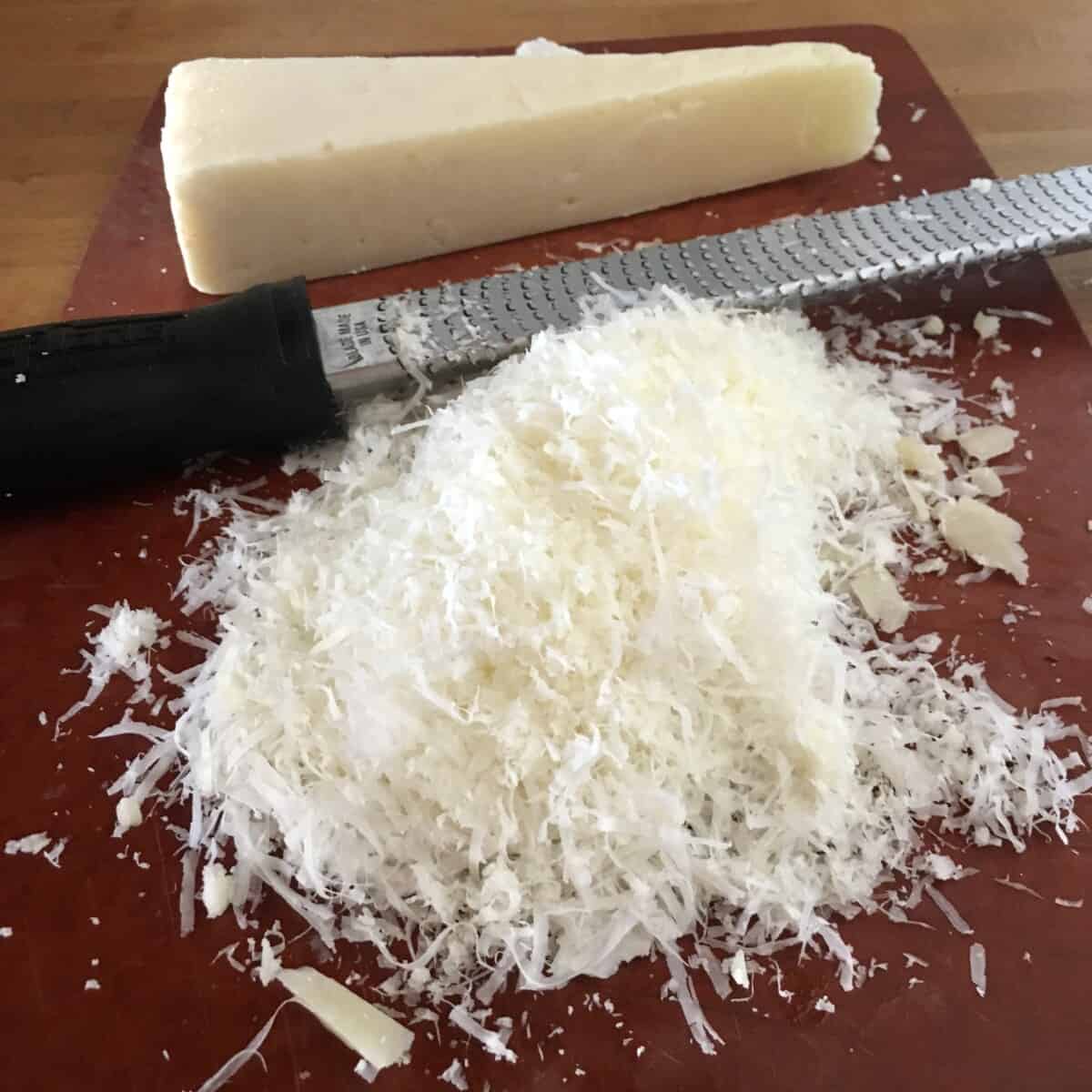
- Pecorino Romano - Freshly grated. Like many Italians, I sometimes substitute some or all of the Pecorino with sweeter, nuttier, milder Grana Padano or Parmigiano-Reggiano for a more balanced flavor. You may want to do the same because not all Pecorino Romano is equal. Especially because what you might have access to outside of Italy may be of a lower quality. And a lower-quality Pecorino can leave you with an overly sharp, beasty-stinky-foot-flavored pasta.
- Dried chili peppers - Whole peppers or crushed red pepper flakes for heat
- Dry white wine - A splash increases the deliciousness and is great for deglazing. Feel free to skip it if you're out of wine.
- Shallot or onion - Finely diced onions are optional, and I most often add them when I'm using pancetta to make "amatriciana" because the sweetness pairs really well with the smoky bacon flavor. If you're working with lower-quality tomatoes, onions add natural sweetness and can help improve the sauce's flavor.
- Salt and black pepper - Sea salt and freshly cracked black pepper are essential. If you're not a fan of black pepper, omit it. Just avoid pre-ground black pepper, which tastes completely different.
See recipe card for exact quantities.
How to Make Pasta all'Amatriciana With Guanciale
Total time: 30 minutes. Here's the method:
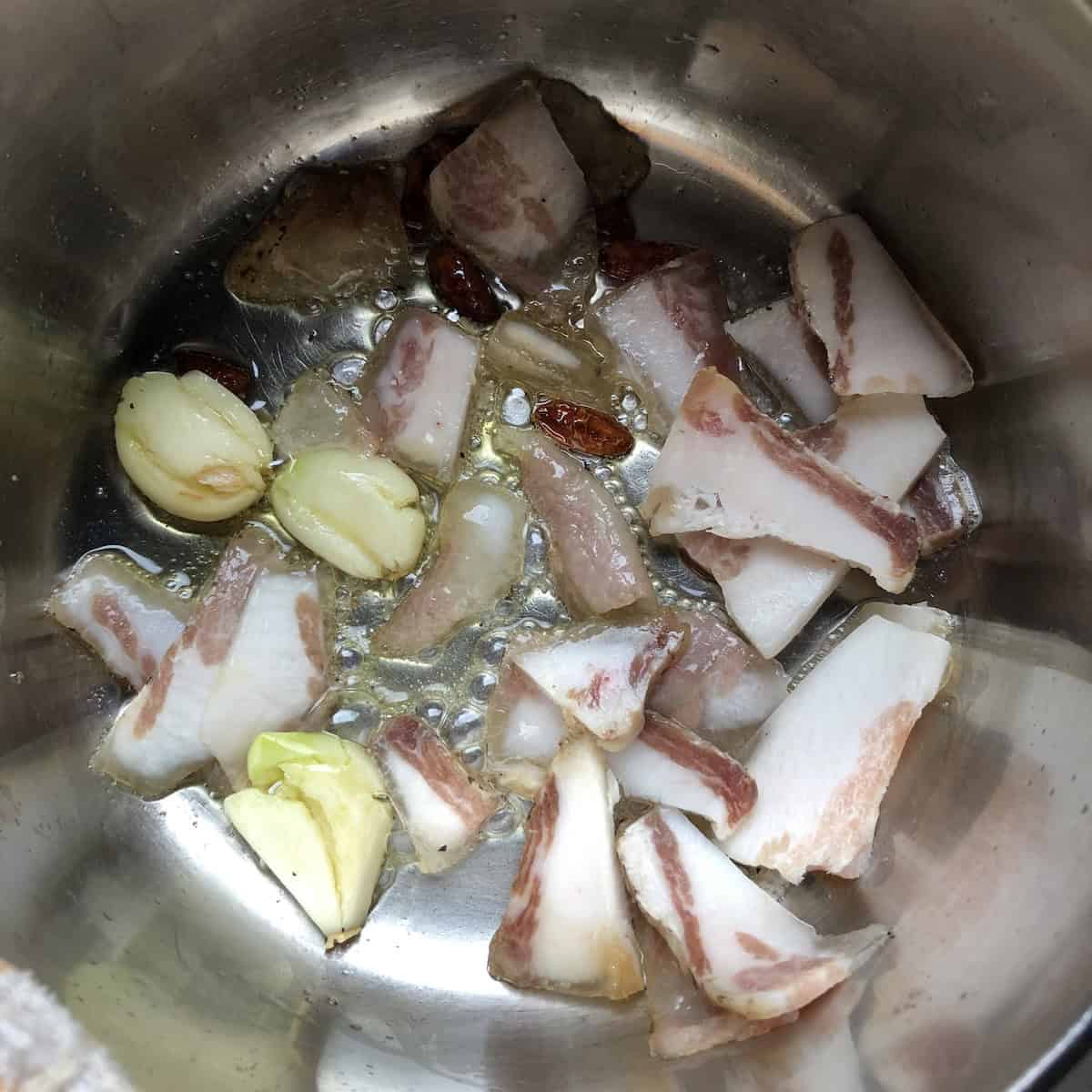
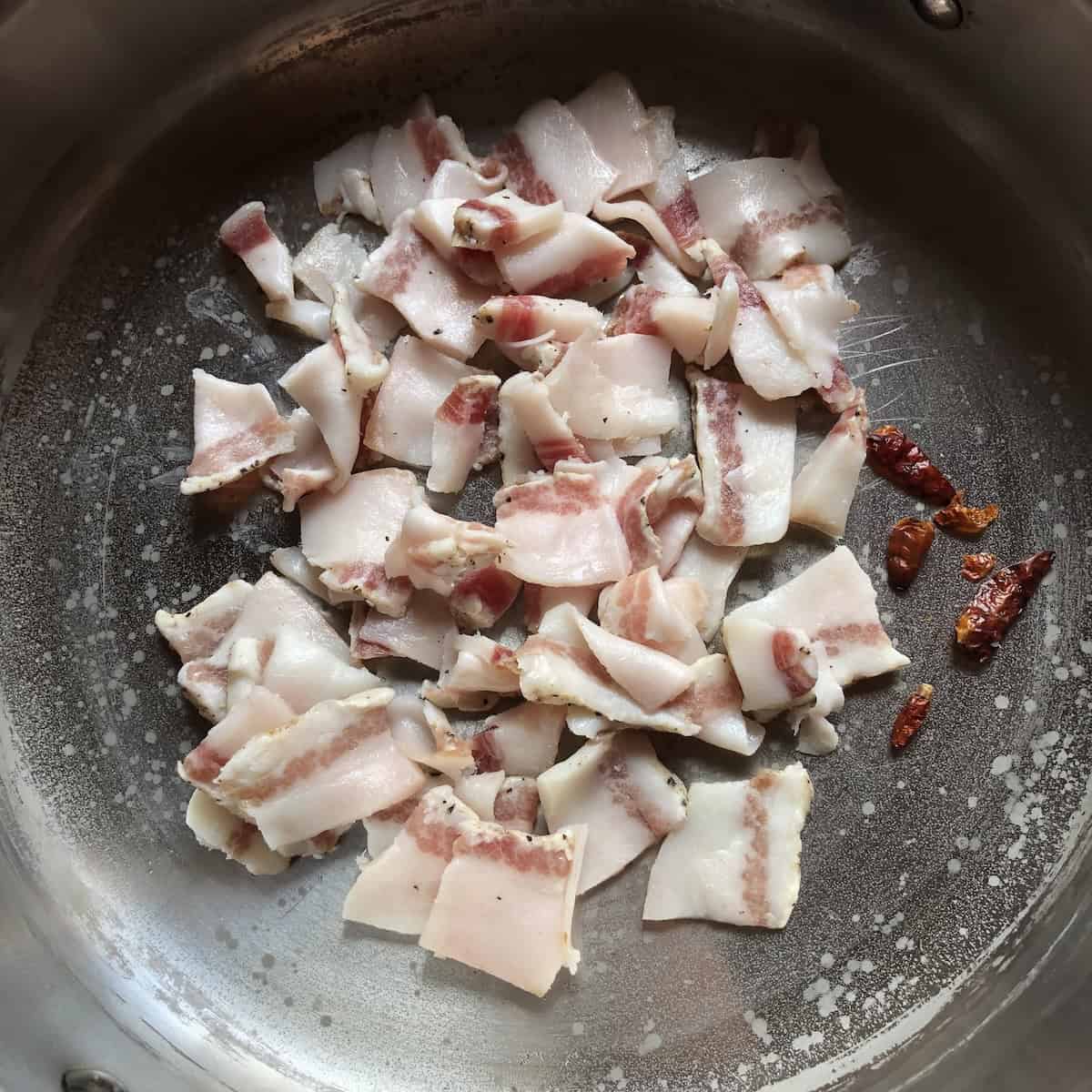
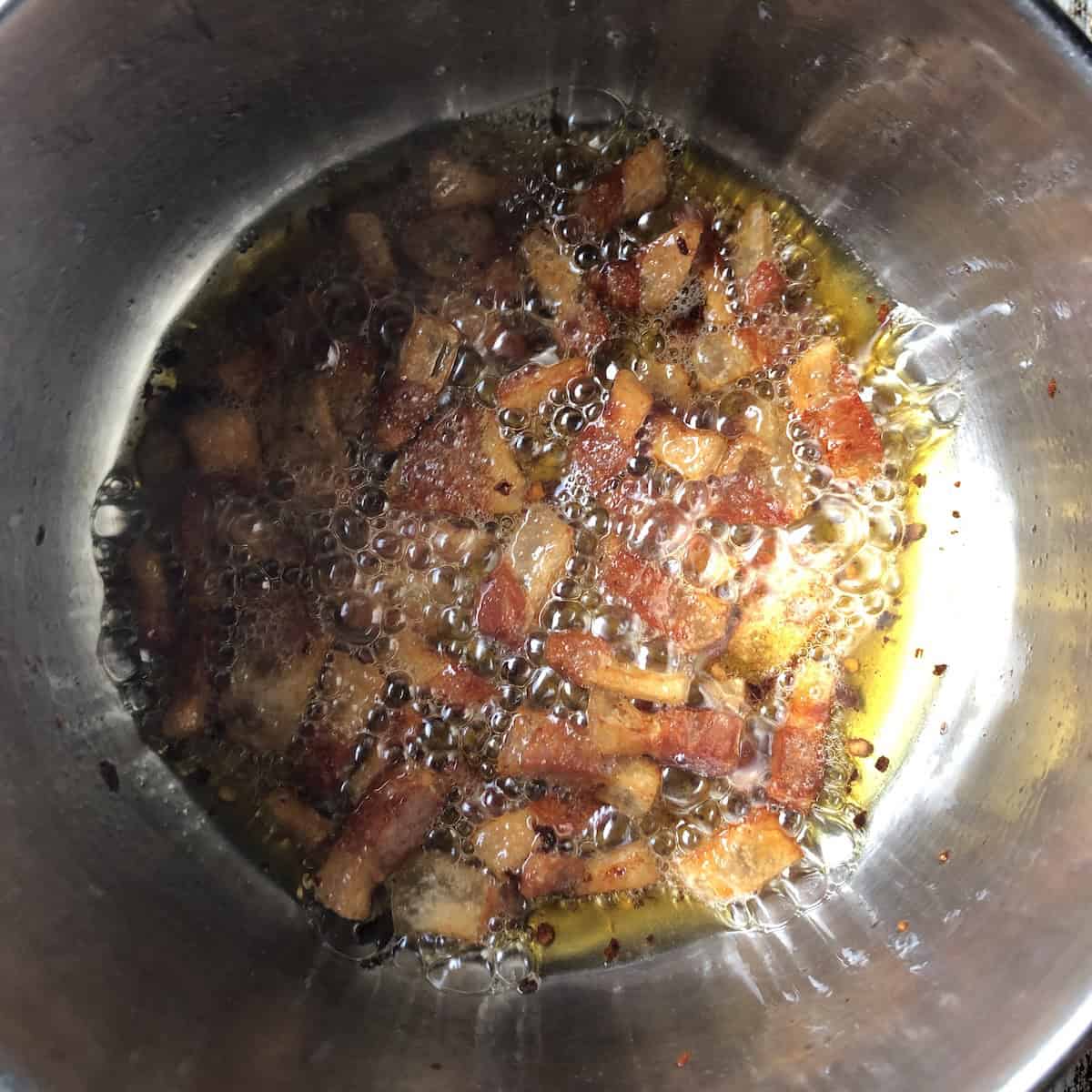
Step 1. Render the guanciale (5-6 minutes). Add the sliced guanciale and dried chili to a 12-inch skillet or 4-quart pot set over medium heat (325°F/163°C). Cook until the fat renders, the meat is golden, but still tender with some chew and a few crispy bits (right photo below).
You have the option at this point to remove ¾ of the tender, perfectly cooked (not yet super crispy) guanciale to a plate to stop the cooking, then continue cooking the rest until very golden and very crispy to use as a garnish. Add shallots (if using) and cook 5 minutes, or until translucent but not browned. Add the ¾ of tender guanciale back to the pot.
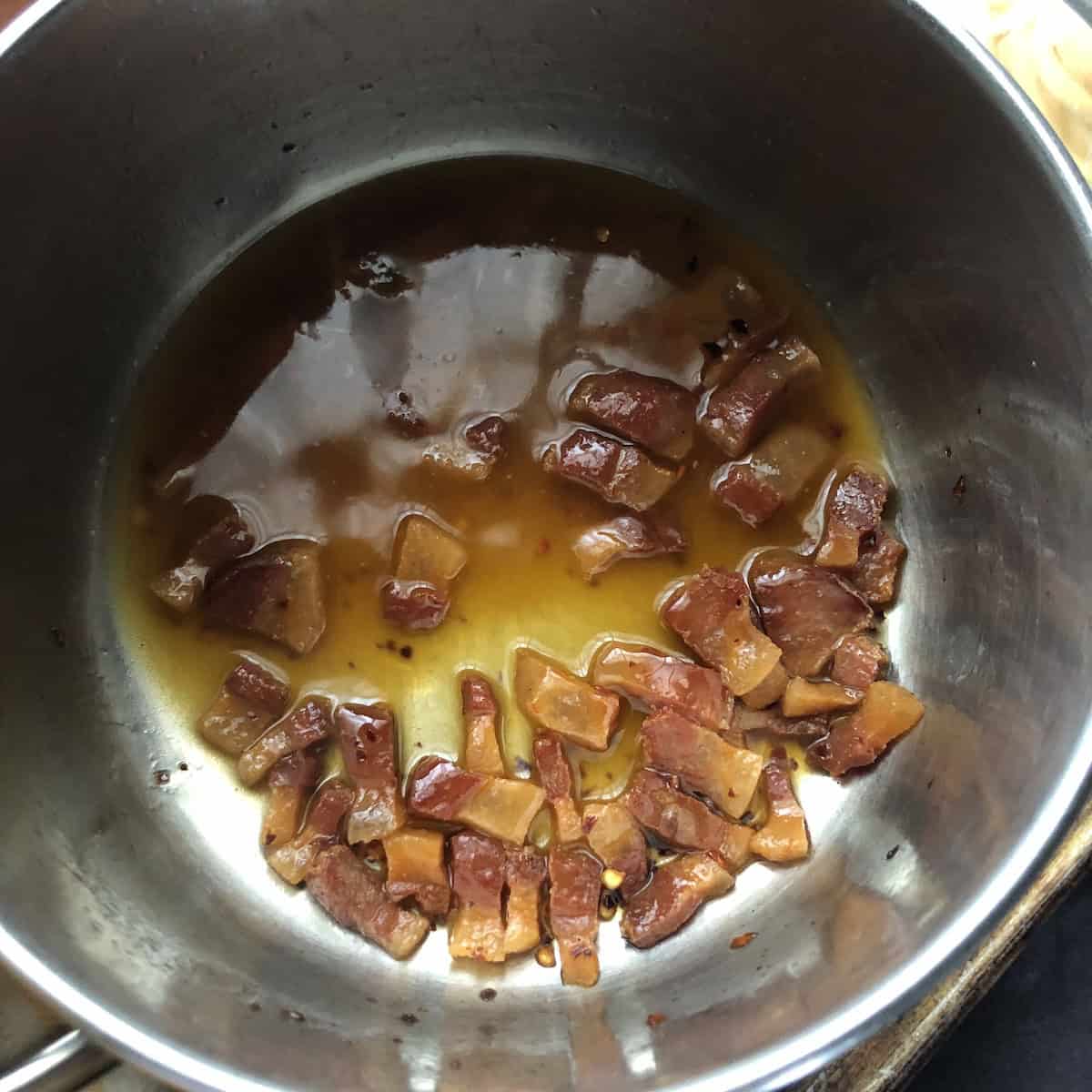
Step 2. Deglaze with wine. Turn the heat to medium-high, add the white wine while scraping up any fond (browned bits) from the bottom of the pan. Cook for 3-4 minutes so the wine can evaporate (it will look glossy when it's ready).
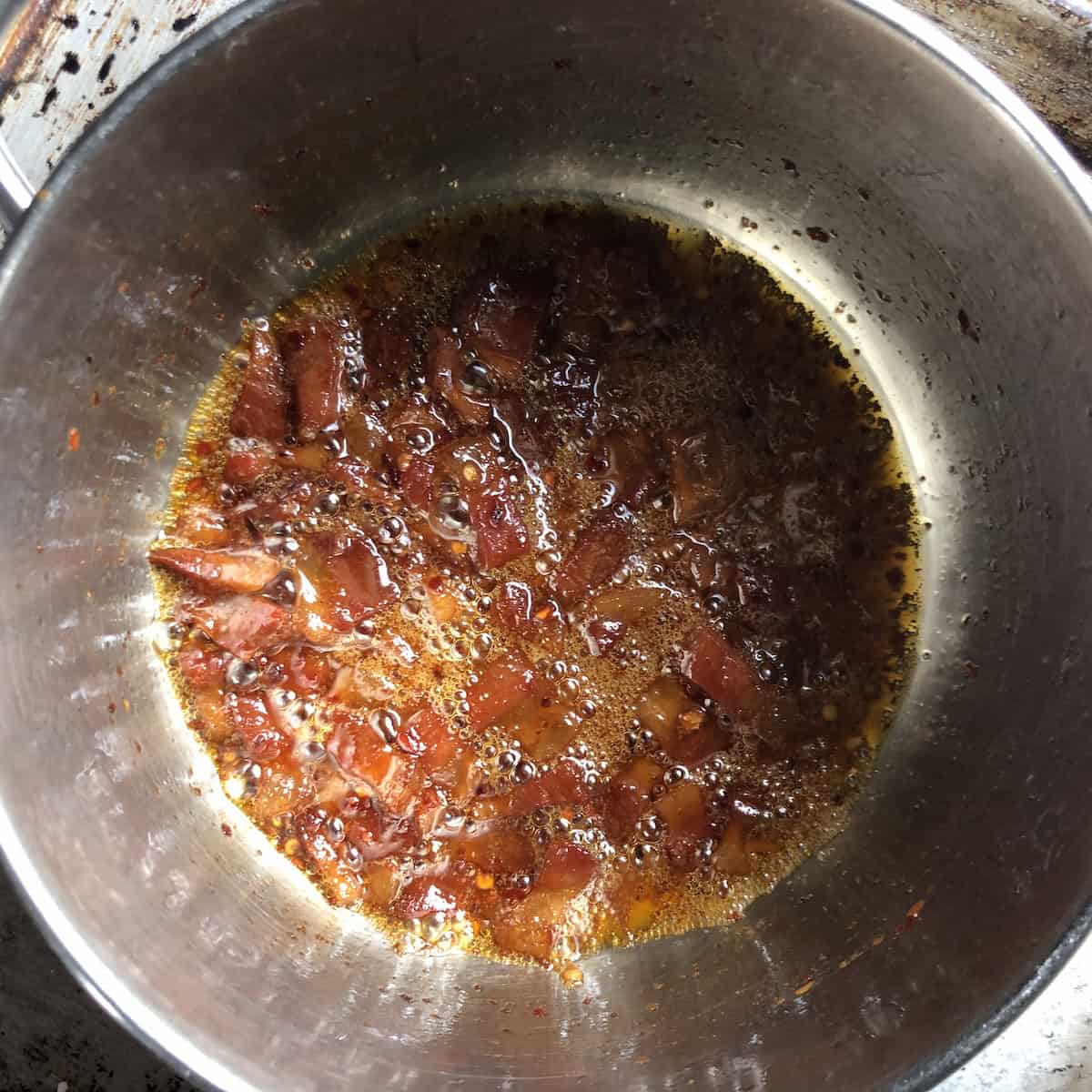
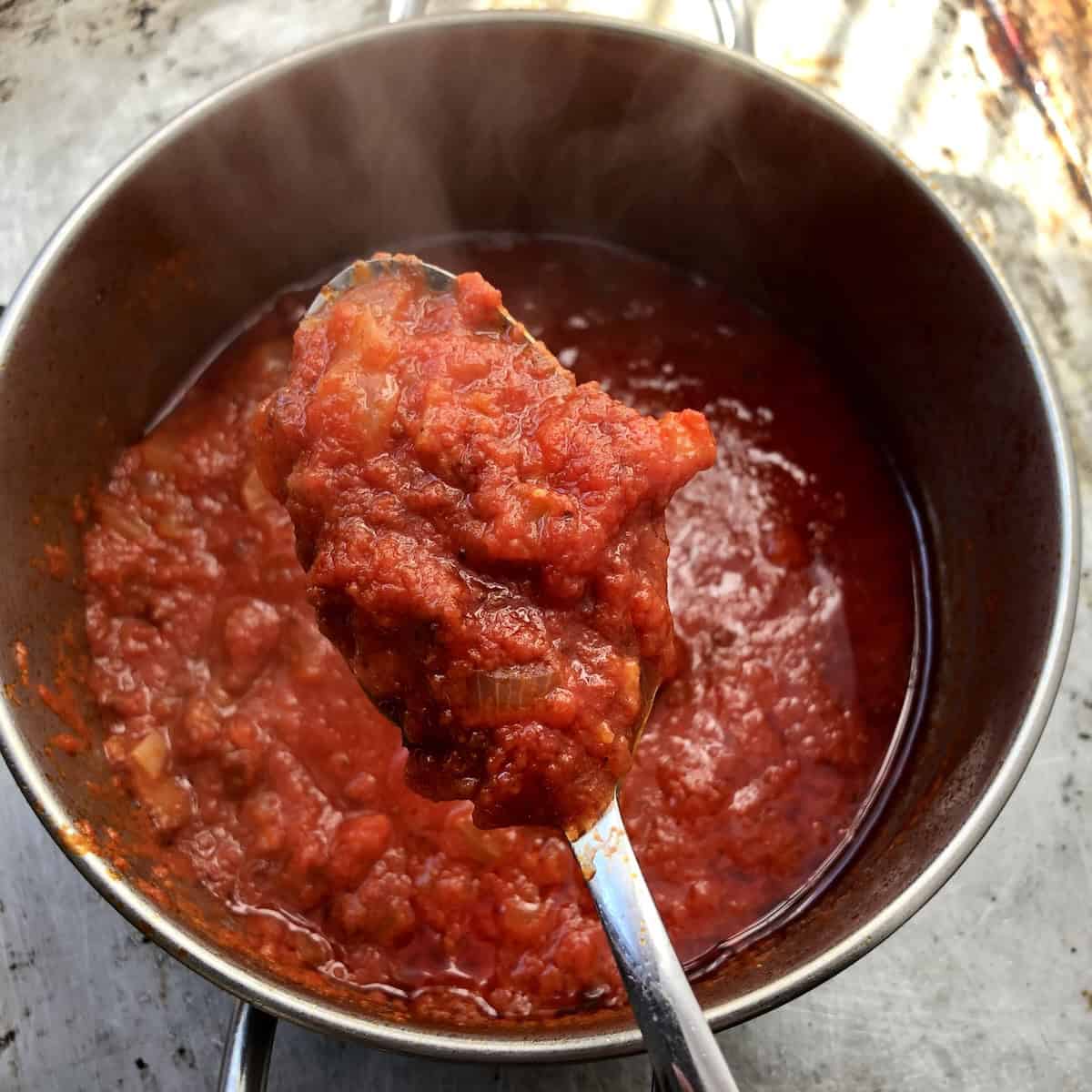
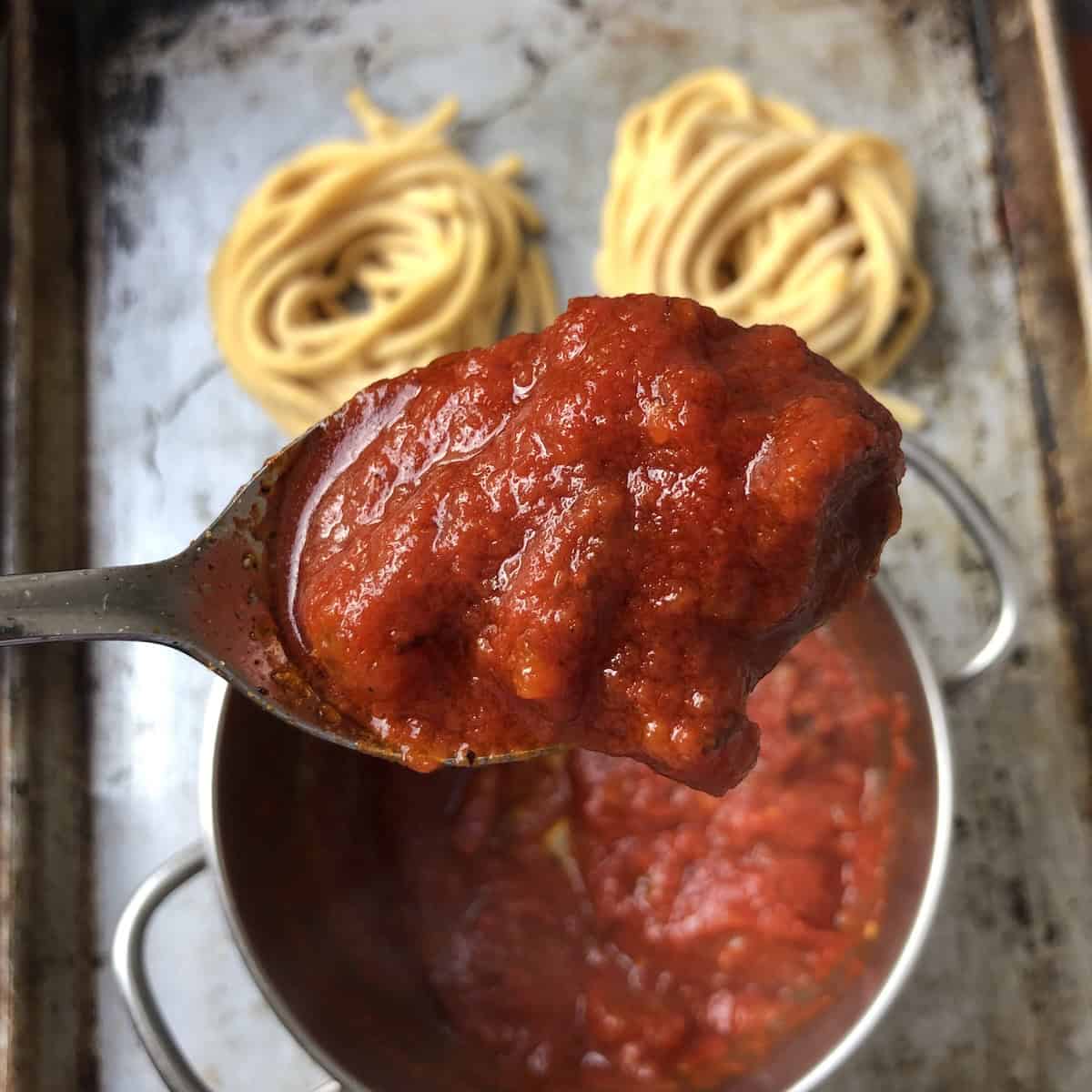
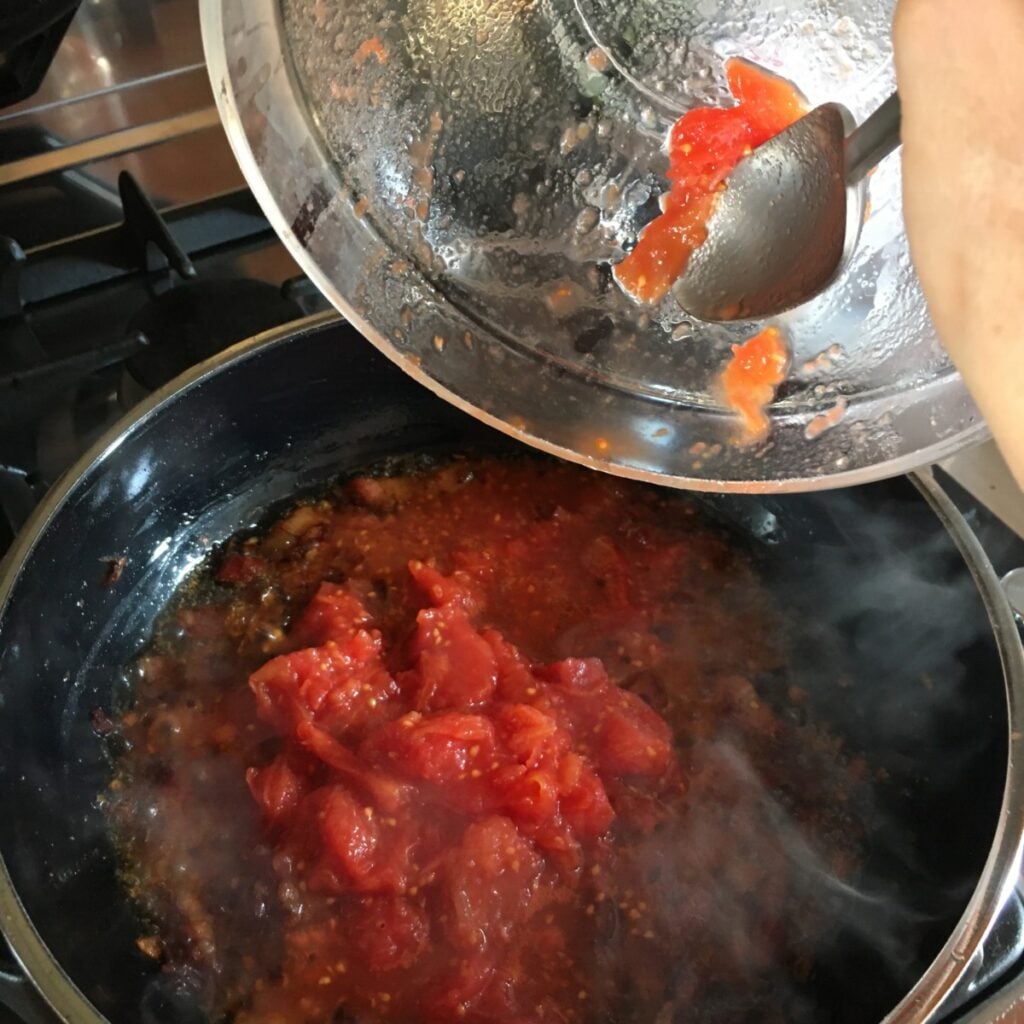
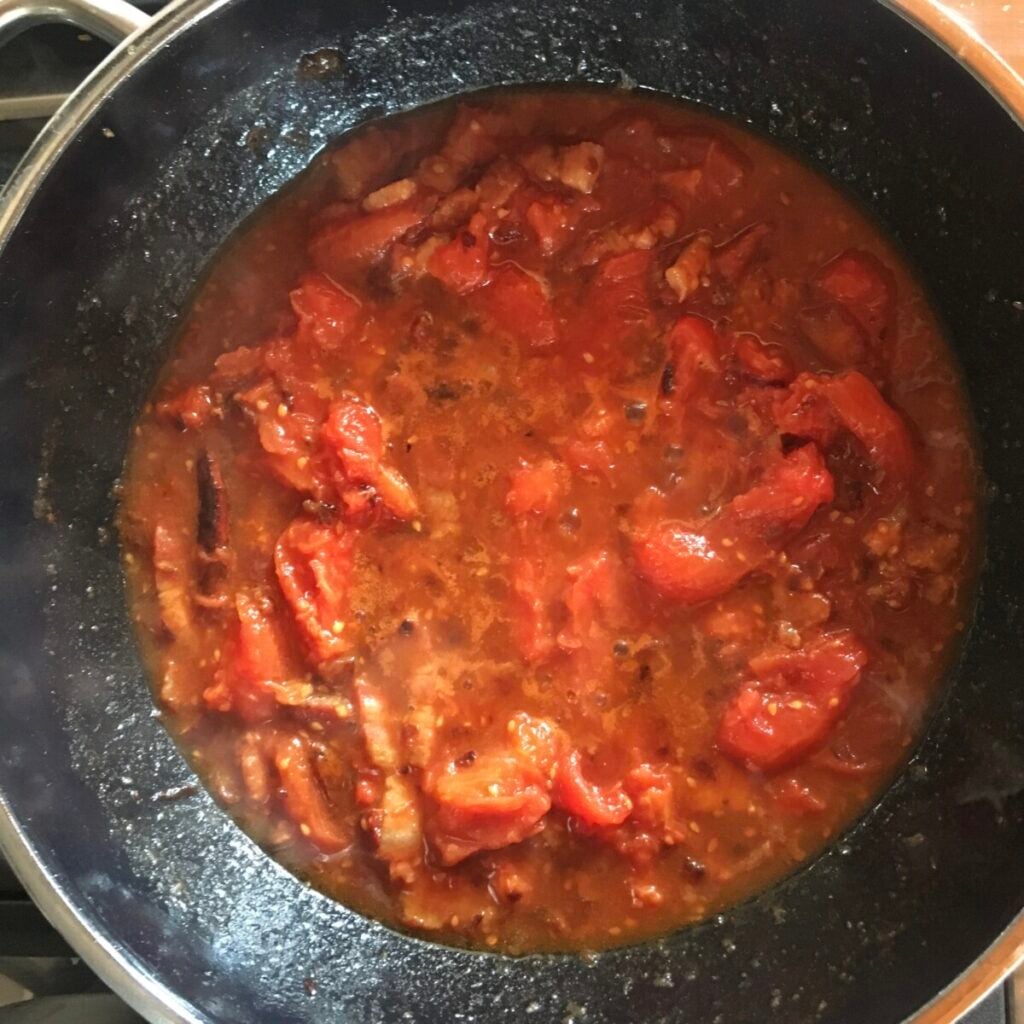
Step 3. Add tomatoes to the guanciale and simmer. (Use canned tomatoes or blanched, peeled, garden-fresh San Marzano or grape tomatoes). Simmer on low until the sauce slightly thickens (about 10-15 minutes if using fresh tomatoes and 15-20 minutes if using canned tomatoes).
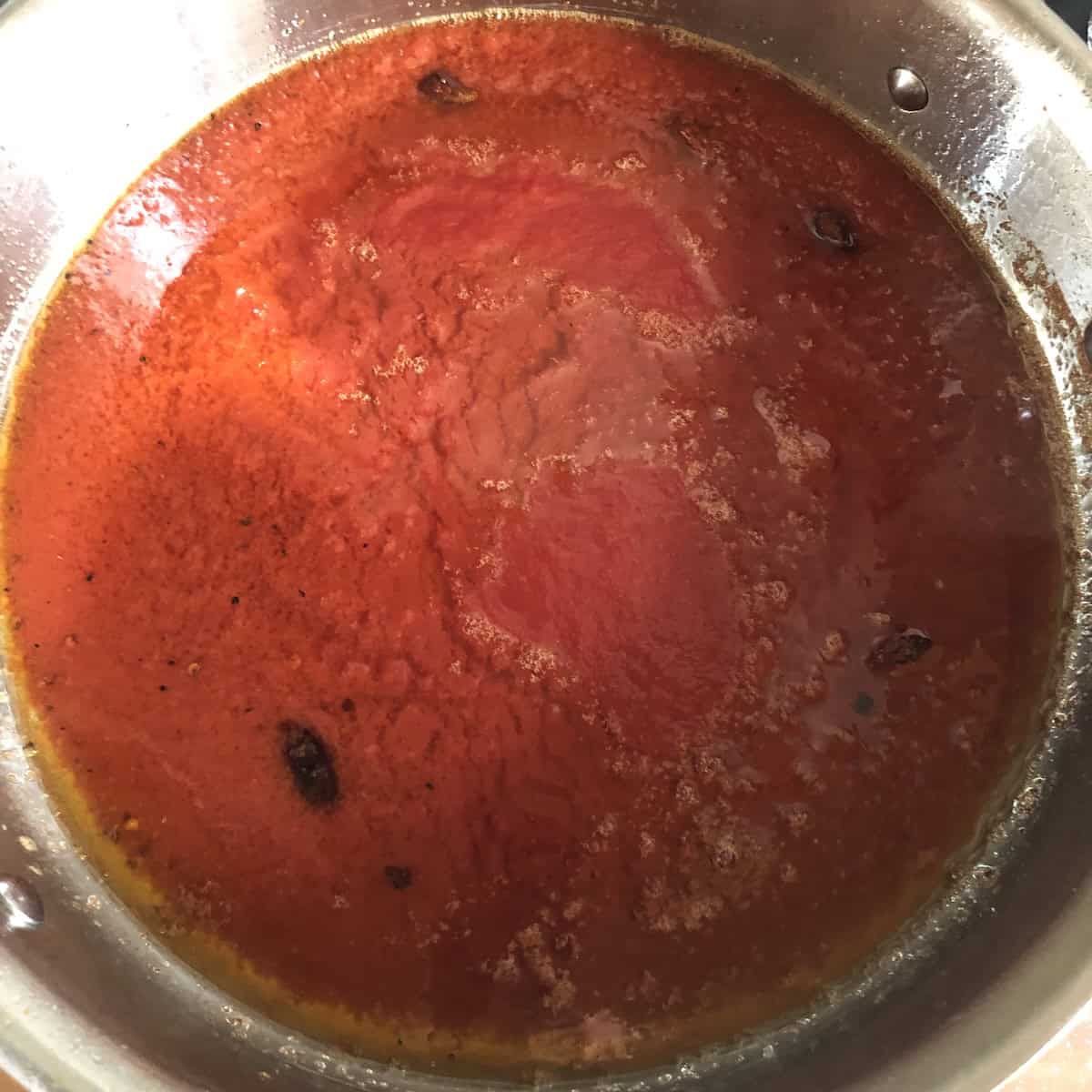
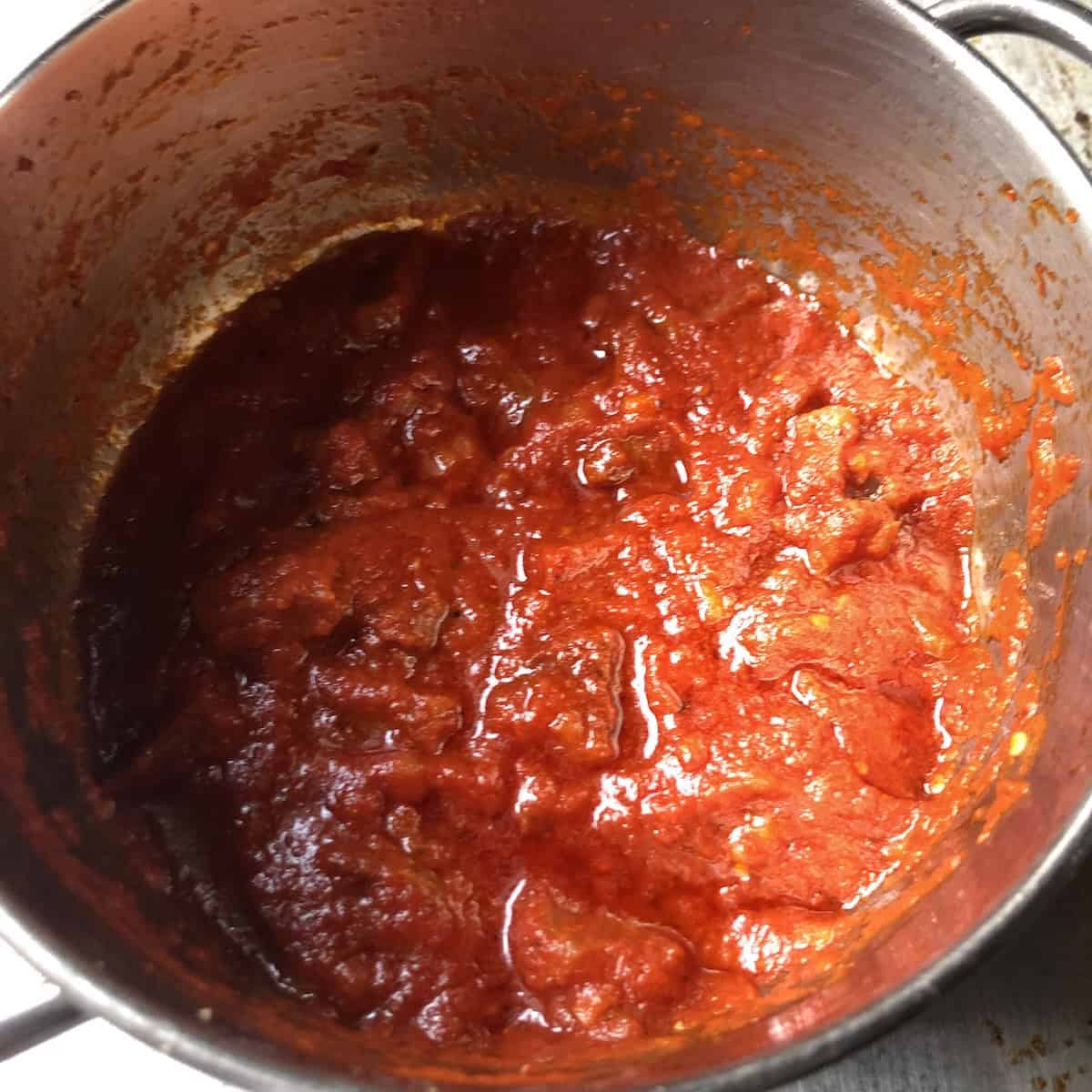
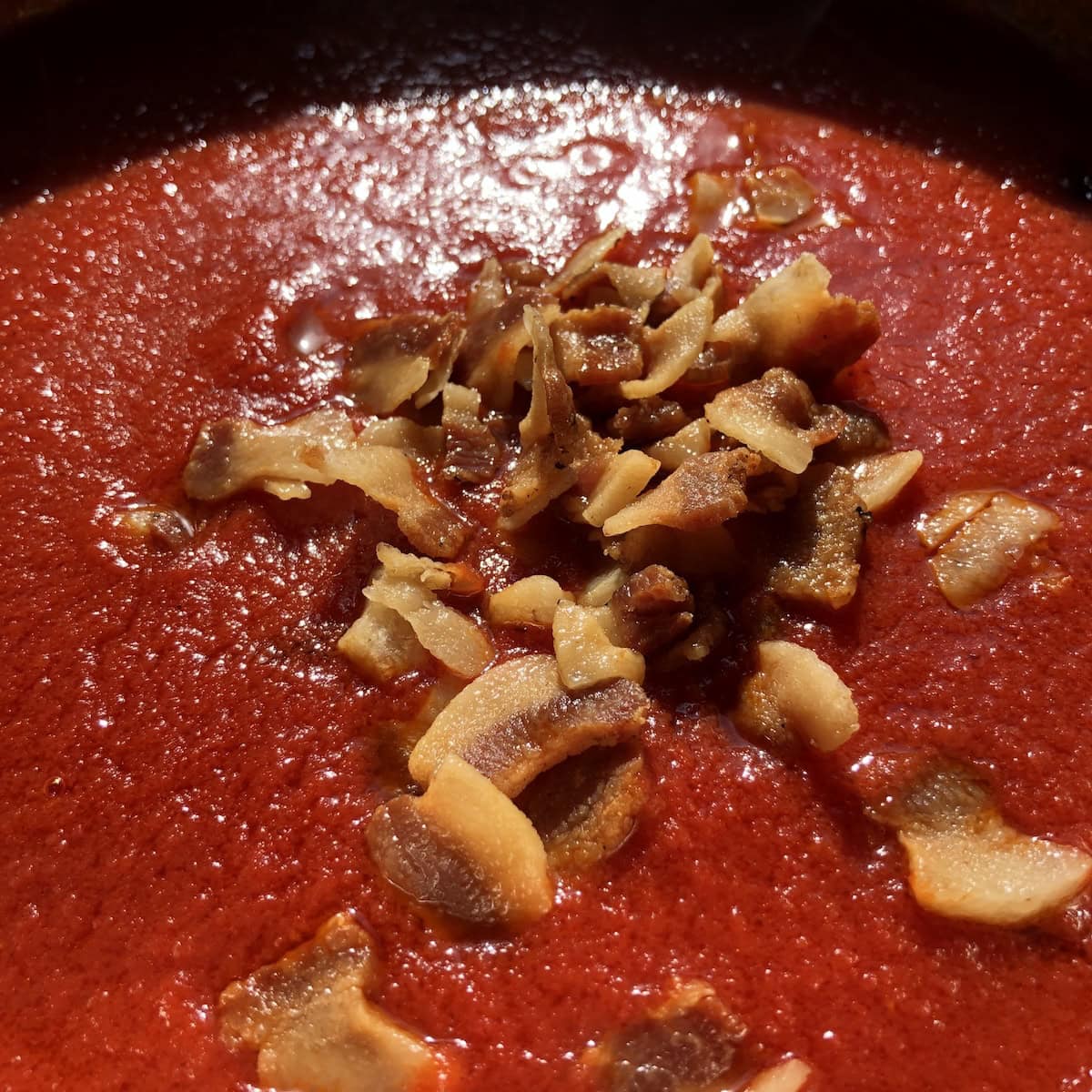
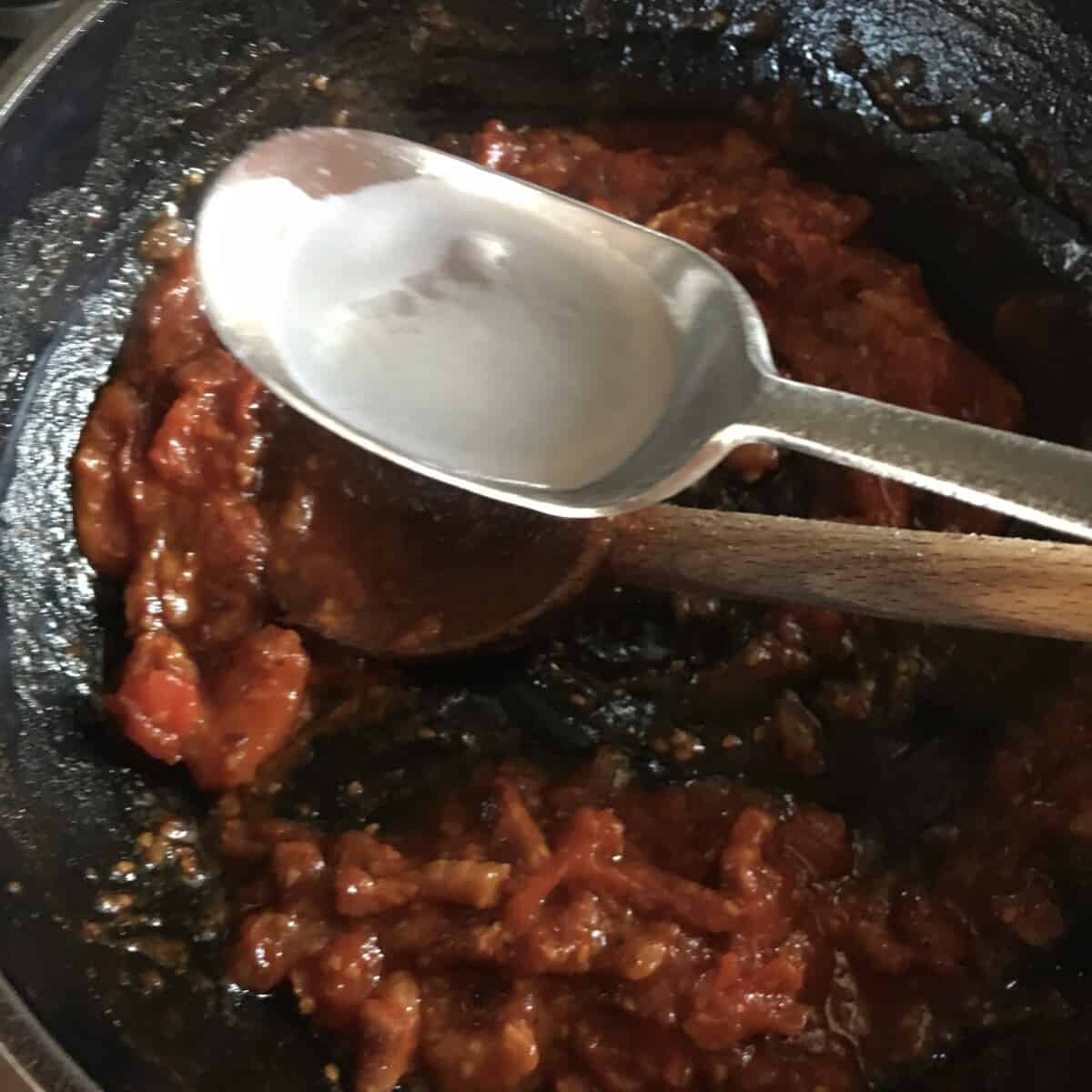
Step 4. Cook pasta to al dente. Reserve about 1 cup of pasta water before draining. You will not be using the whole cup (not even close), but it's good to have more than enough on hand. Add a few spoonfuls of starchy pasta water to the sauce. Increase the heat to medium. Cook for 1-2 minutes, or until it becomes glossy.
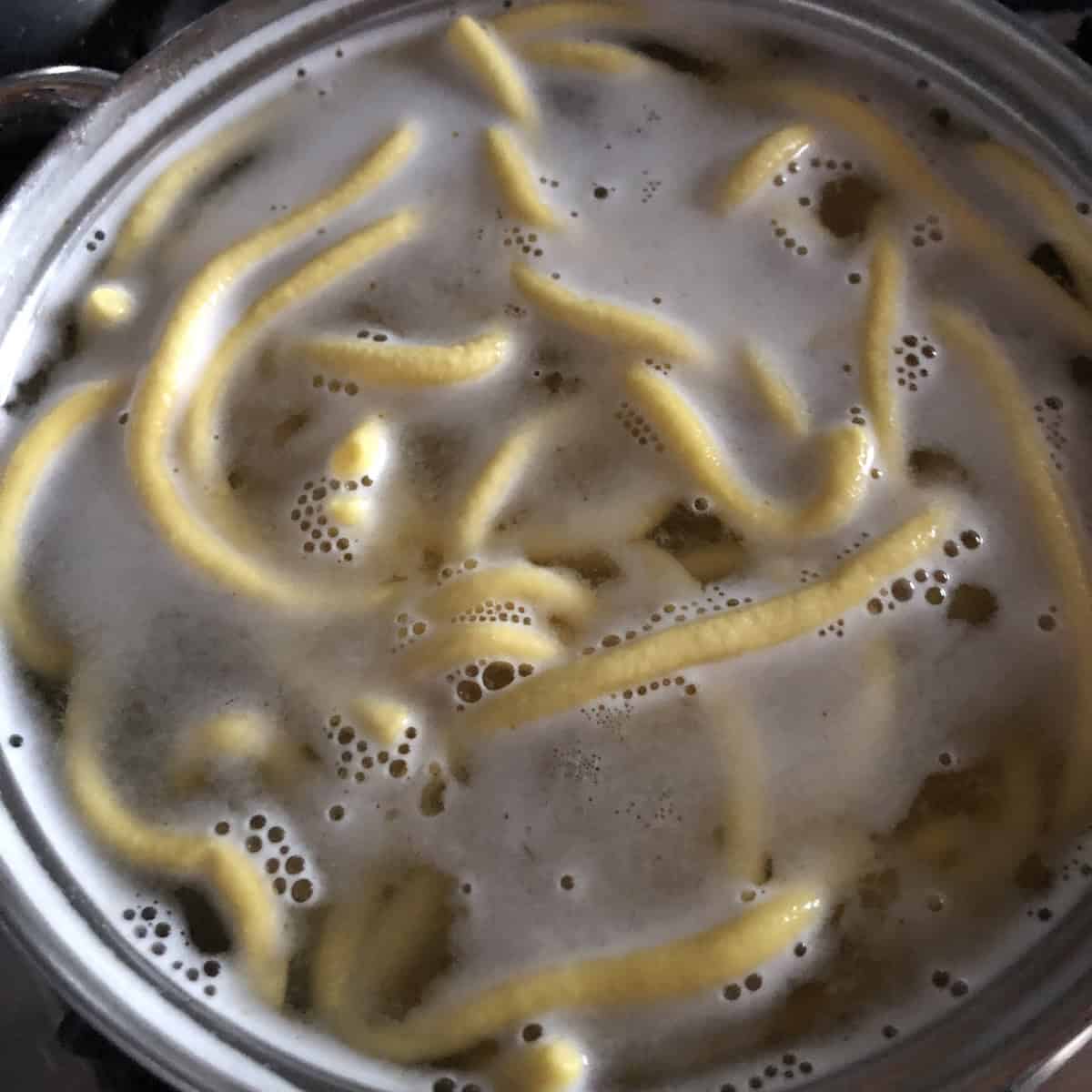
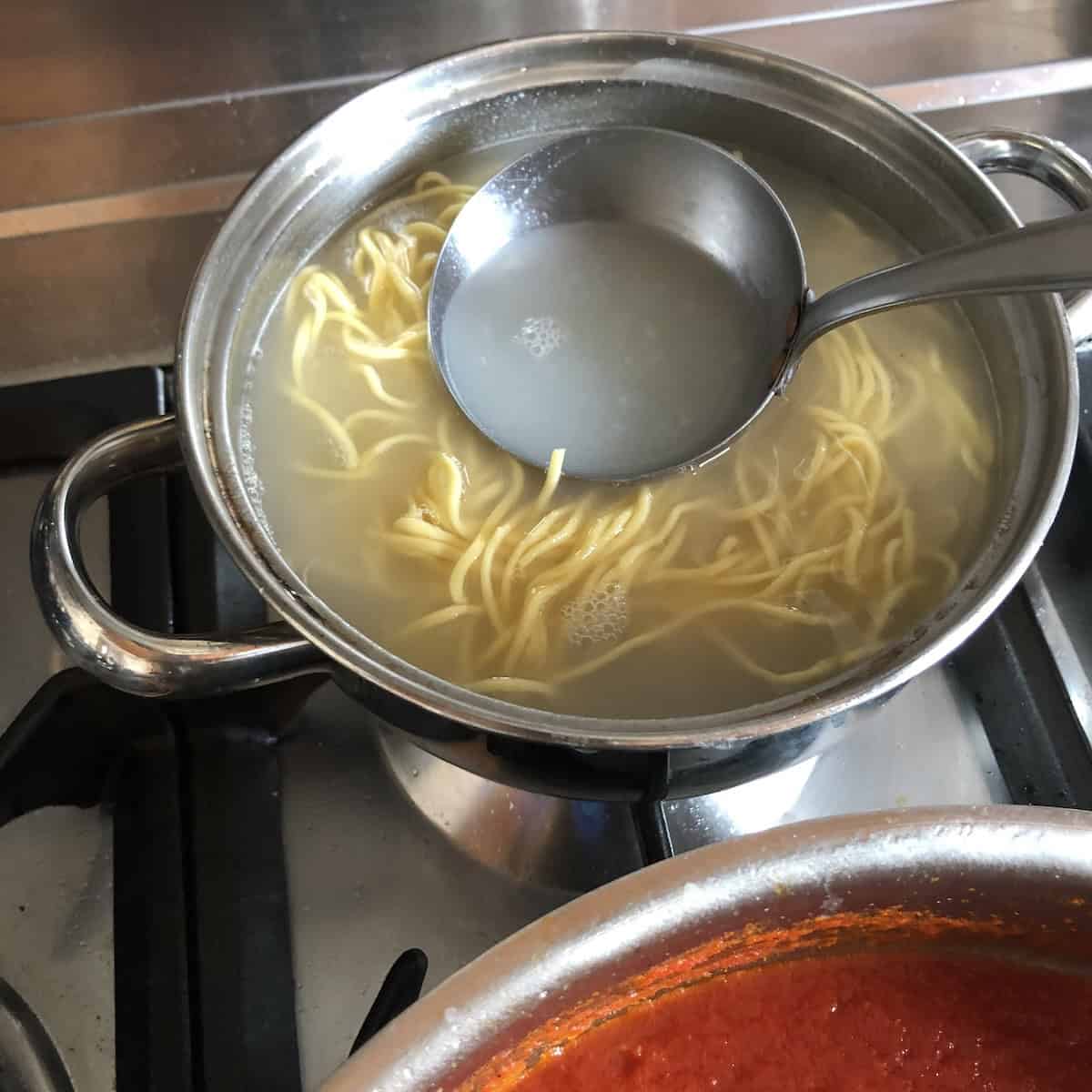
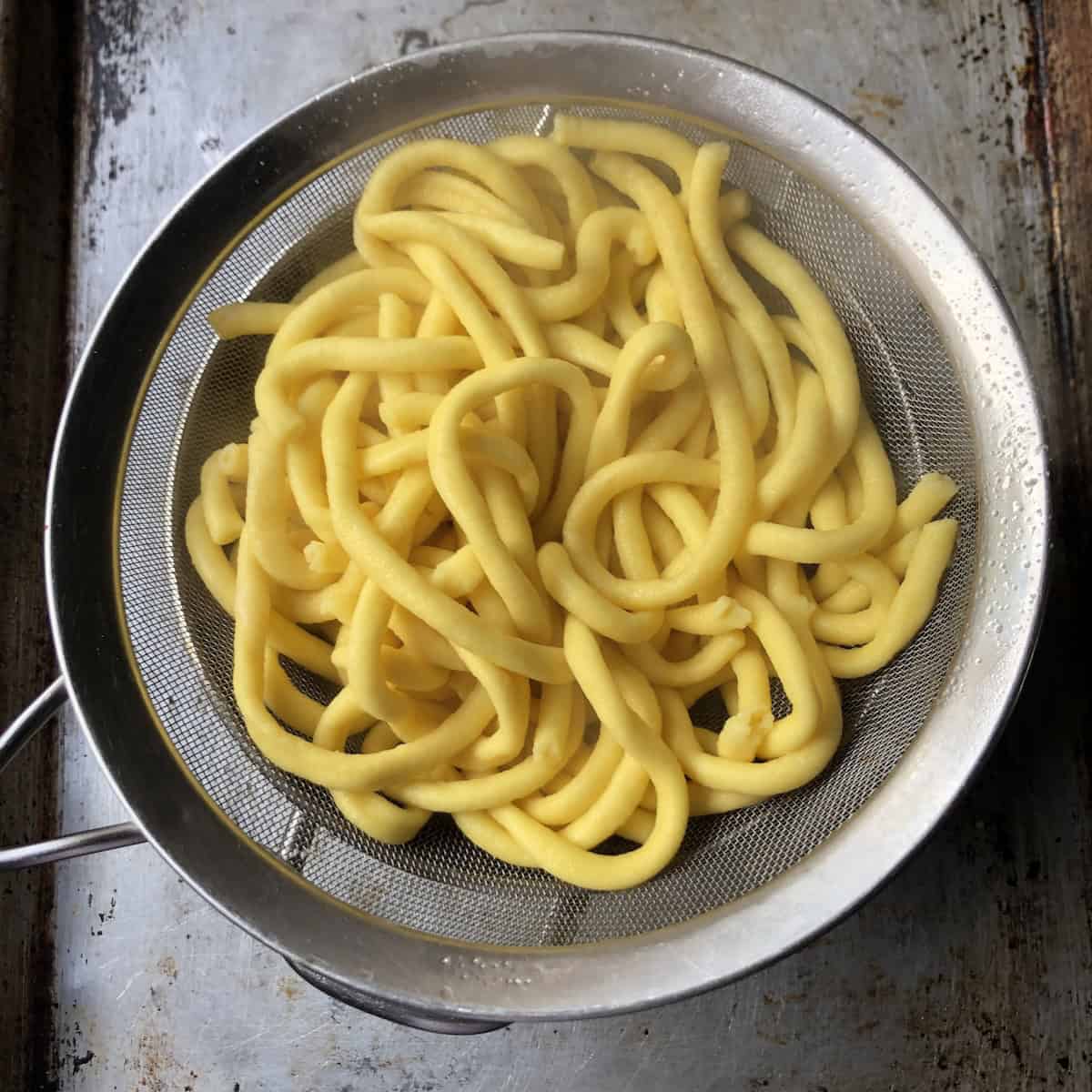
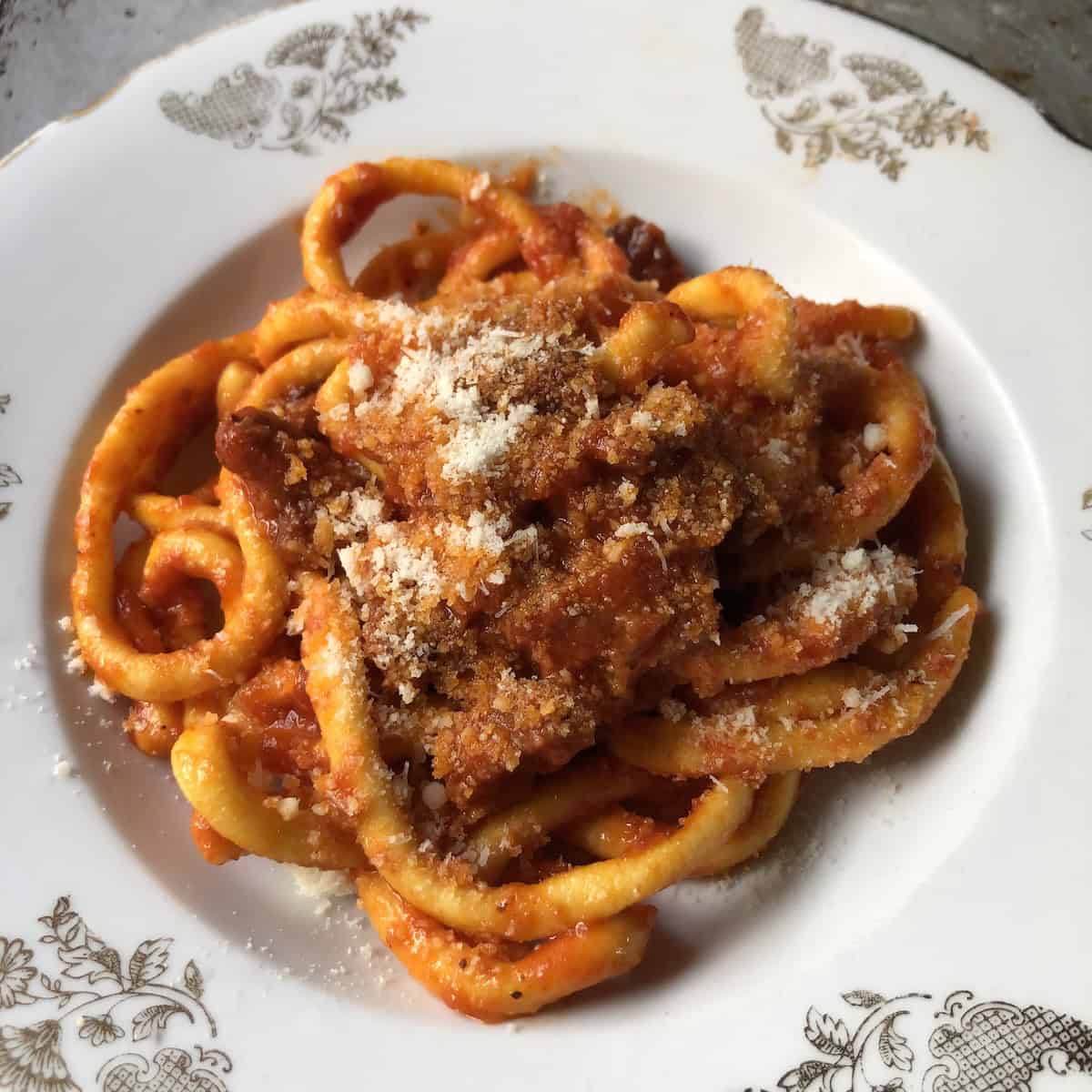
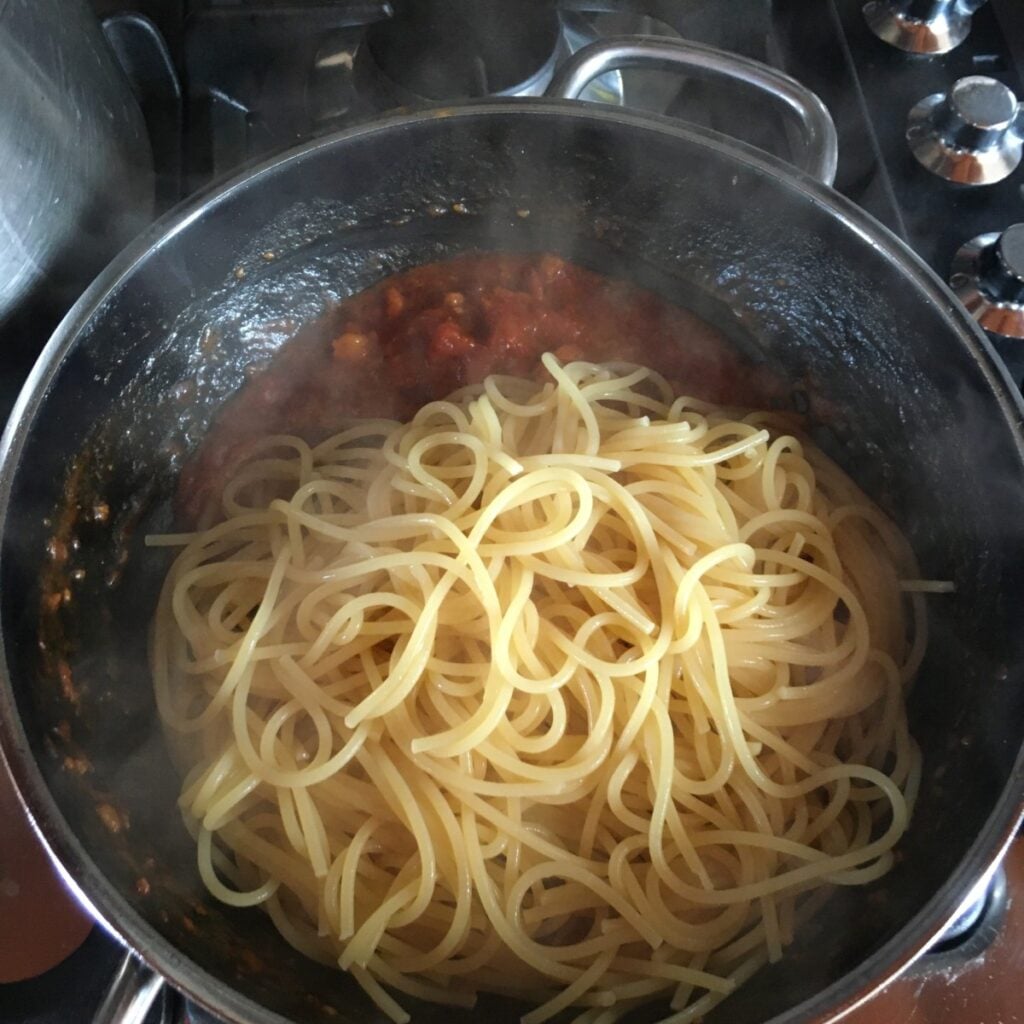
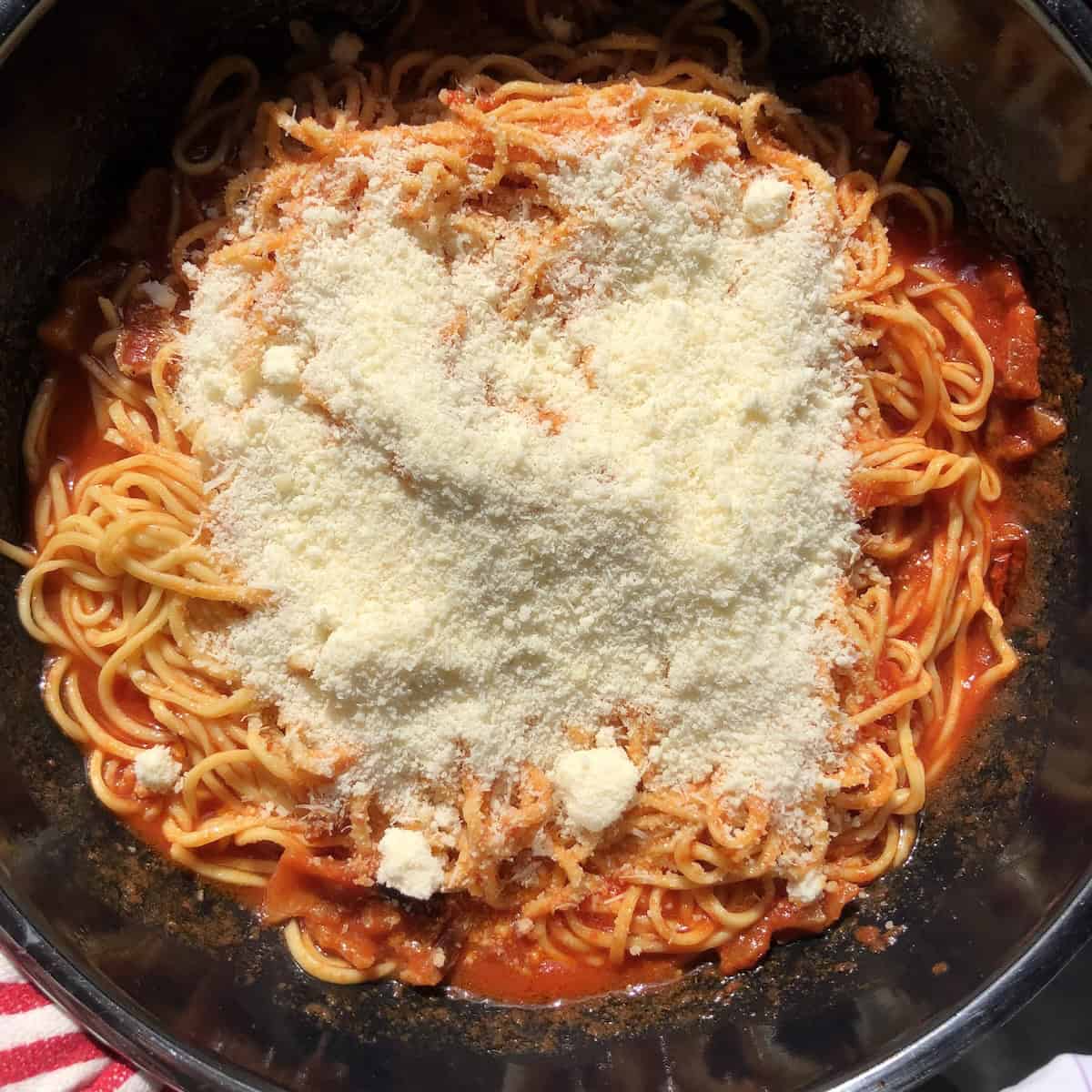
Step 5. Finish and serve. Add drained pasta to the sauce. Toss 30 seconds. Remove from heat. Add a little Pecorino and toss again, adding more pasta water if needed to loosen up the sauce. Serve immediately.
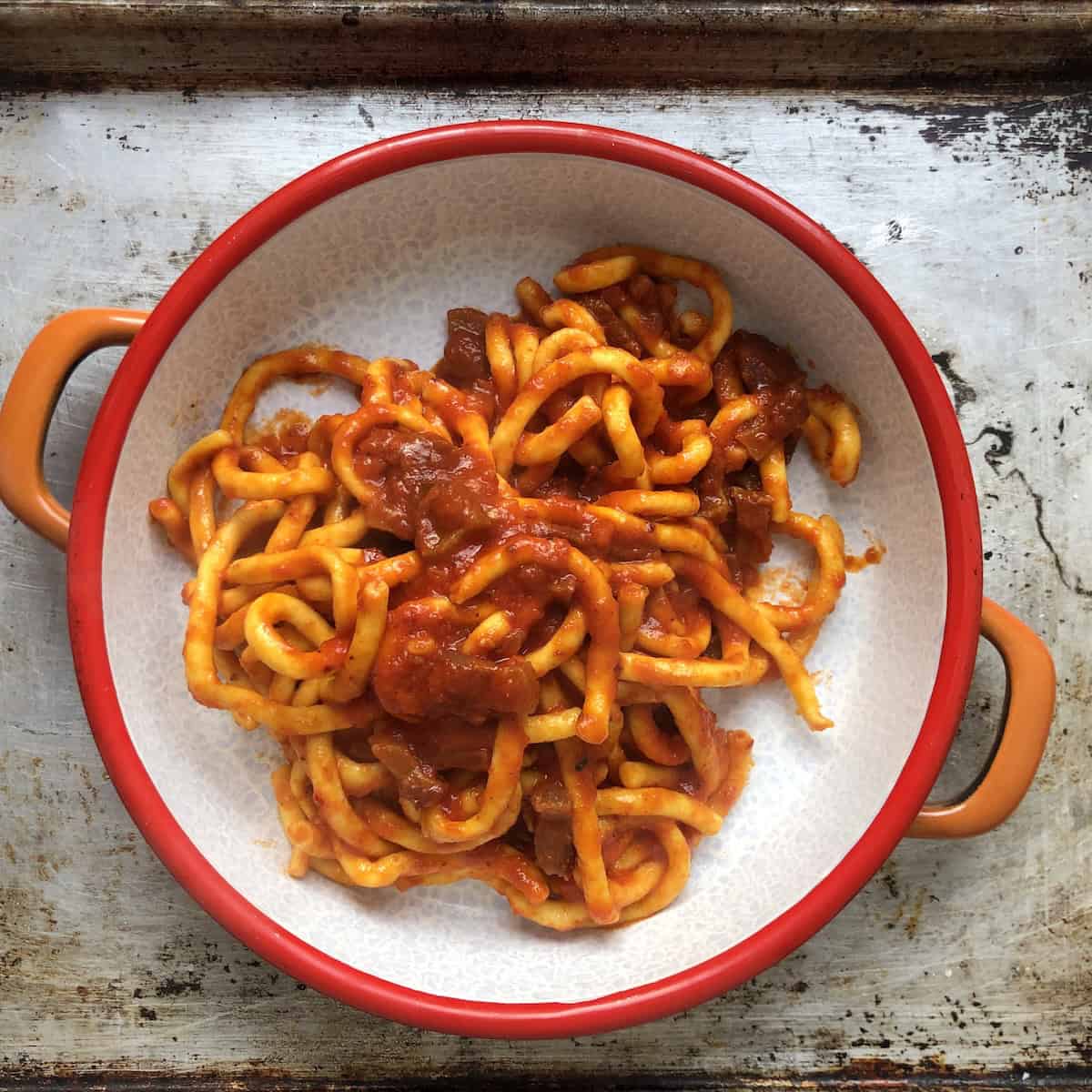
Find detailed instructions in the recipe card.
How Do You Make Amatriciana With Pancetta?
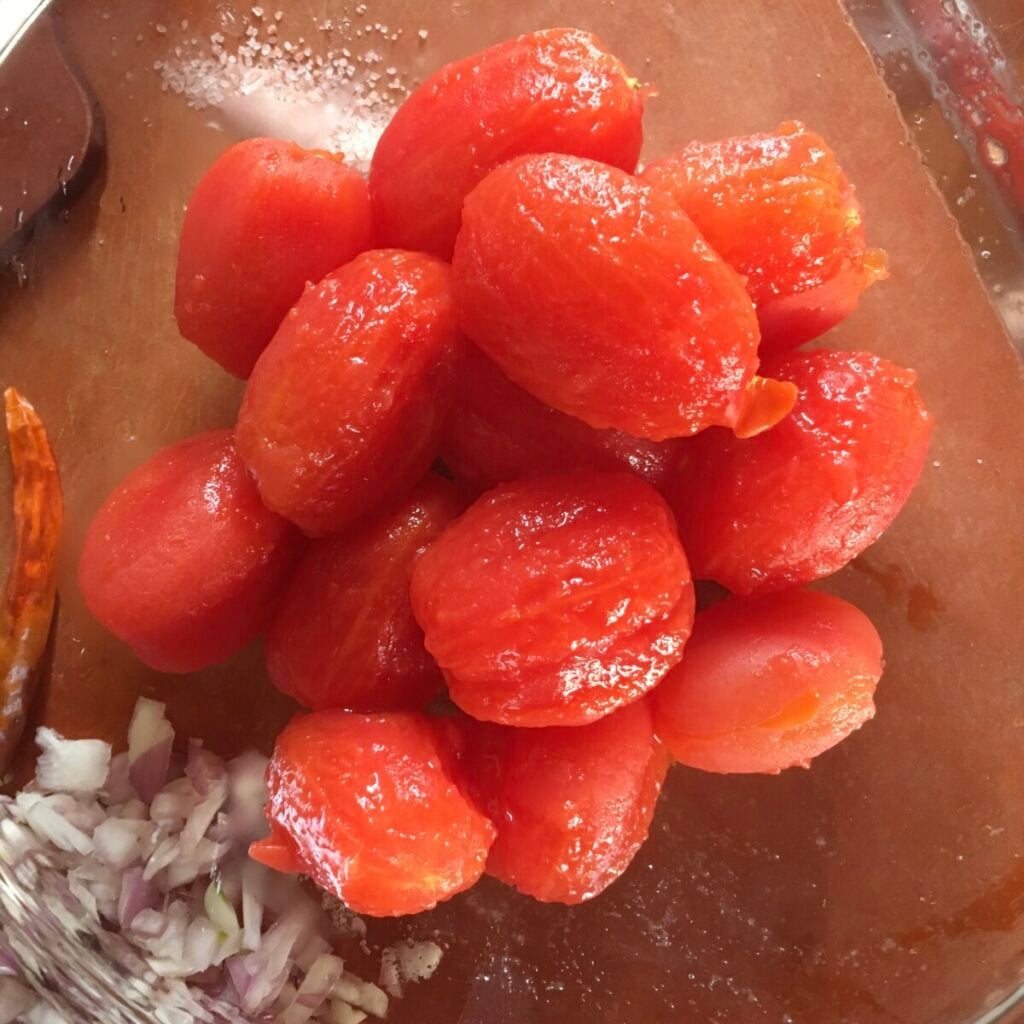
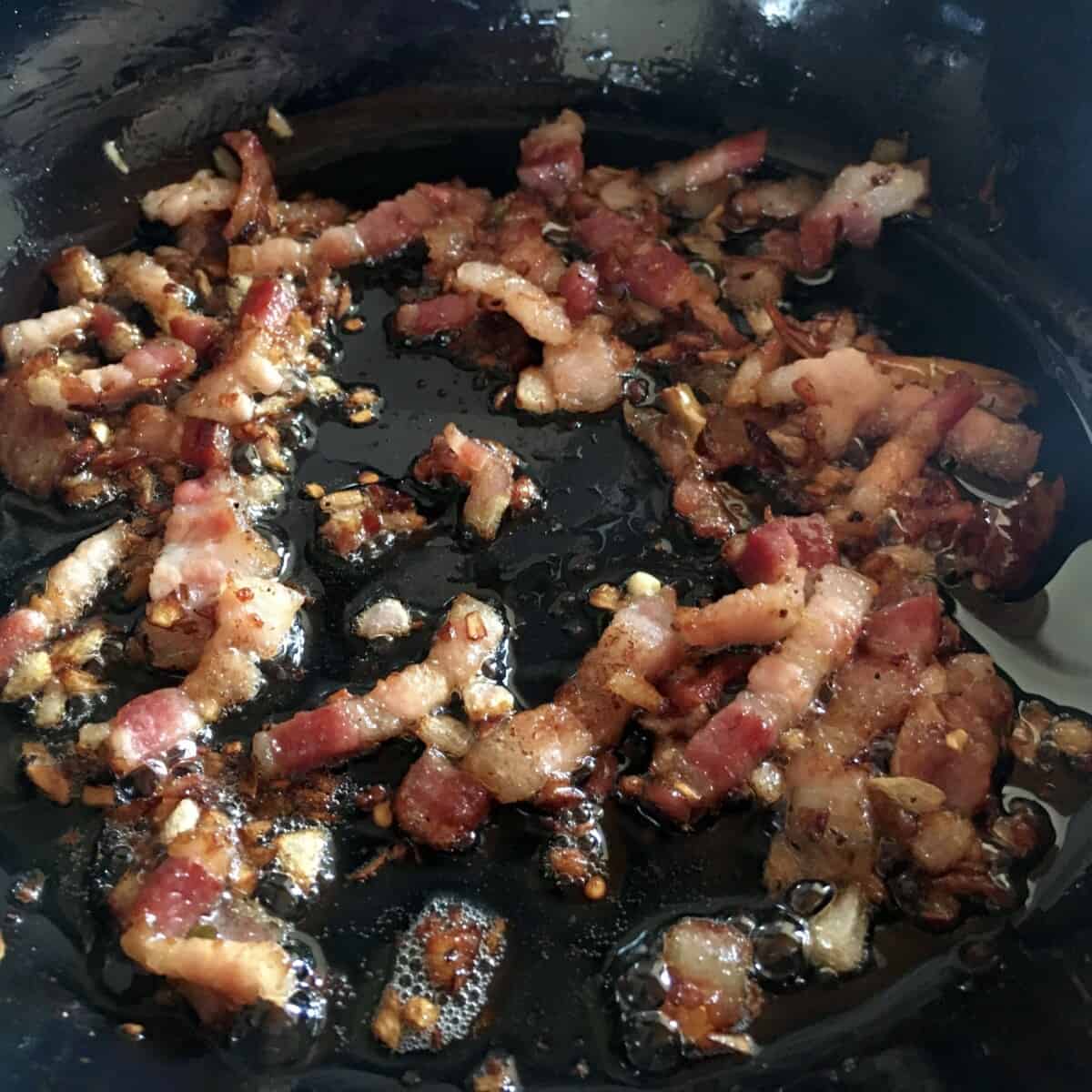
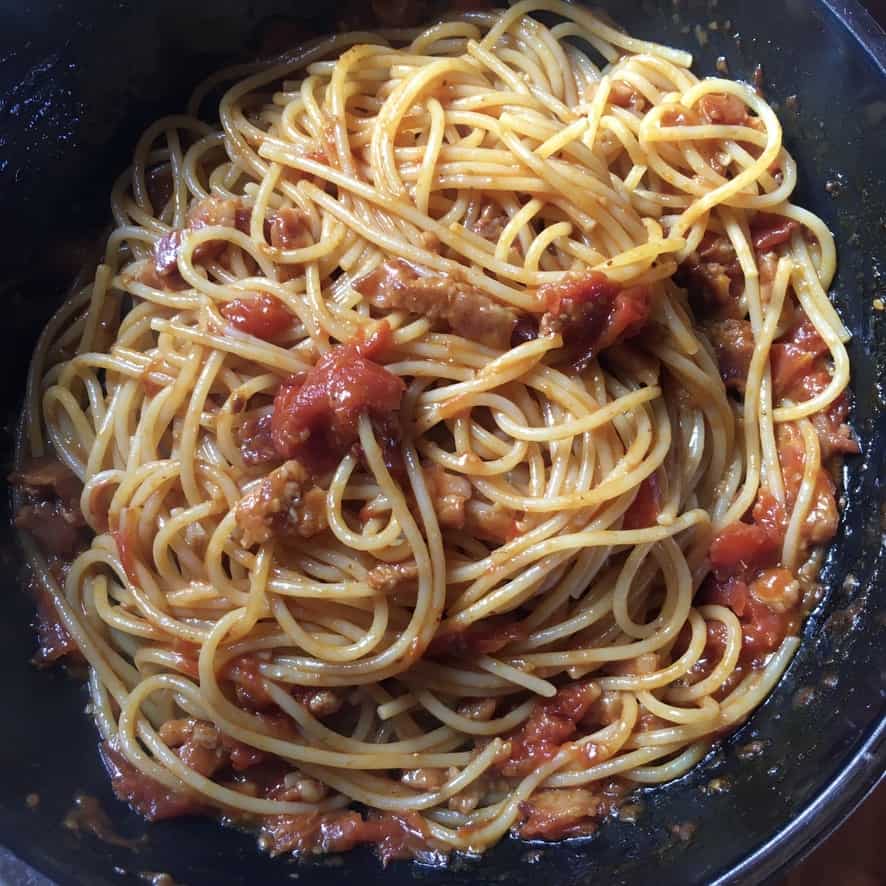
If using pancetta instead of guanciale, the method changes slightly. Pancetta is meatier and has less fat to render, so you'll need to add about a ¼ cup of extra virgin olive oil to this recipe.
Add the olive oil, pancetta, shallots, and chili peppers to the skillet all at once. Cook over medium heat until the pancetta is tender (not super crispy) and the onions are translucent. Deglaze with wine, add the tomatoes, and cook 3 minutes. Then reduce the heat to low and simmer for about 15 minutes until the sauce thickens.
This is how many Italians make it at home, including Rana. It's not strictly authentic, but it's delicious.
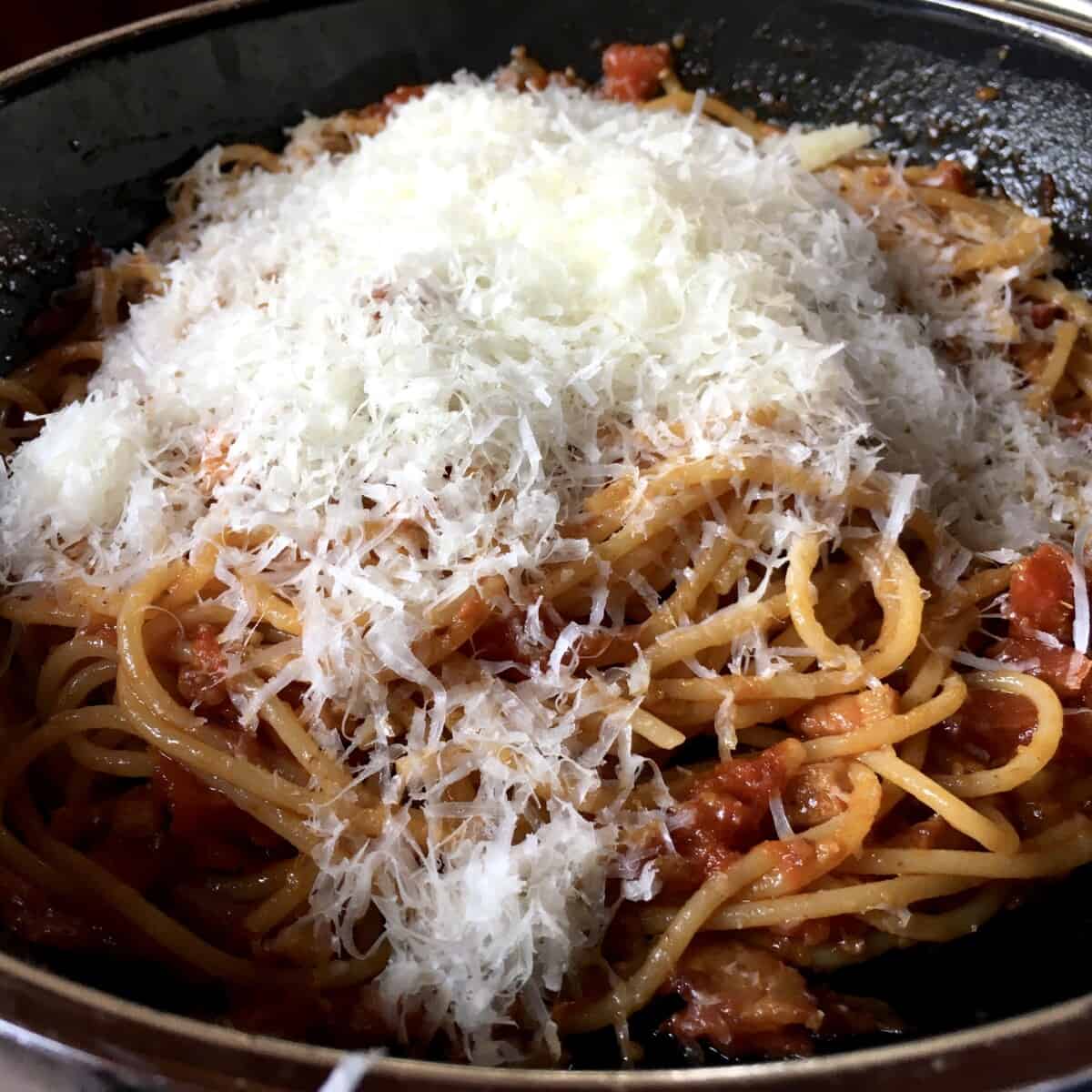
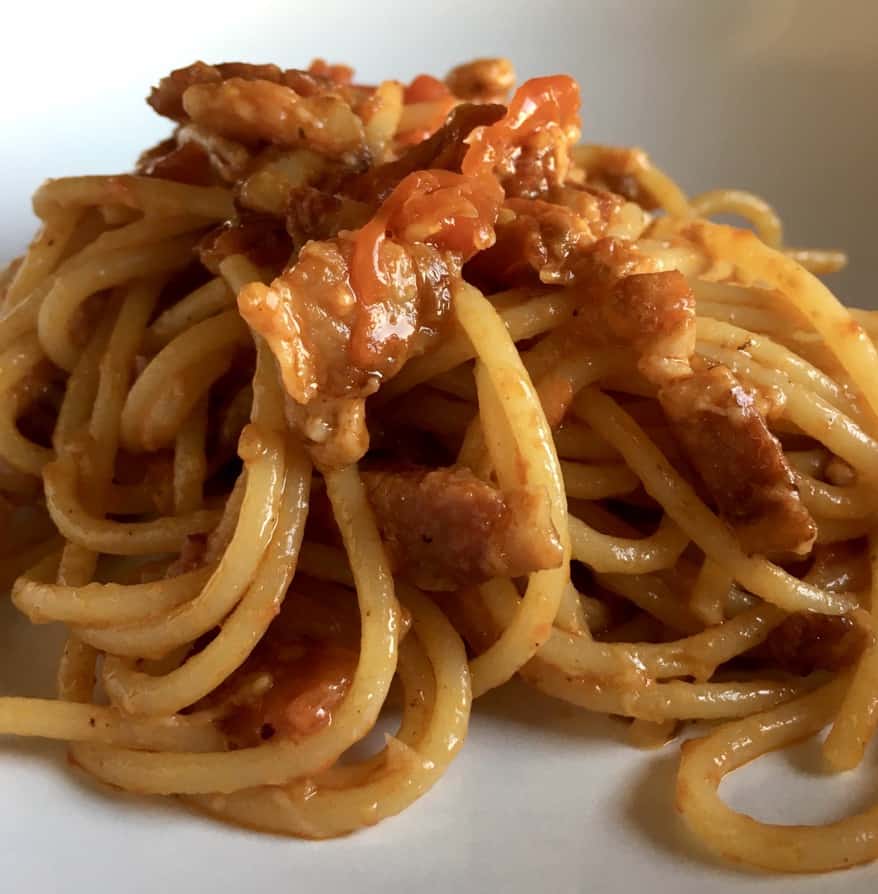
Pasta Amatriciana With Pancetta Step-by-Step Recipe Photos
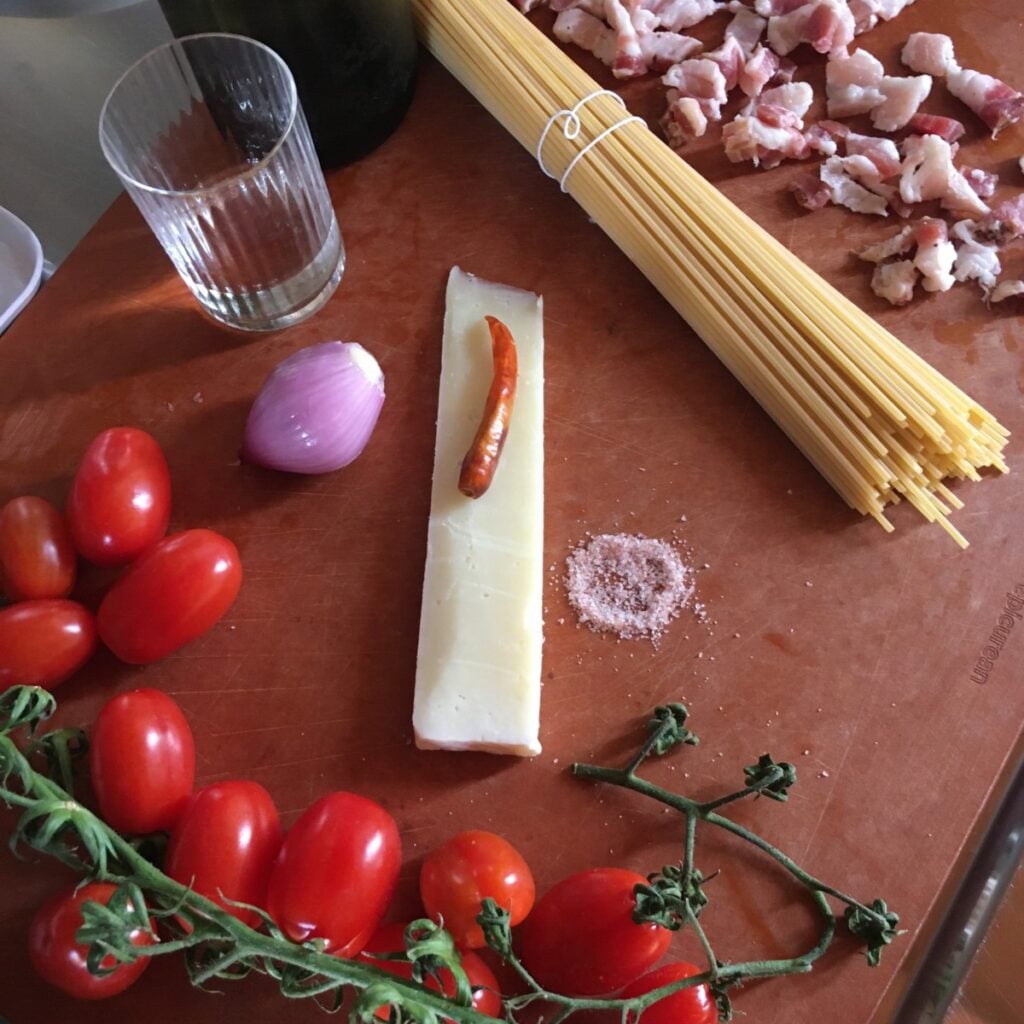
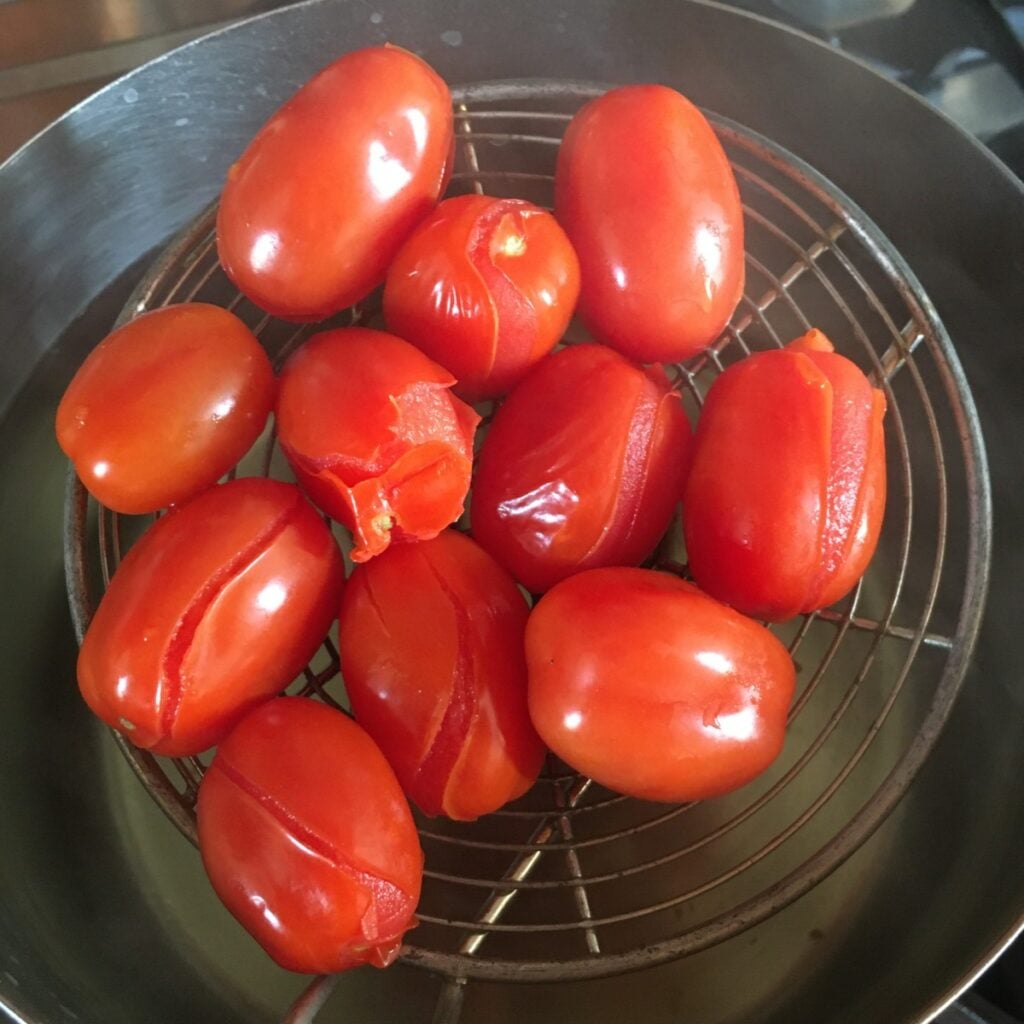
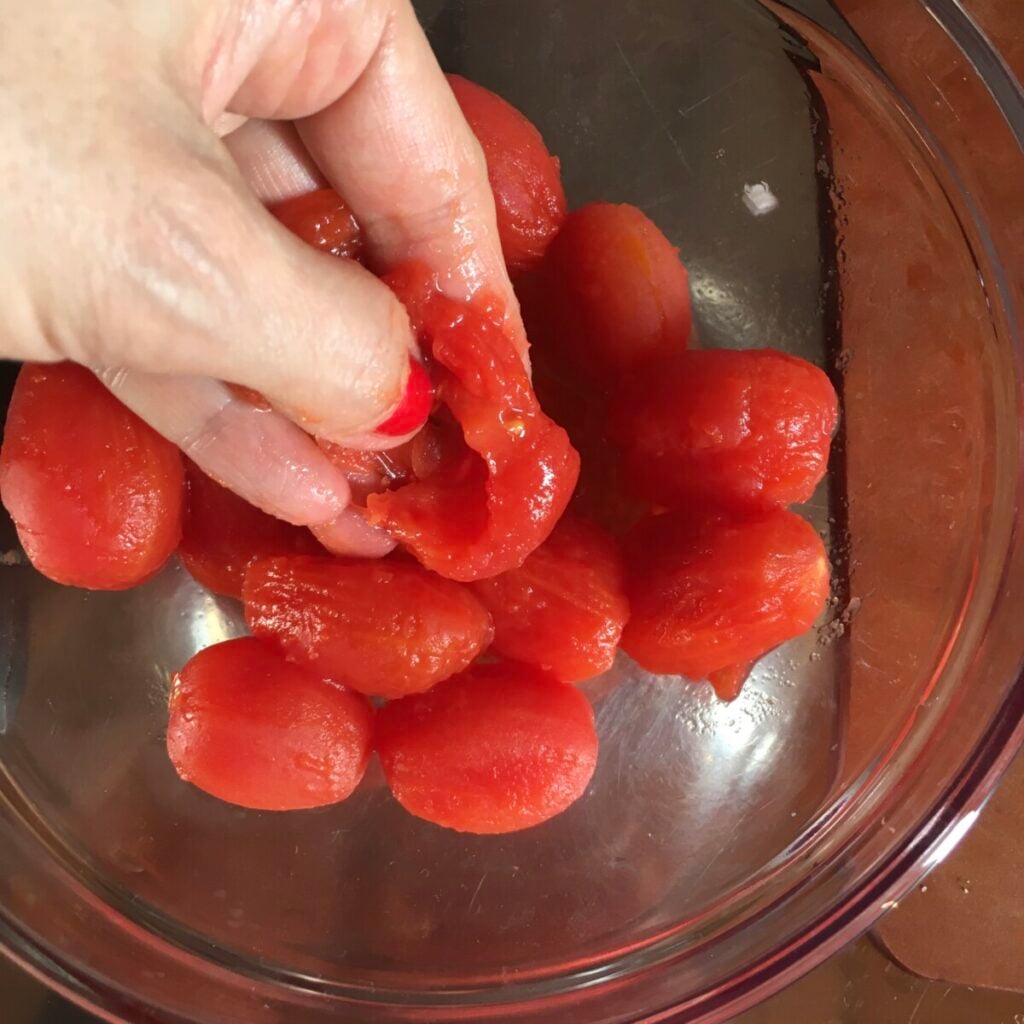
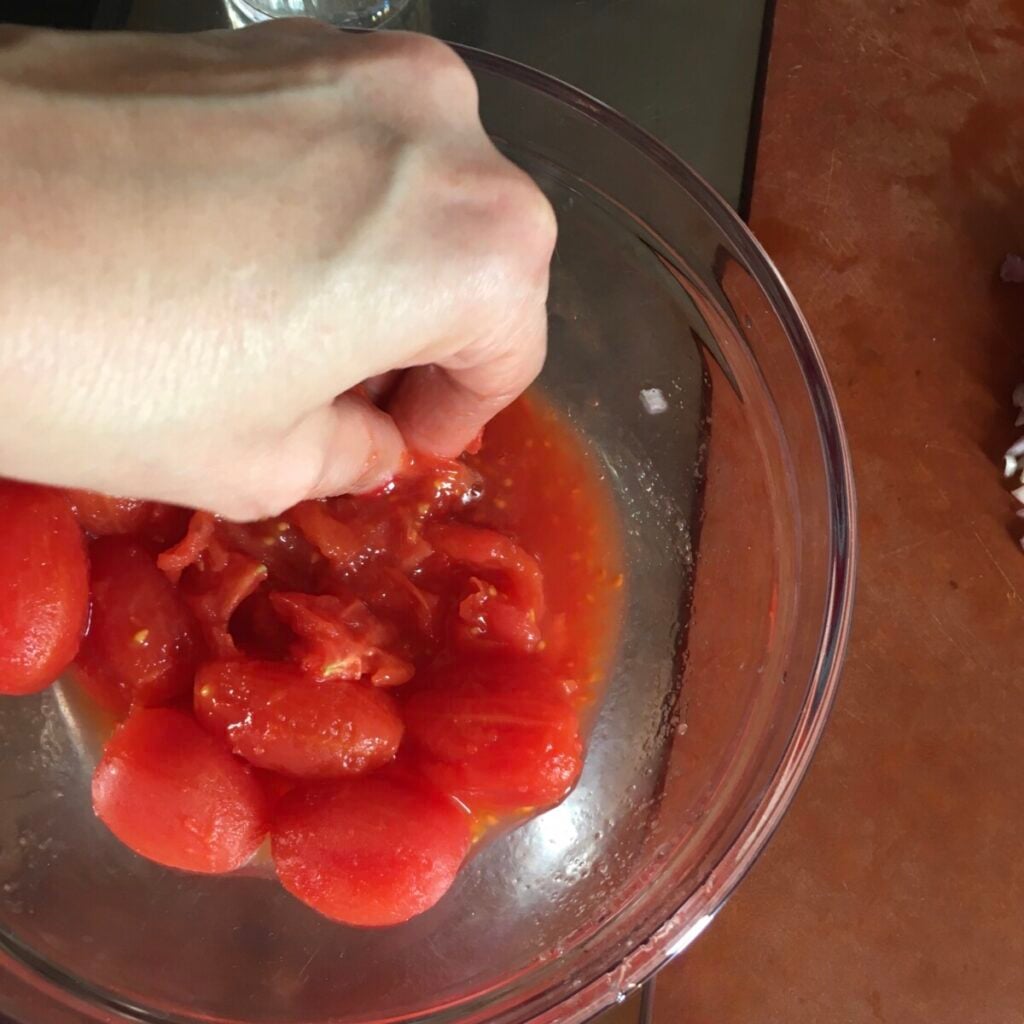
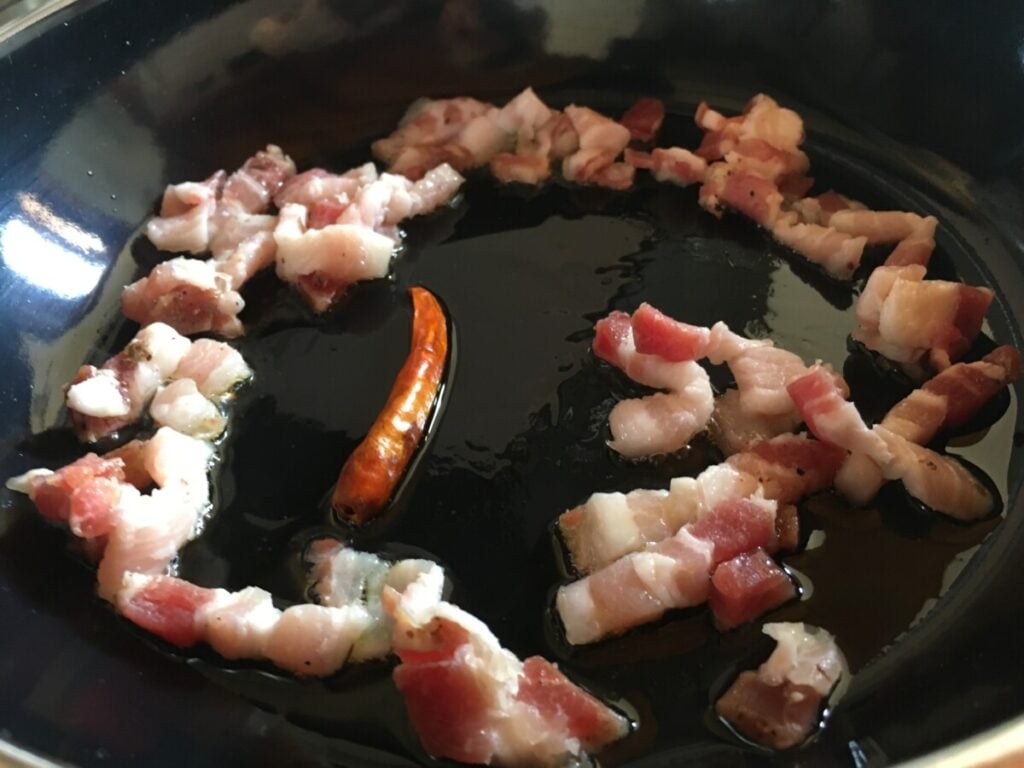
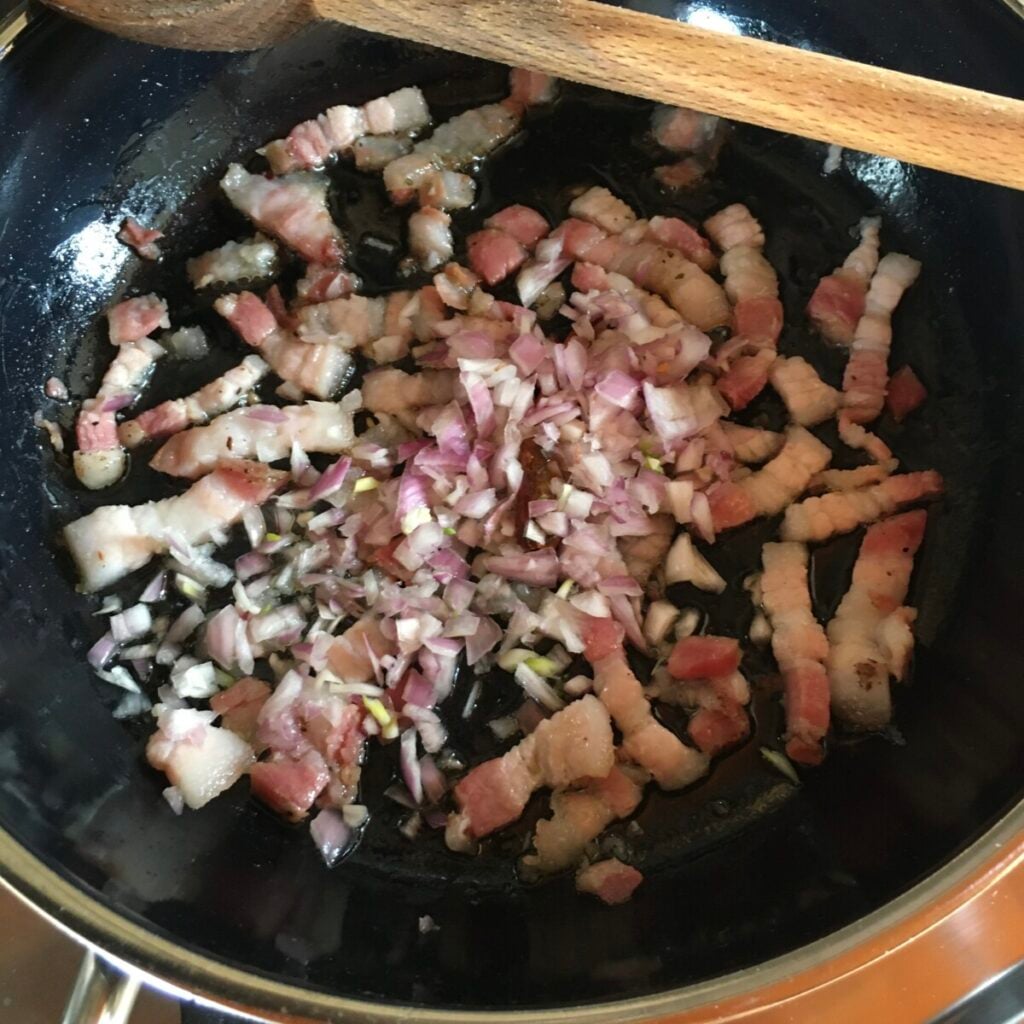
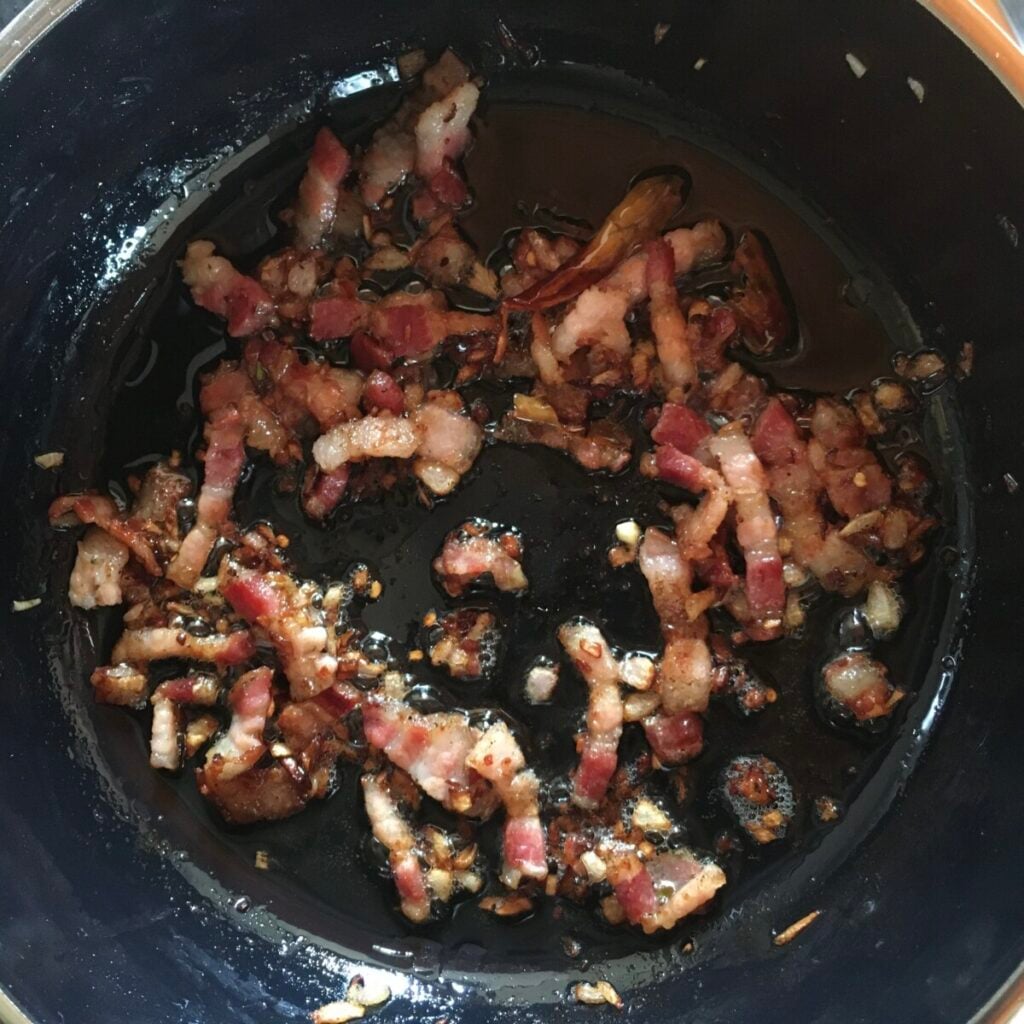
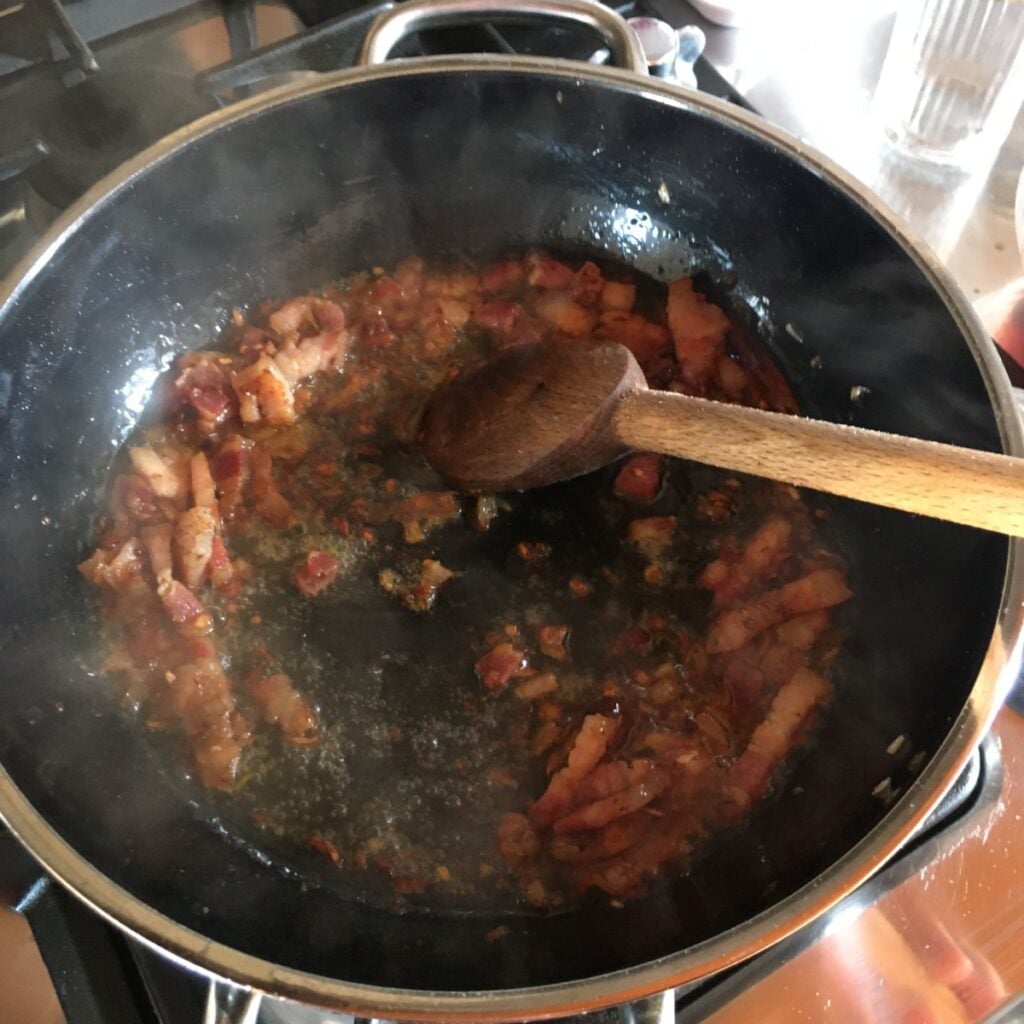
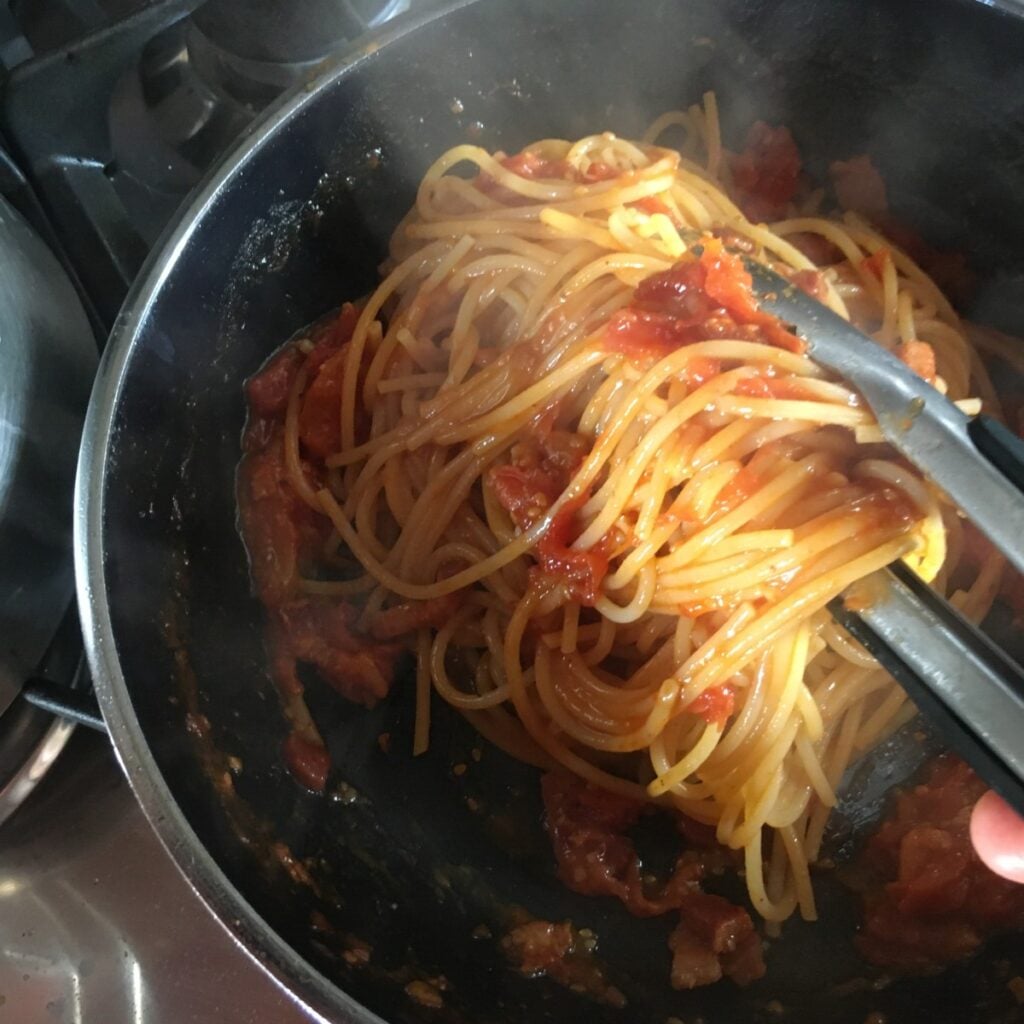
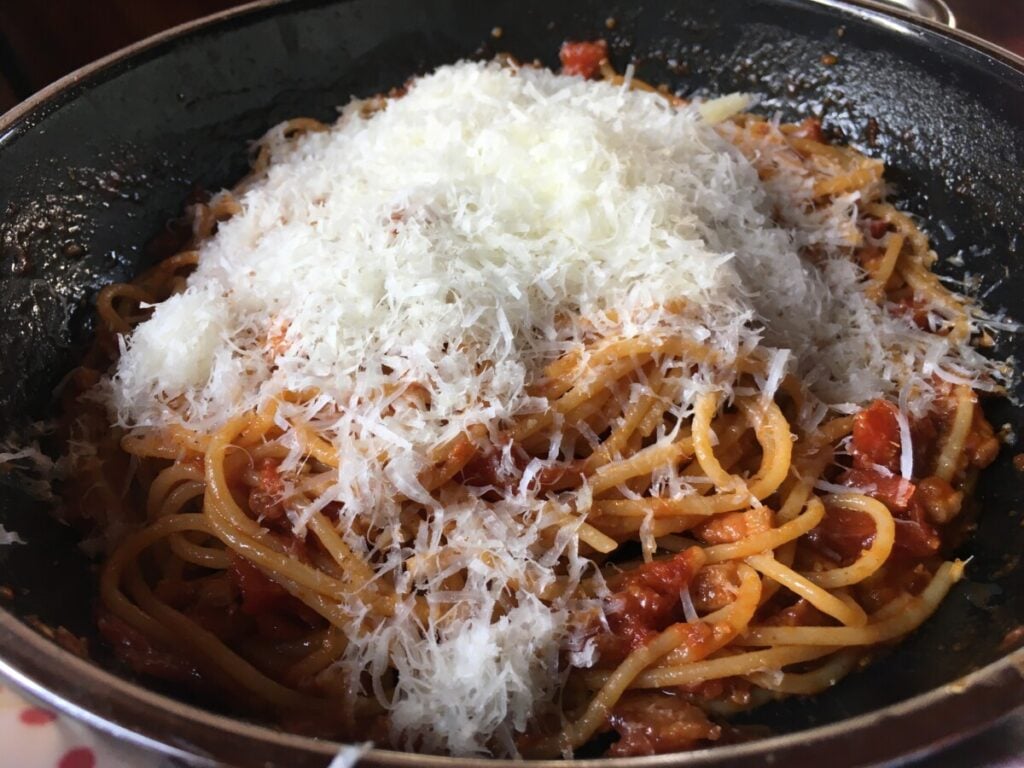
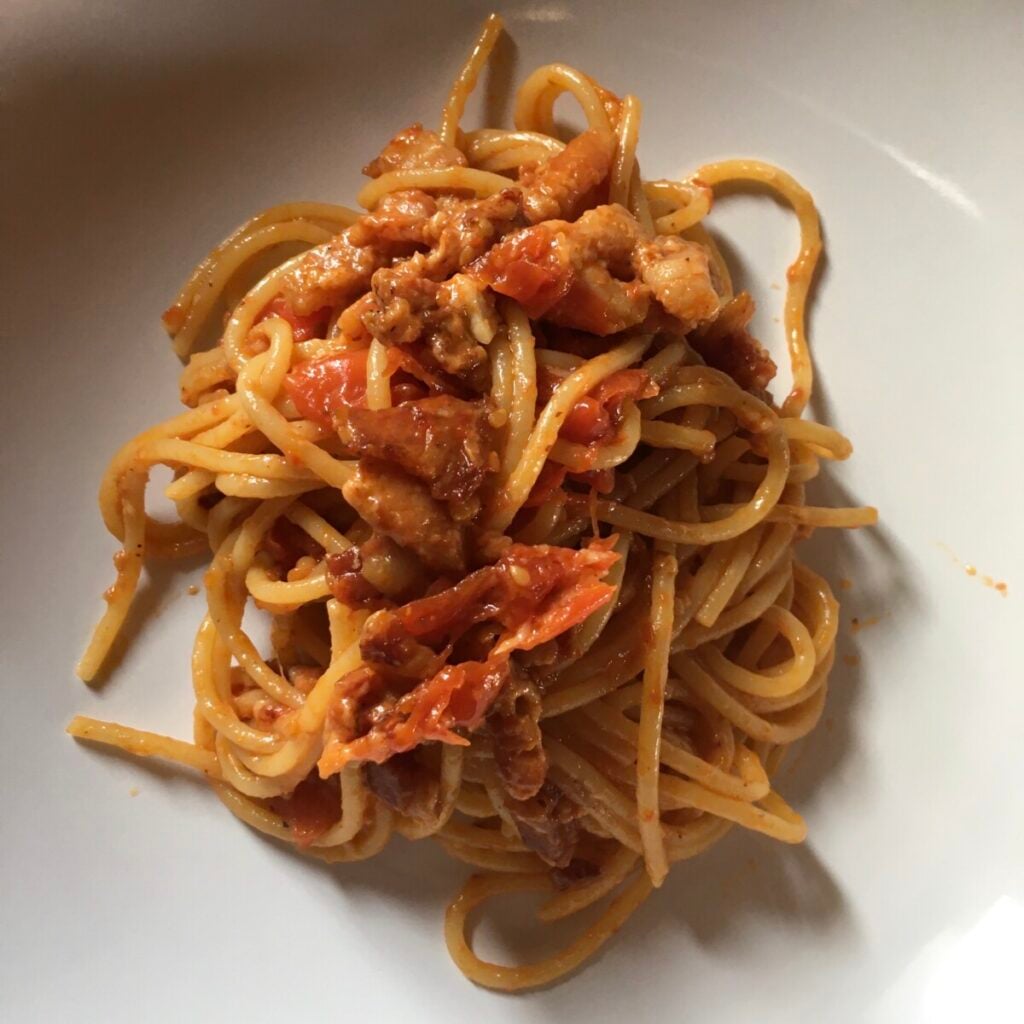
Substitutions
- Guanciale: Substitute pancetta affumicata, pancetta dolce, or, as a last resort, thick-cut bacon (but don't call it amatriciana!)
- Fresh tomatoes: Use canned whole peeled or chopped San Marzano DOP tomatoes, or, as a last resort, high-quality tomato passata with a 1:1 ratio. Mutti brand canned datterini tomatoes are an excellent choice if you can find them.
- Pecorino Romano: Substitute Grana Padano or Parmigiano-Reggiano if you prefer a milder cheese. I use Grana Padano most often, or half pecorino and half Grana Padano.
- Dried chili peppers: Use red pepper flakes if you don't have whole dried chilies
- White wine: Substitute with dry red wine, dry vermouth, or skip entirely. It won't be as super tasty because the wine chemically alters the tomatoes so they actually become even more flavorful, and allows for the emulsion of the fat, but it'll still be delicious!
Equipment
- Large pot for boiling pasta
- 12-inch sauté pan or skillet
- Microplane or fine grater for Pecorino
- Spider strainer or slotted spoon (for blanching tomatoes)
- Tongs for tossing pasta
Storage
How long does amatriciana last in the fridge?
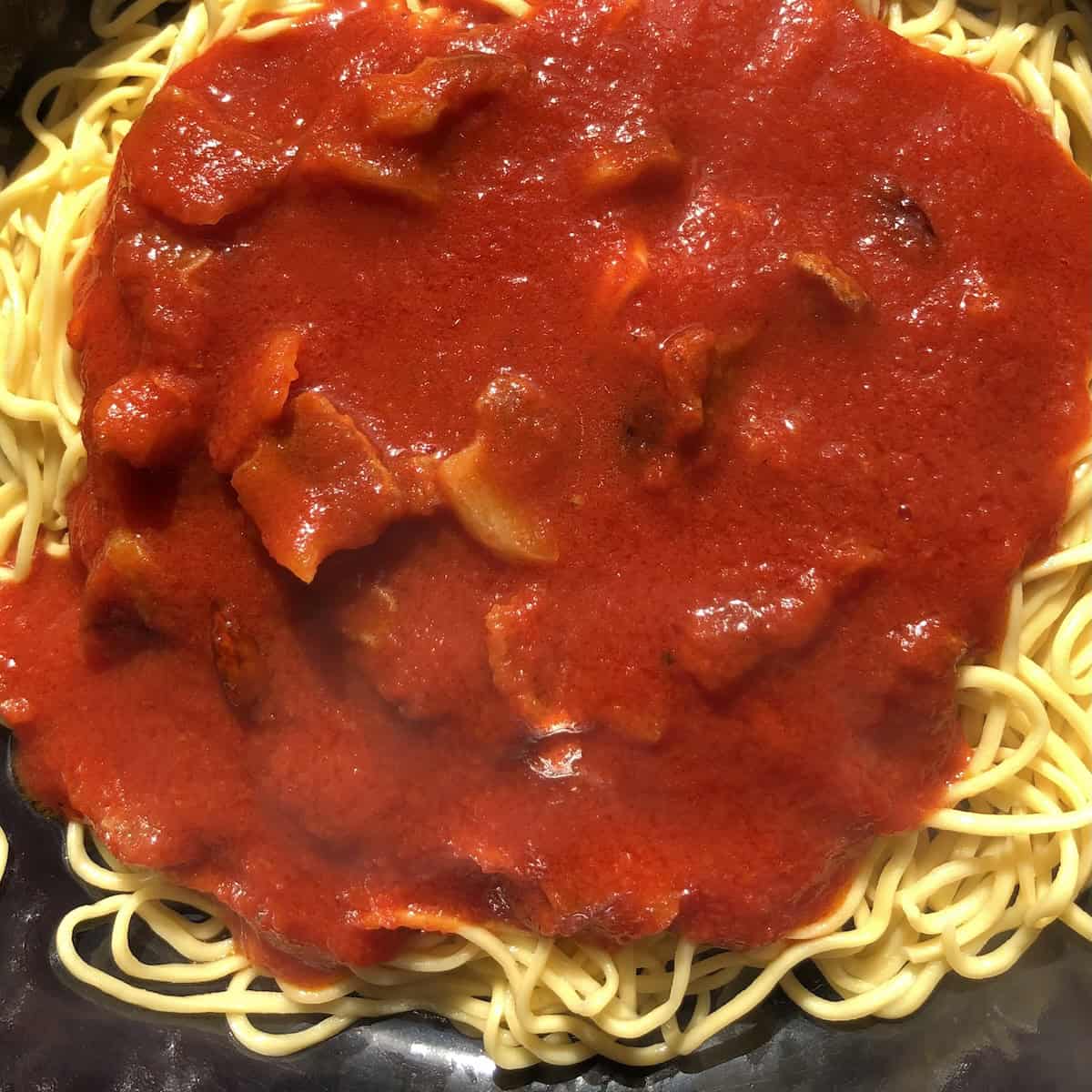
Store in an airtight container for up to 3 days. The sauce thickens as it cools. Add a splash of extra virgin olive oil if needed when reheating, or just add a splash of starchy pasta cooking water to help loosen it.
Can you freeze amatriciana sauce?
Yes! This is one of my favorite pasta sauces to meal prep and freeze for easy weeknight dinners. Portion and freeze the sauce (without pasta) for up to 6 months. Thaw overnight in the refrigerator. Reheat gently while you're cooking fresh pasta.
How do you reheat amatriciana?
Reheat in a pot or skillet over medium-low heat (about 300°F/149°C). Toss until warmed through. When your pasta is almost finished cooking, add 1-2 tablespoons (15-30g) of starchy pasta cooking water to the sauce and stir to combine. Add the pasta and toss, then add fresh Pecorino (or Parmesan) off the heat.
Serving Suggestions
What do you serve with amatriciana?
In Italy, amatriciana is a primi (first course). But as a main dish (secondi), you can pair it with:
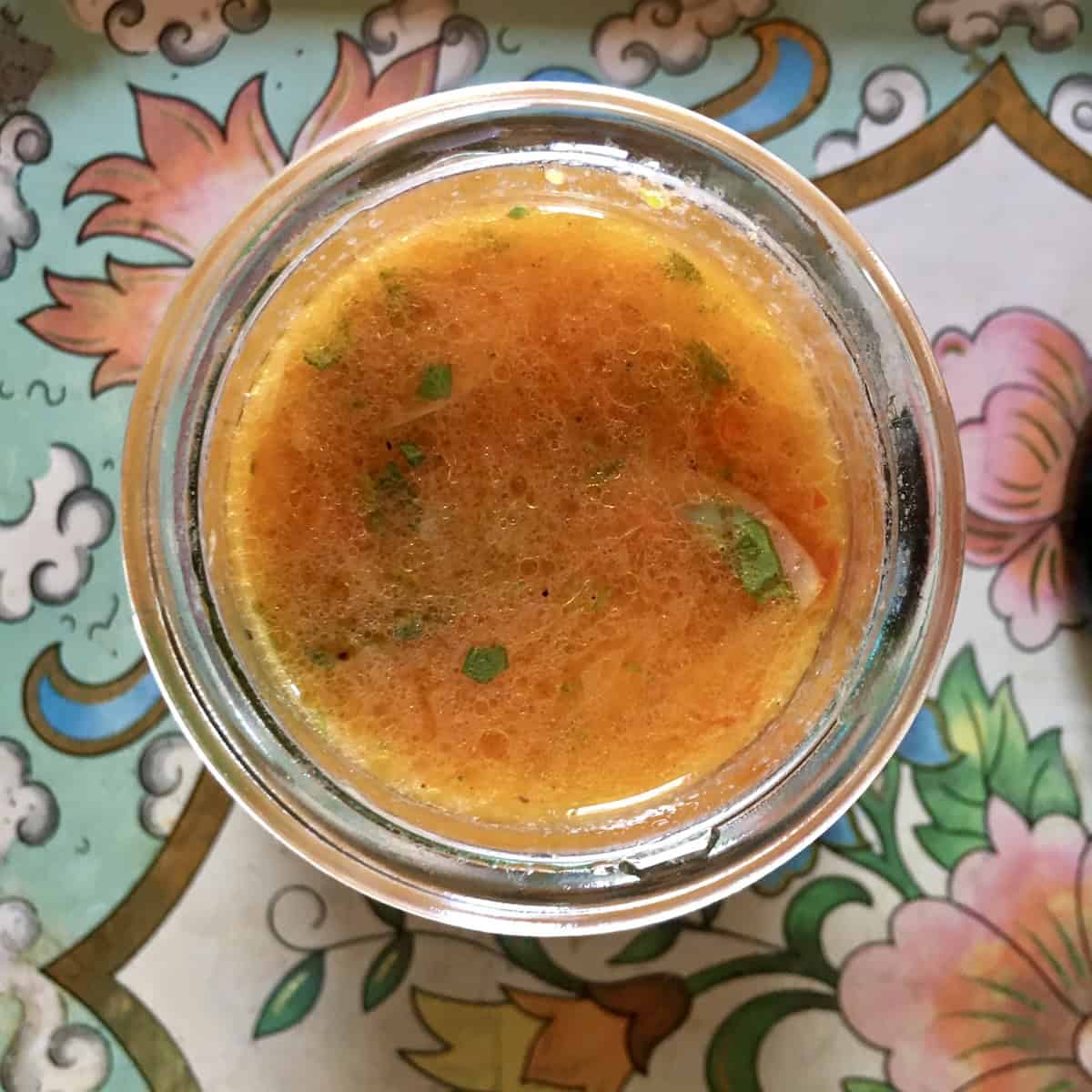
- Simple green salad with lemon-tomato vinaigrette
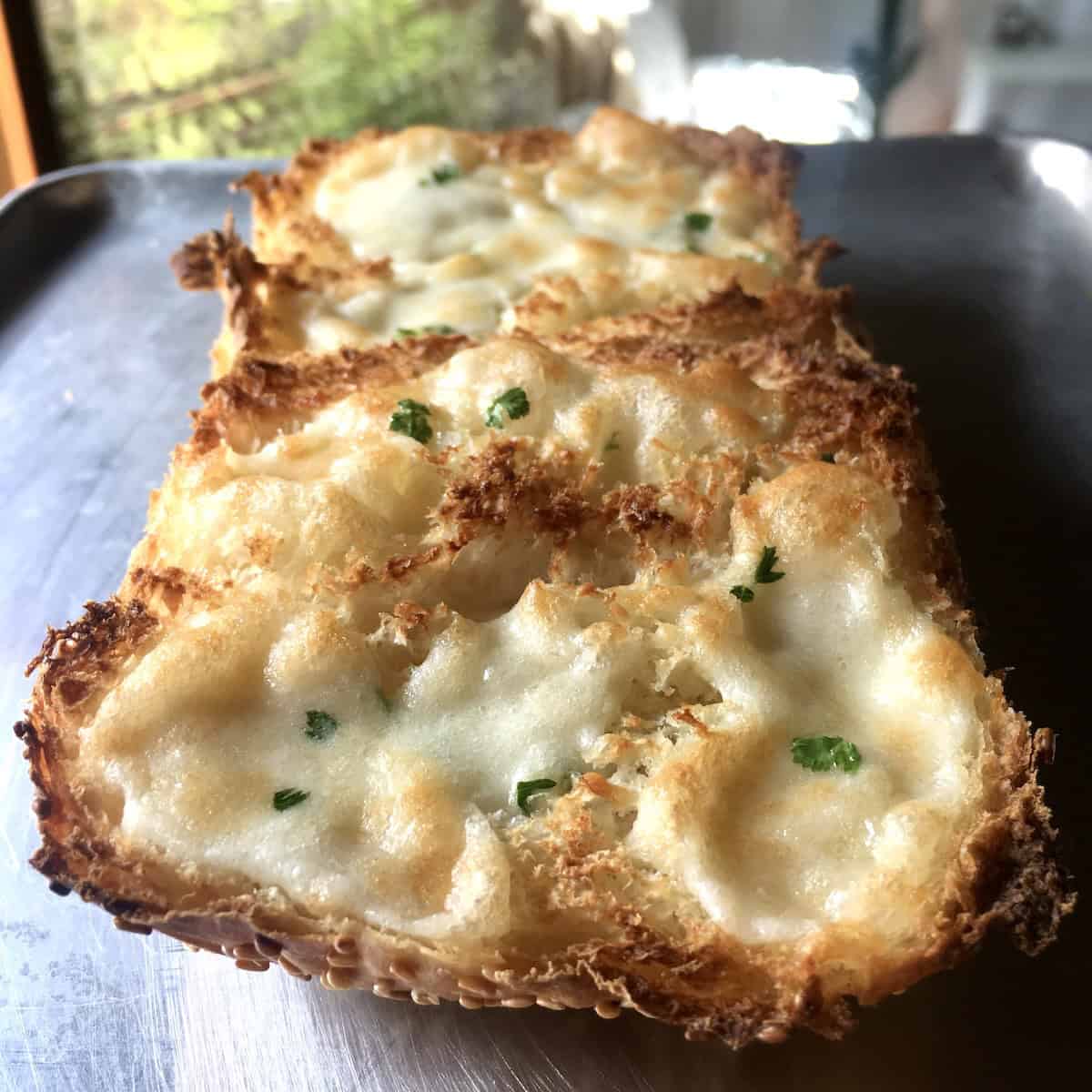
- Crusty Italian bread for soaking up sauce
- Sautéed broccoli rabe or rapini
- Sautéed chicory with anchovies
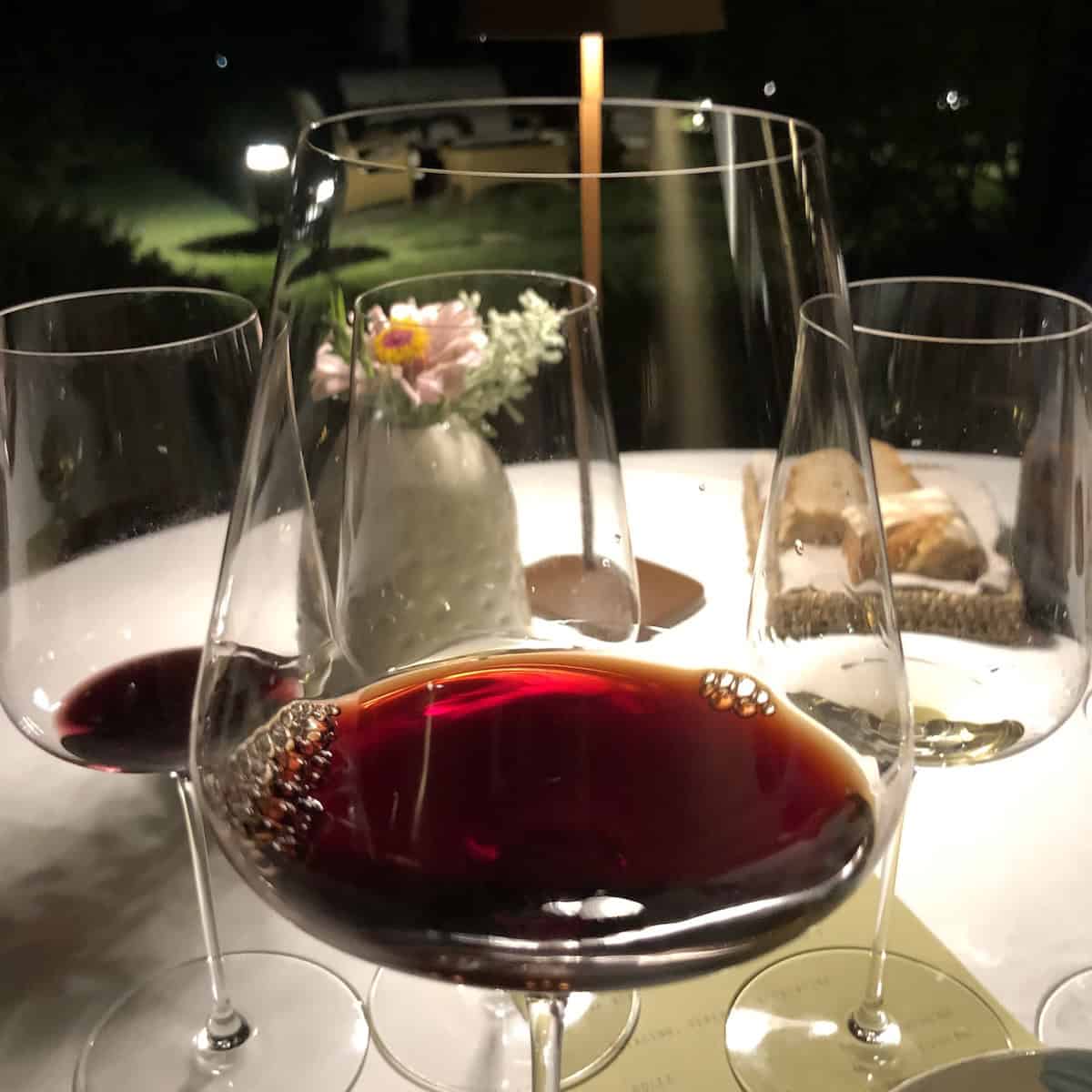
What wine pairs with amatriciana?
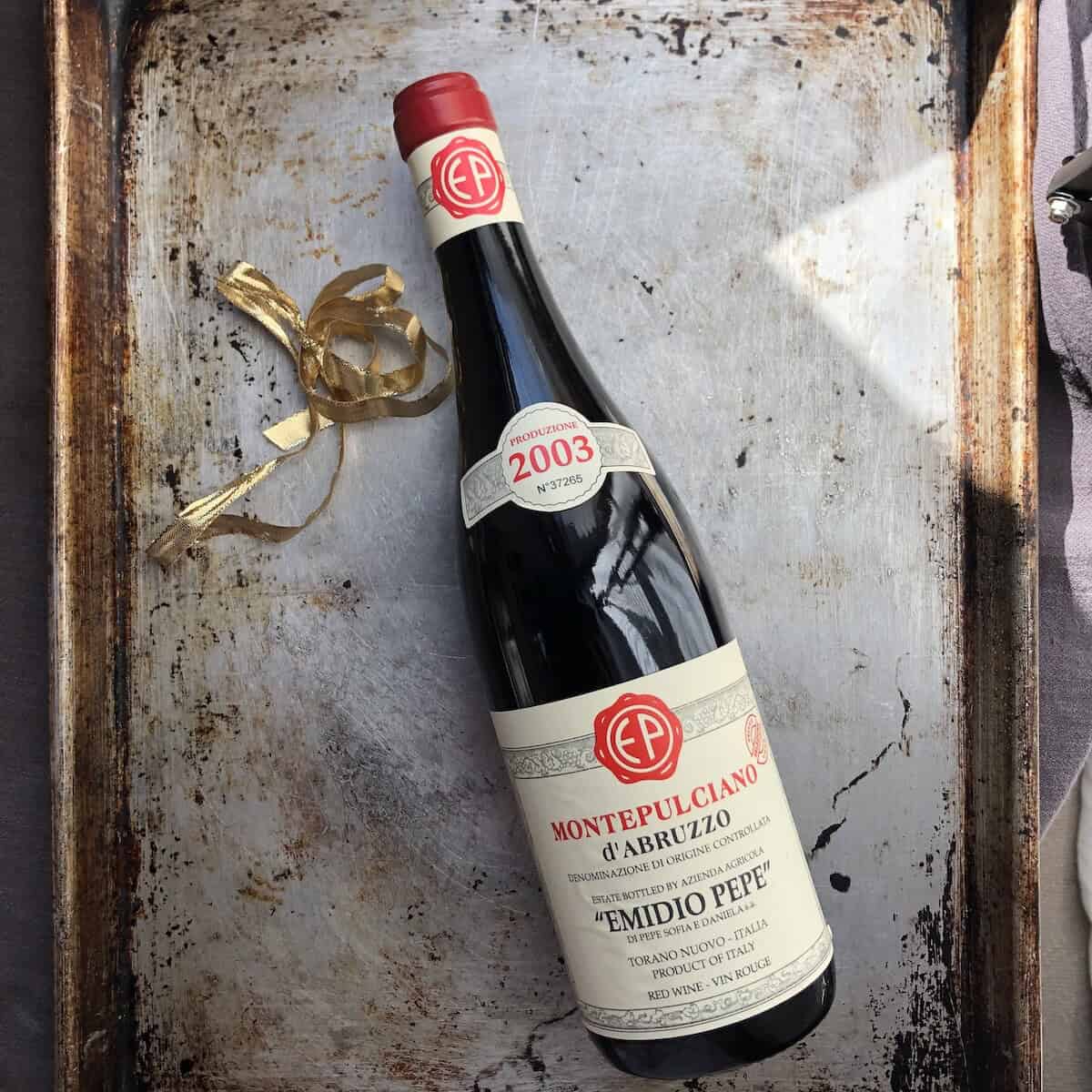
Medium-bodied Italian reds work best. Try Emidio Pepe's incredible 2001 or 2003 Montepulciano d'Abruzzo (what grows together goes together) or Chianti. The tannins cut through the rich pork fat while complementing the tomatoes.
Top Tips for Perfect Amatriciana
- Don't overcook guanciale. Golden with some crispy bits is ideal. Fully crispy guanciale is great for garnishing the pasta, but you want a mix of those more tender pieces for the best experience.
- Save some pasta water. The starch emulsifies with fat to create a glossy sauce that clings to every strand or tube of pasta.
- Finish the pasta in the sauce (if you want to get fancy). Add pasta 30 seconds before al dente. The starches release and bind with the sauce.
- Add Pecorino off the heat. Cheese clumps above 180°F/82°C. Wait 15-20 seconds after removing the amatriciana from the heat before tossing in the cheese. Or better yet, serve the cheese separately and let each person add however much they want.
- Taste your tomatoes. If your tomatoes are really low quality or just too acidic, you can add onions to help add some natural sweetness. Or you can add up to ¼ teaspoon of sugar. I've never had to personally add sugar because the tomatoes we use are consistently the highest quality. Many of you know, we buy our tomatoes for the year directly from the producers we've sourced and built personal relationships with over the years. You can also just grow your own sweet, delicious tomatoes
Frequently Asked Questions
Authentic amatriciana sauce is made with just a few ingredients: guanciale (cured pork jowl), tomatoes, Pecorino Romano cheese, dried red chili peppers, and sometimes a splash of white wine. Some versions include a small amount of onion or shallot, though purists omit it.
Amatriciana is pronounced ah-mah-tree-CHAH-nah. The emphasis is on the "CHA" syllable. In Roman dialect, you may also hear it called "matriciana" (mah-tree-CHAH-nah) without the initial "A."
Guanciale is cured pork jowl (cheek) with a higher fat content and more intense flavor. Pancetta is cured pork belly, the same cut as bacon but prepared differently. Guanciale renders more fat and creates a silkier sauce, which is why it's preferred for authentic amatriciana.
You can use thick-cut bacon as a substitute, but the dish won't taste the same and technically shouldn't be called amatriciana. Bacon is smoked (guanciale is not) and has a different fat content. It will still be delicious, just different!
Bucatini is slightly thicker than spaghetti and has a hollow center running through each strand. This hole traps sauce inside, delivering more flavor per bite. Bucatini takes 1-2 minutes longer to cook than spaghetti, typically 9-11 minutes.
Bucatini typically takes 9-11 minutes to cook to al dente, depending on the brand. Check your package for specific timing. It takes 1-2 minutes longer than regular spaghetti because of its thicker diameter.
Amatriciana means "in the style of Amatrice," referring to the town of Amatrice in central Italy where the dish originated. The town was historically part of Abruzzo until 1927, when it became part of Lazio.
Amatriciana has a rich, savory flavor with bright tomato notes, salty-sweet pork from the guanciale, a pleasant spicy kick from dried chilies, and sharp, tangy notes from Pecorino Romano. The sauce is slightly oily (in a good way) from the rendered pork fat.
Yes! The sauce (without pasta) freezes well for up to 3 months. Cool completely, store in airtight containers, and thaw overnight in the refrigerator before reheating gently while cooking fresh pasta.
Guanciale is pronounced gwan-CHAH-lay. The "gu" sounds like "gw" and the emphasis is on the "CHA" syllable.
More Authentic Italian Pasta Recipes
If you love pasta as much as we do, here are a few more recipes for easy weeknight pasta dinners:



Let's Get Started!
Made this Recipe? We'd love for you to rate ⭐️ it and tell us how it went for you!
Let's get started!
Print📖 Recipe
Amatriciana (Authentic Pasta all'Amatriciana Recipe)
- Total Time: 30 minutes
- Yield: 4 servings
Description
Fresh sweet tomatoes, guanciale (or pancetta, not authentic but delicious!), Pecorino Romano cheese, white wine (optional), and spicy red peppers give this favorite Italian pasta all its deliciousness. This is one of our absolute favorite Italian pasta recipes to make and eat.
Ingredients
- 12 ounces spaghetti, rigatoni, or bucatini pasta noodles (320g)
- 6 ounces guanciale (cured pork jowl) or pancetta affumicata, cut into strips (175g)
- ¼ cup onion or shallot, finely diced (40g) (optional)
- 20 ounces peeled tomatoes, crushed (about 30 grape tomatoes) (400g)*see notes for how to blanch fresh tomatoes
- 2-4 dried chili peppers (or more to taste)
- ¼ cup dry white wine (60g)
- Salt and freshly grated black pepper to taste
- ½ cup Pecorino Romano, grated (or more for serving) (50g)
 Get Recipe Ingredients
Instructions
Prepare the guanciale. Using a sharp knife, remove the skin and any spices from the fat side. Reserve for brodo or another use. Slice into matchsticks and/or wider thin strips.
- Cook the guanciale. Add guanciale and chili peppers to a 12-inch skillet or 4-quart pot over medium heat (325°F/163°C). Cook 5-7 minutes until fat renders and meat is golden but still tender with some chew. Remove ¾ to a plate. Continue cooking the remaining ¼ until very golden and crispy. Remove to the plate and reserve for garnish.
- Cook the shallots. Add shallots (if using) to the pan with the rendered fat and peppers. Sauté 5 minutes until translucent but not browned. Return the ¾ of tender guanciale to the skillet.
- Deglaze with wine. Turn heat to medium-high and add the white wine while scraping up the fond (browned bits). Cook 3-4 minutes until wine evaporates and mixture looks glossy.
- Add the tomatoes. Add tomatoes, salt, and black pepper to taste. Reduce heat to low and simmer until sauce slightly thickens (10-15 minutes for fresh tomatoes, 15-20 minutes for canned).
- Cook the pasta. Meanwhile, cook pasta in boiling salted water according to package directions until al dente. Reserve about 1 cup pasta water before draining.
- Finish the sauce. Add a few spoonfuls of starchy pasta water to the sauce. Increase heat to medium and cook 1-2 minutes until glossy.
- Assemble and serve. Add drained pasta to the sauce and toss 30 seconds. Remove from heat. Add a little Pecorino and toss again, adding more pasta water if needed to loosen. Top with reserved crispy guanciale and serve immediately with extra Pecorino on the side.
Notes
Using pancetta instead of guanciale? Check out the main post for the ingredients and instructions for how to use pancetta instead of guanciale, which is just slightly different but just as delicious!
Tomato substitute: Use equal amounts of canned whole San Marzano DOP tomatoes or sweet grape tomatoes, or garden fresh San Marzano tomatoes aren't available.
Cheese preference: In many of the photos in the main post, I tossed grated Pecorino over the entire dish before tossing and serving. But, it's also traditional to serve cheese on the side, so everyone can add as much (or as little) as they like.
Wine selection: Use a light, drinkable dry white wine like a Pecorino from Cirelli Wines in Abruzzo (one of my favorite white wines!). Avoid sparkling, sweet, or semi-sweet wines. If you don't drink white wine and don't want to buy it just for this recipe, you can substitute dry red wine or omit it altogether. You can always freeze the white wine in an ice cube tray to pop out when you want to make this recipe or any other pasta!
Pasta water tip: Don't forget to add a little pasta cooking water to the sauce. The starches along with the Italian technique, "mantecare", helps to bind the sauce to the noodles. This is also why it's important not to overly salt your pasta cooking water.
- Prep Time: 10 minutes
- Cook Time: 20 minutes
- Category: Pasta
- Method: Stovetop
- Cuisine: Italian
Nutrition
- Serving Size: ¼ recipe
- Calories: 525
- Sugar: 5g
- Sodium: 600mg
- Fat: 20g
- Saturated Fat: 8g
- Unsaturated Fat: 12g
- Trans Fat: 0g
- Carbohydrates: 64g
- Fiber: 4g
- Protein: 21g
- Cholesterol: 45mg

Food Safety
- Cook pork products to an internal temperature of 145°F (63°C) as recommended by the USDA
- Refrigerate leftover pasta within 2 hours of cooking
- Consume refrigerated leftovers within 3-4 days
- When reheating, ensure pasta reaches 165°F (74°C) throughout
See more guidelines at USDA.gov.



Kelly says
This is a family favorite that I make at least once every month and a half and we enjoy it every single time!