

Learn how to make homemade pumpkin purée from fresh pumpkin in about 30 minutes. It's the simplest recipe you'll make all fall, needs just one ingredient, and tastes so much better than anything from a can. Here's why it's worth it:
- Pure flavor: intensely fresh pumpkin taste you can't get from a can
- One ingredient: just roasted pumpkin, nothing added
- Freezer-friendly: make a big batch and bank it for months of fall baking
- Swaps 1:1 for canned in any sweet or savory recipe

Jump to:
- Why Make Homemade Pumpkin Purée?
- The Best Pumpkin for Pumpkin Purée
- Roast, Boil, or Steam: Which Is Best?
- Homemade Pumpkin Purée Ingredients
- How to Make Pumpkin Purée Step-by-Step
- How to Store and Freeze Pumpkin Purée
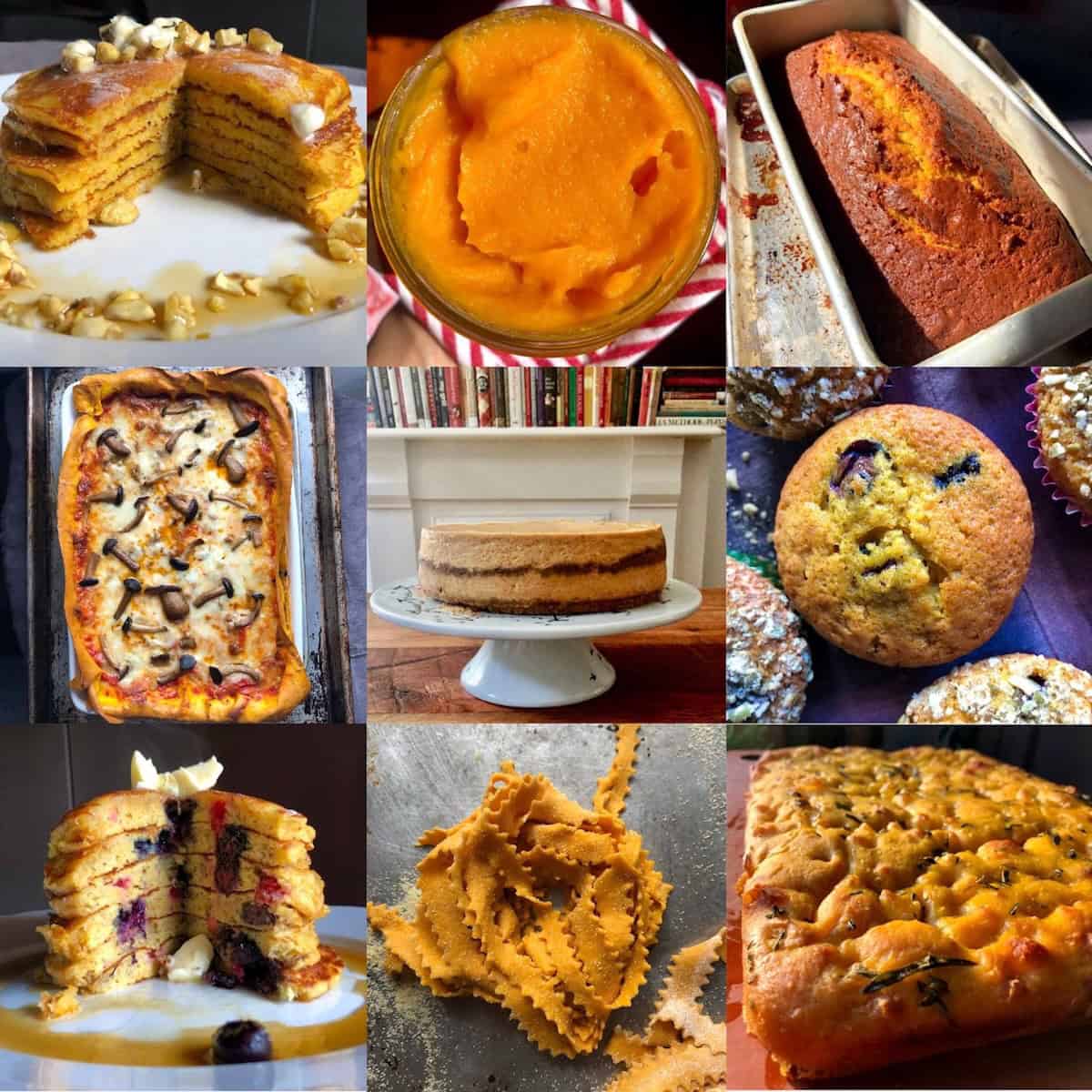
- What to Make With Pumpkin Purée
- Pumpkin Purée FAQ
- Easy Pumpkin Recipes Using Pumpkin Purée
- 📖 Recipe
- How to Make Homemade Pumpkin Purée
Why Make Homemade Pumpkin Purée?
If you're looking for a way to make better-tasting, less-processed holiday pumpkin desserts and savory sides, or you just want to know what a pumpkin pie was really meant to taste like, you're about 30 minutes from everything you need (that includes both the prep and the cook time).
I've cut the 40 to 60-minute roasting time most pumpkin purée recipes call for down to 20 to 30 minutes by peeling and dicing the pumpkin first instead of roasting it whole. Smaller pieces cook faster, so you save time and energy without giving up any flavor. Start to finish, you're about 30 minutes from a jar of purée.
Got a surprise pumpkin? Don't let it go to waste. If a whole pumpkin turned up in your CSA box, your food bank crate, or your garden and you're not sure what to do with it, making pumpkin purée is the answer. Turning it into purée now means you're not staring at a cute pumpkin you'll never get around to cooking. Roasting, pureeing, and freezing it means it's ready when you are to become the recipes you actually want to eat:
- Pumpkin bread, muffins, and pancakes all winter long
- Soups, pastas, focaccia, lasagna and more savory bakes through the cold months into spring
- Simple, nutritious homemade baby food, since plain purée is just cooked pumpkin with nothing added
The Best Pumpkin for Pumpkin Purée
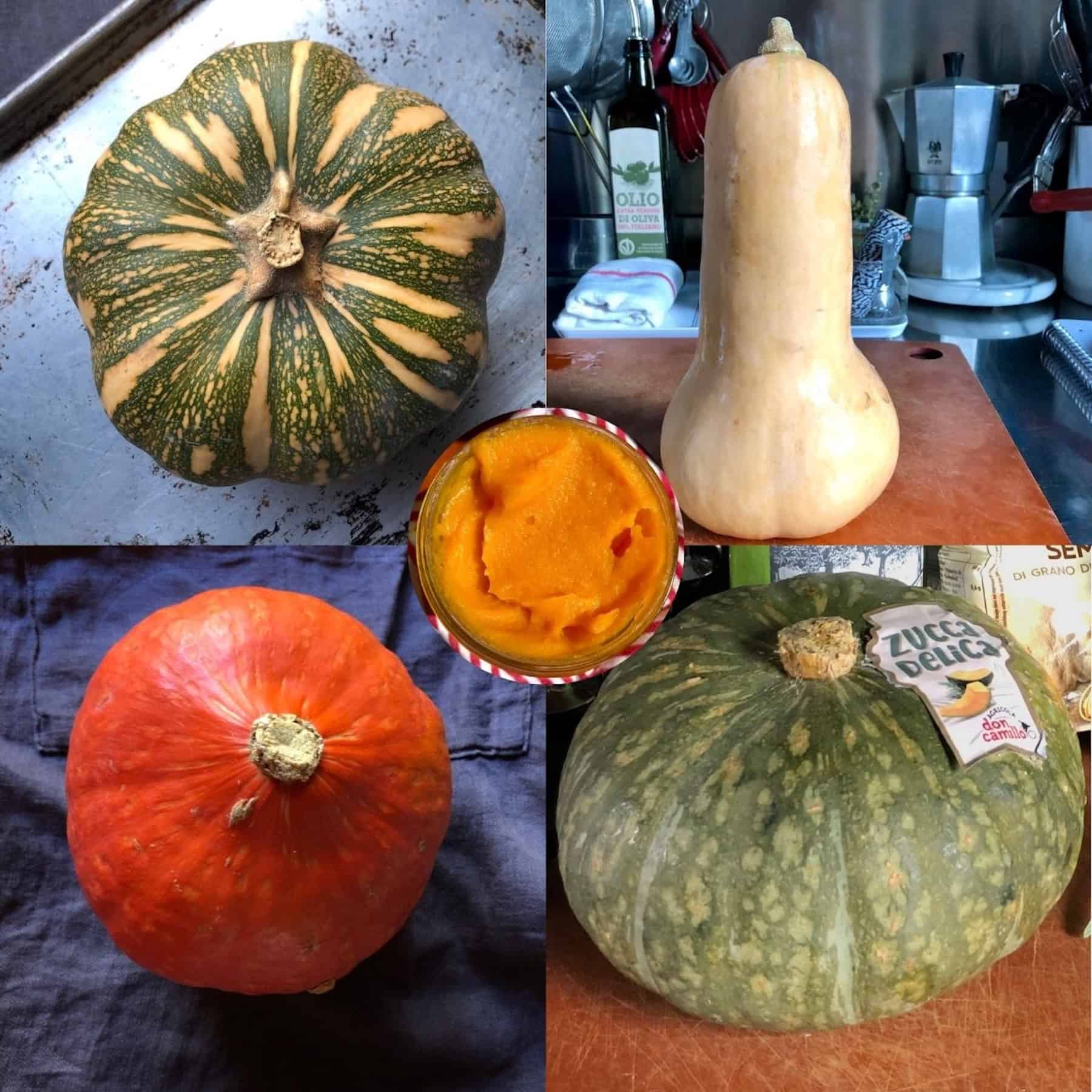
The most important thing to look for is size. Small pumpkins make the best purée. Big carving pumpkins are watery and stringy, so save those for your jack-o'-lanterns.
- Hokkaido: my favorite. It's a squatty Japanese variety with reddish-orange skin and dense flesh that holds less water than most pumpkins, so you get a thick, luscious purée without straining. Roasted, it's slightly sweet, soft, and nutty. The skin is edible, so you can leave it on if you're roasting it to eat as a side.
- Kent (Jap) squash: grey-green skin with sweet, dense, nutty flesh that purées smooth with little water. Less common in the US but worth grabbing if you spot it, and I'll happily use one when I do.
- Sugar or pie pumpkin: the easiest to find and labeled for exactly this. A safe, reliable choice.
- Butternut squash: not a pumpkin, but it purées beautifully and is the easiest of all to find. Sweet, smooth, and low in moisture, it's a reliable stand-in when good pie pumpkins are out of season.
- Kabocha: darker, intensely sweet flesh with a hint of chestnut when roasted. I use it in my kabocha squash tart if you want to taste it on its own.
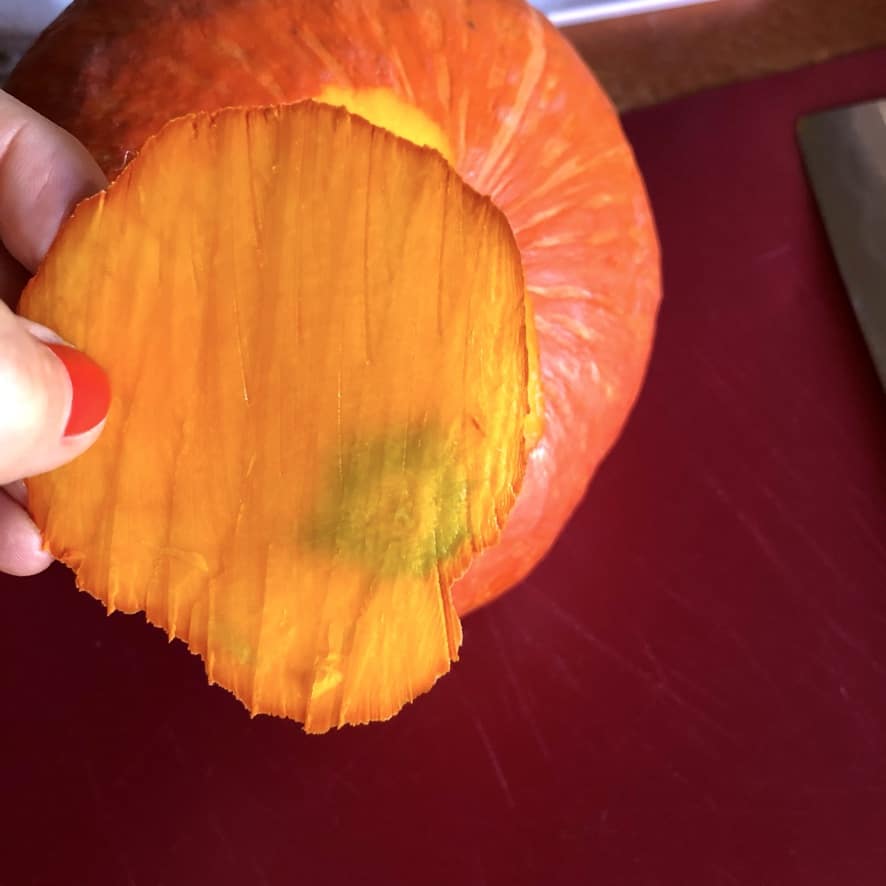
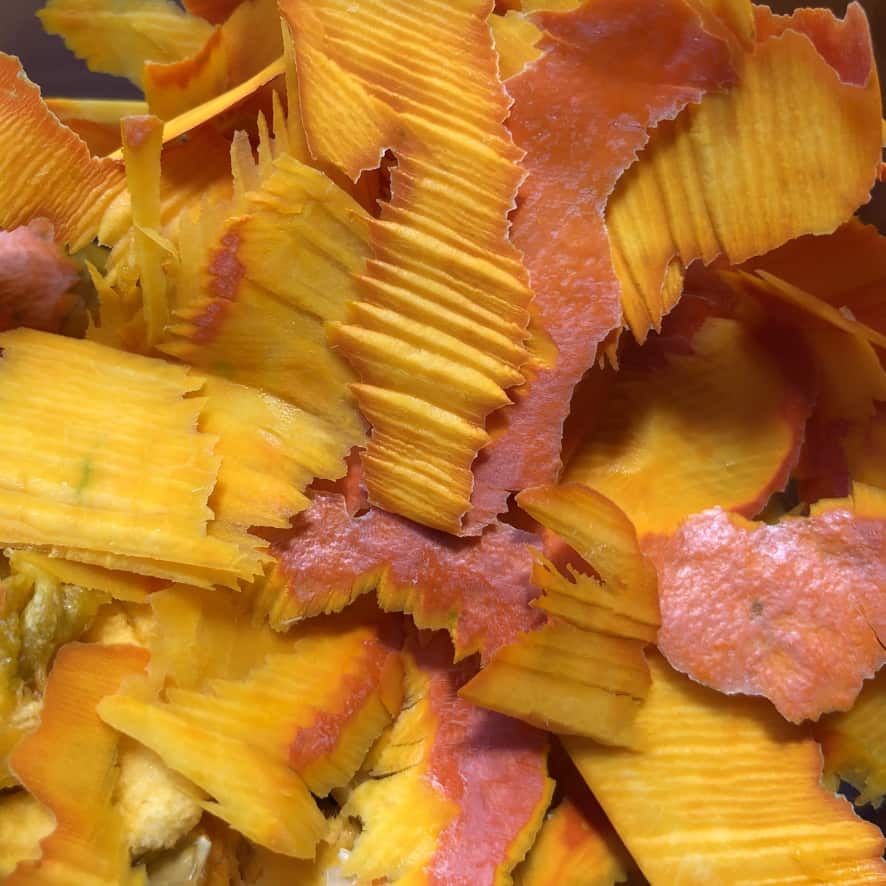
Zero-waste tip↓. If you peel the pumpkin, save the skin and pulp for broth bags in the freezer, and season and toast the seeds for a snack. Between the flesh, skin, and seeds, nothing goes in the bin.
Roast, Boil, or Steam: Which Is Best?
For us, roasting wins on flavor and texture. All three methods soften the pumpkin, but they don't taste the same.
- Roasting (my method): dry oven heat concentrates the flavor and caramelizes the natural sugars, so the purée tastes deeper and sweeter. It also drives off moisture, giving you a thick purée you won't need to strain.
- Boiling: fast, but the pumpkin soaks up water. You get a thinner, more watery, blander purée that usually needs draining before you can bake with it. I don't recommend it.
- Steaming: better than boiling since the pumpkin isn't sitting in water, but it still holds more moisture than roasting and misses the caramelized flavor. A reasonable backup if your oven is full.
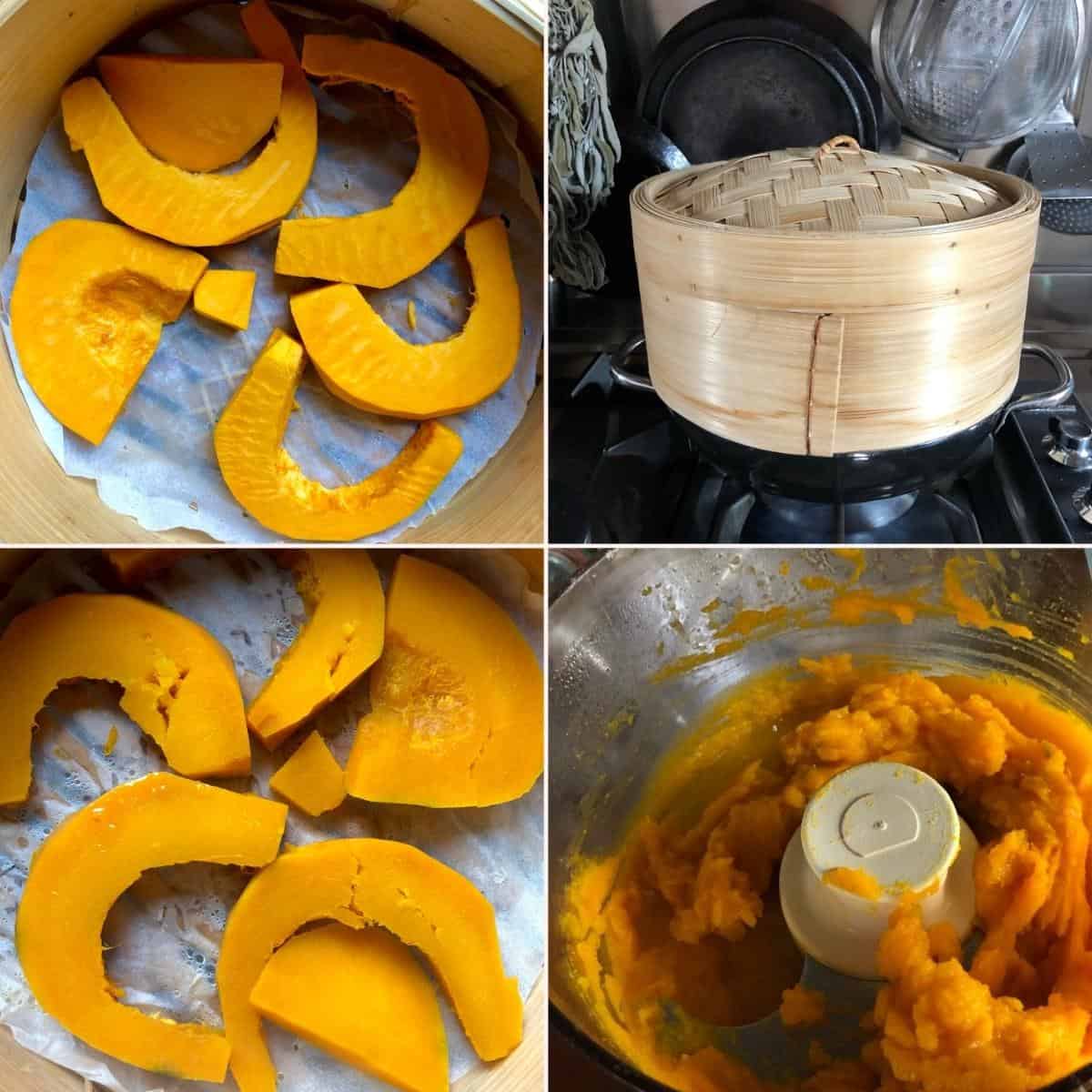
If you want the best flavor and the right texture for baking, roast it. The rest of this recipe uses the roasting method.
Homemade Pumpkin Purée Ingredients
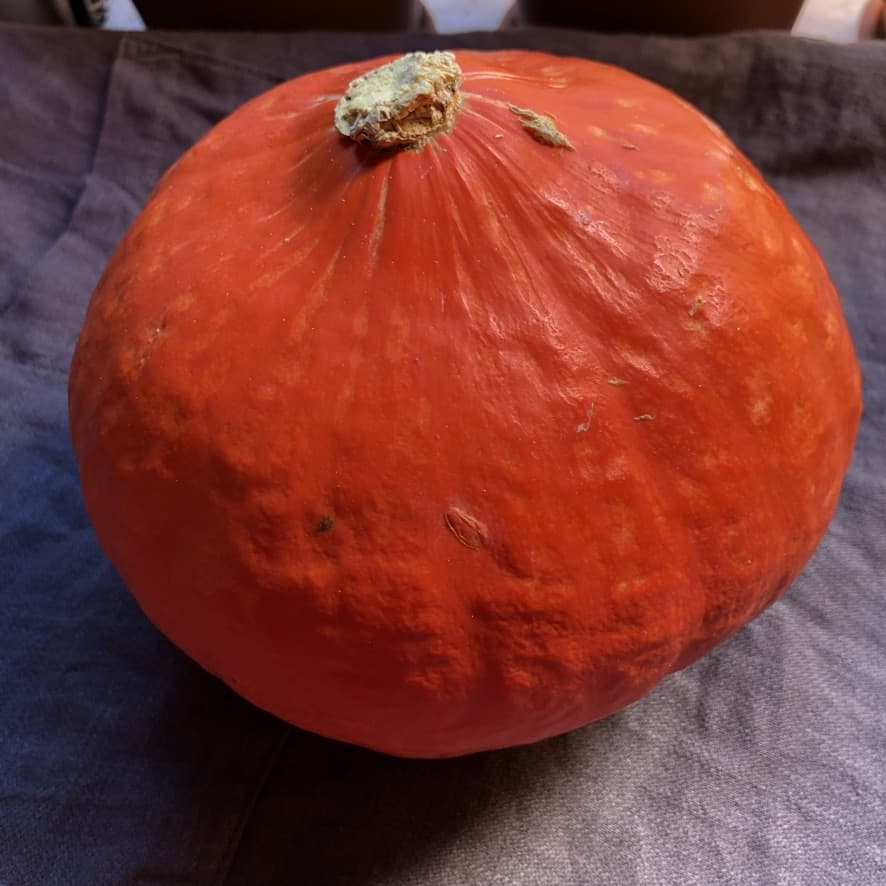

This recipe uses one ingredient: roasted pumpkin. Leaving out the salt keeps the purée versatile, so it works in any sweet or savory recipe.
- One 2-pound whole Hokkaido, sugar, kabocha, or pie pumpkin, peeled and diced (1kg)
How to Make Pumpkin Purée Step-by-Step
Three ways to prep your pumpkin. Two are fast, one is hands-off but slower:
- Peel and dice (my 30-minute method): peel, seed, and cut into 1-inch pieces. Small pieces roast fastest.
- Buy it pre-cut: many grocery stores sell pumpkin already peeled and halved or cut into chunks. It costs a bit more but skips the peeling and seeding. Just cut any large chunks down to 1-inch cubes so they roast fast and evenly.
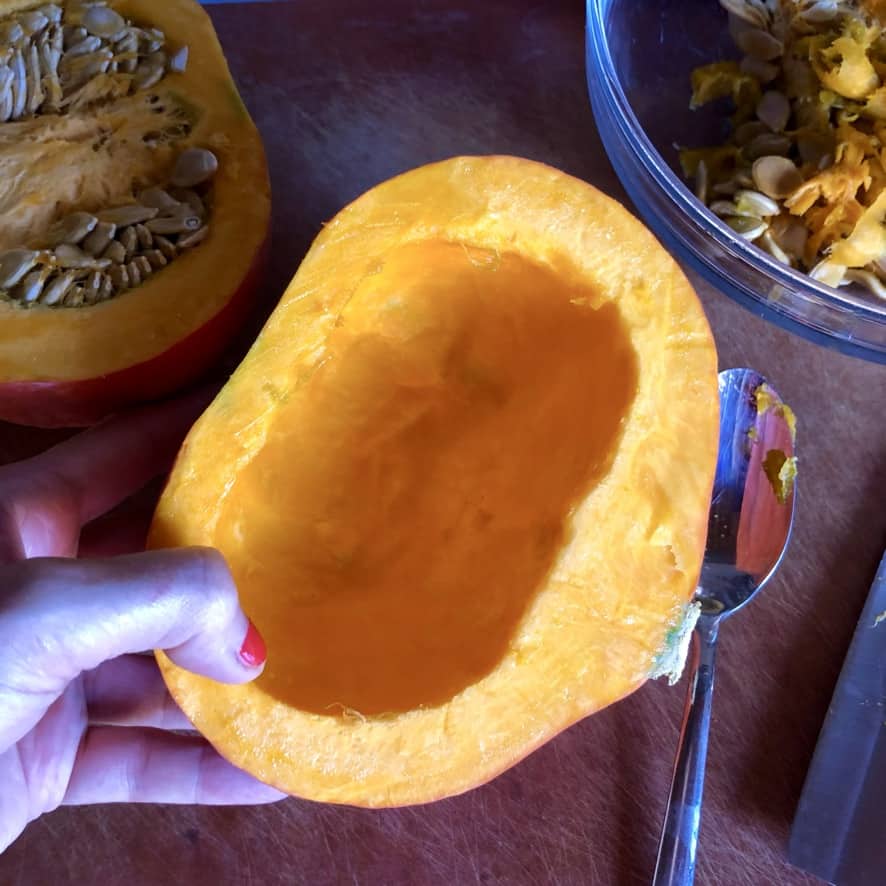
- Roast it in halves (no peeling): cut the pumpkin in half, scoop out the seeds, and roast both halves flesh-side down. No prep, but add 20 to 30 minutes to the roasting time.
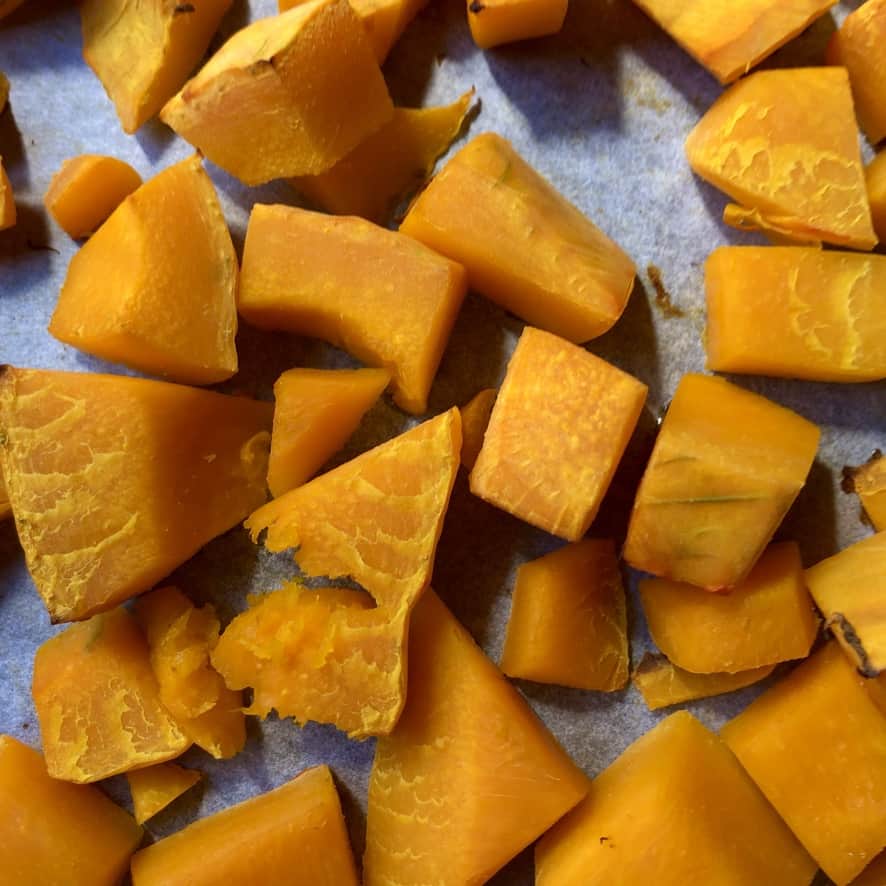
Step 1. Preheat the oven to 400°F/200°C and roast the pumpkin. Line a baking sheet with parchment paper. Peel the pumpkin, remove the seeds, and dice into 1-inch pieces. Roast for 20 to 30 minutes, until fork-tender. Larger, denser pieces sit at the longer end. Remove from the oven, let the pumpkin rest until it stops steaming, then transfer it to a food processor.


Step 2. Purée the pumpkin. Process until smooth and creamy, then ladle into jars or use it straight away in any recipe that calls for canned pumpkin or pumpkin purée.
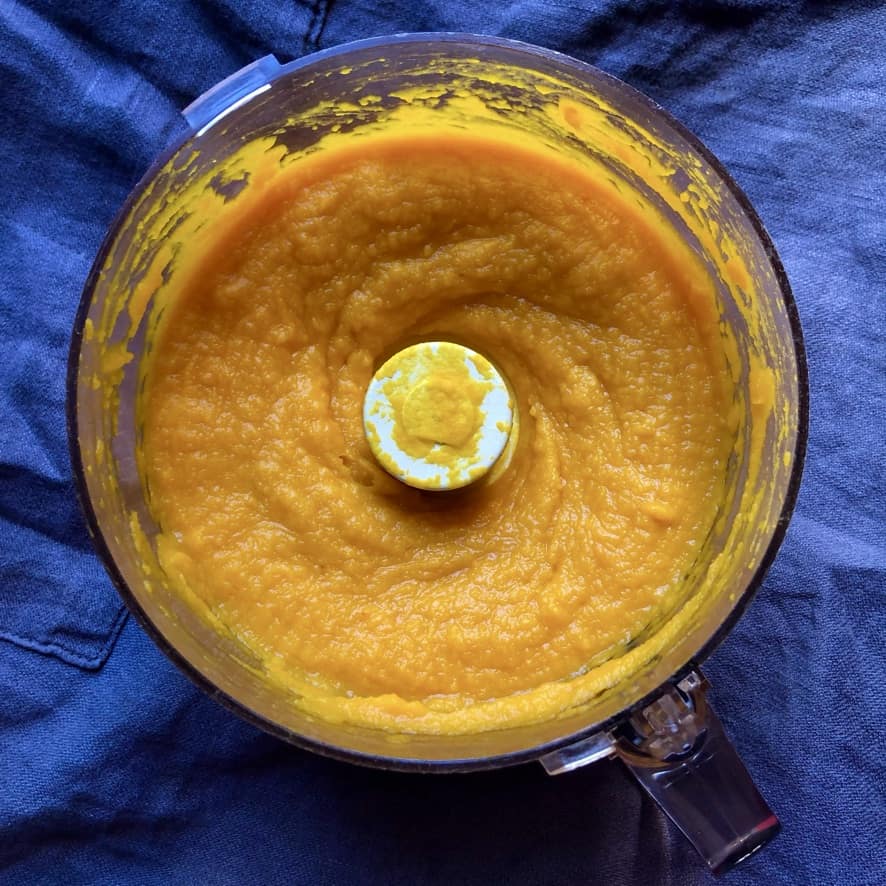
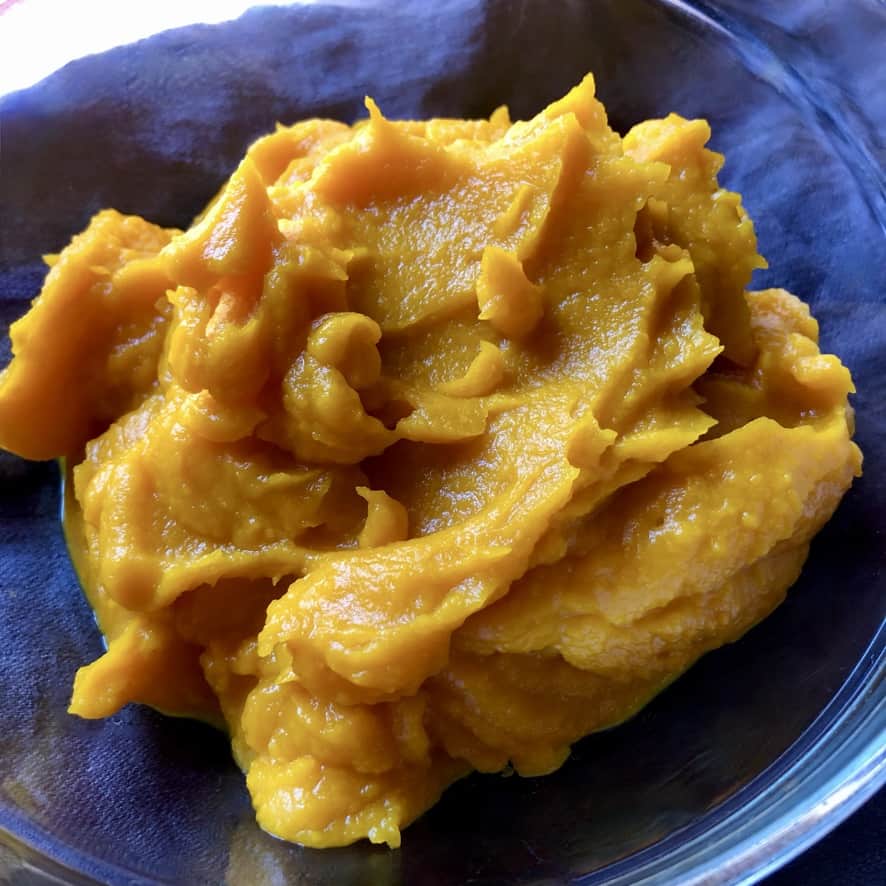
No food processor? Mash it by hand. While the roasted pumpkin is still hot, mash it with a potato masher or the back of a fork, or push it through a potato ricer for the smoothest result. Hot pumpkin breaks down far more easily than cooled. Mashing gives a slightly coarser, more rustic texture than a food processor, which is perfect for pumpkin bread, muffins, and savory dishes. For a silky pie filling, a ricer or a few extra minutes of mashing gets you closest to smooth.
How to Store and Freeze Pumpkin Purée
In the fridge. Store homemade pumpkin purée in an airtight container in the refrigerator for 4 to 5 days.
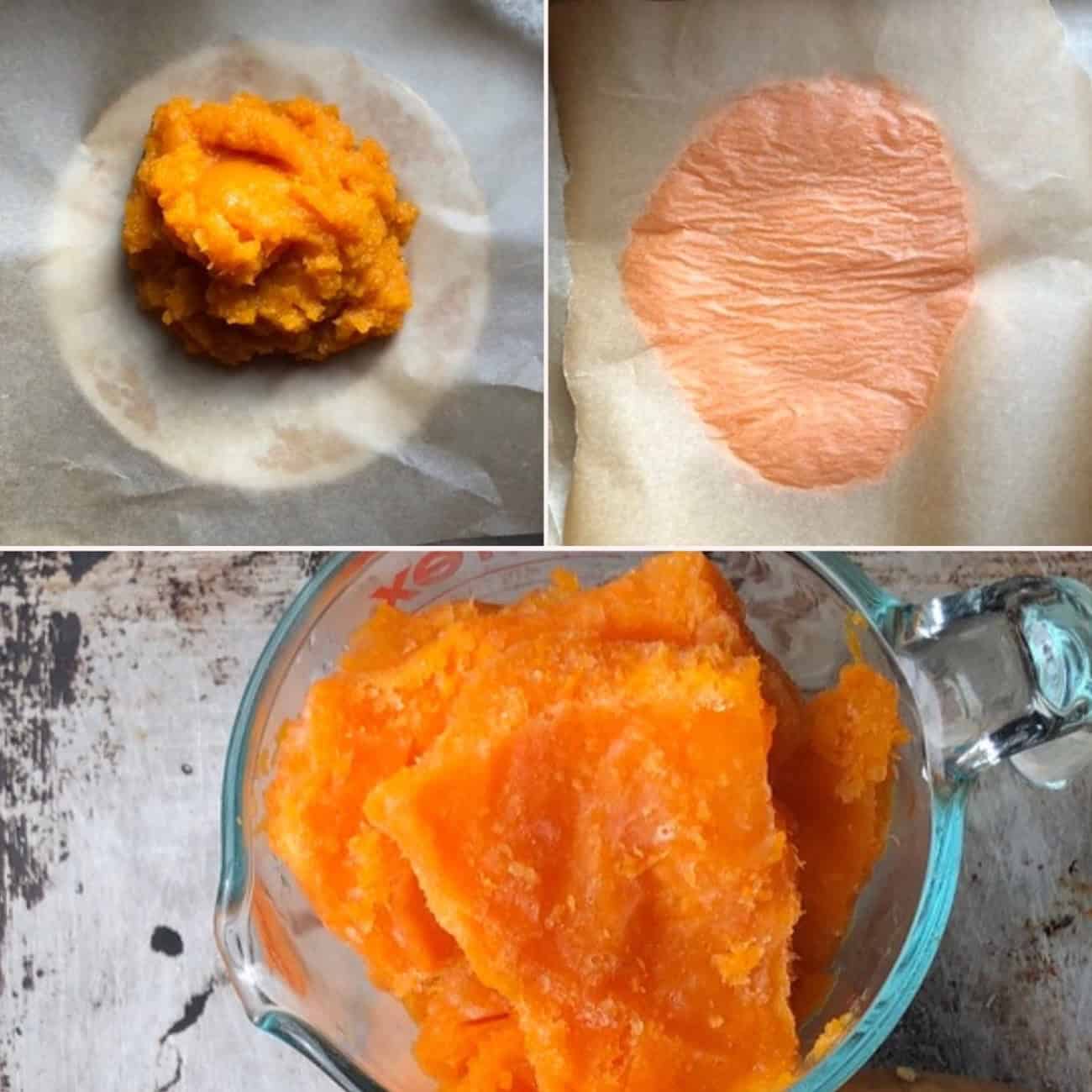
In the freezer. Pumpkin purée freezes beautifully, keeping its flavor and creamy texture. Portion it into usable amounts, seal it airtight, and freeze. Most sources say three months, which is a safe window for any method below. Choose whichever suits you:
- Glass canning jar (my favorite). Leave headspace for the purée to expand, press a piece of parchment or wax paper onto the surface before sealing, and freeze. I use mine up within about six months, but a well-sealed jar holds beautifully well past that, I've frozen mine a full year and used it without any issue.
- Flat-stack in parchment (my next choice). Portion the purée onto sheets of parchment or wax paper in the amounts you reach for most (½ cup and 1 cup are handiest), layer a sheet between each portion, and stack them flat before sliding the stack into a freezer bag. It keeps the purée off the plastic, thaws fast, and lets you pull exactly what a recipe needs.
- Straight in a freezer bag. Press out all the air, lay the bag flat, and stack once solid to save room. A quart bag holds about one 15-ounce can's worth.
- Muffin tin or ice cube tray. For small amounts, freeze the purée in the wells, then pop the pucks or cubes into a freezer bag.
- Label and date every container so nothing gets lost in the back of the freezer.
To thaw. Defrost in the refrigerator overnight, or leave at room temperature until thawed (no more than a few hours). Give it a stir and use it as the recipe calls for. Don't drain it. That liquid belongs in the recipe.e calls for.
Can You Can Pumpkin Purée? (Please Don't)
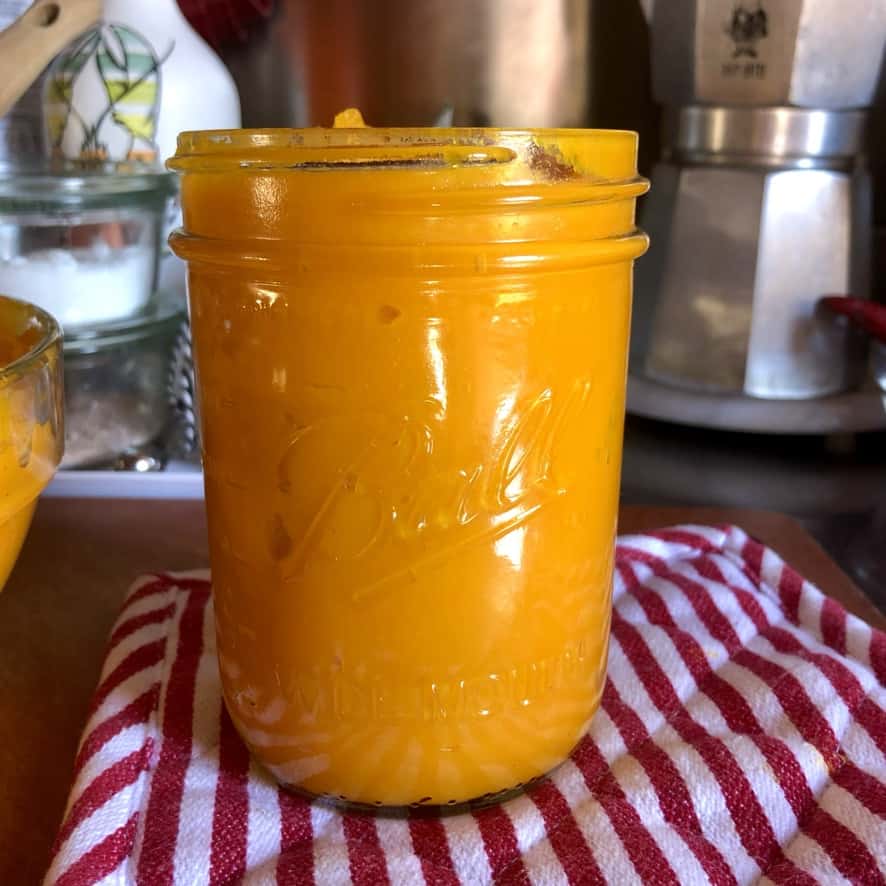
Freeze your purée, but do not home-can it. The USDA and the National Center for Home Food Preservation do not recommend canning any mashed or puréed pumpkin or winter squash. The official canning guide only gives directions for cubed pumpkin and includes the explicit warning, "Do not mash or purée."
The reason is safety, not fussiness. Pumpkin is a low-acid food, which means it can support the bacteria that cause botulism. Purée is so thick and varies so much from batch to batch that no safe home-canning time can be established for it. Freezing is the recommended way to preserve pumpkin purée, and a glass canning jar with headspace, used for freezing rather than shelf-canning, is exactly what I use.
What to Make With Pumpkin Purée
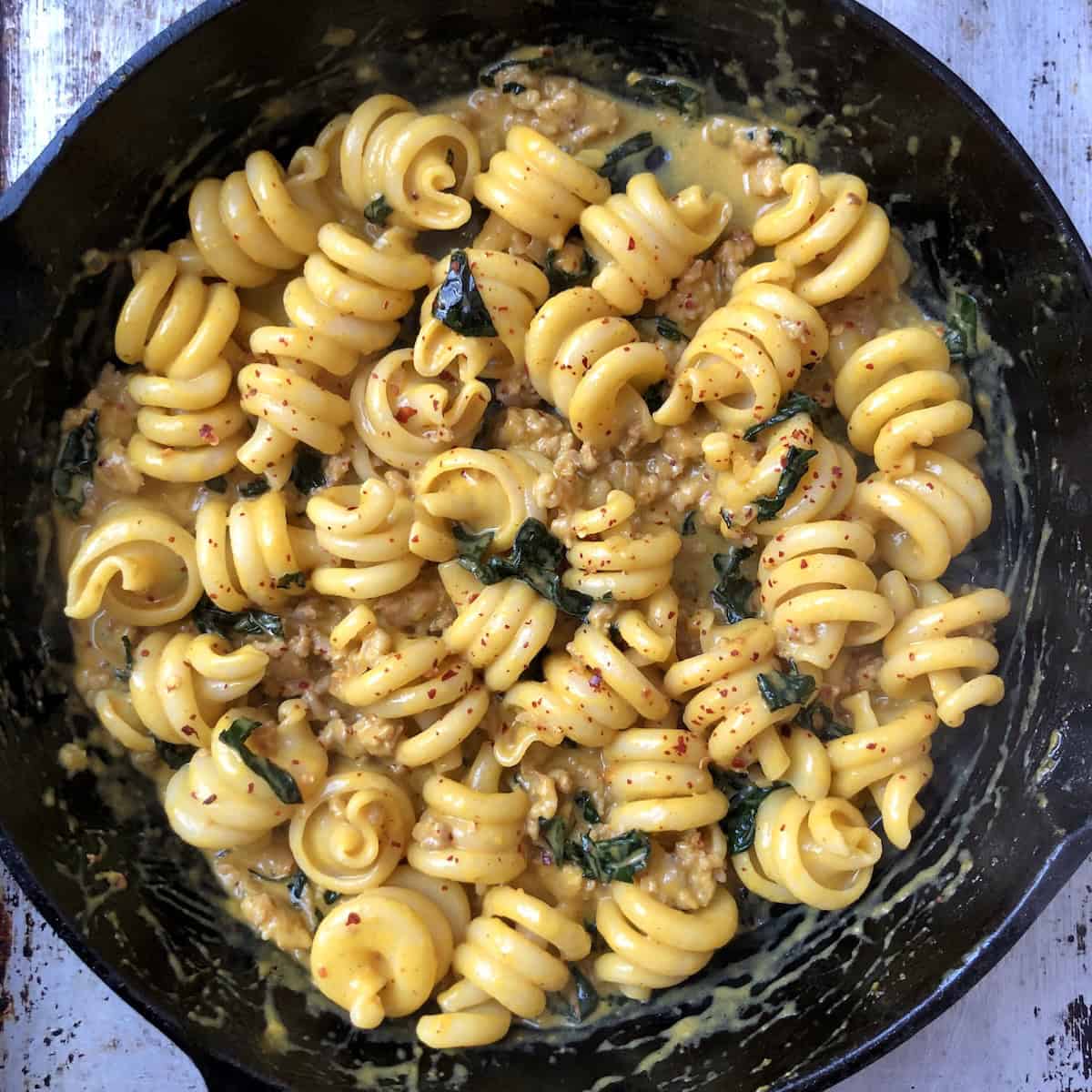
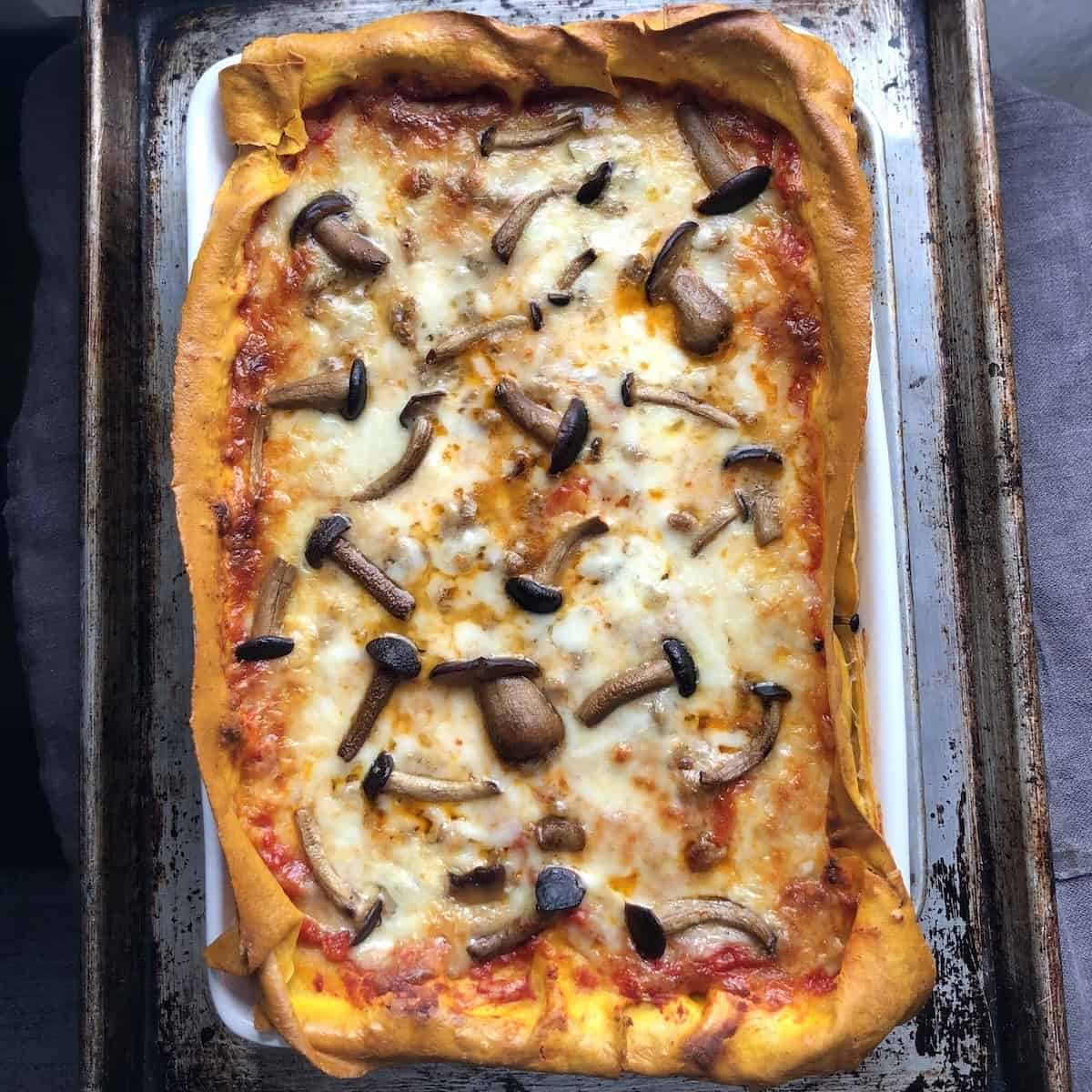

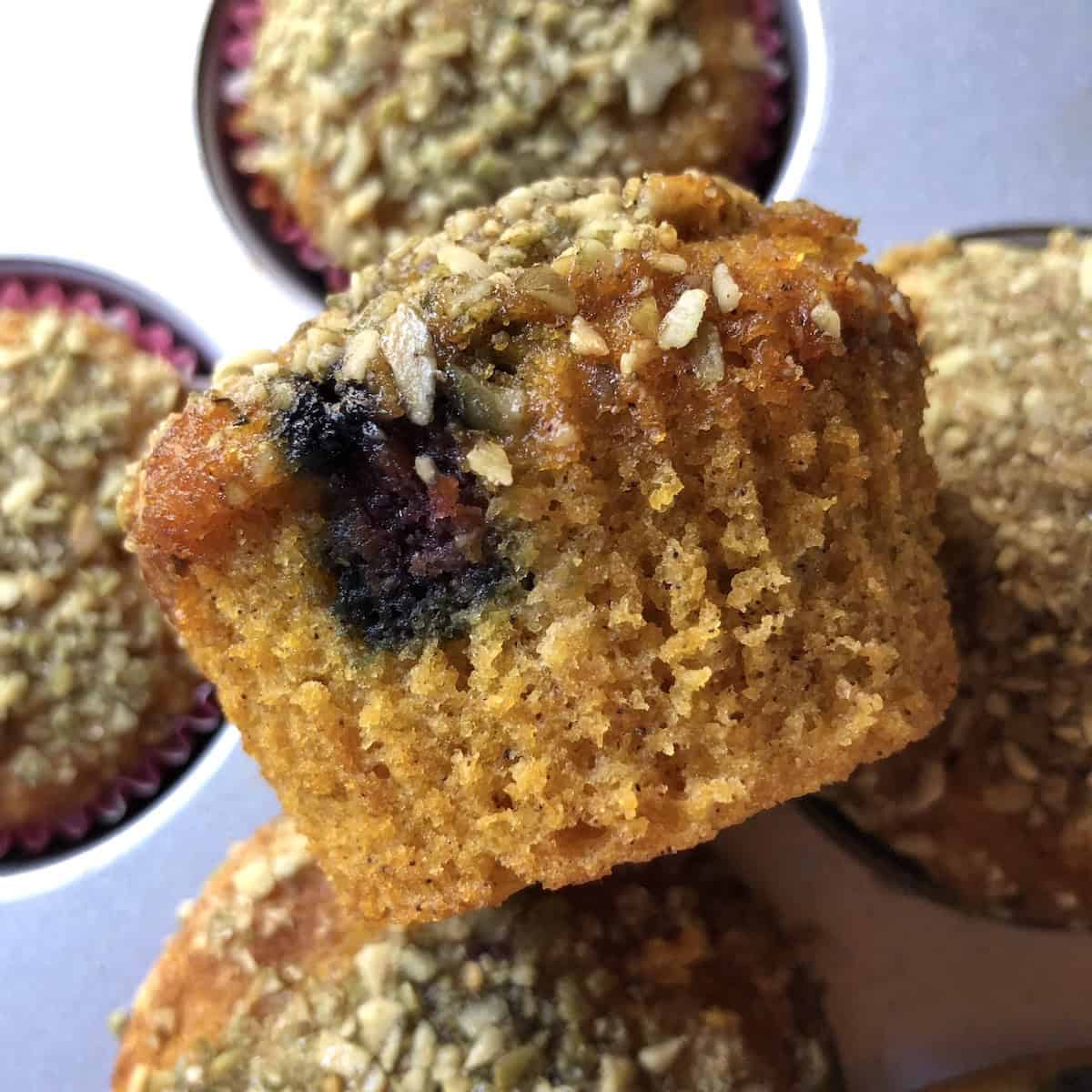
Once you have a batch, it goes into everything. Use it one-to-one anywhere a recipe calls for canned pumpkin, in both sweet and savory dishes:
- Pumpkin bread and pumpkin muffins
- Pumpkin pancakes
- Pumpkin cheesecake and pumpkin pie
- Pumpkin focaccia and savory bakes
- Creamy pumpkin pasta sauce
- Homemade pumpkin pasta
- Diced or stirred into risotto, soups
Pumpkin Purée FAQ
Roast it. Dry oven heat concentrates the flavor and caramelizes some of the natural sugars, so the puree tastes deeper and sweeter, and it drives off moisture for a thick puree you won't need to strain. Boiling makes the pumpkin soak up water, leaving a thinner, blander puree that usually needs draining before you can bake with it.
You can, but it won't taste very good or have a great texture. Large carving pumpkins are bred for size, not flavor, so they're watery and stringy and make a bland, thin puree. Small sugar or pie pumpkins, Hokkaido, or kabocha have denser, sweeter flesh and make a far better puree. Butternut squash is also a great option.
Mash the roasted pumpkin while it's still hot with a potato masher or the back of a fork, or even better, push it through a potato ricer for the smoothest result. Hot pumpkin breaks down much more easily than once it's cooled. You'll get a slightly more rustic texture that's perfect for bread, muffins, and savory dishes.
Yes. Pumpkin puree freezes very well and keeps its flavor and creamy texture. Freeze it for up to three months, portioned and flattened between wax or parchment paper and added to a freezer bag, or for up to 1 year in a glass canning jar with ½-inch headspace left empty for expansion as it freezes. I've personally frozen mine in a glass jar for a full year with absolutely no issues. Thaw in the refrigerator overnight and give it a stir before using.
Yes, one to one. Homemade pumpkin puree is unsweetened and unseasoned, exactly like plain canned pumpkin, so it swaps directly into any recipe. If your homemade puree looks wetter than canned, let it drain in a fine-mesh strainer for a few minutes so your batter or filling isn't too loose.
Easy Pumpkin Recipes Using Pumpkin Purée
If you love Fall pumpkin desserts as much as we do, here are a few family favorites to try!
- Pumpkin Walnut Bread (Super Moist, No Mixer + Video)
- Pumpkin Cheesecake with Chestnut Graham Cracker Crust
- Easy Pumpkin Seed Milk (Dairy-Free Milk Recipe)
- Pumpkin Pie Spice Recipe (Best McCormick Copycat)
- Pumpkin Pecan Pancakes Recipe With Blueberries (+ Video)
- Easy Pumpkin Focaccia Bread (Focaccia alla Zucca)
- Pumpkin Pie Mascarpone Tart With Pecan Crunch and Biscoff Crust
- Bakery-Style Pumpkin Muffins (Super Moist, No Mixer)


Let's get started!
Made this Recipe? We'd love for you to rate ⭐️ it and tell us how it went for you!
📖 Recipe

How to Make Homemade Pumpkin Purée
- Total Time: 40 minutes
- Yield: 1 pound 10 ounces Purée (26 ounces)
- Diet: Gluten Free, Low Calorie, Low Fat, Vegan, Vegetarian
Description
This homemade pumpkin purée recipe is perfect for better-tasting, less-processed holiday pumpkin desserts and savory sides, for homemade baby food, or for the best pumpkin pie ever. It takes just 30 minutes from start to finish. I've cut the 40 to 60-minute roasting time most pumpkin purée recipes call for down to 30 minutes, because everyone's trying to save energy and time these days.
Ingredients
- one 2-pound whole pumpkin (Hokkaido, Sugar, Kabocha, or Pie Pumpkin), peeled and diced (1kg)
 Get Recipe Ingredients
Instructions
- Prep the pan and preheat the oven to 400°F/200°C. Line a baking sheet with parchment paper.
- Roast the pumpkin. Peel it, remove the seeds, and dice into 1-inch pieces. Spread in a single layer on the sheet pan and roast for 30 minutes, until fork-tender. Remove from the oven, let the pumpkin rest until it stops steaming, then transfer it to the bowl of a food processor. *See notes for alternative ways to process the pumpkin.
- Purée the pumpkin. Process until smooth and creamy, then ladle into jars or use it straight away in any recipe that calls for canned pumpkin or pumpkin purée.
Notes
Larger pumpkins: roast slightly longer and toss the pieces once or twice for more even cooking.
No peeling or dicing: cut the pumpkin in half, scoop out the seeds, and roast both halves flesh-side down. Increase the roasting time by 20 to 30 minutes, until fork-tender.
No food processor: mash the roasted pumpkin with a potato masher or fork, or push it through a potato ricer for a creamy consistency.
Purée in batches: I process about half the pumpkin at a time. It gives a smoother result and moves a little faster.
Let the steam die down first: waiting until the roasted pumpkin stops steaming before it goes in the food processor does two things. It lets some moisture evaporate so your purée is thick, not watery, and it keeps you safer, since you should never process piping-hot ingredients.
For a thicker purée, start in a cold oven: put the pan of chopped pumpkin into the oven before you turn it on, and let it roast through the entire preheat, then give it 20 minutes once the oven reaches 400°F/200°C. The slow warm-up draws off extra moisture, so it's especially useful for wetter varieties like butternut or sugar pumpkin, and it puts the oven to work the whole time it's on instead of only after it's hot. Just remember the total time runs longer, roughly your preheat plus the 20 minutes.
- Prep Time: 10 minutes
- Cook Time: 30 minutes
- Category: Condiments + Sauces + Dips
- Method: Oven Roasted
- Cuisine: American
Nutrition
- Serving Size: ½ cup
- Calories: 54
- Sugar: 3g
- Sodium: 2mg
- Fat: 0.1g
- Saturated Fat: 0g
- Unsaturated Fat: 0g
- Trans Fat: 0g
- Carbohydrates: 12g
- Fiber: 2g
- Protein: 1.2g
- Cholesterol: og




Made the Recipe? Tell Us What You Think!