

Here in Northern Italy, you'll find a variety of squid ink pasta and risotto on just about every seafood restaurant menu, but in two very different forms. The first is when the nero di seppia ink (aka cuttlefish ink or squid ink ) is worked directly into fresh pasta dough to create stunning jet-black noodles. And the second is when the ink is used to make a sauce, and then it's paired with plain pasta (turning the whole dish black).
This post is about creating beautiful, black pasta dough, and it's the version I most often gravitate towards when cooking it at home. These tasty, dramatic, black noodles create the perfect foundation for some of the most impressive seafood pasta dishes you'll ever make!
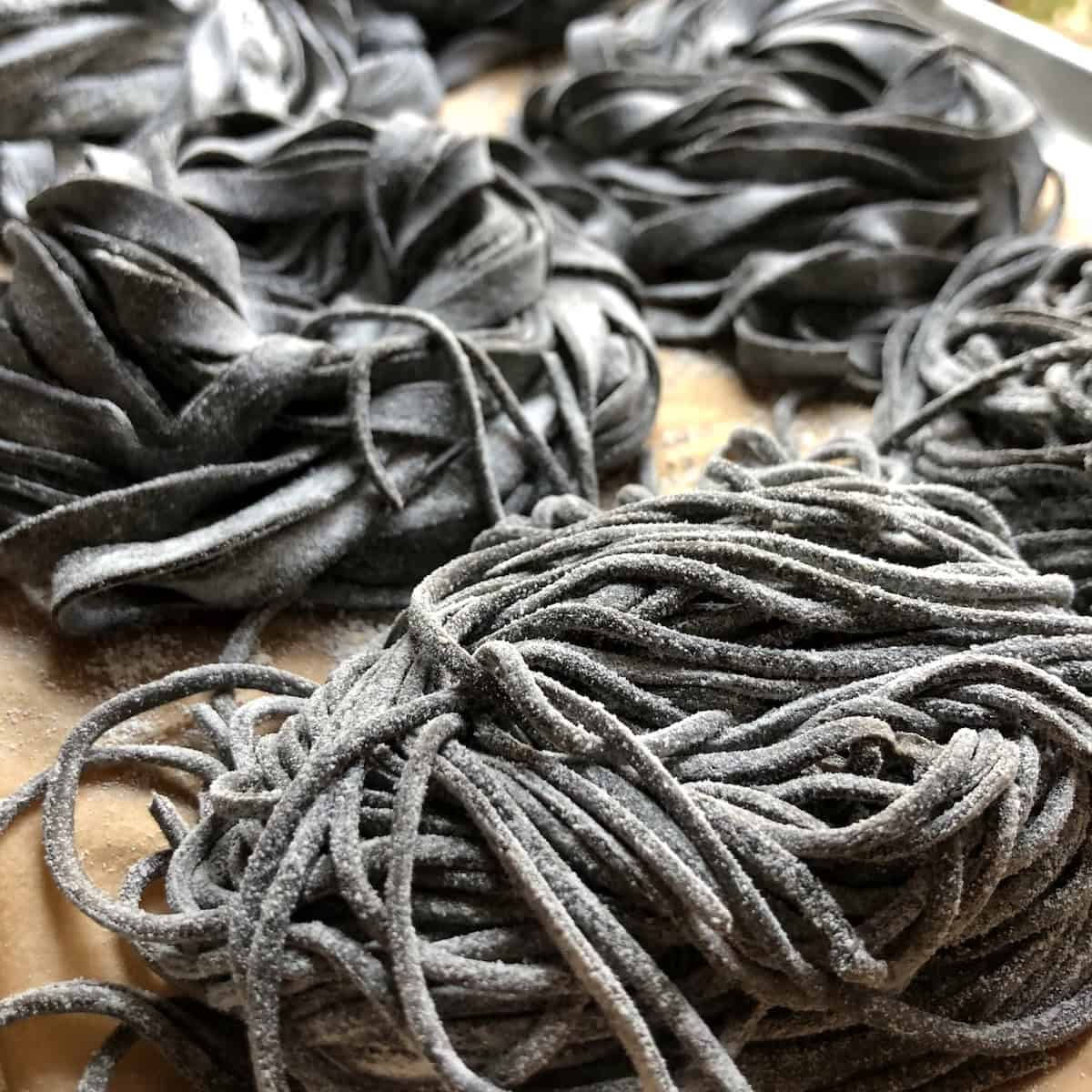
Squid ink pasta (with the ink in the dough) has a subtler, more balanced briny flavor that pairs beautifully with a wider range of sauces and ingredients.
The squid ink pasta sauce version (classic nero di seppia) can be incredibly delicious. But if the ink is low-quality and/or used too heavy-handedly, it can overwhelm the pasta with a one-note sea flavor. This is especially true for anyone trying this dish for the first time.
When cuttlefish ink is in the dough itself, though, the pasta becomes the canvas. And the gentle ocean-flavored undertone enhances any seafood you pair it with, rather than potentially overwhelming it.
Jump to:
- Why This Recipe Works
- Why You'll Love This Homemade Squid Ink Pasta Recipe
- What Is Squid Ink Pasta?
- What Does Squid Ink Pasta Taste Like?
- Squid Ink Pasta Ingredients
- How to Make Squid Ink Pasta (From Scratch)
- Semolina Squid Ink Pasta vs 00-Flour Squid Ink Pasta (In Photos)
- How Much Squid Ink to Use (The Color Guide)
- Substitutions
- Equipment Needed for Making Squid Ink Pasta
- How to Store Squid Ink Pasta
- Types of Squid Ink: Squid Ink vs. Cuttlefish Ink (Seppia) and Fresh vs. Shelf-Stable
- Where to Buy Squid Ink
- Best Sauces to Pair With Squid Ink Pasta
- Top Tips
- Squid Ink Nutrition
- FAQ
- More Easy Pasta Dough Recipes
- More Naturally Gray and Black-Colored Recipes
- 📖 Recipe
- Food Safety
- Squid Ink Pasta for Halloween
- Squid Ink Pasta in Italian Cuisine: A Brief History
- Squid Ink Pasta: Venice vs. Sicily
Why This Recipe Works
This homemade squid ink pasta recipe uses just three ingredients and the same technique as making classic Italian fresh egg pasta. One of the keys to learning how to make really good squid ink pasta is knowing how much ink to use.
Too little, and your pasta lacks visual impact, turning out brown or grey (not black), and choosing quality ink, whether that's fresh seppia ink from the fishmonger or a good shelf-stable jar or plastic sachet.
I'll walk you through all of it, including where to extract the ink from fresh cuttlefish (a bit messy) or using store-bought ink (much easier). You'll soon be making black spaghetti, black linguine, squid ink fettuccine, ravioli, lasagna, and more!
Why You'll Love This Homemade Squid Ink Pasta Recipe
- Stunning jet-black color without artificial food coloring is tasty and dramatic-looking.
- Just 3 simple ingredients. Flour, eggs, and cuttlefish ink (or squid ink). The technique is straightforward once you know the ink-to-flour ratio, and I'll give you my exact color guide below.
- Subtle briny, umami flavor that pairs beautifully with seafood sauces, cream sauces, or even a simple garlic and olive oil sauce, minus the overwhelming intensity of ink-in-sauce nero di seppia you sometimes find.
- You control the color. From deep grey to jet black, depending on how much ink you add. I'll show you the difference.
- Make it ahead and freeze. Shape into nests and freeze; no pasta drying rack needed. Impressive enough for date night or a dinner party, but easy for a weeknight dinner because it cooks directly from frozen in just minutes.
- Make all kinds of black pasta shapes. This dough works as squid ink linguine, squid ink fettuccine, squid ink spaghetti, tagliatelle, pappardelle, bigoli, bucatini, or leave it as sheets for dramatic black ravioli and seafood lasagna.
- Perfect for Dramatic Valentine's Day pasta or spooky Halloween Pasta
What Is Squid Ink Pasta?
Squid ink pasta is fresh or dried pasta made with cephalopod ink (typically from cuttlefish or squid) incorporated directly into the dough. The ink turns the pasta a striking black color and adds a subtle, briny, umami flavor.
In Italian, it's called "pasta al nero di seppia" (literally "pasta with cuttlefish ink") or simply "pasta nera" (black pasta). Whether you call them squid ink noodles, black spaghetti, or pasta nera, they all start with the same technique.
Black squid ink pasta is a staple of traditional coastal Italian cooking, especially in Venice and the greater Veneto region (where we live), Sicily, and Sardinia. You'll also find squid ink used across the Mediterranean in Spain's arroz negro and in Asian cuisines like Japan's ikasumi noodles.
Living near Venice, we get to enjoy this pasta with various kinds of delicious local seafood sauces, but it's actually really easy to make it yourself at home😉! Keep reading for everything you need to know:
What Does Squid Ink Pasta Taste Like?
What does squid ink taste like? Subtle, briny, with a hint of umami and sea saltiness - not fishy. Think of a fresh oyster on the half shell, but way more delicate.
To me, it's reminiscent of light soy sauce with hints of fish sauce and Chinese fermented bean paste. Some supertasters detect a subtle iodine or mineral undertone, which is normal since squid ink naturally contains iodine.
Go ahead and taste your ink straight - high-quality ink (just cuttlefish ink + salt, no preservatives or thickeners) tastes surprisingly good. Lower-quality inks may lack that fresh sea flavor.
When worked into pasta dough, the squid ink taste enhances rather than dominates whatever sauce you pair it with. Fresh homemade squid ink pasta has a more noticeable flavor than dried store-bought versions.
The color and taste are directly connected: lightly inked grey pasta tastes almost like regular pasta, while deeply black pasta has a more noticeable briny, savory depth.
Ink in the Dough vs. Ink in the Sauce: Why I Prefer the Dough
Ink in the dough (this recipe): Subtle, balanced, ever-so-slightly briny. The pasta acts as a canvas that enhances seafood sauces without competing with them. Versatile enough to pair with everything from a simple aglio e olio to a light crab sauce, creamy alfredo, or tomato cream sauce.
Ink in the sauce (classic spaghetti al nero di seppia): Much stronger, earthier, saltier - the ink IS the sauce (or a major component of it). Delicious when done well, but the squid ink taste can overwhelm a dish if overused. This version is perfect for people who already know they love intense sea flavor.
I prefer the dough version because it's more versatile, and lets whatever sauce you pair with it shine. If you want the sauce version, that's a different recipe entirely.

Squid Ink Pasta Ingredients
This homemade squid ink pasta recipe uses just three ingredients. That's it. The magic is in the quality of your ink, flour, and eggs.
- 00 Flour OR Twice-Milled Semolina Flour: Italian 00 flour gives the silkiest texture, but like many Italian pasta makers, I also like to use twice-milled, finely ground semolina flour for a little extra "bite". Feel free to blend 00 with semola rimacinata. Pretty much any of these Italian flours will give you a perfect dough as you can see from my photos.
- Eggs (organic, free-range if possible): Room-temperature eggs incorporate into the flour more evenly and produce a smoother dough. Organic, free-range eggs are healthier and taste better, but regular eggs work well too.
- Squid ink or cuttlefish (seppia) ink (15-30g): I use about 24g for a rich black color. You can go up to 30g for intensely black, deeply briny pasta. Fresh, refrigerated, or shelf-stable sachets all work. See the Types of Squid Ink section above for details on choosing the best ink.
Important note on semolina vs. semola: "Semola" is simply the Italian word for semolina. Both refer to flour made from hard durum wheat. Regular semola (or semolina) has a coarser grind and is typically used for breads or dusting pizza peels to prevent sticking.
Semola rimacinata (meaning "re-milled semolina") is the same flour milled twice to produce a much finer grain. This is what you want for making egg pasta dough, not the coarse version. Using regular coarse semolina will not produce good results.
That's the entire ingredient list. No oil, and no salt needed. Squid ink is naturally salty, so additional salt isn't necessary. Plus, you boil it in salted water.
See recipe card for detailed ingredient amounts.
How to Make Squid Ink Pasta (From Scratch)
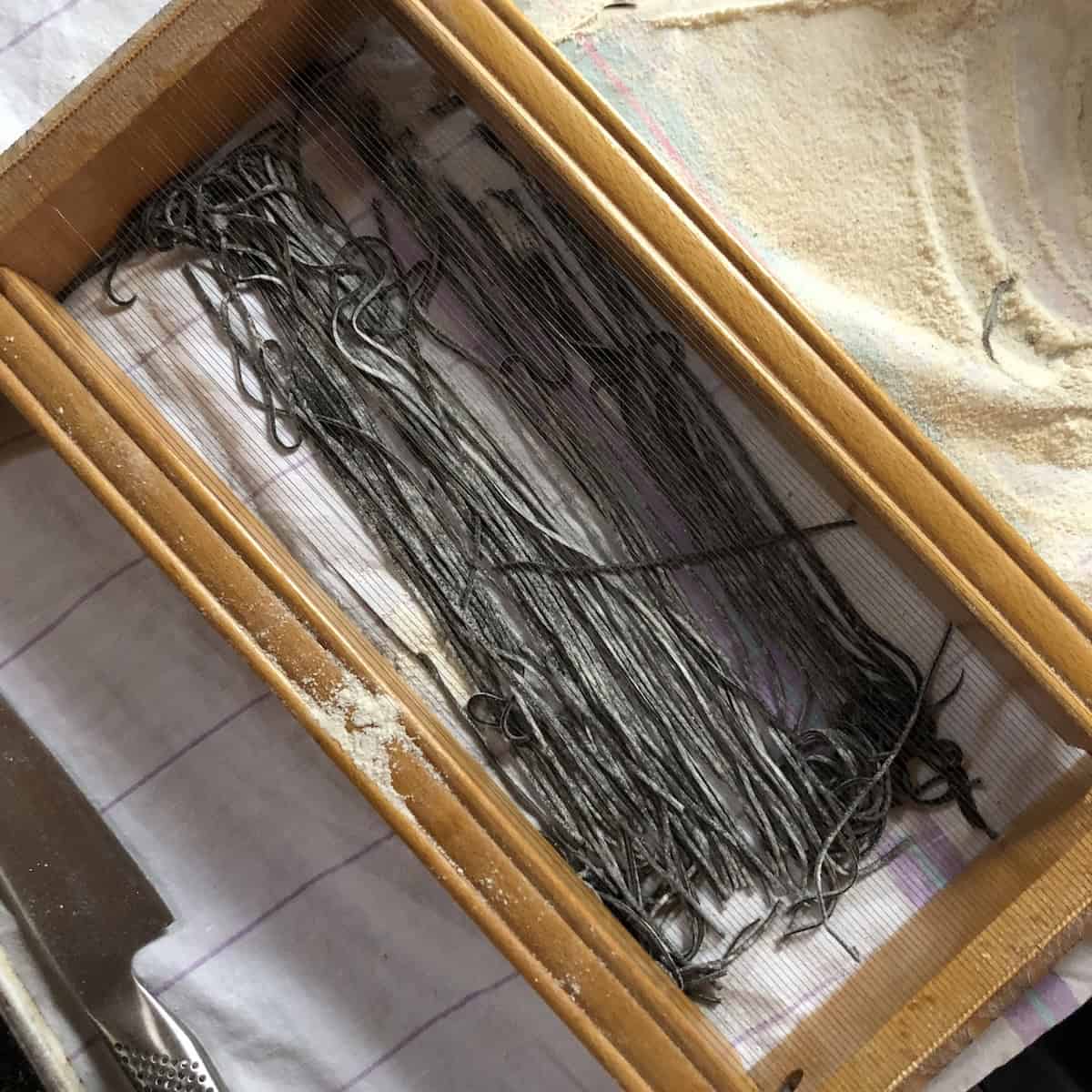
The technique for making squid ink pasta is essentially the same as making regular fresh pasta, except you'll add the ink directly to the eggs before incorporating them into the flour. This ensures the color distributes more evenly throughout the dough instead of leaving you with streaks.
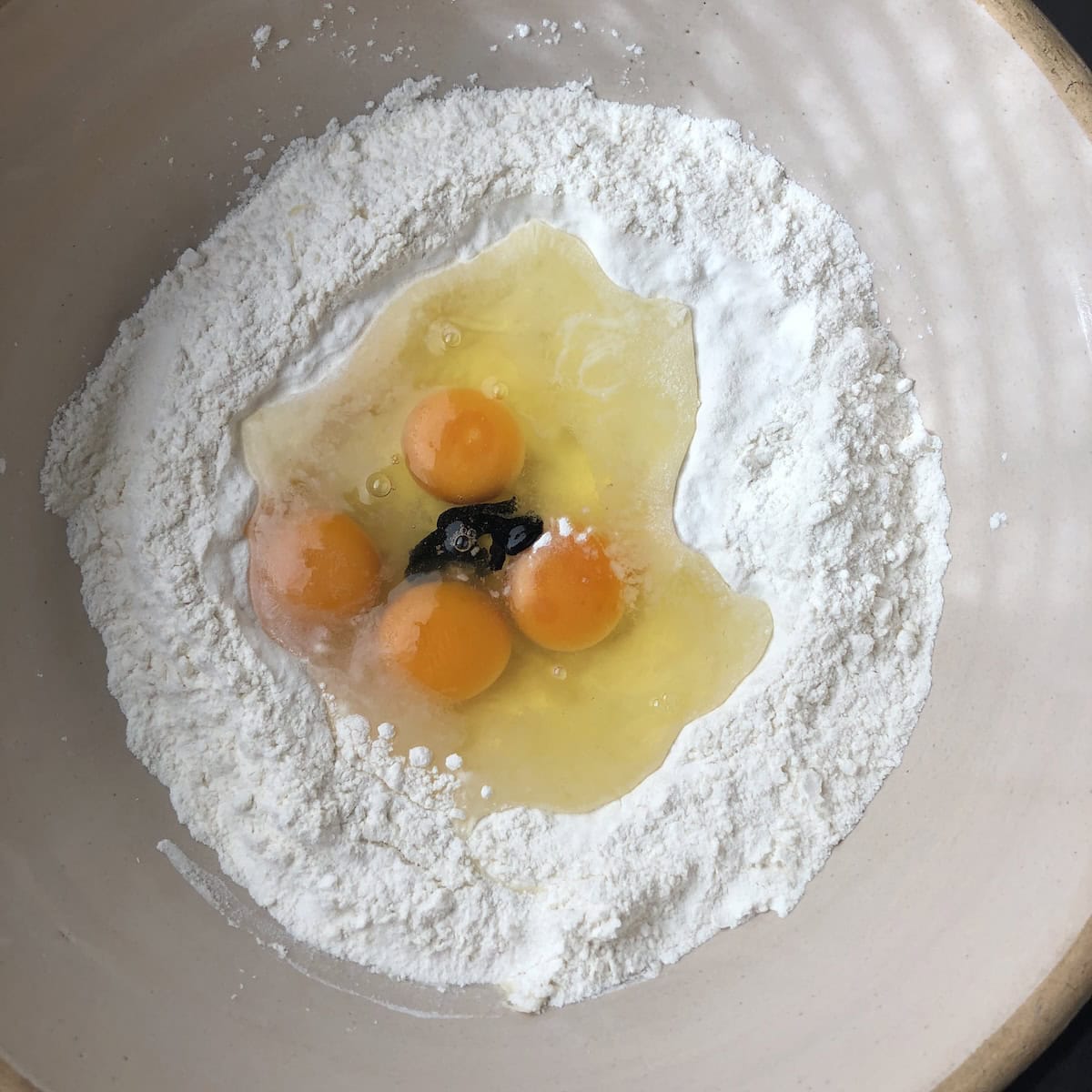
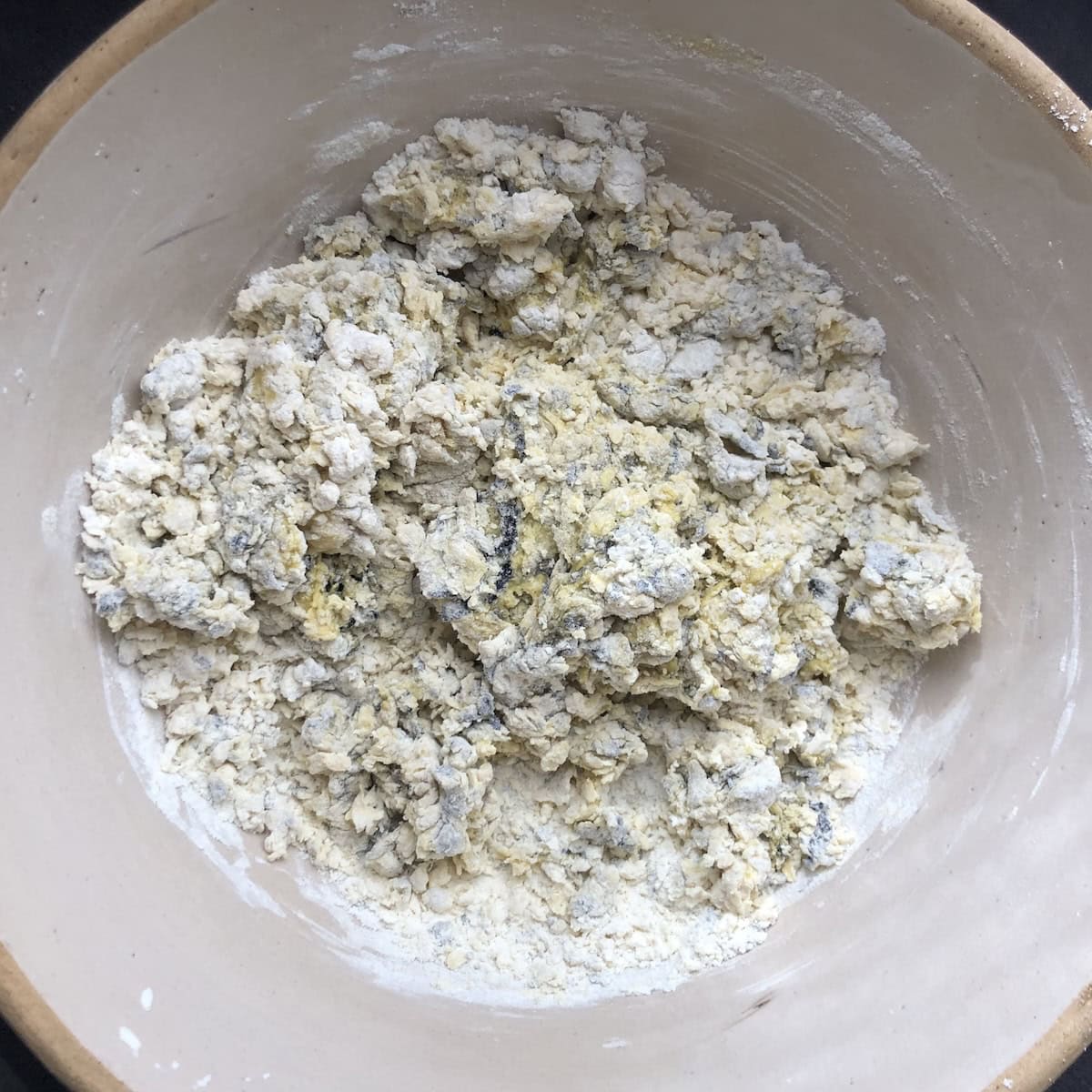
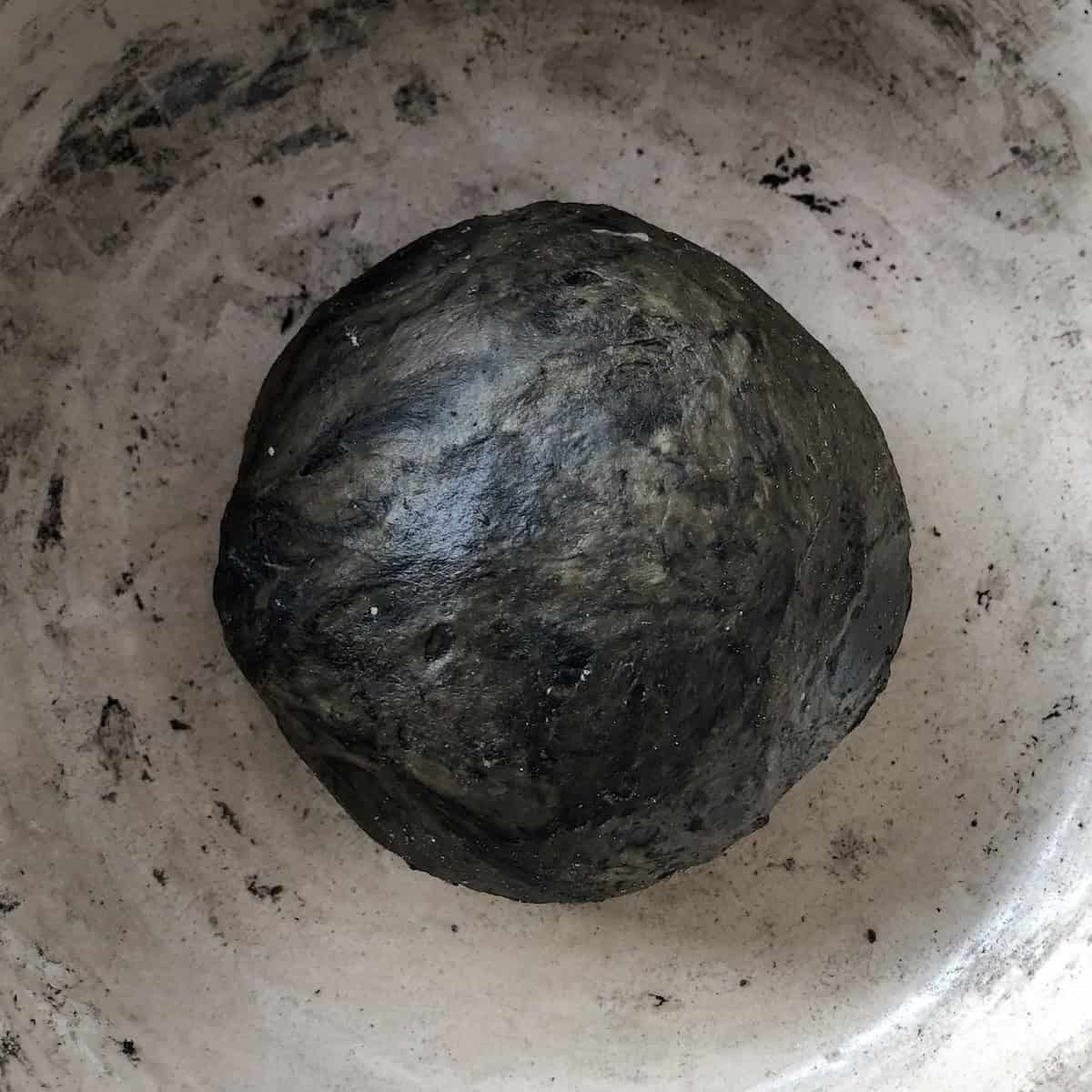
Step 1. Add the ink to the eggs (not directly onto the flour) for more even color distribution. Using a fork, whisk the eggs and ink together in the well and start adding flour from the sides as you go around until you get a shaggy mess.
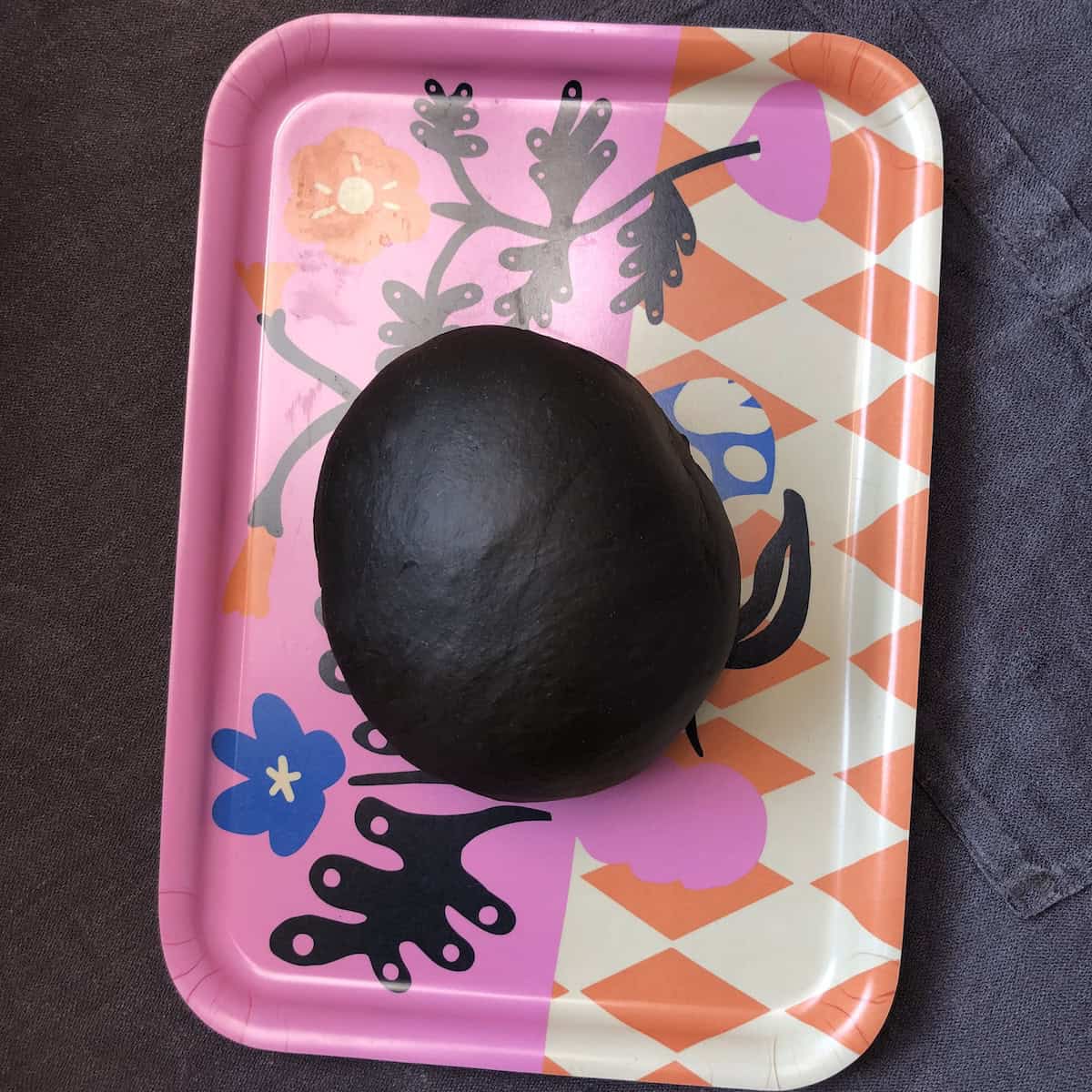
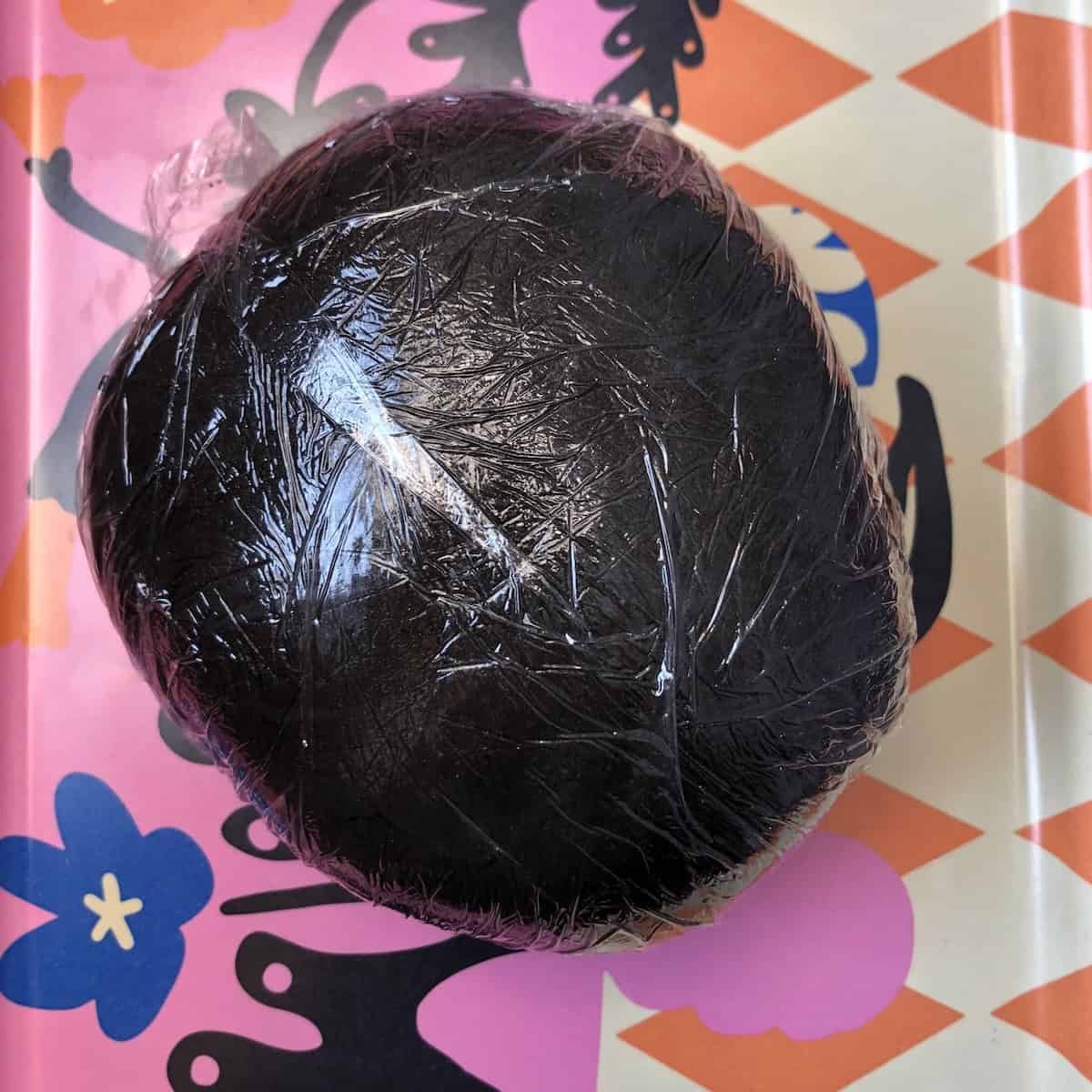
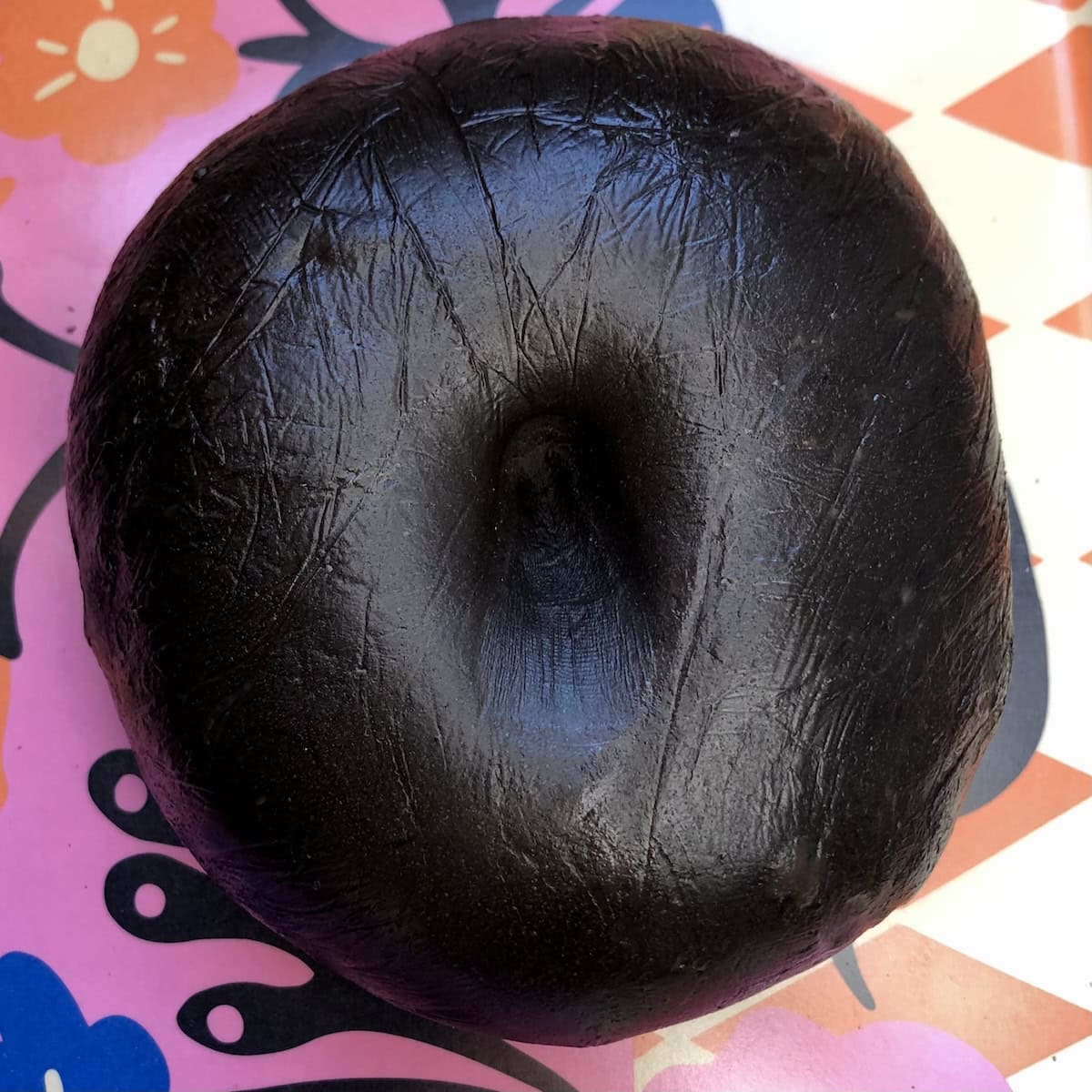
Step 2. Knead the dough on a lightly floured surface until smoother, more pliable, and the ink is fully incorporated (about 10-12 minutes by hand or 8-10 minutes in a stand mixer with the dough hook attachment -Speed #2 KitchenAid). It should not stick to your hands at this point.
Cover the dough and rest it for at least 30 minutes, or up to overnight in the refrigerator. After resting, it should feel smooth, elastic, and look well-hydrated with a slight sheen.
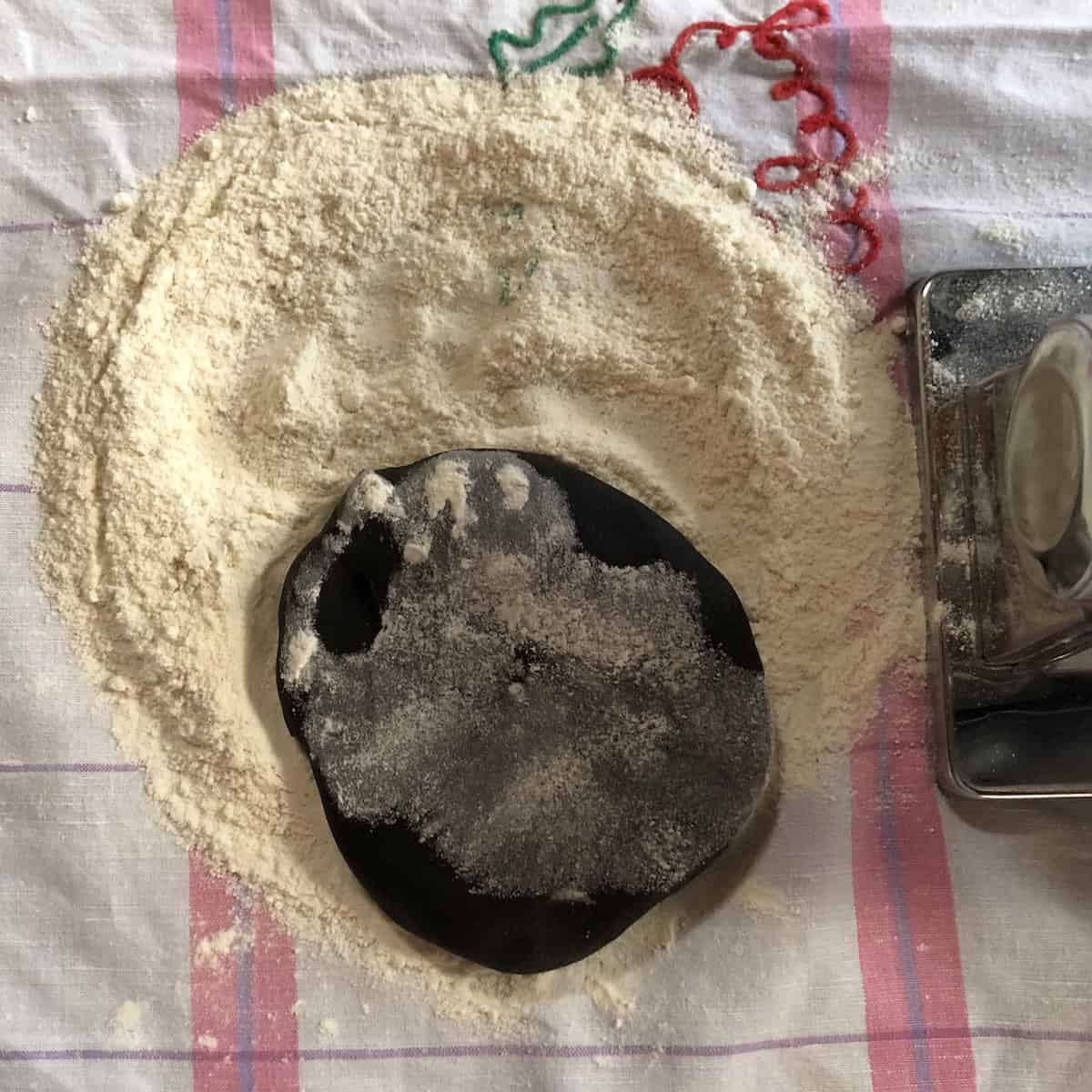
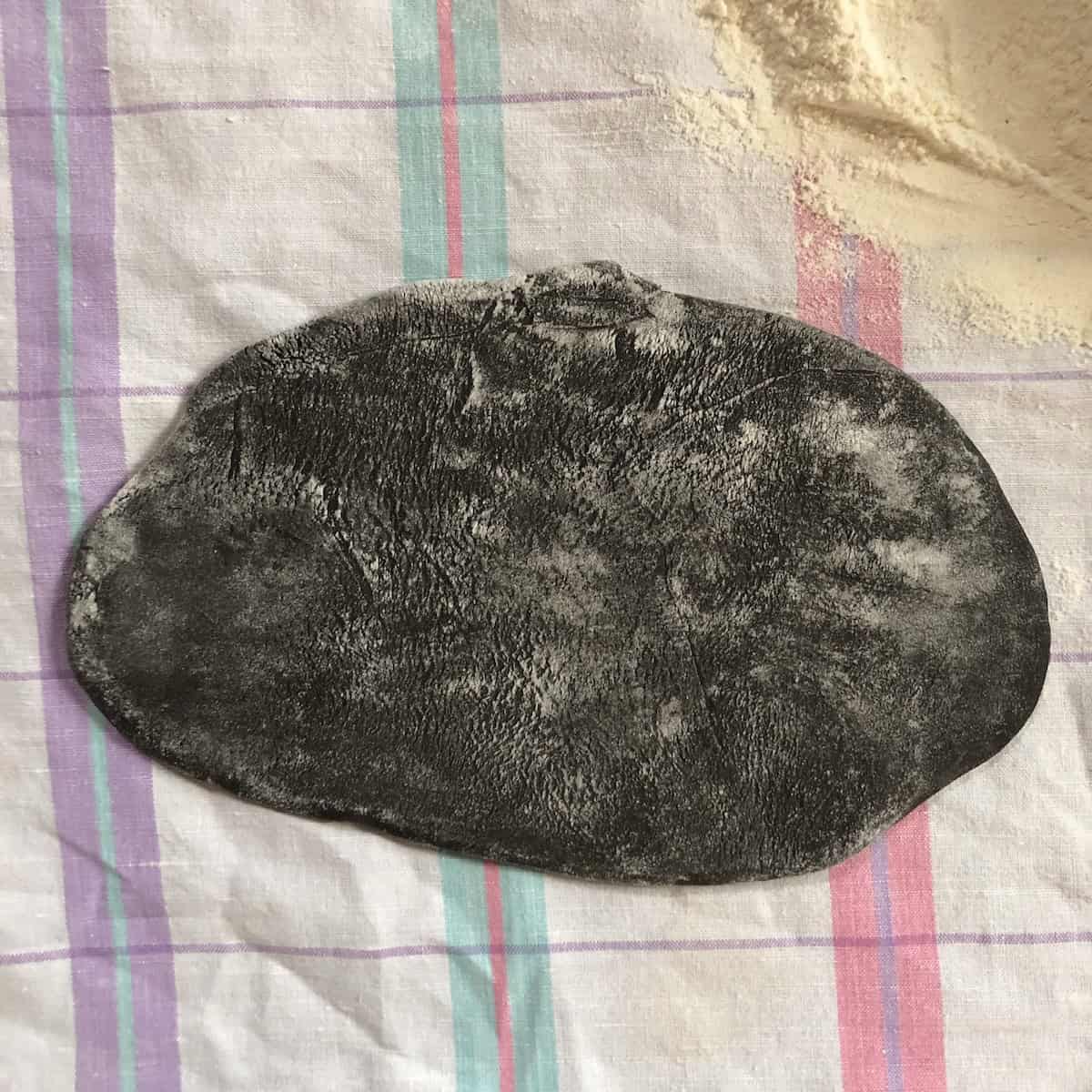
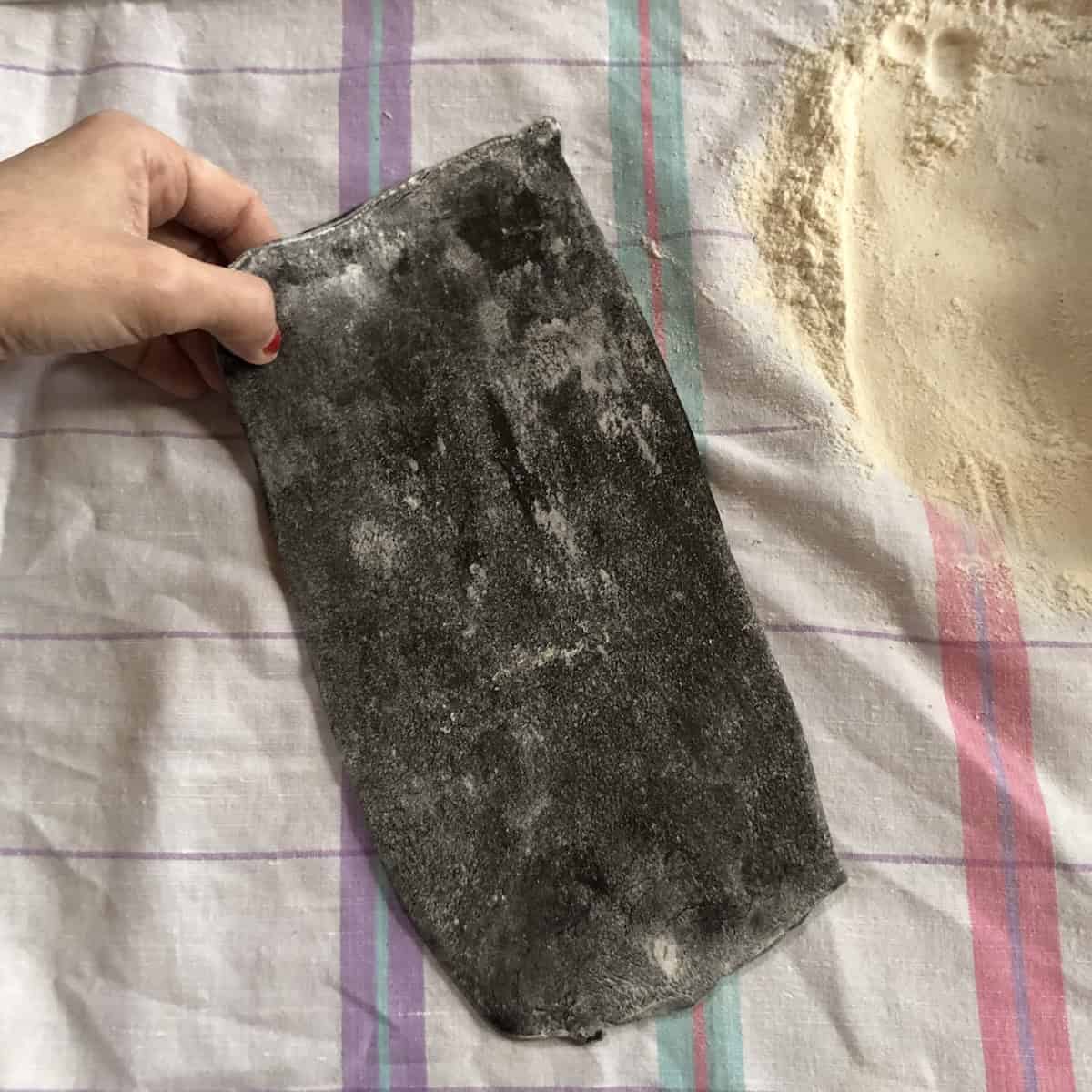
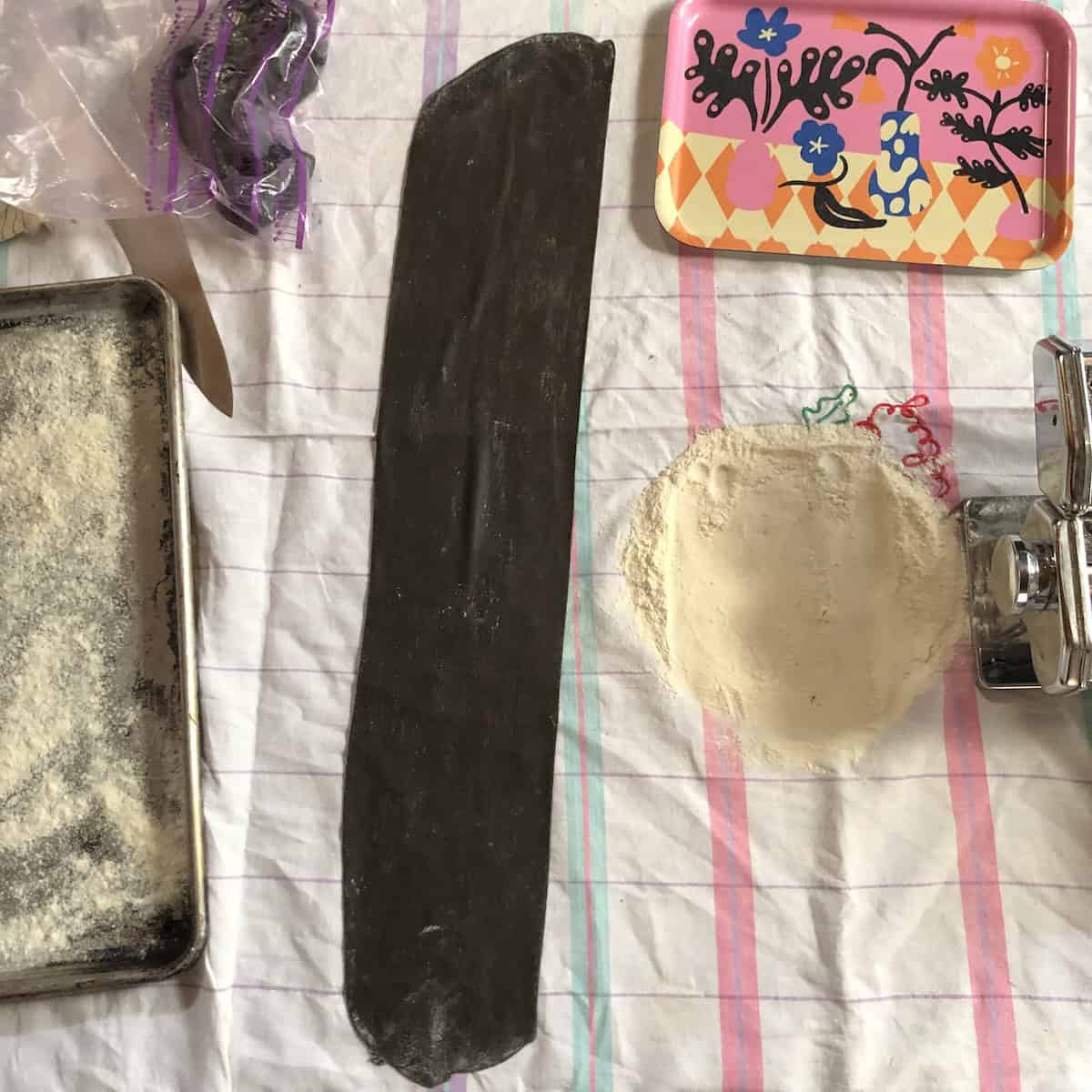
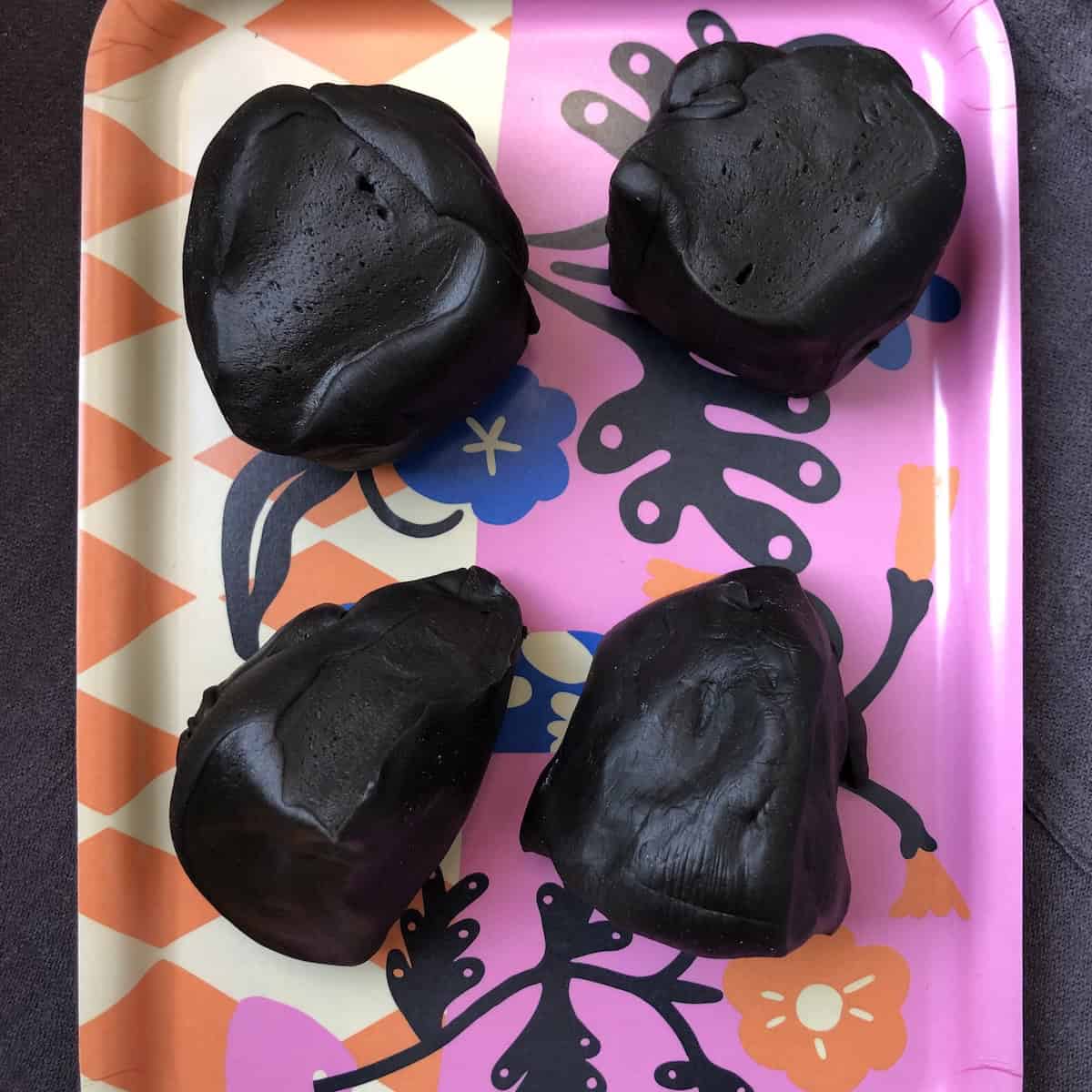
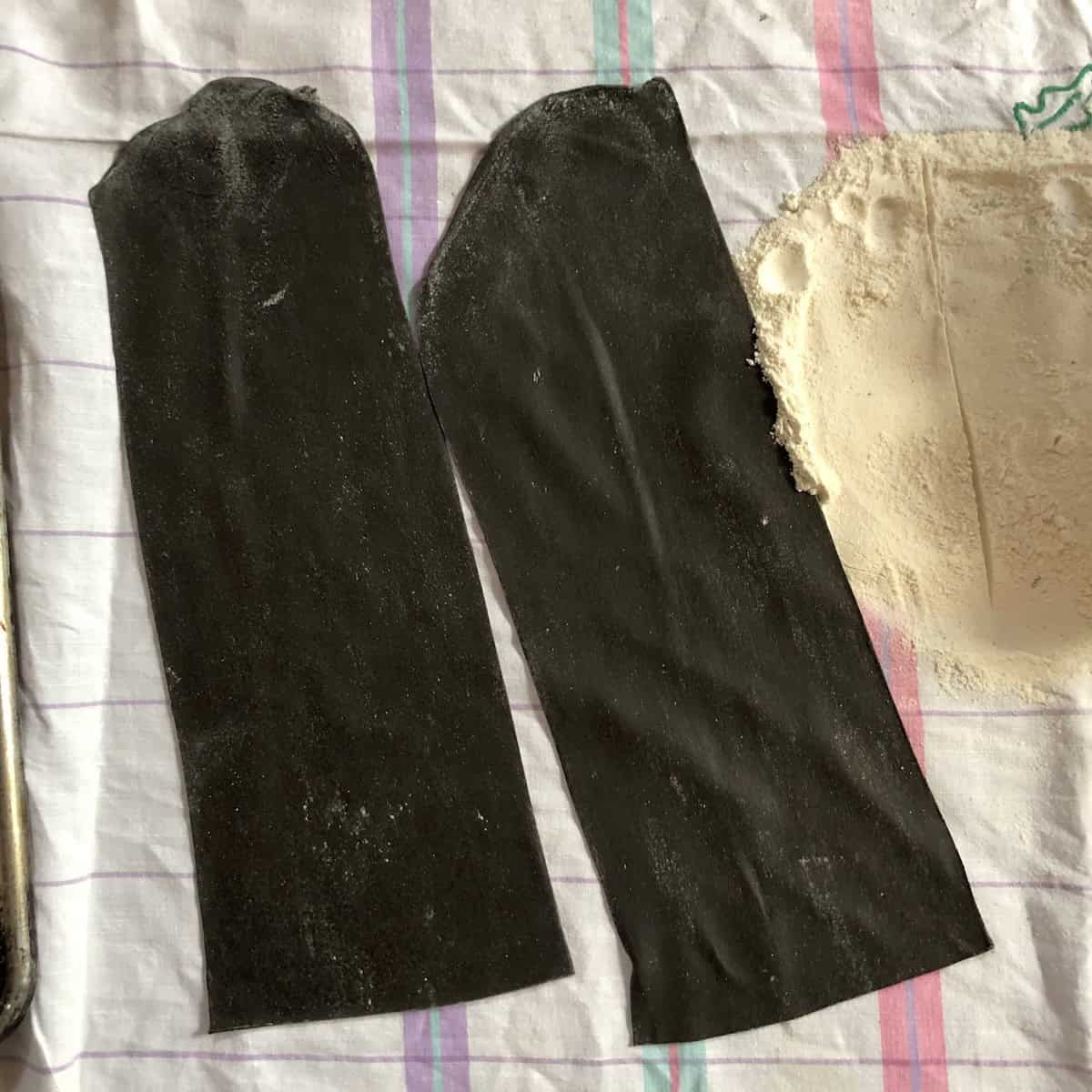
Step 3. Portion the dough into 4 equal pieces. Working with one piece at a time, flatten the dough and roll it through a pasta machine on its widest setting (0 or 1) or use a rolling pin. I use my Atlas Marcato, going to setting #6 for most pasta shapes, and #6 or #7 for ravioli.
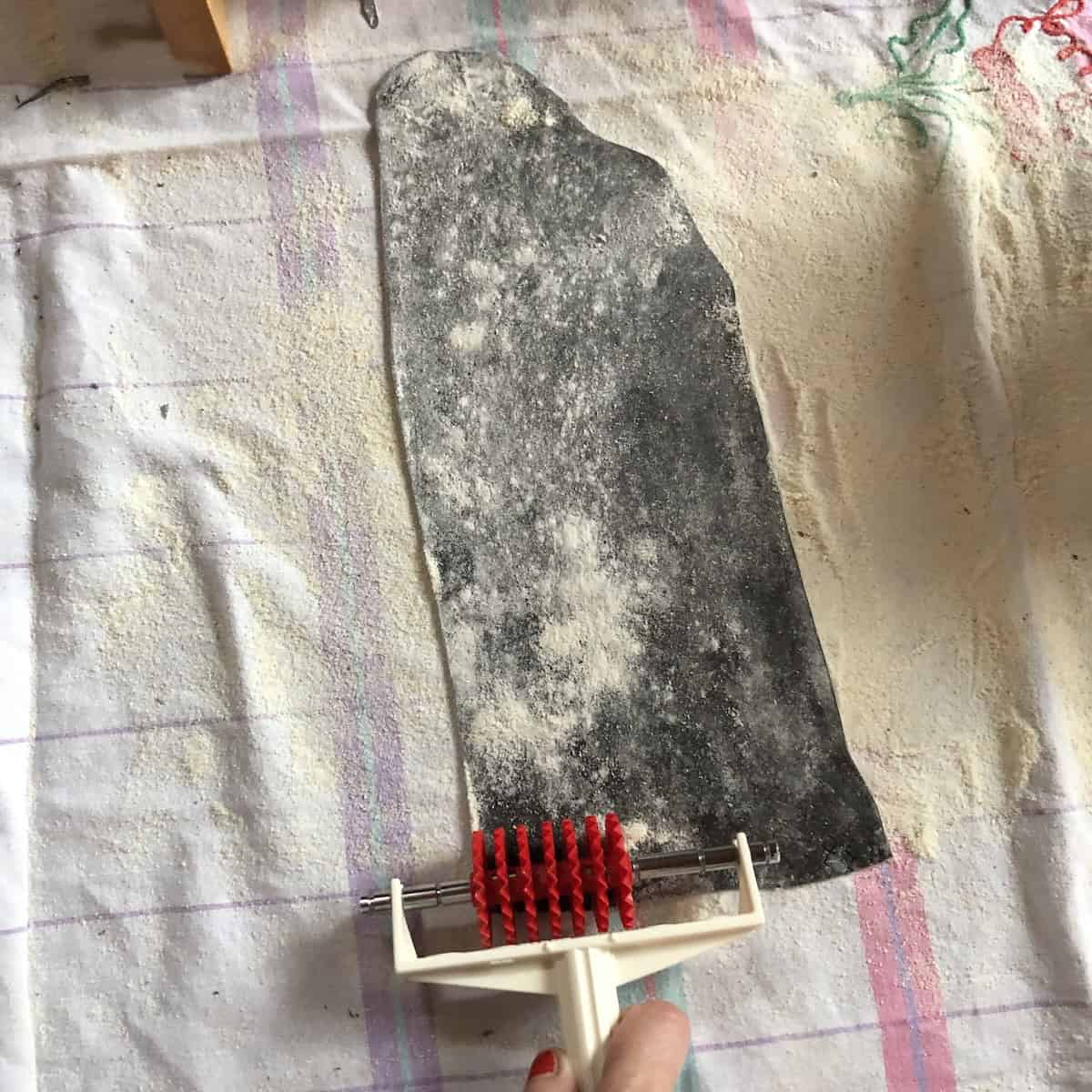

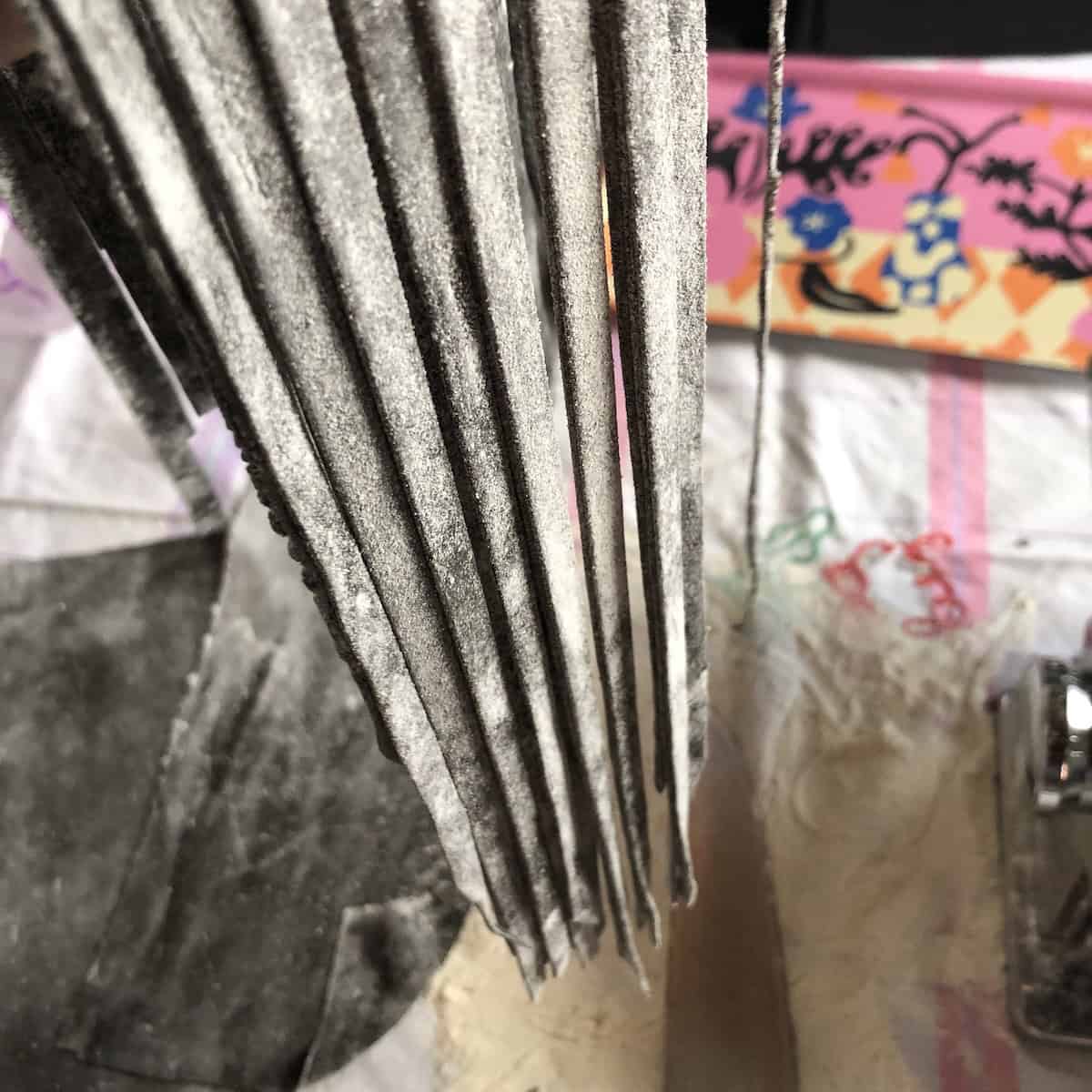
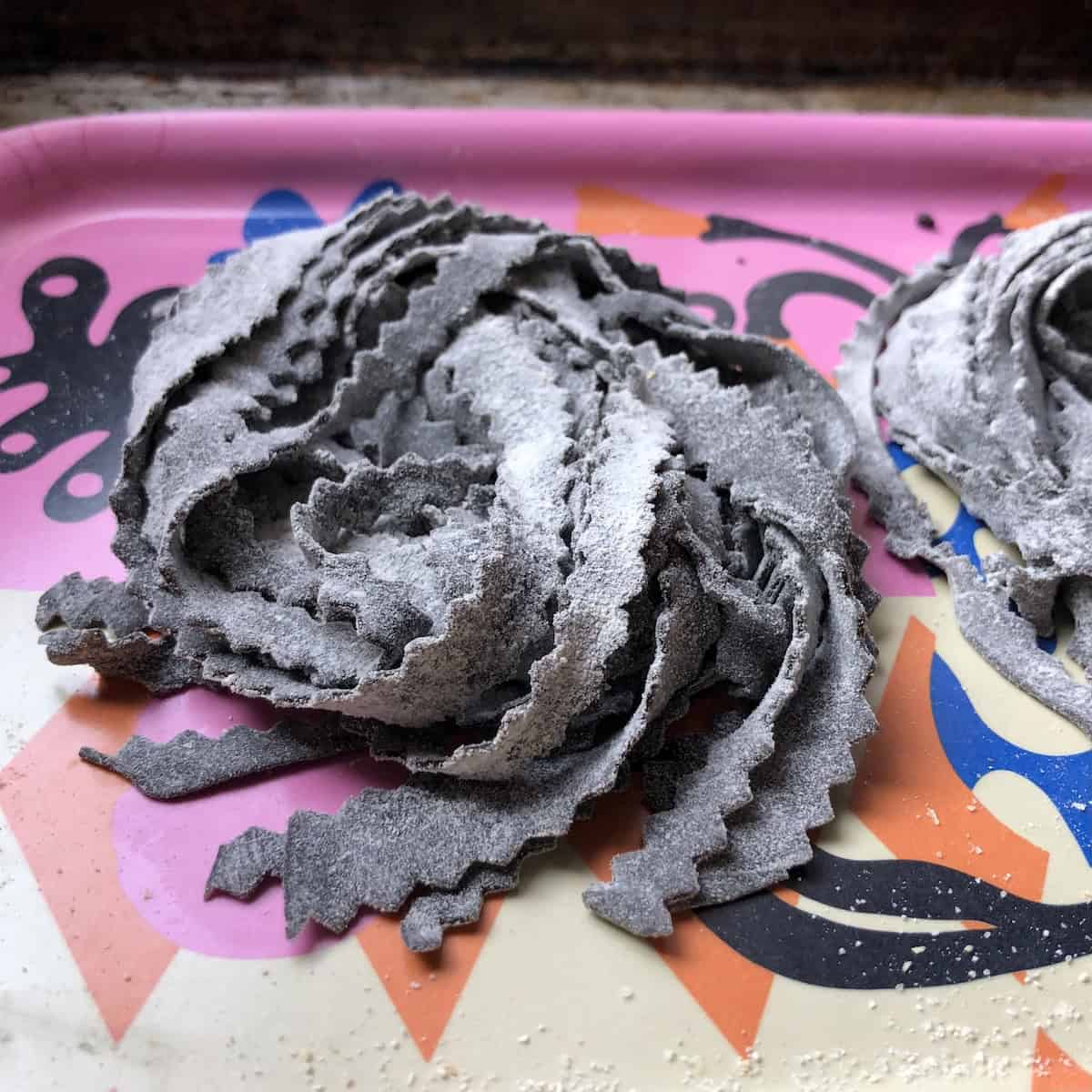
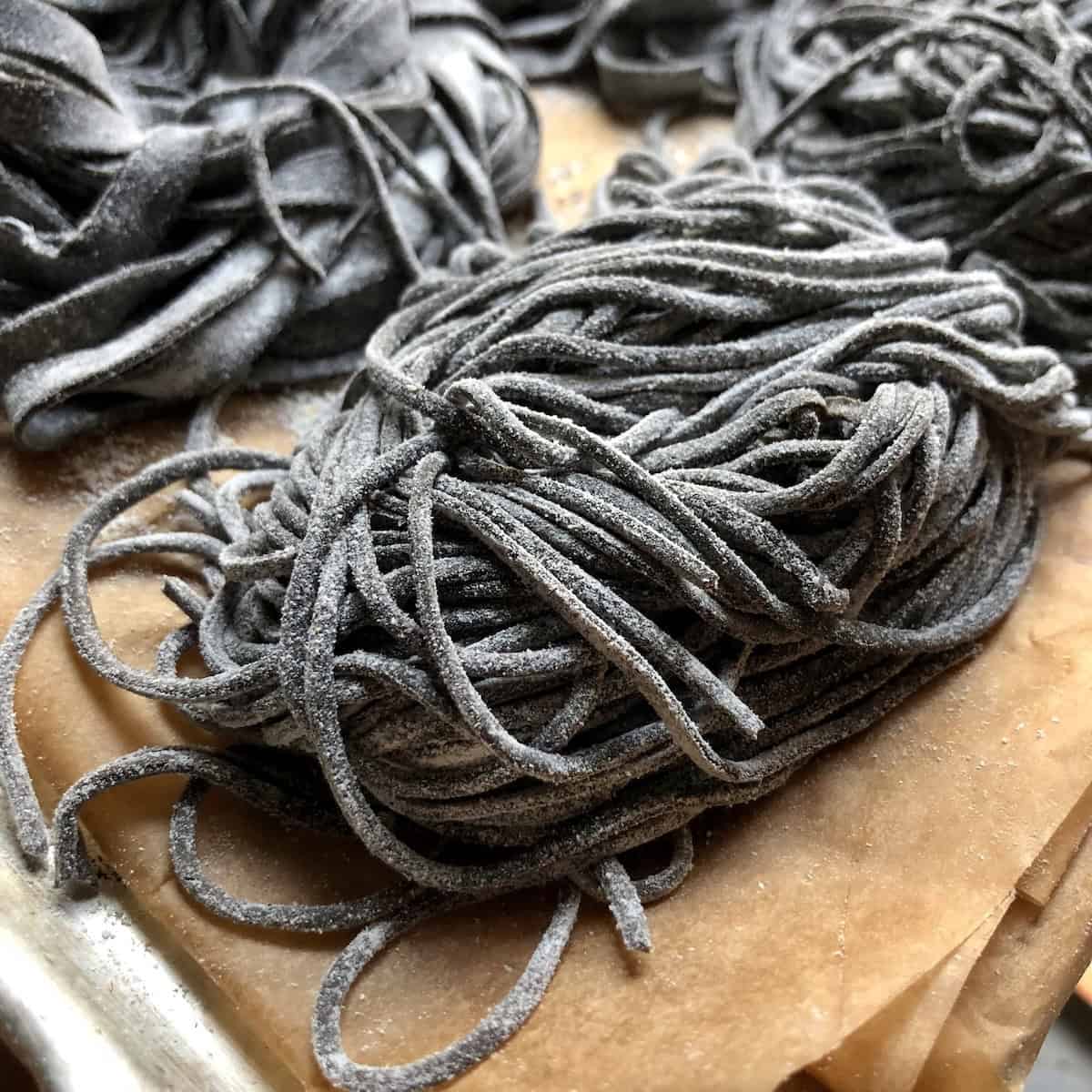
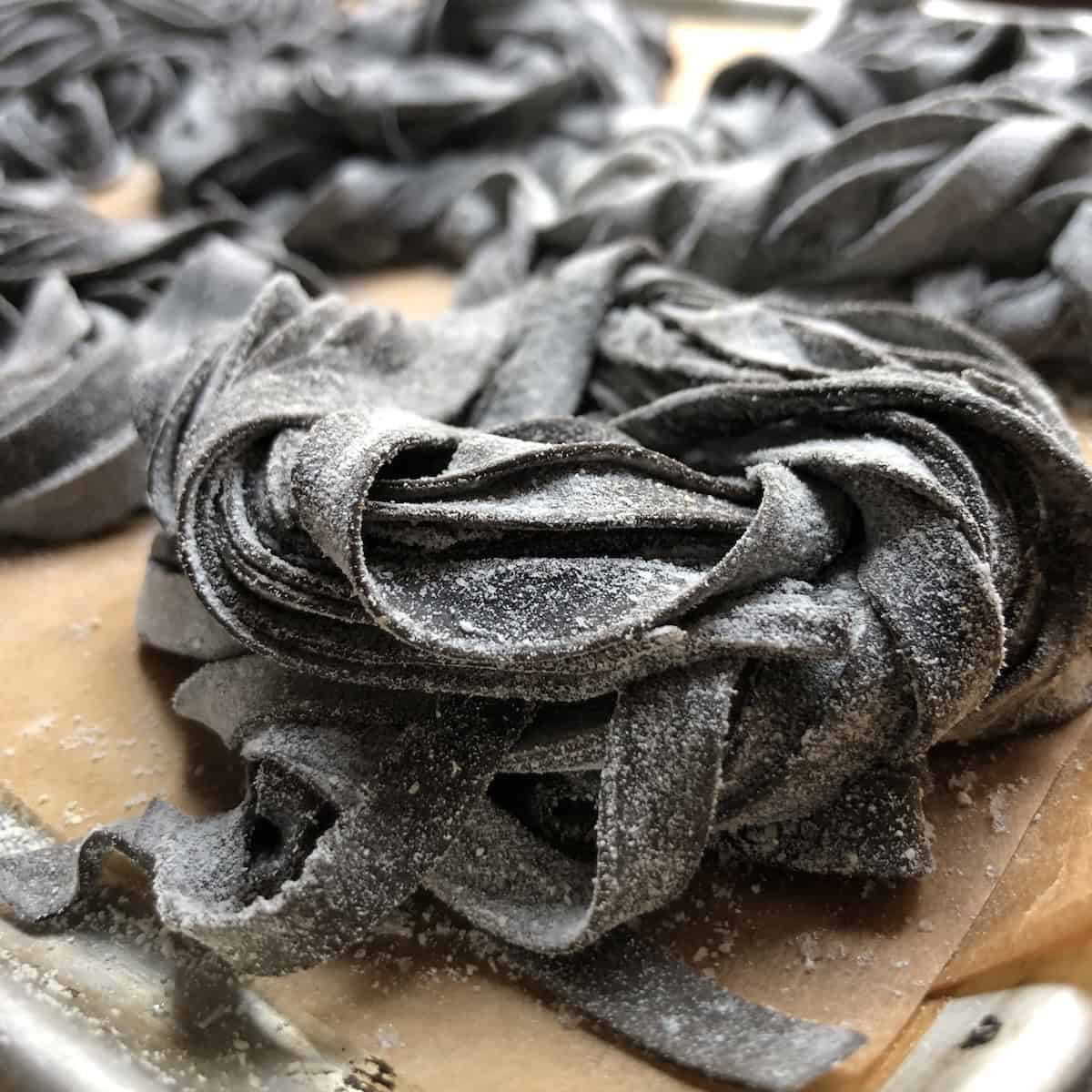
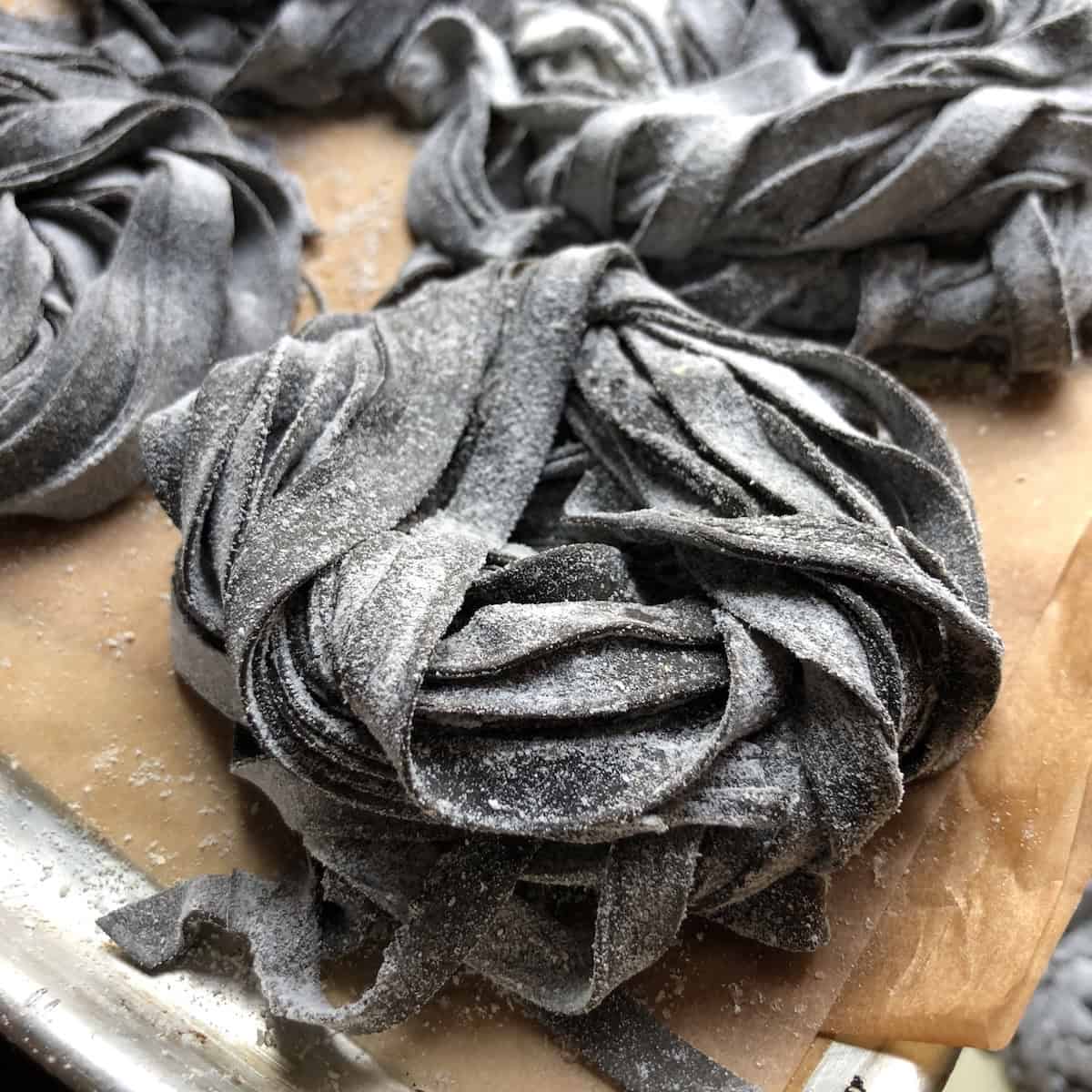
Step 4. Cut the pasta into any shape: squid ink linguine, black fettuccine, black spaghetti, tagliatelle, pappardelle, or leave in sheets for black ravioli and lasagna.
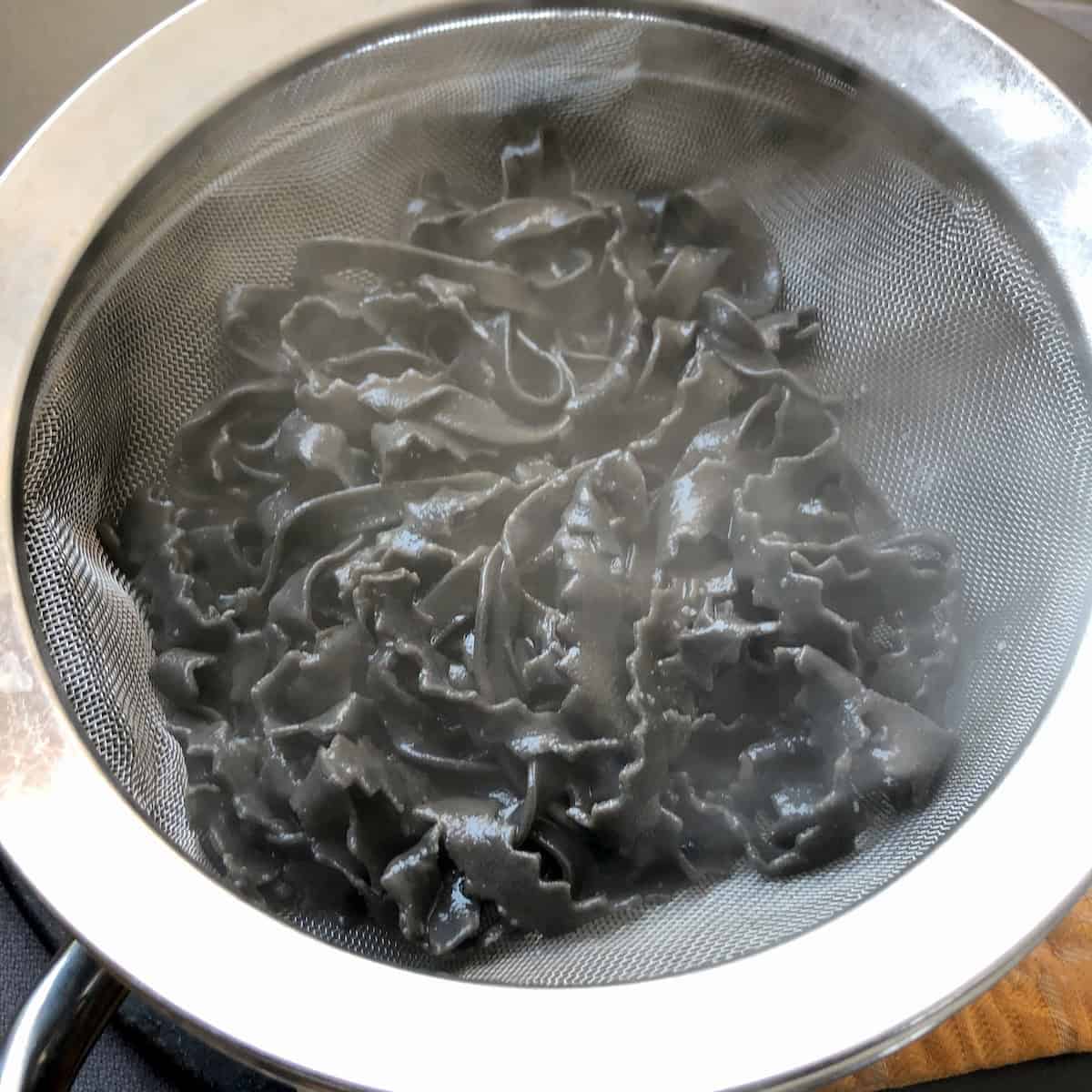
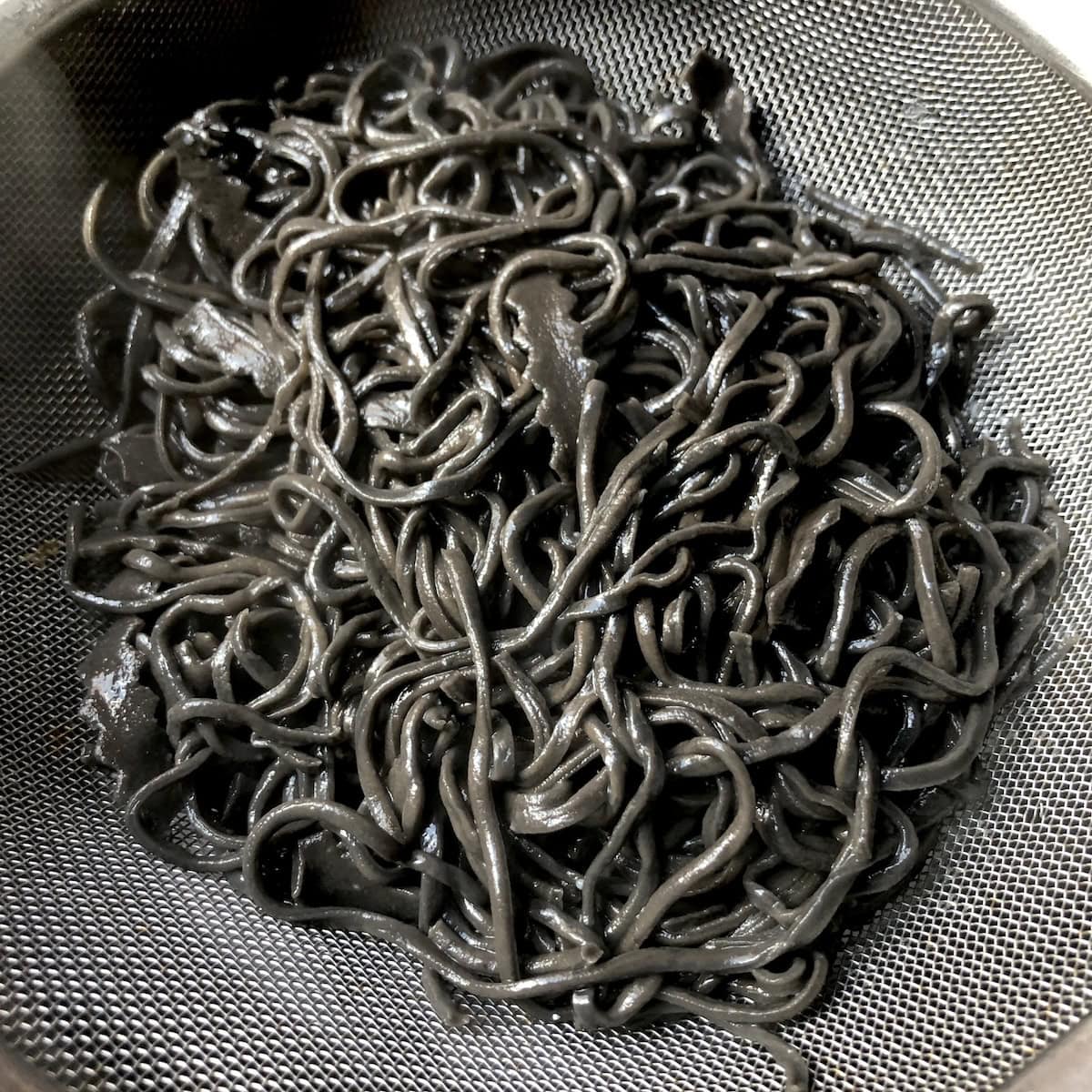
Step 5. Cook the pasta in a pot of salted boiling water. Fresh squid ink pasta cooks in 2-3 minutes. Save a little starchy pasta water for your sauce.
Hint
The dough will smell slightly briny and oceany as you knead it. Don't worry. This is completely normal, and it mellows significantly after cooking. By the time the pasta hits your plate, the brininess is subtle and balanced.
Find detailed instructions in the recipe card.
Semolina Squid Ink Pasta vs 00-Flour Squid Ink Pasta (In Photos)

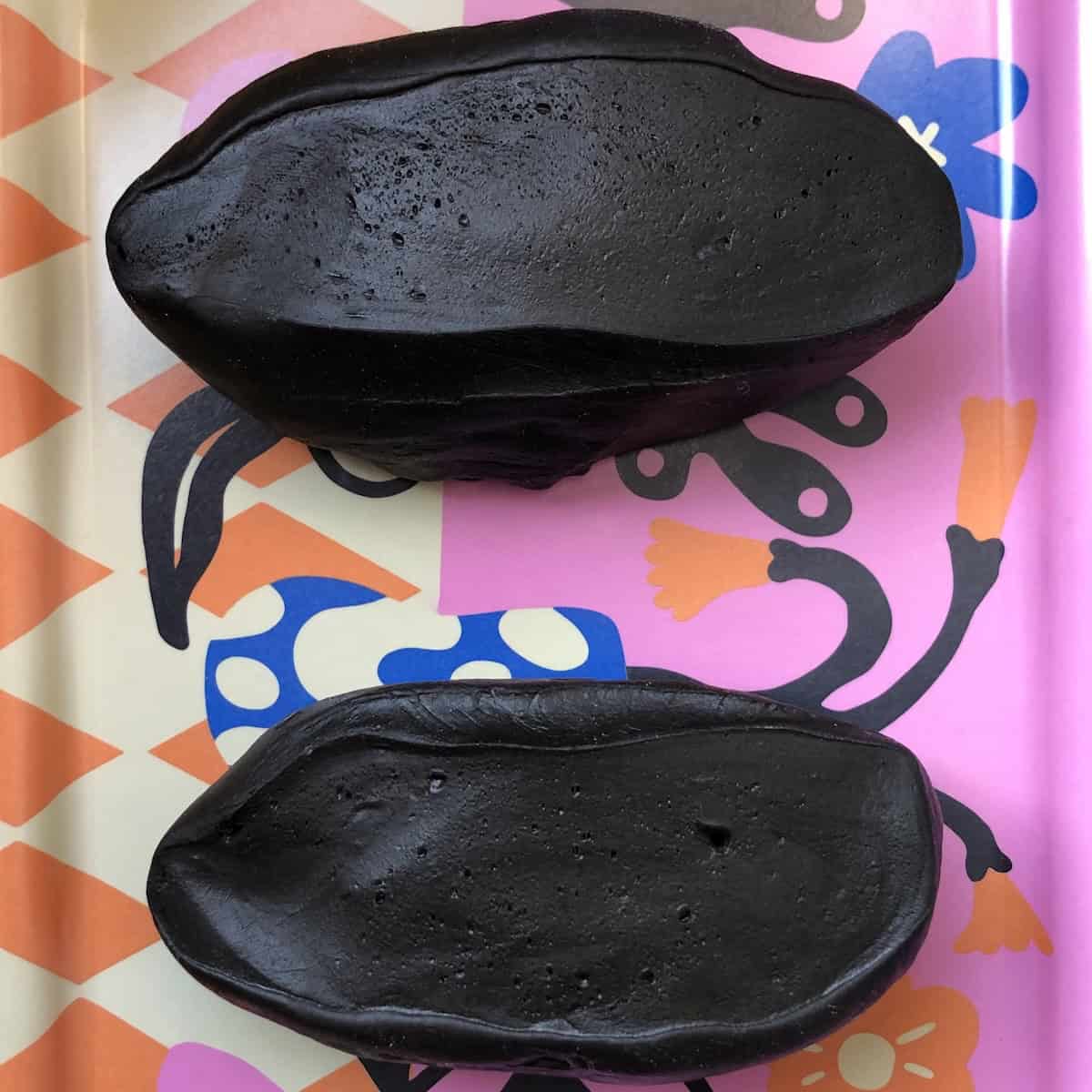
You can see from these two different squid ink doughs that the 00 flour dough (above left) is super shiny and smooth after resting - even before resting, it's smoother.
Semola rimacinata (twice-milled semolina flour) creates a squid ink dough with more texture and a slightly coarser surface. Both produce an intense black color, but the texture difference is visible.
In terms of the finished pasta, semolina has a firmer, chewier bite, and its micro-textured surface helps sauces cling better. The 00 flour version is silkier and more delicate - there's something deeply satisfying about that smoothness. I use both depending on my mood, what's in my pantry, and the seafood sauce I'm serving.
How Much Squid Ink to Use (The Color Guide)
When making black pasta, the amount of ink you use determines both the color and the flavor intensity of your finished dough. So getting it right is the difference between impressive jet-black noodles or ending up with brown or grey pasta instead.
Too little ink: Your pasta will turn out brown or dark tan. The briny flavor will be barely noticeable. This is the most common beginner mistake.
A bit more: You'll get a dark grey pasta. The flavor is subtle, but the color isn't visually striking enough for the "wow factor" most people are going for (unless you're celebrating Gray May).
The right amount: Deep, jet black pasta with a balanced briny, umami flavor. This is the goal.
For my recipe using 400g of 00 flour and 4 eggs, I use 24g (about 1 tablespoon + 2 teaspoons) of ink for a rich jet-black color. You can go all the way up to 30g if you want an intensely black, deeply briny pasta. If you're new to squid ink pasta, start with 24g and adjust from there.
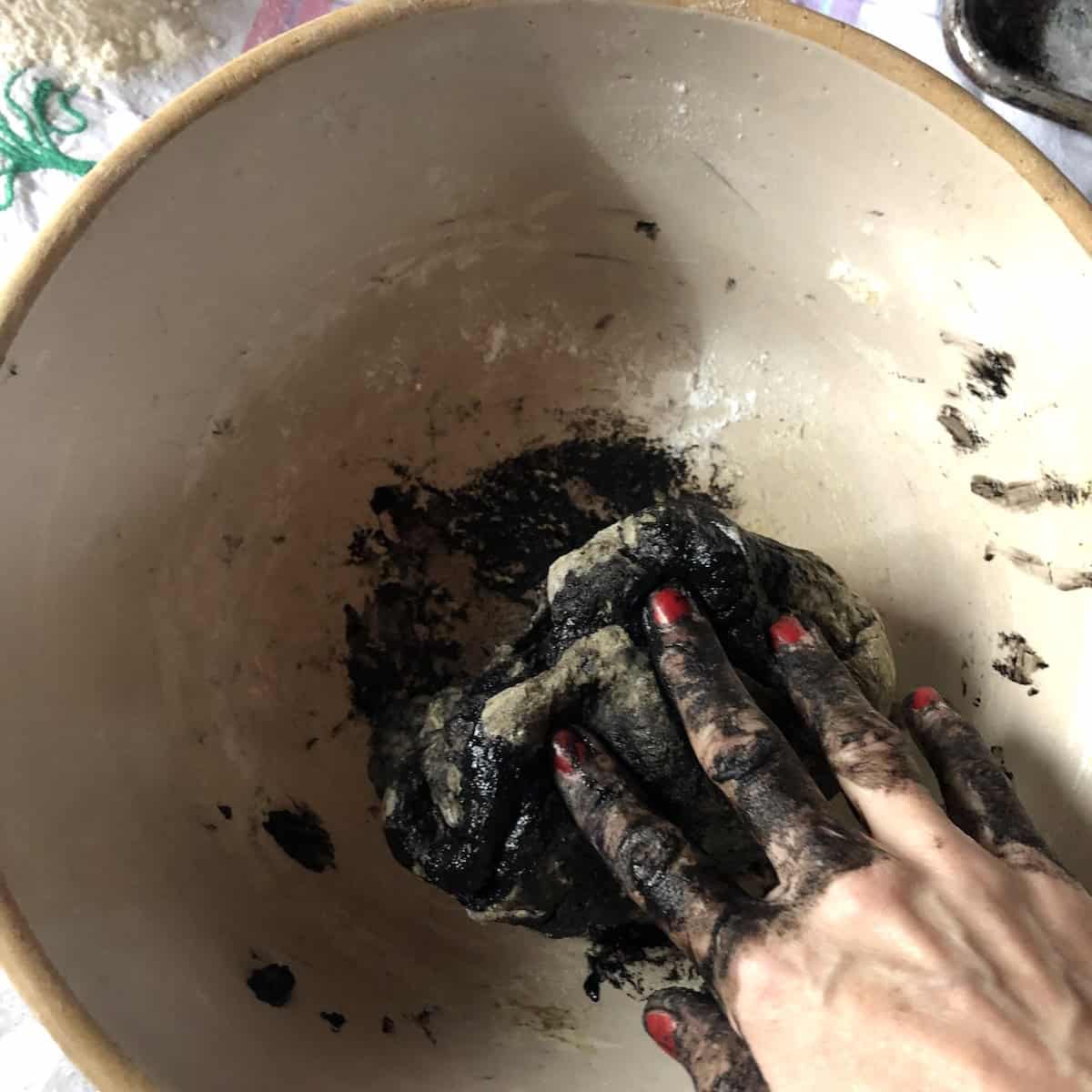
The good news: you can always add more ink if your dough looks too light. Knead it in gradually until you reach the color you want. Just know it is extremely messy to add ink in after you've already brought the dough together (photo above).
Adding "too much" ink mostly just makes the flavor more intense, but it won't ruin your dough.
| Ink Amount (per 400g flour / 4 eggs) | Resulting Color | Flavor Intensity |
|---|---|---|
| 5g or less | Brown/dark tan | Very subtle, barely noticeable |
| 12g | Dark grey | Mild briny undertone |
| 15-16g | Rich, jet black | Balanced briny, umami flavor |
| 24-30g (my go-to) | Deep, pure black | Bold ocean flavor, intense umami |
Substitutions
- Flour: Italian 00 flour gives the silkiest texture, but an all-semolina pasta (using twice-milled semolina flour) produces excellent results with even more texture. Or try a blend of 50/50 00 flour and semola rimacinata. The dough will be slightly stiffer but holds its shape superbly after cooking. I don't recommend using all-purpose flour on its own unless you can't find 00 or semolina flour, although a high-protein AP flour like King Arthur AP (11.7% protein) or Hecker's will work in a pinch😉.
- Ink type: Cuttlefish ink and squid ink are fully interchangeable in this recipe. Cuttlefish ink gives a slightly richer color and sweeter flavor. Use whichever you can find. You may have to use slightly more squid ink to achieve the same color.
- Ink amount: 15-16g gives a rich black color. Go up to 30g for an intensely dark, deeply briny pasta. Less than 10g and you'll end up with grey or brown pasta rather than black.
- No ink available? Without the ink, this is simply a fresh egg pasta recipe. The technique is identical. Don't try to substitute with black food coloring for color only (what's even in that stuff anyway?). You'll miss the flavor entirely, and the color won't be the same.
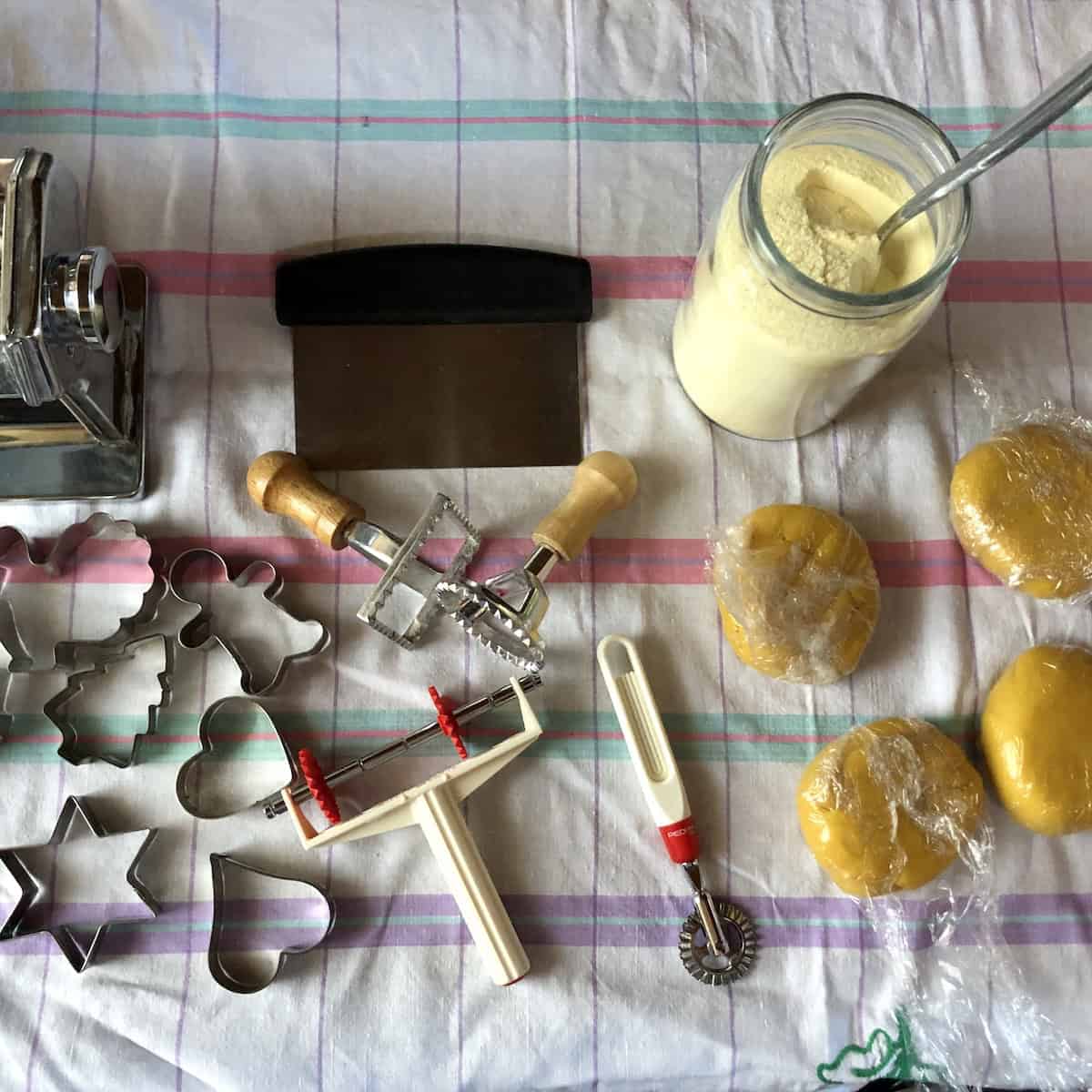
Equipment Needed for Making Squid Ink Pasta
- Pasta machine or rolling pin: I use the Atlas Marcato here in Italy and an Imperia back home in the States. They're both workhorses for fresh pasta. Any manual or electric pasta machine works. Hand-rolling with a rolling pin also works well as long as you have the countertop space.
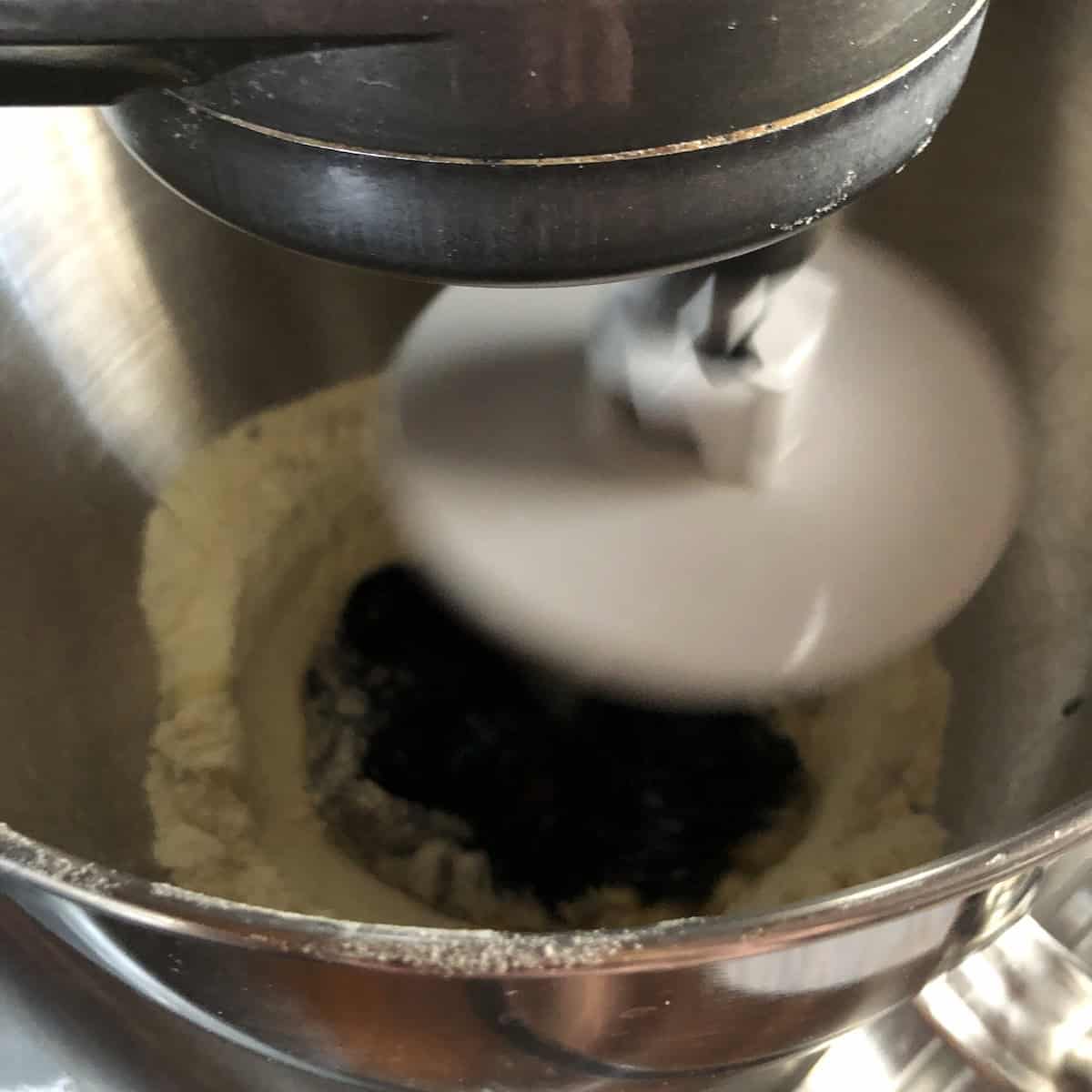
- Stand mixer or food processor(optional): Helpful for mixing the dough evenly without getting ink everywhere. Some people prefer this method for a cleaner workspace. I've mixed the dough directly in my Mom's bread bowl (was my great-grandmother's bread bowl and passed down♡). Place a damp kitchen towel under it to keep it from moving around on you. But I also like to use my Kitchenaid for zero mess⬇️!
- Gloves (NOT NEEDED): You really don't need disposable kitchen gloves for handling the ink. It washes off your skin with soap and water, but your hands might be slightly stained dark grey/black for a bit. It's important to feel the pasta dough as you're making it in order to understand what it needs.
- Floured-lined baking sheet or pasta drying rack: For resting or drying the cut pasta before cooking or freezing. I like to place parchment paper down first, then flour it and add the pasta. This way, when I'm freezing pasta nests, I can easily remove the whole piece of parchment to then cover the frozen nests in an airtight container.
How to Store Squid Ink Pasta
Fresh pasta (refrigerator): Best used within a few hours of making it (after a little rest to help it dry and hold its structure better during cooking). You can refrigerate it on a well-floured tray, loosely covered, for up to 24 hours, but it's not my recommendation. The pasta can take on odors from the refrigerator, and it's easier to just freeze it.
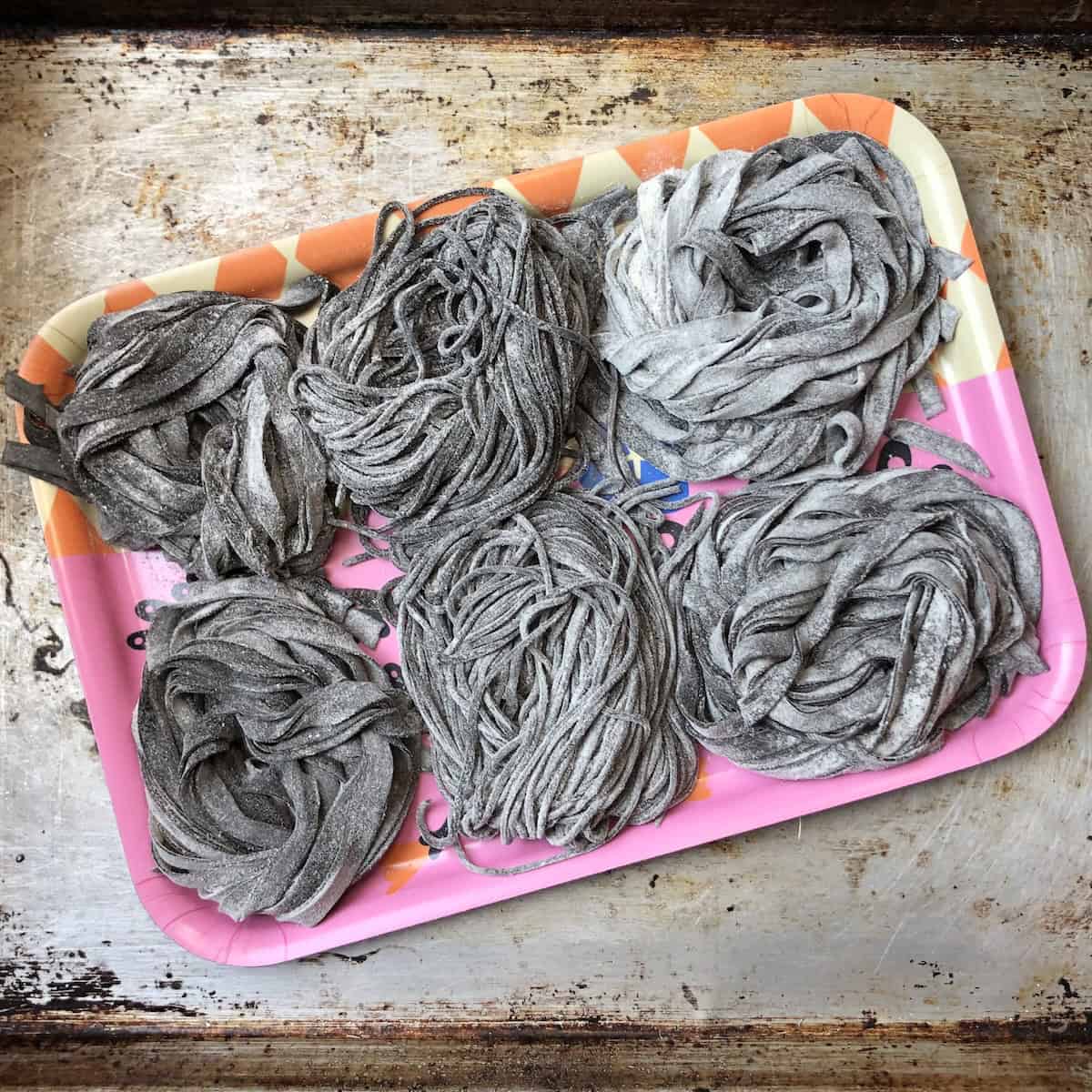
Freezing (my recommendation for making ahead): Shape the cut pasta into nests on a parchment-lined baking sheet and freeze until solid (about 1-2 hours). Transfer the frozen nests to freezer bags or airtight containers. Squid ink pasta keeps frozen for up to 3 months. Cook directly from frozen, adding 1-2 extra minutes to cooking time. This is my preferred method for meal prep since fresh pasta cooks so quickly.
How long does squid ink last? Freshly extracted ink: refrigerate and use within a few days, or freeze. Opened squid ink in jars: 1-3 weeks refrigerated. Unopened plastic sachets are generally shelf-stable, but I like to go ahead and refrigerate or freeze them. They defrost almost instantly. Always check for off smells or color changes before using stored ink.
Types of Squid Ink: Squid Ink vs. Cuttlefish Ink (Seppia) and Fresh vs. Shelf-Stable
The majority of "squid ink" pasta is actually made with cuttlefish (seppia) ink, not true squid ink. Here in Italy, it's almost always seppia. The two are closely related but not identical, and the difference matters when you're choosing what to buy.
Cuttlefish (Seppia) Ink vs. Squid Ink
Cuttlefish (seppia) ink is the gold standard in Italian cooking. It has a richer, slightly sweeter flavor and more intense coloring power. This is what most Italian artisanal pasta makers use, and it's what I use. Essentially, cuttlefish ink produces a more intense black color than squid ink.
Squid ink is more widely available commercially, especially in the US. The flavor is a bit more briny or metallic, salty, and a bit less sweet. It works perfectly well in this recipe. Both inks come from the ink sac of the animal's body, a gland cephalopods use as a defense mechanism to confuse predators.
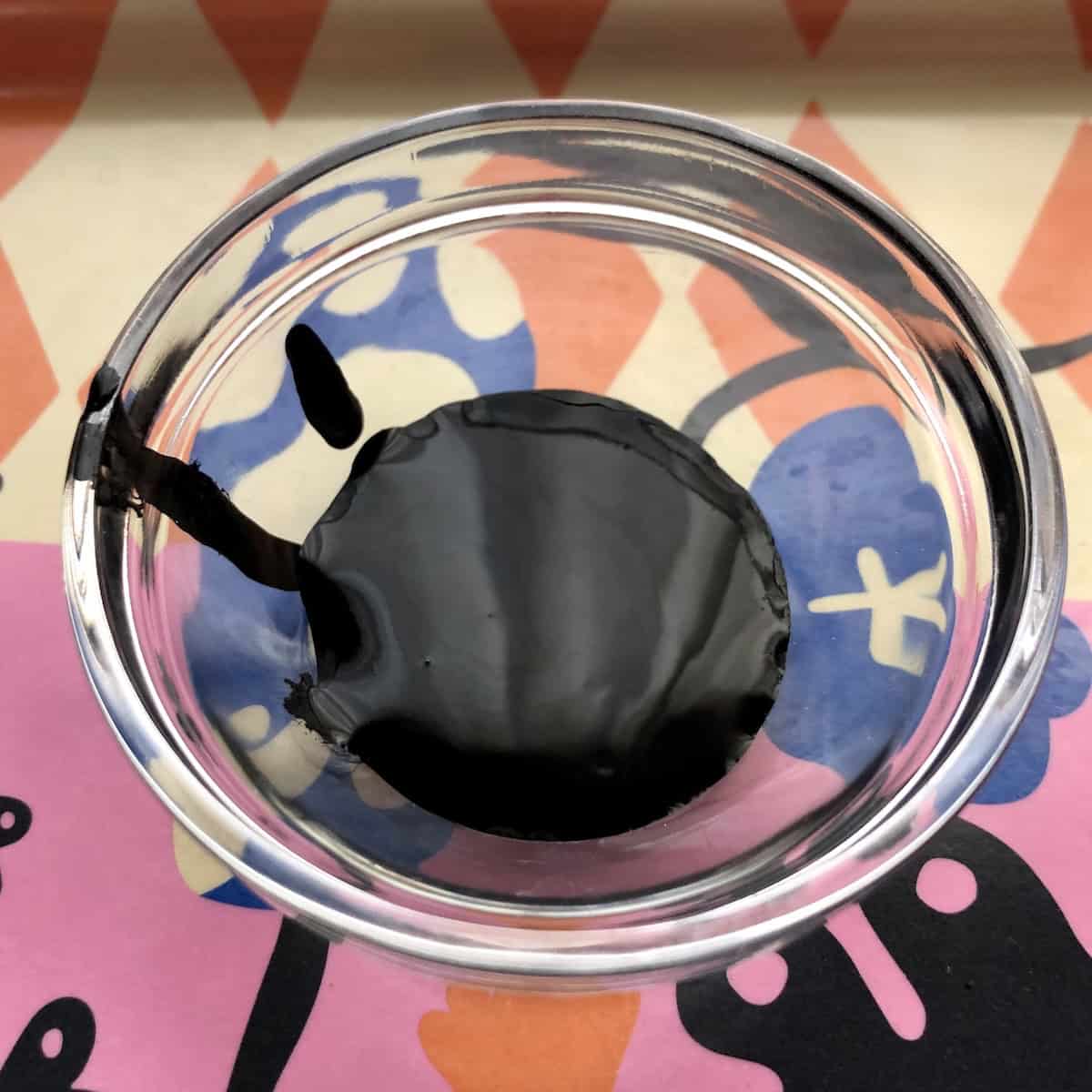
Fun fact: the ink itself is actually a very dark brown, not truly black (hence the name "seppia"). Though it certainly looks black once it's worked into pasta dough.
Is octopus ink the same? Octopus ink is similar to squid and cuttlefish ink but less commonly used in cooking because octopuses produce less ink and it's harder to harvest. The flavor is comparable. If you happen to have octopus ink, it will work in this recipe.
My recommendation: Use seppia (cuttlefish) ink if you can find it. Squid ink is a perfectly good alternative. Either will give you beautiful black pasta.
Fresh-Refrigerated Ink vs. Shelf-Stable Jars
Fresh or refrigerated cuttlefish ink or squid ink (from a fishmonger or extracted yourself from whole cuttlefish) delivers the best flavor with no preservatives or added salt. This kind of squid ink is perishable, so keep it refrigerated and use it within a couple of days, or freeze it in portions for later.
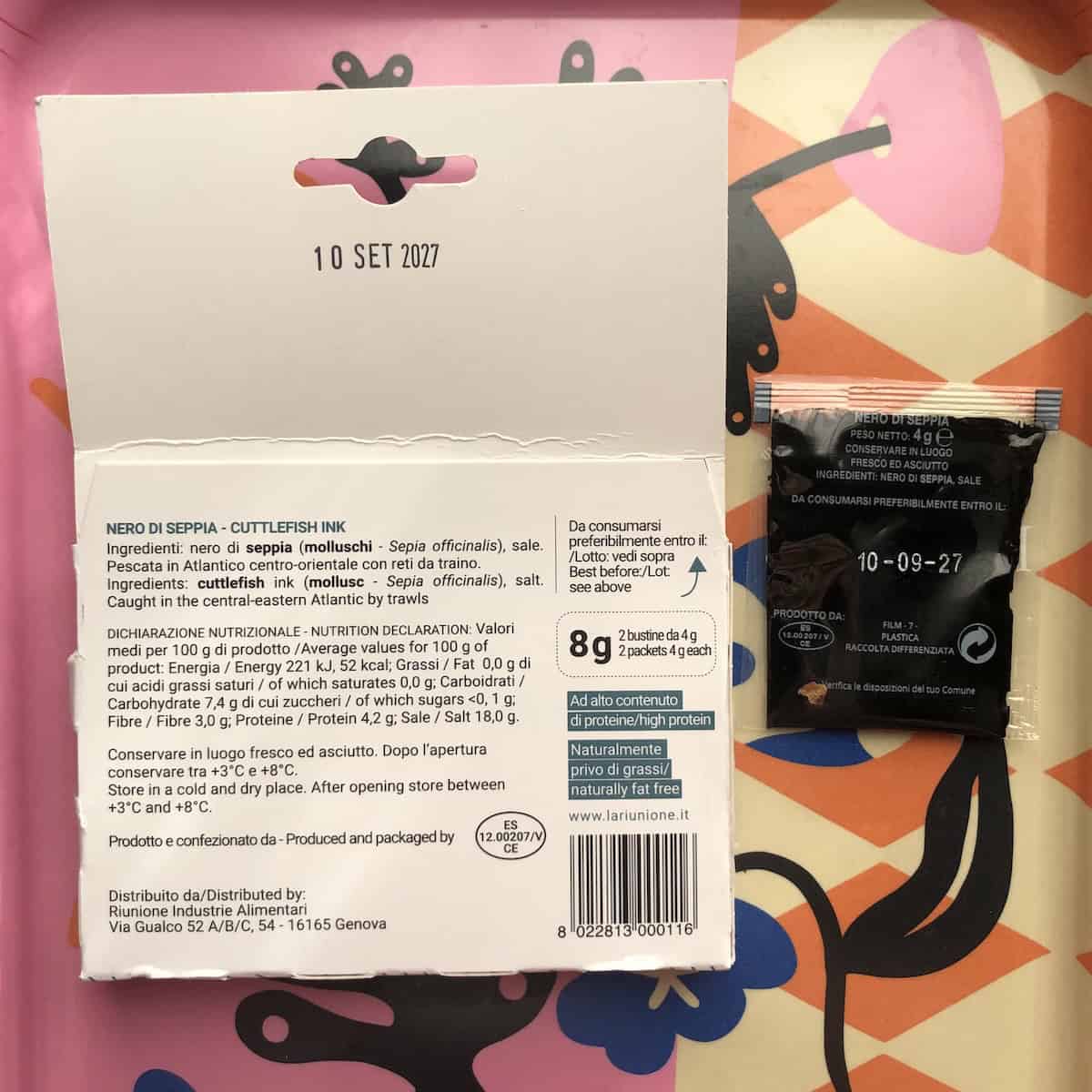
Shelf-stable jars/plastic sachets are convenient and widely available online and at specialty stores. The best quality inks contain only 2 ingredients: pure ink and salt, and this is what you should try to find.
Whereas lower-quality brands contain preservatives like citric acid, water, salt, and stabilizers such as sodium carboxymethyl cellulose (E466). This matters less when making squid ink dough and matters a lot when using the ink directly as the sauce or part of the sauce. They'll still work for this dough recipe.
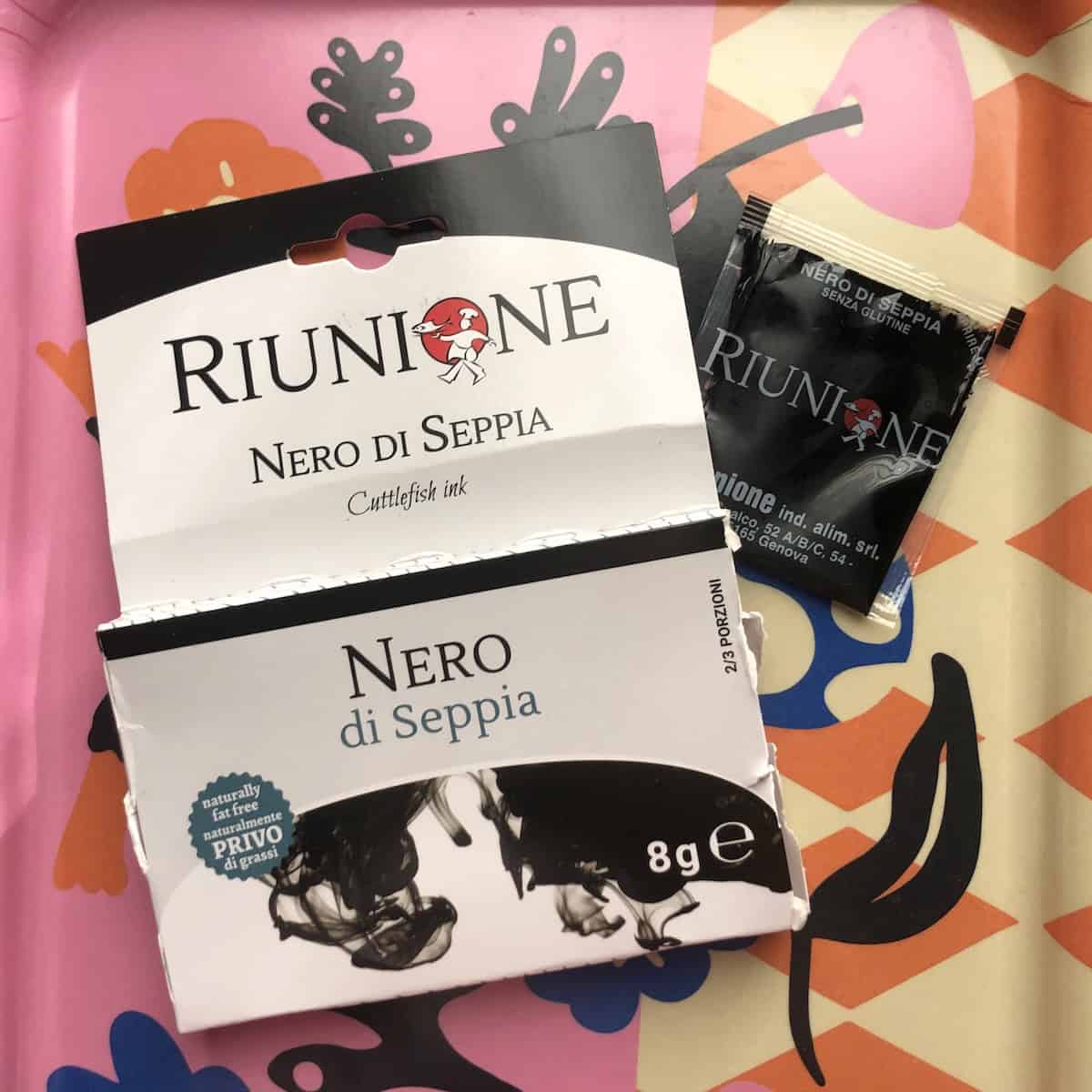
My all-time favorite brand of squid ink is La Riunione for its clean, pure sea-like flavor you can actually lick off your finger. This brand of cuttlefish ink without preservatives is really good and worth seeking out.
How to Extract Ink from Fresh Seppia (Cuttlefish)
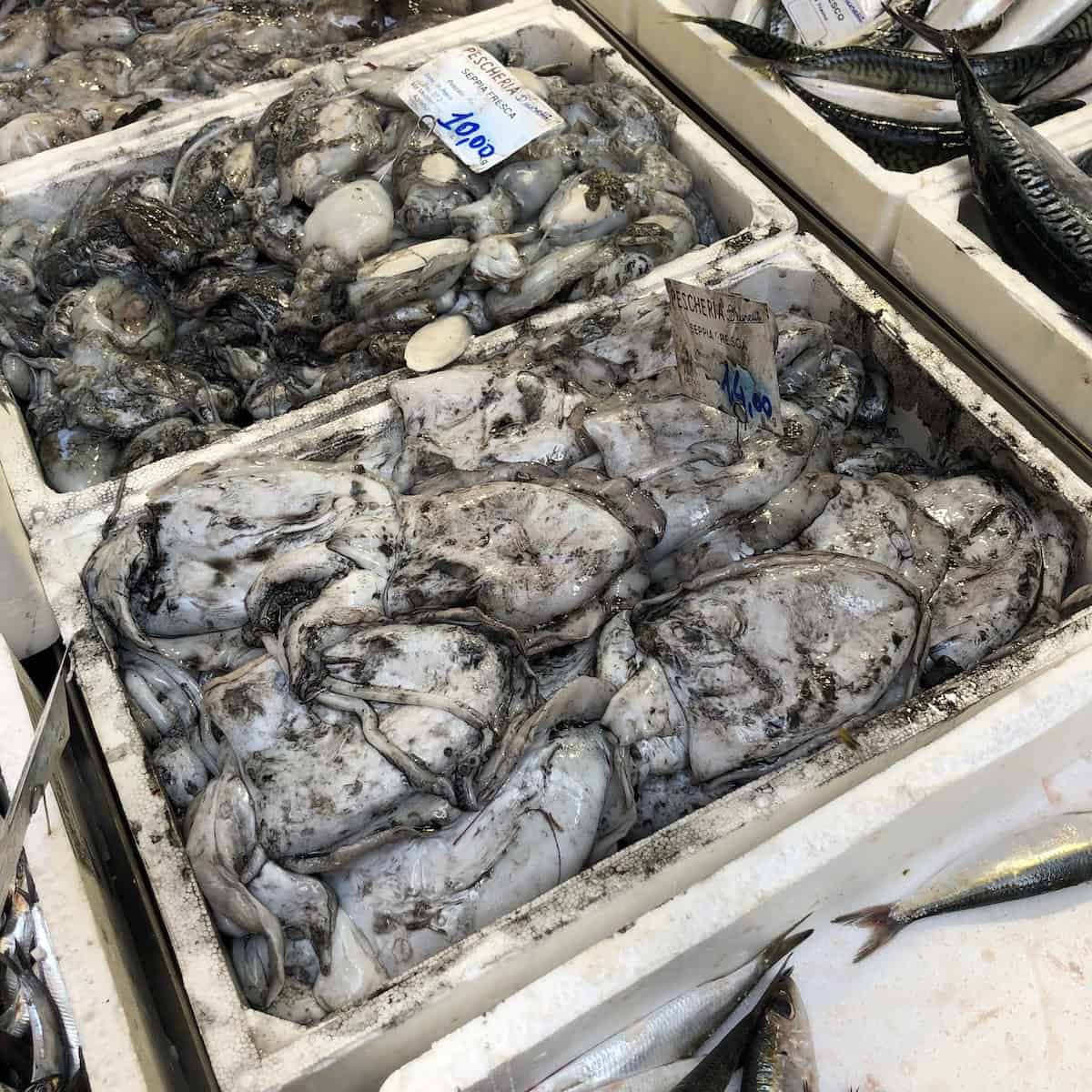
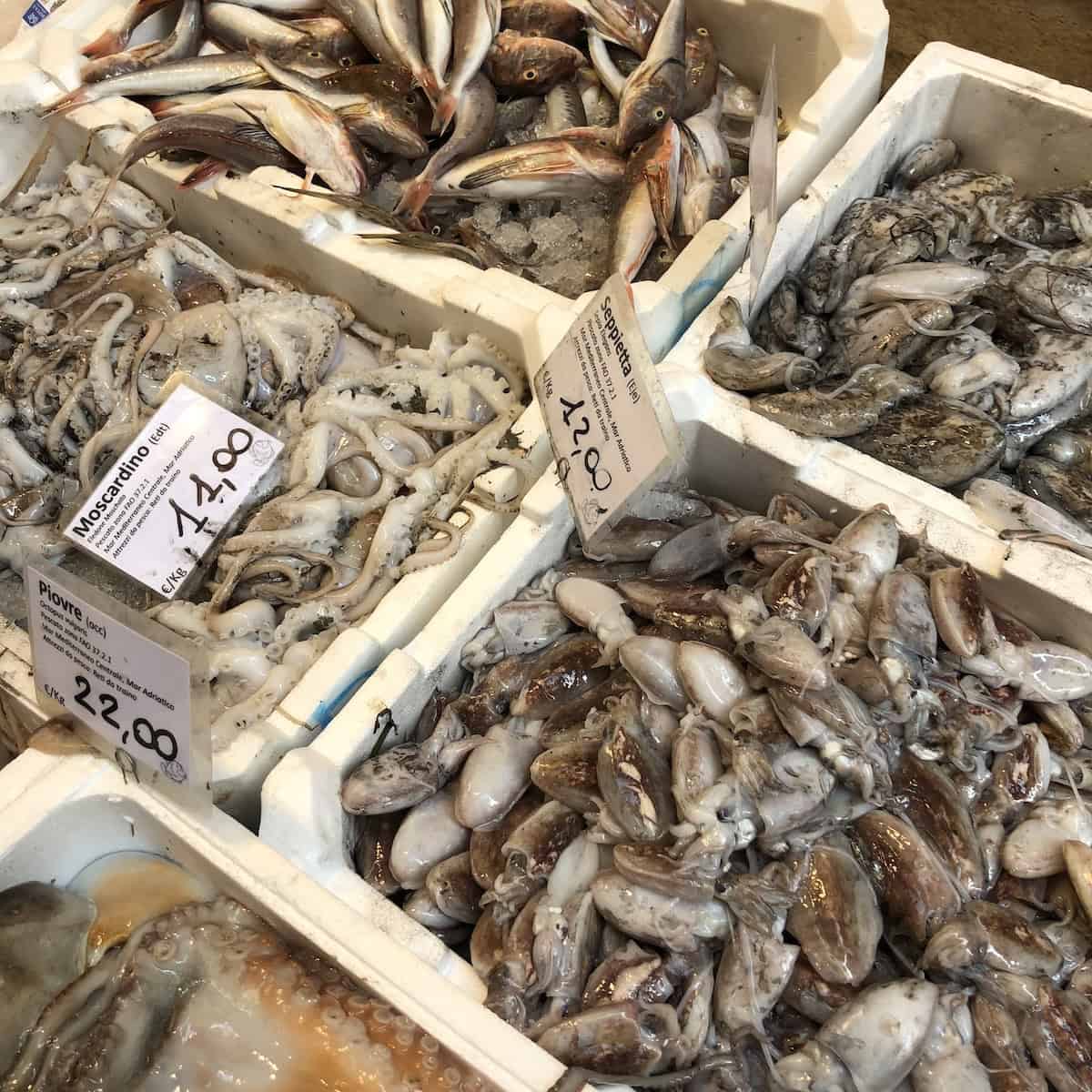
If you have access to fresh whole cuttlefish (seppia), you can extract the ink yourself. It's the traditional method, and there's something deeply satisfying about making your pasta completely from scratch.
The ink sac is a small, silvery pouch located near the head of the cuttlefish. To extract it, carefully separate the head from the body and locate the ink sac among the internal organs.
Gently remove it without puncturing, then snip one end over a small bowl to release the ink. One medium-sized cuttlefish yields a small amount, so either go for the large ones or buy several for a full batch of pasta dough.
Staining warning: Wear an apron. Squid ink can stain your clothes, cutting boards, and countertops, depending on the material. It washes off skin and utensils very easily with soap and water, but fabric is another story. Plan accordingly.
Freshly extracted ink can be refrigerated for a few days or frozen in ice cube trays for longer storage. That said, buying quality ink is obviously much easier. This section is for readers who have access to fresh cuttlefish or want the full hands-on experience.
Where to Buy Squid Ink
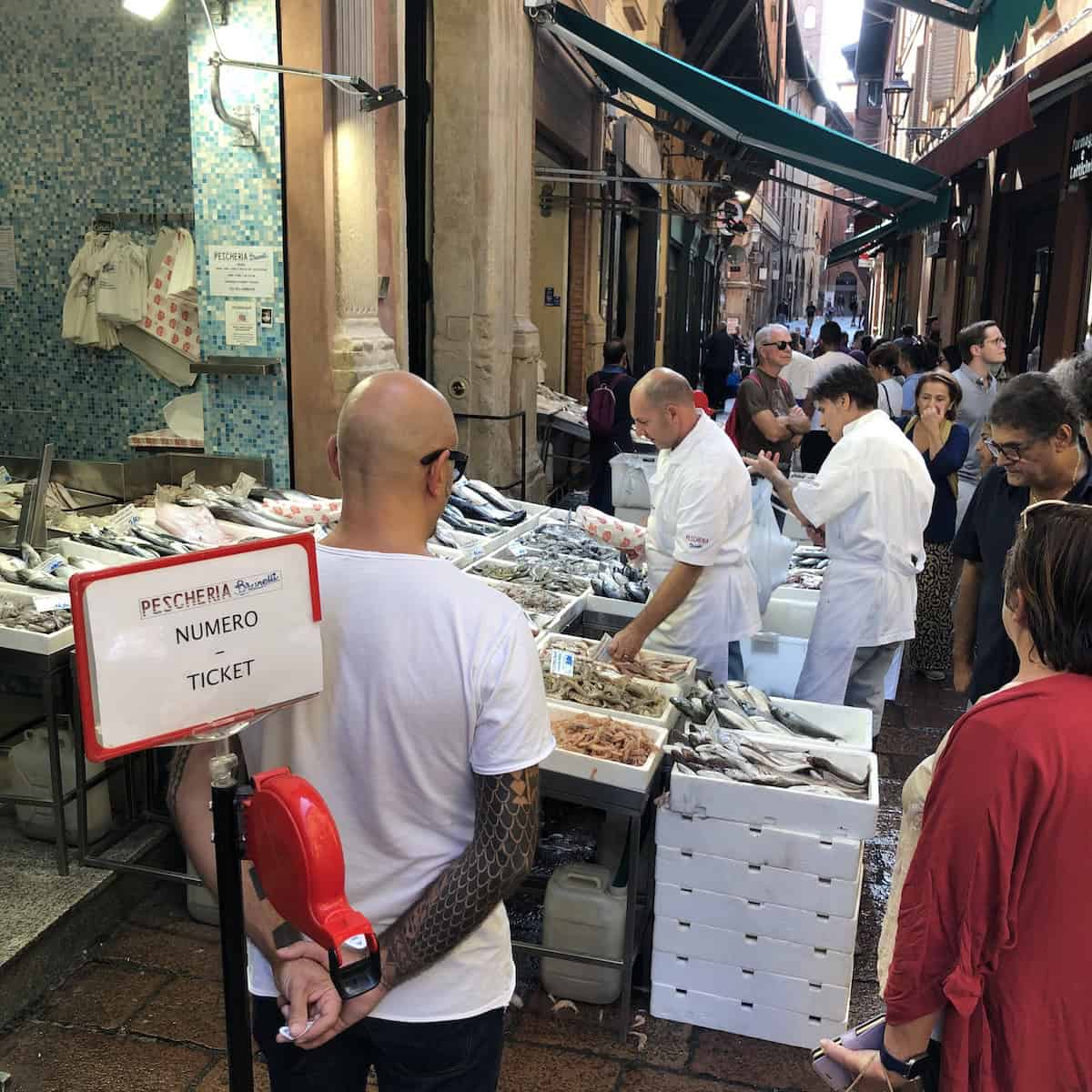
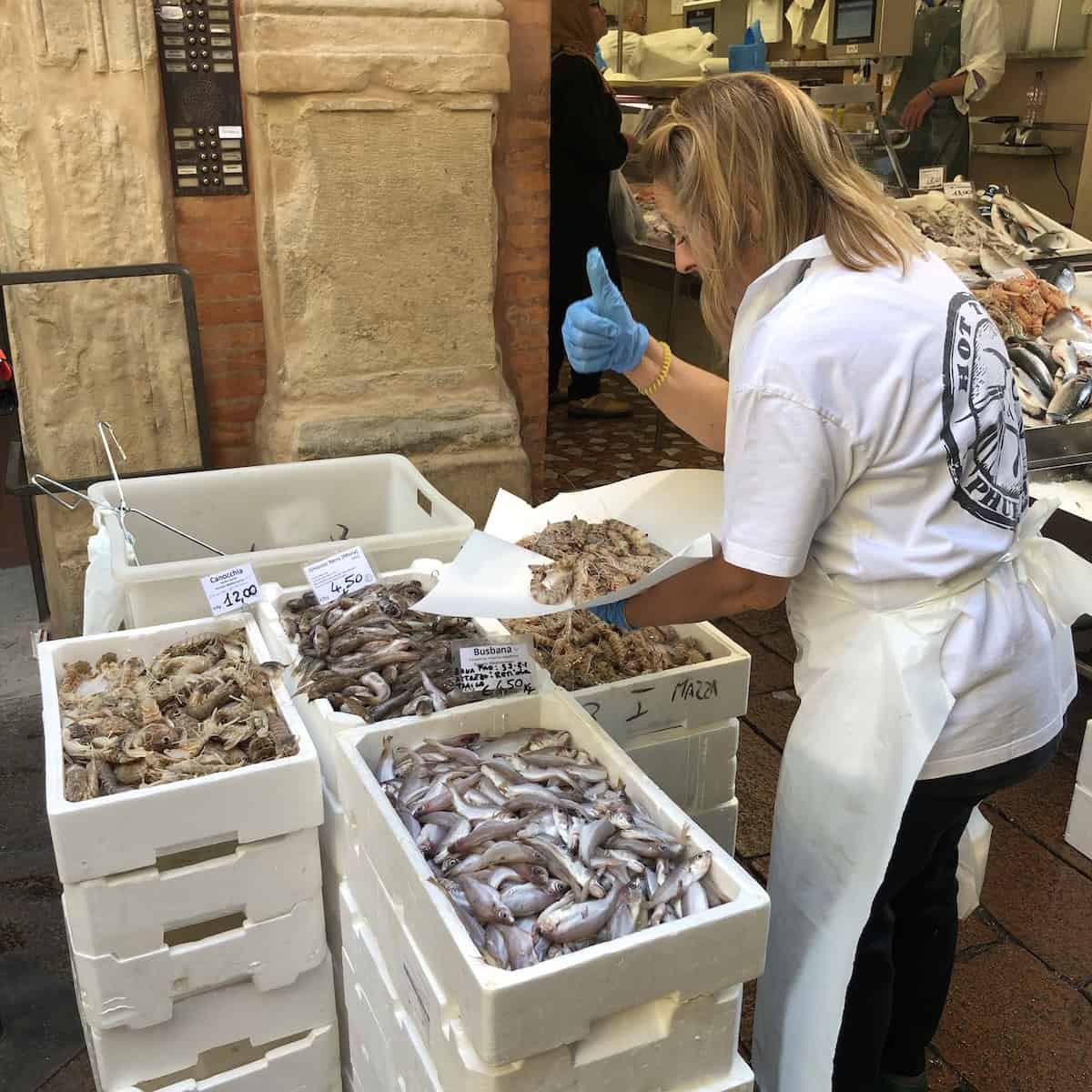
To buy squid or cuttlefish ink for making your own pasta: Your best bet for fresh, refrigerated ink is a fish market or fishmonger. Italian specialty stores, gourmet delis, Spanish delis, and Hispanic markets (they carry it for arroz negro) are also great sources.
Online, you can find inks made by Alma and Nortindal easily on Amazon, or other Italian specialty food sites. Here in Italy, we can buy 8g for €1.50 or less. But in the States, a pack of 2-6 sachets costs between $6-30 USD, ranging from affordable to not so much.
Jars are more economical if you use ink regularly, but the packets are practical for making a special occasion pasta or a handful of times. You can also find squid ink at Whole Foods in some locations.
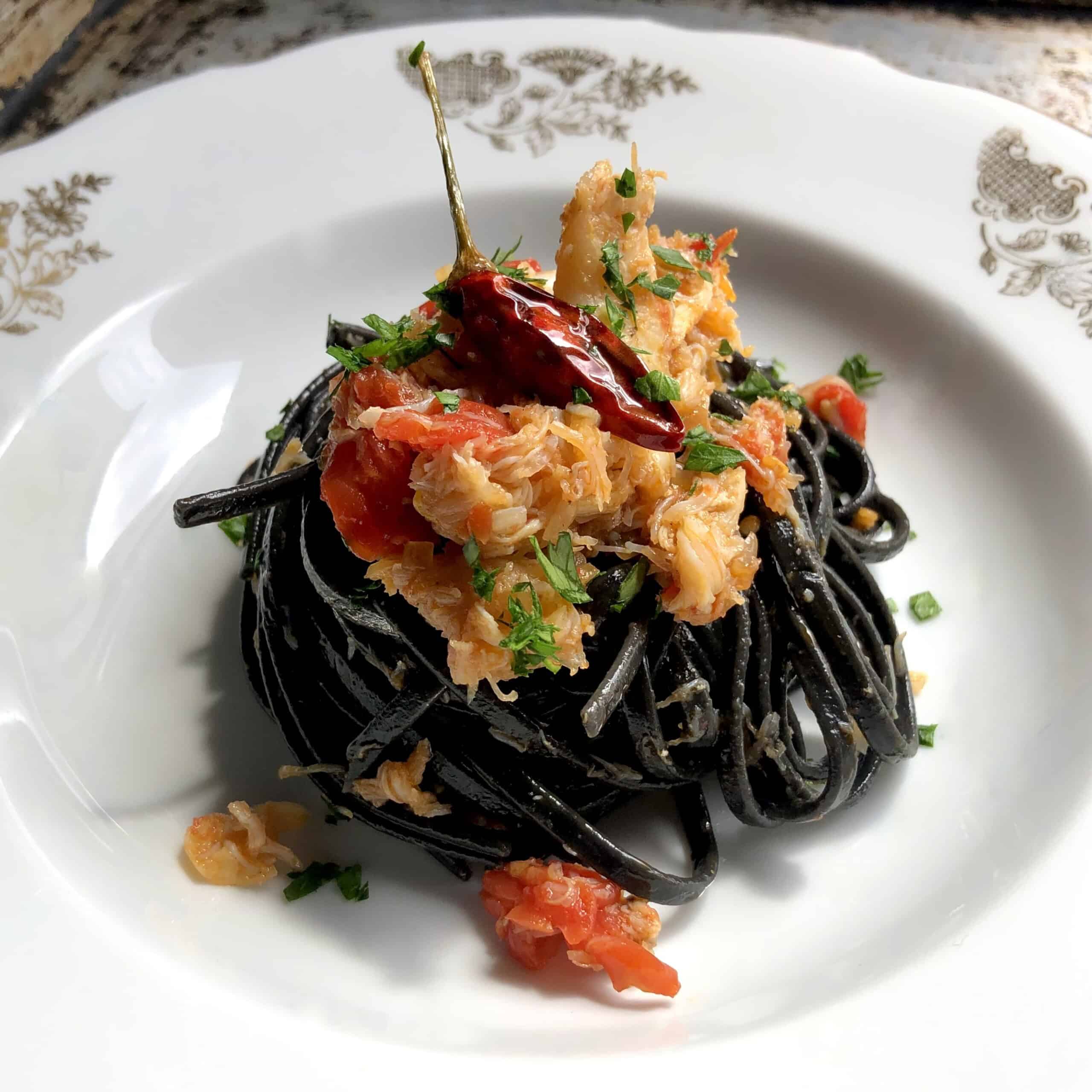
Making squid ink pasta from scratch gives you the best flavor and full control over how dark and briny you want it. But quality dried black pasta is a perfectly good shortcut, especially for recipes like my Easy Crab Linguine.

Best Sauces to Pair With Squid Ink Pasta
This is where the dough version of squid ink pasta really shines over the sauce version. Because the briny flavor is subtle and balanced (never overpowering), it pairs beautifully with a much wider range of sauces, making it much more versatile. This seafood pasta works with everything from a simple garlic olive oil to a rich cream sauce.
Here are the best options I've found after years of eating and making this pasta in Italy:
Seafood sauces (the natural pairing):
- Crab in white wine tomato sauce
- Pasta with scallops: seared scallops with EVOO, butter and lemon
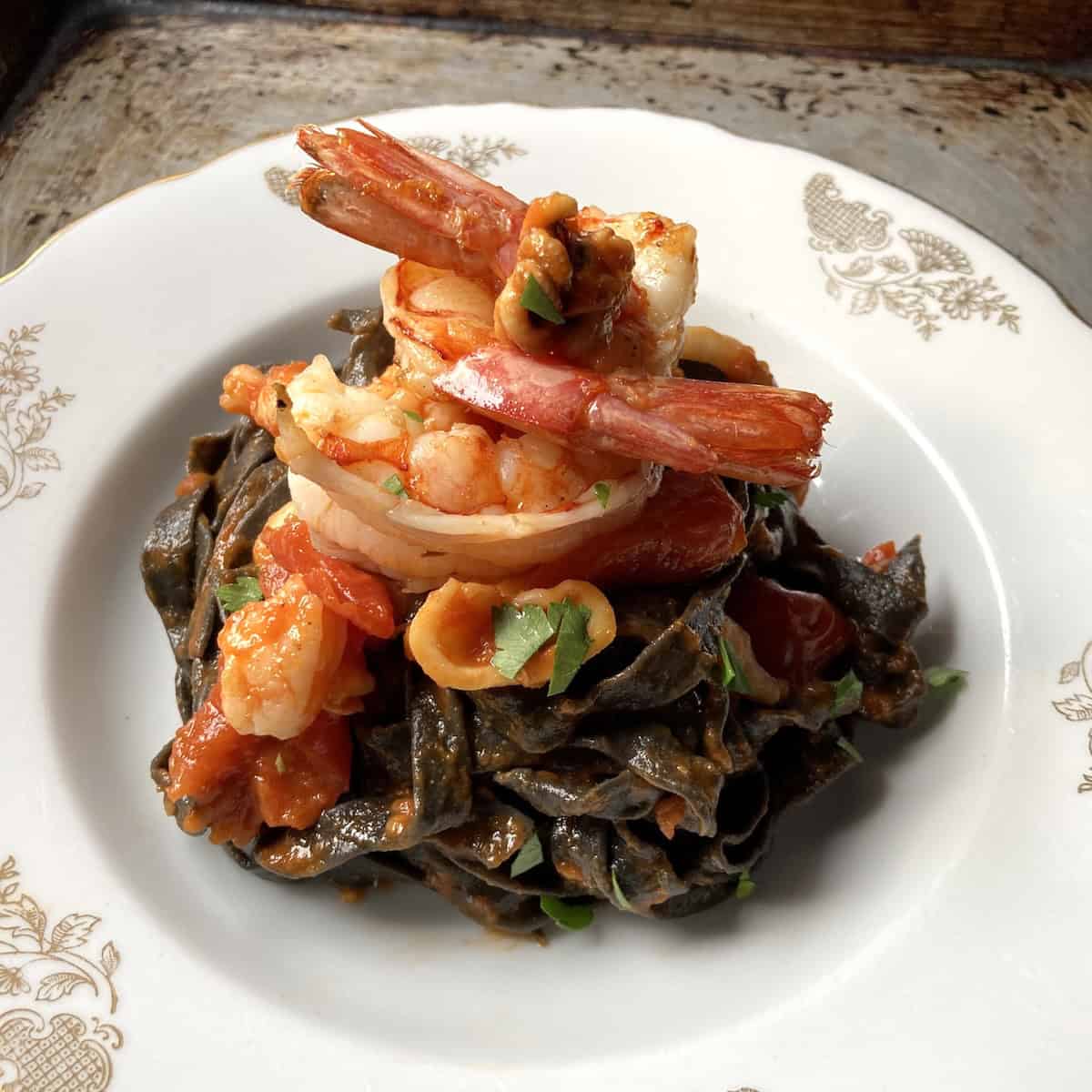
- Shrimp and cuttlefish in tomato sauce (recipe coming soon!)
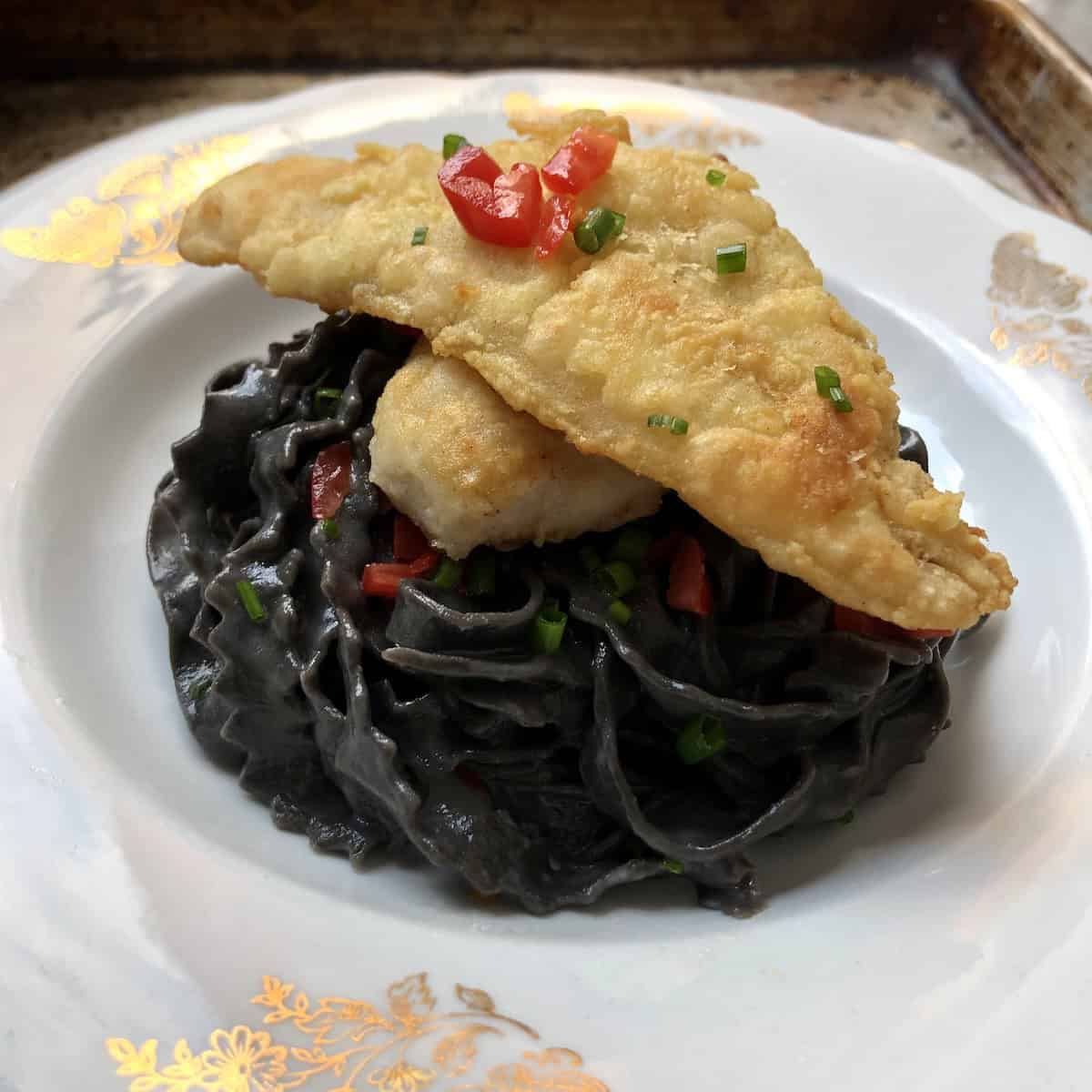
- White cod or flaky white fish in a light olive oil sauce (recipe coming soon!)
- Clams, alle vongole-style
- Mixed seafood (frutti di mare)
Cream-based sauces (stunning visual contrast):
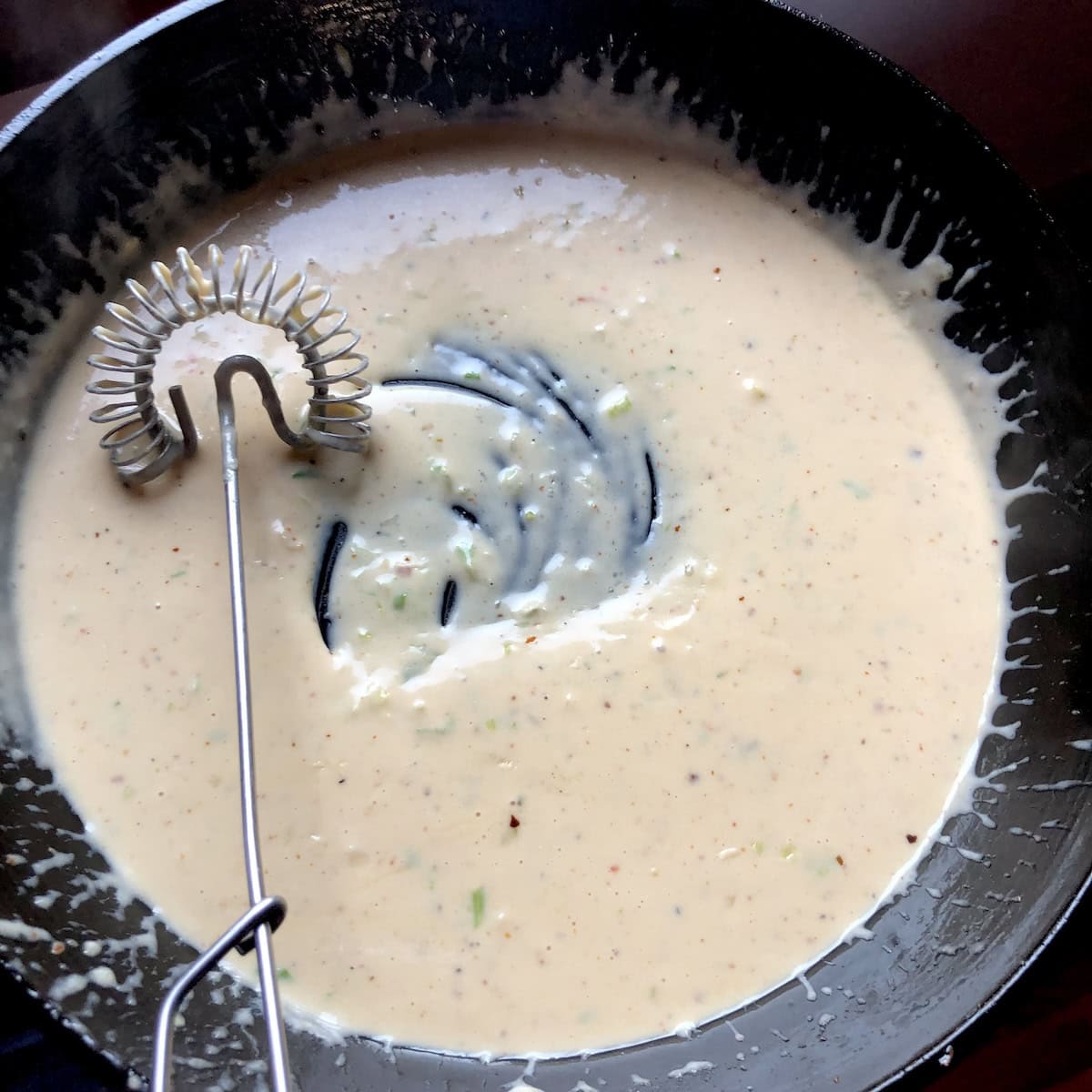
- Alfredo sauce creates the classic white-on-black "tuxedo" look. Dramatic and delicious.
- Tomato cream sauce (tomato alfredo) gives you a gorgeous pink-on-black contrast, and the slight acidity brightens the briny pasta beautifully.
- The tomato mascarpone cream sauce from my lobster ravioli is rich and silky. The mascarpone's sweetness balances the ink's salinity perfectly.
A note on cheese and seafood: In Italy, combining cheese and seafood is traditionally avoided and often frowned upon. But these cream sauces served with or without additional seafood (like shrimp or crab) are a perfectly tasty approach.
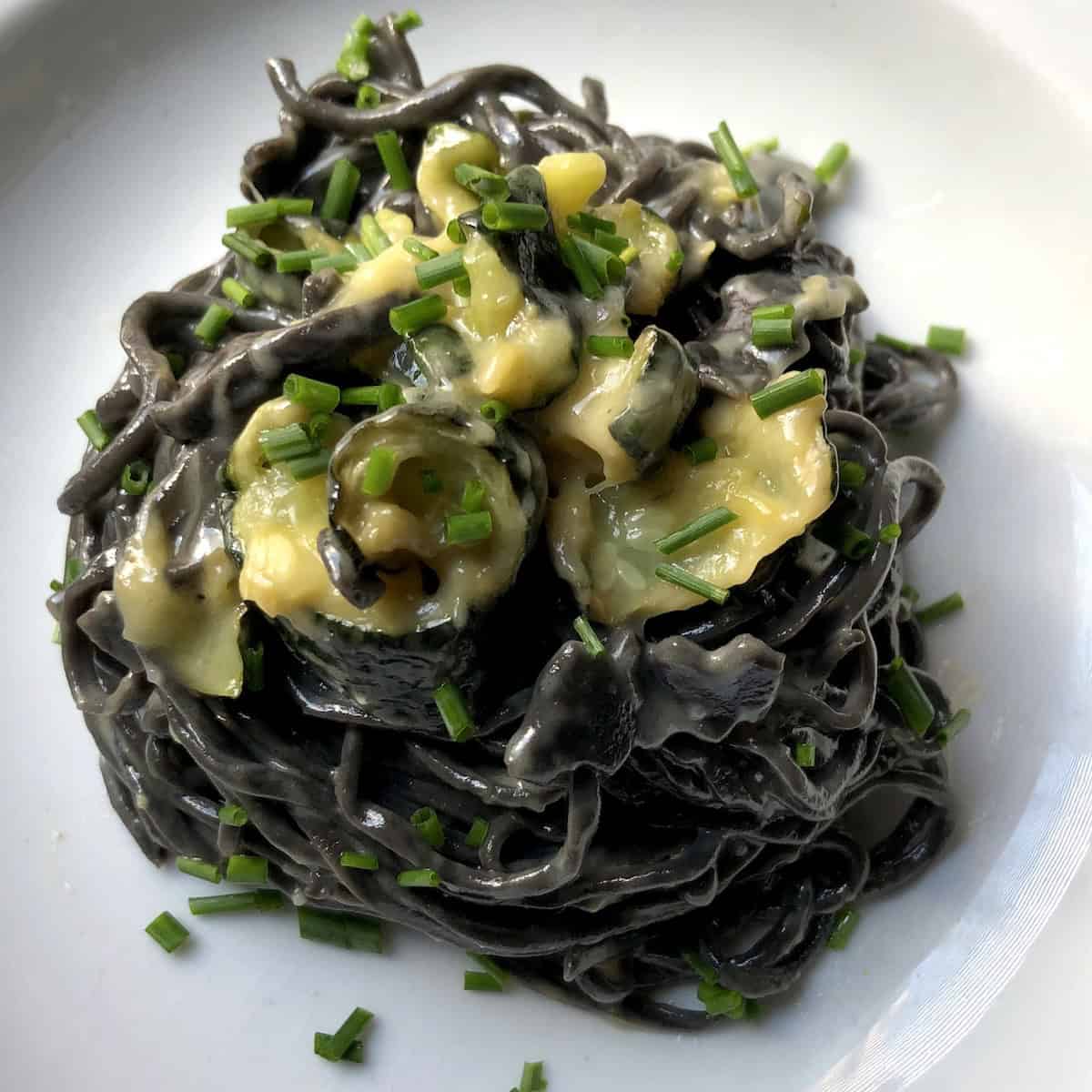
If you're adding seafood to the dish, consider a lighter olive oil-based sauce for the authentic Italian approach, or the alfredo and cream sauces for the Italian-American approach.
Simple sauces (let the pasta shine):
- Grape or Cherry tomato sauce with olive oil and fresh basil
- Garlic, olive oil, and peperoncino (spicy peppers) (aka aglio, olio e peperoncino)
- Lemon garlic butter sauce (aka shrimp scampi sauce)
My general rule: Let the pasta's briny flavor complement the sauce, don't compete with it. Heavy, meaty ragus are an absolute no-go because they overpower the ink's subtlety and have conflicting flavor profiles.
Light, bright, seafood-forward sauces are the natural pairing. Cream-based sauces work beautifully when you want comforting pasta. Simple olive oil-based sauces let the pasta itself shine as well as any seafood you're adding.
Wine pairing: Crisp Italian whites work beautifully here as they're a natural and traditional wine pairing for seafood dishes. Soave (from our Veneto region), Verdicchio, Pinot Grigio, Metodo Classico (Italy's sparkling wine that's made in the same "classic method" as Champagne - this is 10x a cut above prosecco - see below), or Garganega are all excellent choices.

For tomato-based sauces, a light young Chianti or Pinot Nero is a lovely option for anyone who doesn't enjoy white wine.
Top Tips
- Blend the ink with eggs first. Whisking the ink into your beaten eggs before adding to the flour ensures even color distribution and prevents streaks. This is the single most important technique tip. But as long as you have added enough squid ink and you knead the dough long enough, you can fix any streak issues.
- Don't be surprised by the smell. The dough will smell briny and oceany as you knead. This is completely normal and mellows significantly after cooking.
- No salt needed in this dough. Squid ink is naturally salty, so you don't need to add any. Your pasta water should be salted as usual.
- Wear gloves when handling ink. It stains everything it touches. Hands wash off easily, but clothes and cutting boards may be permanently marked depending on the material.
- Grey pasta? You need more ink. If your pasta looks grey instead of black after kneading, you haven't added enough ink. You can work in more by flattening the dough, spreading additional ink on the surface, and kneading until evenly distributed.
- Rest the dough, don't skip this. At least 30 minutes at room temperature, or up to overnight in the fridge. This relaxes the gluten and makes rolling much easier.
- Save the cooking water! Your pasta water will be dark and inky. It makes an incredible natural emulsifier for whatever sauce you're using. Add a splash to your pan sauce before tossing with the pasta.
Squid Ink Nutrition
Research published in Foods journal (2023) confirmed that squid ink melanin has significant antioxidant properties, including the ability to scavenge free radicals. Squid ink also contains iron, zinc, and vitamin B12, nutrients important for energy and immune function.
FAQ
Squid ink pasta (with the ink used as an ingredient in the pasta dough) has a very subtle, briny flavor with a hint of umami and sea saltiness. It is not fishy at all. Think of it as a gentle ocean undertone that enhances rather than dominates whatever sauce you pair it with. The flavor is much milder than eating squid ink pasta sauce (where the ink is one of the sauce ingredients) (nero di seppia), which is one of the reasons many people prefer this ink-in-the-dough version.
Squid and cuttlefish ink is generally considered safe and has been consumed in Mediterranean and Asian cuisines for centuries. However, like all seafood, cephalopod ink can contain trace heavy metals including cadmium, lead, zinc, and copper. The ink's melanin naturally binds to metal ions, which is why the ink sac tends to accumulate more metals than the animal's muscle tissue.
A study published in the Journal of Food Protection found that fresh cuttlefish ink had significantly lower concentrations of arsenic, chromium, iron, and cadmium than frozen ink. Fresh or refrigerated ink from a reputable supplier is your safest option. Microplastics are also a concern across all seafood, not specific to cephalopod ink, so consume it at your own discretion.
The small quantities used in cooking (roughly a tablespoon per batch of pasta dough, divided across multiple servings) are well within the limits considered safe by the FDA and the EU (which has much tighter controls for food safety than America) for general consumption.
No government agency has issued specific guidance on cephalopod ink for pregnant women, nursing mothers, or immunocompromised individuals but you may decide not to take any risks. If you fall into any of these categories, the best bet is to consult your doctor before consuming squid ink or cuttlefish ink.
No. Squid and cuttlefish ink come from an animal. The ink sac is harvested from these cephalopods, which means the animal is killed in the process. This pasta is not suitable for vegetarian or vegan diets, but a perfect pasta for pescatarians and omnivores!
No, and if you're on a site that says otherwise, it may have been written by AI😉. When squid ink is cooked into pasta dough (which I've made and eaten a ton of here in Italy), the pigment binds to the flour and egg proteins, so it does not stain your teeth, lips, or tongue. Even raw squid ink does not permanently stain teeth. Researchers at UC San Diego confirmed this when testing food-grade squid ink as a dental imaging rinse. If you eat squid ink in a sauce (nero di seppia), you might notice slightly more temporary discoloration since the ink is less bound, but it rinses away easily. The real staining risk is on your hands and clothes when handling raw ink, so wear gloves.
Pasta al nero di seppia, which literally translates to "pasta with cuttlefish ink." The pasta dough itself is sometimes called "pasta nera" (black pasta). In Venice, you'll see it on restaurant menus as "bigoli al nero" or "spaghetti al nero." Bigoli is a regional specialty pasta from here in the Veneto region.
No. Squid and cuttlefish ink is completely safe to eat and has been consumed in Mediterranean and Asian cuisines for centuries. It's a natural substance produced by the animal as a defense mechanism. Research has actually found beneficial compounds in squid ink, including antioxidants and essential minerals. That said, with all the
They're similar but not identical. Most "squid ink" pasta in Italy actually uses cuttlefish (seppia) ink, which has a slightly richer flavor and stronger coloring power. Squid ink is a bit more briny and salty. Both are safe, delicious, and interchangeable in this recipe.
Yes! Shape into nests on a parchment-lined baking sheet, freeze until solid (about 1-2 hours), then transfer to freezer bags. It keeps for up to 3 months and cooks directly from frozen. Just add 1-2 extra minutes to the cooking time. Fresh pasta cooks very quickly though, so keep an eye on it and test a piece or two so you don't overcook them.
No. Squid ink is produced by a specialized ink gland and stored in an ink sac. Cephalopods (squid, cuttlefish, octopus) release it as a defense mechanism to create a dark cloud that confuses predators. It's completely separate from the digestive system and has nothing to do with waste products.
This depends on your level of observance and which kosher authority you follow. Squid and cuttlefish are not kosher animals under traditional Jewish dietary law because they lack fins and scales. The ink, being a product of a non-kosher animal, would generally not be considered kosher. Consult your rabbi for specific guidance.
Fresh extracted ink: refrigerate and use within a couple of days, or freeze it for longer storage. Opened jars: 1-3 weeks refrigerated. Unopened shelf-stable sachets should be stored in a cool, dry, dark place away from the sun (I store mine in the refrigerator even though it's not necessary). They have very long expiration date, you should always abide by it so long as they are unopened. When sachets are opened, freeze them if you're not using them within a day or two; they defrost almost instantly. Always check for off smells or color changes before using stored ink.



More Naturally Gray and Black-Colored Recipes

Let's Get Started!
Made this Recipe? We'd love for you to rate ⭐️ it and tell us how it went for you!
Print📖 Recipe
Squid Ink Pasta Recipe
- Total Time: 50 minutes
- Yield: 650g (1 lb 7 oz) fresh squid ink pasta (6-8 portions)
- Diet: Dairy-Free, Pescatarian
Description
This homemade squid ink pasta (pasta al nero di seppia) creates stunning jet-black noodles with a subtle briny flavor. Made with just three ingredients - flour, eggs, and cuttlefish ink - this fresh pasta recipe works for squid ink spaghetti, black linguine, black fettuccine, or any shape you prefer. The ink adds a gentle ocean undertone that enhances seafood sauces without overpowering them.
Ingredients
- 400g semola rimacinata (twice-milled semolina) OR 00 flour (see notes for cup measurements)
- 4 large eggs, room temperature (200g)
- 24g cuttlefish ink or squid ink (1 tablespoon + 2 teaspoons)
 Get Recipe Ingredients
Instructions
1. Mix the Ink and Eggs. Add the flour to a large countertop or into a large mixing bowl and create a well in the center. Add the eggs and squid ink to the center of the well. Using a fork, whisk the eggs and ink together in the center well, then gradually incorporate flour from the sides as you work your way around. Continue mixing until you have a shaggy, crumbly dough that's starting to come together. *Alternatively, add all the ingredients to the bowl of a stand mixer.
2. Knead the Dough. Turn the dough out onto a lightly floured surface and knead by hand for 10-12 minutes, or use a stand mixer with the dough hook on Speed #2 for about 8 minutes. The dough is ready when it's smooth, elastic, and the ink is fully incorporated with no streaks. It shouldn't stick to your finger when you poke it. Wrap the dough tightly in sustainable cling film or cover it with a bowl. Let it rest at room temperature for at least 30 minutes, or refrigerate for up to overnight. After resting, the dough should feel smooth, elastic, well-hydrated, and have a slight sheen.
3. Roll the Dough. Divide the rested dough into 4 equal pieces. Work with one piece at a time, keeping the others covered. Flatten the dough slightly with your hands or a rolling pin, then feed it through your pasta machine on the widest setting (0 or 1). Fold the dough into thirds (like a letter), rotate it 90 degrees, and run it through the widest setting again. Repeat this folding process 2-3 times to develop the dough's structure. Then continue rolling the dough through progressively narrower settings without folding. For most pasta shapes, roll to setting #6 on an Atlas Marcato. For ravioli or delicate shapes, roll to setting #6 or #7 for thinner sheets.
4. Cut the Pasta. Cut the rolled pasta sheets into your desired shape: squid ink linguine, black fettuccine, black spaghetti, tagliatelle, pappardelle, or leave in sheets for black ravioli and lasagna. Dust the cut pasta lightly with semolina or flour and form into nests to prevent sticking. Rest the cut pasta for a minimum of 10 minutes and up to 45 minutes to help it hold its structure better while cooking.
5. Cook the Pasta or Freeze it for Meal Prep. Bring a large pot of salted water to a rolling boil. Add the fresh squid ink pasta and cook for 2-3 minutes, stirring gently to prevent sticking. The pasta is done when it floats to the surface and is tender but still has a slight bite (al dente). Reserve 1 cup of starchy pasta cooking water before draining, then toss the pasta with your sauce.
Notes
Flour measurements by volume, a loose guide: For semola rimacinata (twice-milled semolina): 400g = approximately 2½ cups + 2 tablespoons. For 00 flour: 400g = approximately 3¼ cups. For the best accuracy, weigh your flour. Different flours have different densities, so cup measurements provided here are just approximate.
Semola vs. semolina: Semola is the Italian word for semolina. Regular semola (coarse grind) is used for breads and dusting pizza peels. Semola rimacinata (twice-milled) has a finer texture suitable for pasta dough. Using coarse semolina will not work for this recipe.
Ink quality matters: Use high-quality squid ink or cuttlefish ink that contains only ink + salt. Inks with preservatives or thickeners may lack the fresh sea flavor. I use La Riunione brand.
Color guide: The amount of ink determines both color and flavor intensity. This recipe uses 24g ink for 400g flour (6g per 100g), producing jet-black pasta. 1g ink per 100g flour = light grey, very subtle flavor, 2.5g ink per 100g flour = medium grey, 4g ink per 100g flour = dark grey/near black, 6g ink per 100g flour = jet black, noticeable briny depth
Storage: Fresh squid ink pasta freezes for up to 3 months. Dust with semolina before storing to prevent sticking. *See the main post for tips on how to freeze squid ink pasta.
Cooking: Fresh squid ink pasta cooks in 2-3 minutes in salted boiling water. Save the dark pasta water - it makes an excellent sauce emulsifier.
Yield: 650g (1 lb 7 oz) fresh pasta, 6-8 servings. In Italy, 80g per person is standard for a main course (8 servings); 100g is typical for American-sized portions or when pasta is the only dish (6 servings). For a primo course in a multi-course meal, serve even smaller portions (60-70g).
- Prep Time: 15 minutes
- Resting Time: 32 minutes
- Cook Time: 3 minutes
- Category: Fish + Seafood, Pasta
- Method: Knead & Roll
- Cuisine: Italian, Mediterranean
Nutrition
- Serving Size: 80g
- Calories: 211
- Sugar: 2g
- Sodium: 38mg
- Fat: 3g
- Saturated Fat: 1g
- Unsaturated Fat: 2g
- Trans Fat: 0g
- Carbohydrates: 35g
- Fiber: 2g
- Protein: 9g
- Cholesterol: 93mg

Food Safety
- Wash hands thoroughly before and after handling raw eggs and squid ink.
- Use fresh eggs from a reputable source. Room temperature eggs incorporate more evenly.
- Fresh squid ink should be refrigerated and used within a few days, or frozen for longer storage.
- Always check stored ink for off smells or color changes before using.
- Fresh pasta cooks quickly (2-3 minutes). Don't overcook.
See more guidelines at USDA.gov.
Squid Ink Pasta for Halloween
Black spaghetti or tagliatelle is not a pasta that should solely be reserved for Halloween dinner ideas. This isn't just a halloween pasta! Instead it should be eaten year round like we do in Italy with whatever seafood happens to be in season.
That said, squid ink pasta is a natural fit for Halloween dinner. The jet-black color is dramatic and spooky without any artificial food coloring. The visual impact is incredible, especially if you're looking for elegant Halloween dinner ideas that go beyond kitchy candy corn and spider decorations.
Ideas for Halloween black and orange pasta:
- Black and orange ravioli (round or square) with a ricotta or pumpkin filling, served in a light butter and sage sauce
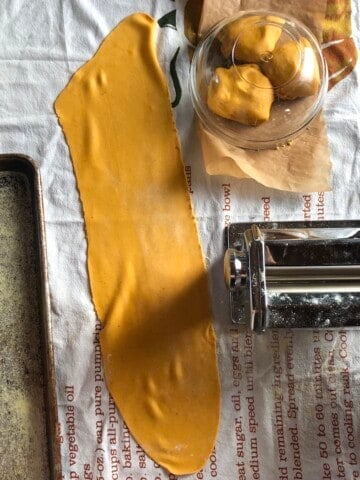
- Black and orange fettuccine bowl by pairing squid ink fettuccine with orange-hued pumpkin or roasted red pepper fettuccine, tossed together with shrimp "fingers" for a dramatic two-tone pasta dish
Sauces that create the black-and-orange contrast:
- Sweet grape tomato sauce with fresh basil
- Roasted red pepper sauce
- Tomato mascarpone cream sauce
- Tomato alfredo sauce
- Classic alfredo for a black-and-white "tuxedo" look
Squid ink pasta is fun for kids, but also pleases adults. If you're looking for an elegant Halloween dinner idea that goes beyond kitchy candy corn and spider decorations, homemade squid ink pasta is a perfect choice.
Squid Ink Pasta in Italian Cuisine: A Brief History
Nero di seppia is a staple of Veneto and Venetian lagoon cooking, where cuttlefish has been harvested for centuries. Living in this region, I see it on nearly every trattoria menu, from simple spaghetti al nero to elaborate seafood preparations and squid ink risotto.
The Venetian version is perhaps the most iconic, but squid ink pasta is deeply rooted in Sicilian cooking as well, where families have passed down recipes through generations.
Beyond Italy, the tradition spans the Mediterranean. Spain's arroz negro (black rice) uses the same ink for color and flavor. Croatia's coastal restaurants serve crni rizot (black risotto) as a signature specialty.
In Japan, ikasumi (squid ink) appears in noodles, rice, and even pizza. The ingredients may vary by region, but the appeal is universal: the dramatic black color, the briny depth, and the connection to coastal fishing traditions.
Squid Ink Pasta: Venice vs. Sicily
Squid ink pasta has a double tradition in Italy, rooted in the poor fishing traditions of coastal Catania and Venice. In both regions, cuttlefish were plentiful and fishermen wasted nothing, including the ink sac. What started as cucina povera (food of the poor) is now a celebrated specialty worldwide.
The two traditions diverge sharply on one question: tomato or no tomato?
Venetian Squid Ink Pasta
The Venetian version is "totally black," as one of our go-to neighborhood spots in Venice, Cantina Do Spade puts it. No pomodoro (tomato), no concentrato (tomato paste), no peperoncino (chili pepper). The sauce is pure: seppie (cuttlefish) sauteed with scalogno (shallot), deglazed with vino bianco (white wine), then finished with the ink and prezzemolo (parsley).
The traditional Venetian pasta shape and the greater Veneto region where we live is bigoli (one of our ALL-TIME favorite pasta shapes), a fat, spongy, fresh egg noodle that looks like thick spaghetti but has a far superior texture and taste. Bigoli's porous surface grabs onto that inky sauce in a way dried spaghetti simply cannot. The result is an intense, deeply marine dish where the ink is the undisputed star.
Sicilian Squid Ink Pasta
The Sicilian version from eastern Sicily, particularly Catania, Syracuse, and Messina, takes a different path. Pomodoro enters the picture, whether as concentrato di pomodoro (tomato paste) or fresh polpa (crushed tomato). The acidity and sweetness balance the intensity of the ink.
Peperoncino often appears, and some traditional Catanese families even finish with grated caciocavallo (a semi-hard aged cheese) or pecorino. That combination would be unthinkable in Venice, where cheese and seafood together is considered a sacrilege. In Sicilian dialect, the dish is called "u niuru di siccia," and local Sicilians say it's found in every self-respecting fish restaurant on the island.
Both of these traditions use the ink in a sauce over regular pasta. My recipe takes a third approach: working the ink directly into the dough itself for a more subtle, versatile result that pairs beautifully with a wider range of sauces.
Don't get me wrong, a well-balanced squid ink pasta sauce or risotto is delicious, but it can also be too overwhelming if too much is used.



Kelly Leding says
This black squid ink pasta is as delicious as it is dramatic!