

This homemade spinach and ricotta ravioli (Ravioli con spinaci e ricotta) is the recipe Luca's mamma (Anna) and I make together every Easter here in the Veneto. And it's become one of my favorite Italian family traditions.
My version keeps her classic filling as the foundation but adds two small "extra gusto" touches I picked up here along the way (more about that below!). The result is a spinach and ricotta ravioli filling that's sturdy enough to hold its shape, but still plenty creamy, and delicious!

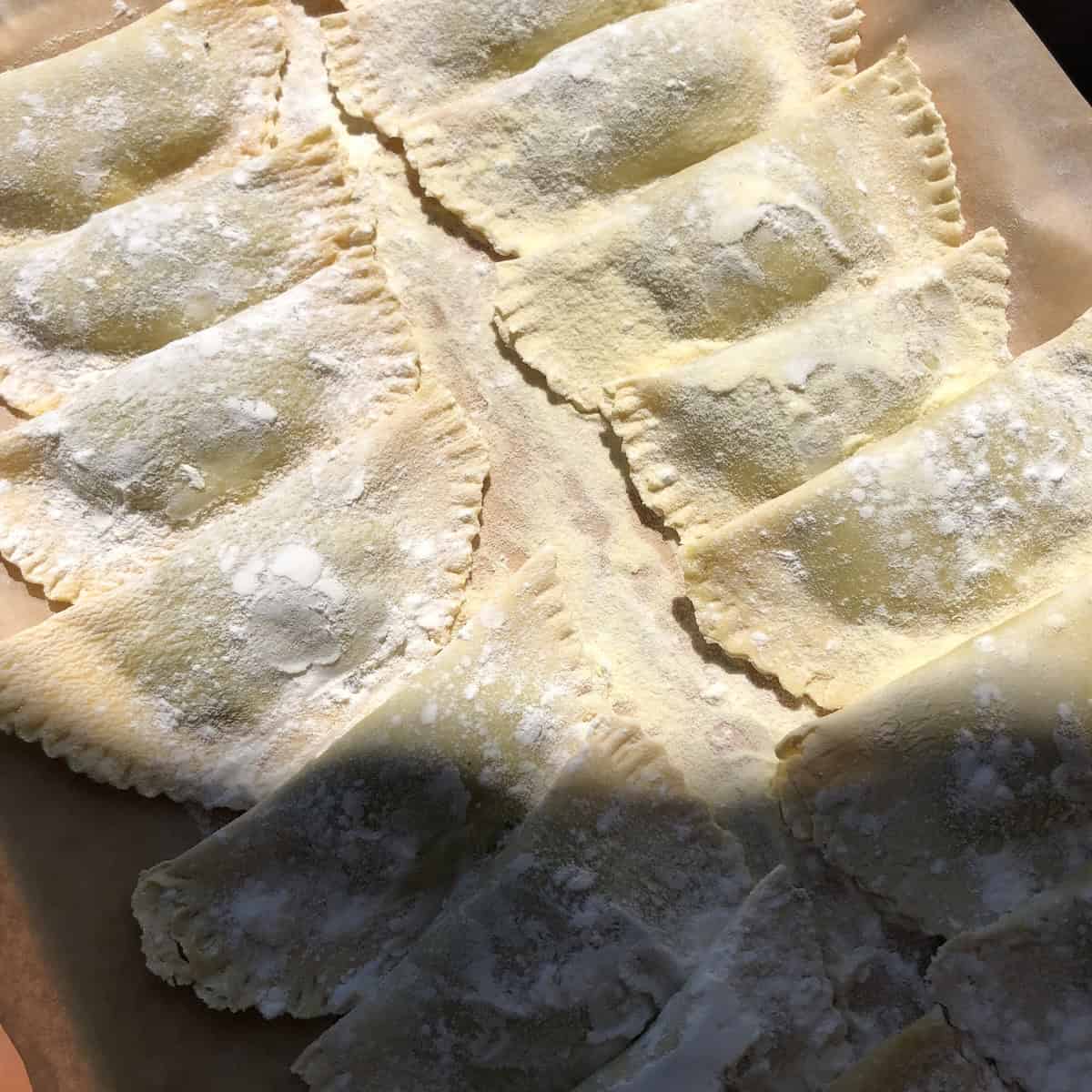
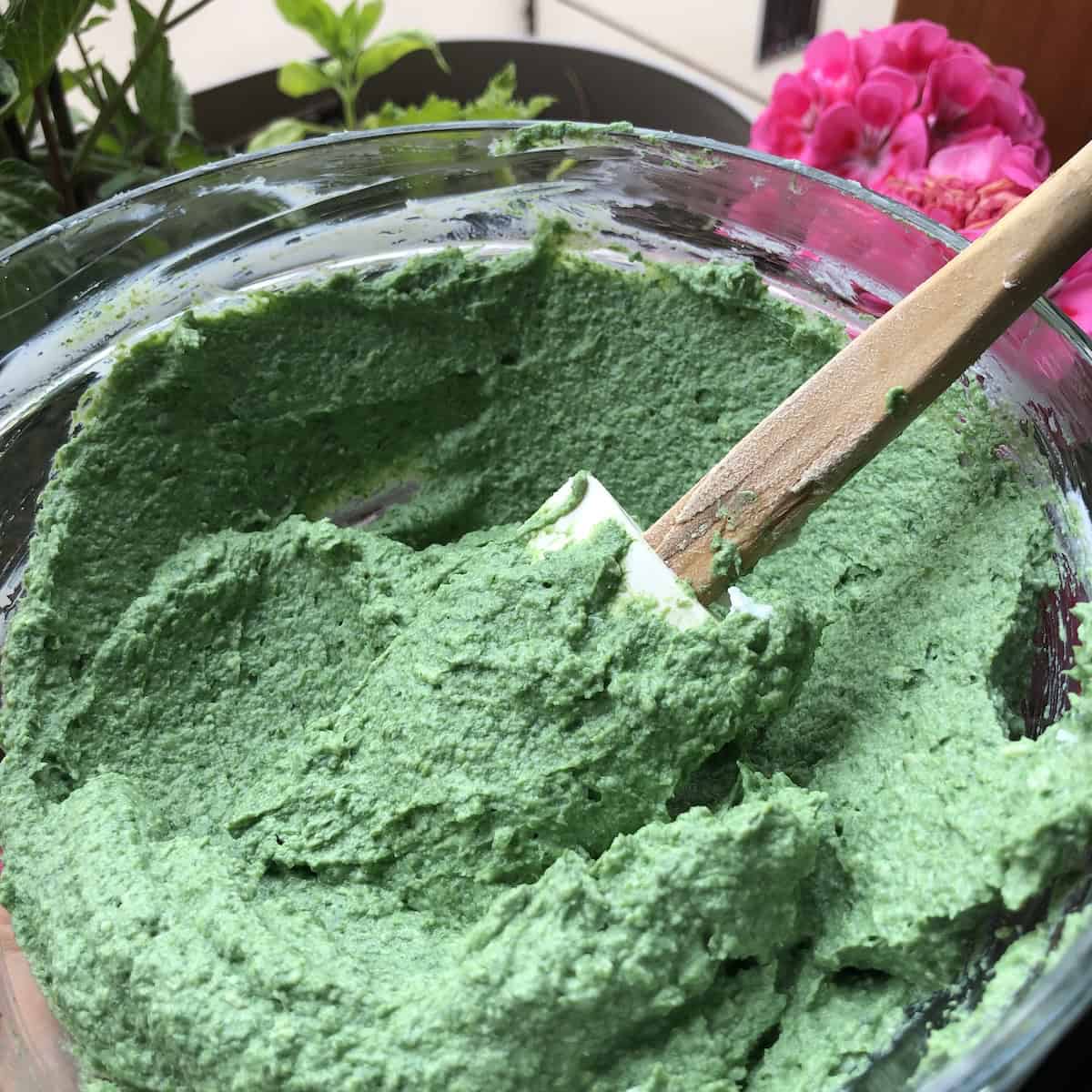
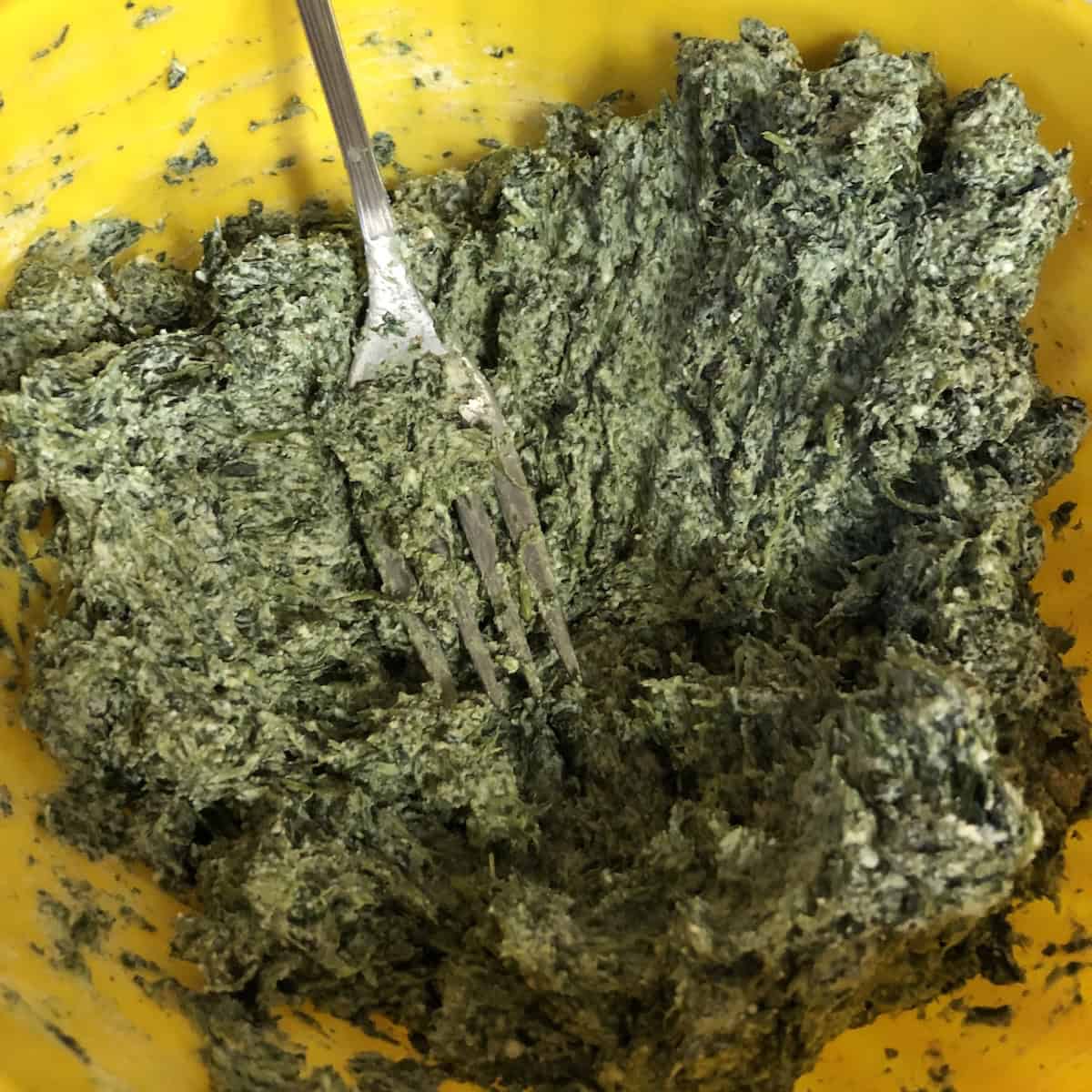

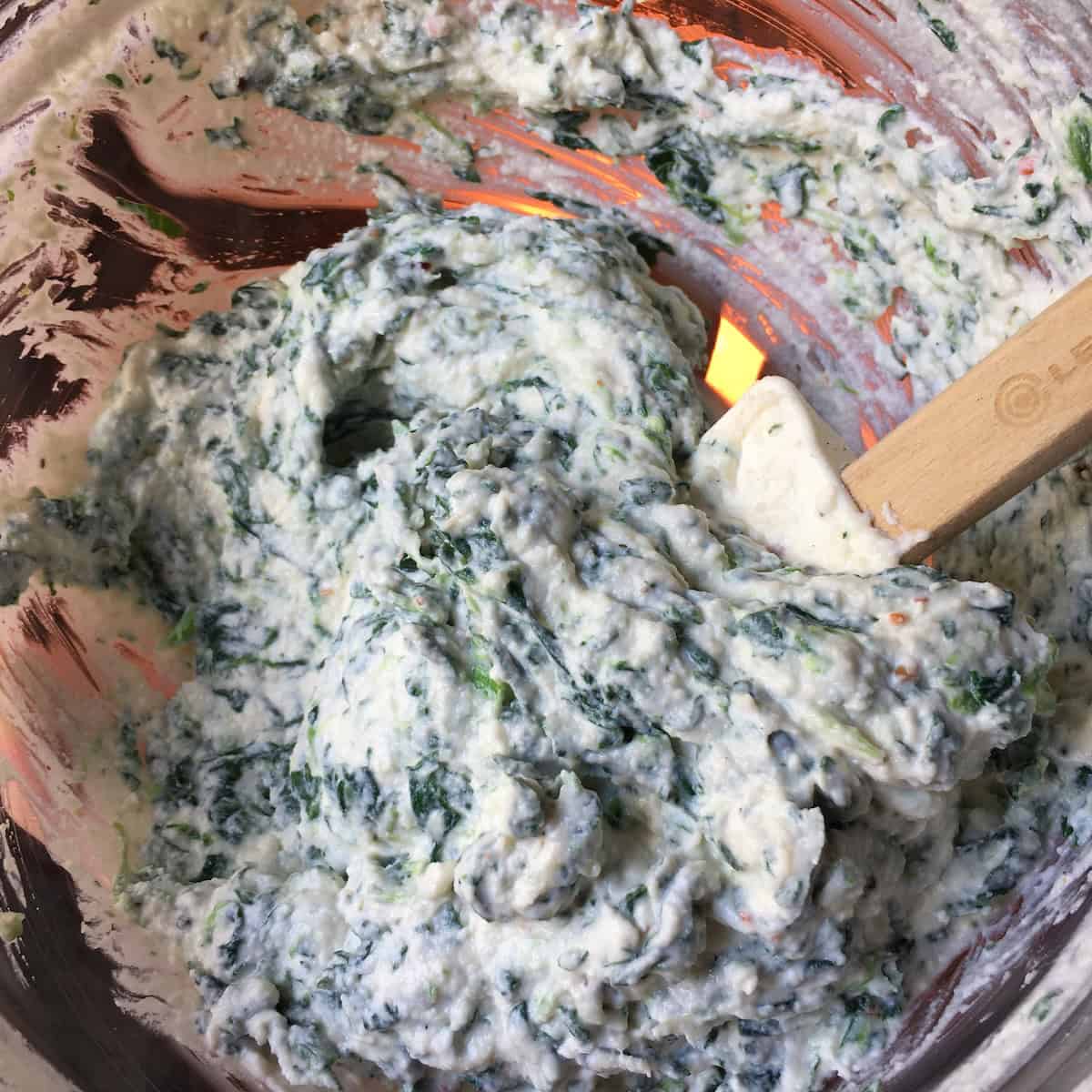
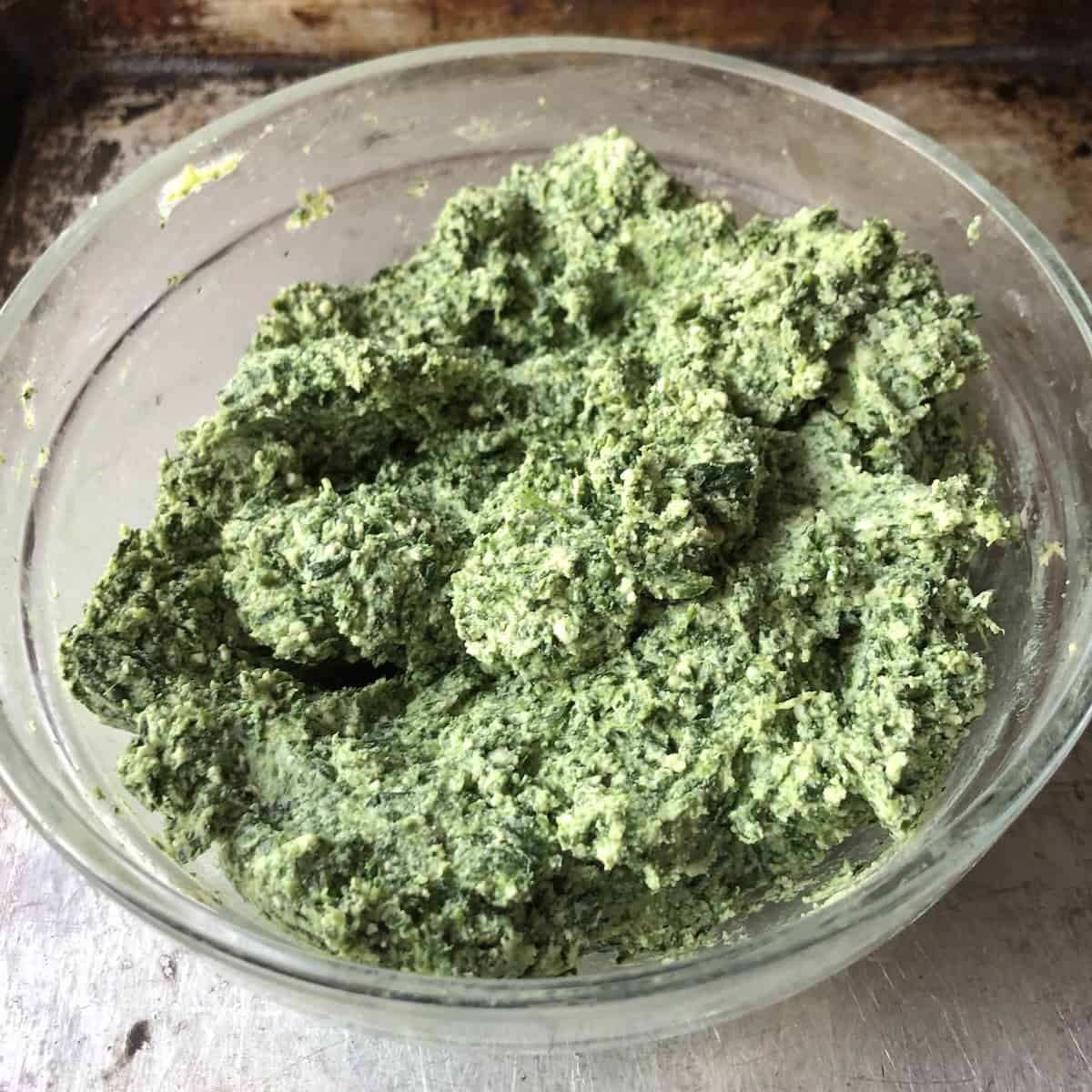
I've tested this filling more times than I can count (as you can see above). Whole egg, just a yolk, no egg, different ratios of spinach to ricotta, fresh and frozen spinach. Plenty of versions looked great but were too creamy to hold up inside pasta, or not the right ratio of spinach to cheese.
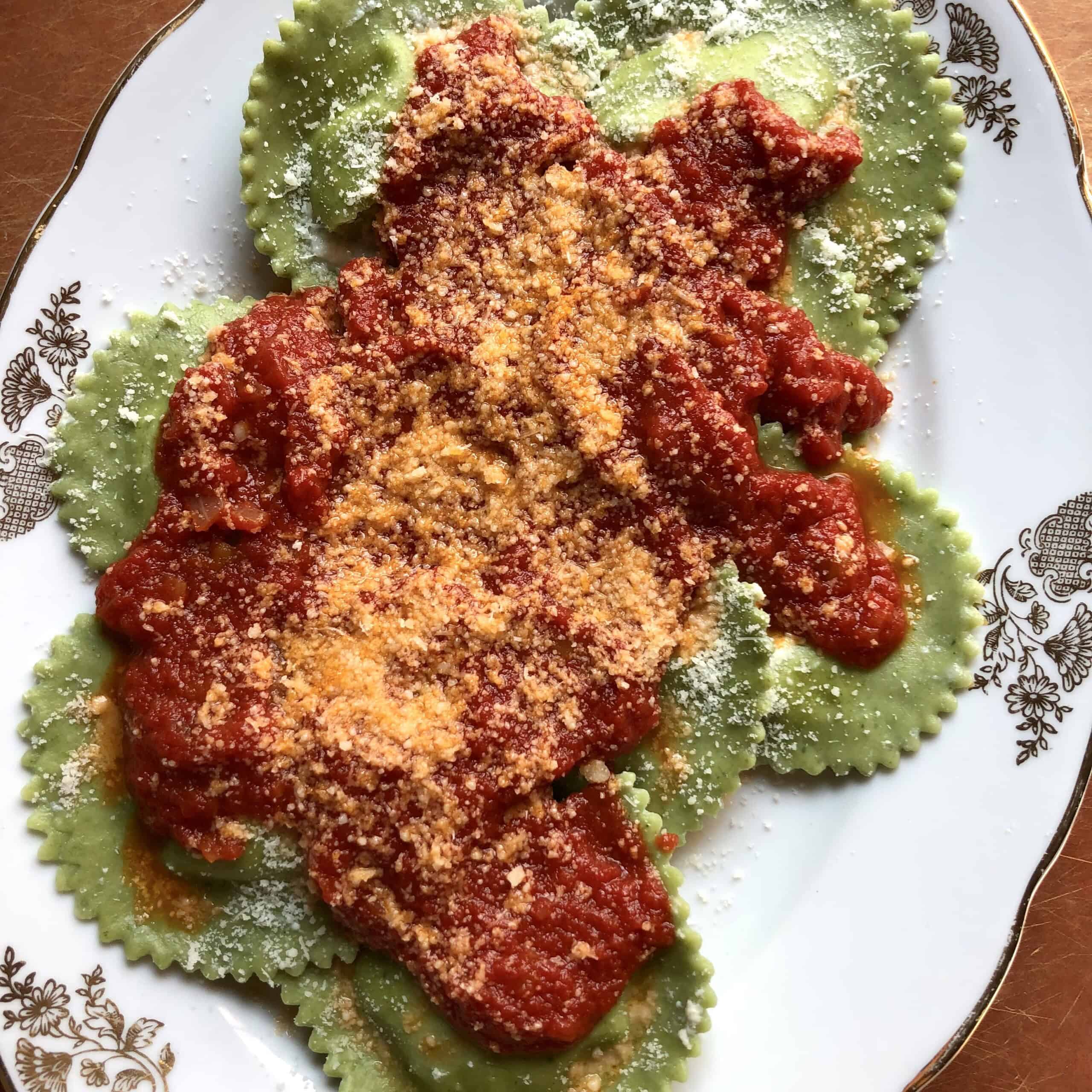
This particular version is where I landed, and I've stayed! It's balanced, flavorful, and forgiving enough to adjust the proportions to your own taste. Serve these ravioli with a classic Italian tomato sauce, a brown butter and sage sauce, or, honestly, just a glug of good olive oil seasoned with garlic and a generous sprinkle of aged Grana Padano DOP or Parmesan cheese.
Jump to:
- Why This Recipe Works
- Why You'll Love This Spinach and Ricotta Ravioli
- Spinach and Ricotta Ravioli Ingredients
- How to Make the Spinach and Ricotta Ravioli Filling
- How to Fill and Assemble Ravioli
- How to Cook Fresh Homemade Spinach and Ricotta Ravioli
- What Sauce Goes with Spinach and Ricotta Ravioli?
- Strained Ricotta vs. Unstrained Ricotta for Ravioli Filling (in Photos)
- Substitutions
- How to Use Fresh Spinach for This Spinach and Ricotta Ravioli Filling
- Equipment
- How to Store and Freeze Homemade Spinach and Ricotta Ravioli
- Serving Suggestions
- Top Tips for Perfect Spinach Ricotta Ravioli
- FAQ
- More Easy Pasta Recipes
- 📖 Recipe
- Food Safety

Why This Recipe Works


- I've learned this recipe from the best Italian home cooks I know (Anna (Luca's mamma), her sister Zia Linda, Zia Gloria (Luca's papà's sister), and their daughter and son-in-law Rosella and Luca. These are real recipes from my Italian family here in the Veneto and Abruzzo, and every one of them is an amazing cook in their own right.
- Mascarpone adds extra creaminess without making it runny. I first used mascarpone in my lobster ravioli filling, then spotted it on the ingredient list of Italian-made Rana spinach and ricotta ravioli (the one produced in Italy, not the American version). It adds body and richness that ricotta alone can't achieve, and keeps the filling from weeping liquid during cooking.
- Blistered garlic adds depth you can't identify. One very, very small clove, fried golden in EVOO, then mashed into a paste. It's there for flavor, not for a garlic-forward bite. You won't taste "garlic" in the filling, but it adds extra gusto flavor without knowing what it is.
- No egg in the filling means you control the texture. Many recipes call for adding an egg as a binder, and that's ok. But this filling doesn't need one because the strained ricotta and mascarpone hold everything together while keeping the filling creamy and never rubbery. (If you skip straining the ricotta, you'll need to add an egg to compensate for the extra moisture.)
- Whole nutmeg, freshly grated. Ten quick bursts on a Microplane. Pre-ground nutmeg loses the majority of its aromatic compounds within months of milling, while whole nutmeg holds its oils for years. The difference in a delicate filling like this is real. Freshly grated adds warmth you can't quite place, while pre-ground tastes flat and dusty by comparison.
- The spinach gets sauteed dry, not just squeezed. After thawing and chopping frozen spinach, I saute it in a dry skillet over medium-high heat until there are no traces of water on the bottom of the pan. This extra step prevents soggy ravioli filling.
- You can use my traditional 00-flour egg pasta dough, or this semolina egg pasta dough, or a half-and-half semolina and 00 flour pasta dough, or make it spring green with this spinach egg pasta dough recipe!
What Is Spinach and Ricotta Ravioli?
Spinach and ricotta ravioli is one of the most traditional filled pastas across Northern Italy (and Italy in general). 00 Fresh egg pasta dough (or semolina varieties) is rolled thin, filled with a mixture of strained ricotta, cooked spinach, and aged hard cheese like Grana Padano or Parmigiano-Reggiano, and a grating of fresh nutmeg, then sealed and cooked in salted boiling water.
The filling varies by family and region. Some add egg, egg yolk, while some don't. Some use only Parmigiano, others (like us) prefer the sweeter, nuttier Grana Padano, while others prefer Pecorino.
In parts of Emilia-Romagna, the same filling goes inside tortelli rather than ravioli. Every version is a little different and may include aromatics or seasonings, and that's what makes cooking your own so great!
Why You'll Love This Spinach and Ricotta Ravioli
- The filling comes together in about 15 minutes (not counting ricotta straining time). Here in Italy, ricotta is typically sold either in bulk at the cheese counter or in plastic tubs with a built-in straining basket that sits about an inch above the bottom, so the excess liquid drains away from the cheese on its own. By the time you open it, the ricotta is already nicely drained. Most ricotta sold in the US comes in tubs without a raised strainer, which is why straining is such a critical step for this recipe.
- No egg in the filling. Sturdy, creamy, and never rubbery.
- Customizable: Adjust spinach, cheese, and garlic to your taste.
- Vegetarian ravioli recipe is freezer-friendly for meal prep.
- Links to five of my different homemade egg pasta dough options so you can choose the texture (and color) you want.
- Tested repeatedly with both fresh and frozen spinach, eggs vs no eggs, varying ricotta and parmesan amounts, and different cheese ratios. This is the version we like best (Anna's recipe with a couple of flavor boosters)!
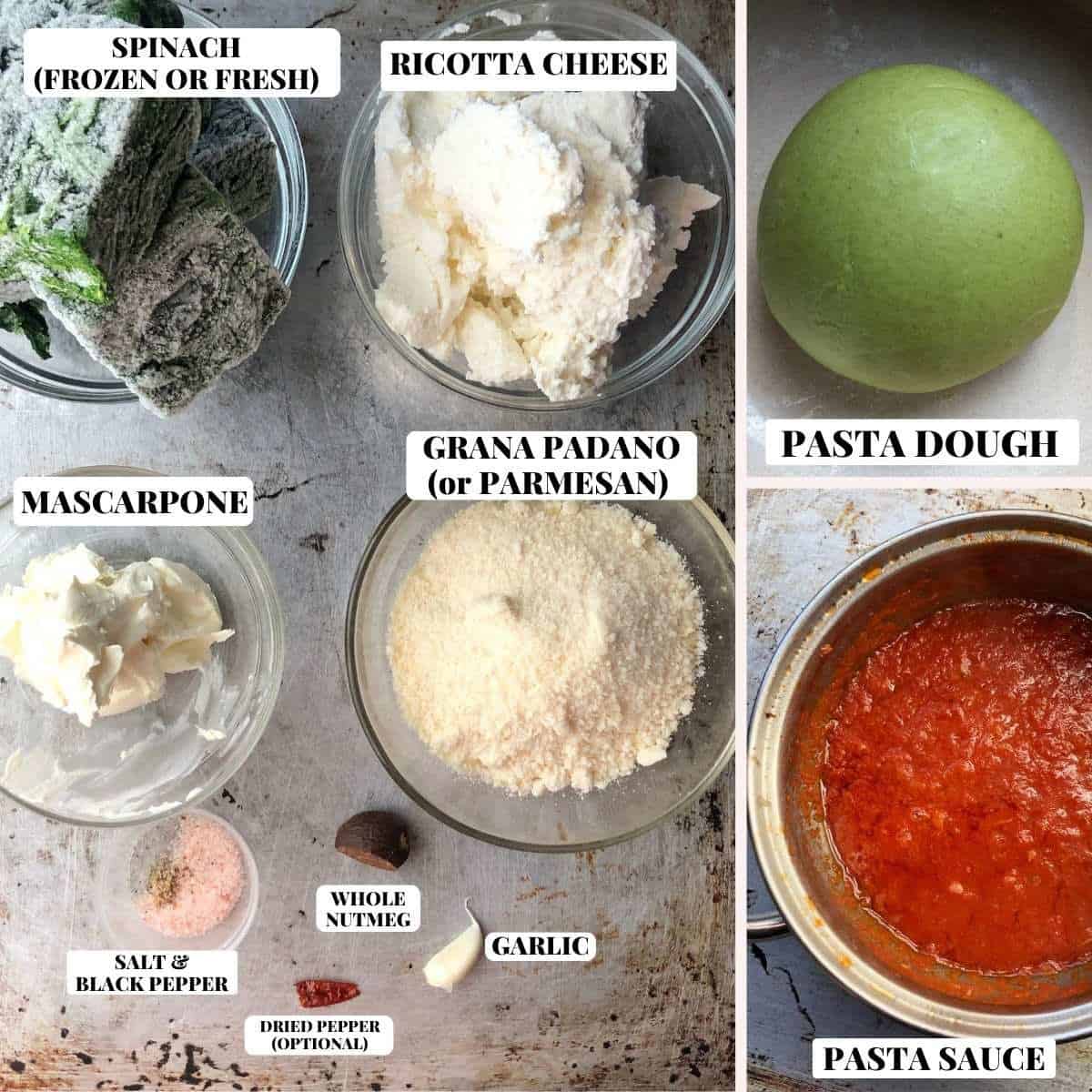
Spinach and Ricotta Ravioli Ingredients
For the Spinach and Ricotta Filling
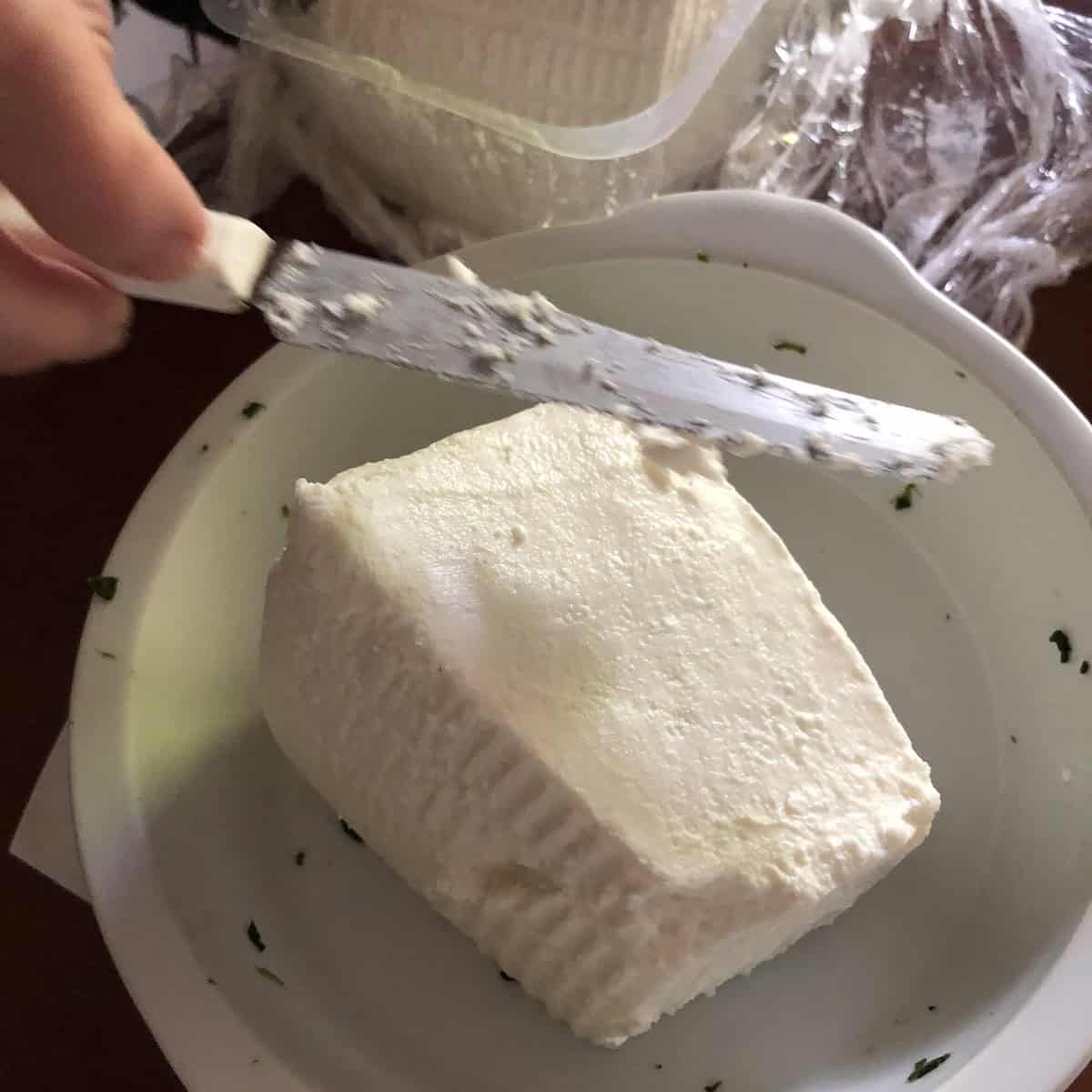
- Ricotta cheese (strained) forms the creamy base. Straining is essential: wrap it in cheesecloth and suspend it over a bowl in the fridge for several hours (or overnight) to pull out excess moisture. Wet ricotta is the number one reason homemade ravioli fillings turn runny. If you skip straining, add one egg to bind the filling, but the texture will be slightly different.
- Mascarpone cheese (optional but highly recommended) adds silky richness and body without thinning the filling. I started using mascarpone in ravioli fillings when developing my lobster ravioli recipe, then later found it listed in the ingredients of Italian-made Rana spinach and ricotta ravioli. It's not traditional to Anna's version, but it's a worthwhile addition.
- Aged Grana Padano DOP (or Parmigiano-Reggiano) brings savory, nutty depth. Grate it finely so it integrates fully. Don't pack it into the measuring cup.
- Frozen Spinach is what most Italians I know use for this filled pasta, because it's easier and more convenient than fresh (especially when fresh spinach isn't in season). Thaw it partially, chop it, then saute it in a dry skillet to cook off the water. If using fresh spinach, you'll need about 1 ½ pounds (680g) to yield roughly the same cooked amount as 14 ounces of frozen (fresh spinach loses about 90% of its volume when cooked).
- One small garlic clove, blistered in EVOO is my own addition. Fry the whole clove in about a teaspoon of extra virgin olive oil over medium heat until golden brown on both sides, then mash it into a paste with the back of a knife. This technique mellows the raw sharpness completely. The garlic adds a layer of flavor you won't be able to identify, but you'd miss if it weren't there. Anna doesn't use garlic in hers, and most Italians don't. It's my spin.
- Whole nutmeg, freshly grated at about 10 quick bursts on a Microplane grater. This is a classic Italian filling ingredient. The amount here adds warmth without being discernible as nutmeg. Do not substitute pre-ground nutmeg. The flavor is not the same.
- Sea salt and freshly cracked black pepper to taste.


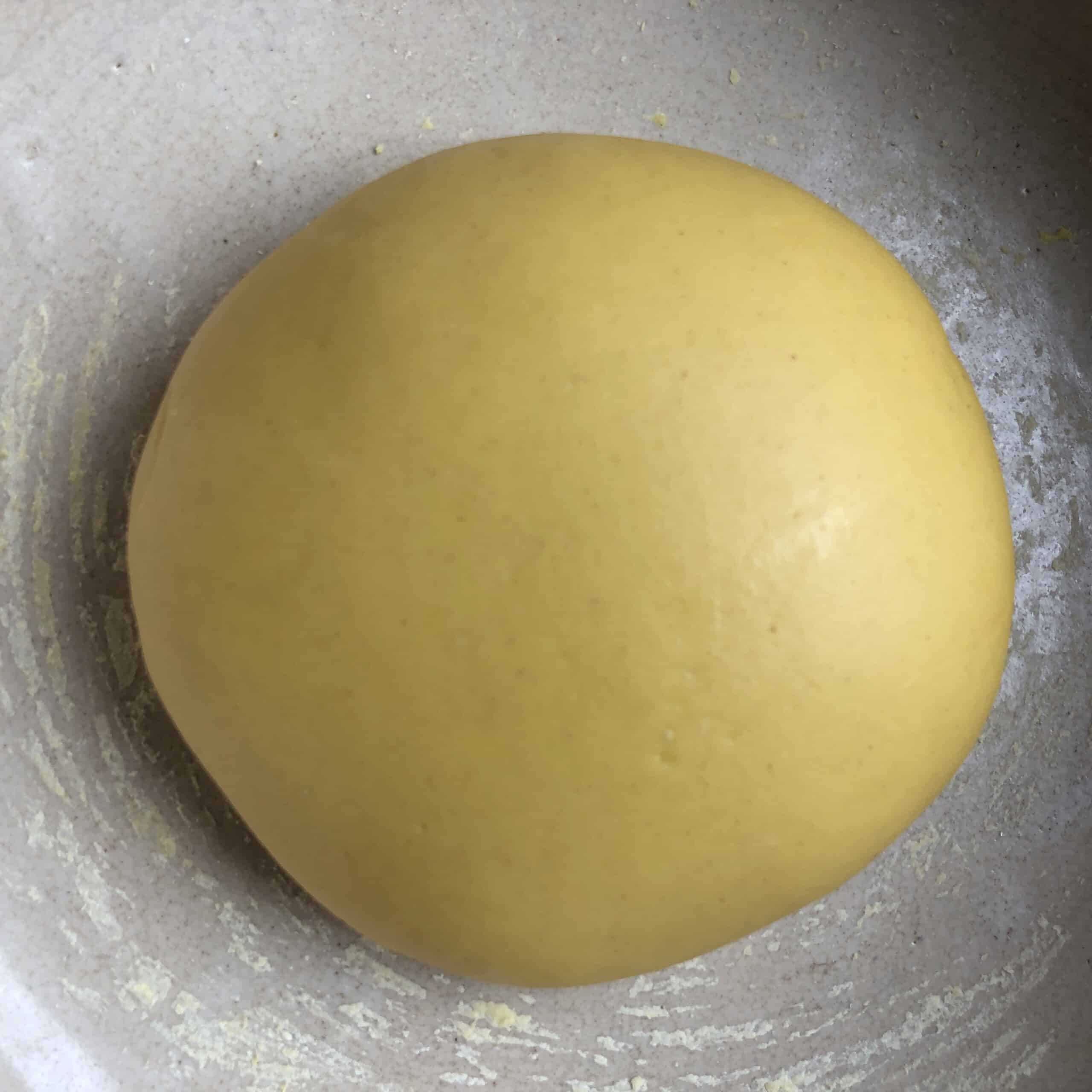

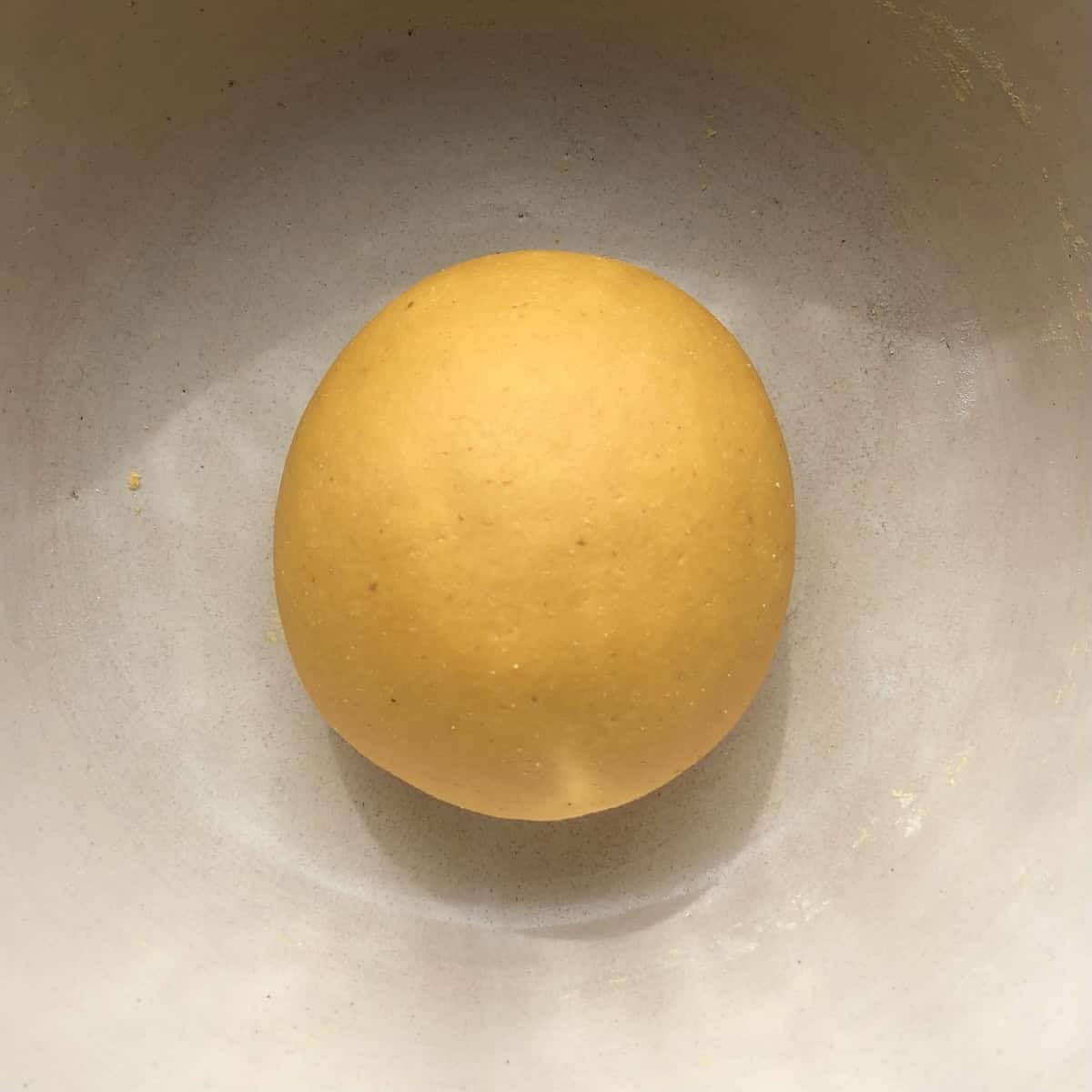
For the Pasta Dough
Here are five homemade pasta dough options depending on the texture and look you're after. Each produces a slightly different ravioli experience:
- 00 flour egg pasta dough produces the silkiest, most delicate ravioli with a tender bite. This is the classic choice when you want the pasta to practically dissolve around the filling. It's the most forgiving dough to roll thin.
- Semolina flour egg pasta dough produces the chewiest, most rustic ravioli with the strongest wheat flavor and the most "bite." It's a heartier dough that pairs well with bolder, heartier sauces.
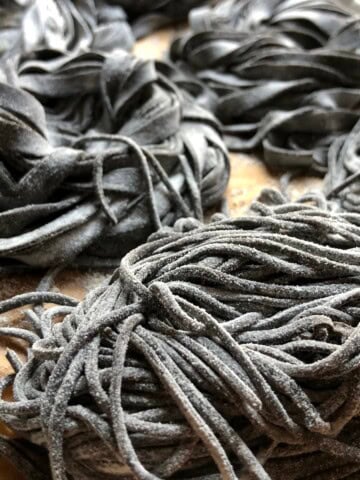
- 00 flour and semolina (semola rimacinata) egg pasta dough combines the silkiness of 00 flour with the added chew and strength of twice-milled durum wheat semolina. This is what Italian brands like Rana use for their commercial ravioli pasta, and it's an excellent all-around choice for filled pasta that holds up well during cooking and freezing.
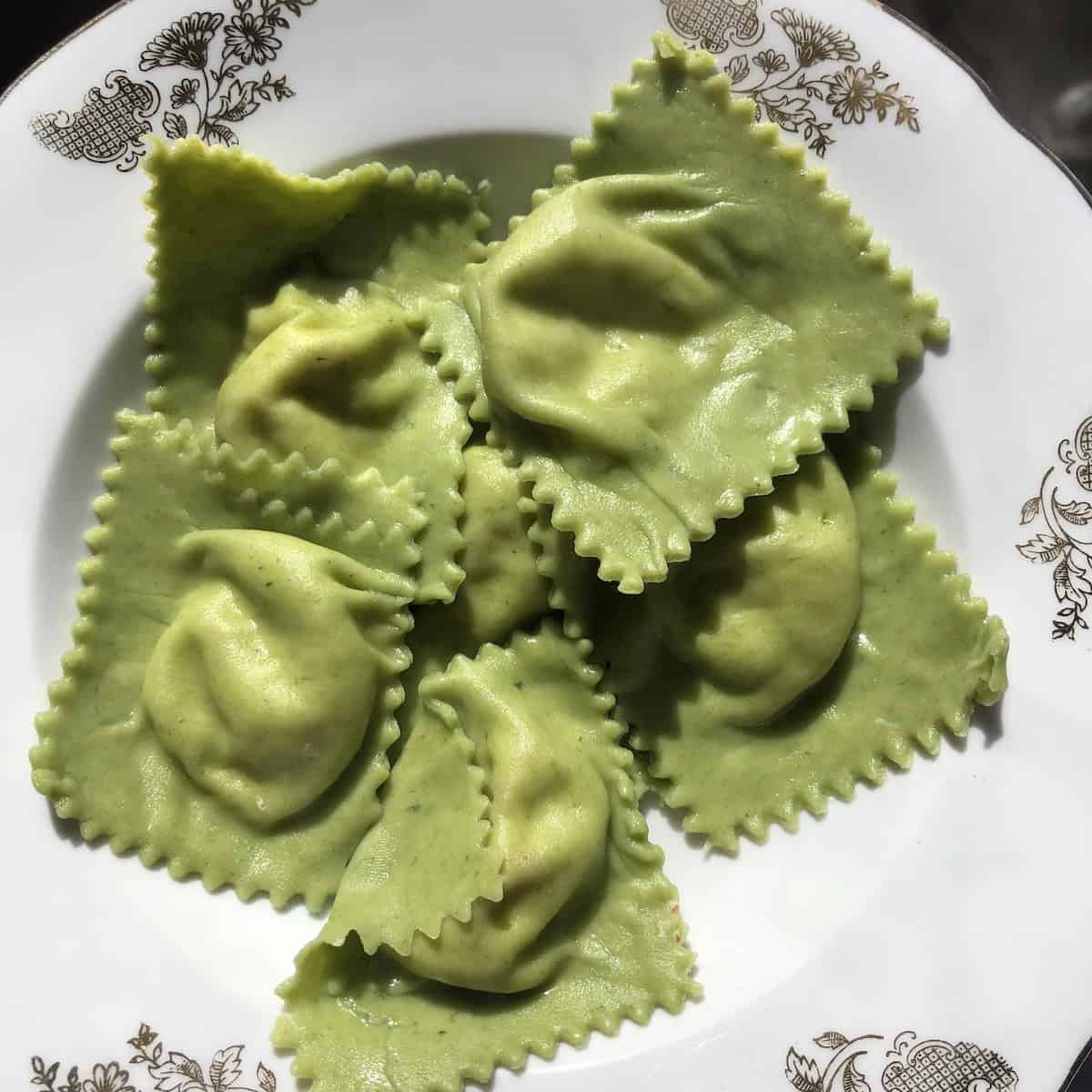
- Spinach (00 flour) pasta dough makes stunning, bright green ravioli that are especially gorgeous for Easter and Christmas dinner. The spinach adds a subtle earthiness to the dough, and the color contrast against the white ricotta filling is beautiful when you cut into one.
- Pumpkin Pasta Dough produces silky, golden-orange ravioli with a subtle sweetness that pairs beautifully with the savory ricotta and spinach filling. The color alone is perfect for fall and Thanksgiving dinners.
Any of these will work beautifully. Choose based on the occasion and the texture you prefer, and what kind of flour you have in your pantry.
For Serving
- One recipe classic Italian tomato sauce (or your favorite pasta sauce...*See below for more sauce options)
- Freshly grated Grana Padano or Parmigiano-Reggiano for finishing
See recipe card for quantities.
How to Make the Spinach and Ricotta Ravioli Filling
The filling comes together quickly once your ricotta is strained and your spinach is prepped. Straining the ricotta is the step that takes the longest (a few hours to overnight), but it's also the step that matters most. Skip it, and your filling will be watery.
Step 1. Strain the ricotta in cheesecloth suspended over a bowl in the refrigerator for several hours or overnight. The longer the better. You want it thick and scoopable, not wet or pourable. Add it to a medium-sized mixing bowl.
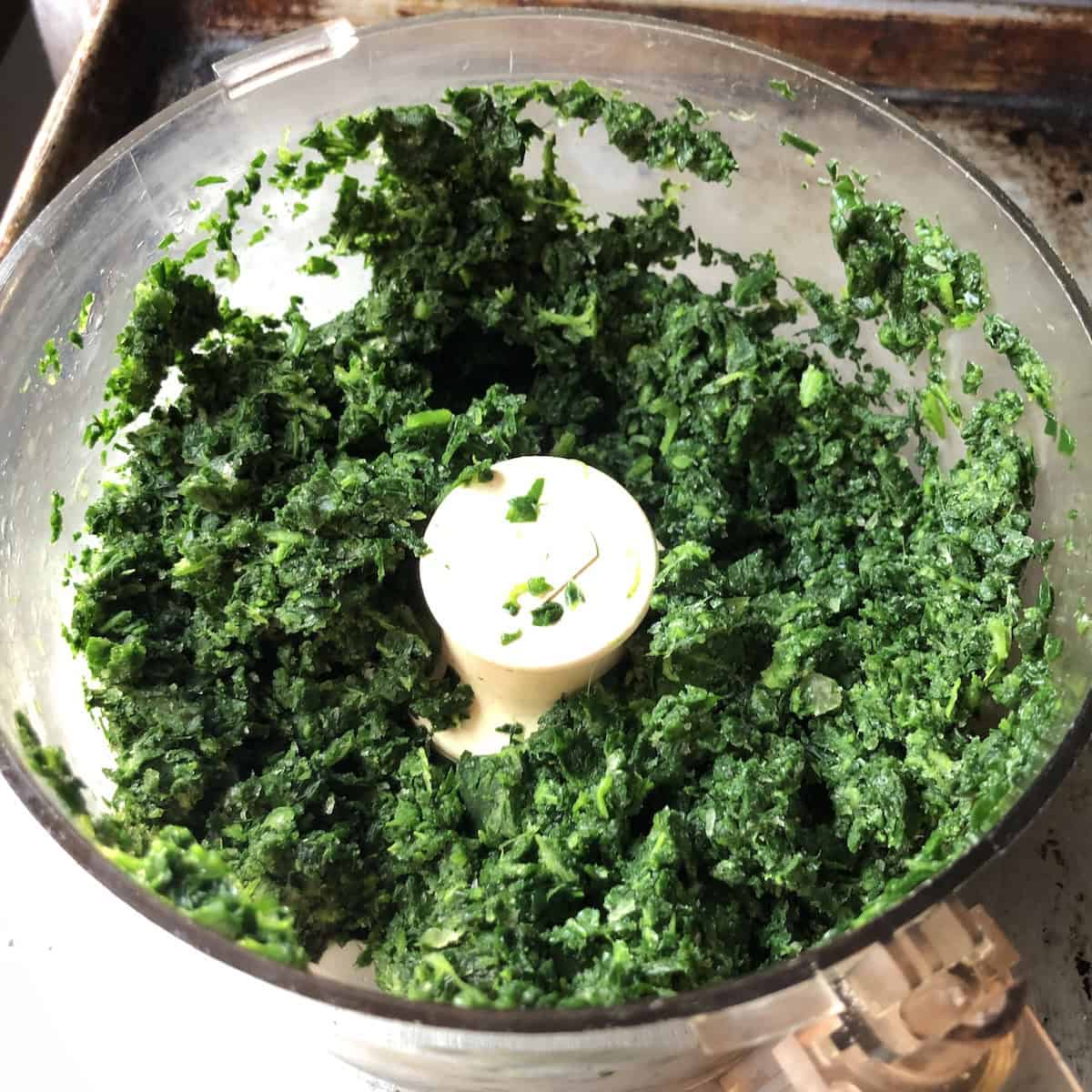
Step 2. Prep the spinach. Partially thaw frozen spinach until you can cut through it with a knife a few times to get a rough chop. Add it to the bowl of a food processor and pulse to desired size (or chop by hand using a chef's knife).
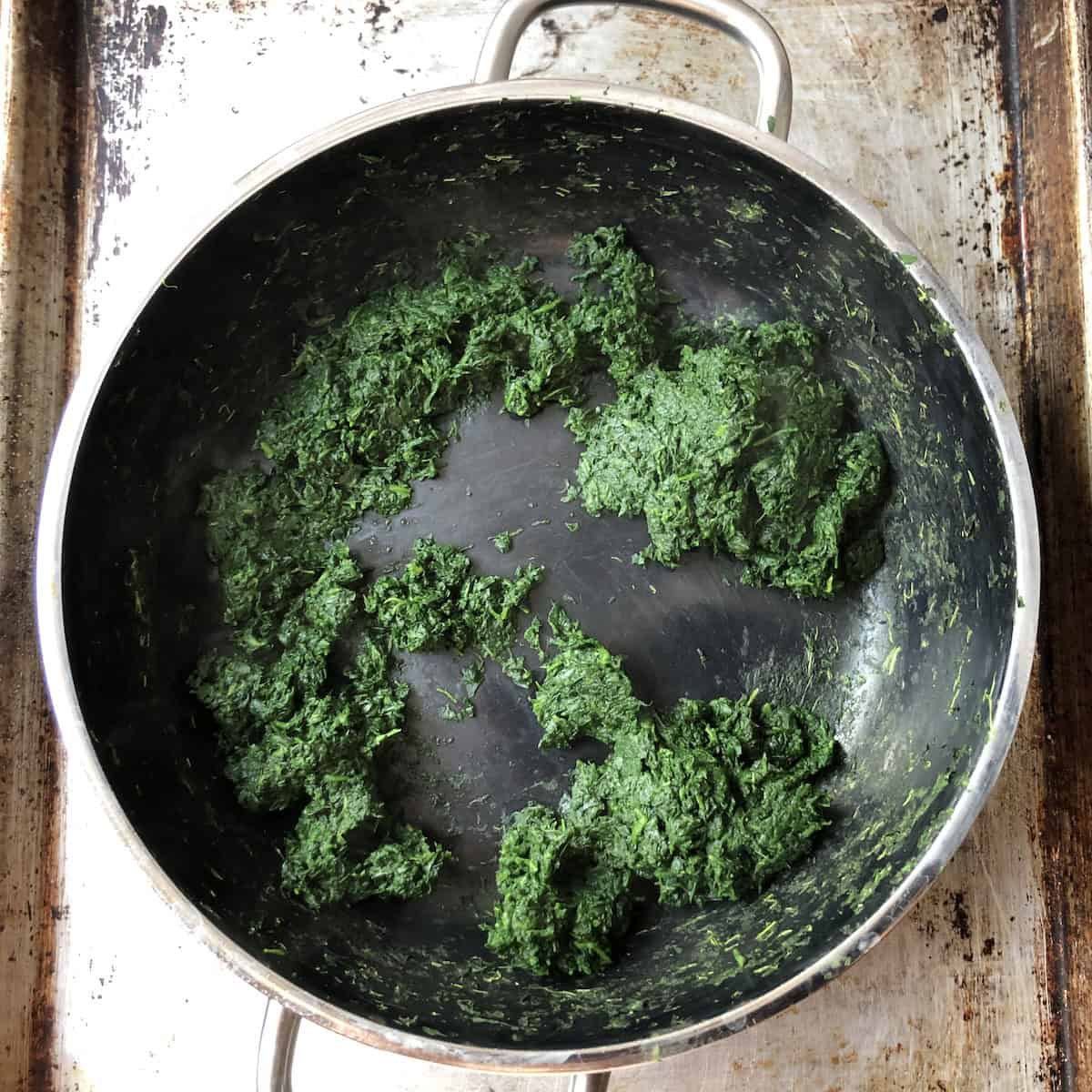
Transfer it to a dry skillet over medium-high heat and saute, stirring, until you see absolutely no moisture remaining on the bottom of the pan. Let it cool to room temperature.

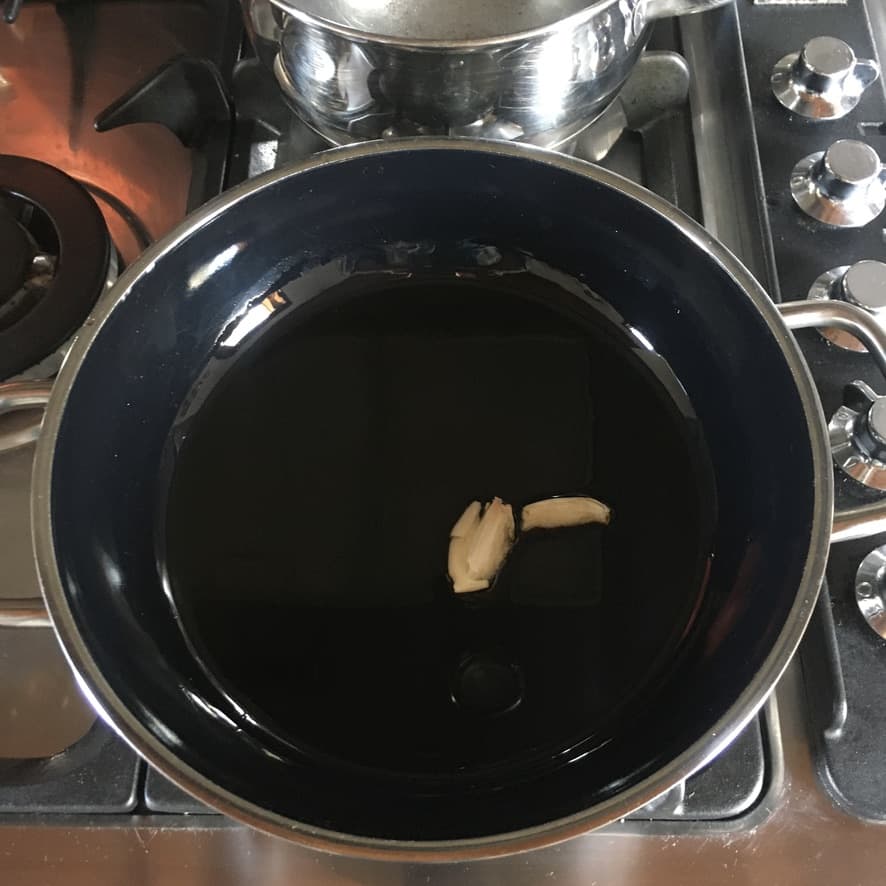
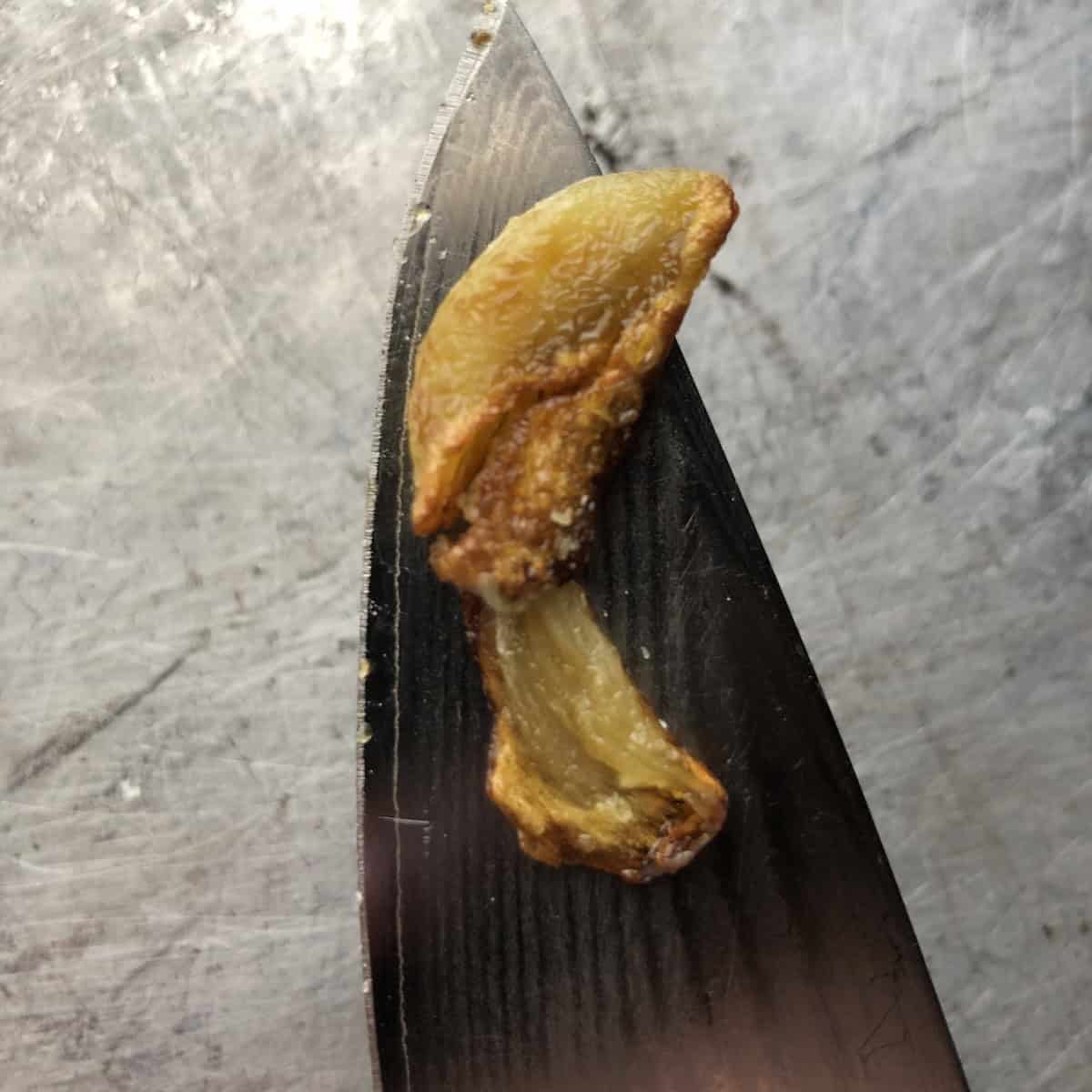
Step 3. Make the garlic paste. Heat about a teaspoon of EVOO in a small skillet over medium heat. Add the whole garlic clove and fry until blistered and golden brown on both sides. Transfer the clove to a cutting board and use the back of a knife to mash it into a smooth paste.
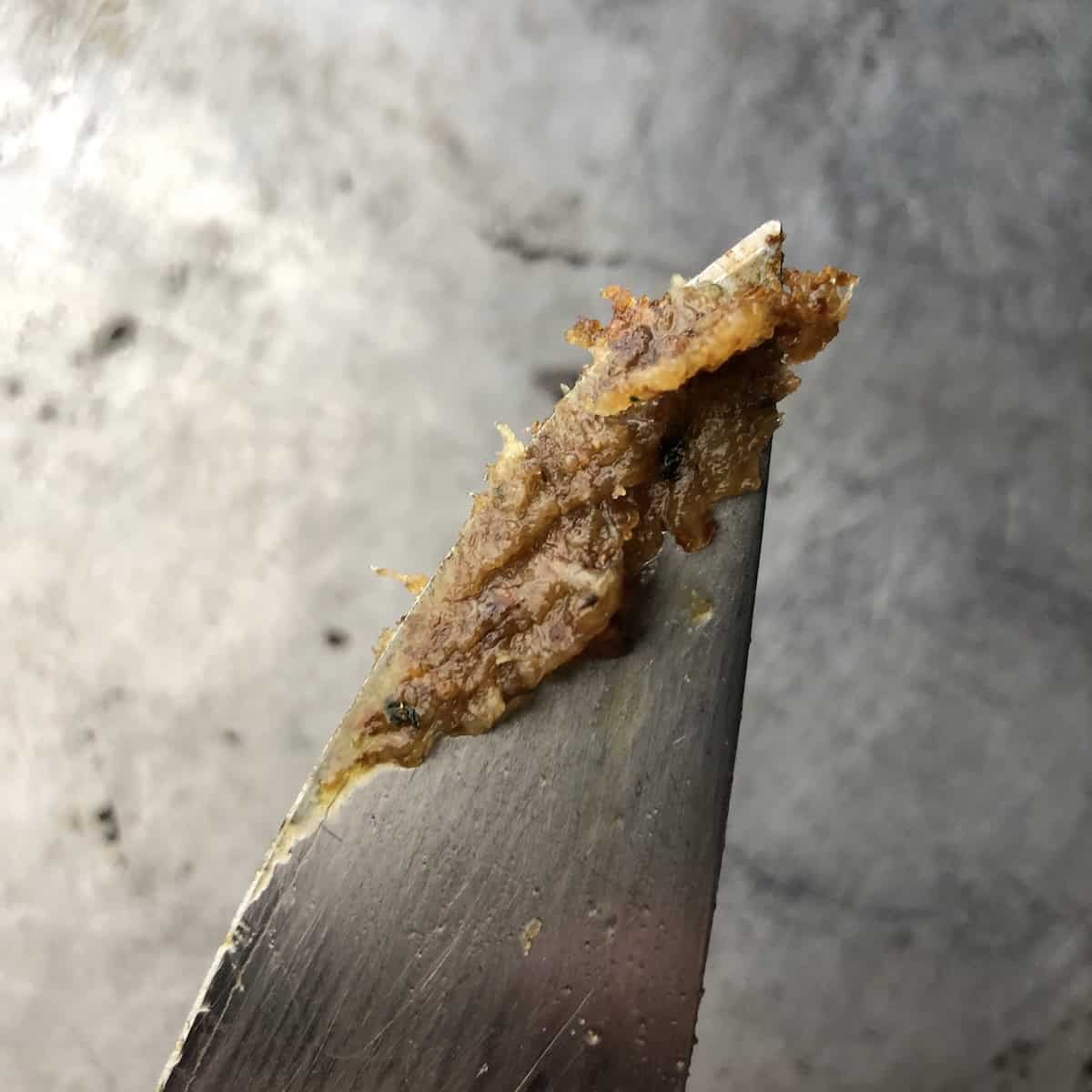
Step 4. Combine the filling. In a large mixing bowl, add the strained ricotta, mascarpone (if using), finely grated Grana Padano, salt, pepper, and freshly grated nutmeg (10-15 quick bursts on a Microplane is plenty). Mix with a spatula until smooth and well combined. Fold in the garlic paste and the cooled spinach. Taste and adjust seasonings. Cover and refrigerate until ready to use.
How to Fill and Assemble Ravioli
The steps below show me making spinach and ricotta ravioli using various types of pasta dough as the base (i.e., 00 Flour pasta dough and beautiful green spinach pasta dough).
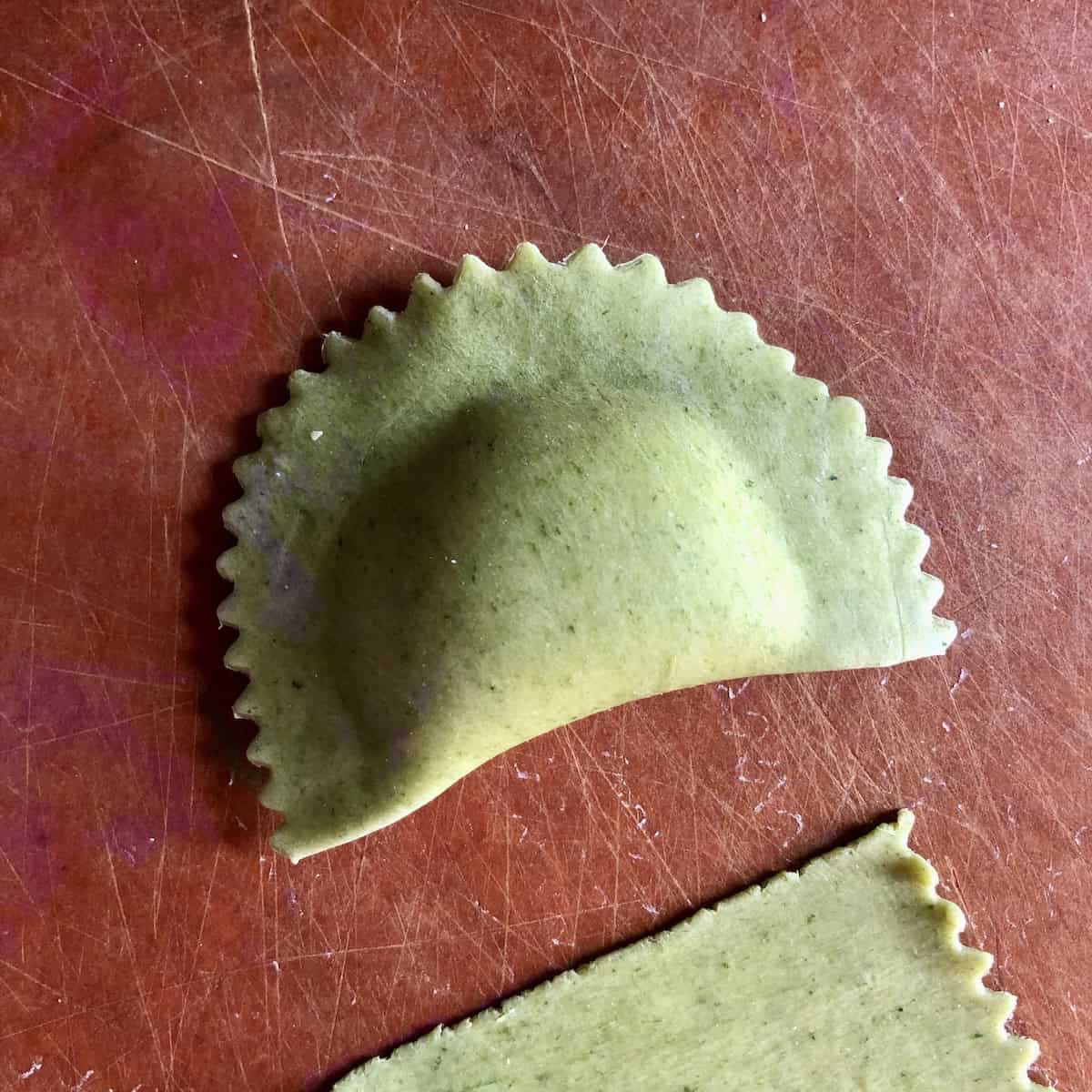
I also show you various folding techniques, including Anna's traditional mezzaluna-shaped Easter spinach and ricotta ravioli, hand-cut squares and circles, plus circles and squares using pasta stamps for a more uniform look.
This allows you to decide what's easiest, or best suits your needs or skill level. The point is, don't worry so much about what the ravioli looks like. Instead, prioritize not overstuffing them with filling and ensuring you remove any air bubbles before sealing them. Make them more rustic like Anna, or more "perfect" looking if that's more your style!
How to Shape Spinach & Ricotta Ravioli (Mezzaluna Ravioli for Easter)
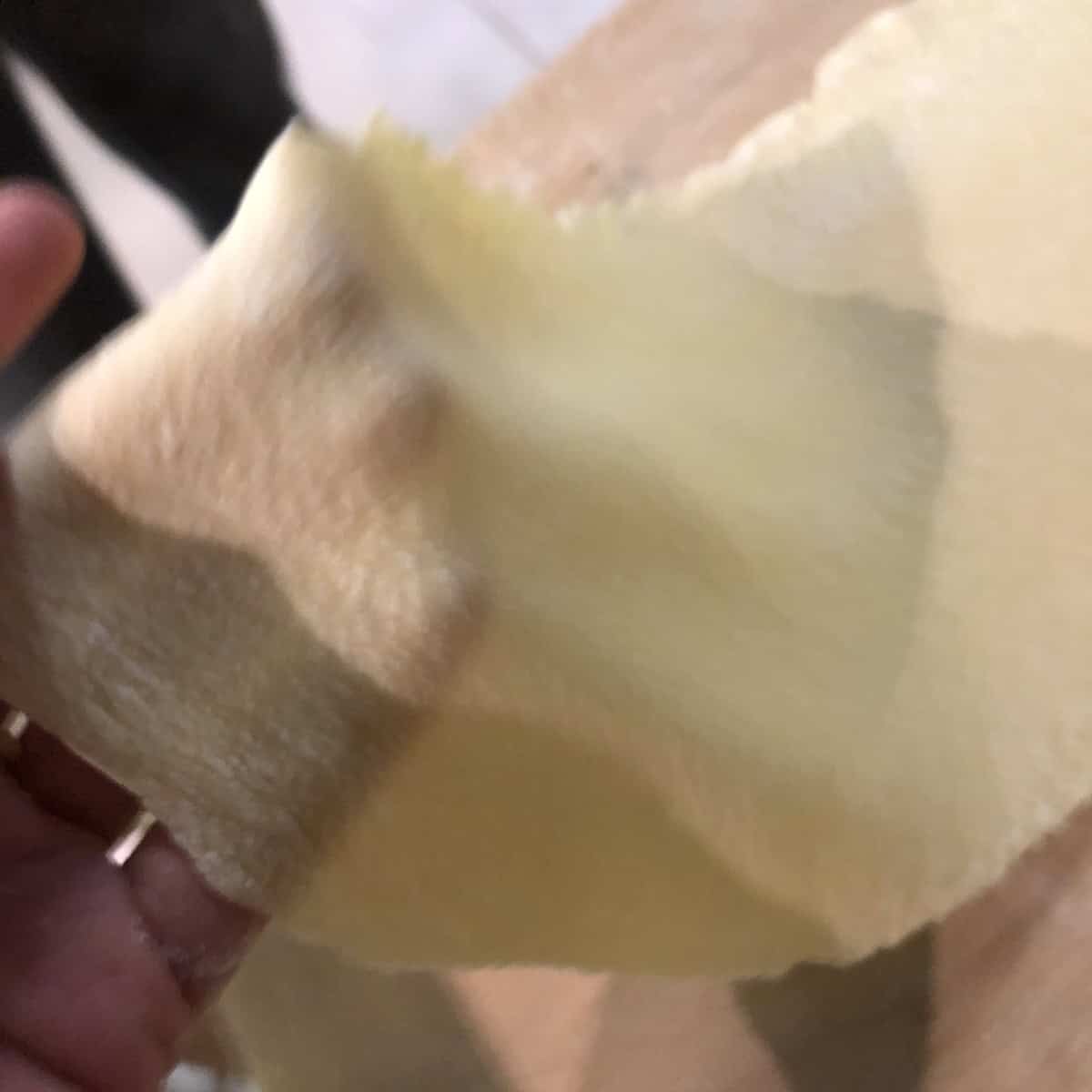
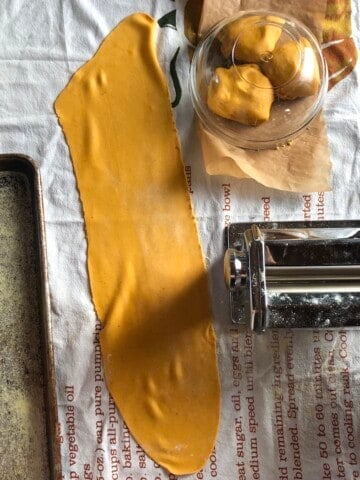
Step 5. Make the pasta and roll it out to your desired thickness using a pasta machine or rolling pin. For ravioli specifically, I use setting #6 or #7 on my Marcato Atlas. When held up to light, you should be able to see a faint silhouette of your hand through the dough, but it shouldn't be transparent. If you're making ravioli for the first time, cook a couple of test ravioli at different thicknesses before committing the whole batch.
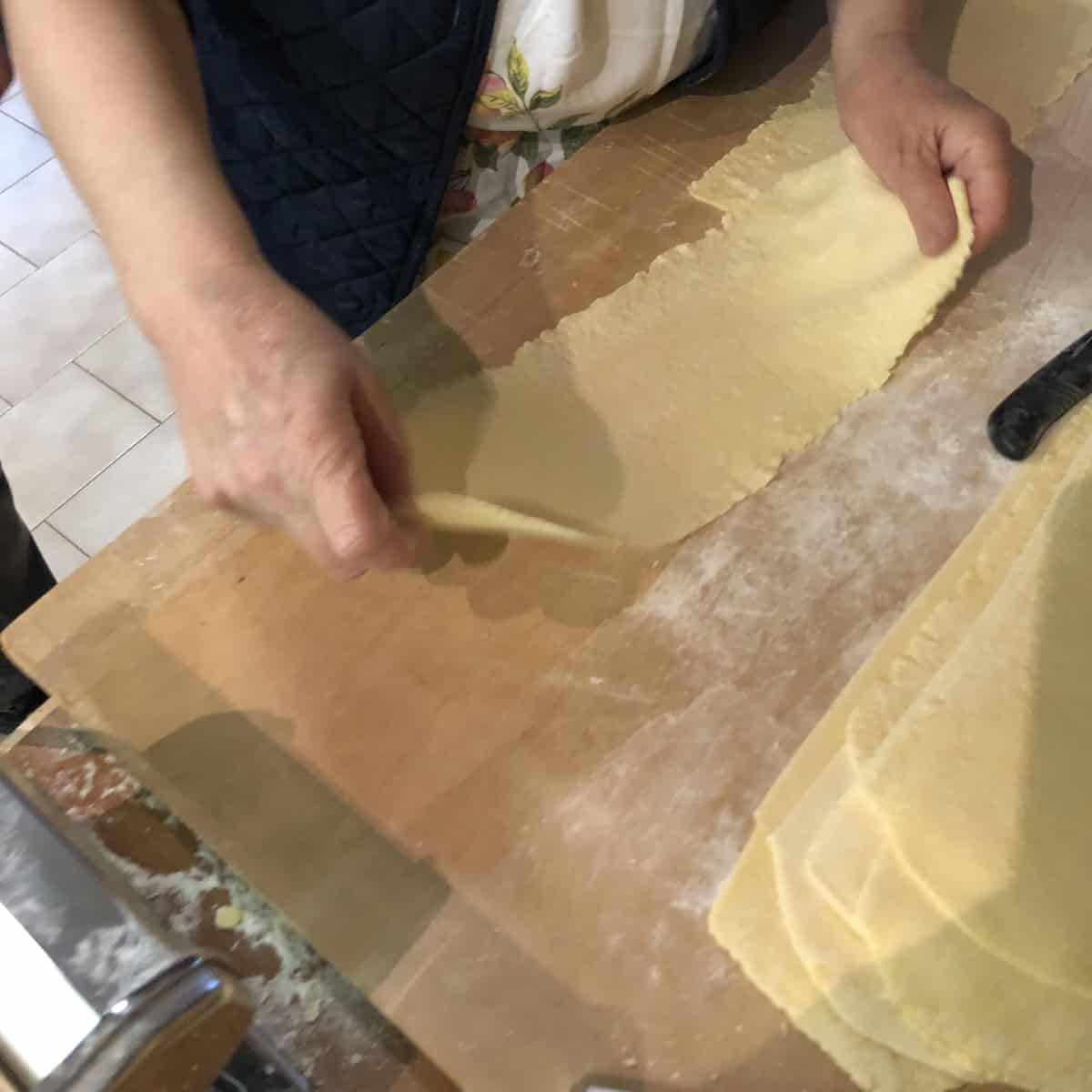
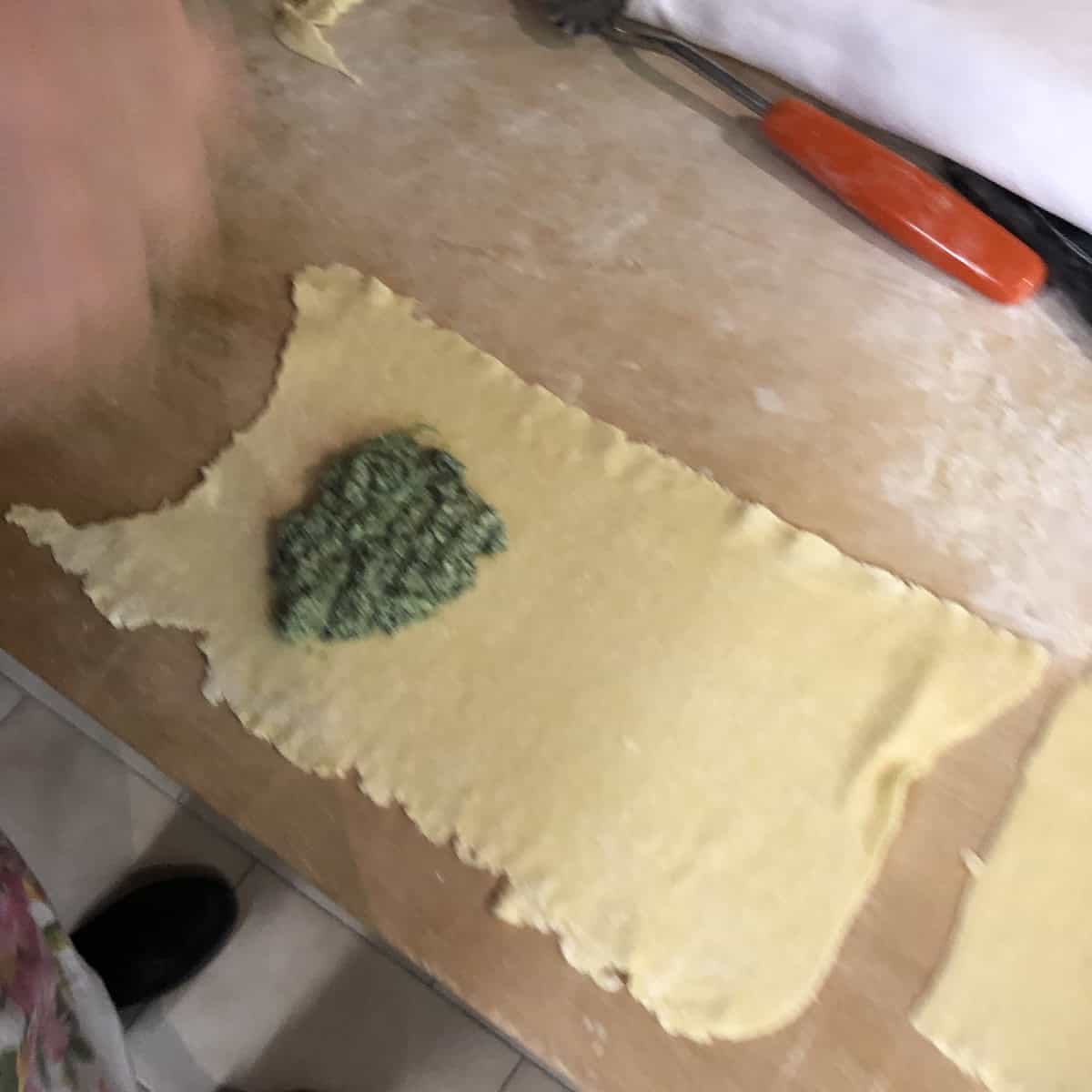
Step 6. Place about 1 tablespoon of filling onto the pasta sheet, spacing the mounds about 2 inches apart. Keep a small bowl of water nearby. If needed, brush water lightly around each mound using your finger or a pastry brush. This can help the two layers of pasta adhere, but I usually don't need to do this when using a homemade 00 flour pasta dough.
Step 7. Fold the pasta over (or lay a second sheet on top) and gently press around each mound of filling, working from the filling outward toward the edges. This is where you push out trapped air. Air pockets are the enemy. They expand during cooking and cause the ravioli to burst open in the boiling water.
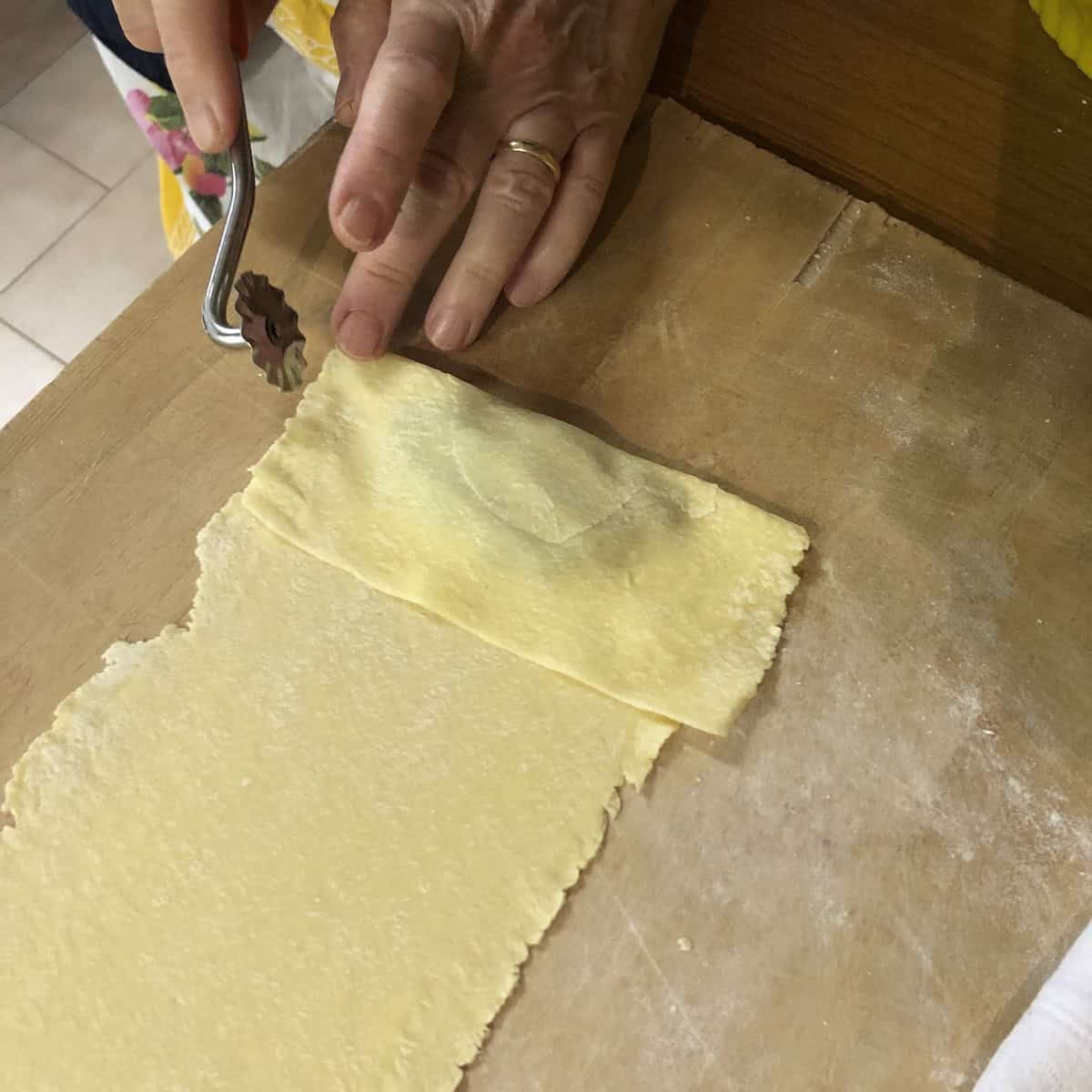
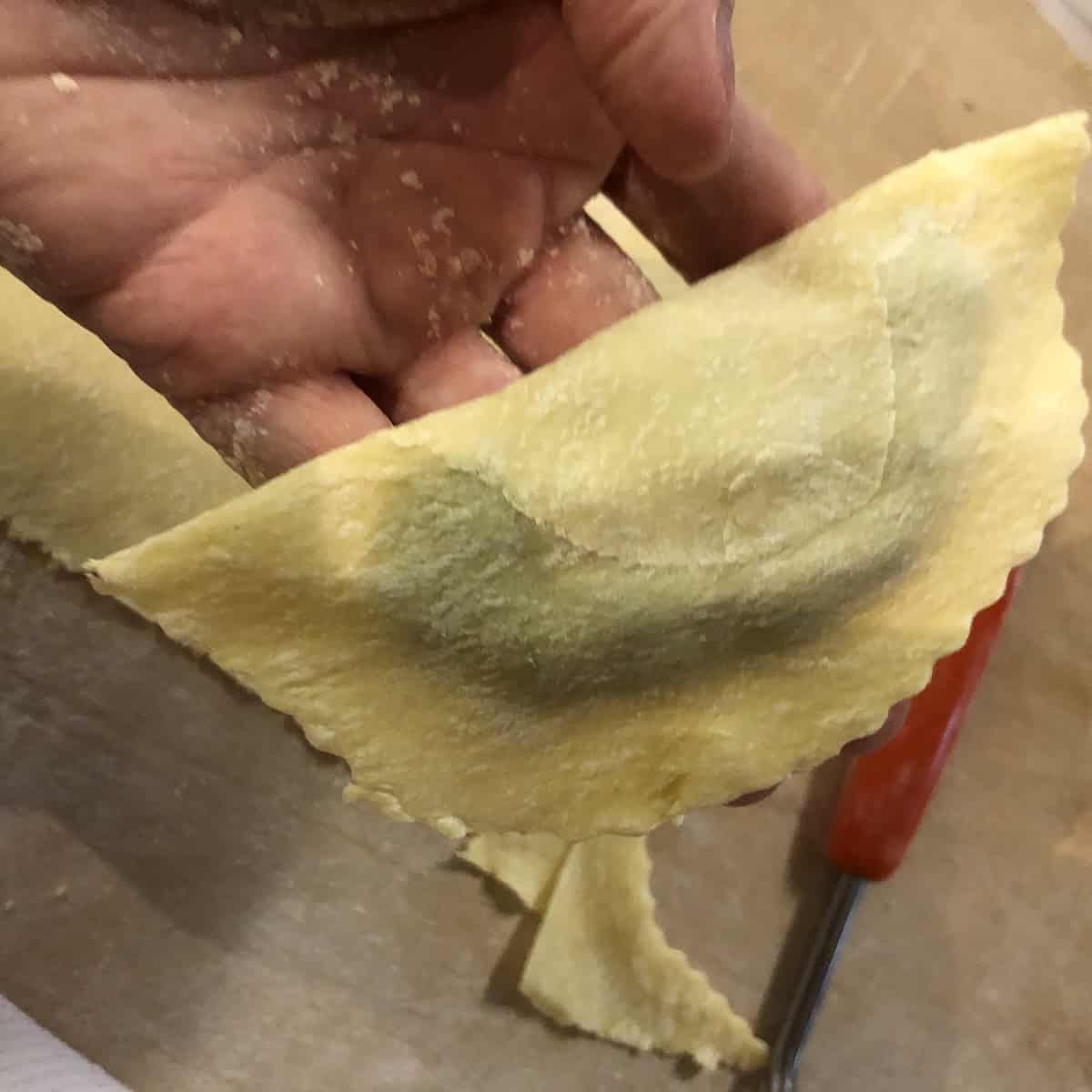
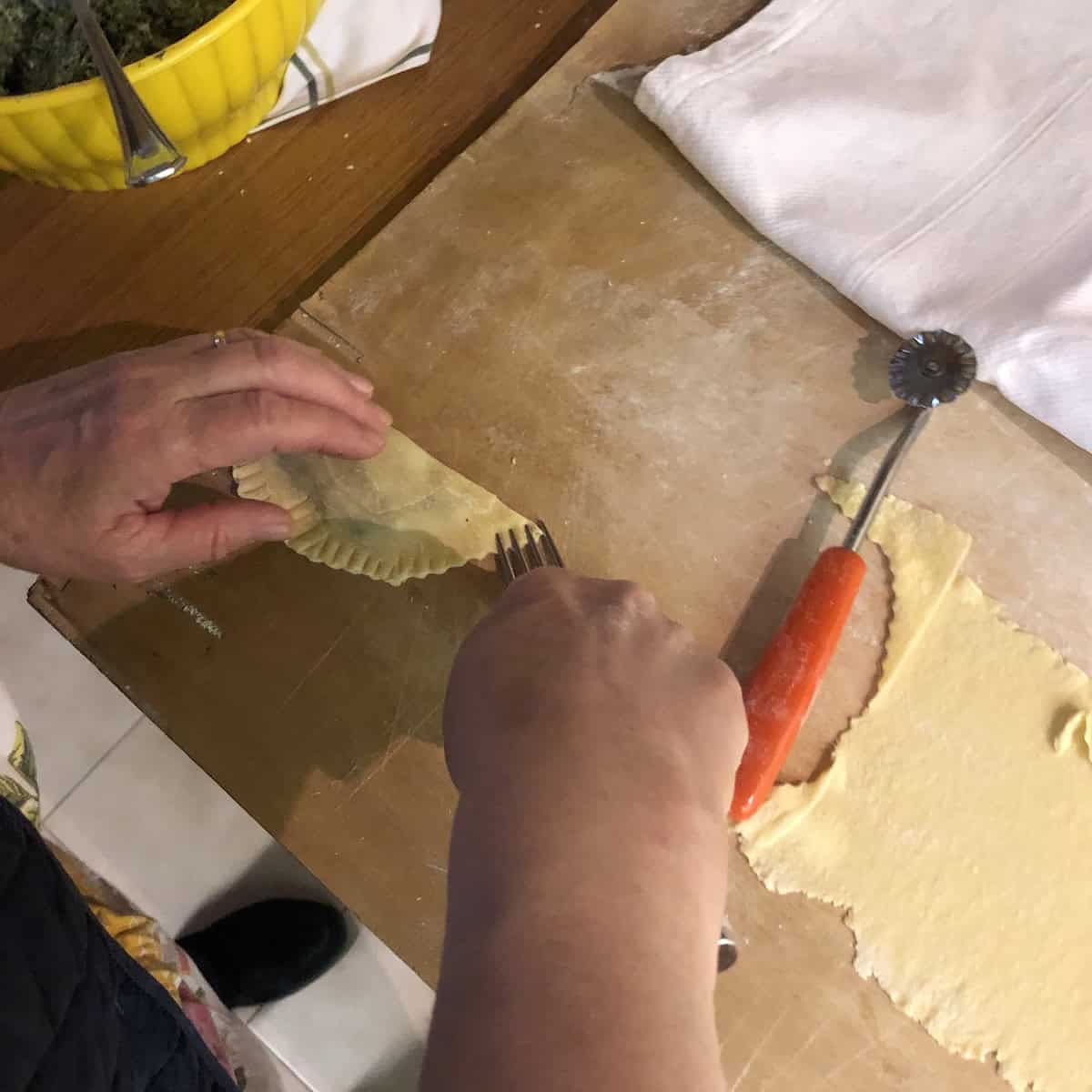
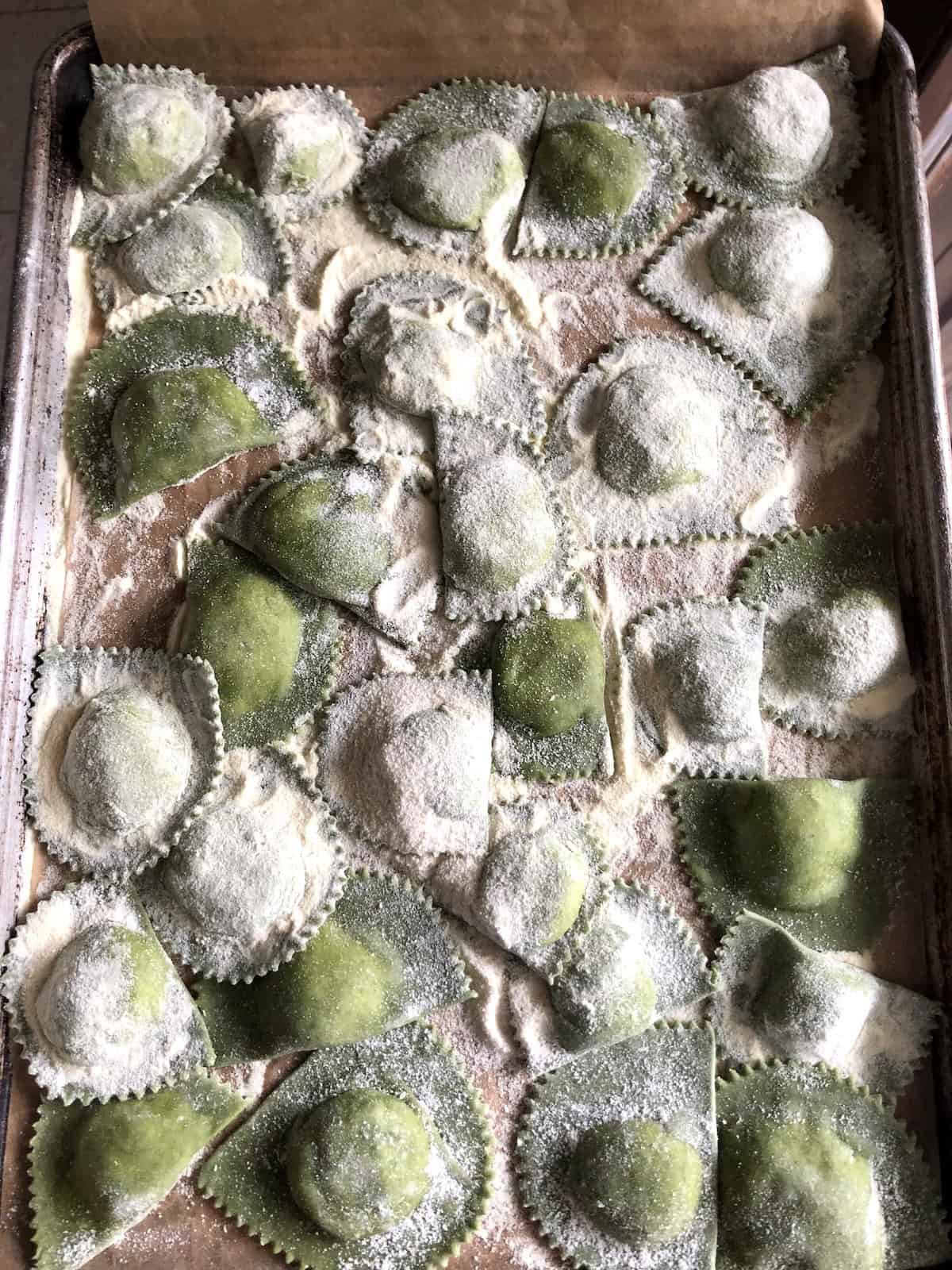
Step 8. Cut into your desired shape using a sharp knife, fluted pasta wheel, round cookie cutter, or ravioli stamp. Press the edges firmly to make sure they're fully sealed. If using a fork, crimp around the open edges. Transfer to a semolina-dusted, parchment-lined baking sheet as you work.
Do not let the ravioli overlap or touch each other, or they will stick together. Keep them in a single layer. Allow to rest for 10-15 minutes before cooking, or pop them into the freezer for meal prep.
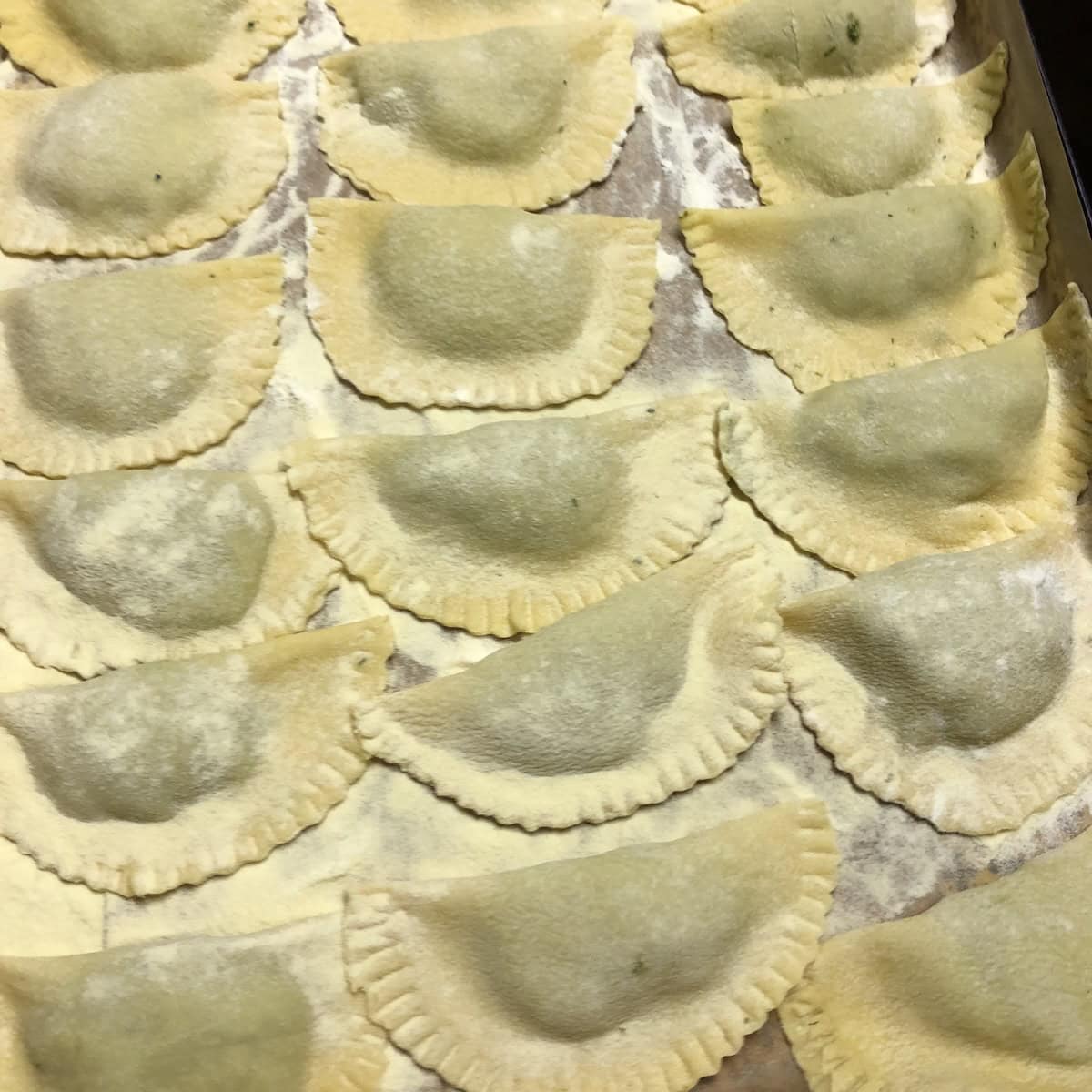
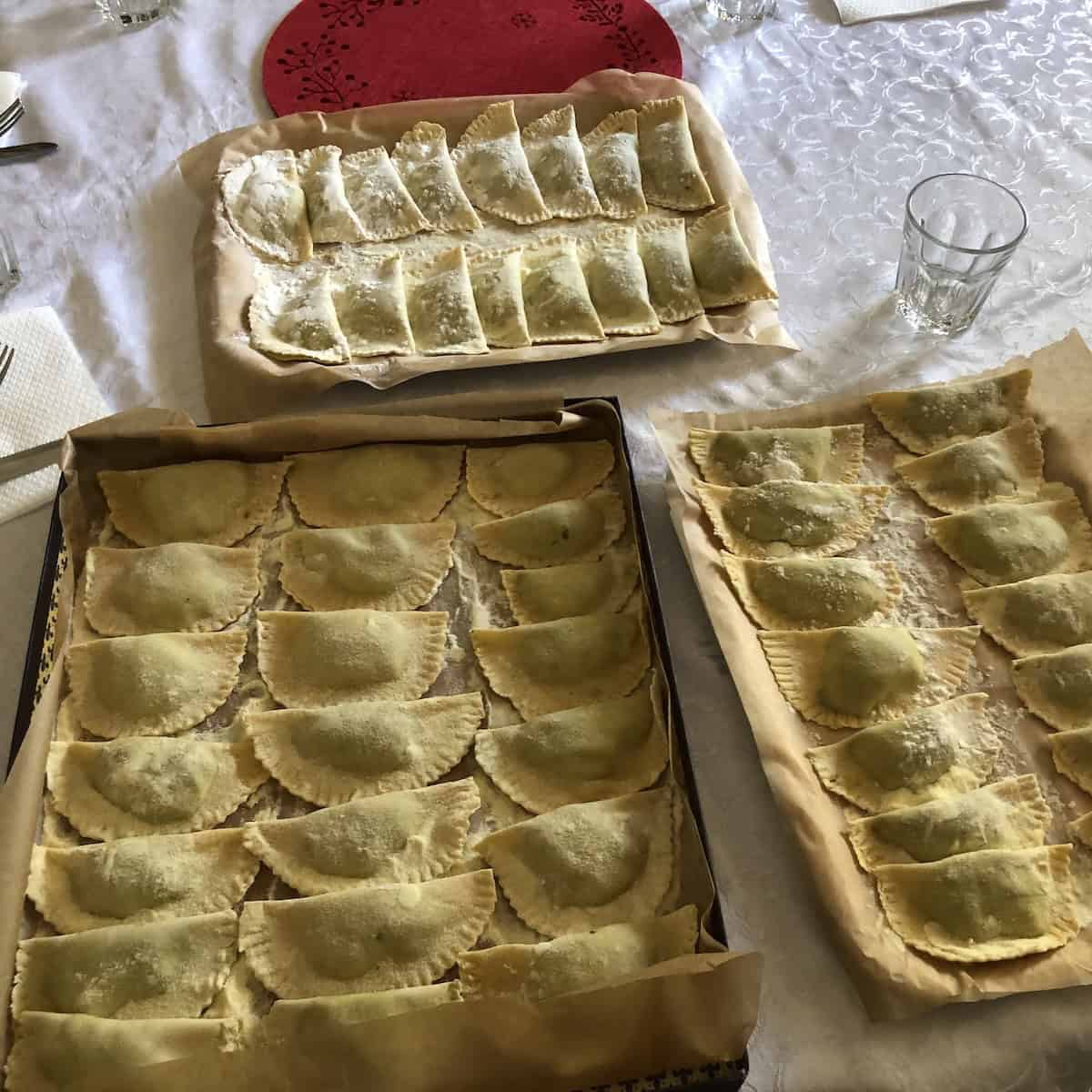
How to Shape Square Spinach & Ricotta Ravioli Photos
FYI, the images below are from a separate spinach and ricotta ravioli experiment (also without egg) using ricotta cheese that hadn't been strained and no egg, which ends up giving you ravioli that tastes really good, but has a texture that's too runny and not a pleasure to eat. But you'll find these photos useful for seeing another folding technique.

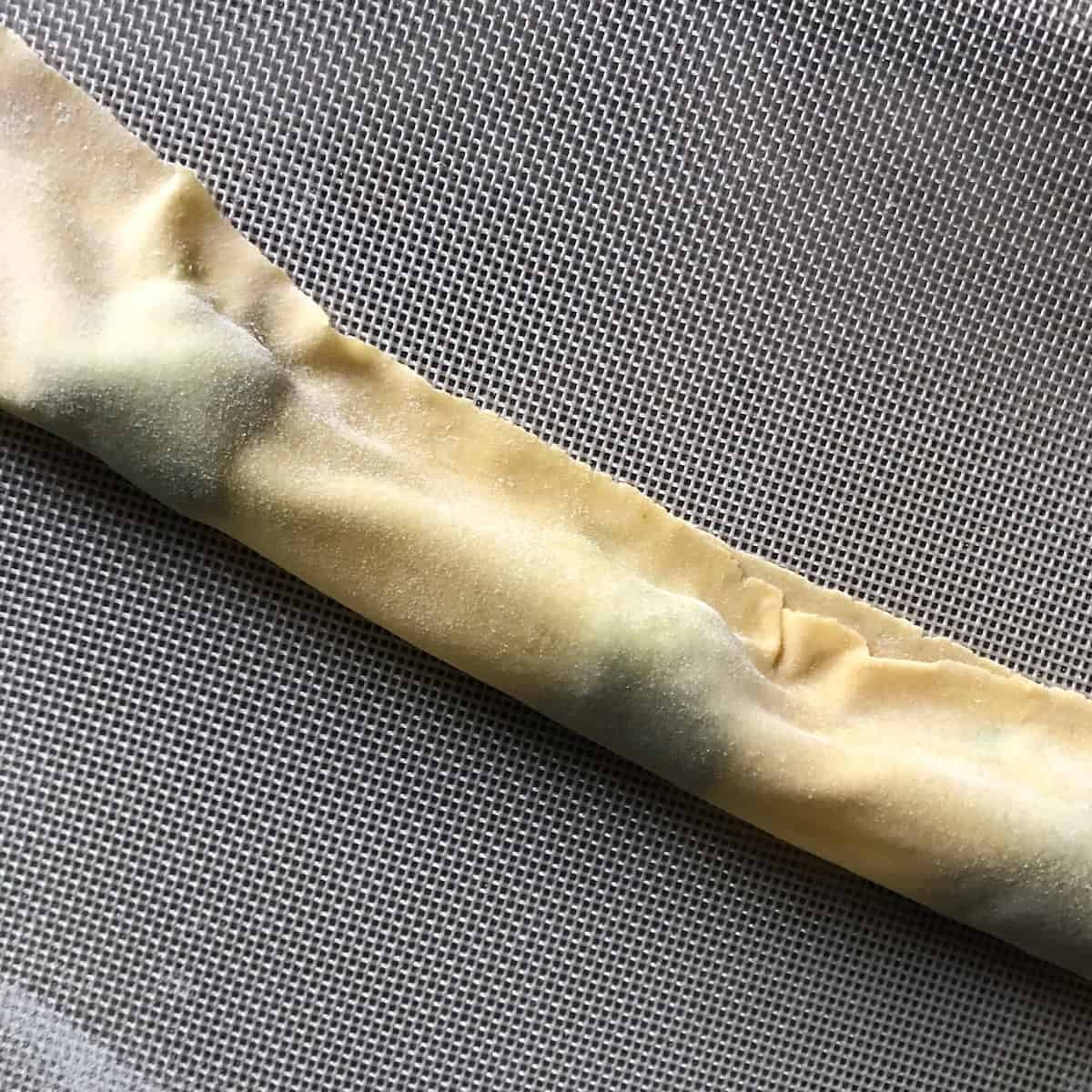

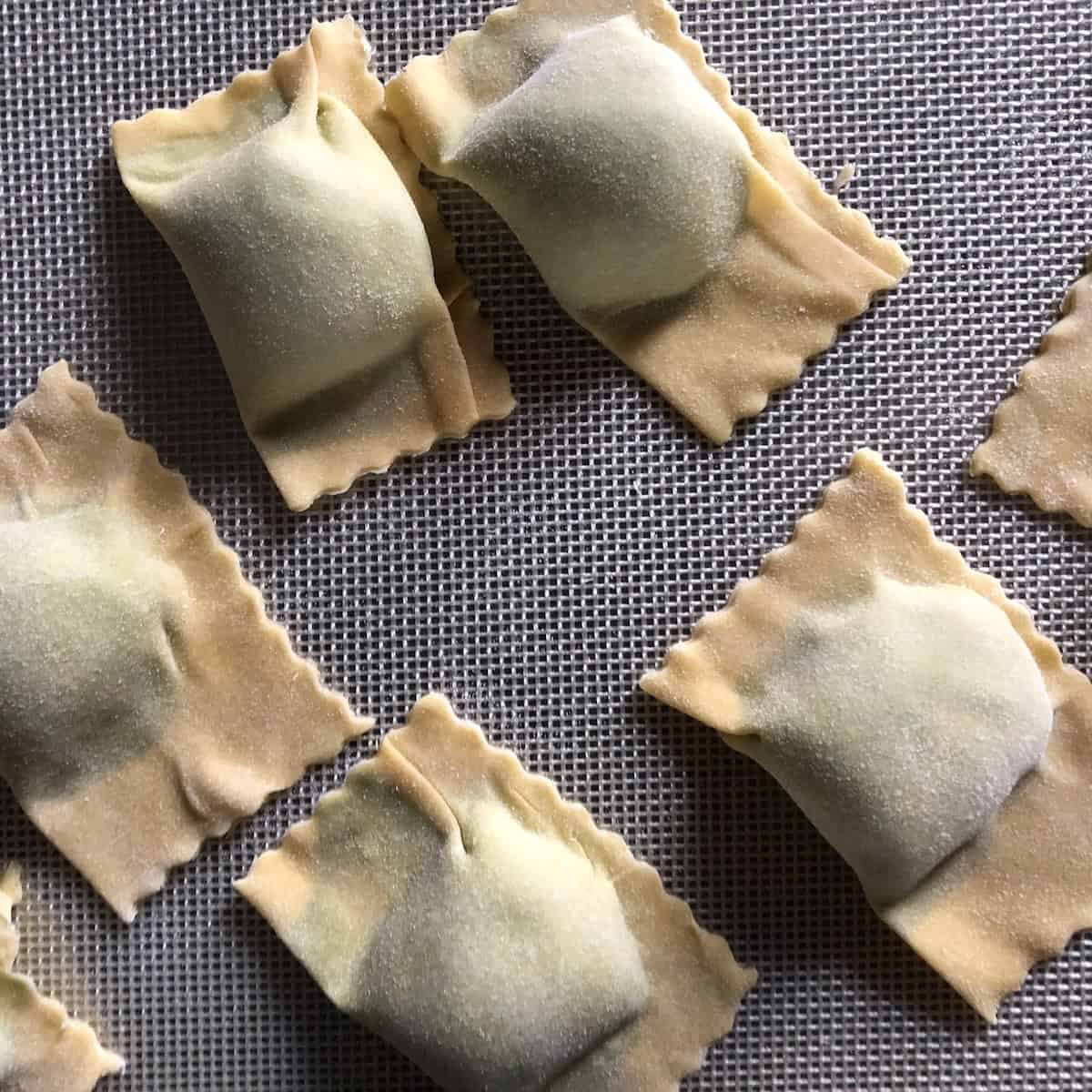

Making Spinach & Ricotta Ravioli (Using Green Spinach Pasta With a More Professional Look)
If you want a more professional ravioli look, you can use a pizza cutter or pasta wheel cutter (zig-zagged edges or not) to create clean edges before filling them. Then, create clean edges after you've pressed the air out and sealed them.

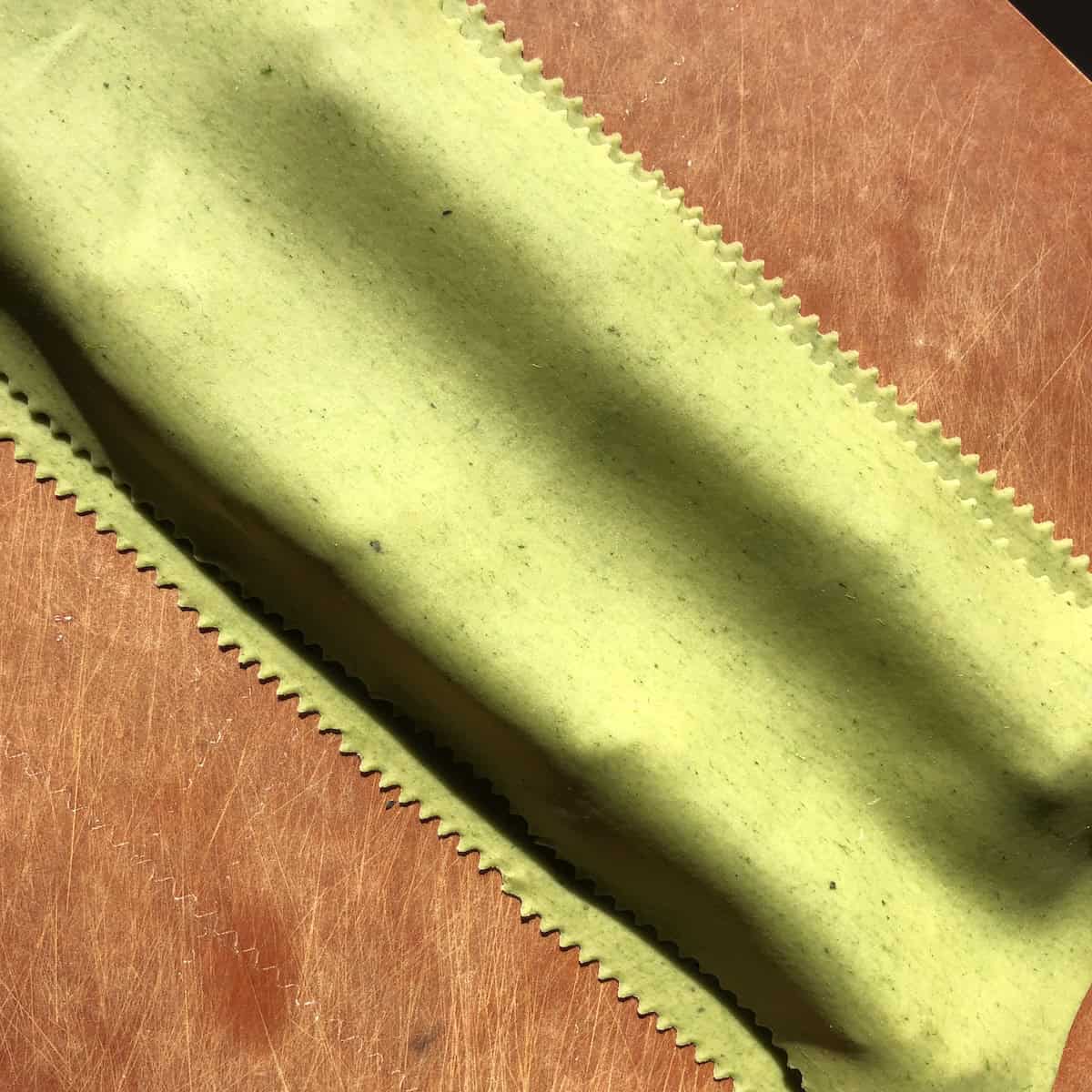
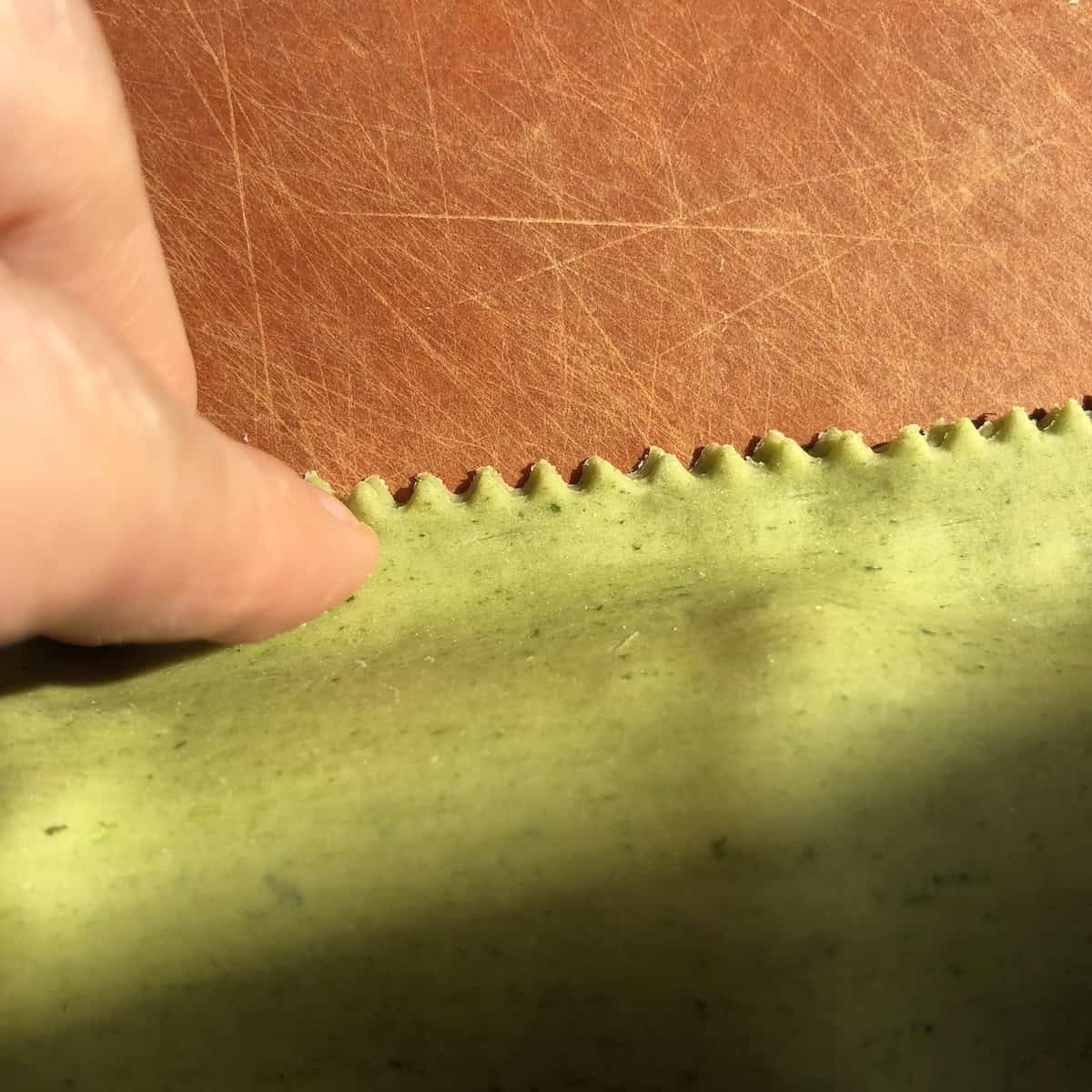
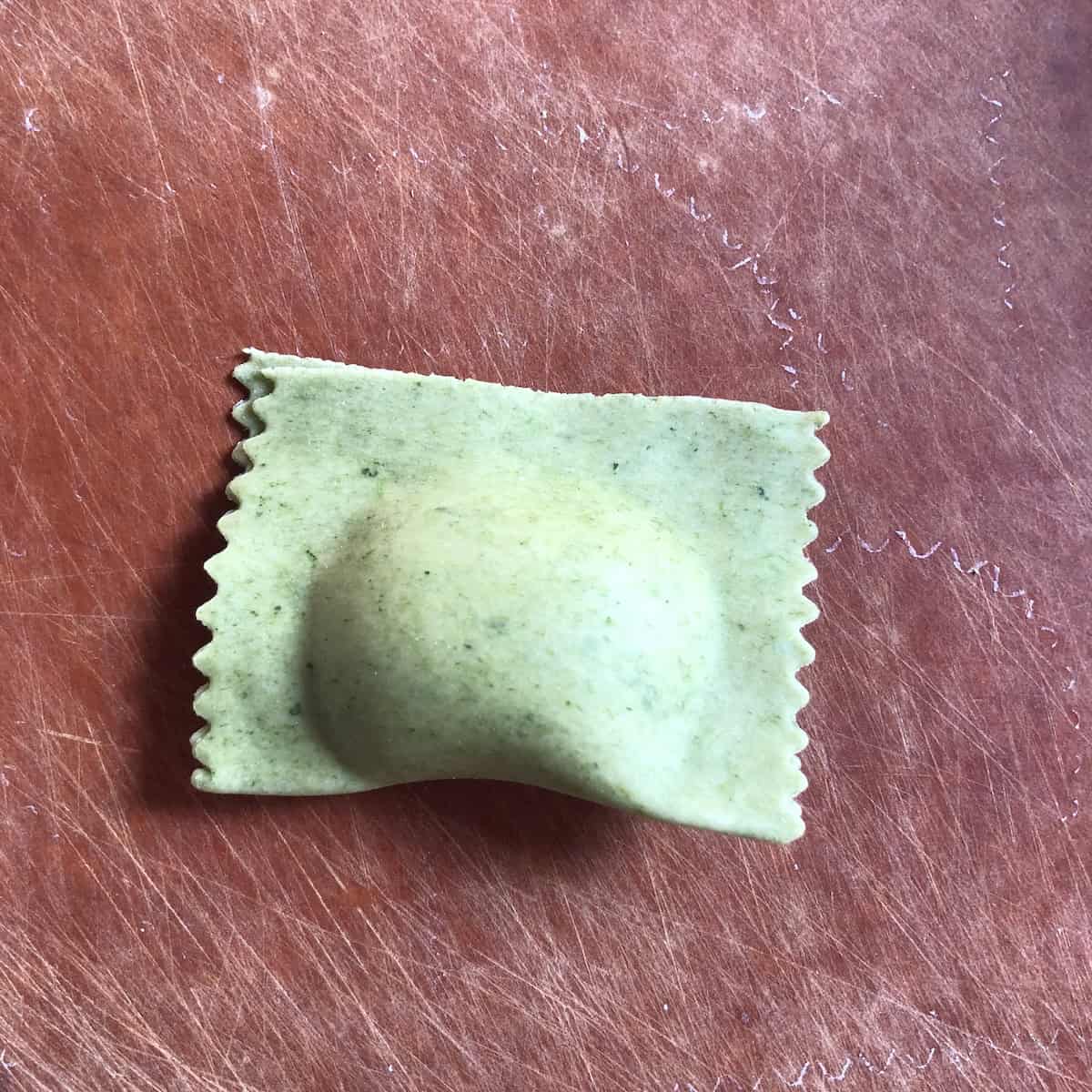

How to Cook Fresh Homemade Spinach and Ricotta Ravioli
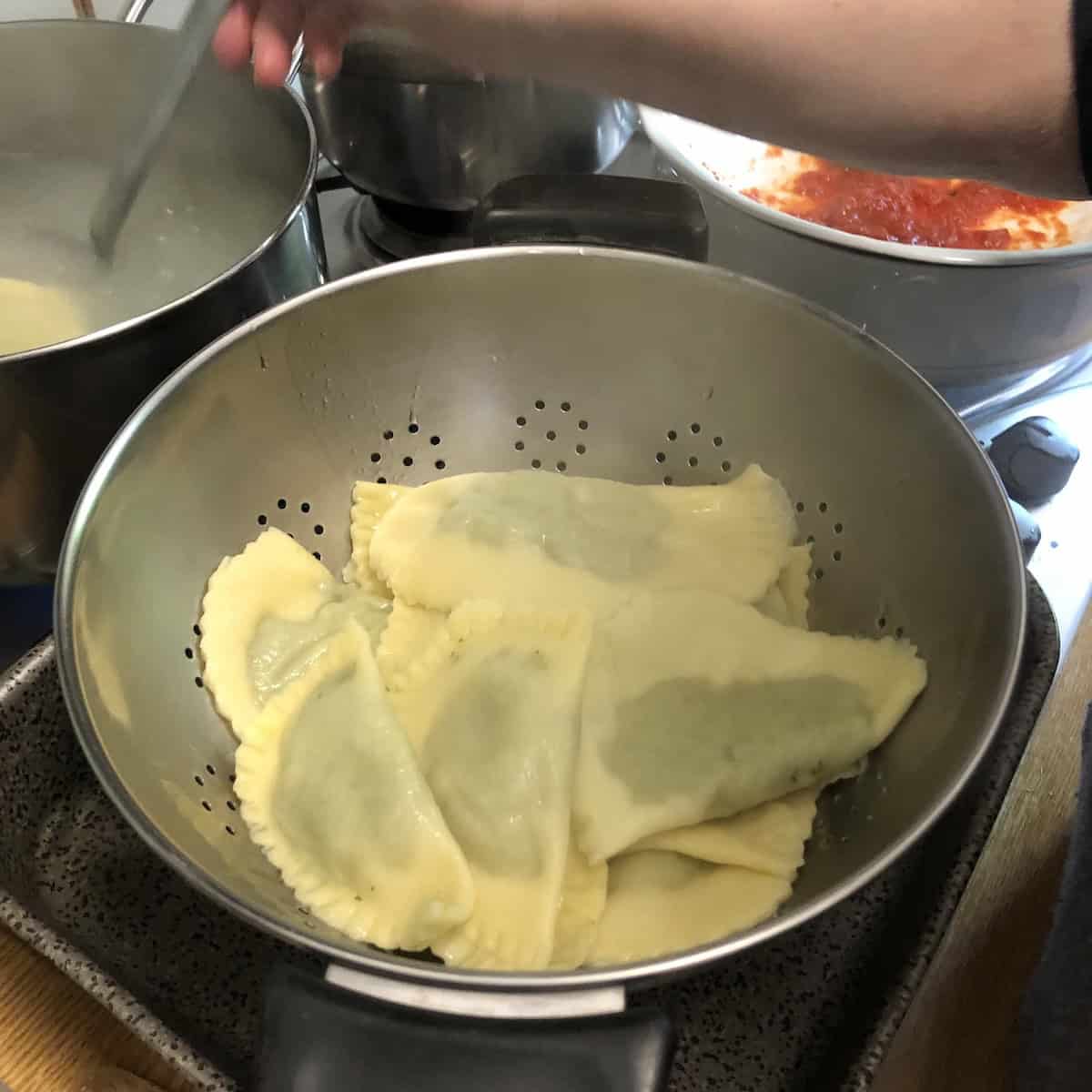
Step 1. Bring a large pot of generously salted water to a gentle boil (not a rolling boil, which can be too aggressive for delicate filled pasta). Carefully add the ravioli and gently stir to keep them from sticking to each other.
Cook for 2 to 5 minutes, depending on the thickness of your pasta, or until they float to the surface. Fresh pasta cooks incredibly fast compared to dried. Do not walk away.

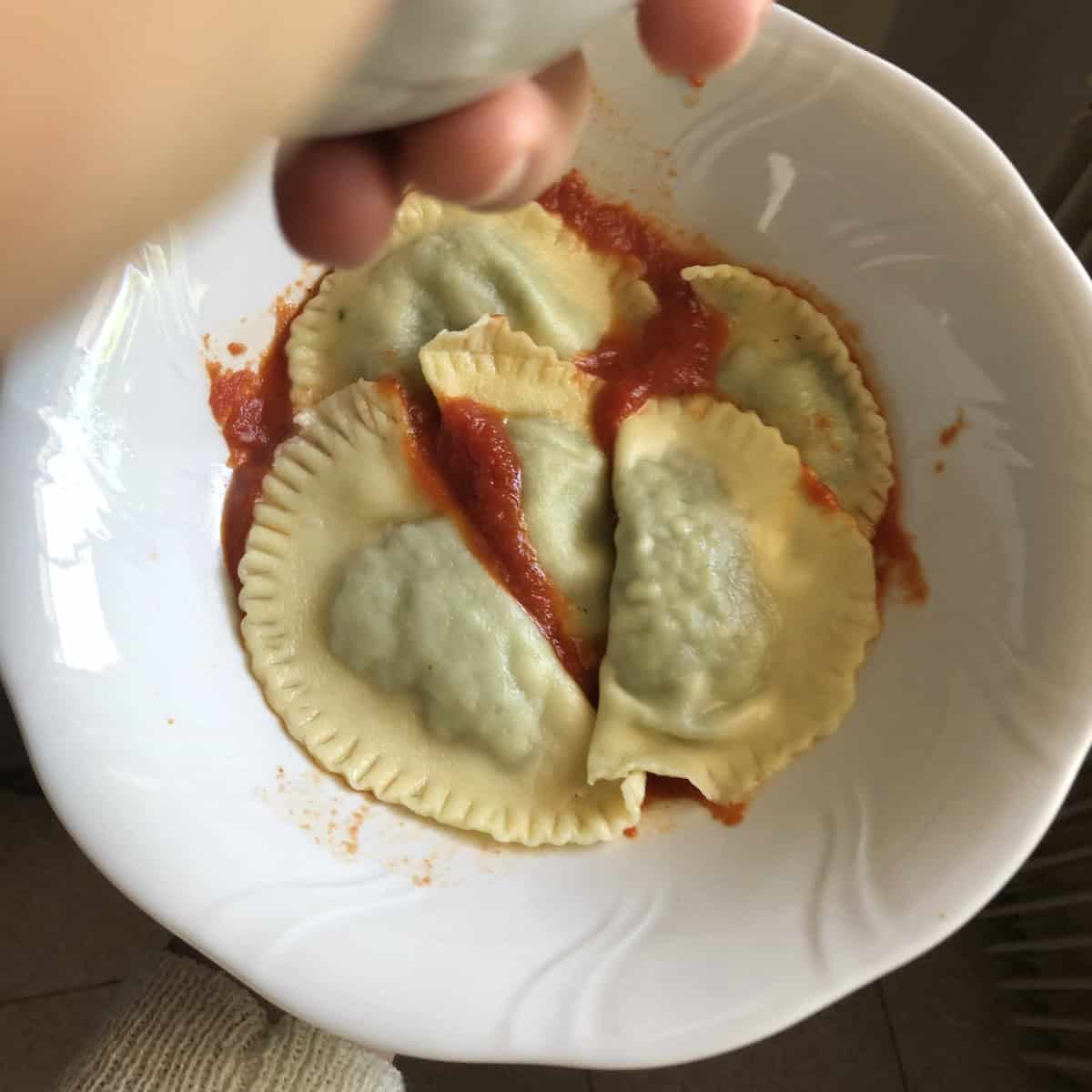
Step 2. Remove the ravioli with a slotted spoon or spider strainer, letting the water drain well. Transfer them directly to a warmed serving platter with a little sauce underneath or into a skillet with your sauce and toss to coat.
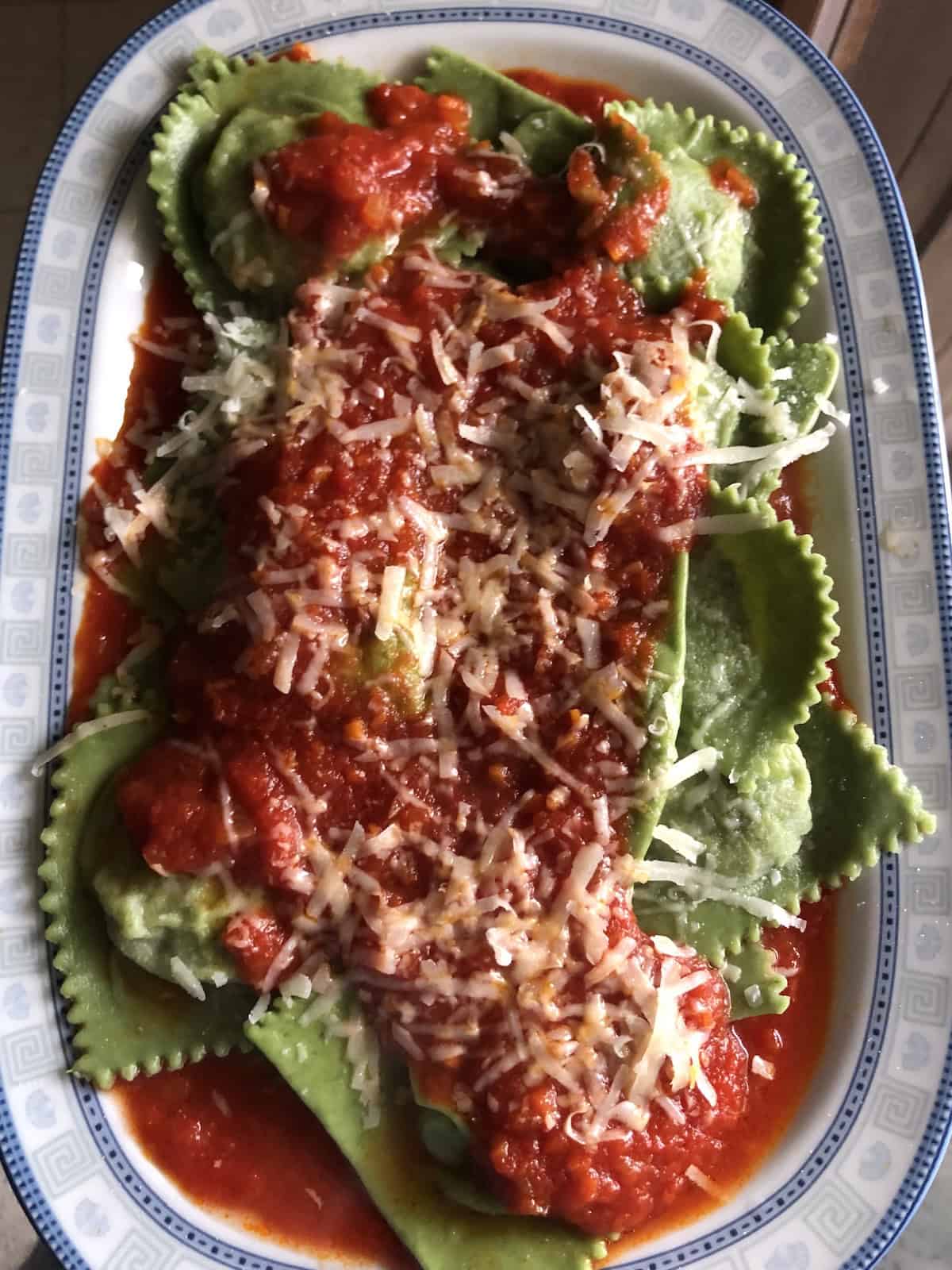
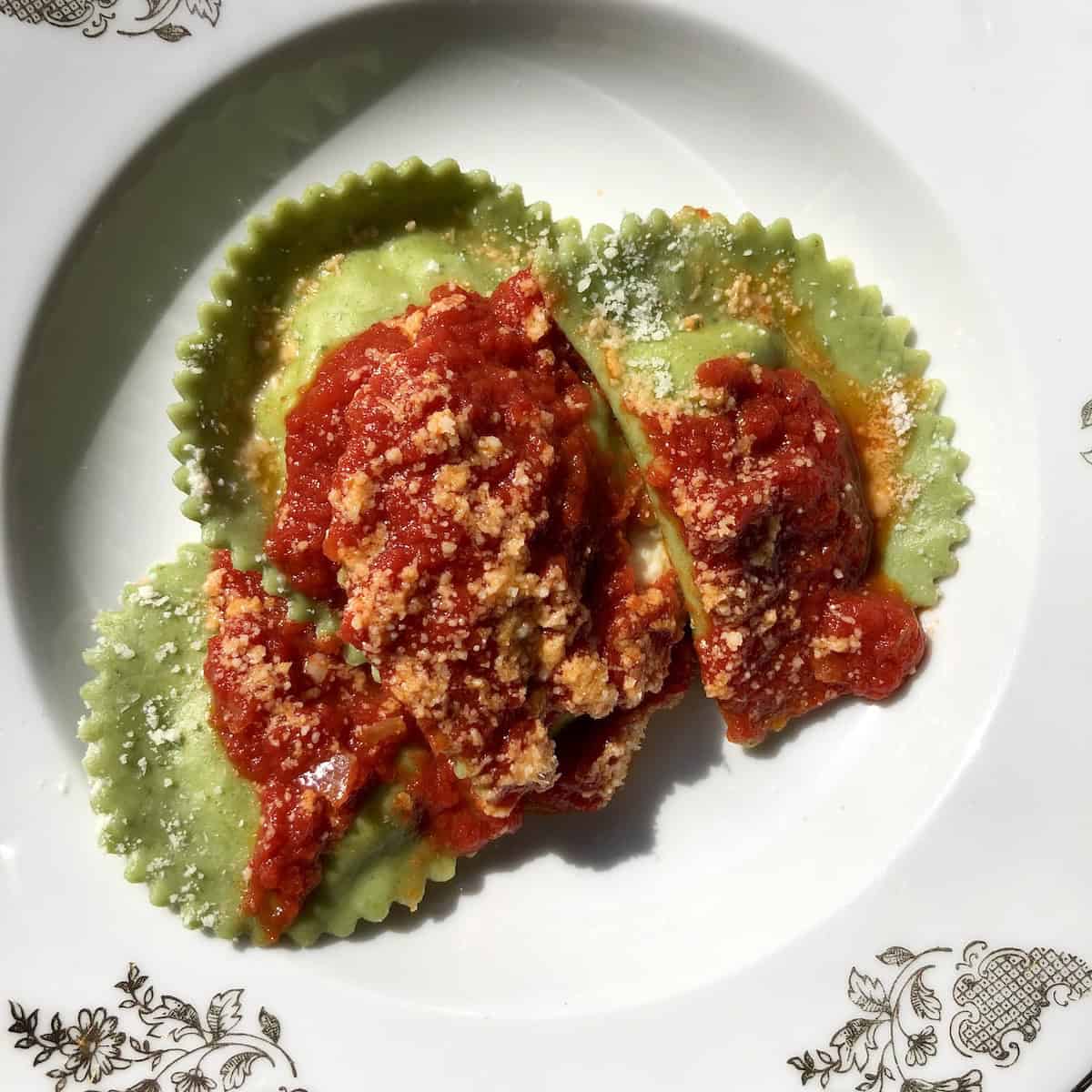
Spoon more sauce over the top, finish with a generous grating of aged Grana Padano, and serve immediately.
Cooking from frozen? Add 30 seconds to 1 minute of extra cooking time. No need to thaw first. Drop them straight from the freezer into salted boiling water.

What Sauce Goes with Spinach and Ricotta Ravioli?
This is one of the most common questions about ricotta ravioli, and the answer depends on how much you want the filling or the sauce to lead. Our favorites are the two most traditional Italian sauces paired with spinach and ricotta ravioli:
Traditional Sauces to Pair:
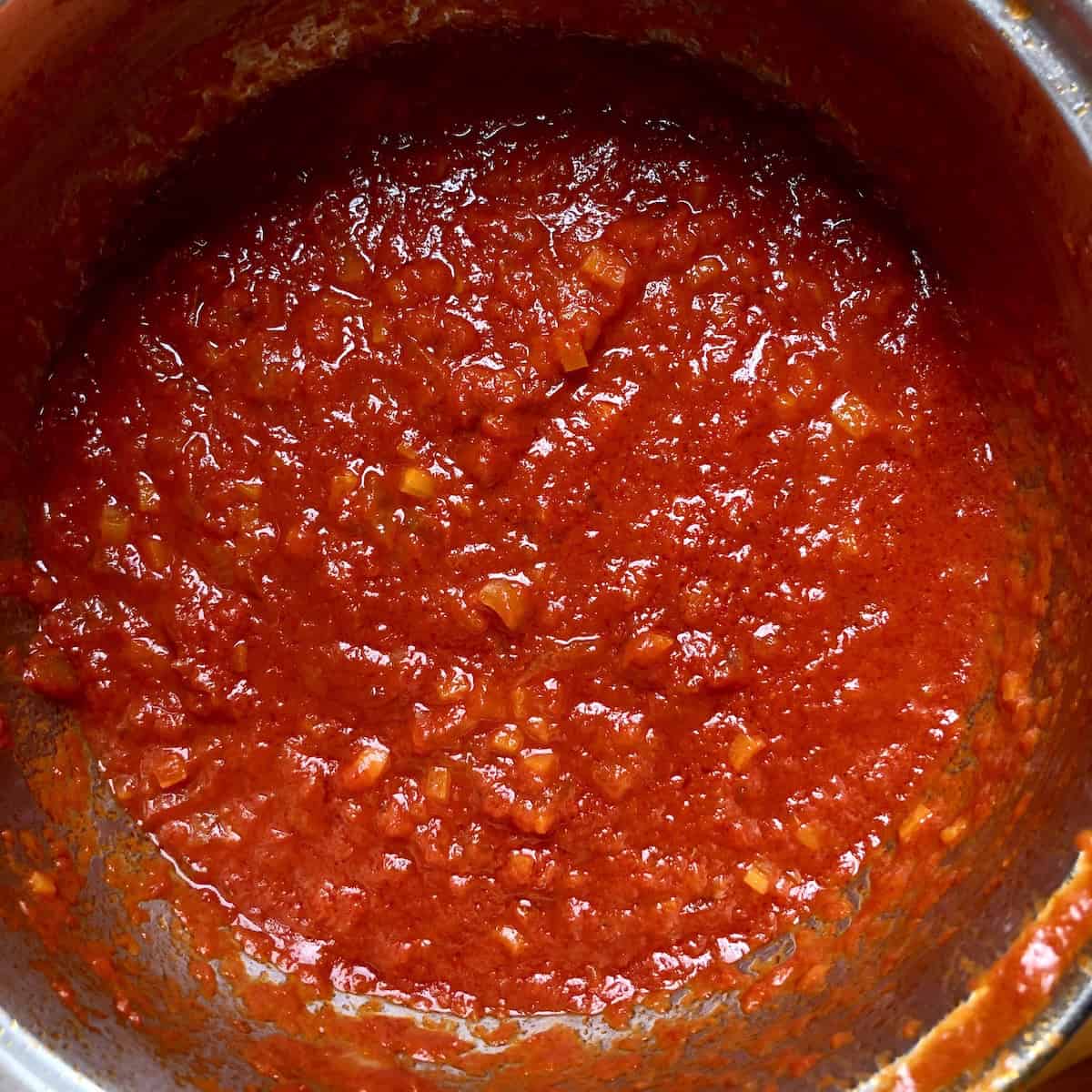
- Classic Italian tomato sauce is what Anna, Zia Linda, and Zia Gloria all serve(d) with theirs, and so do I. The acidity of a simple tomato sauce cuts through the richness of the cheese filling beautifully.
- Brown butter and sage sauce (burro e salvia) is another traditional Northern Italian pairing and tastes amazing for a lighter sauce option! - Melt 7 tablespoons (100g) of butter in a skillet over medium heat, add about 10 fresh sage leaves, and let them sizzle until the leaves are fragrant and just starting to crisp at the edges. Add the drained ravioli to the skillet and toss to coat. Finish with grated Grana Padano.
Non-Traditional Sauces to Pair:
- Tomato cream sauce (salsa rosa), like the one from my lobster ravioli recipe works beautifully here too. The mascarpone-based sauce mirrors the creaminess inside the ravioli.
- Aglio e olio, or garlic and olive oil with spicy peppers, keeps things light and lets the filling shine, but adds a nice kick of heat that contrasts nicely with the creamy filling.
- Lemon butter sauce adds brightness that pairs especially well with the spinach in the filling.
For a textural garnish, pangrattato, known in Italian as il parmigiano dei poveri (the Parmesan of the poor or "poor man's parmesan"), adds crunch. Toast stale breadcrumbs in garlic-infused olive oil, and if you want, add grated cheese like Pecorino, Grana Padano, fresh herbs, or lemon zest. Whatever sauce you choose, go easy. This filling is flavorful enough that it really can stand mostly on its own.
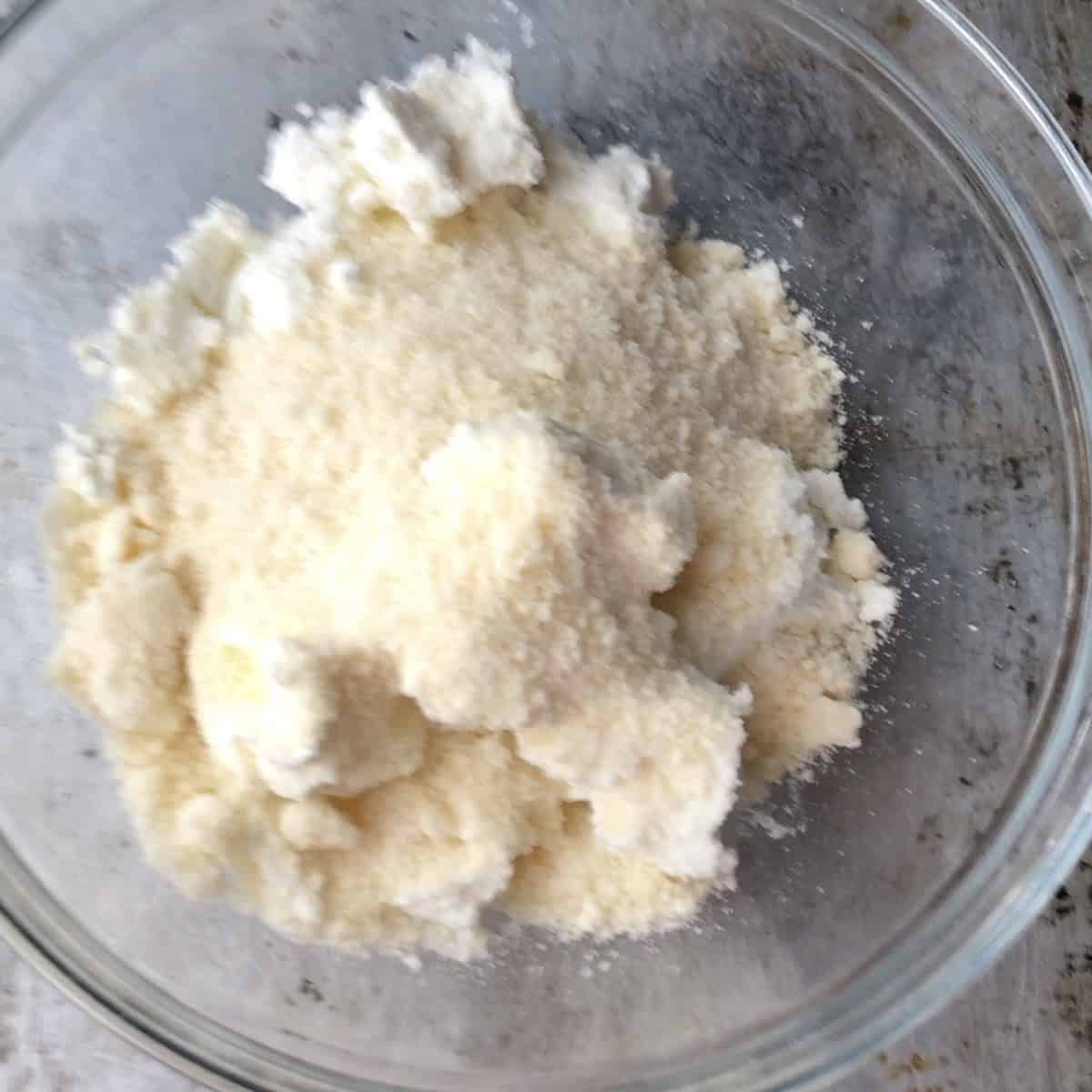
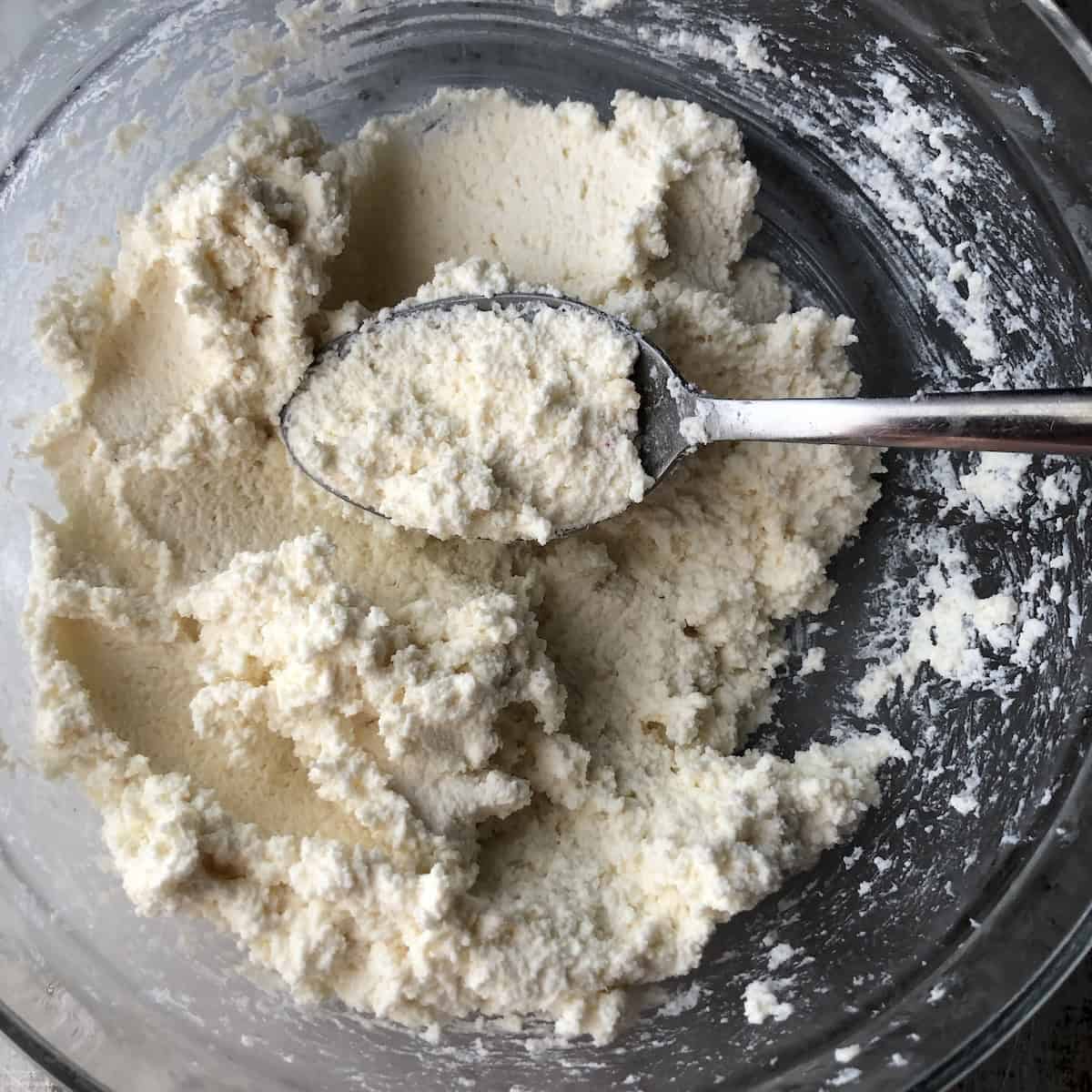
Strained Ricotta vs. Unstrained Ricotta for Ravioli Filling (in Photos)
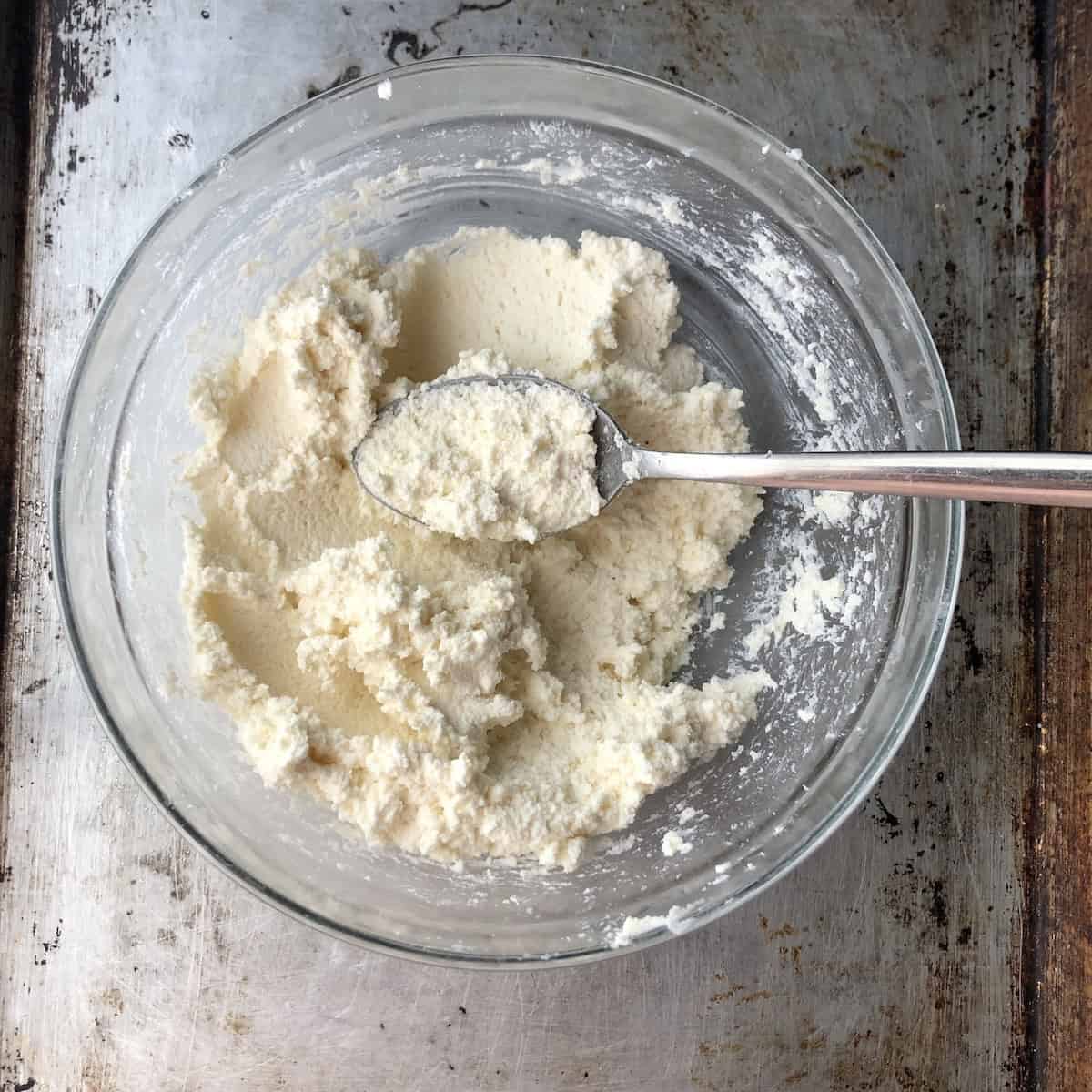
The ricotta mixture on the left is using unstrained ricotta, and it's too creamy to use without adding an egg as a binder. The strained ricotta cheese mixture on the right uses strained ricotta and has the perfect texture for ravioli filling without adding any egg.

Substitutions
- No mascarpone? Leave it out entirely. Anna's traditional version doesn't include it, and it's still delicious. The filling will be slightly less creamy, but it absolutely works and tastes great! Do not substitute cream cheese. The flavor profile is wrong for this filling.
- Grana Padano vs. Parmigiano-Reggiano: Either works. 30-month Aged Grana Padano DOP is what we use most often in this recipe (it's less sharp, a bit sweeter, and nuttier, and is a specialty here in Northern Italy), but Parmigiano-Reggiano is also obviously delicious. Use whichever you have or opt for a high-quality American Parmesan if these options are out of your budget or hard to find.
- Fresh spinach instead of frozen: You'll need roughly 1 ½ pounds (680g) of fresh spinach to yield the equivalent of 14 ounces (625g) frozen. See the Fresh vs. Frozen Spinach section below for two easy Fresh Spinach methods. Frozen is just easier, and what most Italians I know reach for when making filled pasta.
- Don't substitute cottage cheese for ricotta. The taste, texture, and production process are completely different. Ricotta (meaning "recooked" in Italian) is made by reheating leftover whey and milk (or whey alone) from cheesemaking until fine, delicate curds form. Cottage cheese is made from milk curds that are cut, cooked, and rinsed, producing a lumpier, wetter, runnier, tangier cheese that doesn't melt or become creamy the way ricotta does when heated. It would make a lumpy filling that won't hold together in ravioli. It also has 3-4 times the sodium of Ricotta if that's a concern.
How to Use Fresh Spinach for This Spinach and Ricotta Ravioli Filling
This recipe calls for using frozen spinach, which is what I use most often and what most Italian home cooks I know reach for when making filled pasta. It's already blanched during processing, so all you need to do is thaw it and sauté it in a dry skillet to remove the water (no squeezing required).
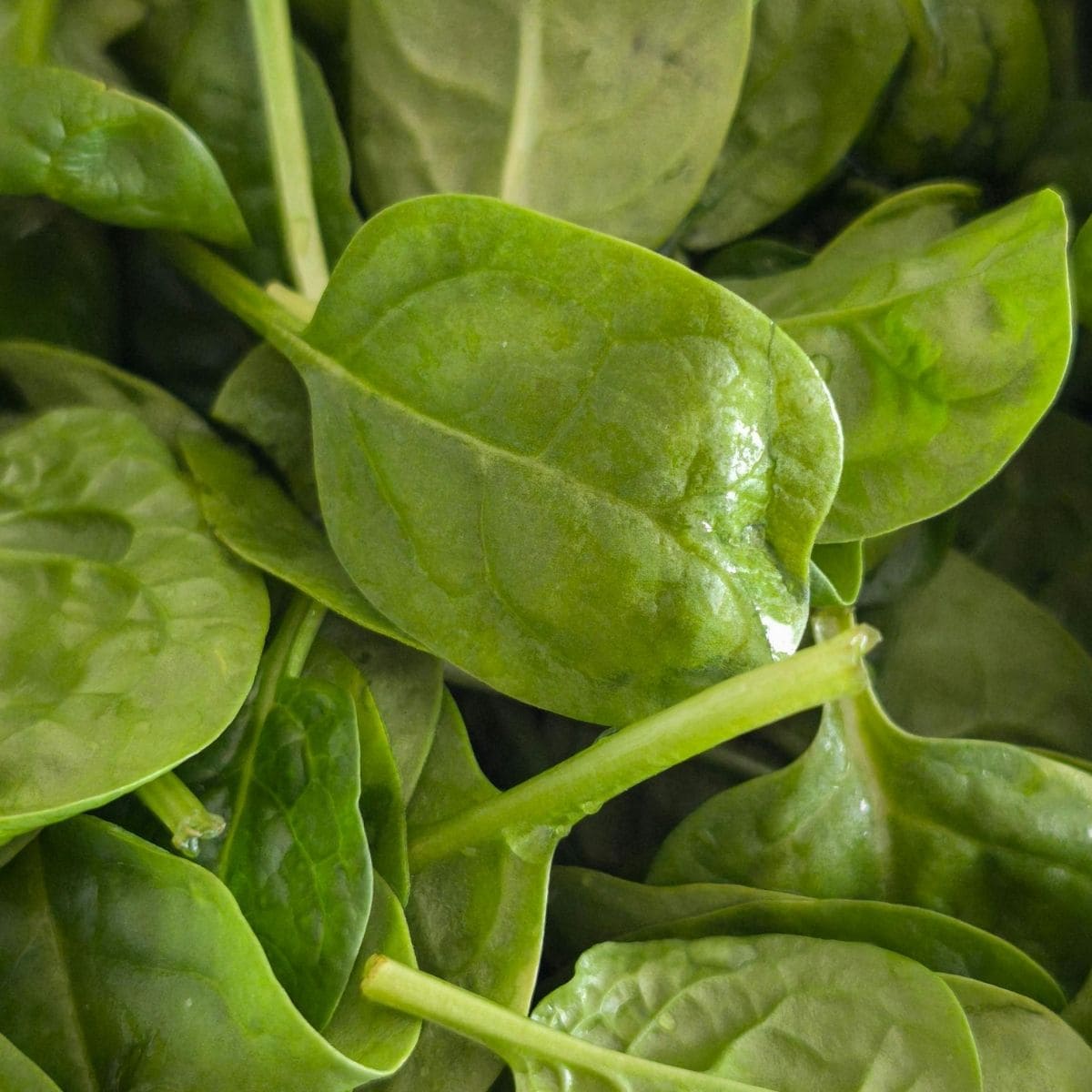
If using fresh spinach, baby spinach is the way to go. No woody stems to pick through! If you prefer fresh spinach, you have two options.
Option 1: Sauté Method (Faster)
Wash roughly 1.5 pounds (680g) of fresh spinach and shake off the excess water. Working in batches if needed, add the spinach directly to the same skillet you fried the garlic clove in, set over medium heat. Toss and stir until fully wilted, then increase the heat to medium-high and cook, stirring often to prevent the spinach from sticking to the bottom of the pan.
Once no more traces of liquid remain, transfer it to a bowl or plate and let it cool completely to room temperature. Chop it by hand with a knife or pulse it a few times in a food processor. No blanching, no ice bath. This is the faster method and saves you a step.
Option 2: Blanch and Shock Method
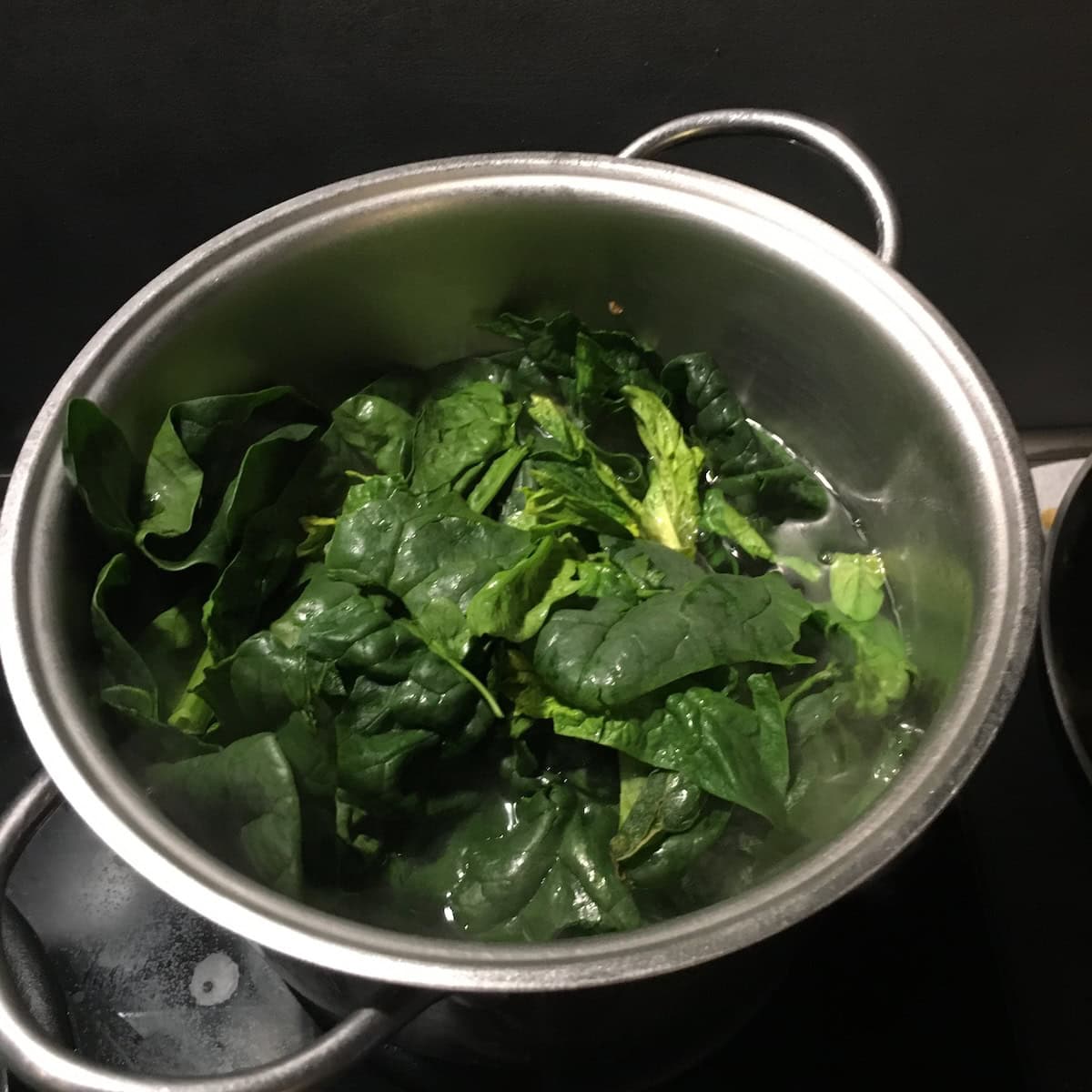
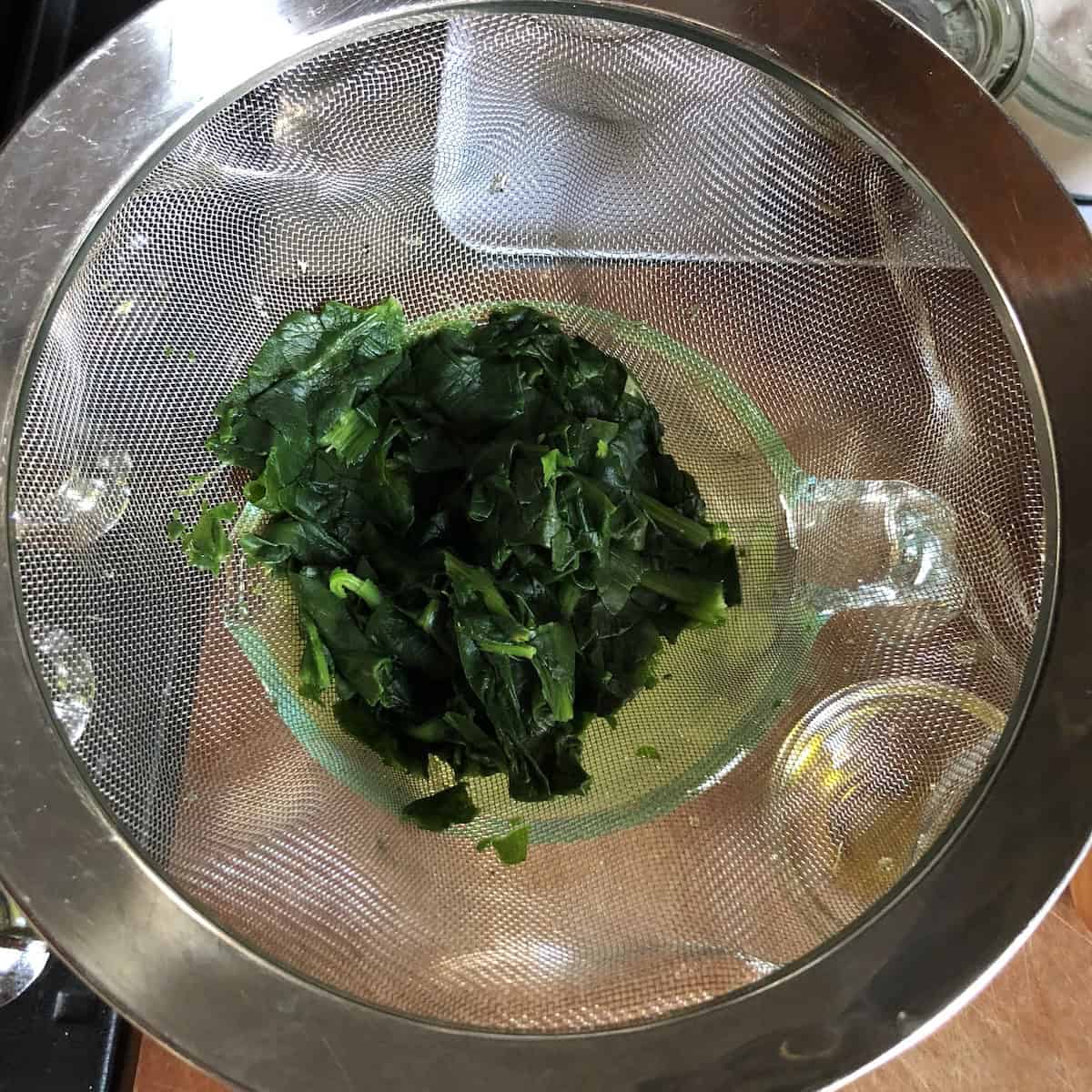
Bring a large pot of water to a boil. Add the fresh spinach and blanch for about 60 seconds, just until wilted and bright green. Immediately transfer it to a bowl of ice water to stop the cooking and lock in the color.
Once cooled, squeeze it with your hands to remove as much water as possible (or press it into a fine-mesh strainer, or through a clean towel or cheesecloth), then sauté it over medium-high heat in a dry skillet to cook off any remaining moisture.
Remove the dry spinach to a cutting board or food processor to chop it before adding it to the cheese mixture. This method preserves the brightest green color, which only matters if you want to see vivid green flecks of spinach in the filling.
Whichever method you use, the goal is the same: the spinach must be completely dry before it goes into the filling. Any residual water can make the filling too runny and/or weaken the integrity of the pasta from the inside out.
Equipment
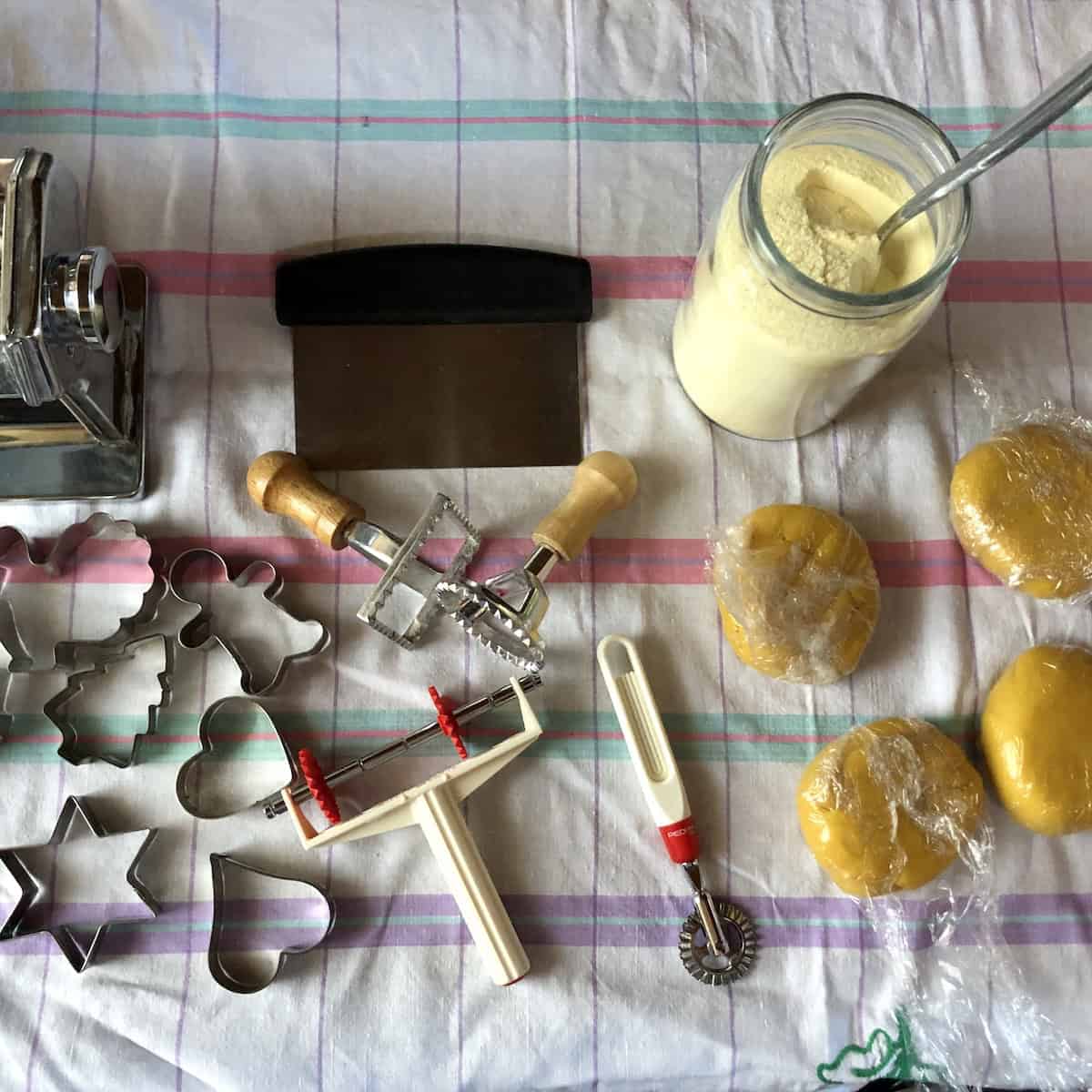
- Pasta machine (I use the Marcato Atlas 150 in Italy and my Imperia in the States) for rolling even, consistently thin sheets. A KitchenAid pasta roller attachment also works well. No pasta machine? A rolling pin and some arm power will get you there 😉.
- Fine-mesh sieve, cheesecloth, or a clean linen towel for straining ricotta
- Microplane grater for grating whole nutmeg (and/or a block of Grana Padano or Parmesan if you're not using pre-grated cheese).
- Fluted pasta wheel, ravioli stamp, or cookie cutter for shaping. A sharp paring knife works too for simple squares. If you own a ravioli mold or press, it'll speed up the process and produce uniform shapes.
- Parchment-lined baking sheet dusted with semolina flour for holding finished ravioli and for freezing them on the tray for meal prep.
How to Store and Freeze Homemade Spinach and Ricotta Ravioli
Same-day cooking:
Keep assembled ravioli on a semolina-dusted, parchment-lined baking sheet in the refrigerator until you're ready to cook. Use within a few hours. Filled pasta with a wet filling like ricotta shouldn't sit in the fridge much longer than that, especially if the pasta is on the thinner side, as the moisture from the filling will begin to soften and weaken the pasta dough.
Freezing (the best option for make-ahead):
Place assembled ravioli in a single layer on a semolina-dusted, parchment-lined baking sheet, making sure none of them overlap or touch. Freeze until completely solid (about 1 to 2 hours), then transfer the frozen ravioli to an airtight freezer bag or container.
Store in the freezer for up to 2 to 3 months. Cook directly from frozen in salted boiling water, adding about 30 seconds to 1 minute of extra cooking time. No thawing needed.
Refrigerating (my least favorite option):
Place on a semolina-dusted tray, cover with a clean tea towel, and refrigerate for up to 1 day. I don't love this method for spinach and ricotta ravioli because the filling's moisture can seep into thin pasta and weaken the dough or the seal, making them prone to tearing during cooking.
If your dough is rolled to #6 on an Atlas Marcato, you'll probably be fine. Rolled thinner to #7? Freeze them instead. I just don't take the chance.
Cooked leftovers:
Store in an airtight container in the refrigerator for up to 3 days. Keep the sauce separate if possible to prevent the pasta from going soggy. Reheat gently in a skillet with a splash of sauce or EVOO. Last resort, reheat it in the microwave in short intervals.

Serving Suggestions
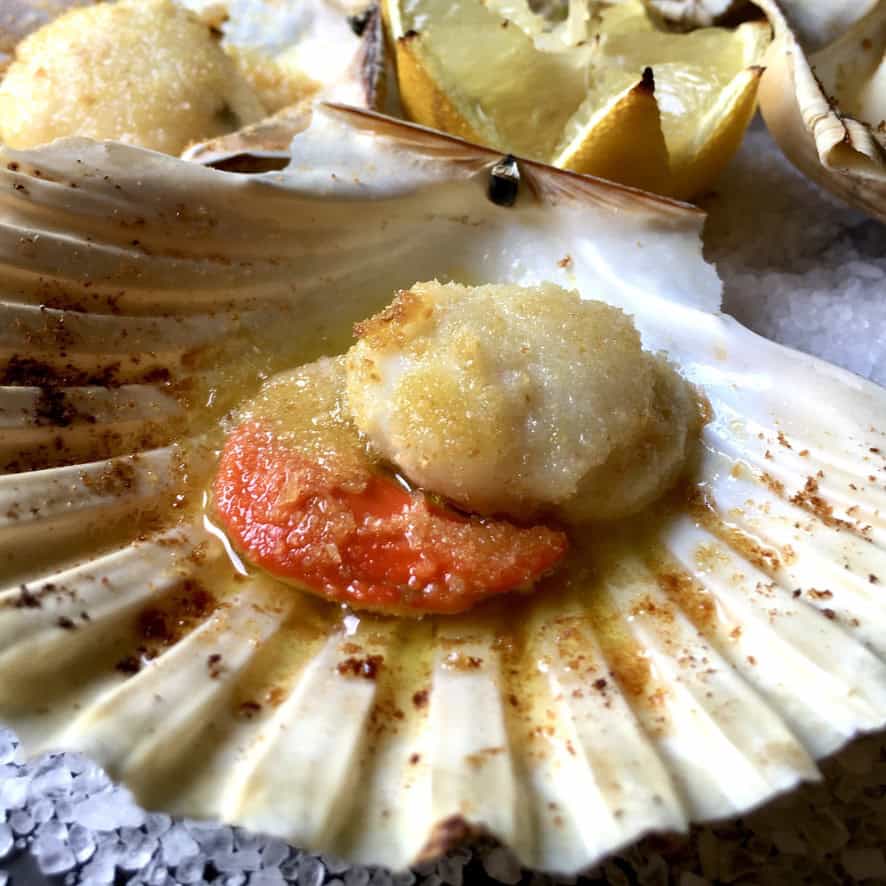
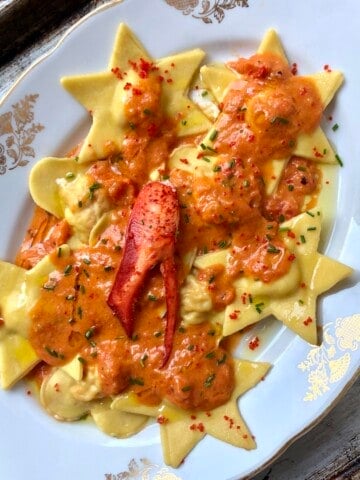
This ravioli is rich enough to be the main event, so keep your appetizers and sides light. A special occasion appetizer might include Scallops au Gratin (the Italian way), which takes just minutes to prep and cook.
And our favorite sides include a simple green salad with a bright lemon-tomato vinaigrette, sautéed carrots and asparagus, green beans, or a plate of roasted seasonal vegetables, all of which work well. Add a piece of crusty Italian bread for soaking up any remaining sauce on the plate.
For wine, a light-bodied white like Sancerre, Gewurztraminer, Pinot Grigio, Pecorino (from Abruzzo), Tarramoto from Sicily, or Metedo Classico sparkling from the Veneto complements the cheese filling without overpowering it.
For portioning, plan on about 6 to 8 medium-sized ravioli per person as a main course, or 4 to 5 as a first course (primo piatto) if you're serving it Italian-style before a second course (secondo).

Top Tips for Perfect Spinach Ricotta Ravioli
- Strain your ricotta. I cannot stress this enough. Wet ricotta will ruin your filling and your ravioli filling texture. If you're short on time, wrap it tightly in cheesecloth, place it in a fine mesh strainer over a bowl, and press it with a heavy plate for at least an hour. Overnight is better. If you don't want to strain your ricotta, use an egg to act as a binder.
- Work quickly once the pasta is rolled. Fresh pasta dries out fast, especially in dry or warm kitchens. Keep unused dough and rolled sheets covered with a clean, damp towel or plastic wrap while you assemble.
- Press out ALL air before sealing. Trapped air expands in boiling water and can cause your ravioli to tear open. Work from the center of each mound outward, pushing air toward the edges as you seal.
- Don't overstuff. About 1 tablespoon of filling per ravioli is the sweet spot for medium-sized ravioli. Overstuffed ravioli are nearly impossible to seal properly, and they'll burst when freezing and cooking.


- Cook in gently boiling water, not a rolling boil. Aggressive boiling can tear delicate filled pasta. A gentle simmer with lazy bubbles is what you want.
- Drain well. Water clinging to the ravioli will dilute your sauce. Use a slotted spoon or spider strainer and let the water drip off before plating.
FAQ
A classic Italian tomato sauce, brown butter and sage, or a light tomato cream sauce all pair beautifully. The best sauce complements the creamy filling without overwhelming it. For a lighter option, try garlic and olive oil with a squeeze of lemon.
Fresh spinach and ricotta ravioli cook in about 2-5 minutes, depending on your pasta thickness, in gently boiling salted water. They're done when they float to the surface. If cooking from frozen, add 30 seconds to 1 minute. Fresh filled pasta cooks much faster than dried, so watch closely and don't walk away.
Yes, straining ricotta is essential. Wrap it in cheesecloth, suspend over a bowl, and refrigerate for several hours or overnight. Excess moisture makes the filling runny and weakens the pasta during cooking. If you skip straining, you'll need to add an egg to help bind the filling and compensate for the extra liquid, but the texture will be slightly different (more set and less creamy).
Yes, and freezing is the best make-ahead method. Place assembled ricotta ravioli in a single layer on a semolina-dusted, parchment-lined sheet pan and freeze until solid (1 to 2 hours), then transfer to freezer bags. They'll keep for up to 2 to 3 months. Cook directly from frozen with no thawing needed. Avoid refrigerating uncooked filled pasta with a ricotta-based filling overnight because the moisture will soften and weaken the pasta.
Flash freeze first, then store. Lay uncooked ravioli in a single layer on a semolina-dusted, parchment-lined baking sheet (no touching or overlapping) and freeze until solid. Transfer to airtight freezer bags or containers. This prevents them from clumping into an inseparable mass. Store for up to 2 to 3 months. Cook straight from frozen in salted boiling water.
Three things cause ricotta ravioli to burst: trapped air inside, weak seals, and a rolling boil that's too aggressive. Press out all air when sealing by working from the center of each mound outward. Use water on the edges to help the pasta adhere. Seal firmly with your fingers or a fork. Cook in gently simmering (not violently boiling) salted water.
No, and I'd strongly advise against it. The taste, texture, and production process are completely different. Ricotta (meaning "recooked" in Italian) is made by reheating leftover whey and milk (or whey alone) from cheesemaking until fine, delicate curds form.
You can also make ricotta at home by heating whole milk and cream with an acid like lemon juice or vinegar (recipe coming soon!). Cottage cheese is made from milk curds that are cut, cooked, and rinsed, producing a lumpier, wetter, tangier cheese that doesn't melt or become creamy the way ricotta does when heated. It would make a lumpy filling that won't hold together in ravioli. Ricotta is also significantly lower in sodium if that's a concern.
Plan on about 6 to 8 medium-sized spinach and ricotta ravioli per person as a main course, or 4 to 5 as a primo (first course) if you're serving it Italian-style before a second dish. This recipe yields enough to serve 4-5 people depending on the size of your cutter and how much filling you use per piece.


Let's Get Started!
Made this Recipe? We'd love for you to rate ⭐️ it and tell us how it went for you!
📖 Recipe
Homemade Spinach and Ricotta Ravioli Filling Recipe
- Total Time: 1 hour 35 minutes
- Yield: 4 to 6 Servings
- Diet: Vegetarian
Description
Homemade Italian spinach and ricotta ravioli filled with a creamy ricotta ravioli filling of strained ricotta, a touch of mascarpone, aged Grana Padano, sauteed spinach, and a quick blistered garlic paste for very subtle depth. No egg needed. This vegetarian fresh ravioli pairs beautifully with a classic tomato sauce, brown butter and sage, or simply good olive oil and freshly grated cheese.
Ingredients
For the Spinach and Ricotta Ravioli Filling:
- 1 heaping cup ricotta cheese (8.8 ounces), strained (250g)*see notes for straining instructions
- ¼ cup mascarpone cheese (60g) optional but highly recommended
- 2 ounces (⅔ cup) finely grated Grana Padano DOP, or more to taste (60g) (sub Parmigiano-Reggiano or American Parmesan) *see notes for increasing the amount if desired
- 14 ounces frozen spinach, thawed (400g) (sub approximately 1 ½ lbs / 680g fresh spinach)
- 1 very small garlic clove
- 1 teaspoon extra virgin olive oil, for frying the garlic (5g)
- ½ teaspoon sea salt (2g)
- freshly cracked black pepper, to taste
- freshly grated whole nutmeg, about 10-15 quick bursts on a Microplane grater
For Assembling & Serving:
- 1 recipe homemade pasta dough (see post for dough options)
- 1 recipe classic Italian tomato sauce, or favorite pasta sauce or brown butter and sage sauce
- Freshly grated Grana Padano or Parmigiano-Reggiano, for finishing
 Get Recipe Ingredients
Instructions
Make this Classic Pasta Sauce (or use your favorite recipe).
Make the Filling:
- Strain the ricotta in cheesecloth suspended over a bowl in the refrigerator for several hours or overnight. Transfer to a medium-sized mixing bowl.
- Partially thaw frozen spinach until you can cut through it with a knife to rough chop. Pulse in a food processor to the desired size (or chop by hand). Transfer to a dry skillet over medium-high heat and saute, stirring, until no moisture remains on the bottom of the pan. Cool to room temperature.
- Heat about a teaspoon of EVOO in a small skillet over medium heat. Fry the whole garlic clove until blistered and golden brown on both sides. Transfer to a cutting board and mash into a smooth paste with the back of a knife.
- To the bowl with ricotta, add mascarpone (if using), finely grated Grana Padano, salt, pepper, and freshly grated nutmeg (10-15 quick bursts on a Microplane). Mix with a spatula until smooth. Fold in the garlic paste and cooled spinach. Taste and adjust seasonings. Cover and refrigerate until ready to use.
Assemble the Ravioli:
- Roll pasta dough to desired thickness (setting #6 or #7 on a Marcato Atlas pasta machine, or thin enough to see a faint silhouette of your hand when held to light).
- Place about 1 tablespoon of filling onto the pasta sheet, spacing mounds about 2 inches apart. Brush water lightly around each mound if needed to help the pasta adhere.
- Fold the pasta over (or lay a second sheet on top) and gently press around each mound, working from the filling outward to push out trapped air. Air pockets cause ravioli to burst during cooking.
- Cut into desired shapes using a knife, fluted pasta wheel, cookie cutter, or ravioli stamp. Press edges firmly to seal. Transfer to a semolina-dusted, parchment-lined baking sheet in a single layer (do not let them touch or overlap). Rest for 30 minutes before cooking, or freeze for later.
Cook the Ravioli:
- Bring a large pot of generously salted water to a gentle boil. Carefully add the ravioli and gently stir to prevent sticking.
- Cook for 2 to 5 minutes, depending on pasta thickness, or until they float to the surface.
- Remove with a slotted spoon or spider strainer, draining well. Transfer to a warmed serving platter with sauce underneath, or directly into a skillet with sauce and toss to coat.
- Spoon additional sauce over the top, finish with freshly grated Grana Padano, and serve immediately.
Notes
- Feel free to increase the grated Grana Padano cheese (or Parmesan or Parmigiano) to 4 ounces (120g) if desired. The ⅔ cup measurement is not grated cheese that's been packed in, but rather added loosely.
- Ricotta straining time not included. Plan several hours or overnight.
- Sauce prep time not included. See linked sauce recipes.
- Pasta dough resting time (30 min) is included in the total but overlaps with filling prep.
- Assembly time varies by experience and batch size.
- If skipping ricotta straining, add one whole egg to the filling.
- Freeze extras on a semolina-dusted tray before transferring to bags.
- Cook from frozen without thawing, add 30 seconds to 1 minute.
- Prep Time: 1 hour 1 minute
- Rest Time: 30 minutes
- Cook Time: 4 minutes
- Category: Dinner
- Method: Boiling, Knead & Roll
- Cuisine: Italian
Nutrition
- Serving Size: ⅕ recipe
- Calories: 560
- Sugar: 4g
- Sodium: 575mg
- Fat: 27g
- Saturated Fat: 12g
- Unsaturated Fat: 15g
- Trans Fat: 0g
- Carbohydrates: 56g
- Fiber: 4.5g
- Protein: 24g.
- Cholesterol: 156mg

Food Safety
- Wash hands thoroughly before making pasta dough and after handling raw eggs.
- Do not taste raw pasta dough, as it contains raw eggs which can carry Salmonella.
- Keep ricotta-based filling refrigerated until ready to use. Do not leave dairy-based fillings at room temperature for more than 2 hours.
- Store cooked ravioli in the refrigerator within 2 hours and consume within 3 days.
- If freezing, use freezer-safe containers and consume within 2 to 3 months for best quality.


Kelly Leding says
An easy, creamy spinach and ricotta ravioli filling anyone can make using frozen or fresh spinach!