

Mushroom risotto is one of the cheapest restaurant-quality Italian meals you can cook at home, and it's really easy to make! In this post, I share the traditional Italian methods I've learned while living here in Italy for making the creamiest mushroom risotto using any mushrooms you've got (fresh, frozen, wild, dried, or canned seasoned mushrooms in oil).
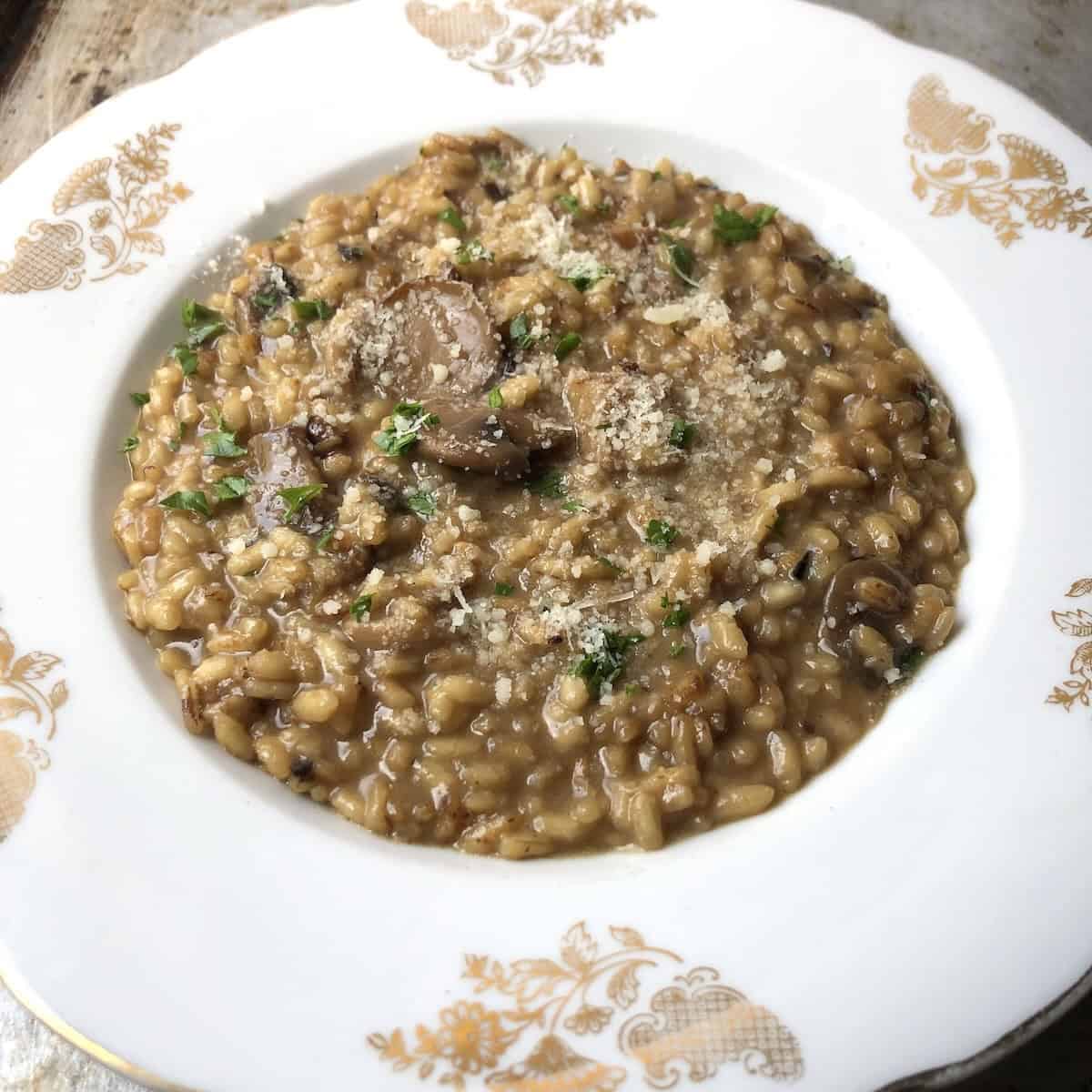
This post shows you how savvy Italian home cooks and restaurants make mushroom risotto, no matter what kind of mushrooms you have. (With one exception...you should never use regular American canned mushrooms in water.)
I share three versions in this post, all tested, loved, and each of them delicious:
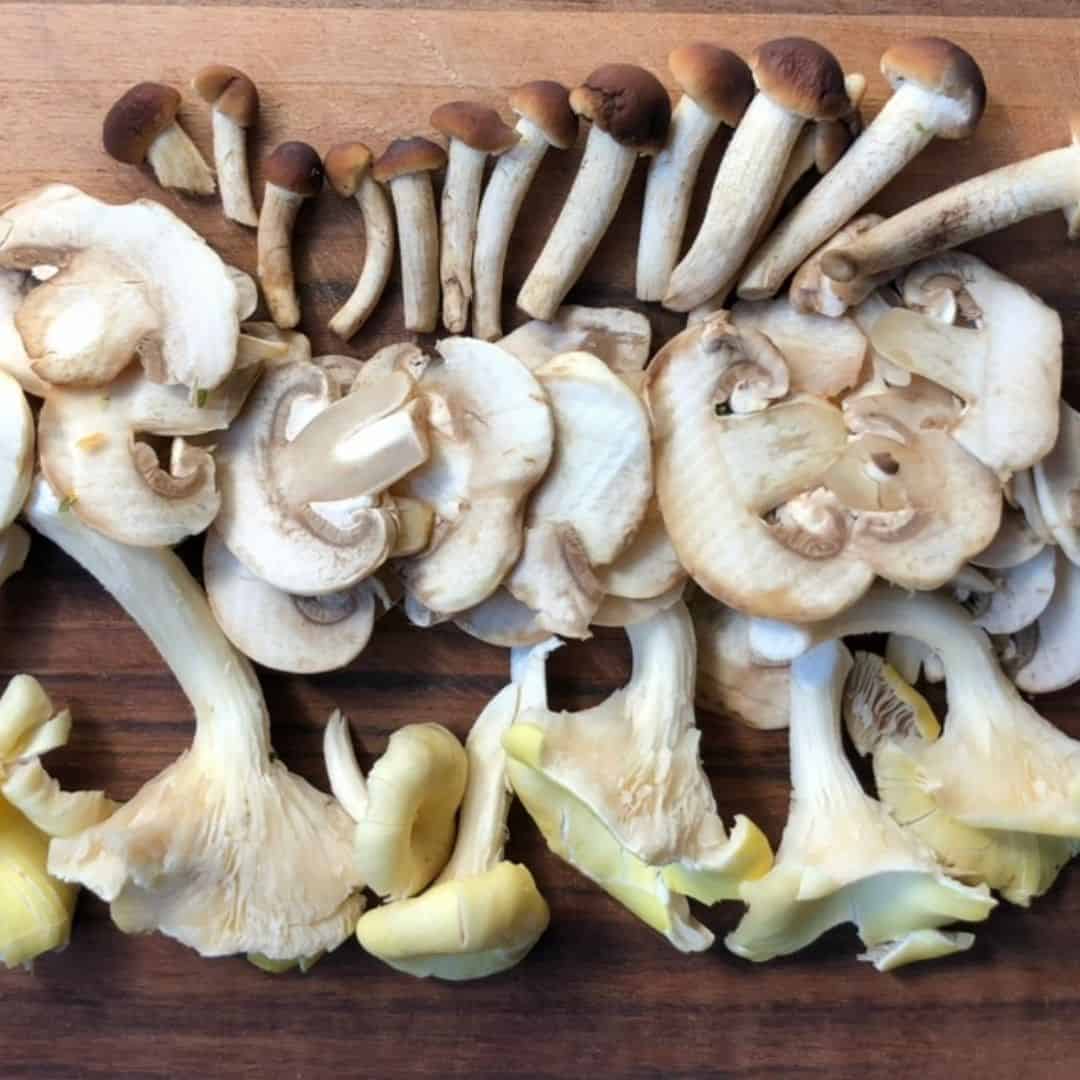
- a fresh wild mushroom risotto that includes a mix of oyster, pioppini, button, and fresh or frozen porcini mushrooms for when you want the showstopper
- a classic champignon (button or cremini mushroom) version for anytime and/or budget
- and a pantry version (using dried porcini + canned seasoned mushrooms in oil) for the day the fridge is bare, but you need a hearty, super delicious family meal without a trip to the grocery store
Jump to:
- Why You'll Love This Recipe
- What's Mushroom Risotto?
- The Best Mushrooms for Risotto
- Wild Mushroom Risotto (The Hero Version)
- Champignon Mushroom Risotto (The Easy Italian Weeknight Version)
- Pantry Porcini Mushroom Risotto (When the Fridge Is Bare)
- Mushroom Risotto Ingredients (The Hero Version)
- How to Make Mushroom Risotto: The Italian Method
- How to Make the Perfect Mushroom Risotto: Italian Tips
- Substitutions
- Variations
- Equipment
- How to Store Mushroom Risotto
- What to Do With Leftover Mushroom Risotto
- What to Serve with Mushroom Risotto
- Wines to Pair With Mushroom Risotto
- Top Tips
- FAQ
- More Risotto Recipes & Mushroom Recipes
- 📖 Recipe
- How Much Should You Pay for Dried Porcini?
- Food Safety
Why You'll Love This Recipe
- It's three recipes in one, depending on what you have on hand. Wild seasonal mushrooms, everyday button/cremini mushrooms, or pantry mushrooms (dried and/or canned seasoned mushrooms in oil).
- Genuinely easy. Risotto has a fussy reputation it doesn't really deserve.
- Kid-friendly. Creamy rice is a near-universal kid favorite.
- Naturally gluten-free if you're using homemade broth or GF store-bought broth.
- The pantry version is one of my favorite emergency meals when the fridge is bare (and this is the one I learned from Luca's mamma, Anna).
- Built on the Italian mantecatura method (which I learned the way most things in this country are learned...by living here, eating risotto everywhere, and paying close attention to how restaurants, family, and friends each make their own).
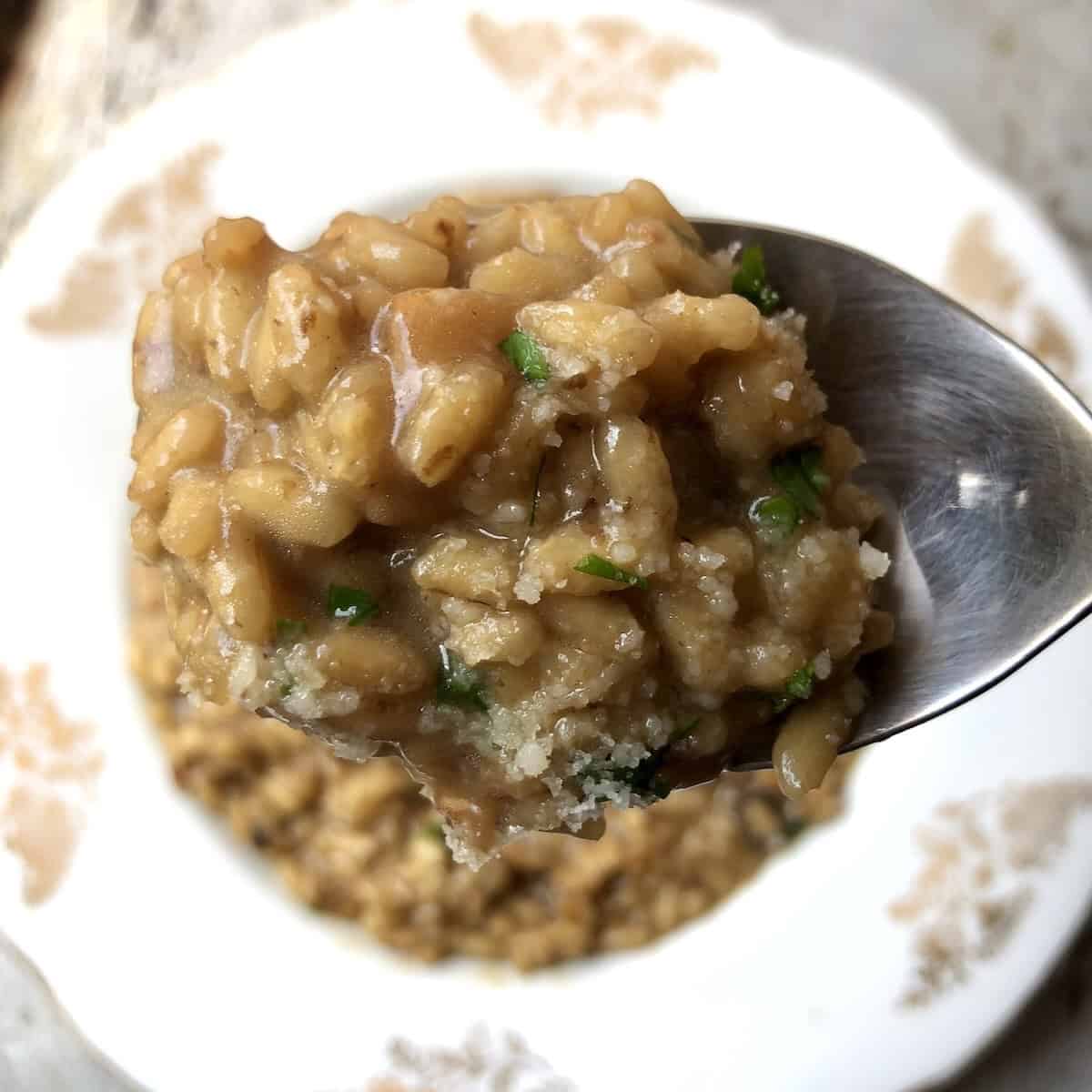
What's Mushroom Risotto?
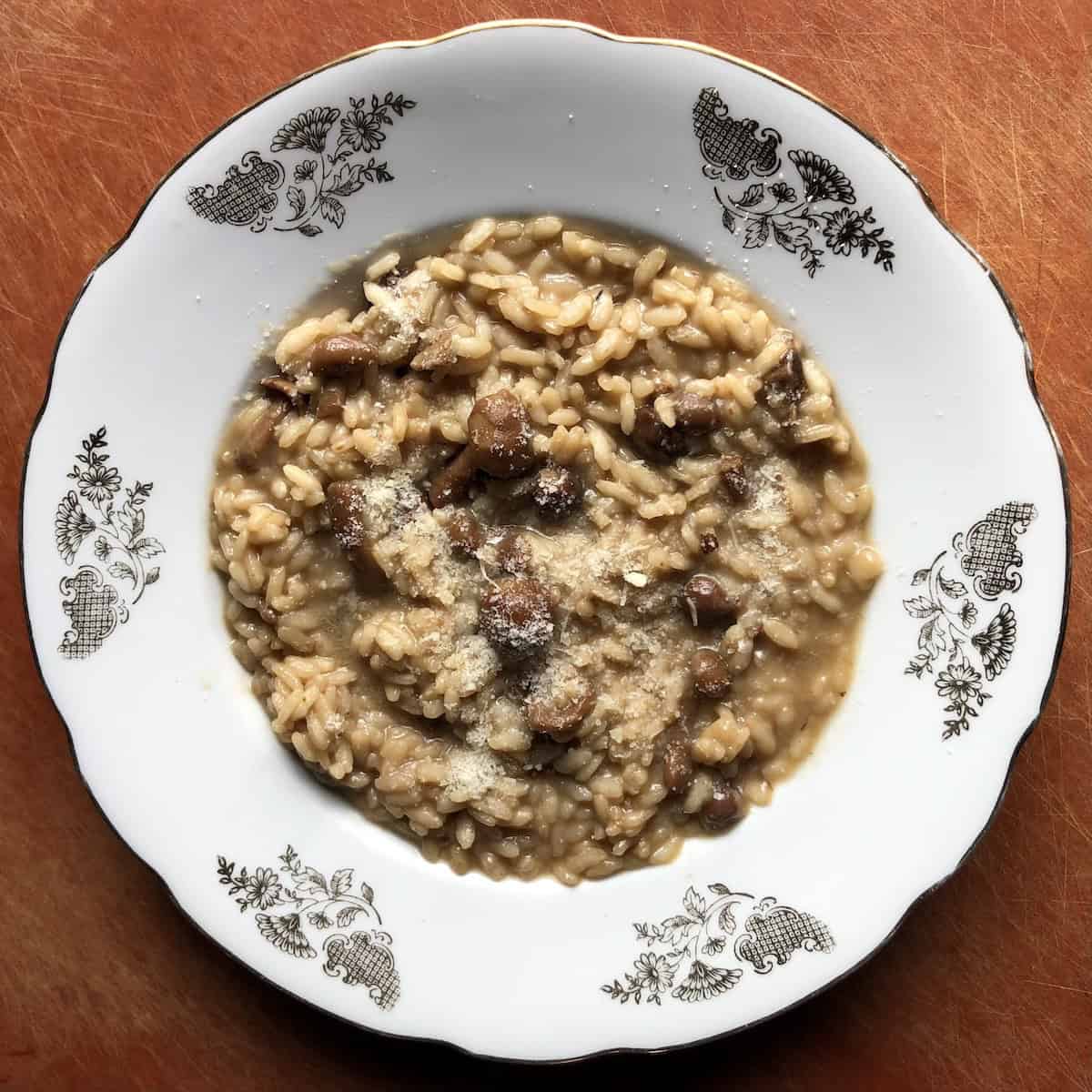
Mushroom risotto, called risotto ai funghi in Italy, is an ultra creamy northern Italian rice dish made by toasting and then slowly cooking short-grain Italian rice in hot broth with sautéed mushrooms, shallots, and a splash of dry white wine.
Butter and grated Grana Padano or Parmigiano-Reggiano go in at the end, off the heat ("a fuoco spento"), in a step called mantecatura that emulsifies the fats and starches. The mushrooms can be fresh, frozen, dried, or even canned (the right kind!...more on that below).
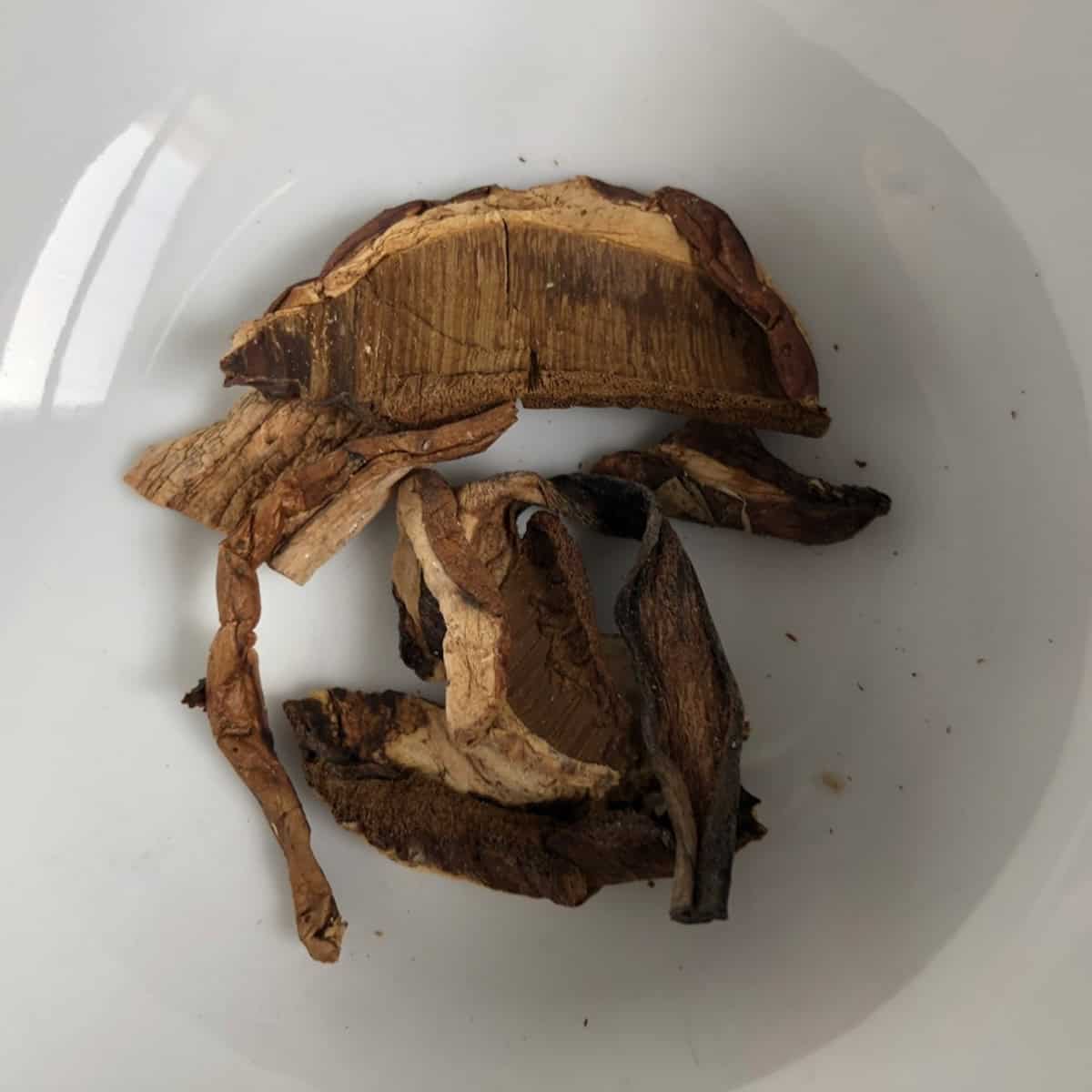
The Best Mushrooms for Risotto
The short answer: use the mushrooms you love and have access to at your local store or farmers' market. The base technique works with fresh, frozen, dried, or Italian-style canned mushrooms in oil (not water).
That said, a balanced mushroom mix gives a nice depth, so feel free to switch it up. Porcini for the umami heavy-lifting, and one or two cultivated varieties (champignon, cremini, oyster, pioppini, black trumpets, morels, chanterelles, or even portobello) for texture. You can even use shiitake mushrooms in the mix as well.
Each variety lends a different flavor, but a nice mix with champignon or cremini usually rounds out the flavor nicely.
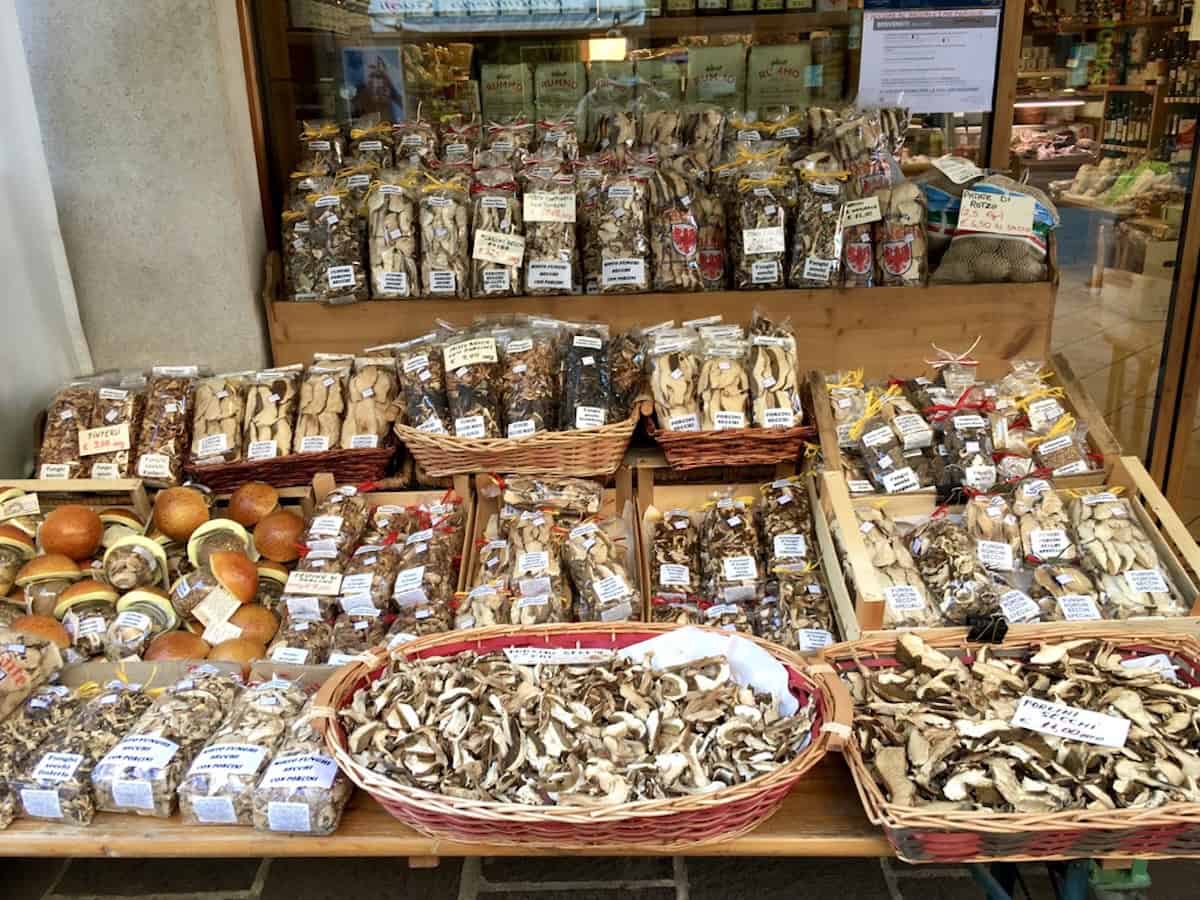
Why Porcini Are the King of Italian Mushrooms
Porcino is the singular, porcini the plural. The word literally means "piglet" in Italian. They're prized in Italy for their concentrated umami flavor. Natural glutamates and a compound called 1-octen-3-ol give porcini a meaty, almost nutty flavor that many other cultivated mushrooms can't match.
Dried porcini have even more of this deep flavor than fresh after rehydration, because drying concentrates this compound. This is why even a small handful transforms an ordinary risotto into something restaurant-worthy.
The best dried porcini in Italy come from specific regions, and the origin matters:
- Fungo di Borgotaro IGP (Emilia-Romagna and Tuscany): the gold standard, and the only EU-protected porcini designation. Reserves established 1964.
- Trentino-Alto Adige: Rumo, Predaia, Cles. Alpine porcini that turn up at the Trento Saturday market (we drive up here often).
- Tuscany: Colline Metallifere and Monte Amiata, home of the annual #AmiatAutunno festival.
- Umbria: Terni province, prized for aromatic intensity.
- Asiago / Veneto: about an hour north of us in the Dolomite foothills. Excellent porcini, no IGP.
Outside Italy, frozen porcini are increasingly available at Italian specialty markets and Whole Foods, and dried porcini are everywhere from Costco to Amazon.
Wild Mushroom Risotto (The Hero Version)
A mix of fresh oyster, champignon (or cremini), plus fresh or frozen porcini. If fresh or frozen porcini are not available, substitute 10-14g (0.35 to ½ ounce) of dried porcini rehydrated in ½ cup hot water, and use the strained soaking liquid in the broth. It's delicious either way!
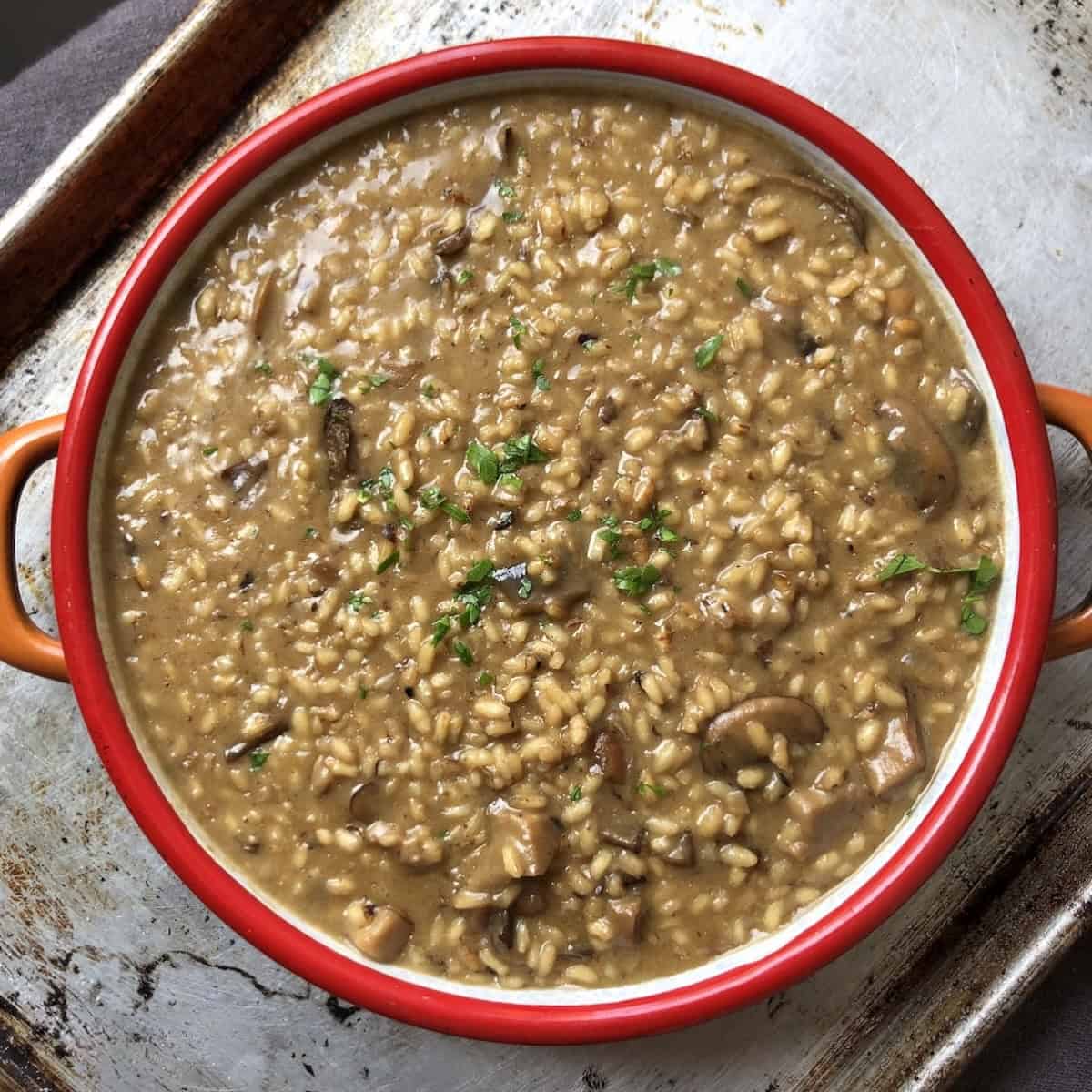
Champignon Mushroom Risotto (The Easy Italian Weeknight Version)
Quick, weeknight-friendly, and made with regular white button(or cremini) mushrooms, the kind you can find at any grocery store. Just as delicious with or without a small handful of dried porcini (rehydrated) stirred in for an extra hit of umami. *See recipe notes for ingredient amounts.
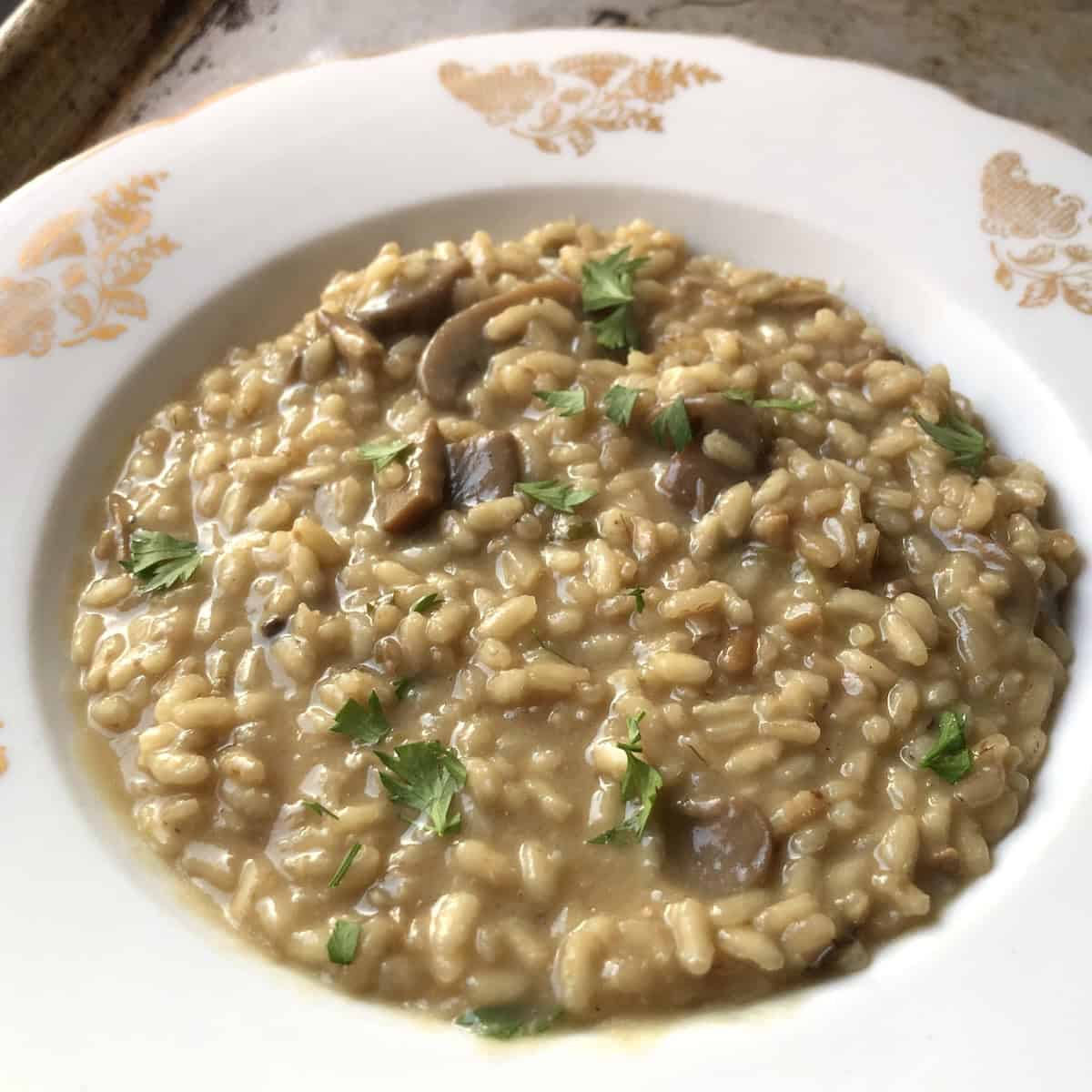
Pantry Porcini Mushroom Risotto (When the Fridge Is Bare)
The version I make when the fridge is bare, but the craving for something warm and creamy is real. Italian-style canned mushrooms in oil, a small handful of dried porcini, and you're 25 minutes from a restaurant-quality dinner. *See recipe notes for ingredient amounts.
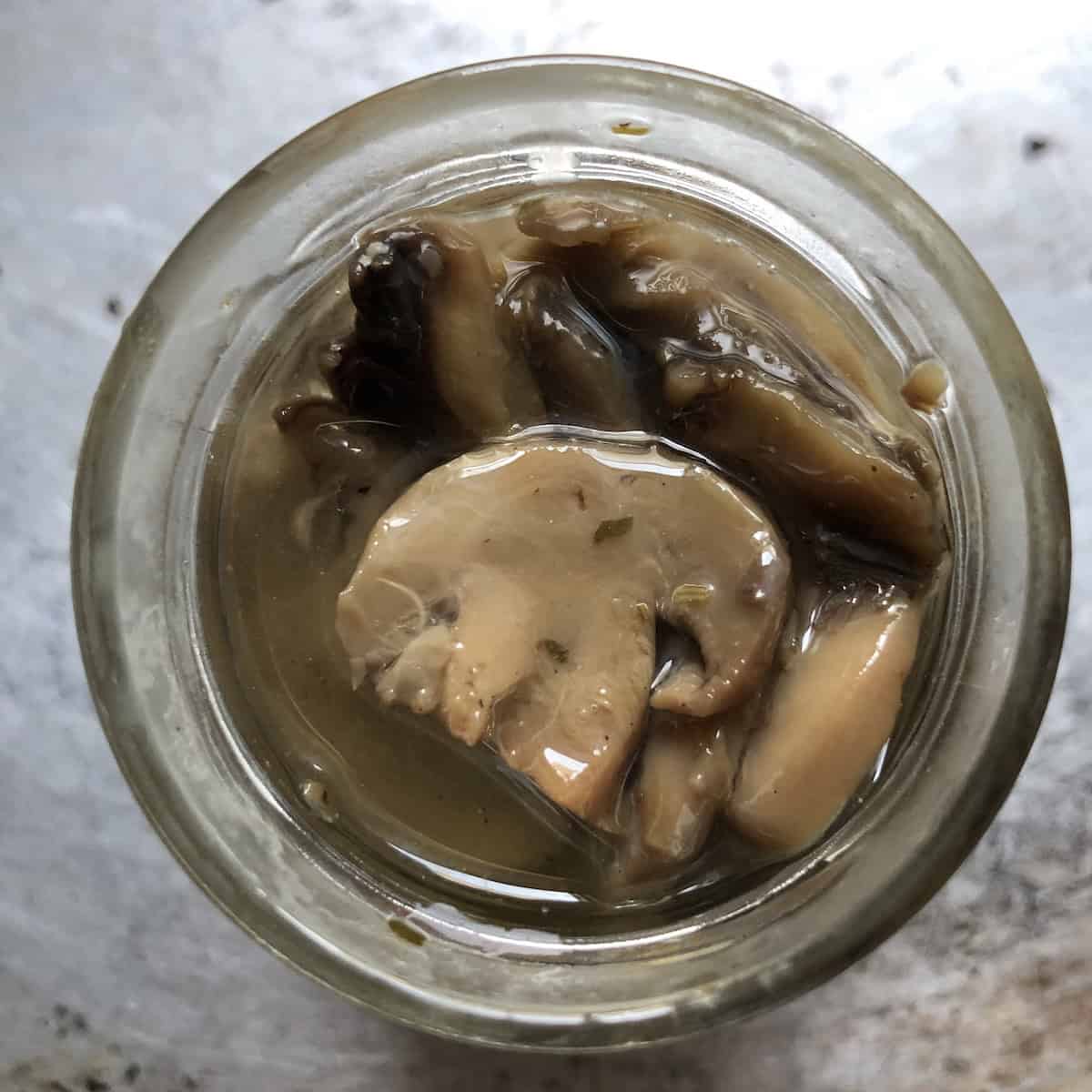
The secret is the kind of jarred or canned mushroom you use. In Italy, the right ones are labeled funghi trifolati or funghi sott'olio: mushrooms sliced and cooked in oil, usually with garlic and parsley, NO vinegar. I use Nova champignon trifolati.
One rule matters more than the brand: never buy mushrooms packed with vinegar. Read the ingredient list every time. If you see vinegar, wine vinegar, or aceto anywhere on it, put the jar back. These mushrooms DO NOT include any vinegar whatsoever.
Again, DO NOT use mushrooms in oil that includes vinegar in the ingredients, because doing so will ruin your mushroom risotto, turning it sharp and sour instead of creamy, umami, and savory.
In the US, look for Italian champignon trifolati in oil at Italian specialty grocers, in person or online through shops like Eataly (specifically the Sliced Porcini Mushrooms in Oil 9.9 oz by Piemont Fungo), Piccolo's Gastronomia, or Cerini, and on Amazon. Whatever brand you find, check the label for the simple oil-garlic-parsley formula and skip anything with vinegar.
Plain American canned mushrooms packed in water are the other thing to avoid: never use those for this recipe unless you want pure disappointment with a side of bland.
If you can't find a vinegar-free jar or if these imported Italian mushrooms are too expensive, make the champignon version above instead.
Mushroom Risotto Ingredients (The Hero Version)
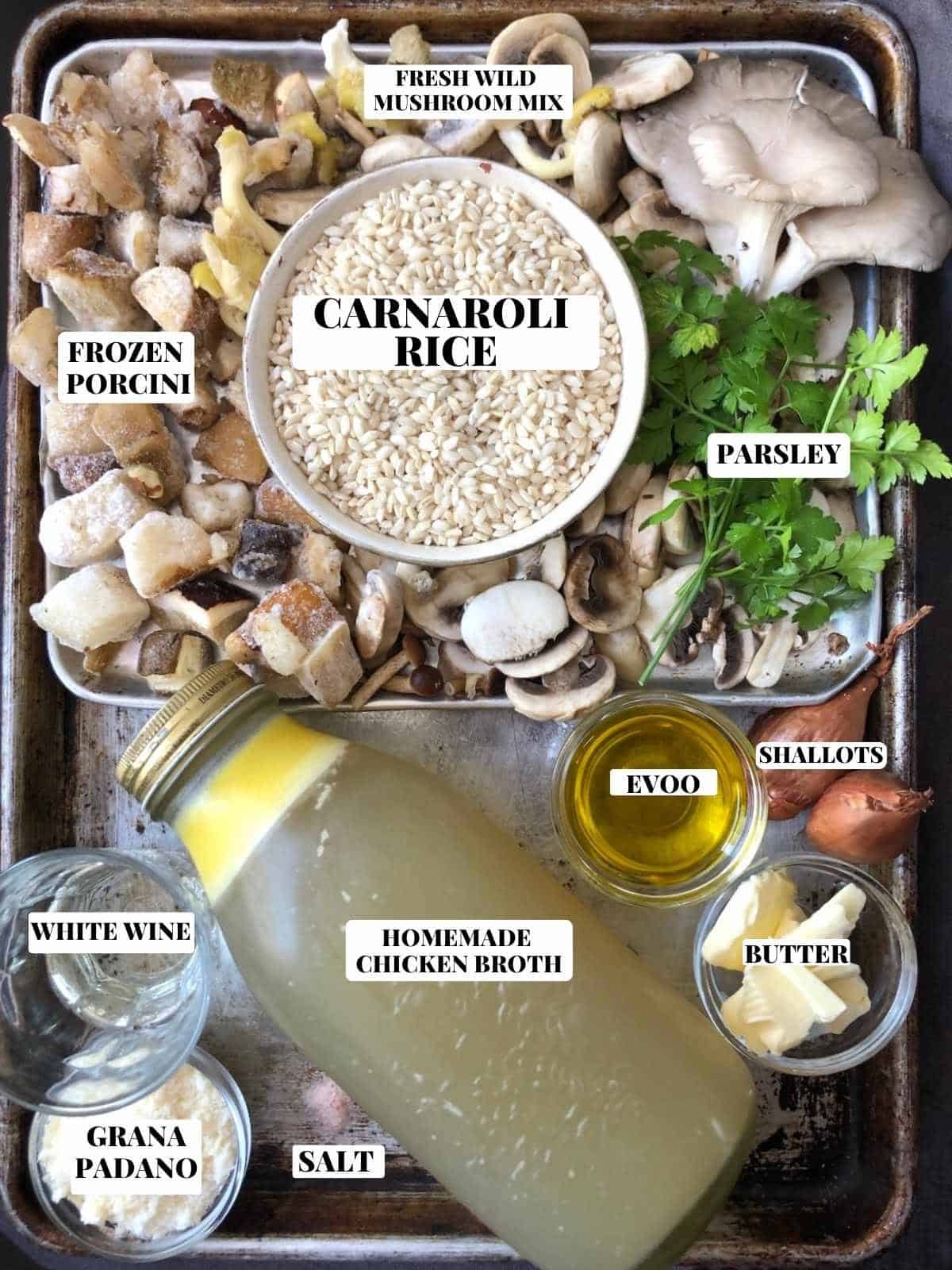
- Fresh mushrooms (champignon, oyster, pioppini, cremini, or a mix of your choice)
- Fresh or frozen porcini mushrooms
- Extra virgin olive oil (used in two stages)
- Fresh flat-leaf parsley
- Carnaroli risotto rice (or sub Arborio or Vialone Nano)
- Shallots
- Dry white wine (sauvignon blanc, Pinot grigio, or Sancerre)
- Homemade chicken brodo (sub low-sodium store-bought chicken broth)
- Unsalted butter
- Grana Padano or Parmigiano-Reggiano
See recipe card for quantities.
How to Make Mushroom Risotto: The Italian Method
Carnaroli rice takes about 18 minutes to cook. Arborio is a little faster. Vialone Nano lands somewhere in between. Italians prefer their rice with a real bite at 16 to 18 minutes; if you're not used to al dente rice, taste as you go and be ready to cook it up to 20 minutes or until you reach the texture you prefer.
Step 1: Sauté the Mushrooms in Two Batches
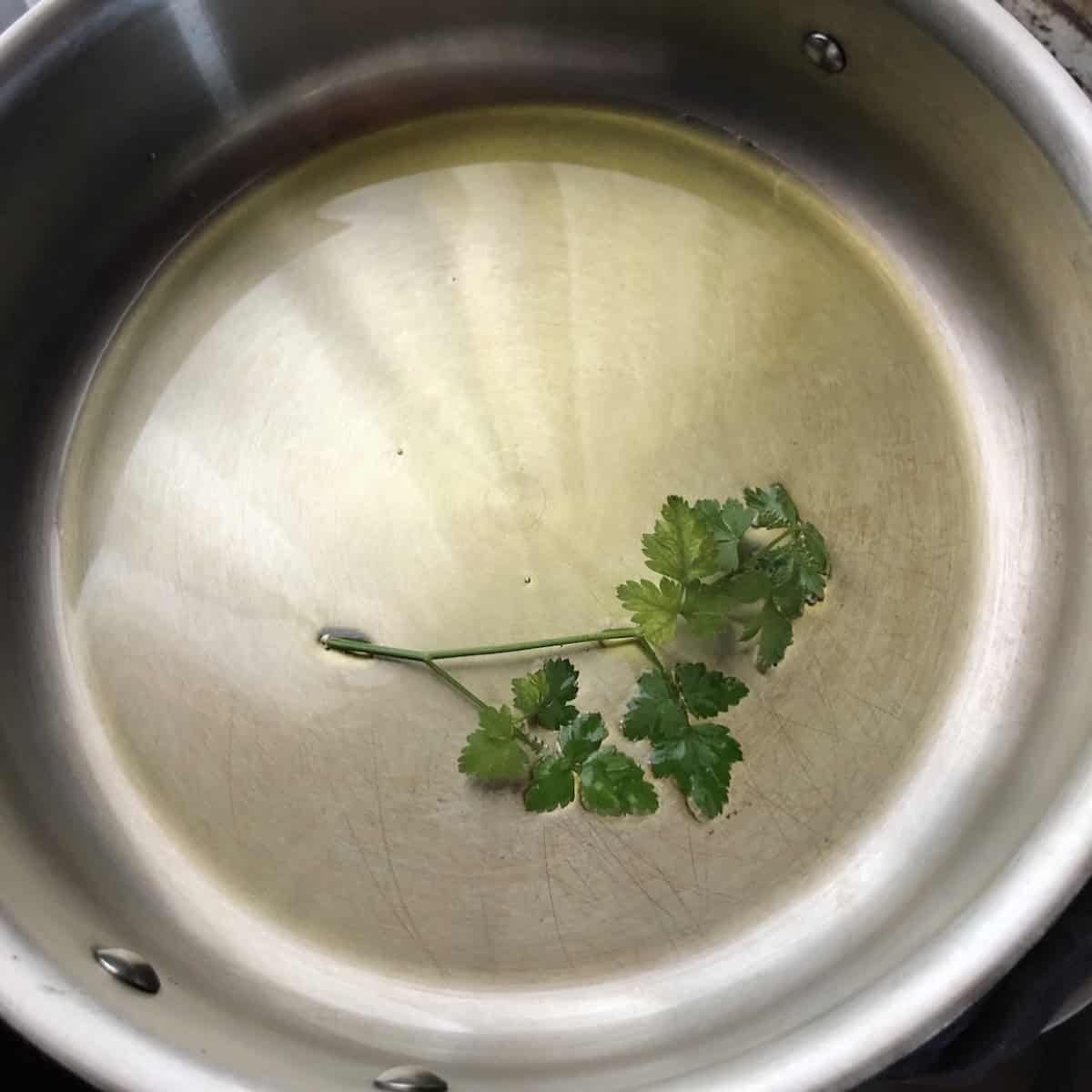
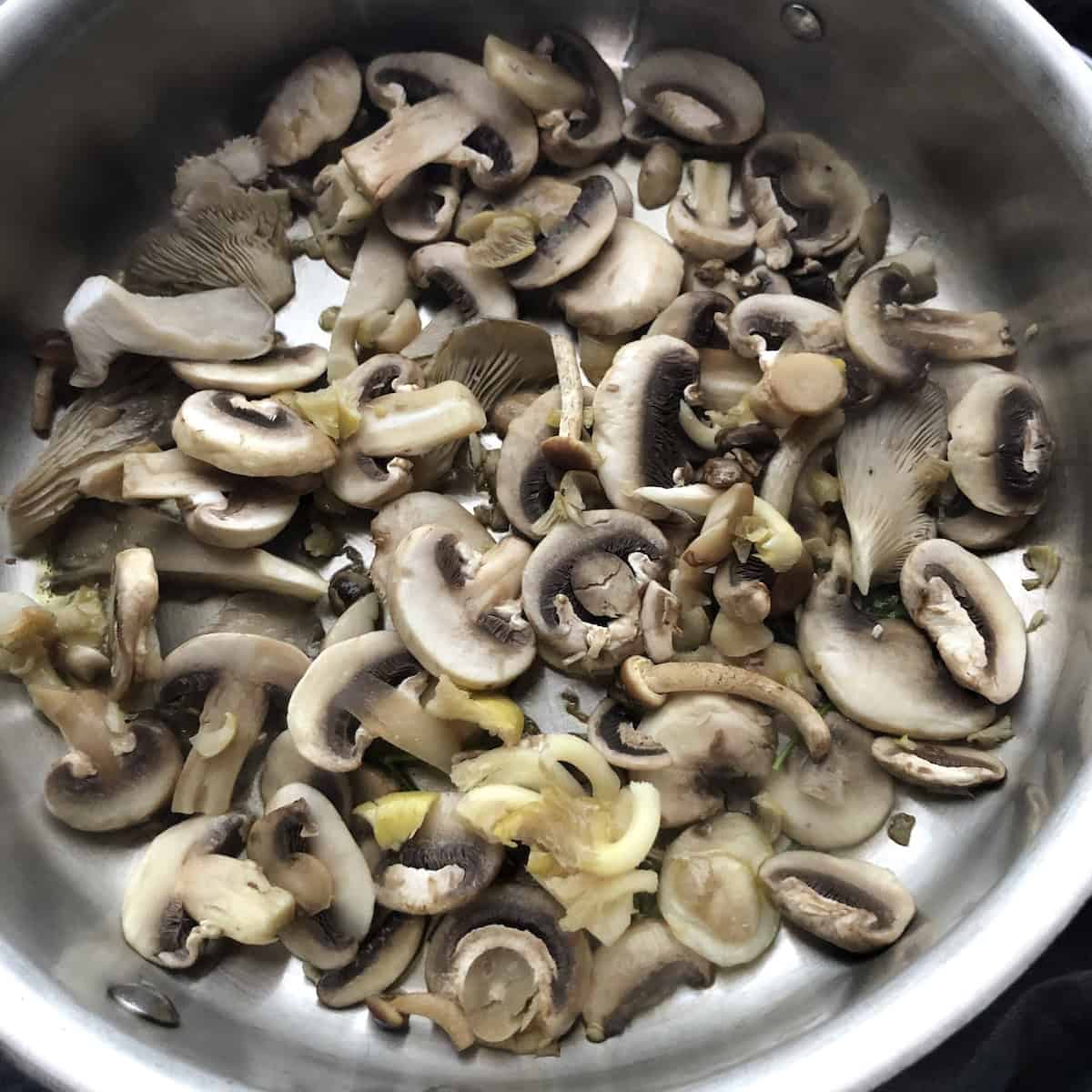
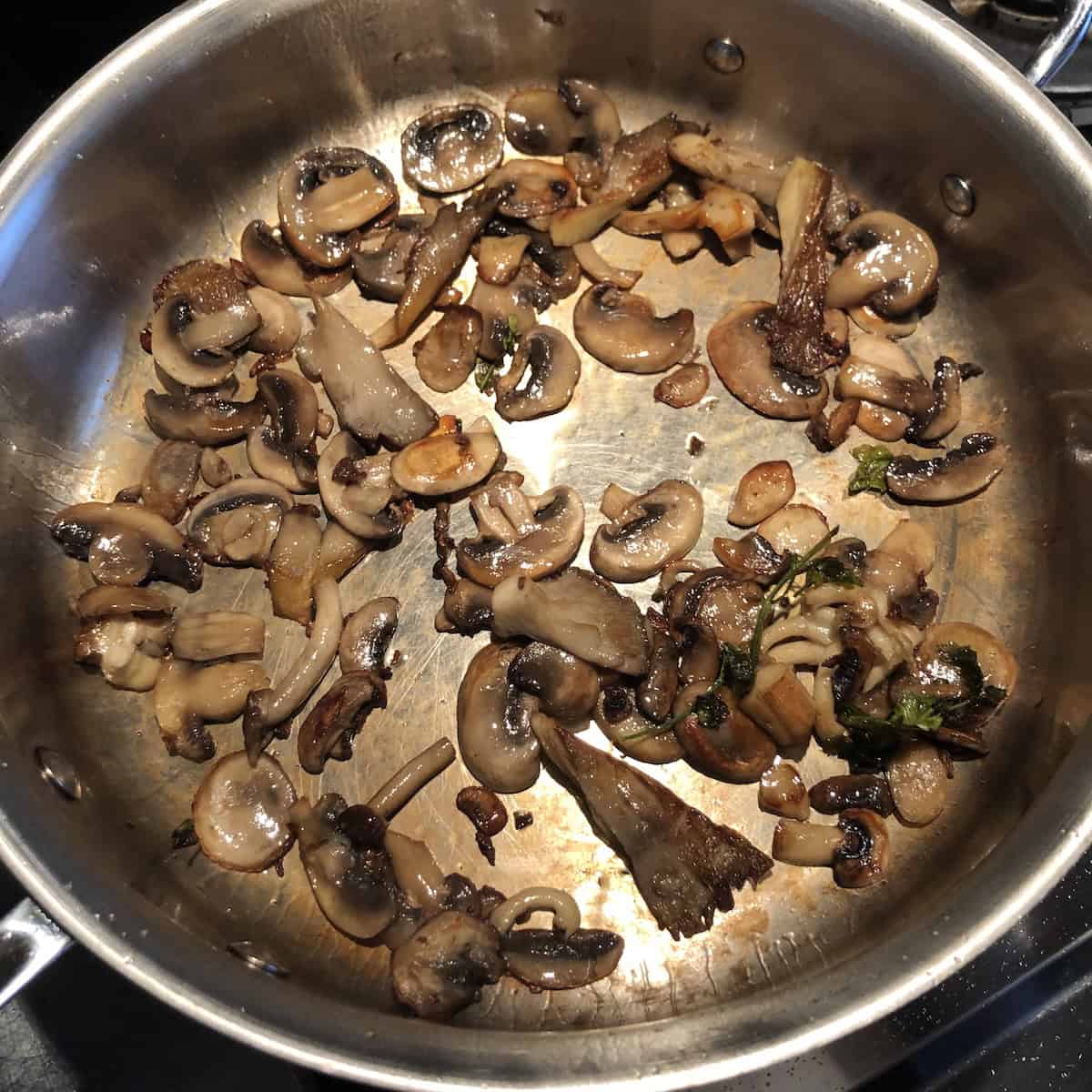
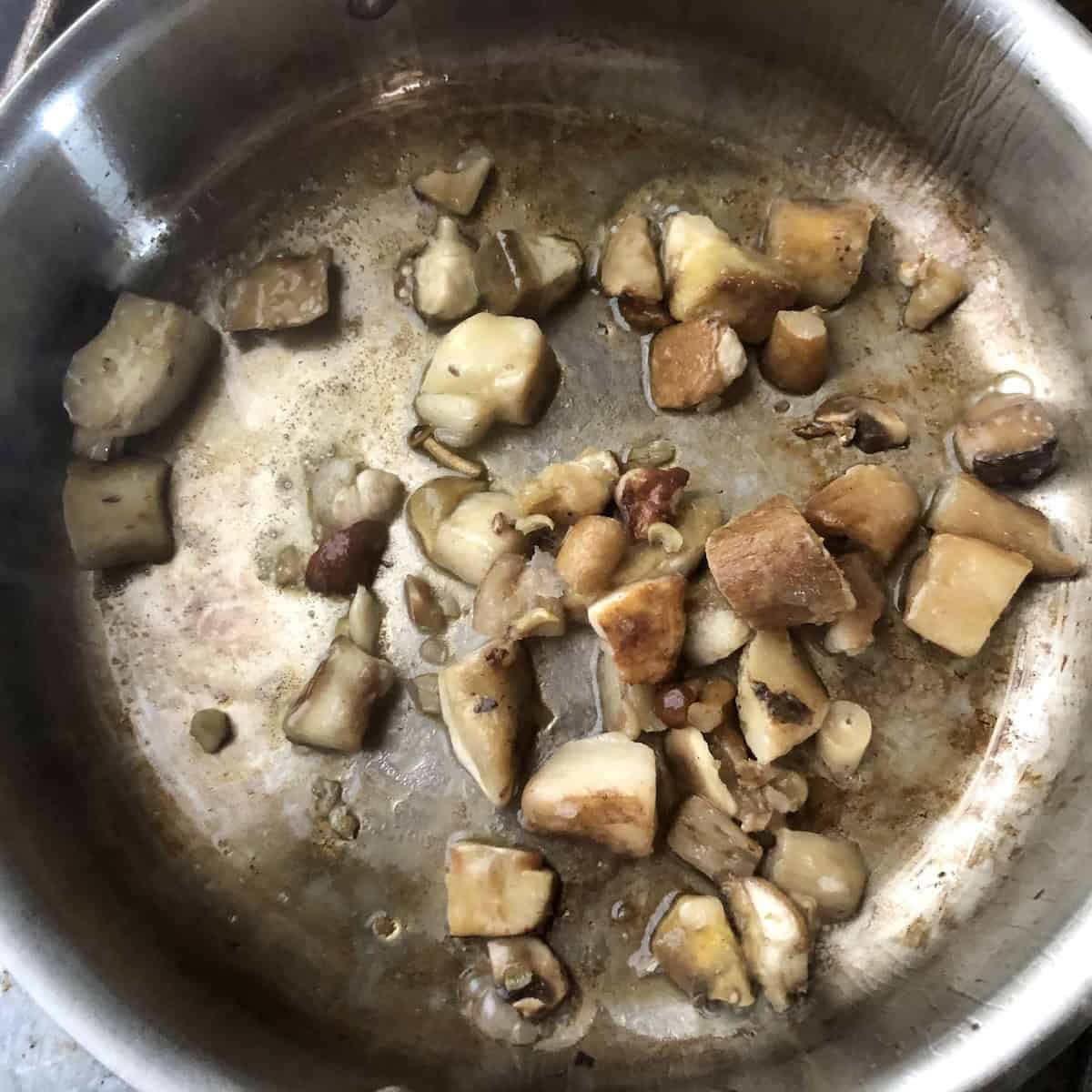
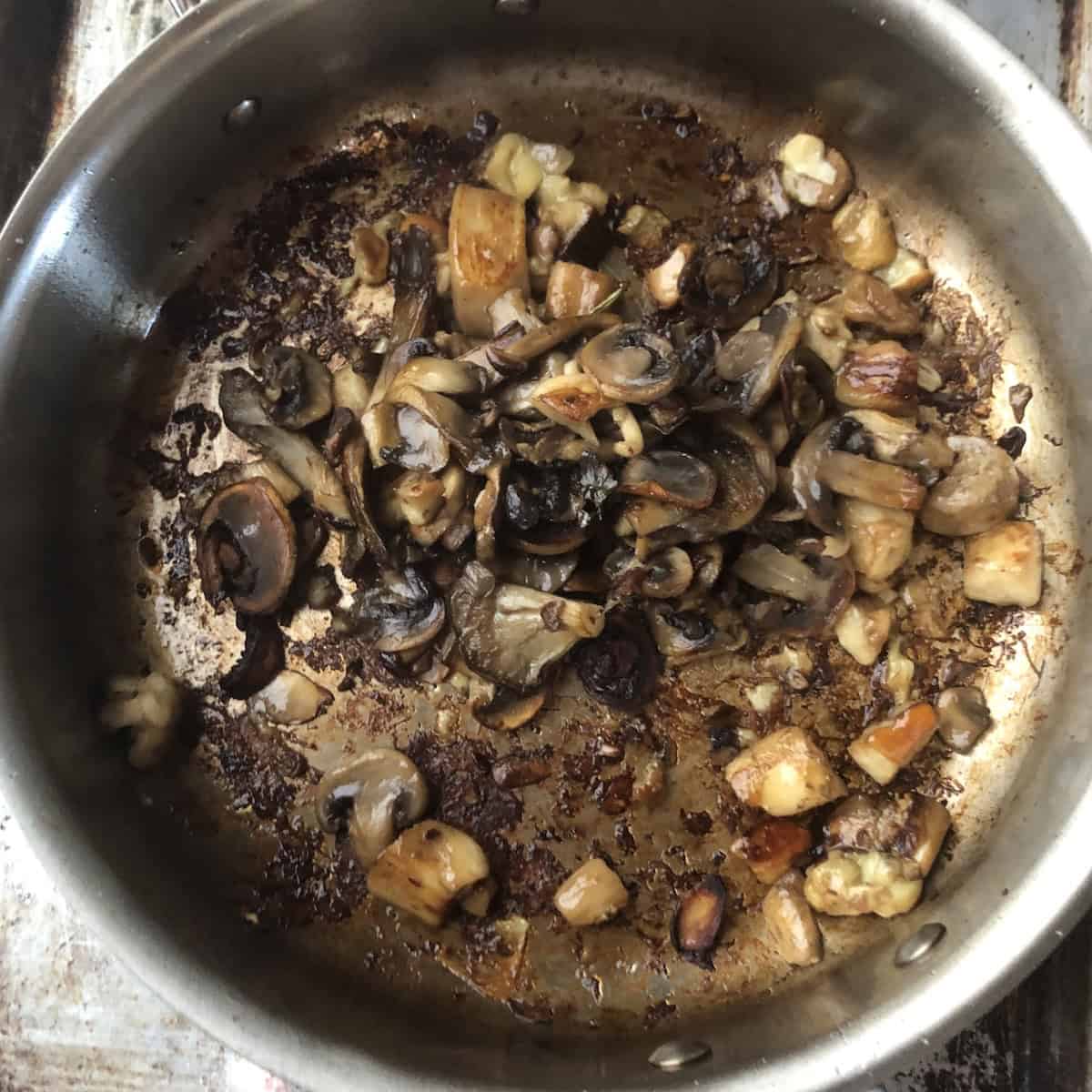
Heat 1 tablespoon of EVOO and a whole sprig of fresh parsley in a large 4-6qt sauté pan or skillet set over medium-high heat. Once the oil is hot but not smoking, add half the mushrooms in a single layer. Don't move them for 2 to 3 minutes so they can brown. Season with salt to taste.
Stir, then keep cooking until the water has evaporated and the mushrooms are golden (about 5-7 more minutes). Remove to a plate. Repeat with 1 more tablespoon of EVOO and the remaining mushrooms. Add all the mushrooms back to the sauté pan.
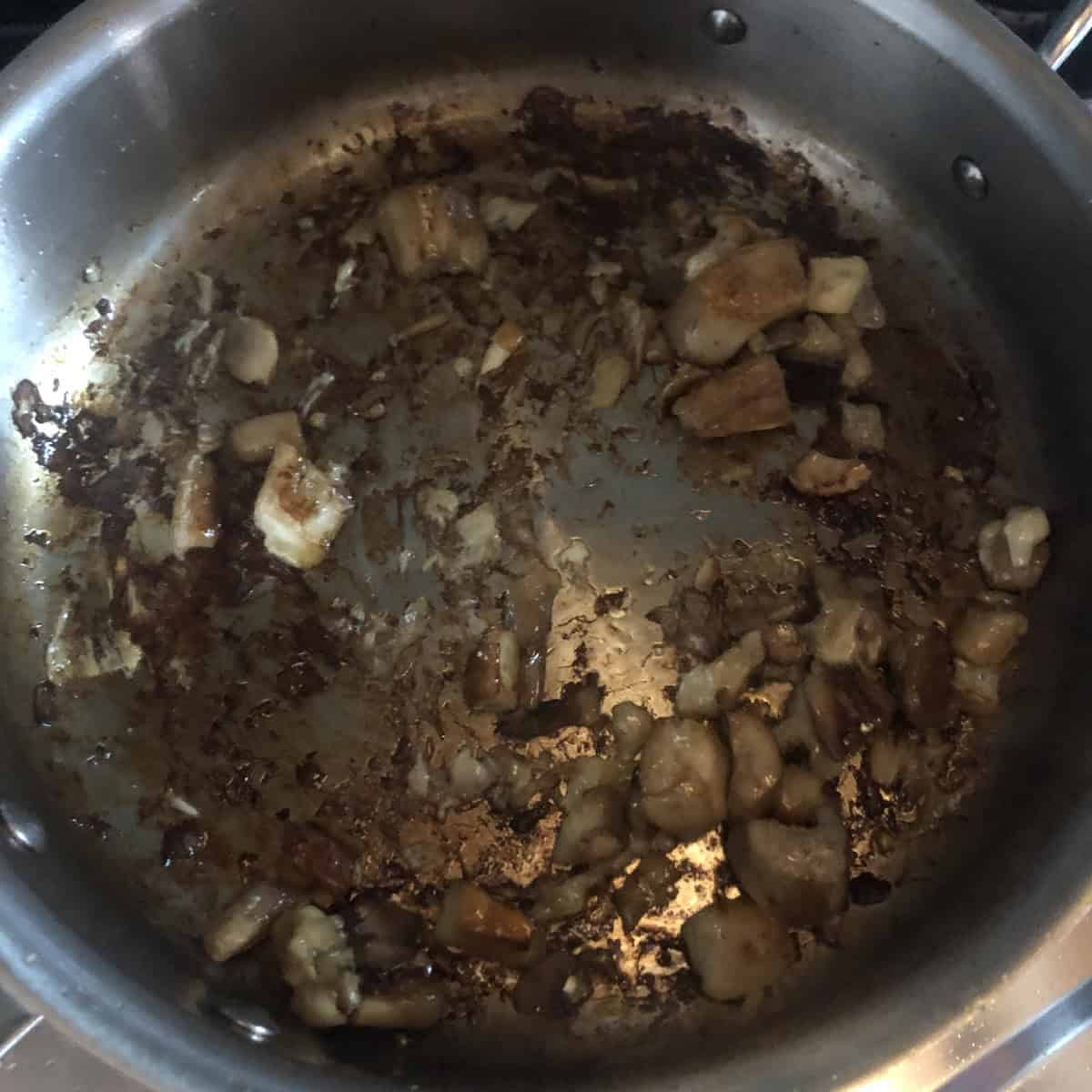
NOTE: If you're using frozen porcini, sauté them last and by themselves as shown in the above photos. The water will evaporate eventually, and they'll color up beautifully. Some pieces will fall apart and become a creamy mixture that melts into the pan and browns on the bottom. That's what you want. When you deglaze with wine in the next step, you'll pick up all that flavor from the fond (the browned sticky bits on the bottom of the pan).
Step 2: Deglaze with Wine (Sfumatura)
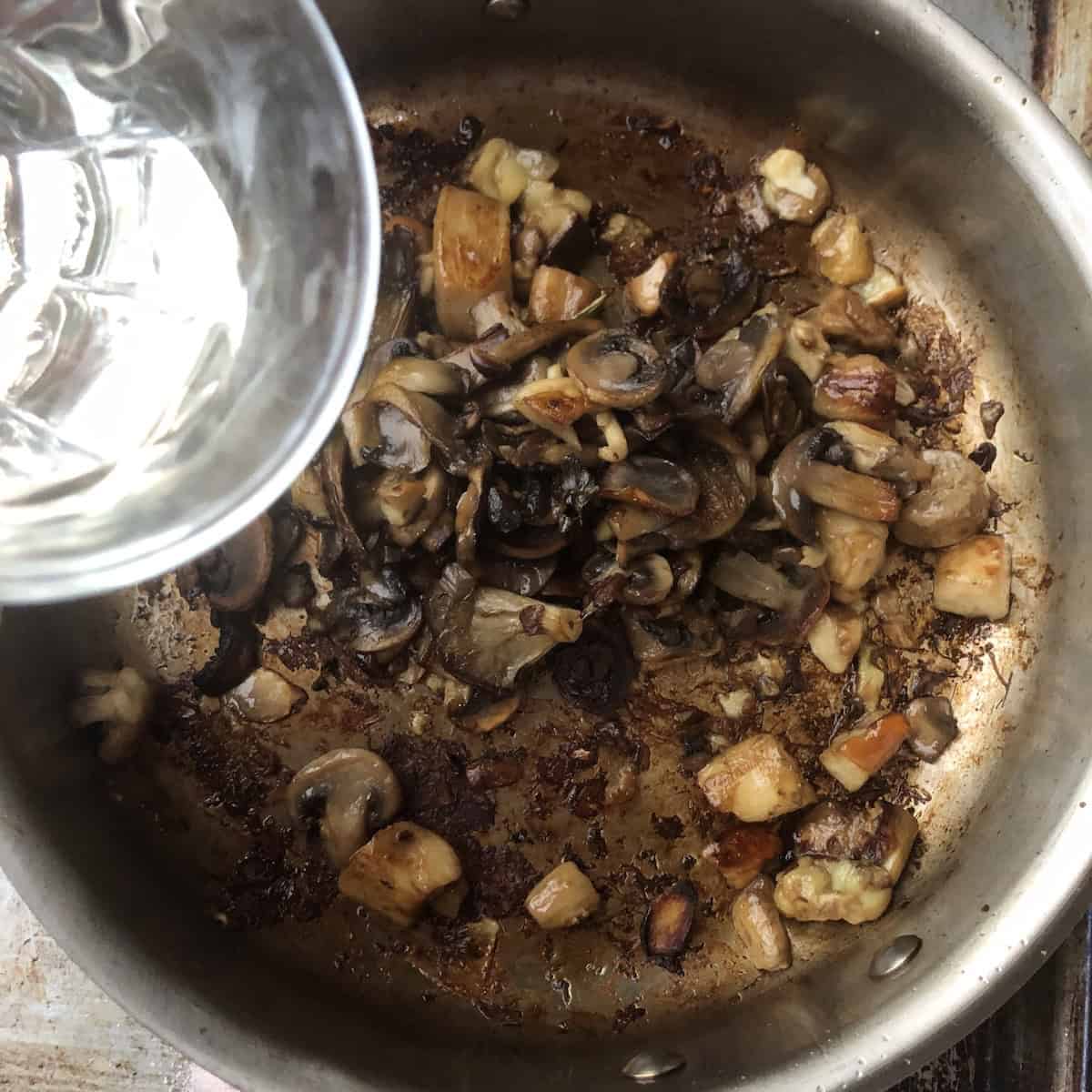
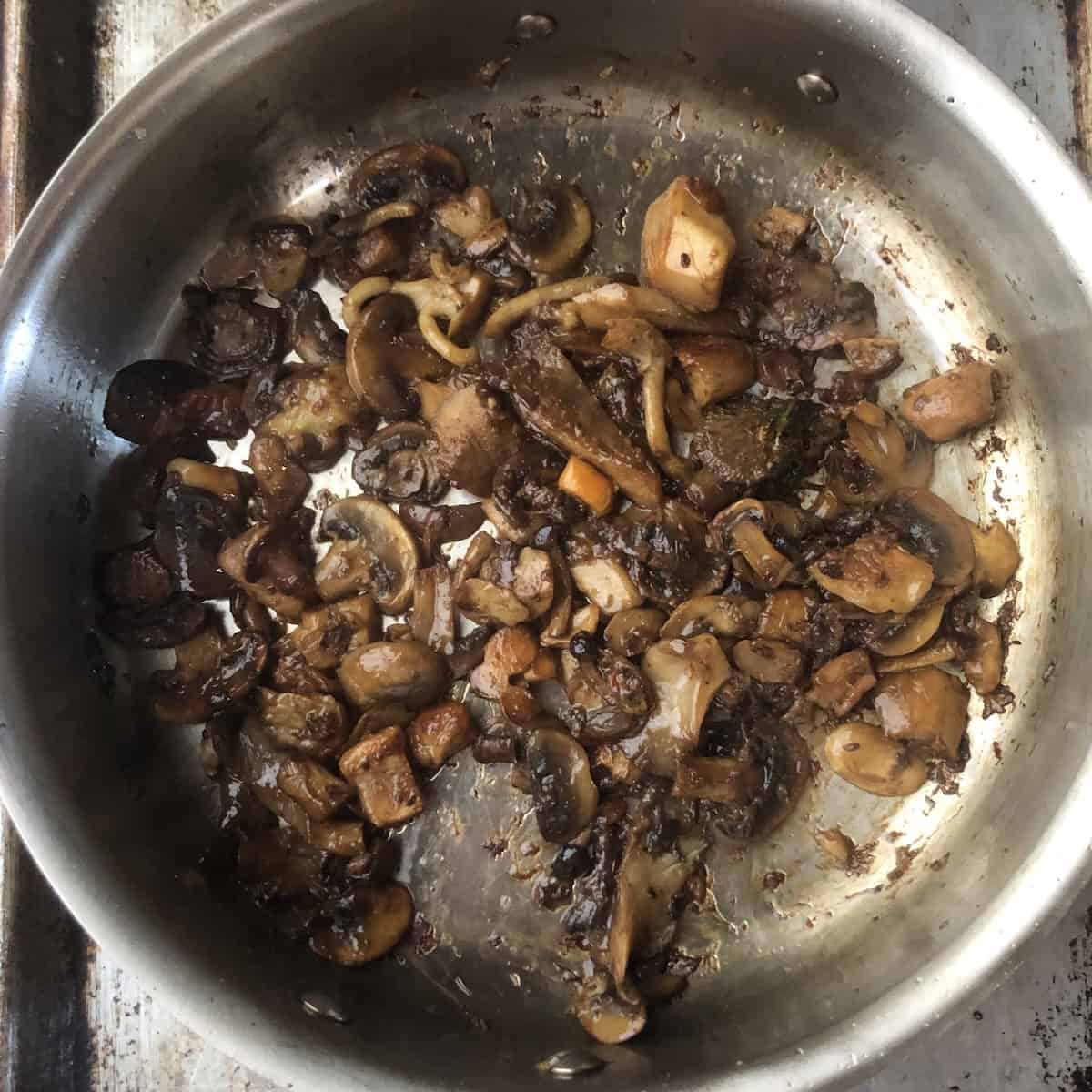
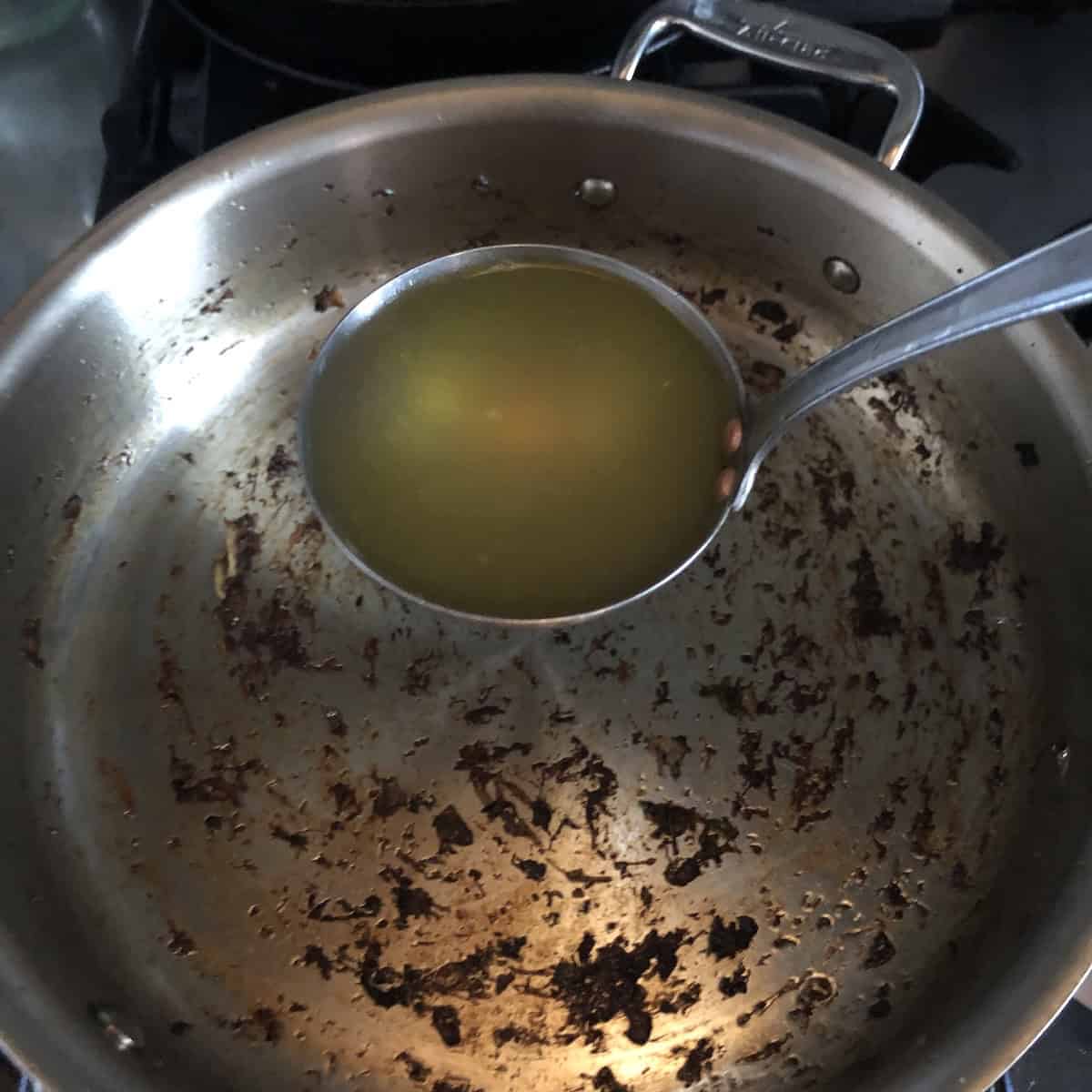
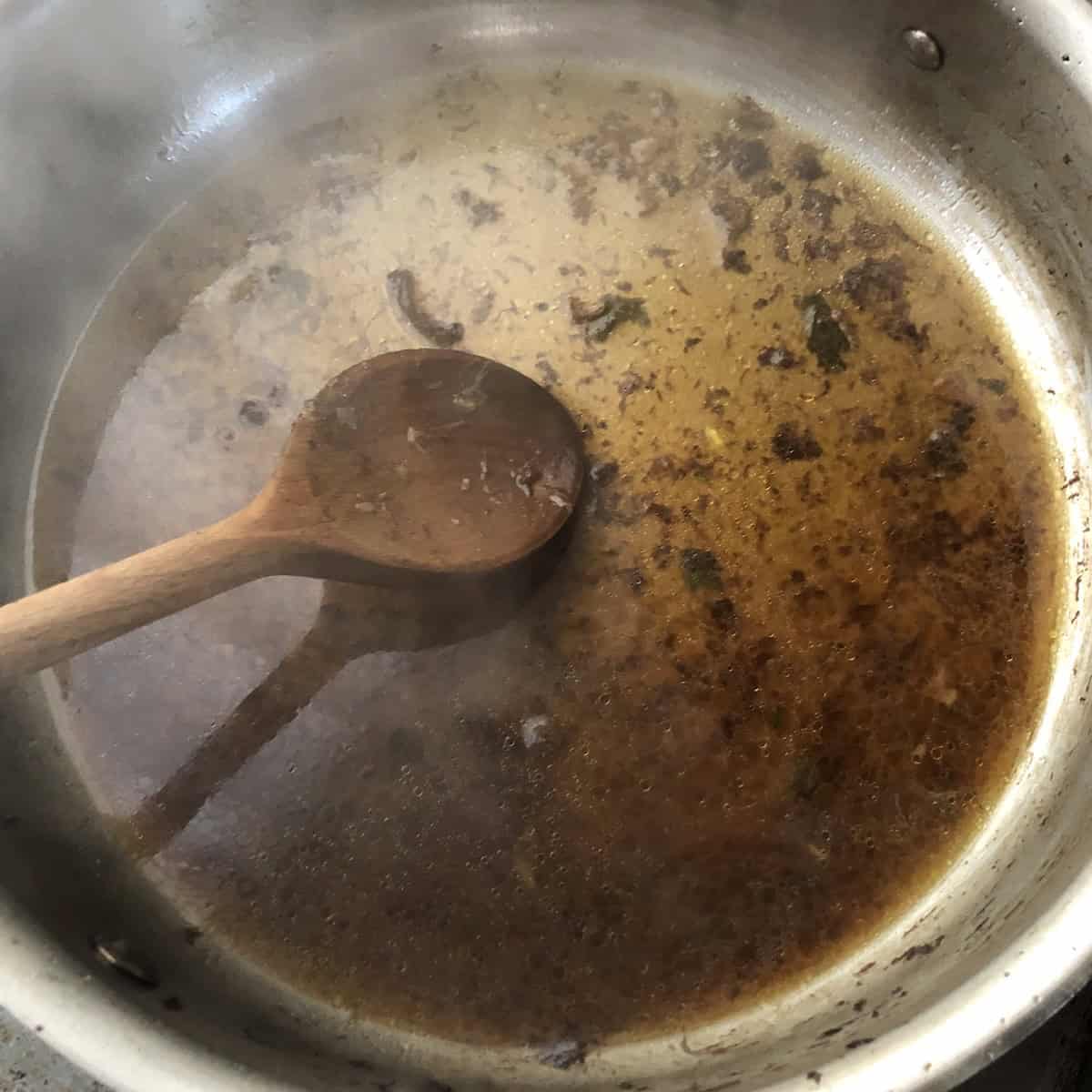
Add the white wine and use a flat-bottomed or wooden spoon to scrape up the browned bits (the fond) from the bottom of the pan. Let the alcohol cook off, about 3 to 4 minutes. The mushrooms will take on a glossy look at this point.
If any bits are still stuck, add a couple of spoonfuls of hot chicken broth to lift them. (I did this after having removed the mushrooms, but you can leave the mushrooms in the pan for this part).
Set the mushrooms and any deglazing liquid aside while you toast the rice. The parsley sprig can stay in the pan; it disintegrates into the risotto as it cooks.
Step 3: Toast the Rice (Tostatura)
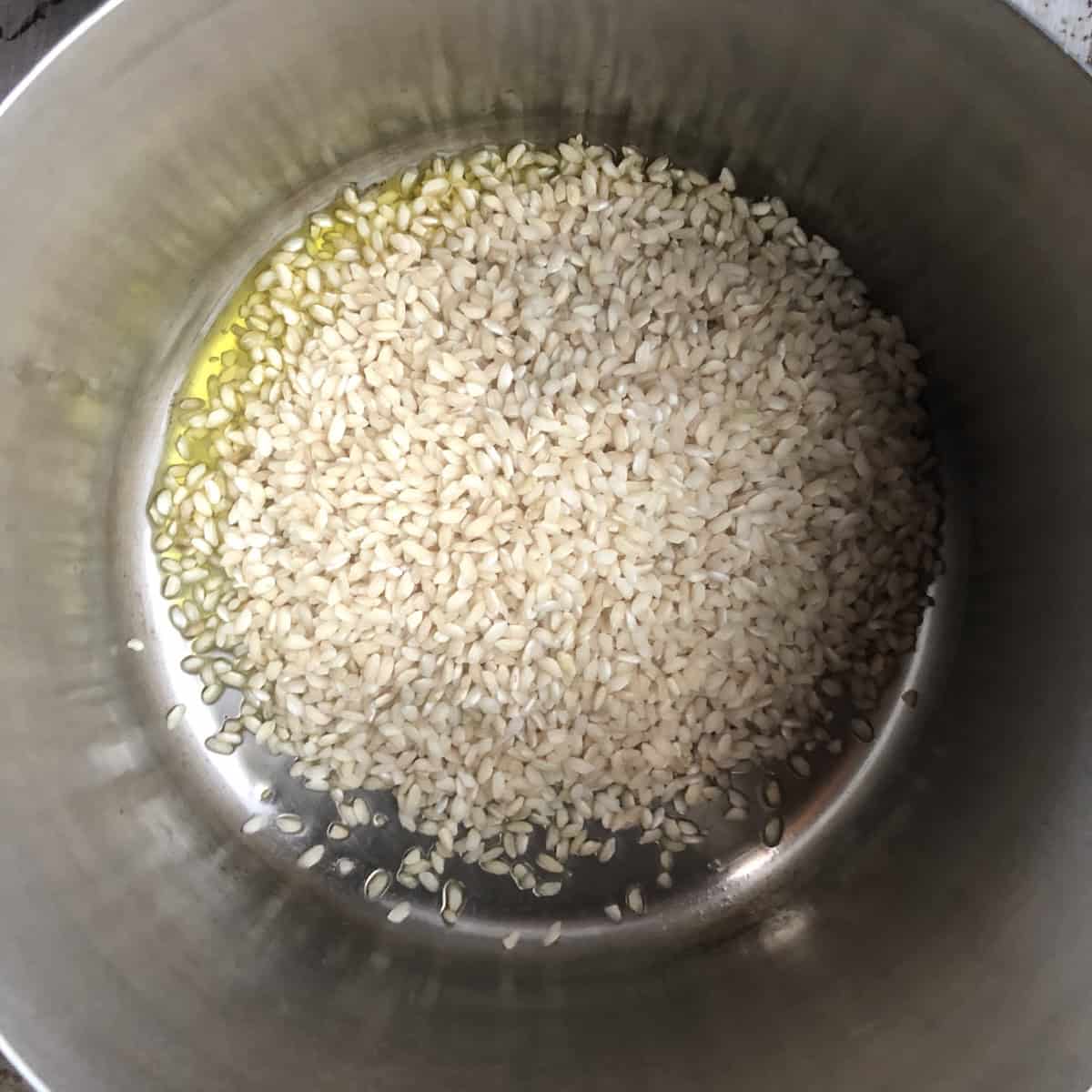
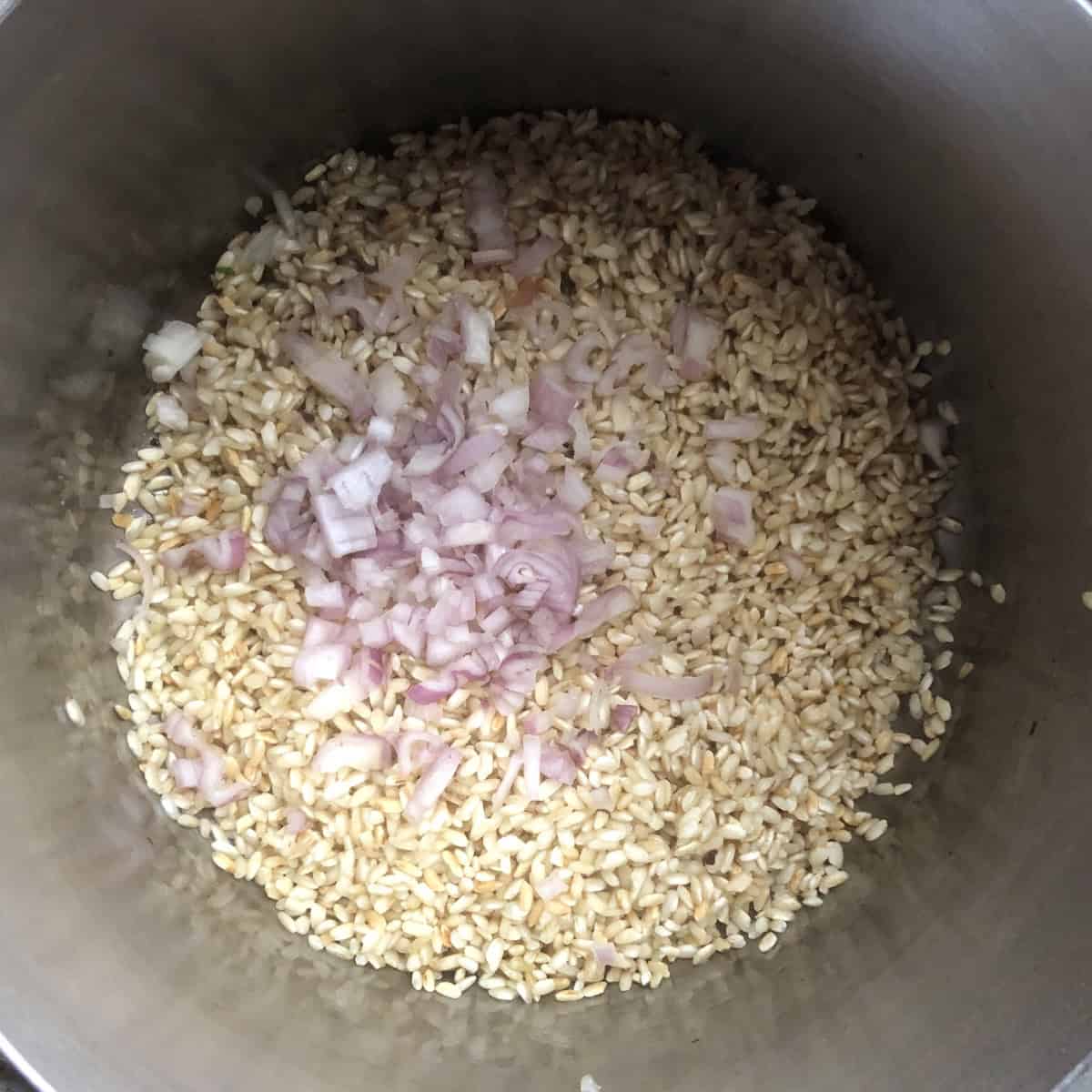
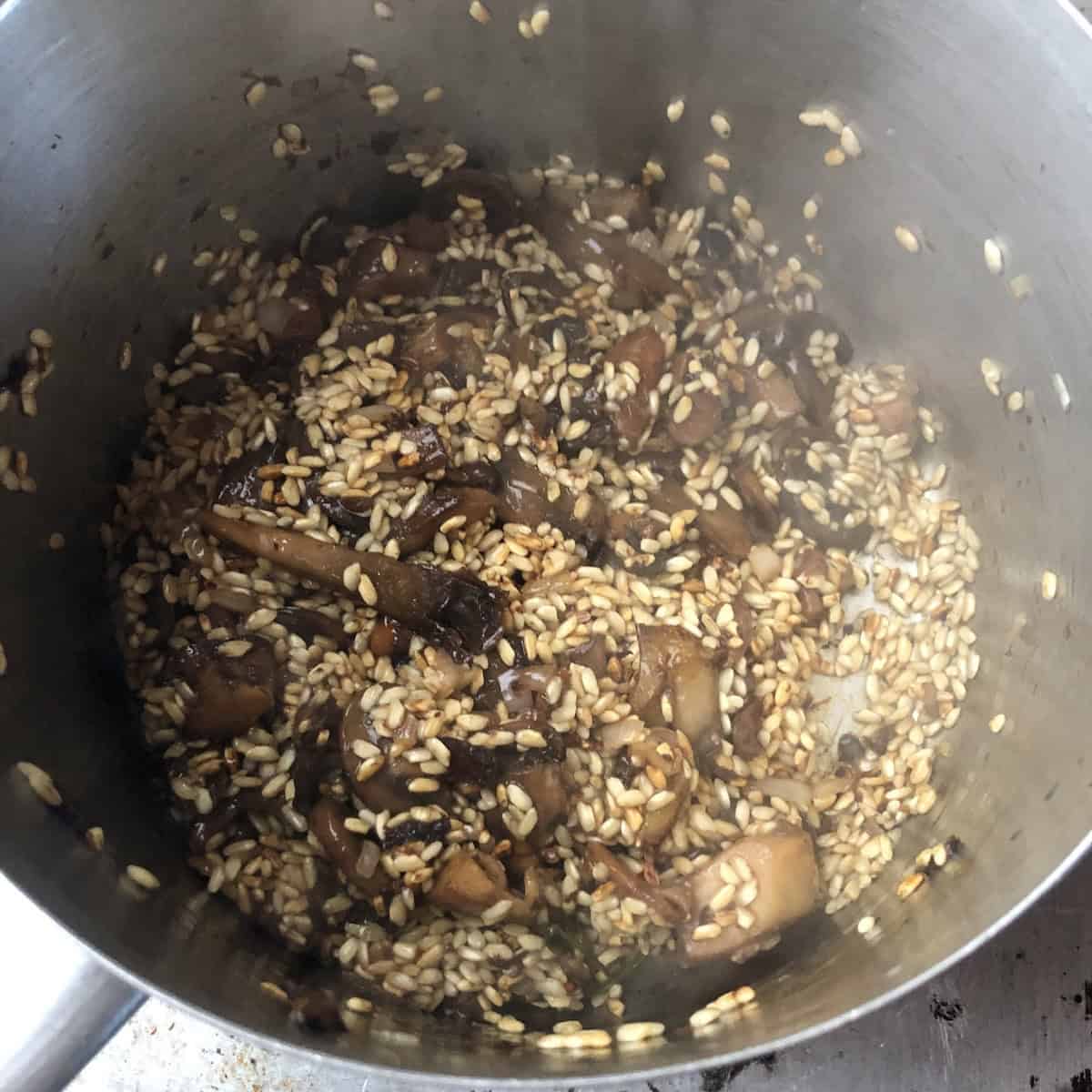
Meanwhile, in a deep 4qt pot, toast the rice in 2 tablespoons of EVOO over medium heat, stirring occasionally for 4 to 5 minutes, until the rice is somewhat golden.
Add the chopped shallot. Continue toasting for about 3 to 4 more minutes until the shallots are translucent and the rice is mostly golden brown. Add the deglazed mushrooms and any deglazing liquid, and give it a stir.
NOTE: If you're new to cooking, hold off on toasting the rice until after the mushrooms are sautéed and deglazed. Doing fewer things at once is the easier path. The main thing is not to burn the rice or the mushrooms.
Step 4: Adding Broth Gradually (Cottura)
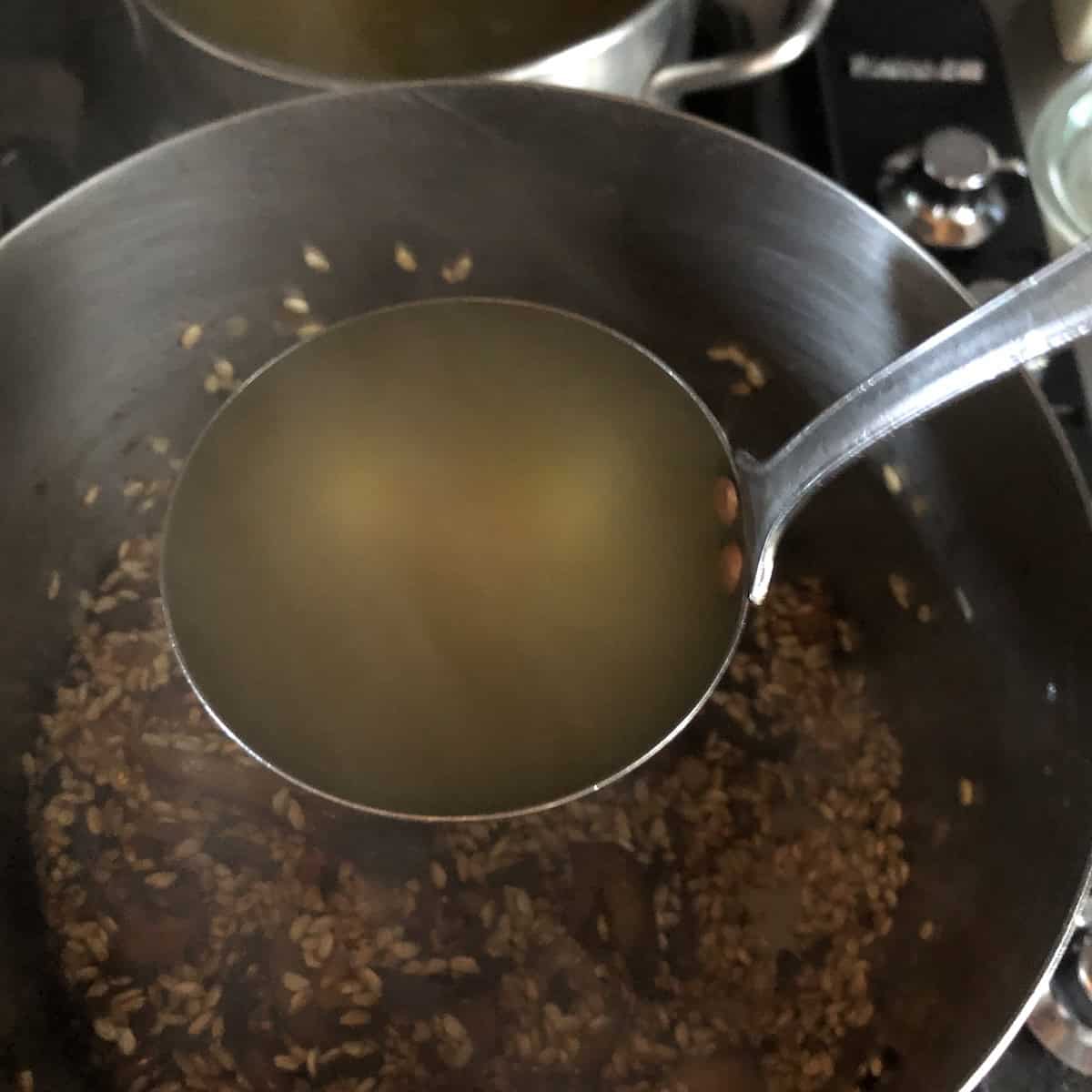
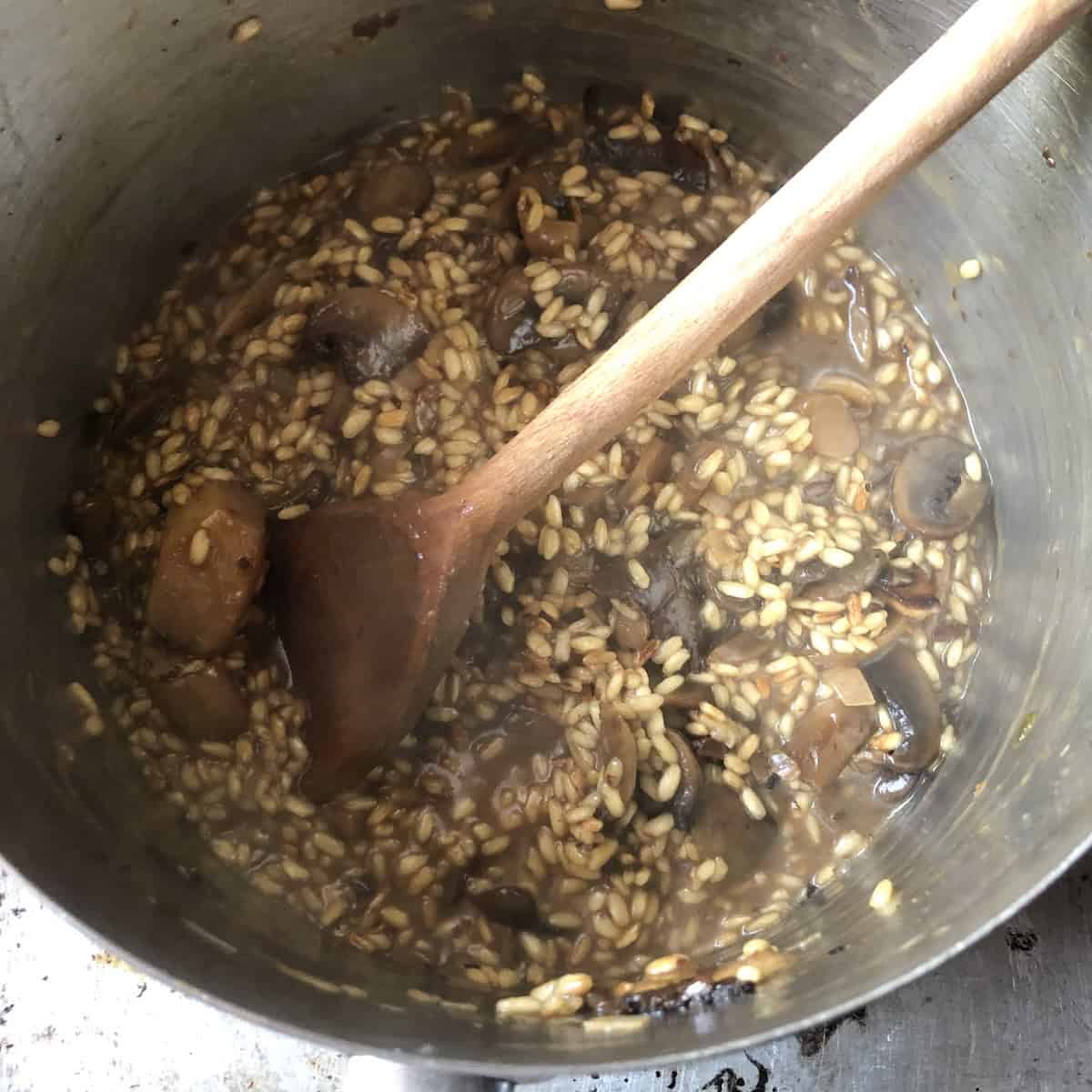
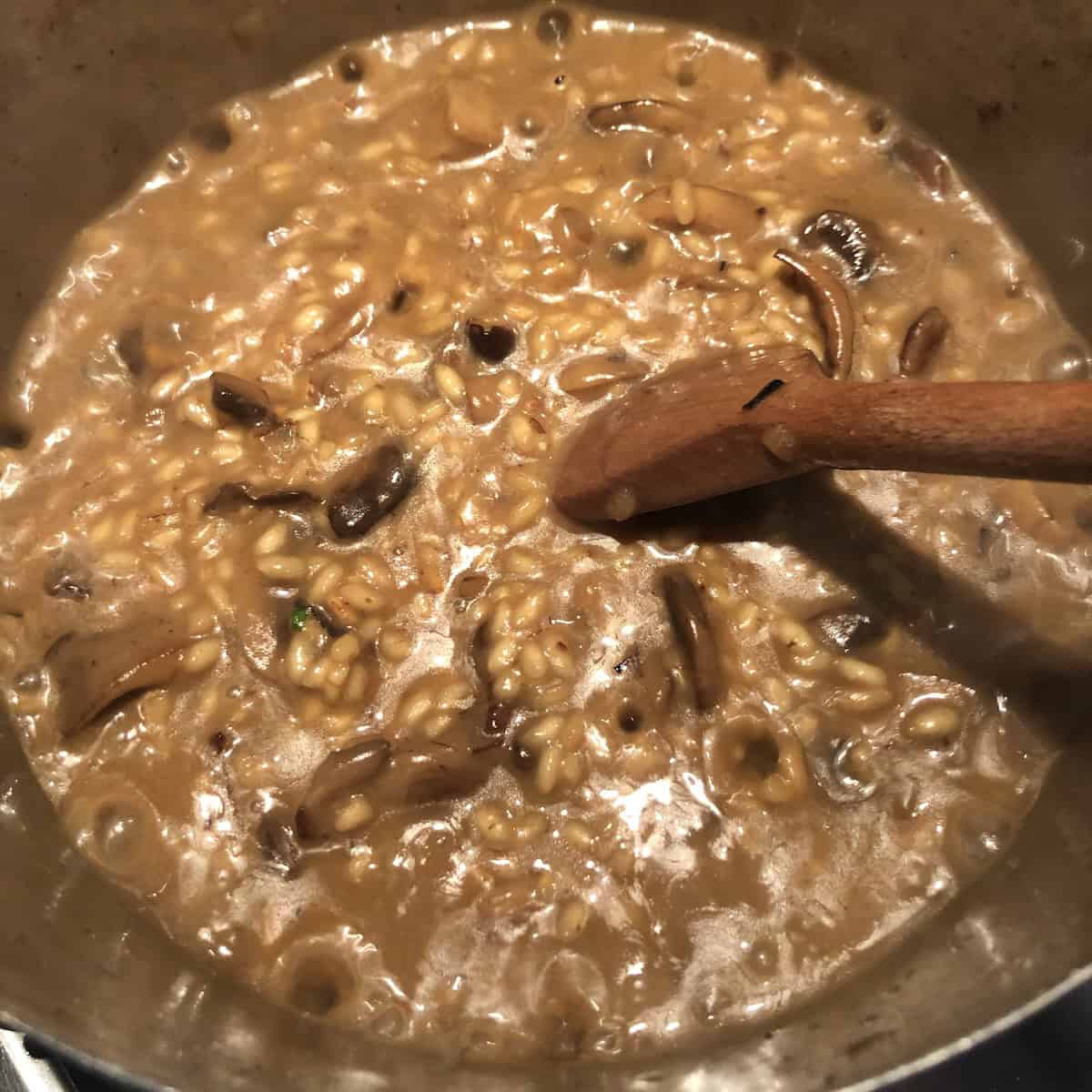
Increase the heat to medium-high. Start adding the hot broth one to two ladles at a time, stirring frequently and waiting for each addition to mostly absorb before adding the next. I like to shake the pan with one hand while stirring with the wooden spoon in the other (the push-pull method). You can also stir with a risotto spoon. Either works.
Continue adding broth until the risotto is ultra creamy and cooked through, about 18 minutes (last photo above). Add more broth to loosen it up or cook it a bit longer to make it less creamy/runny.
NOTE: This stirring is where the creaminess is actually built. Every stir releases starch from the rice into the broth, and that starch is what makes risotto naturally creamy. The mantecatura at the end (adding butter and parmesan and stirring like crazy for a minute or two) just locks it in and makes it shiny.
Step 5: Mantecatura (The Final Emulsion)
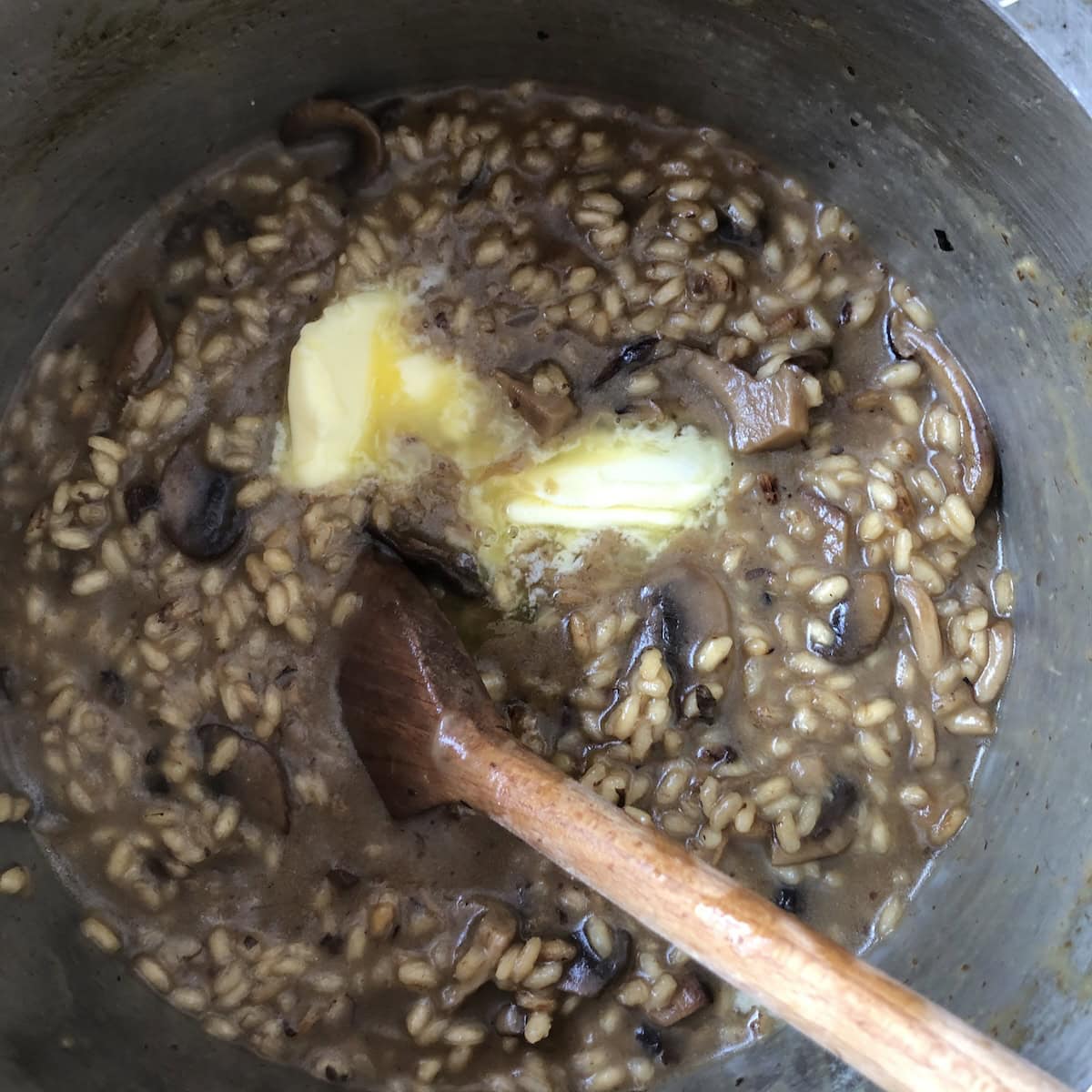
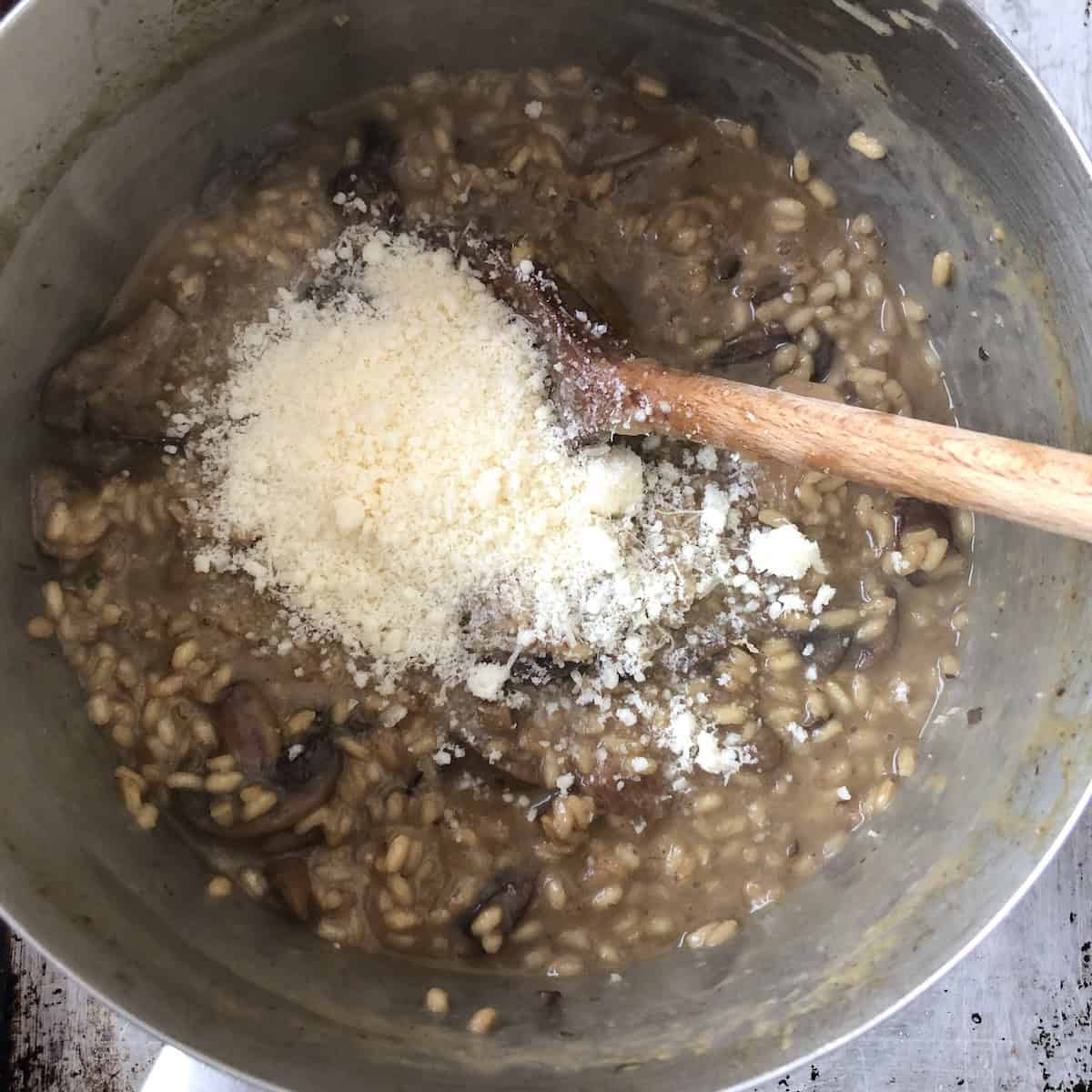
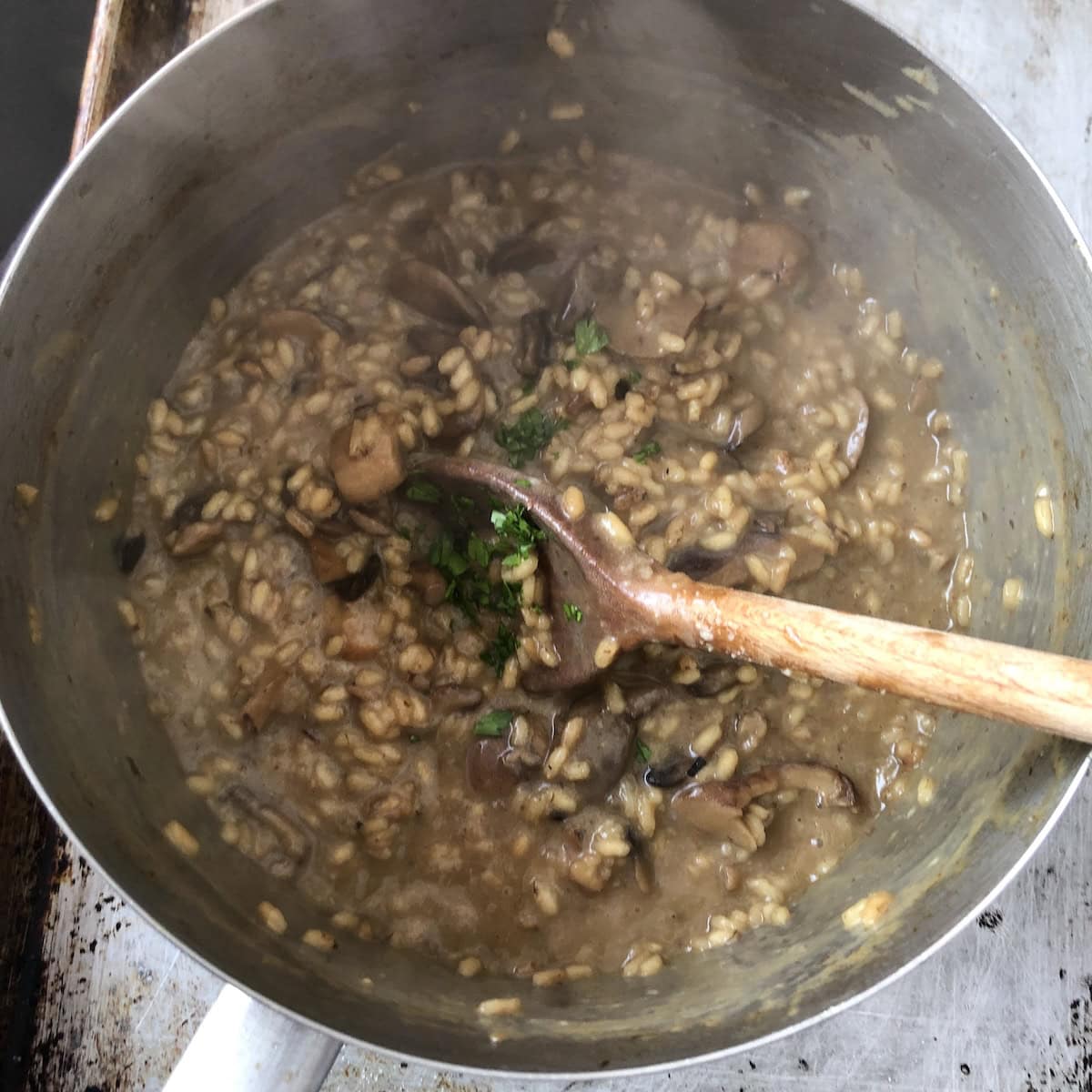
When the rice is finished, pull it off the stove and let it rest for one minute. Add the cold butter and cheese. Stir aggressively to emulsify the fats and starches into a glossy, saucy, creamy risotto. Taste for salt. Add a pinch or two of chopped parsley and stir once more.
Plate the risotto and tap the plate against your palm to spread it flat (not piled high). That's the Italian way! Serve immediately with more grated cheese.
Find detailed instructions in the recipe card
How to Make the Perfect Mushroom Risotto: Italian Tips
- Use Carnaroli rice if you can find it. It gets extremely creamy and holds its bite longer.
- Keep the broth at a low simmer the entire time. Hot broth, not room temperature, and never cold.
- Always heat a little more broth than you think you'll need. You can adjust how creamy the final risotto is by adding more or less at the end.
- Salt the broth, not the rice. Risotto draws its salt from the broth as it absorbs.
- Sauté the mushrooms in olive oil only. Butter goes in for the mantecatura.
- The mantecatura must happen off the heat.
- Save Parmigiano rinds for your homemade brodo instead of dropping them in the risotto as some recipes recommend. They infuse every grain of rice when they're in the broth. And eating the softened rind straight out of the brodo is honestly one of my favorite chef's snacks: chewy and great for gut health.
- Do not use long-grain rice, jasmine, basmati, or anything sold as "rice for paella." None of them have the starch profile that makes risotto work.
Substitutions
- Rice: Use Arborio, or Vialone Nano instead of Carnaroli. For a full breakdown of the three main Italian risotto rice varieties and what makes them different, see my crab risotto post.
- Wine: Dry vermouth works beautifully. If you don't use wine, substitute a splash of fresh lemon juice and extra broth. The acid matters.
- Broth: Homemade Italian chicken brodo is the gold standard. Low-sodium store-bought broth or stock is the next best. For a vegetarian version, use a good vegetable broth topped up with the porcini soaking liquid.
- Dairy-free: Skip the butter and cheese in the mantecatura and replace it with extra virgin olive oil. You still get creamy risotto, just lighter. The creaminess mostly comes from the rice starch anyway.
- Gluten-free: Risotto is naturally gluten-free. Just confirm your broth label.
Variations
- With truffle: Shave two or three thin slices of fresh summer or winter truffle over each plate just before serving.
- Add a protein: Top with a seared scallop, a piece of grilled or pan-roasted chicken, or crispy pancetta. Risotto goes with almost anything.
Equipment
- A wide, sauté pan or 12-inch skillet for sauteeing mushrooms
- 3-4qt heavy-bottomed pot for stirring and cooking the risotto
- A separate pot for keeping the broth at a simmer
- A ladle (about ½ cup capacity)
- A fine mesh sieve (for straining the porcini soaking liquid if using dried porcini)
- Risotto spoon or a regular wooden spoon
How to Store Mushroom Risotto
Refrigerate leftover mushroom risotto in an airtight container for up to 3 days. Risotto does not freeze well. The texture suffers significantly.
How to Reheat Mushroom Risotto Without Drying It Out
Leftover risotto is genuinely delicious, but it needs a little extra liquid to come back to life. The starch sets up overnight in the fridge, and reheating without loosening it can make it a bit thick.
The fix is simple: add 2 to 3 tablespoons of chicken broth per cup of cold risotto to a saucepan over low heat. Stir it gently until the rice loosens and warms all the way through.
The microwave works if you're in a hurry. Cover the bowl, add the same splash of broth, and stir halfway through.
What to Do With Leftover Mushroom Risotto
You have three great options for day-old risotto, all delicious:
- Reheat it as-is. Use the method above. Honestly, leftover risotto warmed through with a splash of broth is one of the better quick dinners you can give yourself.
- Stir it into soup. A scoop of cold risotto added to a brothy soup at the end of cooking thickens it and adds instant body and flavor. Especially good in vegetable, bean, or mushroom soups.
- Make mushroom arancini. The traditional Sicilian use for leftover risotto. Roll cold risotto into balls or the traditional cone or tear-drop (pera tozza) shapes, optionally stuff with a cube of mozzarella, then coat in flour, beaten egg, and fine breadcrumbs (panko works beautifully even if it's not traditional). Fry until golden in 350°F/175°C hot oil. The cone shape is traditional in eastern Sicily, the sphere in western Sicily.
What to Serve with Mushroom Risotto
In Italy, mushroom risotto is a primo: a first course, served on its own or with a simple green salad. It is not a side dish.
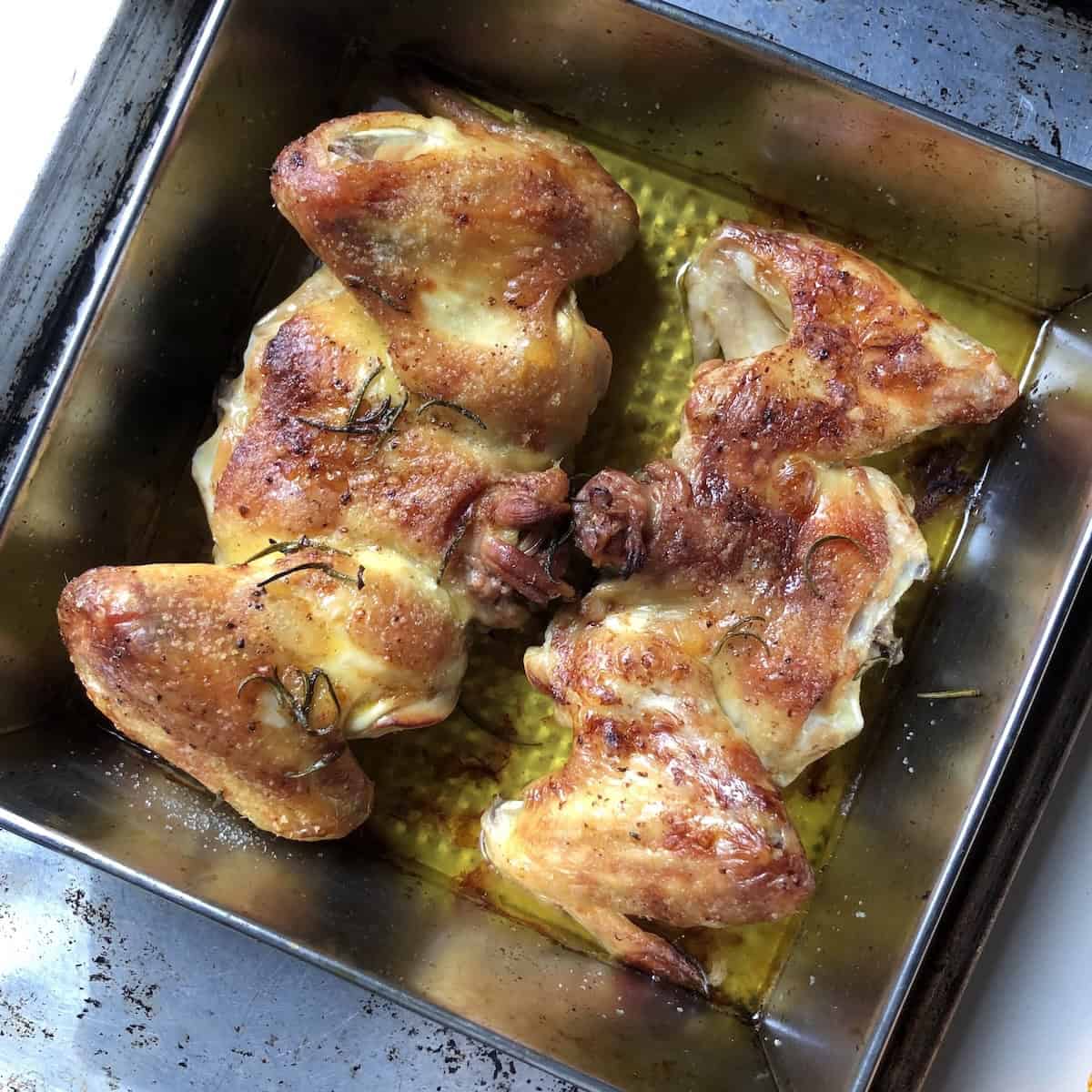
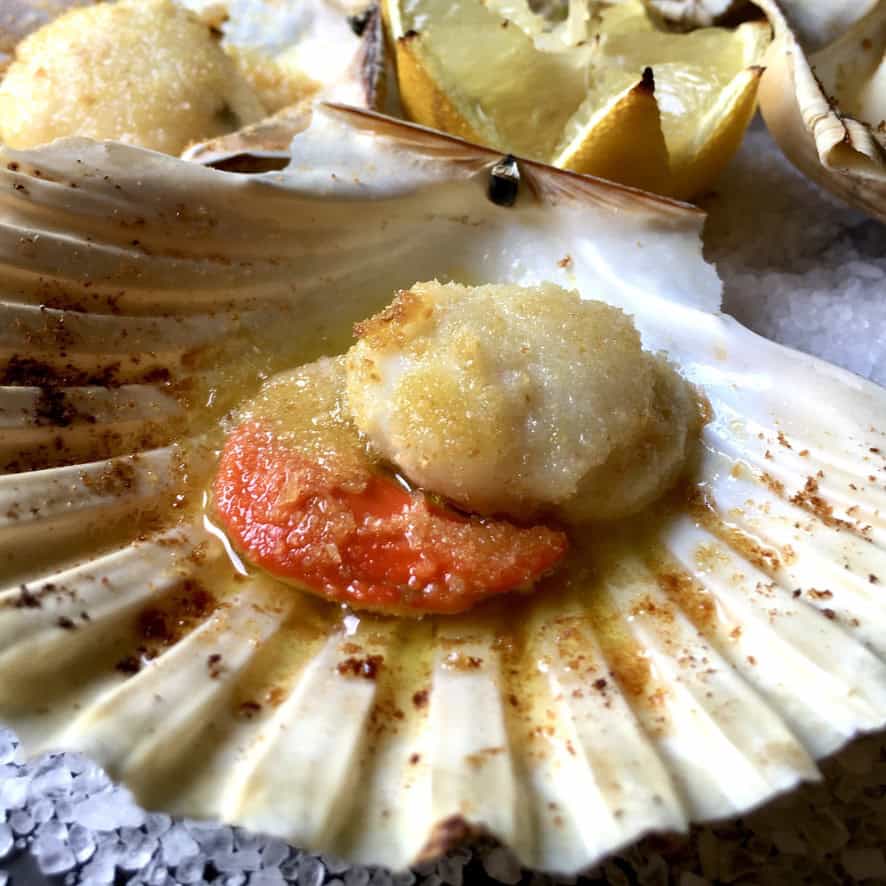
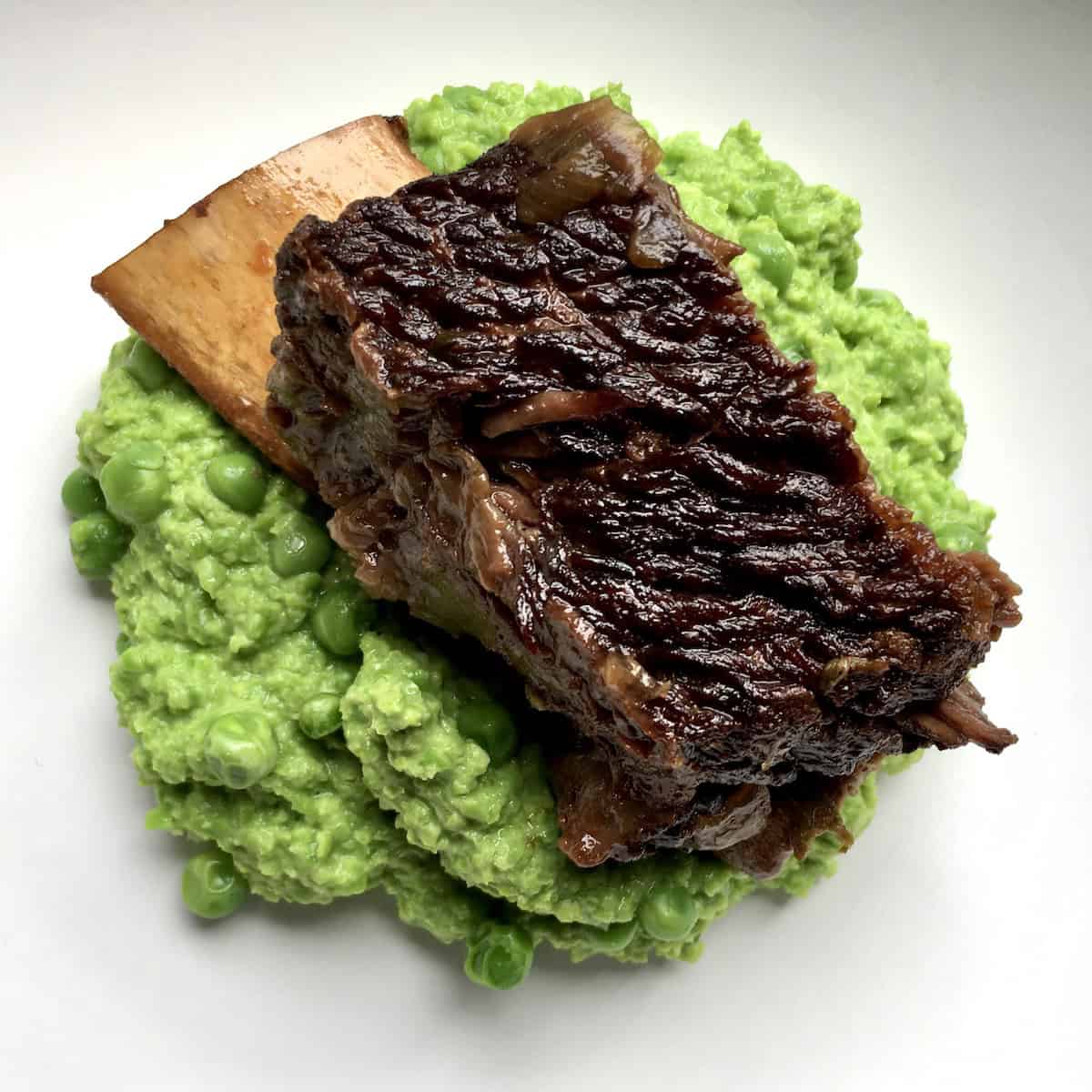
As an American main course, it pairs well with roasted chicken, grilled chicken, braised short ribs, seared scallops or scallops au gratin, or a bitter green salad with radicchio or chicory.
Wines to Pair With Mushroom Risotto
Red Wine: In the cooler months, medium-bodied Italian reds work best, like Nebbiolo, Barbera, a Valpolicella Ripasso, or a good Pinot Nero from the Alto Adige if you can find one.
White Wine: In spring and summer, when you want something lighter, go with an Italian white or sparkling. Sauvignon Blanc del Collio, a Pinot Grigio from Friuli Colli Orientali, Soave Classico from the Veneto, or a Kerner from the Valle Isarco.
Bollicine (sparkling wines): a Trento DOC (Chardonnay-Pinot Nero metodo classico) or prosecco is a classic Italian pairing. Franciacorta or any good Champagne (especially a blanc de blancs) works well too.
Top Tips
- The broth needs to be hot because cold broth shocks the rice and stops the cooking. Keep it at a low simmer on the back burner.
- Always have more hot broth than you think you need. I once ran out of brodo and had to top up with water, after working so hard to build all those layers of flavor. I always have about a cup or two more than I need. I use whatever's leftover to reheat any risotto leftovers the next day or throw it into a soup or to make homemade gravy.
- Creamy risotto does not require cream. The creaminess comes from the rice releasing its starch during stirring and the mantecatura method emulsifying everything at the end. Adding cream is a stylistic choice, not a structural one. We love this version on the creamier end of the spectrum, but if you want a more structured (firm) risotto, it's great either way.
- It's okay to walk away. If a kid is melting down or the dog is going crazy mid-risotto stirring, turn the heat to its lowest setting and come back. Near constant stirring makes the best risotto for sure, but it's way more forgiving than people let on. Homemade risotto with imperfect stirring is still infinitely better than the ultra-processed alternative or paying $30 for it at a local restaurant.
- WHEN USING DRIED PORCINI that need to be rehydrated, the porcini soaking liquid is full of flavor. Strain it carefully (there will almost always be grit at the bottom) and add it to the broth pot.
- Don't add Parmigiano rinds to the risotto. Save them for making the best brodo (broth) of your life. They make the broth richer, and they're a pain to fish out of the risotto and scrape off before serving.
FAQ
Mushroom risotto is made with short-grain Italian rice (Carnaroli, Arborio, or Vialone Nano), hot broth, sautéed mushrooms, shallot, a splash of dry white wine, extra virgin olive oil, and butter, and grated Grana Padano or Parmigiano-Reggiano stirred in at the end. The mushroom variety can be anything from fresh porcini to Italian-style canned mushrooms in oil.
Mushroom risotto is the general term and most commonly uses cultivated champignon, cremini, or even portobello (larger cremini). Wild mushroom risotto specifies foraged or wild-harvested varieties such as porcini, chanterelles, oyster mushrooms, or pioppini. The technique is identical; only the mushroom mix changes. Wild versions tend to have a deeper flavor because of the porcini addition.
Porcini risotto (risotto ai funghi porcini in Italian) is mushroom risotto made primarily or entirely with porcini mushrooms, fresh, frozen, or dried (that have been rehydrated). Porcini have a concentrated, earthy umami flavor that no other mushroom matches. In Italy, dried porcini are a pantry staple; the strained soaking liquid is added back to the broth for maximum mushroom flavor.
Porcini are the most prized mushrooms in Italian cooking. Their flavor is meaty, nutty, and intensely savory because of natural compounds including glutamates and 1-octen-3-ol. When dried, the flavor concentrates, which is why even a small handful of dried porcini transforms a risotto. The soaking liquid carries a lot of the flavor and is not thrown out.
Yes, mushroom risotto is naturally gluten-free. The grain used is rice (Carnaroli, Arborio, or Vialone Nano), not wheat. The only place gluten can sneak in is store-bought broth/stock. Some commercial broths contain wheat-based additives. Check the broth label, or better yet, make your own brodo, it's a hundred times better than anything from a box or a can.
Yes. The base technique works with any combination of fresh, frozen, dried, or Italian-style canned mushrooms in oil. Fresh porcini and a mix of wild mushrooms make the most luxurious version. Champignon or cremini make the everyday delicious Italian version. Italian seasoned mushrooms in oil with dried porcini make an excellent pantry version. Do not use American canned mushrooms in water, which aren't the same and are virtually tasteless.
Mushroom risotto takes about 30 to 40 minutes from start to finish: roughly 10 minutes of prep (chopping, soaking dried porcini if using), 18 to 20 minutes of active cooking with gradual broth additions, and 1 to 2 minutes of final mantecatura (the final butter-and-cheese emulsion) off the heat.
Reheat mushroom risotto in a saucepan over low heat with a couple of splashes of warm broth (or water in a pinch), about 2 tablespoons per cup of risotto. Stir gently until loose and warmed through. Avoid the microwave when possible; if you must use it, add a little broth to the bowl, stir, cover, and heat, stopping to stir the risotto halfway. Day-old risotto is also the basis for Sicilian arancini (delicious fried risotto balls).
In Italy, mushroom risotto is a primo (first course) served on its own or as a main entree with a simple green salad. As an American main or side, it pairs well with roasted chicken, braised short ribs, seared scallops, or a bitter green like radicchio with fresh lemon juice and EVOO + salt. For the best wine to serve, reds are most often served in the fall and winter months and include medium-bodied Italian reds such as Nebbiolo, Barbera, or Valpolicella Ripasso. In the summer months, white wines like Sauvignon Blanc del Collio, Pinot Grigio, Soave Classico, Kerner from the Valle Isarco, and sparkling wine like Trento DOC (Chardonnay-Pinot Nero metodo classico) are the classic Italian pairing because the bubbles cut through the mantecatura's richness. Franciacorta works for the same reason.
More Risotto Recipes & Mushroom Recipes
- Easy Crab Risotto Recipe (Risotto al Granchio Blu Classico + Video)
- 25-Minute Lemongrass Prawn Risotto (Shrimp Risotto)
- Asparagus Risotto w/Pan-Seared Scallops & Crispy Speck
- The Best Chicken Broth Recipe (Italian Brodo di Pollo)
- Authentic Mushroom Pasta ai Funghi (No Cream)
- Smoky Shake Shack Shroom Burger Recipe
- Easy Creamy Pioppini Mushroom Pasta (Pasta con Funghi e Panna)
- Anti-Inflammatory Chicken Bone Broth w/Turmeric, Ginger, Mushrooms



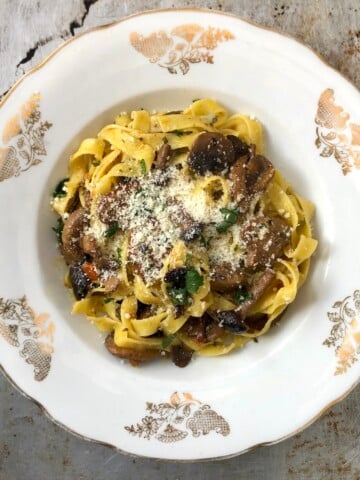



Let's Get Started!
Made this Recipe? We'd love for you to rate ⭐️ it and tell us how it went for you!
📖 Recipe
Mushroom Risotto
- Total Time: 45 minutes
- Yield: 6 Primi Servings or 4 Main Course Servings
- Diet: Gluten Free, Gluten-Free, Vegetarian
Description
Creamy Italian mushroom risotto, three ways depending on the mushrooms you have on hand: with fresh wild mushrooms, including fresh or frozen porcini, with everyday champignon, or with seasoned Italian canned mushrooms in oil + dried porcini. This is real Italian mushroom risotto, made just how my family, friends, and restaurants make it here in Italy.
Ingredients
11 ounces fresh mushrooms (champignon, oyster, pioppini, or a mix) (300g)
7 ounces fresh (or frozen) porcini mushrooms (or substitute dried porcini; see Notes below for equivalents) (200g)
2 tablespoons extra virgin olive oil (for sautéing the mushrooms) (30g)
2 tablespoons extra virgin olive oil (for toasting the rice) (30g)
2-3 sprigs of fresh flat leaf parsley
11 ½ ounces Carnaroli risotto rice (sub Arborio or Vialone Nano) (320g)
2 shallots, finely diced
¼ cup dry white wine (sauvignon blanc, Pinot grigio, or Sancerre) (60g)
1 ½ to 2 quarts homemade chicken broth (sub unsalted or low-sodium store-bought) (up to 1.89 liters)
2 tablespoons unsalted cold butter (30g)
⅓ cup Grana Padano or Parmigiano-Reggiano, grated (30g)
 Get Recipe Ingredients
Instructions
1. Heat the broth. Bring the chicken broth to a low simmer in a saucepan and keep hot on the back burner throughout cooking. If using dried porcini, soak them in ½ cup hot water for 15 minutes, then strain the soaking liquid (through a fine mesh sieve or coffee filter) into the broth. Chop the rehydrated porcini.
2. Sauté the first batch of mushrooms. Heat 1 tablespoon EVOO and the parsley sprig in a large skillet over medium-high. Add half the mushrooms in a single layer. Don't move them for 2 to 3 minutes so they can brown. Season with salt, then stir and cook until the water has evaporated and the mushrooms are golden, about 5 to 7 minutes more. Transfer to a plate.
3. Sauté the second batch. Add 1 more tablespoon EVOO to the same pan. Repeat with the remaining mushrooms (if using frozen porcini, sauté them on their own for about 6 to 7 minutes total). Return the first batch to the pan and toss to combine.
4. Deglaze the pan. Pour in the white wine. Scrape up the fond with a wooden spoon. Cook until the alcohol has evaporated, 3 to 4 minutes. If bits are still stuck, add a couple spoonfuls of hot broth to lift them. Set the pan aside.
5. Toast the rice (tostatura). In a deep 4qt pot, heat 2 tablespoons EVOO over medium. Add the rice and toast, stirring occasionally, for 4 to 5 minutes until lightly golden. Add the shallots and continue toasting for 3 to 4 minutes more, until the shallots are translucent and the rice is mostly golden.
6. Combine the mushrooms with the rice. Tip the sautéed mushrooms (and any pan drippings) into the rice pot. Stir to combine.
7. Add the broth gradually (cottura). Raise the heat to medium-high. Add hot broth one to two ladles at a time, stirring frequently, letting each addition mostly absorb before adding the next. Continue until the rice is al dente, about 18 minutes total. The risotto should be loose and creamy but not soupy.
8. Add the butter and Parmesan (mantecatura). Pull the pot off the heat and let it rest for 1 minute. Add the cold butter and grated cheese. Stir aggressively until the risotto is glossy and emulsified. If you need to loosen the mixture, add a little more hot broth until you reach the desired consistency.
9. Adjust seasonings and serve. Taste for salt. Stir in a pinch or two of chopped parsley. Plate the risotto and tap the plate against your palm to spread it flat. Serve immediately with more grated cheese.
Notes
If you have a few more or a few less of the fresh mushrooms, it's totally ok, I'm just giving you my precise measurements so you can make it exactly as I have if you want. Add more or less depending on what you have, but try to stay close to these measurements if you can.
Dried porcini substitution. If fresh or frozen porcini aren't available, use 10-14g (0.35 to ½ ounce) of dried porcini rehydrated in ½ cup hot water for 15 minutes. Chop the rehydrated porcini and add them with the mushrooms in Step 3. Strain the soaking liquid through a fine mesh sieve or coffee filter to remove any grit and pour it into the rice as part of the broth. Don't discard the soaking liquid; it has a ton of flavor in it.
Champignon (Button or Cremini) or Portobello variation. Use 18 oz (500g) of champignon or portobello mushrooms total in place of the mixed mushrooms and porcini. For a deeper flavor, add 0.35 oz 10g of dried porcini rehydrated as above.
Pantry variation. Use about 13 oz (360g) of seasoned Italian champignon trifolati in oil, drained (roughly two 210g cans, which drain down to about 180g of actual mushrooms), plus 0.35 to 0.5 oz (10 to 15g) of dried porcini rehydrated in ½ cup hot water. Read the ingredient list and make sure there is NO vinegar. The mushrooms should be packed in oil with garlic and parsley only. Do not use any mushrooms in oil that list vinegar (or aceto) in the ingredients. The vinegar will ruin your risotto, turning it sharp and sour instead of creamy and savory. Never use plain American canned mushrooms in water either.
Storage and reheating. Refrigerate in an airtight container for up to 3 days. To reheat, add 2 to 3 tablespoons of warm broth or water per cup of cold risotto and warm gently over low heat, stirring until loosened. Risotto does not freeze well. See more detailed options in the main post.
- Prep Time: 15 minutes
- Cook Time: 30 minutes
- Category: Dinner, Italian, Lunch, Vegetarian
- Method: Mantecatura, Stovetop + Mix & Stir
- Cuisine: Italian
Nutrition
- Serving Size: ¼ recipe
- Calories: 566
- Sugar: 4g
- Sodium: 96mg
- Fat: 24g
- Saturated Fat: 7g
- Unsaturated Fat: 17g
- Trans Fat: 0g
- Carbohydrates: 71g
- Fiber: 2.7g
- Protein: 14g
- Cholesterol: 35mg

How Much Should You Pay for Dried Porcini?
Dried porcini are not cheap, so thankfully, a little goes a long way. You only need 10g (0.35 oz) but you can add up to ½ ounce (14g) per 4 servings of risotto. Of course, if you want to use more, you can, but I typically stick to about 10g when I'm combining it with fresh or canned mushrooms in oil.
| Tier | Price in Italy (€/oz) | Price in US ($/oz) |
|---|---|---|
| Italian supermarket basic (store brand) | €2.60/oz | $3/oz |
| Italian supermarket standard (Pagnan, Crai) | €3.40–4.25/oz | $4–5/oz |
| Italian supermarket extra grade | €4.25–5.10/oz | $5–6/oz |
| Italian specialty / artisanal | €3.70–10.20/oz | $4–12/oz |
| Fungo di Borgotaro IGP | premium | premium |
| US retail (Whole Foods, Amazon, specialty) | n/a | $3 to $13/oz |
In the US, the most accessible quality Italian brand is Urbani Truffles AAA-grade. I've used theirs, and they're excellent. Other reliable options are Mushroom House (Grade AAA/AA) and Giannetti Artisans (sourced from Tuscany).
The per-serving math at any tier: 10 to 14g (0.35 to ½ oz) of dried porcini per 4 servings comes out to well under $1 per serving for the porcini, even at premium grades. A 1-ounce bag makes this recipe 2-3 times. That's what makes mushroom risotto one of the best return-on-flavor dishes in Italian home cooking.
A small bag of dried porcini lasts for months. I always store them in a glass jar once I get them home and keep them in the cupboard for soups, this risotto, dumpling fillings, and my anti-inflammatory bone broth.
Prices are approximate and reflect what I found at the time of writing (spring 2026). Italian prices are shown per ounce converted from how they're sold here by the kilo; US prices reflect typical small-package retail. Exchange rates and shelf prices shift, so treat these as a ballpark.
Food Safety
- Use fresh, unspoiled mushrooms. Discard any that have turned black, are slimy or smell off.
- Refrigerate leftover risotto within 2 hours of cooking.
- Reheat to an internal temperature of 165°F (74°C).
- Strain porcini soaking liquid through a fine mesh sieve or coffee filter, because dried mushrooms can occasionally carry grit.
- Never forage wild mushrooms unless you have been trained to identify them. Some lookalikes are deadly.




Made the Recipe? Tell Us What You Think!