

This anti-inflammatory broth recipe is your nutrient-dense, super sippable answer when you need a little extra nourishment or you're feeling a bit under the weather. It's made using ingredients known to help reduce inflammation, like turmeric, ginger, collagen-rich bones, and medicinal mushrooms.
But this immune-boosting broth goes further, combining four umami sources and healing ingredients from Chinese, Japanese, and Italian traditions, so it tastes amazing too😉! Plus, it's the perfect post-holiday reset-a warm, nourishing broth to start the new year feeling your best.

Why This Recipe Works: Anti-Inflammatory Healing Chicken Broth
I developed this recipe for anyone looking to generally nourish their body, and especially for those of you who may be battling cancer, as my own mom and sister did.
It pulls from the healing food traditions I learned while living in Chengdu (Sichuan, China), and my experience cooking for various clients' health needs, as well as caring for my mom, leading up to and throughout her brain cancer diagnosis.
And I've combined this with a few delicious brodo-making tips from Luca's mamma here in Italy.
For me, this broth is a nutritious, tangible way of showing love through food🤗. But there's actually some cool science behind why each of these ingredients was chosen:
- This anti-inflammatory healing chicken bone broth combines fourteen research-backed ingredients-each chosen for documented anti-inflammatory properties (see the nerdy science reasons below).
- Four umami sources in one pot: kombu, bonito flakes, dried shiitake mushrooms, and aged grana padano rind create a depth of flavor that's deeply satisfying and sippable on its own.
- Kombu provides iodine, calcium, magnesium, and iron, plus the natural glutamates that form the backbone of Japanese dashi.
- Ready in 1 hour (pressure cooker), 2-3 hours (stovetop), or 8-10 hours (slow cooker).
- Developed while cooking for family members during cancer treatment, blending Chinese, Japanese, and Italian culinary healing traditions.
Jump to:
- Why This Recipe Works: Anti-Inflammatory Healing Chicken Broth
- Why You'll Love This Immune-Boosting Broth Recipe
- Why These Ingredients? The Healing Power Behind Every Addition
- Anti-Inflammatory Chicken Broth Ingredients
- How to Make Anti-Inflammatory Healing Chicken Broth
- Top Tips for Perfect Anti-Inflammatory Broth
- Substitutions
- Equipment
- How to Store Anti-Inflammatory Healing Broth
- How to Use This Healing Broth
- FAQ
- More Broth Recipes & Cozy Soups
- 📖 Recipe
- Food Safety

Why You'll Love This Immune-Boosting Broth Recipe
- Endlessly customizable. Adjust the spice level, swap mushroom varieties, or leave out ingredients based on your preferences-this recipe adapts to what you have and what you like.
- Rich in collagen and gelatin. Bone-in chicken releases collagen during cooking, creating that silky quality that makes the broth jiggle when cold. Sippable on its own. This isn't just a soup base-it's a warming, satisfying drink you'll actually crave. Also delicious with a little miso stirred in or as a base for Asian noodles.

Why These Ingredients? The Healing Power Behind Every Addition
Every ingredient in this broth was chosen with intention. This isn't about throwing trendy "superfoods" into a pot and hoping it will taste ok. Instead, it's about combining ingredients that have been used for healing across cultures (for centuries), and now backed by modern research.
The Anti-Inflammatory Trio: Turmeric, Ginger, Black Pepper & Crushed Red Pepper
Turmeric contains curcumin, one of the most extensively studied anti-inflammatory compounds. It's been used in Ayurvedic medicine for thousands of years and in Traditional Chinese Medicine (TCM) for pain and digestive support.
Curcumin's antioxidant and anti-inflammatory properties have been studied in countless peer-reviewed studies, and are worth a read at the end of this section if you're just learning about it.

Black pepper contains piperine, which increases curcumin absorption by up to 2,000%. Without it, most of the turmeric passes through your body unused.
This is why traditional golden milk recipes always include black pepper-ancient wisdom confirmed by modern science.
Fresh ginger contains gingerols and shogaols-compounds that give ginger its warmth and have been studied for anti-inflammatory and anti-nausea effects. When I lived in Chengdu, ginger was in so many dishes and herbal teas.
I use ginger quite a bit, especially during cold months or when anyone feels under the weather. In TCM, ginger is considered a warming herb that promotes circulation and aids digestion.
Crushed red pepper flakes contain capsaicin, studied for its anti-inflammatory and metabolism-supporting properties. They add gentle warmth, making this broth incredibly soothing to sip, and it also helps clear up stuffy noses.
Immune-Supporting Mushrooms: Wood Ear & Shiitake


Dried shiitake mushrooms have been used in Asian medicine for centuries (often called "the elixir of life"). They contain lentinan and beta-glucans, compounds that have been studied for their immune-modulating properties.
Beyond their potential health benefits, shiitakes add incredible umami depth and an earthy complexity to the broth. I use them in all kinds of recipes!
White wood ear mushrooms (snow fungus) are prized in TCM (Traditional Chinese Medicine) for nourishing yin, moistening the lungs, and promoting skin health.
In Chengdu (Sichuan province), I experienced them in both sweet soups and savory broths. They have a delicate, gelatinous texture when cooked that adds body to the broth without overpowering flavor.
Black wood ear mushrooms (cloud ear) are another TCM staple for supporting healthy blood and circulation. According to studies, they contain polysaccharides studied for various health-supporting properties. They're also rich in iron.


Mineral-Rich Ocean Ingredients: Kombu & Bonito Flakes
Kombu is where some of the added "minerals" in this healing broth comes from. This sea vegetable provides iodine (important for thyroid function), calcium, magnesium, and iron. It's also the foundation of Japanese dashi, providing natural glutamates that create deep umami.
You can actually see the glutamine on kombu (it's the white powdery amino acid which naturally rises to the surface of the seaweed as it dries...it's not mold!). Kombu contains fucoidan, a compound studied for anti-inflammatory properties by the National Institutes of Health.
Bonito flakes (katsuobushi) are thin shavings of dried, fermented, and smoked skipjack tuna (the second pillar of Japanese dashi). They contain inosinic acid, which creates umami synergy when combined with kombu's glutamates.
This is the science behind why dashi tastes so deeply satisfying-the umami multiplies. As a fish product, bonito also provides easily digestible protein and B vitamins.

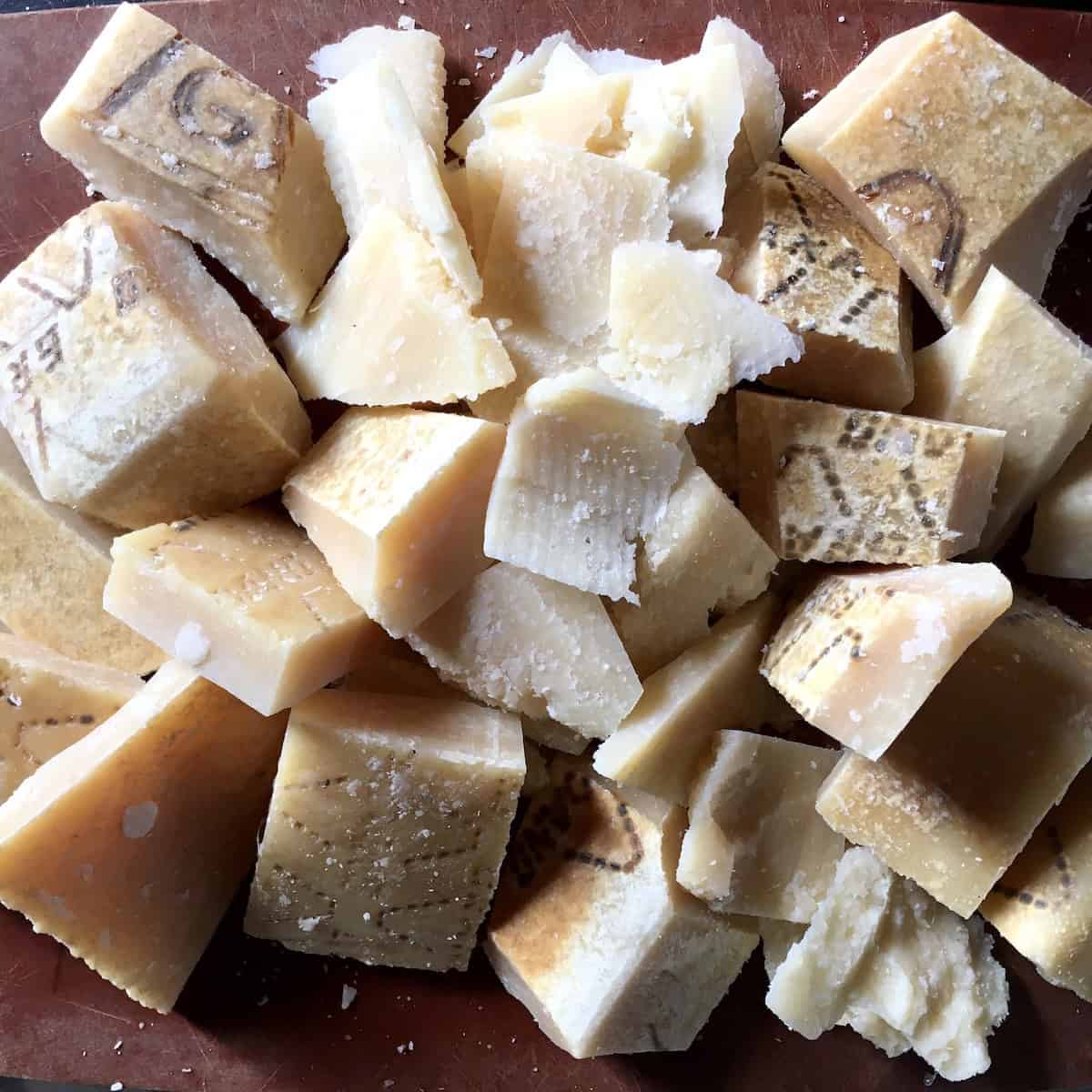
The Italian Secrets: Grana Padano & Cinnamon
Aged grana padano rind is straight from Luca's family tradition for adding extra flavor to broth. Never throw away your cheese rinds! Italian nonnas have added them to broths and soups for generations.
The rind provides another layer of umami (from natural glutamates instead of which are nature's natural MSG), plus calcium and easily digestible aged protein.
Cinnamon stick is Anna's (Luca's mamma) secret that changed everything I thought I knew about making chicken broth. Beyond adding warmth and depth, cinnamon contains cinnamaldehyde-studied for its anti-inflammatory and antioxidant properties.
Note: the cinnamon flavor is MUCH more pronounced in this broth because the glutamates from the four umami sources amplify all flavors naturally. Simply omit the cinnamon it if you're not a fan or use less.
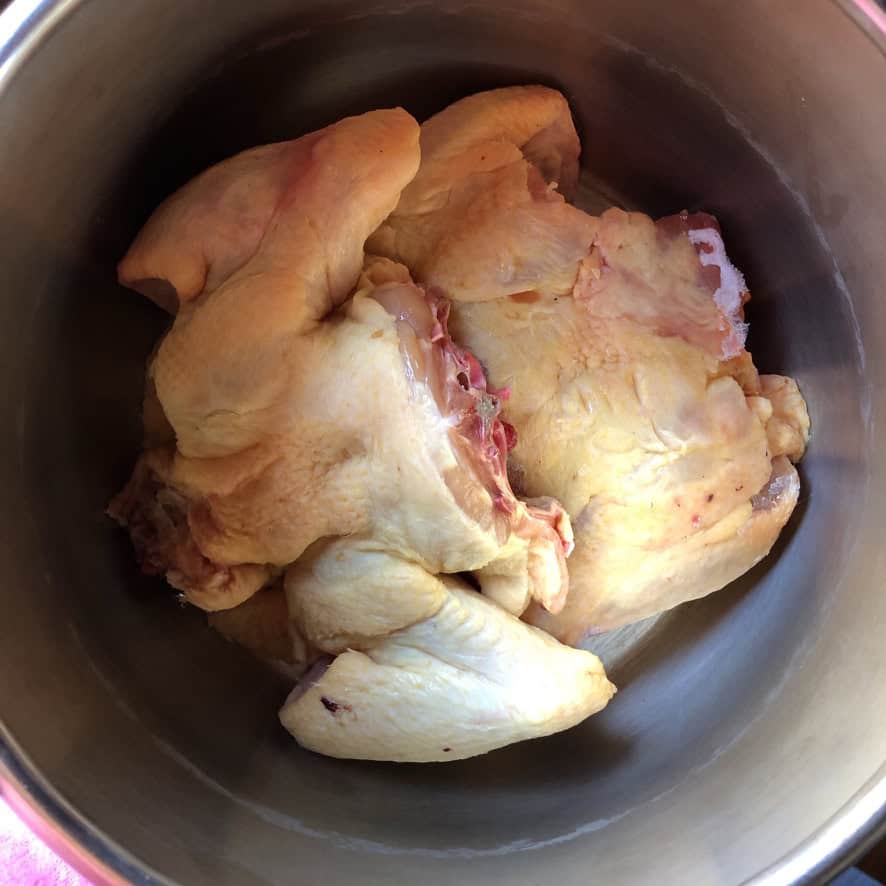
The Nourishing Base: Chicken & Aromatics
Bone-in chicken provides collagen that breaks down into gelatin during cooking. This is what gives the broth its silky, gut-soothing quality and makes it gel when cold. Collagen contains amino acids glycine and proline, studied for their role in supporting gut health, joint health, and restful sleep.
Onions contain quercetin, a powerful antioxidant, and prebiotic fibers that feed beneficial gut bacteria. Leave the skins on (just rinse them first), as they add color and contain even more quercetin.
Carrot and celery add natural sweetness and aromatic depth. Celery contains apigenin and luteolin, compounds with anti-inflammatory properties. Together with onions, they form the classic aromatic base that's perfect for any broth or stock.
Garlic is here for flavor, not allicin. This enzyme-activated compound starts breaking down at just 108°F/42°C and is fully destroyed by 140°F/60°C.
More importantly, research shows that as little as 60 seconds of microwave heating or 45 minutes of oven heating blocks garlic's ability to inhibit carcinogen binding. So, after an hour of cooking, those benefits are gone.
Want garlic's antimicrobial and cancer-fighting properties? Stir fresh minced garlic into your warm mug before sipping or eating it as a soup or noodle dish.
📚 The Science: Anti-Inflammatory Research for All 14 Ingredients (CLICK TO EXPAND & LEARN MORE COOL NERDY FACTS):
Turmeric contains curcumin, one of the most extensively studied anti-inflammatory compounds. It works by inhibiting NF-κB, a molecule that triggers inflammatory genes in your cells. Curcumin's antioxidant and anti-inflammatory properties have been documented in countless peer-reviewed studies.
Black pepper contains piperine, which increases curcumin absorption by up to 2,000%. Without it, most of the turmeric passes through your body unused.
Fresh ginger contains gingerols and shogaols-compounds with documented anti-inflammatory and anti-nausea effects. In Traditional Chinese Medicine, ginger is considered a warming herb that promotes circulation and aids digestion.
Cinnamon contains cinnamaldehyde, which inhibits pro-inflammatory cytokines IL-6 and TNF-α. In one study, cinnamon ranked among the most potent anti-inflammatory foods tested out of 115.
Red pepper flakes contain capsaicin, which inhibits NF-κB activation and reduces inflammatory cytokines. Research shows anti-inflammatory effects comparable to some common pain medications.
Kombu contains fucoidan, a sulfated polysaccharide with demonstrated anti-inflammatory and immune-modulating properties. It also provides iodine, calcium, magnesium, and iron.
Shiitake mushrooms contain lentinan and beta-glucans, compounds studied for immune-supporting and anti-tumor properties. They've been used medicinally in East Asia for centuries.
Black wood ear mushrooms (黑木耳) contain polysaccharides that attenuate inflammatory response and oxidative stress while providing antioxidant and immunomodulatory benefits.
White wood ear mushrooms (银耳) contain polysaccharides that reduce inflammation by inhibiting NF-κB pathways and decreasing TNF-α and IL-6 expression. Traditional Chinese Medicine uses them for lung and skin health.
Onion is rich in quercetin, a flavonoid that inhibits both COX and LOX inflammatory pathways, preventing formation of inflammatory compounds like leukotrienes.
Celery contains apigenin and luteolin, bioactive compounds that inhibit production of inflammatory cytokines IL-6, IL-8, and TNF-α by blocking NF-κB activation.
Carrots provide beta-carotene and polyacetylenes, which regulate pro-inflammatory cytokines and reduce oxidative stress by decreasing free radical accumulation.
Bone-in chicken releases glycine and proline from collagen during cooking. Glycine suppresses inflammatory cytokines TNF-α, IL-6, and IL-1β while increasing anti-inflammatory IL-10.
Bonito flakes contain peptides and amino acids that reduce multiple inflammatory markers including IL-5, IL-6, and granulocyte-colony stimulating factor.

Anti-Inflammatory Chicken Broth Ingredients
Don't be intimidated by the ingredient list! Many of these can be found cheaply at Asian grocery stores or ordered online. Once you have them in your pantry, they'll last for months/years, and you can make this healing broth anytime or use them for other noodle or soup recipes.
- Chicken (bone-in): Use backs, wings, necks, feet, legs, or thighs. Use the bony, collagen-rich parts-not expensive breast meat. See my Italian chicken broth recipe for more on choosing the best chicken parts for broth.
- Onions: Washed and halved (leave the skins on for extra nutrients and color).
- Carrot: Washed and halved (no need to peel or trim).
- Celery: For subtle aromatic depth.
- Fresh ginger: Washed and halved (no need to peel).
- Garlic: Whole cloves (no need to peel individual cloves).
- Dried shiitake mushrooms (香菇): Find these at any Asian grocery store. They keep for months in the pantry.
- White wood ear mushrooms (银耳): Also called snow fungus, snow ear, or silver ear fungus.
- Black wood ear mushrooms (木耳): Also called cloud ear or tree ear fungus.
- Kombu (昆布): This dried kelp is the foundation of Japanese dashi and where most of the minerals come from.
- Bonito flakes (鰹節): Also called katsuobushi. Find these near the kombu at Asian grocery stores.
- Cinnamon stick (1-inch piece): An Italian secret ingredient for making better broth. Omit it if you're not a fan of cinnamon or you want a more pure dashi-flavored stock. Because, specifically, in this recipe, the four umami sources in the broth amplify all other flavors, making cinnamon much more pronounced here. Whereas, in my classic Italian chicken broth recipe, most people don't even know it's in there because there is zero pronounced cinnamon flavor that comes through! Science is cool like this!
- Aged grana padano rind: Save your rinds in the freezer for this, or ask your cheesemonger for scraps. Parmigiano-Reggiano rinds work too.
- Black peppercorns: Whole peppercorns are best, but pre-ground or freshly ground black pepper works too. Do not skip this-it's essential for curcumin absorption.
- Crushed red pepper flakes: You can substitute cayenne pepper. Adjust for heat preference, using less if you're sensitive to spice.
- Turmeric powder: Ground turmeric works well, but fresh turmeric root is even better. Note: Some turmeric products have been found to be contaminated with lead due to bad actors in the spice trade. Buy from reputable sources.
- Cold filtered water: Starting with cold water helps extract more flavor and nutrients as ingredients heat gradually together.
See recipe card for exact quantities.

How to Make Anti-Inflammatory Healing Chicken Broth
Making this broth is incredibly simple! You're basically adding everything to a pot and letting time do the work. No sautéing, no skimming (if using a pressure cooker), and no complicated techniques. The magic happens through slow extraction.
How Long Does It Take to Make Immune-Boosting Chicken Broth?
| Method | Cook Time | Total Time |
|---|---|---|
| Pressure cooker | 1 hour | 1 hour 15 minutes |
| Stovetop | 2-3 hours | 2-3 hours 15 minutes |
| Slow cooker (LOW) | 8-10 hours | 8-10 hours 15 minutes |
| Slow cooker (HIGH) | 4-5 hours | 4-5 hours 15 minutes |
Pressure Cooker Method (Recommended)
Step 1: Add all ingredients to a 5-quart or larger pressure cooker. Start with cold filtered water, which helps extract more flavor as everything heats gradually together.


Step 2: Close the lid and bring to high pressure over high heat. Once high pressure is reached, reduce the heat to the lowest setting that still allows you to maintain high pressure. Cook for 1 hour at high pressure. If short on time, 45 minutes works, but the full hour extracts more collagen and deeper flavor.

Step 3: Turn off the heat and allow for a natural pressure release (15-20 minutes). This yields a clearer broth. But a quick release works perfectly fine if you're in a hurry, your broth will just be cloudier.

Step 4: Strain broth through a fine-mesh strainer into a large bowl. Discard solids. Reserve chicken meat and shiitake mushrooms for another use (if desired). Season with salt to taste. Pour into glass jars for storage.

Stovetop Method
Step 1: Add all ingredients to a 6-quart or larger stockpot or Dutch oven and bring it to a boil over high heat, then immediately reduce to a gentle simmer. Bubbles should barely break the surface.
Step 2: Skim any impurities that rise during the first 20-30 minutes. Then cover and simmer for 2-3 hours. The longer you simmer, the more collagen you extract.
Step 3: Strain, season with salt, and store as described above.
Slow Cooker Method
Step 1: Add all ingredients to a 6-quart or larger slow cooker.
Step 2: Cook on LOW for 8-10 hours or HIGH for 4-5 hours.
Step 3: Strain, season with salt, and store as described above.
This method is perfect for starting in the morning and having broth ready by dinner.
Find detailed instructions in the recipe card.
How Do You Know When The Broth Is Done?
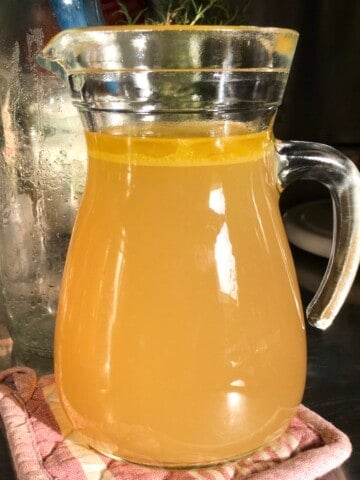
Your broth is ready when it has a rich, golden color and deep, savory flavor. When refrigerated, a collagen-rich broth will gel up a little like Jello, which means you've successfully extracted collagen from the bones.
If it doesn't gel, it's still nutritious and delicious; you may just need more bones or longer cooking time for the next batch.
Top Tips for Perfect Anti-Inflammatory Broth
- Start with cold water, not hot. Cold water helps extract more flavor and nutrients as ingredients heat gradually together. It also produces clearer broth.
- Don't skip the black pepper. This is non-negotiable. Without piperine from black pepper, your body absorbs less of the curcumin from turmeric. The anti-inflammatory benefits depend on this combination.
- Save your cheese rinds. Every time you finish a wedge of grana padano, Parmigiano-Reggiano, or even domestic Parmesan, toss it in a freezer bag. You'll always have one ready for broth.
- Natural pressure release = clearer broth. If you quick-release, the broth will be cloudier. Still delicious, just not as pretty if you care.
- Season lightly during cooking. You can always add more salt at the end. I add 1 teaspoon or less of sea salt or pink Himalayan salt during cooking and adjust after straining when I can taste the final result.
- Gelatinous is good. If your cold broth coagualates a little or ends up like Jello, you've done it right. That's the gelatin from collagen-exactly what gives this broth its gut-soothing, healing quality.
- Don't throw away the fat. The chicken fat (schmaltz) that rises to the top when refrigerated is liquid gold. Skim it off for a lighter broth, or leave it in for extra flavor and nourishment.
- Roast the bones first for deeper flavor (optional). Roasting chicken parts at 400°F for 30 minutes before simmering adds color and a richer, more complex taste. Not required, but worth trying or throwing in your Costco rotisserie chicken carcass😉.
Substitutions
- Can't find wood ear mushrooms? Omit them and double the shiitakes or substitute dried porcini mushrooms. The broth will still be delicious!
- No bonito flakes? Substitute with Italian bottarga. Or, you can omit them, but you'll lose one umami layer. The broth will still have three umami sources (kombu, shiitake, cheese rind) and will taste great!
- No kombu? This one is harder to replace. Kombu provides both minerals and the glutamate backbone of the broth. If unavailable, don't worry, simply add an extra shiitake or two, but know the flavor profile will be different.
- No grana padano rind? Parmigiano-Reggiano rind works exactly the same. Domestic Parmesan rind or any aged hard cheese rind will add umami depth. No cheese rind? Add a chunk of cheese itself, or omit it (the broth will still have three umami sources and taste great).
- Fresh turmeric instead of powder? Use a 1 to 2-inch piece, halved. Fresh is wonderful if you have it. Be warned: it stains everything it touches bright yellow (including your hands).
- No fresh ginger? Use 1 teaspoon ground ginger as a substitute, though fresh is preferred for both flavor and potency.
- Need it dairy-free? Simply omit the cheese rind. You'll lose one umami layer but the broth remains deeply flavorful.
- Want more heat? Double the crushed red pepper flakes or add a whole dried chile or ground cayenne pepper. Want less? Use ½ teaspoon or omit entirely.
Equipment
- Pressure cooker or Instant Pot (5-quart or larger): My preferred method for speed and maximum extraction. I use my pressure cooker for making broth weekly (sometimes twice a week).
- OR Large stockpot or Dutch oven (6-quart or larger): For the stovetop method.
- OR Slow cooker (6-quart or larger): For the overnight/all-day method.
- Fine-mesh strainer: Essential for straining out all the solids. A cheesecloth-lined colander works too for extra-clear broth.
- Tempered glass canning jars: Mason/Ball jars or Italian Bormioli Rocco jars work perfectly for fridge and freezer storage.
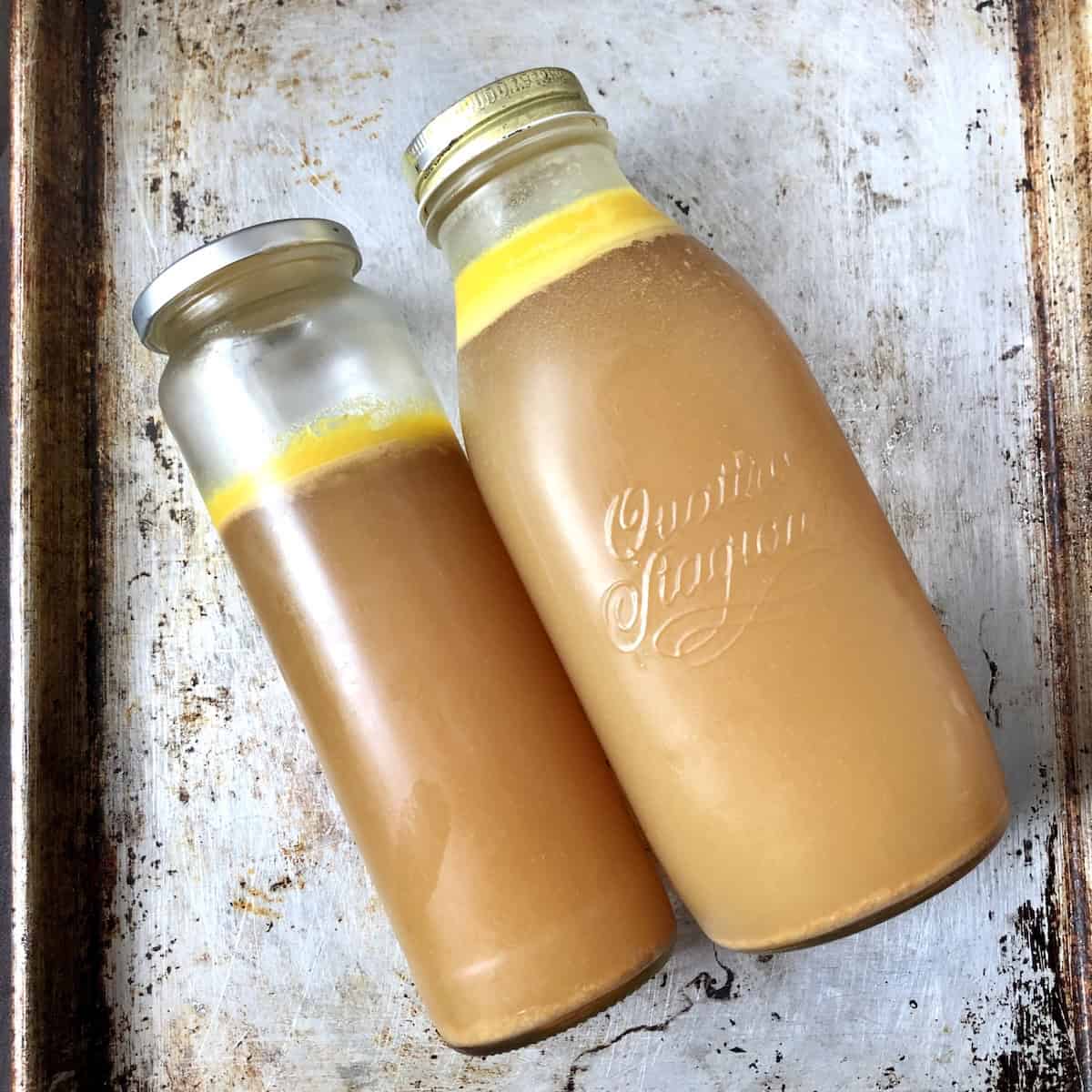
How to Store Anti-Inflammatory Healing Broth
Refrigerator: Let broth cool completely to room temperature, but try not to leave it out longer than 2 hours (food safety), especially in warmer climates and summer months. Transfer to glass canning jars and refrigerate.
Broth keeps for 4-5 days in the fridge. Try not to store it in the fridge door, which has wide temperature swings from opening and closing it.
Freezer: Leave 1 inch of headspace in glass jars so the broth can expand as it freezes. Freezer bags work great if you lay them flat for stackable storage if you're not opposed to using plastic. Frozen broth keeps for 4-6 months at best quality.
Ice cube trays: Perfect for small amounts when you need a splash for deglazing a pan, or sautéing vegetables. Pop out frozen cubes and transfer to a freezer bag for longer storage. I honestly don't ever store broth this way because I make it weekly and almost always have it on hand in the fridge.
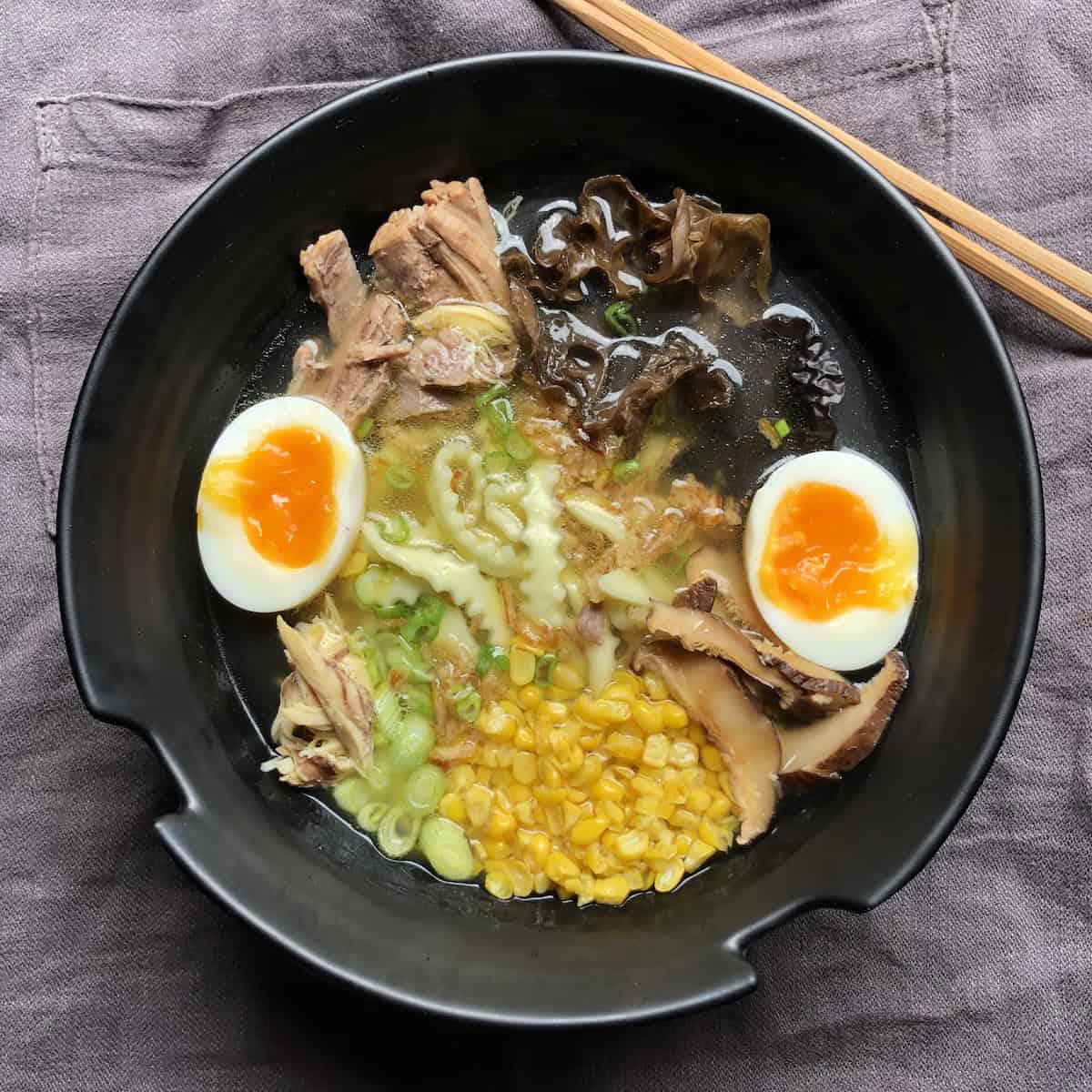
How to Use This Healing Broth
Sip it warm. Heat a mug and drink it like tea. It's incredibly soothing, especially when feeling under the weather or when you just need something nourishing.
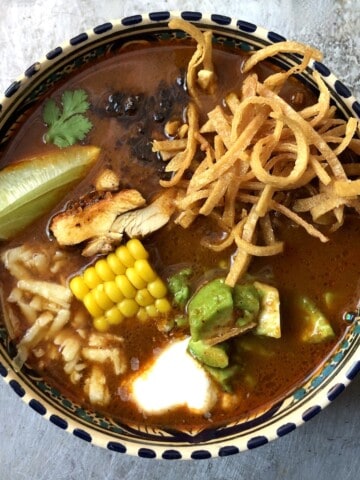
As a soup base. Use it for quick cheater miso ramen with homemade ramen eggs (one of my favorite ways to enjoy it), a cheater pho, udon noodle bowls, or any Asian-style soup, really. The umami depth makes everything taste more complex.
For cooking grains. Use instead of water for rice, quinoa, farro, or any grain. Instant flavor upgrade with added nutrition.
For braising. Use as the liquid for braised meats or vegetables. The collagen adds body to sauces.
For sautéing or blanching. Add a splash to deglaze a pan or sauté greens instead of using oil or butter. You can also use it to blanch vegetables for a healthy side.
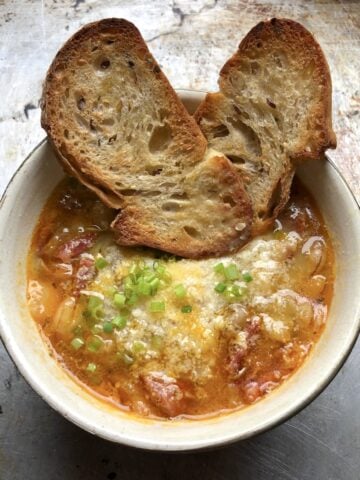
As a base for other soups. Use in place of store-bought broth in any recipe like chicken noodle soup, or vegetable soup.
Where to Find These Asian Ingredients
Dried shiitake mushrooms, wood ear mushrooms (white and black), kombu, and bonito flakes are available at most Asian grocery stores and some mainstream Health food grocery stores and co-ops as well. They're also easy to find online. And all of them have long shelf lives.
I recommend removing all the ingredients from their packaging (which, unfortunately, is usually plastic) and storing them in separate repurposed glass jars with tight-fitting lids. This is what I do to preserve them for much longer and more sustainably.
FAQ
This broth combines fourteen ingredients with research-documented anti-inflammatory properties: turmeric (curcumin), black pepper (piperine), ginger (gingerols), cinnamon (cinnamaldehyde), red pepper flakes (capsaicin), kombu (fucoidan), shiitake mushrooms (beta-glucans), black wood ear mushrooms (polysaccharides), white wood ear mushrooms (polysaccharides), onion (quercetin), celery (apigenin and luteolin), carrots (beta-carotene), bone-in chicken (glycine from collagen), and bonito flakes (anti-inflammatory peptides). Together, they create a broth that's genuinely supportive for the body and not just trendy marketing.
This is what makes this broth taste so deeply satisfying. Kombu provides glutamates, bonito flakes provide inosinic acid, shiitake mushrooms add their own glutamates, and aged Italian cheese rind contributes even more. When these umami sources combine, they create a synergy that makes the broth taste far more complex than any single ingredient could achieve alone. Think of it as dashi on steroids.
Yes! You'll lose one umami layer, but the broth will still be delicious thanks to the kombu, bonito, and shiitakes. Don't substitute anything else-just omit it.
I developed this recipe while cooking for family members going through cancer treatment, and they found it nourishing and easy to digest. However, ALWAYS check with your oncologist and healthcare team before making dietary changes during treatment. Some ingredients (like turmeric) can interact with certain medications.
There's no set amount-listen to your body. Many people enjoy 1-2 cups daily, especially during cold and flu season or when feeling run down. It's food, not medicine (even though food is the first natural medicine:), so drink what feels good to you.
Gelling depends on extracting enough collagen from the chicken bones over a long enough period of cooking time with the right bones and meat pieces to water ratio. Use bony parts (backs, wings, necks), cook long enough (45min+ in a pressure cooker, 2-3+ hours stovetop), and don't use too much water about 1 quart of water per pound of chicken parts. Even if it doesn't gel, it's still nutritious and delicious!
Not this exact recipe because the chicken provides the collagen base. However, you could make a vegetarian version using just the kombu, mushrooms, vegetables, cheese rind, and spices. It would be a different broth (more like a vegetable dashi), but still delicious and nourishing in its own way
More Broth Recipes & Cozy Soups
If you love this healing broth, you'll also enjoy these other broth recipes and comforting soups:
- Authentic Italian Tortellini (Tortellini in Brodo)
- Easy Homemade Chicken Noodle Soup (With a Ramen Twist)
- Authentic Sichuan Wonton Soup (Long Chāo Shǒu 龙抄手)
- Creamy Chicken and Dumpling Soup with Herbs (+Video)
- Easy Egg Drop Soup with Crispy Fried Wonton Strips (Danhuatang 蛋花湯)
- Mom's Easy Chicken and Dumplings Recipe (6-Ingredients, Southern)
- Tonkotsu Ramen Recipe (Easy Authentic Ramen)
- Homemade Chinese Soup Dumplings Xiaolongbao (小笼包) (100% From Scratch)




Made this Recipe? We'd love for you to rate ⭐️ it and tell us how it went for you!
Let's Get Started!
📖 Recipe

Anti-Inflammatory Chicken Bone Broth w/Turmeric, Ginger, Mushrooms
- Total Time: 1 hour 10 minutes
- Yield: 7 cups
- Diet: Gluten Free
Description
This anti-inflammatory healing chicken broth combines turmeric, ginger, and medicinal mushrooms with four umami sources for a deeply nourishing, sippable broth. Inspired by Chinese, Japanese, and Italian healing traditions, it's perfect for immune support or for sipping when you need comfort in a cup.
Ingredients
2 pounds chicken (bone-in backs, necks, wings, legs, or thighs)
2 quarts cold filtered water
2 medium onions, washed and halved (220g)
1 large carrot, washed and halved (80g)
1 rib of celery (80g)13 garlic cloves (30g)
2 ½-inch knob fresh ginger, washed and halved (25g)
5 dried shiitake mushrooms (18g)
2 white wood ear mushrooms, dried (8g)
3 black wood ear mushrooms, dried (4g)
1-inch piece of cinnamon stick
1 piece of kombu (4g)
1 ½ tablespoons bonito flakes (3g)
1 teaspoon black peppercorns (4g)
1 teaspoon crushed red pepper flakes (4g) (use less if your peppers are very spicy)
¼ teaspoon turmeric powder (2g)
1 aged grana padano rind
salt to taste (add after cooking)
 Get Recipe Ingredients
Instructions
Pressure Cooker Method (Recommended)
- Add all ingredients to a 5-quart or larger pressure cooker, starting with cold filtered water.
- Close the lid and bring to high pressure over high heat. Once high pressure is reached, reduce the heat to the lowest setting that maintains pressure. Cook for 1 hour at high pressure.
- Turn off the heat and allow for a natural pressure release (15-20 minutes) for clearer broth. Quick release is fine if you're short on time, but the broth will be cloudy.
- Strain the broth through a fine-mesh strainer into a large bowl or another pot. Discard the solids (reserve the chicken meat for another use if desired).
- Season with salt to taste. Pour into glass jars for storage.
Stovetop Method
- Add all ingredients to a 6-quart or larger stockpot. Bring to a boil over high heat and immediately reduce it to a gentle simmer (bubbles barely breaking the surface). Skim any foam and impurities during the first 20-30 minutes.
- Cover and simmer for 2-3 hours.
- Strain, season, and store as directed above.
Slow Cooker Method
- Add all ingredients to a 6-quart or larger slow cooker.
- Cook on LOW for 8-10 hours or HIGH for 4-5 hours.
- Strain, season, and store as directed above.
Notes
- Not a cinnamon fan? Omit it. The four umami sources amplify its flavor here, making it more pronounced than in a typical broth.
- Can't handle much spice? Omit the crushed red pepper flakes entirely. Love heat? Double them.
- Love ginger and turmeric? Use a 4-inch knob or more for a more ginger-forward broth and add even more turmeric to taste after the broth is fully cooked.
- Don't love dashi or the general "taste of the sea"? Omit the kombu (which is a sea plant with an ocean flavor) and the bonito flakes (which have a slight tuna flavor).
- Scaling up? Use a stockpot that's deeper than it is wide. Less surface area means less evaporation and more broth.
- No cheese rind on hand? Omit it or ask your cheesemonger for scraps. They often give them away, sell them cheaply, or add a chunk of actual Grana Padano, Parmigiano-Reggiano, or American Parmesan directly to the pot (just be sure to eat it if it doesn't fully disintegrate into the broth).
- Don't toss the chicken meat. Shred it for tacos, salads, or soup another day.
- For richer flavor, roast the chicken parts at 400°F for 30 minutes before adding to the pot.
- Freeze in 1-cup and 2-cup portions, so you always have the right amount ready.
- Broth too mild? Add a pinch more salt. Salt opens up all the other flavors.
- Prep Time: 10 minutes
- Cook Time: 1 hour
- Category: Soups & Stews
- Method: Pressure Cooker or Stovetop Slow-Simmered or Slow-Cooker
- Cuisine: Asian inspired
Nutrition
- Serving Size: 2 cups
- Calories: 98
- Sugar: 3g
- Sodium: 150mg
- Fat: 3g
- Saturated Fat: 1g
- Unsaturated Fat: 2g
- Trans Fat: 0g
- Carbohydrates: 6g
- Fiber: 1g
- Protein: 12g
- Cholesterol: 20g

Food Safety
- Cool broth quickly and safely: Don't leave homemade meat or bone broth at room temperature for more than 2 hours. Use an ice bath to cool quickly if needed.
- Refrigerate promptly: Once cooled to room temperature, transfer to the refrigerator. Broth keeps for 4-5 days refrigerated.
- Reheat thoroughly: When reheating, bring to a full boil (212°F/100°C) to ensure any bacteria are killed.
- Handle raw chicken safely: Wash hands thoroughly after handling raw chicken. Clean all surfaces and utensils with hot, soapy water.
- Check for spoilage: If broth smells off, sour, or strange, or if you see mold, discard immediately.
See more guidelines at USDA.gov.



Kelly says
This is the broth I make when I'm feeling a little under the weather and need something warm and nourishing. A mug of this and a cozy blanket is my go-to remedy:)