

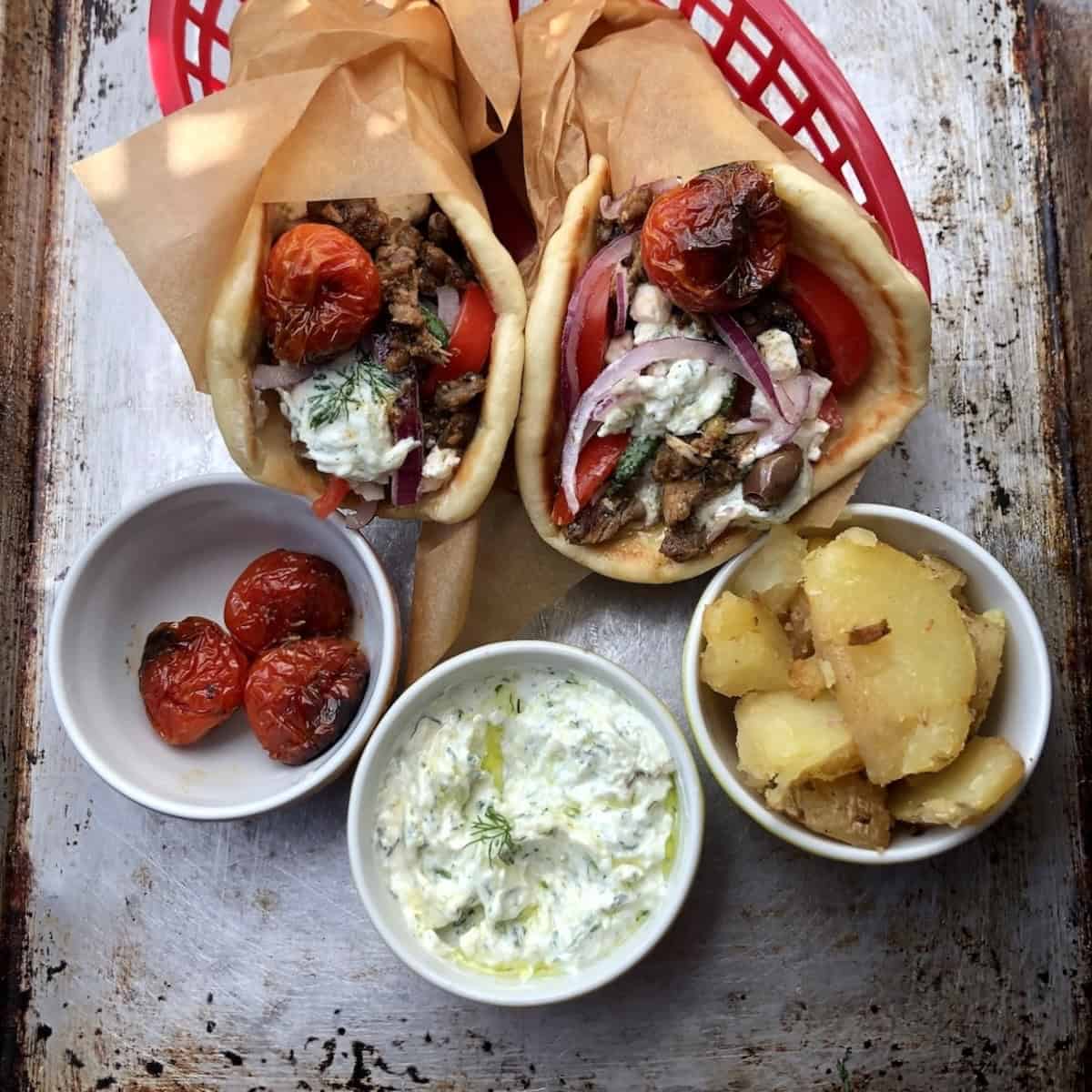
This homemade gyro meat recipe makes incredibly delicious gyros in a regular oven, no rotisserie or professional gyro cone needed. Pork neck and pork belly are marinated in Greek seasonings and spices, then stacked on skewers, wrapped, and slow-baked until tender, then crisped up for juicy, meaty slices just like what you get at a gyro shop.
Jump to:
- Why You Can Trust This Recipe
- Why You'll Love This Gyro Meat Recipe
- What Is Pork Gyro Made Of?
- Best Pork for Gyros: Neck and Belly vs. Shoulder
- Ingredients
- How to Make Gyro Meat (Pork Gyros in the Oven)
- Tips for Tender, Juicy Gyro Meat
- Gyro Toppings (For Greek Gyro Sandwich)
- How to Serve Pork Gyros
- Make-Ahead, Storage, and Reheating
- Pork Gyros FAQs
- More Mediterranean and Greek Recipes
- 📖 Recipe
- Food Safety
Why You Can Trust This Recipe
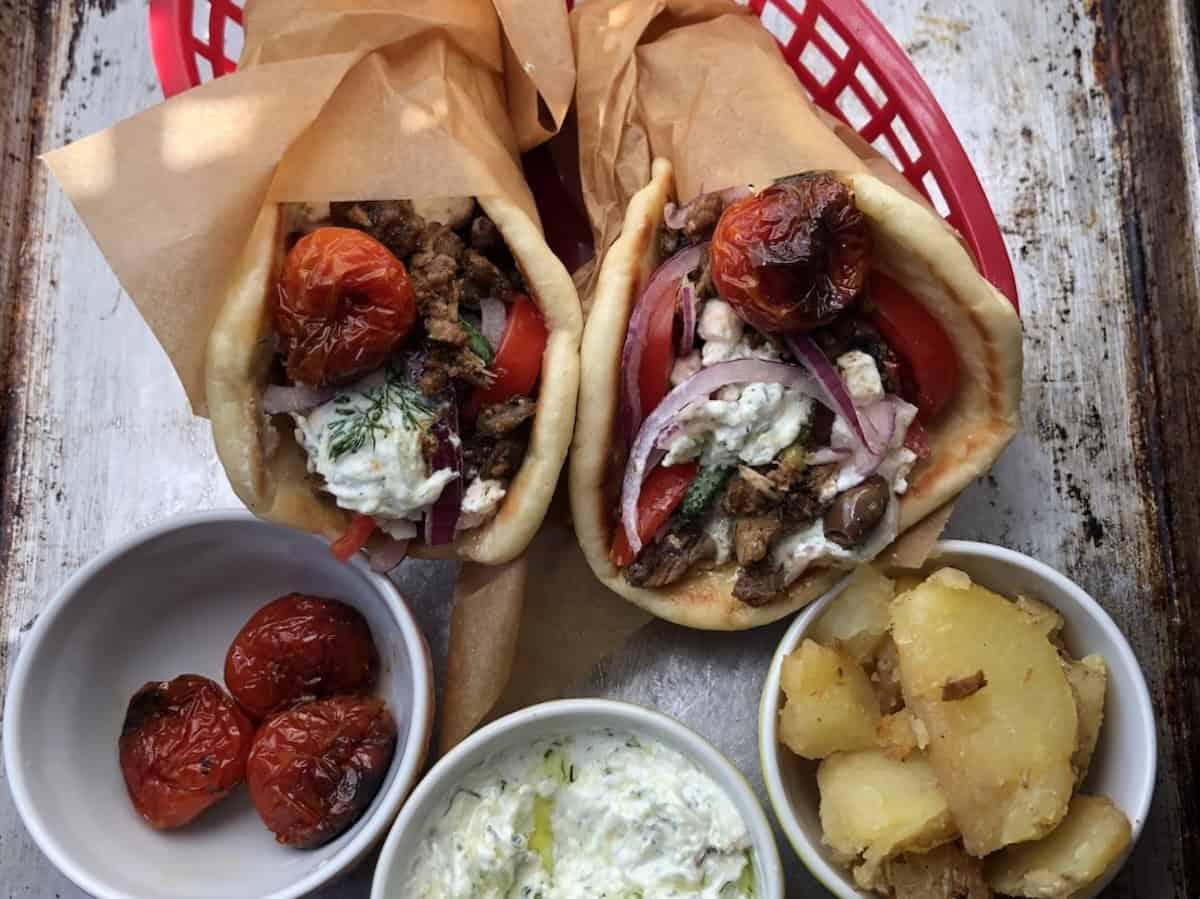
Gyros have been a favorite of mine ever since I worked at Georgia's (a local Greek restaurant) in college. My favorite items on the menu were always the chicken or pork gyros, souvlaki, the Greek salad, and always extra tzatziki sauce.
Later on, while living in NYC, I found a whole new appreciation (and level) of authentic Greek cuisine at places like Periyali, which is still one of my all-time favorite Greek restaurants.
Now here in Italy, the one (really tasty) Greek restaurant in the historic center where we live is run by two people, so orders can take a while, and if you have it delivered at home, it almost always arrives cold with dried-out meat. So, just like I've done with my favorite Mexican, Chinese, and Japanese dishes, I set out to recreate my favorite gyros at home out of "necessity" and for convenience.
Not only are these homemade gyros super delicious and full of authentic Greek gyro flavor, they're also really easy to make.
Why You'll Love This Gyro Meat Recipe
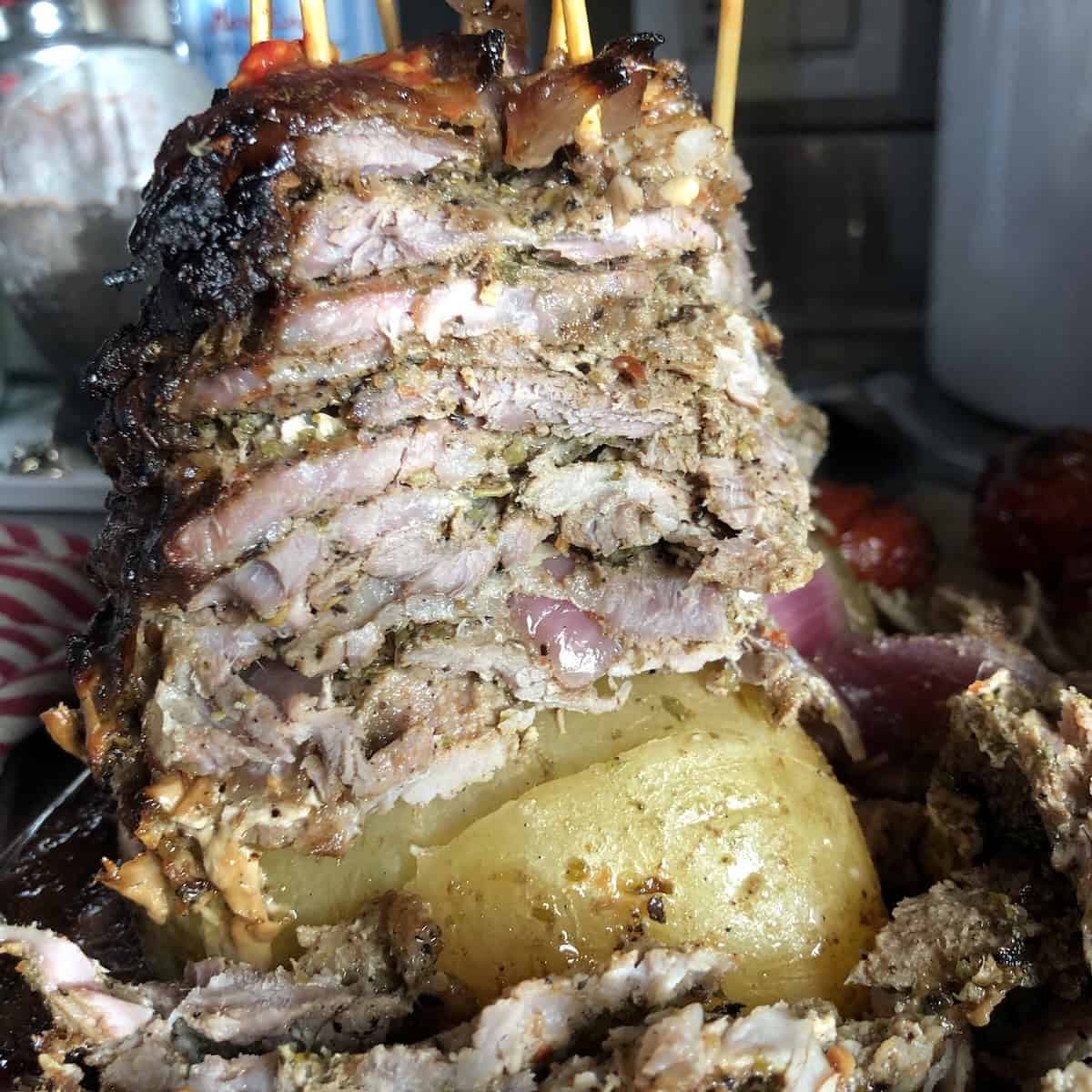
- No rotisserie needed. A DIY gyro stack on skewers bakes in a regular oven and slices just like the real thing.
- Authentic Greek pork gyros. In Greece, gyros are traditionally made with marinated pork (chicken is popular too), not the ground beef-and-lamb loaf common in the US.
- Tender inside, crispy outside. Pork neck and pork belly baste the stack as it slow-bakes, then the broiler crisps the edges.
- Budget-friendly option. Swap in pork shoulder (pork butt) when pork neck or belly is hard to find.
- Make-ahead friendly. The pork marinates 12 to 20 hours, so most of the work is done the night before, and you can refrigerate or freeze the sliced meat.
- So many ways to eat it. Stuff it into gyro pitas, pile it on a Greek salad, serve it with hummus and Greek pita bread, or eat it with eggs and toast for breakfast.
What Is Pork Gyro Made Of?
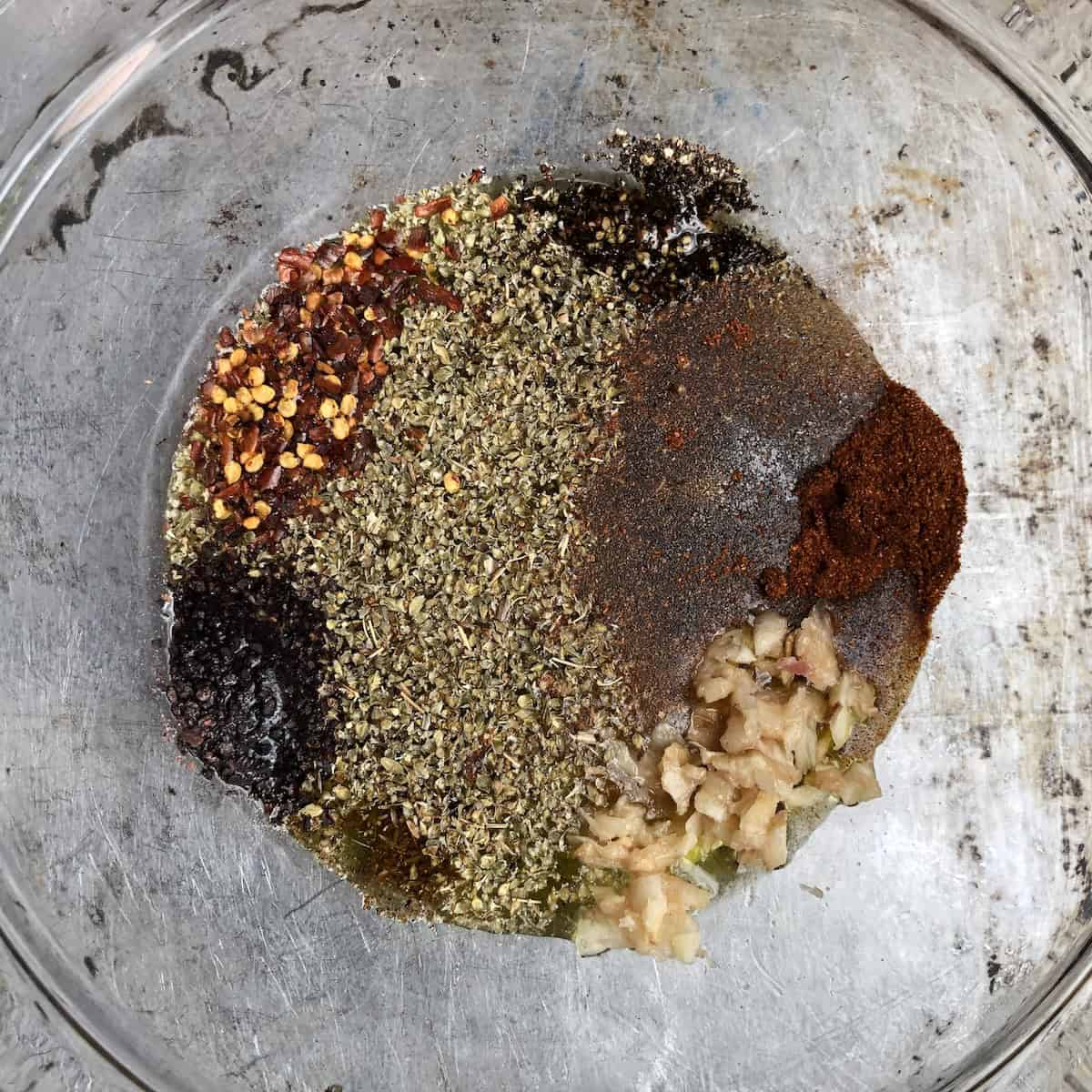
Traditional Greek gyros are thin slices of marinated meat, most often pork, usually well-marbled cuts like pork neck, butt, or shoulder layered with pork belly, stacked on a vertical spit and shaved off as the outside crisps. The ground lamb-and-beef gyro meat served in many American restaurants is a Greek-American version and a different recipe.
This gyro meat recipe is the authentic Greek pork kind marinated in a mix of typical gyro meat seasoning, made with a stack of skewered slices to create a DIY gyro meat cone tower that bakes in your oven.
Best Pork for Gyros: Neck and Belly vs. Shoulder
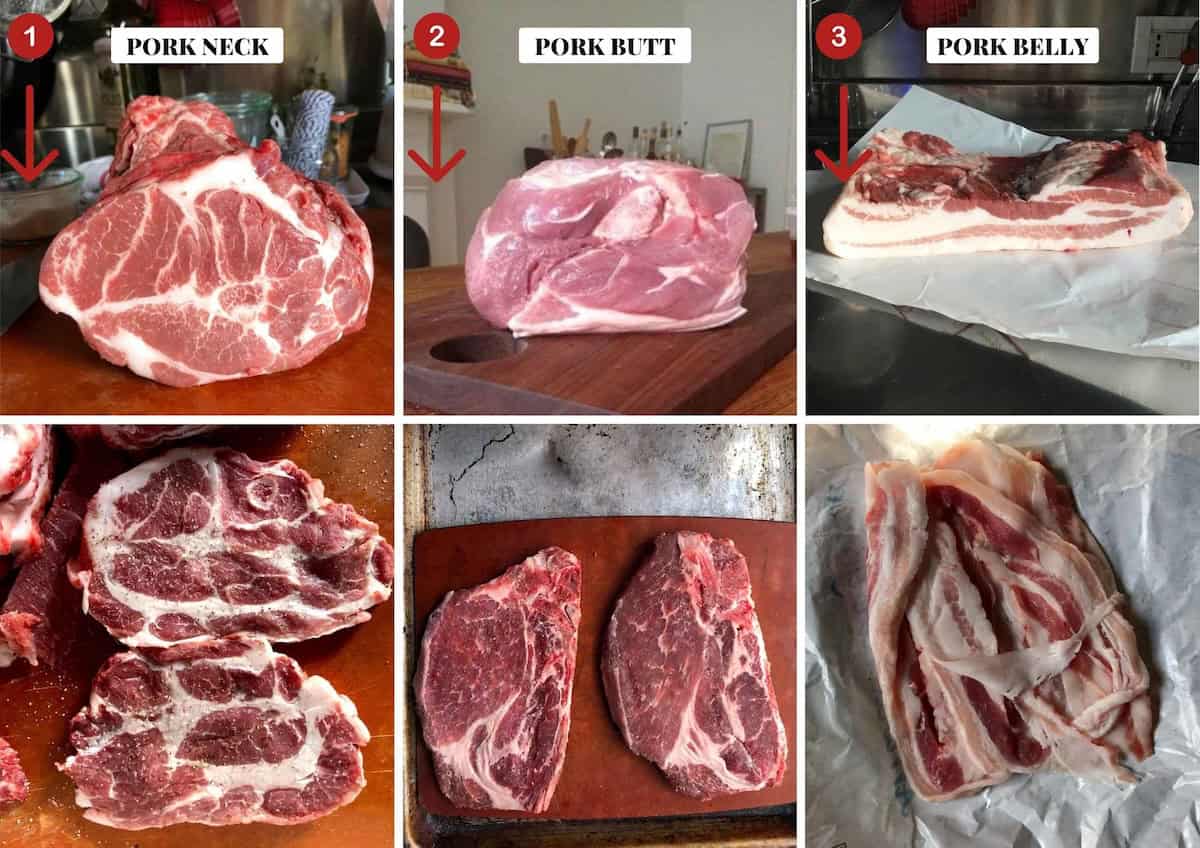
The cut you choose decides how tender and juicy your gyro meat turns out. No matter what cut you use, it's still delicious. Here's how the options compare.
| Cut | Texture after baking | Best for |
|---|---|---|
| Pork neck + pork belly (recommended) | Most tender and juicy, slightly bouncy, with crispy fatty edges | The most authentic gyro shop texture |
| Pork shoulder or pork butt | Delicious and well seasoned, but firmer and less juicy | A budget option, or when neck and belly are hard to find |
| Pork loin or tenderloin | Too lean, dries out over a long bake | NEVER recommended for this method |
Pork neck is beautifully marbled, and pork belly adds fat that naturally bastes the whole stack as it bakes. If you use shoulder, choose the fattiest, most well-marbled piece you can find. My first test batch with lean pork shoulder was perfectly seasoned, but it wasn't as tender or juicy as gyro meat should be.
Ingredients
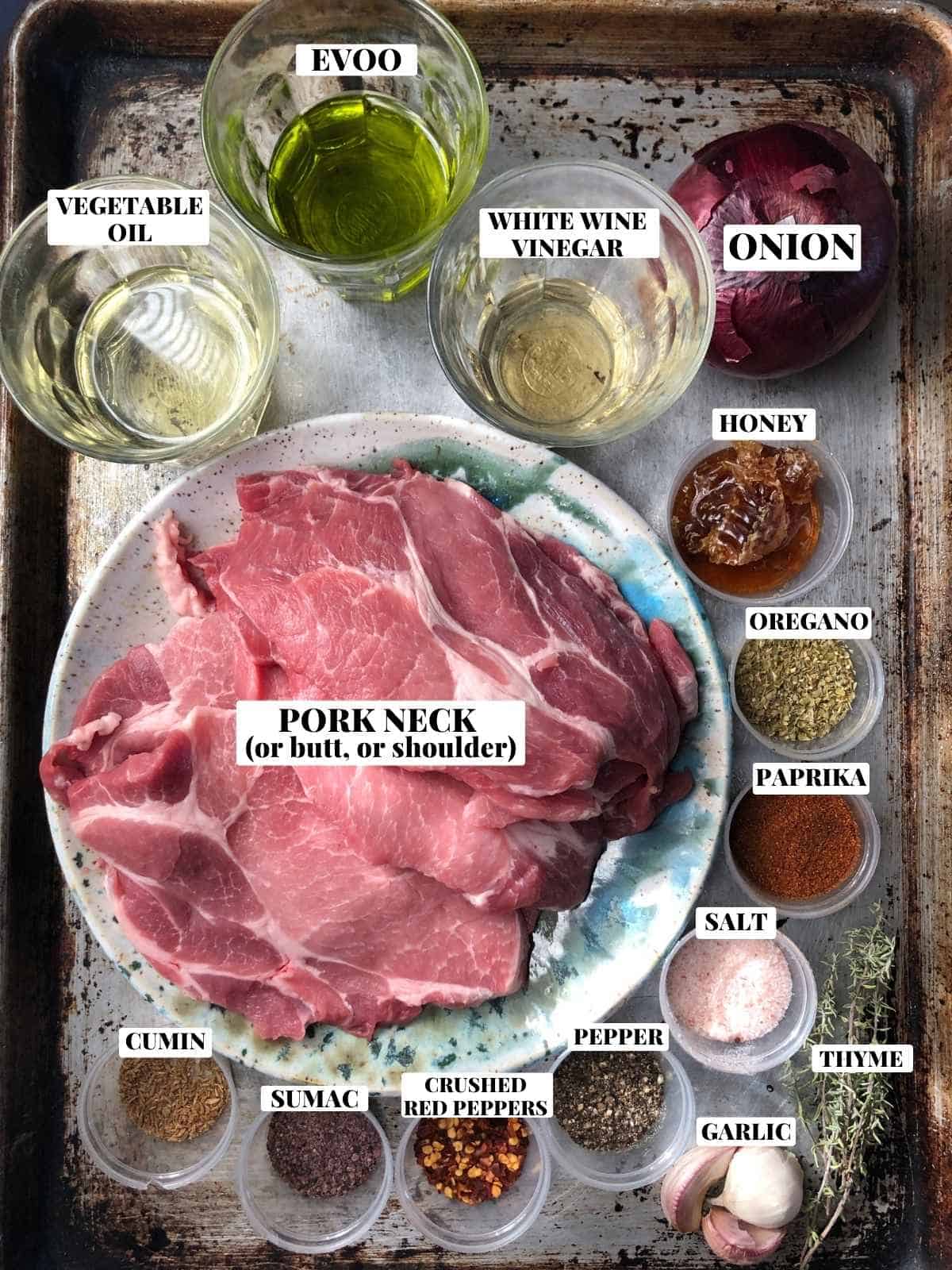
For the Gyro Meat
- Pork neck. Well-marbled pork neck is the star (even more marbled than what I was able to find in the photo directly above). Fatty pork shoulder or pork butt works as a budget swap.
- Pork belly. Thin slices layered between the neck add fat and juiciness. For a smoky pork gyro, swap in thick-cut bacon. If you can't find pork belly, or just can't afford it, leave it out and instead look for the most well-marbled neck you can find. This recipe is still super delicious without.
For the Marinade (Gyro Meat Seasonings)
- Extra virgin olive oil and grapeseed oil. Half and half. Canola, sunflower, or peanut oil can replace the grapeseed.
- White wine vinegar. Just a splash for brightness. Red wine vinegar or apple cider vinegar work too.
- Honey. Balances the vinegar and helps the edges caramelize.
- Red onion. Half is grated with its juices into the marinade, and half is sliced. Use whatever onions you have (white, yellow, or even shallots all work).
- Garlic. Pressed or mashed into a paste, as I've done. Garlic powder works in a pinch (the substitution amounts can be found in the recipe card).
- Spices. Dried oregano, sweet paprika, black pepper, red pepper flakes, and a little cumin.
- Sumac. Optional but highly recommended for its tangy, fruity tartness and somewhat lemony flavor.
- Sea salt or pink Himalayan salt. It seasons the meat all the way through.
- Fresh thyme sprigs. Optional, but recommended. I like to lay the sprigs on top of the meat to just perfume it with a subtle background note, but you can remove some of the leaves and add them directly to the marinade if you want a more thyme-forward flavor.
For Assembling the Gyro Cone Tower
- Yukon gold potato. One large potato, halved lengthwise and set flat side down, holds the skewers upright and keeps the meat out of the pan juices. But I highly recommend adding at least 1 more halved potato to the bottom of the pan (if not 2 more) because these make a super delicious side dish!
- Skewers. Four to 8 wooden skewers total (either 2 or 4 poked into each potato half). I like to add extra so there's never any doubt about it tipping over, but a total of 4 works just fine. Trim them if needed so the assembled tower fits in your oven with plenty of clearance.
- Cherry tomatoes. A few on top of the tower roast in the juices. You can also add green or red bell peppers if you like.
- Parchment paper and foil. To wrap and seal the stack.
- Meat mallet or rolling pin. To pound out the pork neck evenly.
Full ingredient measurements can be found in the recipe card below.
How to Make Gyro Meat (Pork Gyros in the Oven)
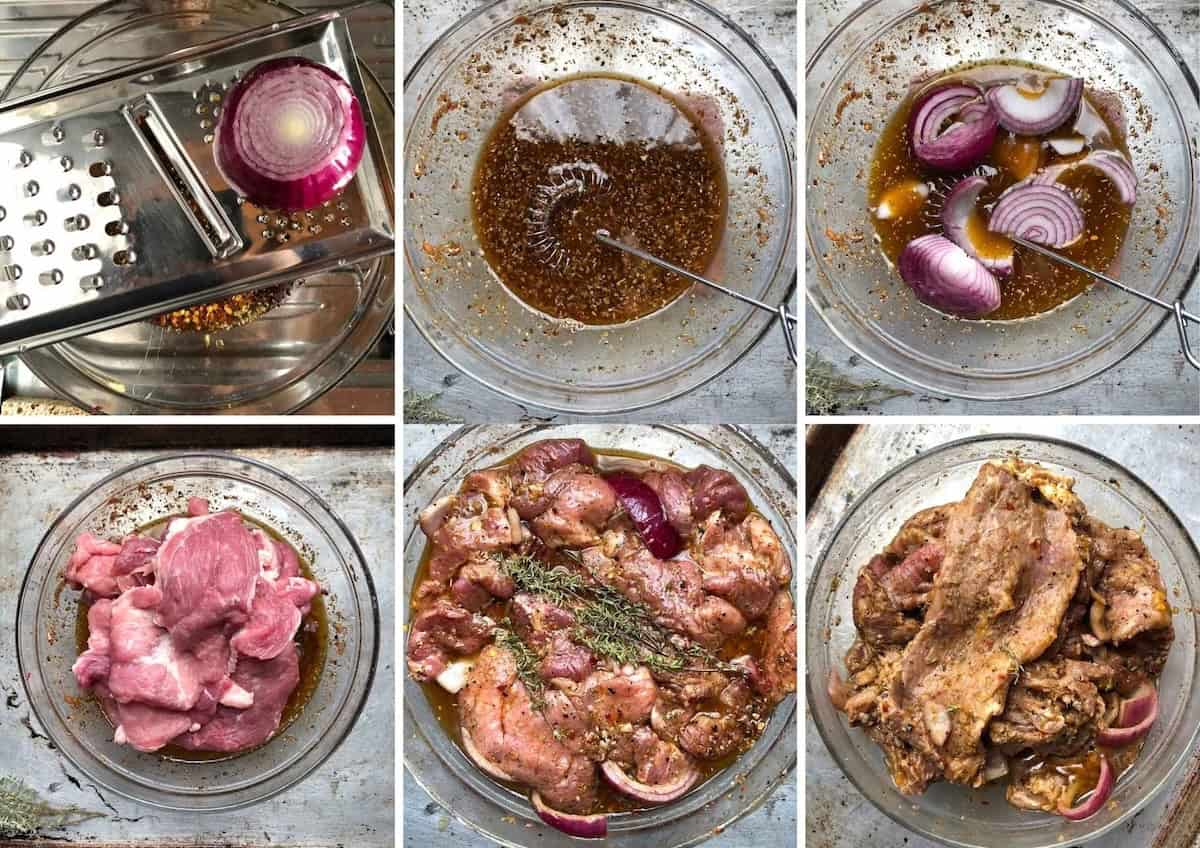
Step 1. Slice and pound the pork. Pound the pork neck slices to an even ¼-inch (6mm) thickness, stopping before the meat tears or gets too thin. Slice the pork belly about ⅛ inch (3mm) thick, similar to thick-cut bacon, if it isn't already.
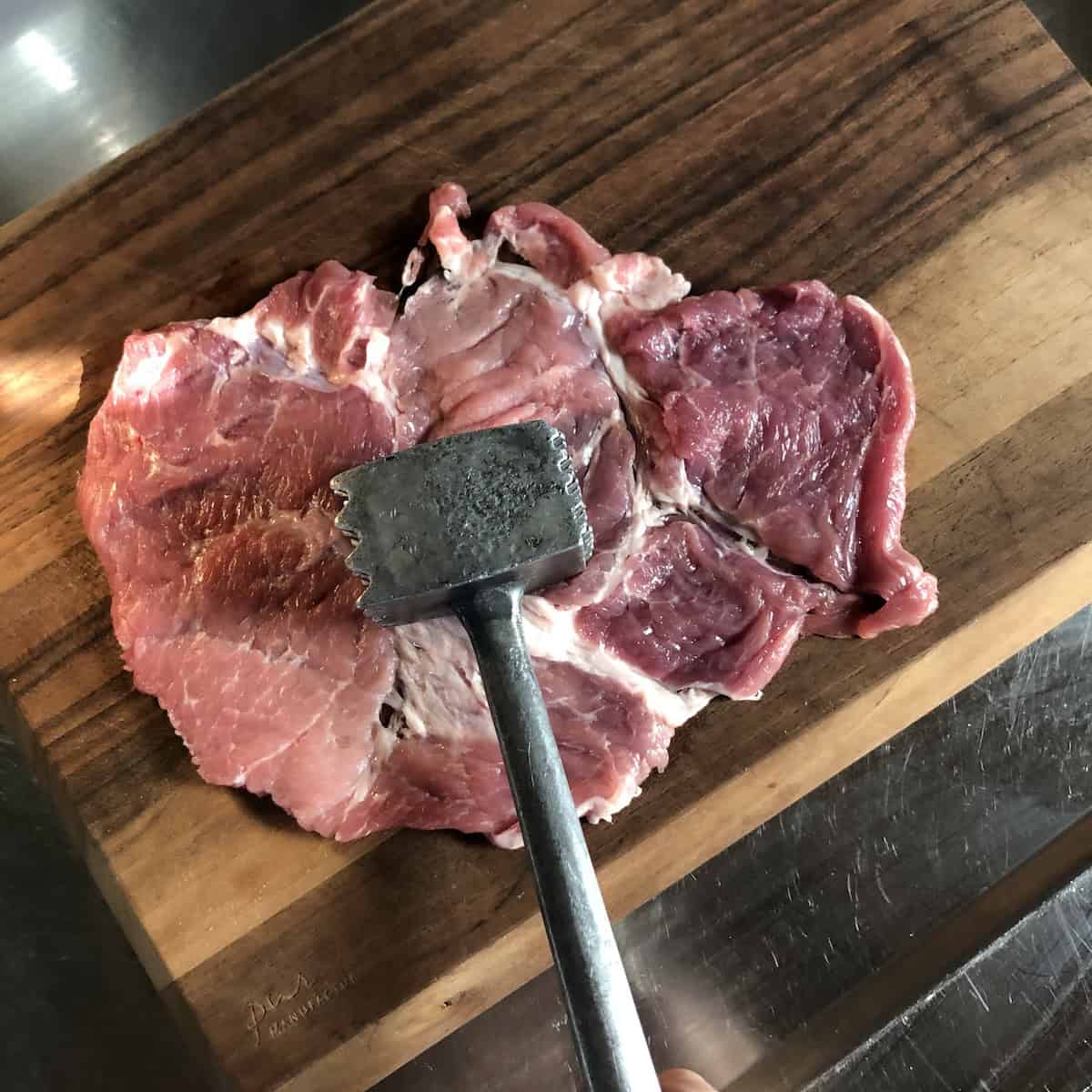
Don't pound it too thin. Paper-thin, torn slices dry out over the long bake, especially if you're using leaner neck meat, or even leaner shoulder or butt, which has less fat and marbling.
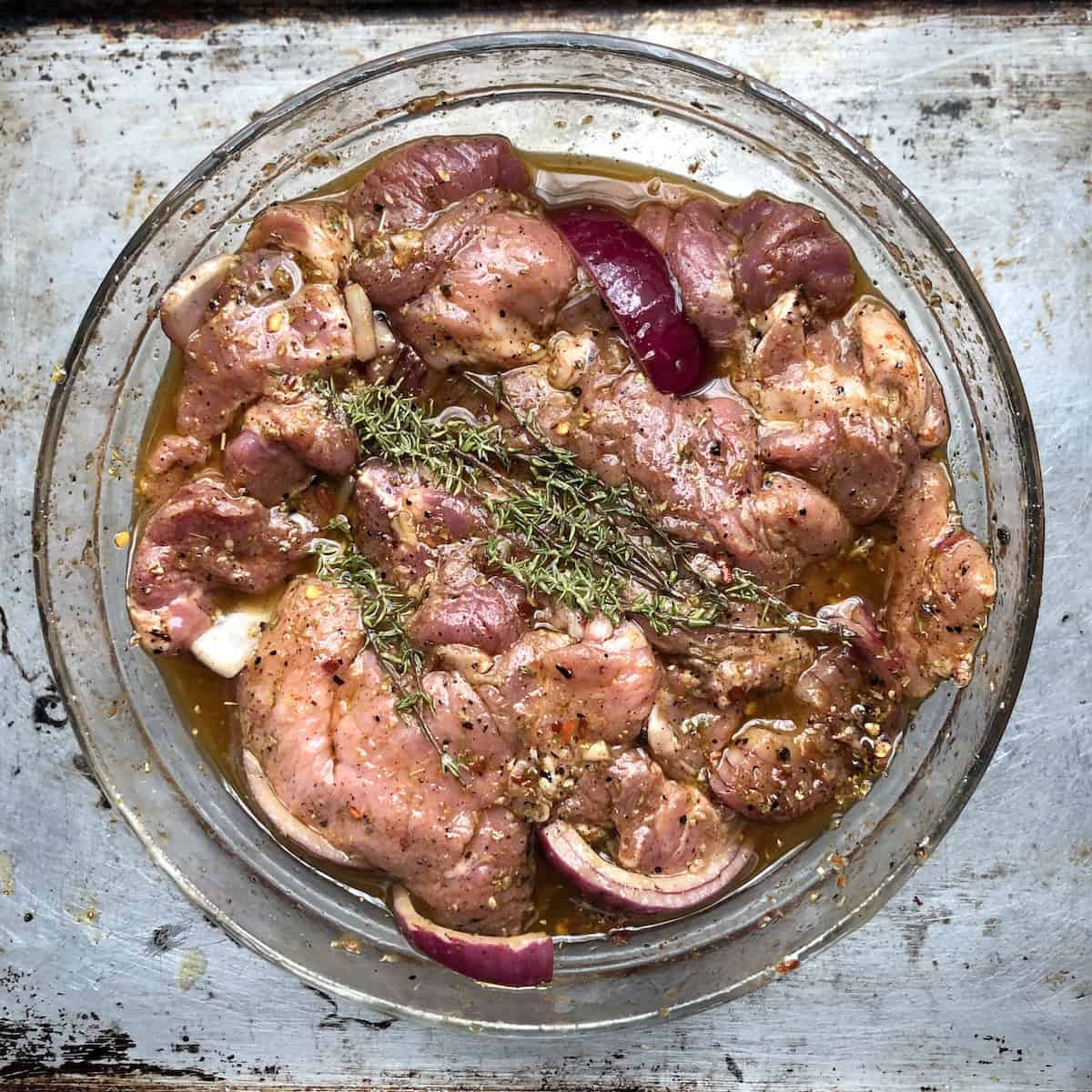
Step 2. Make the marinade and marinate the meat. Grate half of the red onion and whisk it, juices and all, into the oil, vinegar, honey, garlic, salt, and spices. Thinly slice the other half of the onion. Add the pork and sliced onion to the marinade, toss to coat every slice, then cover and refrigerate for at least 12 hours, and up to 20 hours is even better.
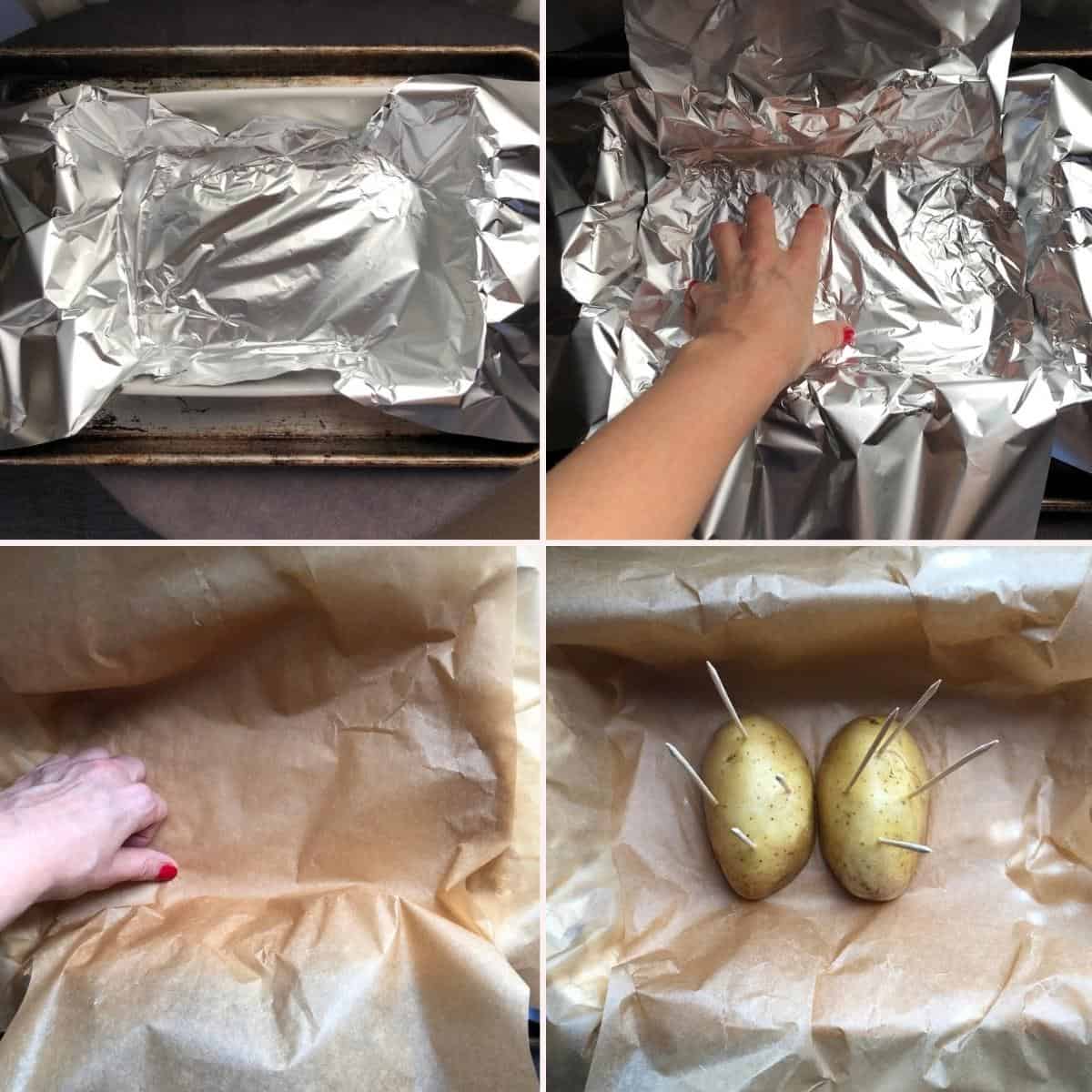
Step 3. Build the base for the gyro meat cone. Line a baking dish with crisscrossed foil and parchment, leaving plenty of overhang. Set the potato halves flat side down in the center, touching, and push four skewers into each half.
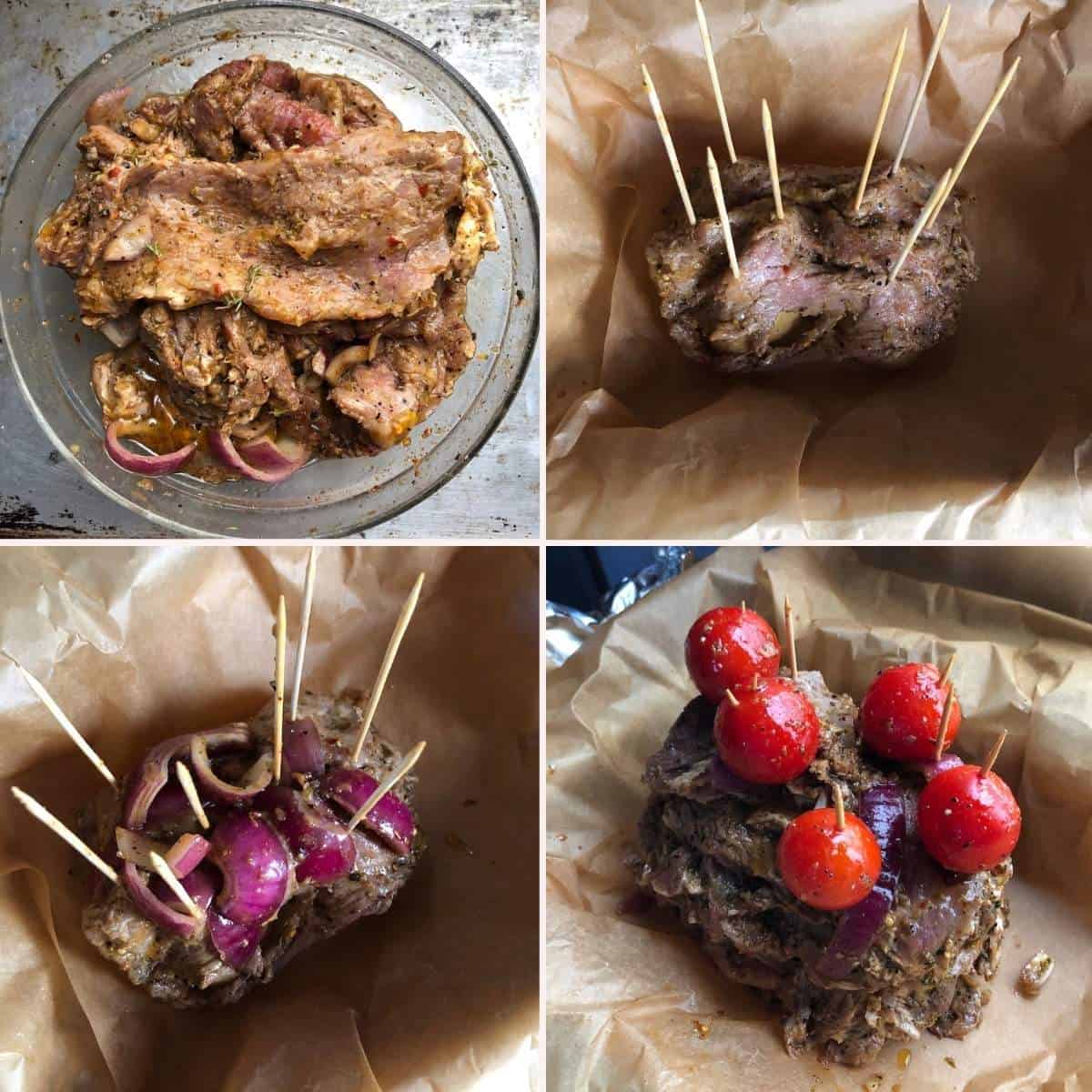
Step 4. Stack and compress the meat. Thread the first layer of pork onto the skewers, then add the marinated sliced onion on top of it. Stack the rest of the slices, alternating pork neck and pork belly, pressing down firmly every few layers. Once it's built, press the whole stack down to compress, top it with the cherry tomatoes, and pour any leftover marinade over the top.
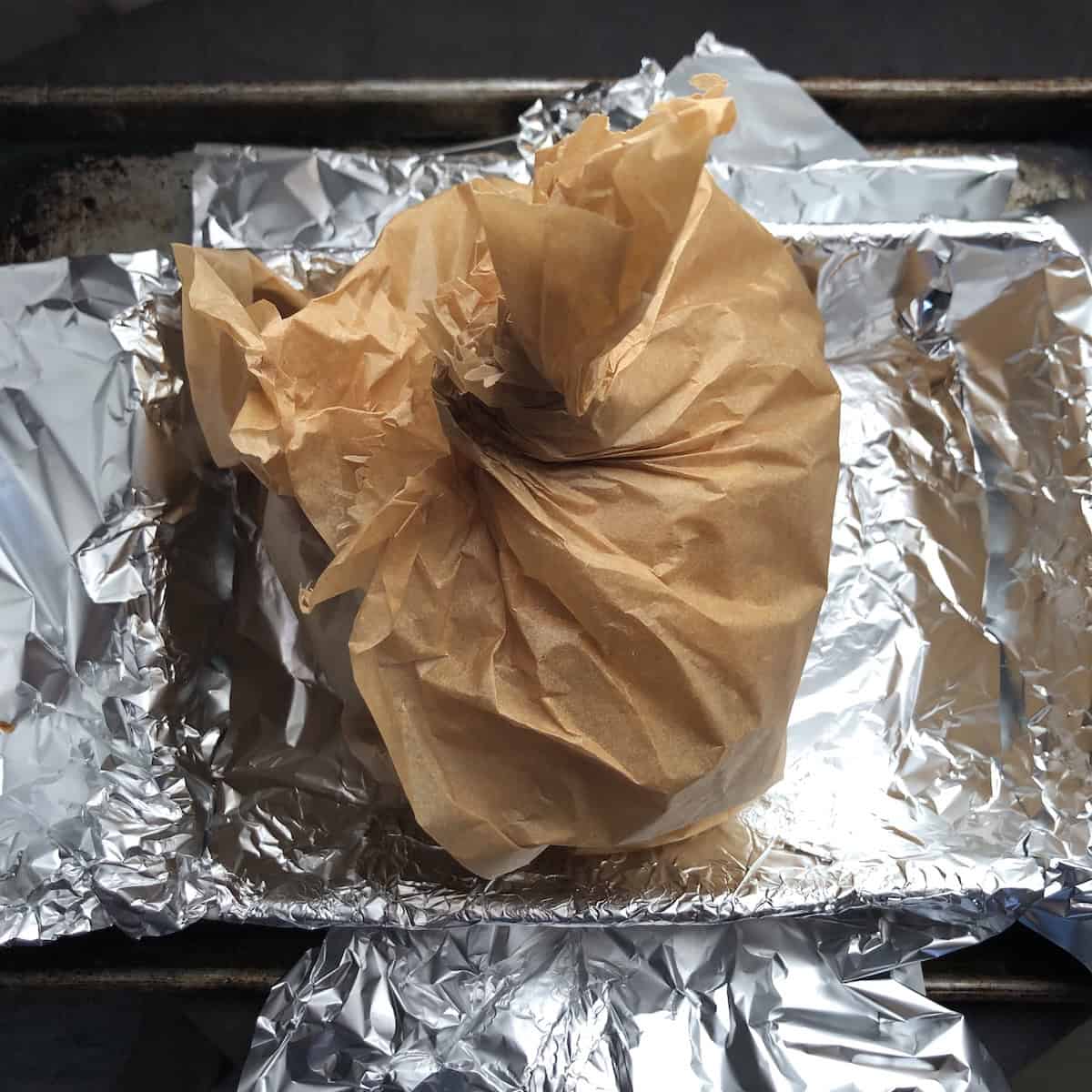
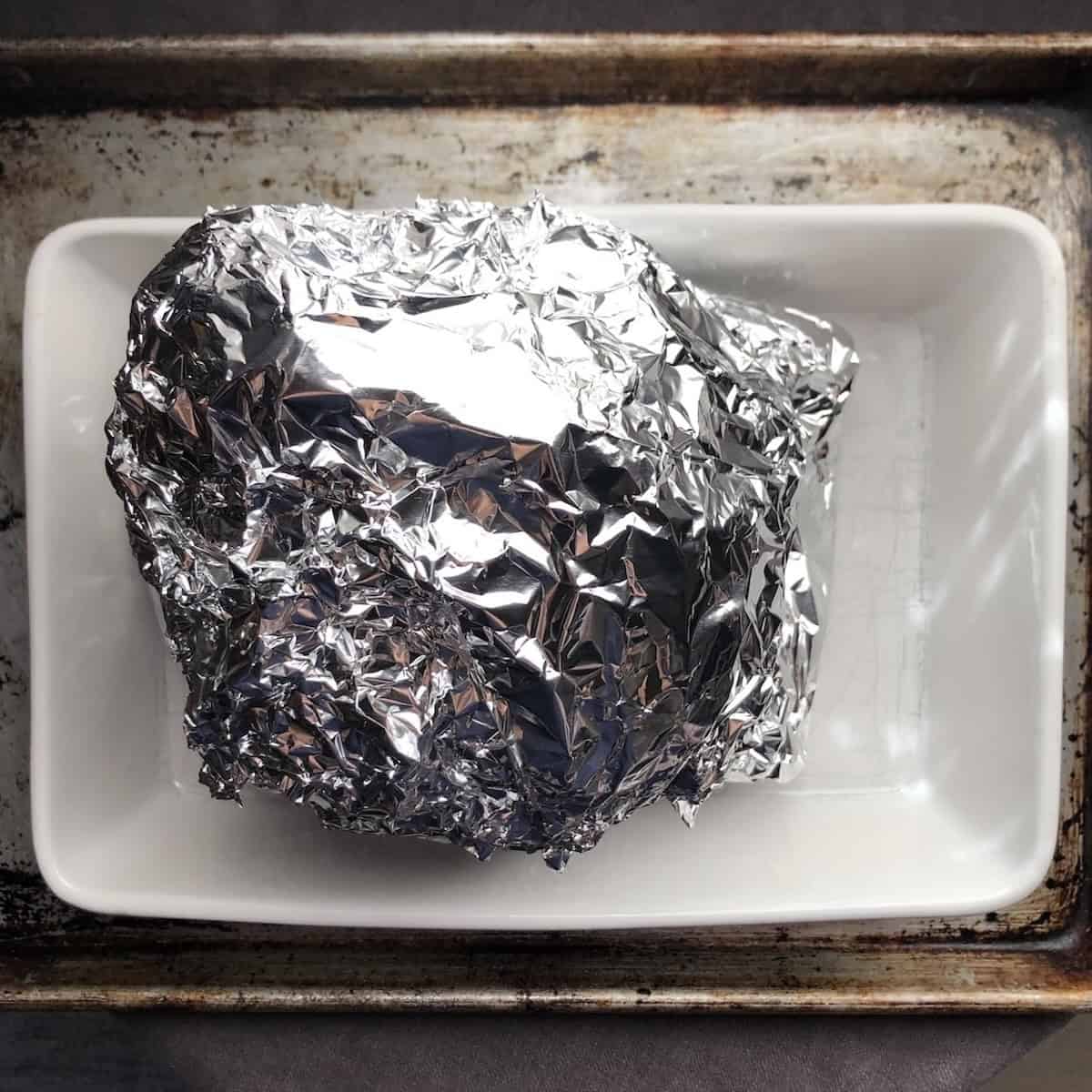
Step 5. Wrap and bake. Wrap the stack in parchment paper, then seal it in foil. Bake at 375°F (190°C) for 2 ½ hours, until a fork slides into the center easily.
Step 6. Unwrap, crisp, and broil. Unwrap the stack, spoon the pan juices over the top, and bake 30 minutes more, then broil for 3 to 5 minutes until the edges are crisp and golden.
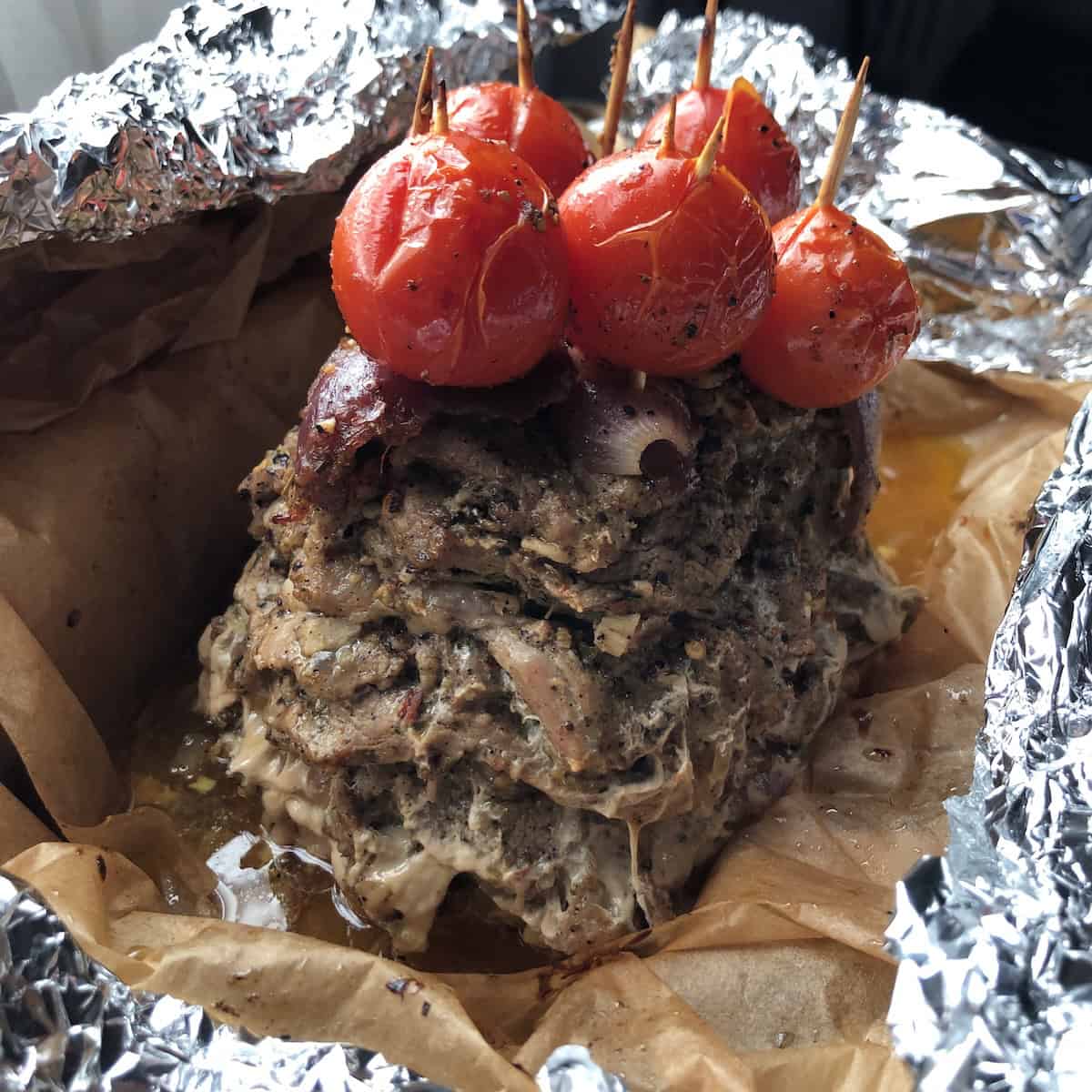
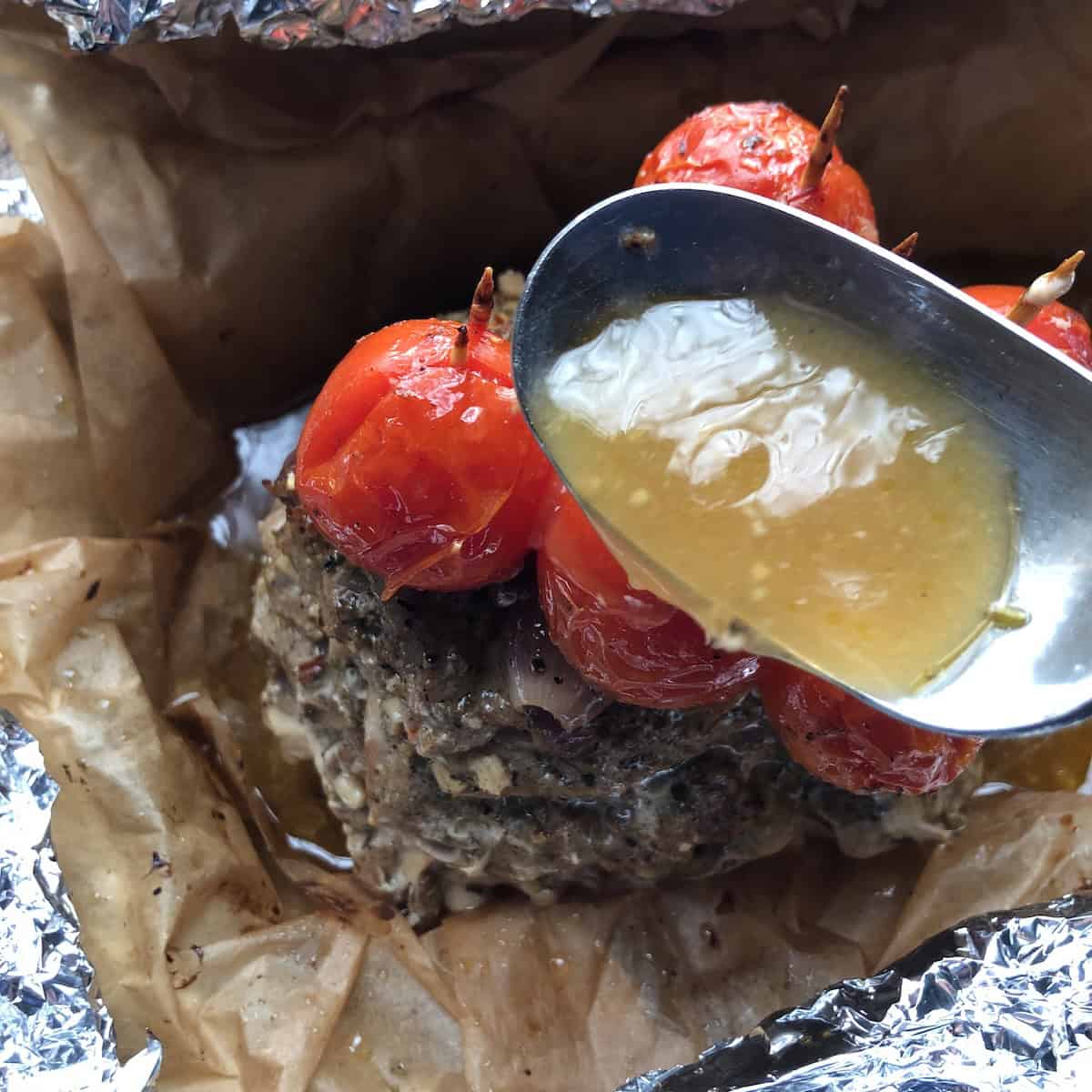
Step 7. Rest and slice. Let the stack rest for 10 minutes, then shave thin slices from the outside. Spoon the pan juices over the sliced gyro meat.
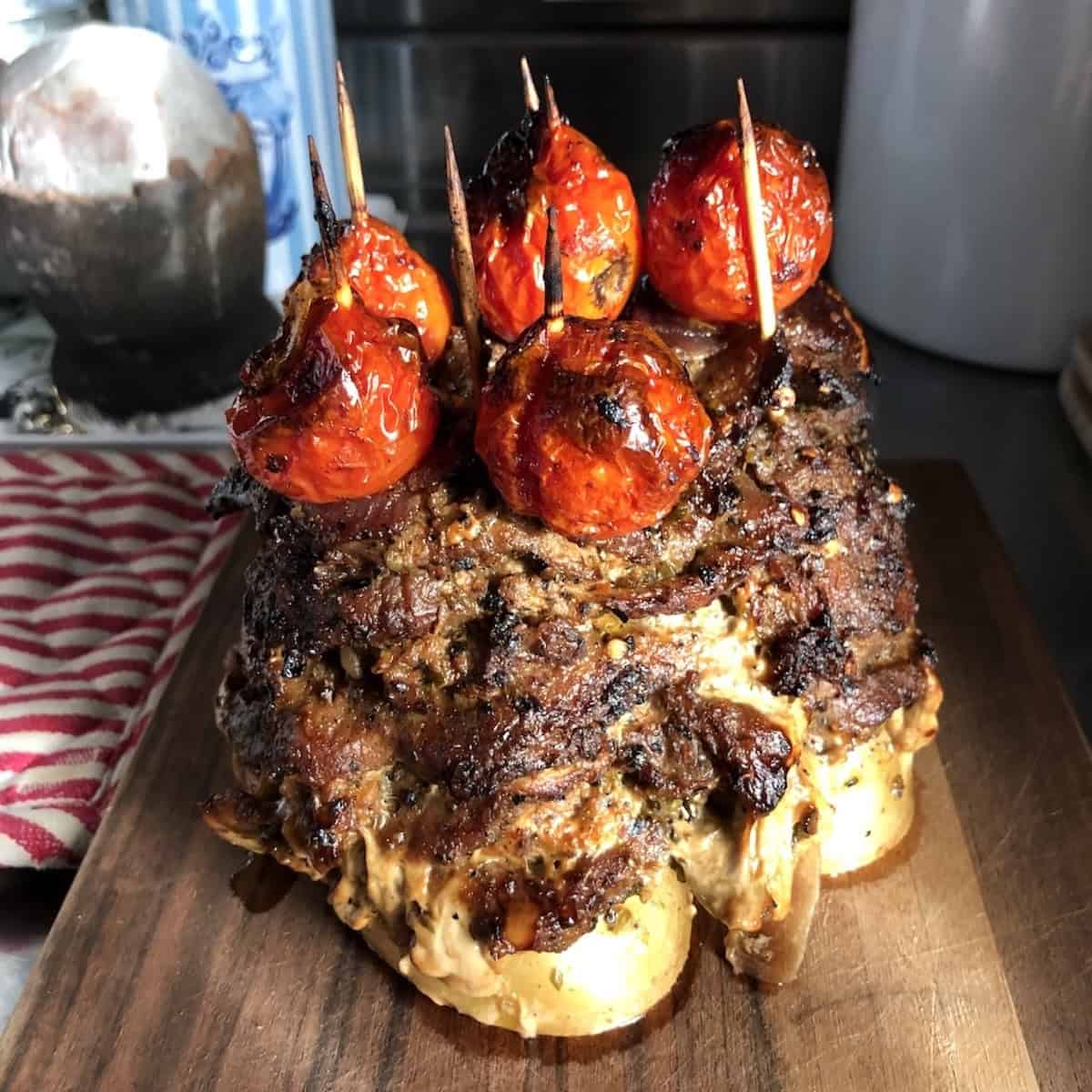
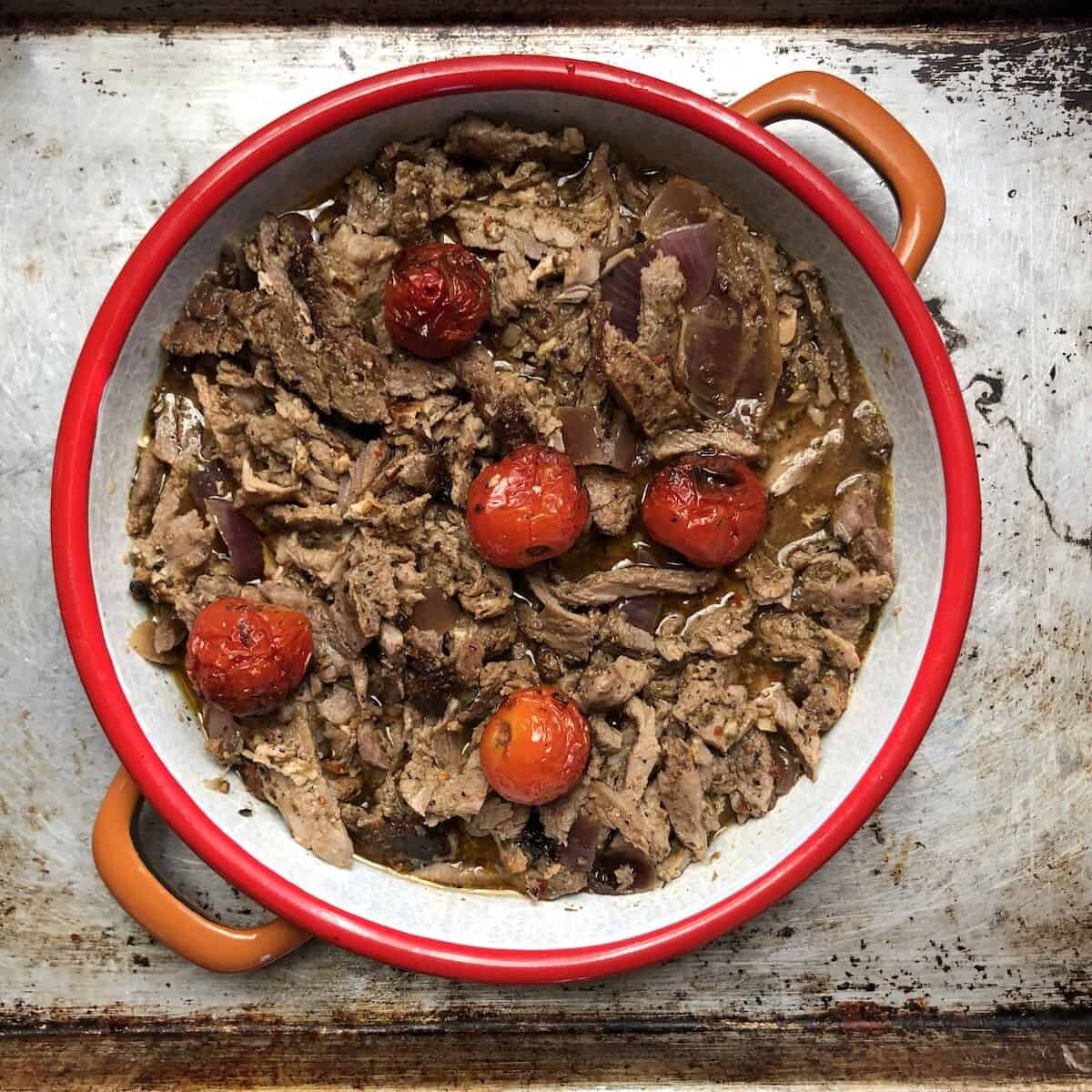
Using a convection oven? Bake wrapped at 350°F (175°C) for 2 ½ hours. After unwrapping, start checking at 20 minutes, since the fan browns the edges faster.
Making a double batch? This recipe easily doubles (and trust me, you'll want to). Bake the wrapped tower 30 minutes longer (3 hours total), then unwrap and bake 30 to 40 minutes more before broiling. A doubled tower is taller, so check your oven clearance first.
Tips for Tender, Juicy Gyro Meat
- Choose fatty cuts. Pork neck and belly stay juicy through the long bake, while lean pork turns firm and dry.
- Pound to ¼ inch, not thinner. Even slices cook evenly and press together into one stack.
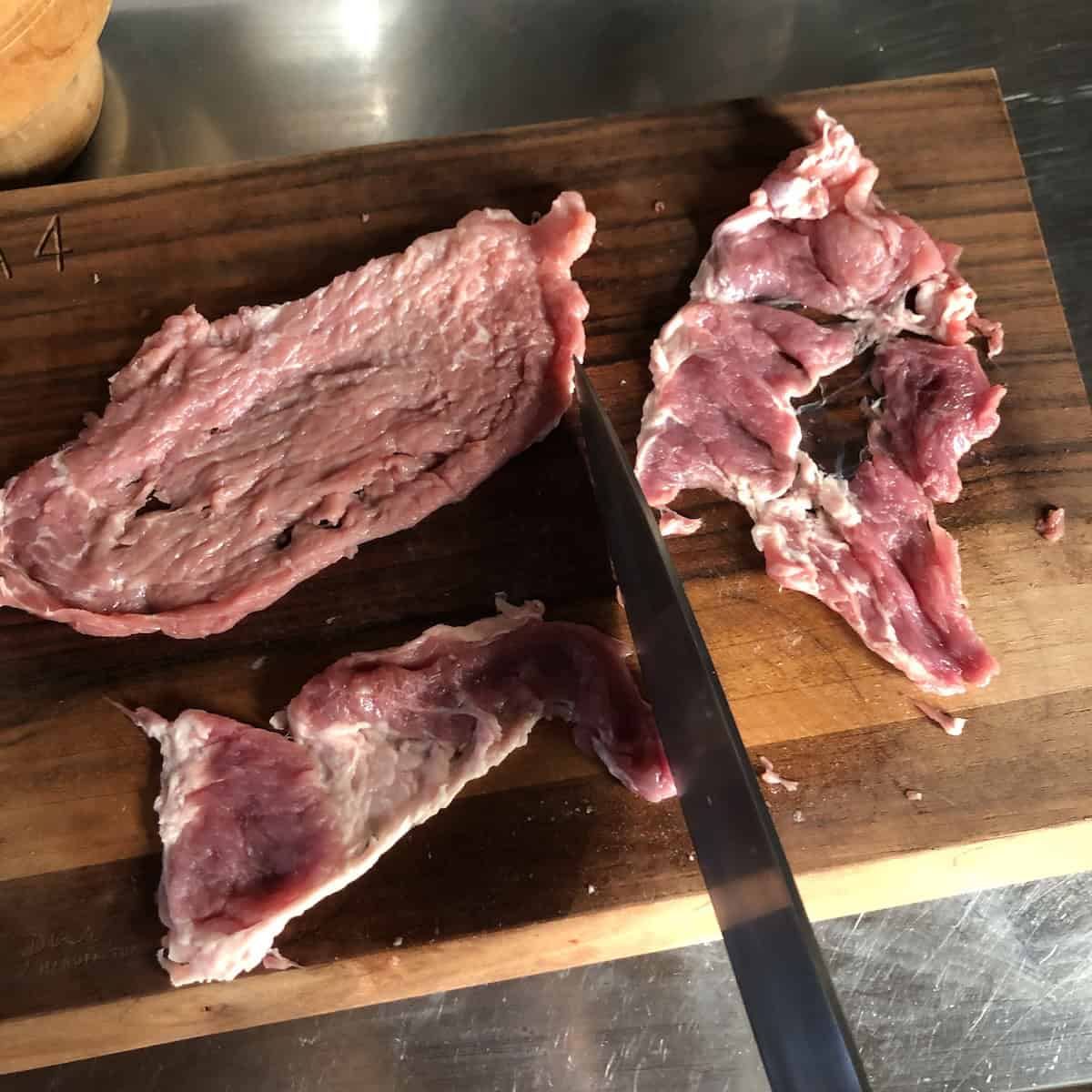
- Alternate the fat. Every lean layer should touch a fatty one, so the pork belly bastes the neck as it renders.
- Press it fairly tight. Compressing the stack fuses the salted slices together, which helps give gyro meat its sliceable, slightly bouncy bite.
- Marinate at least 12 hours (even better up to 20). The salt needs time to season the meat through and help the slices bind.
- Rest before slicing. Ten minutes lets the stack firm up, so it slices cleanly and holds its juices.
- Check your oven. If your oven runs hot or slow, use the fork test or a thermometer. The center should read 175°F to 185°F (79°C to 85°C).
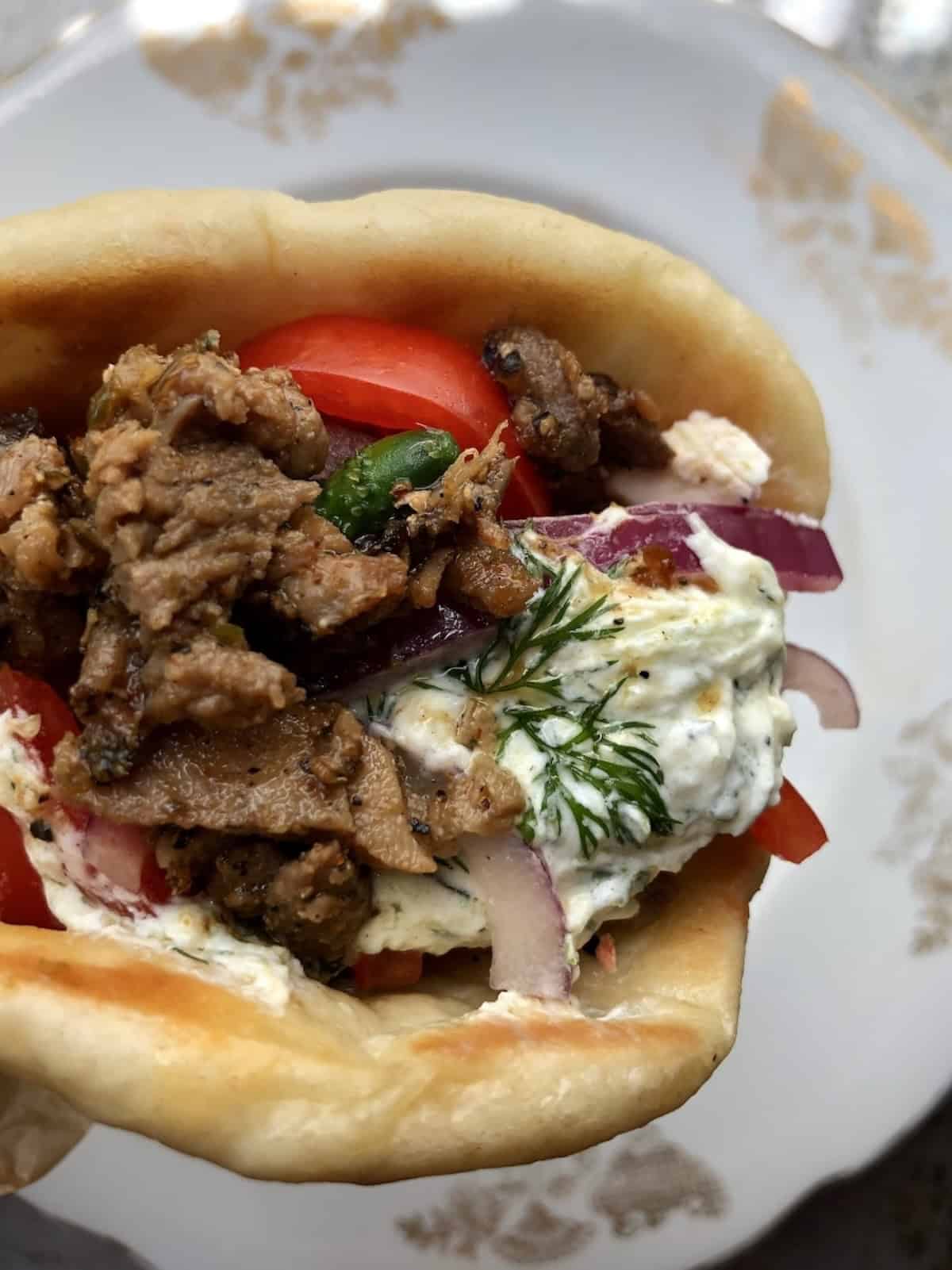
Gyro Toppings (For Greek Gyro Sandwich)
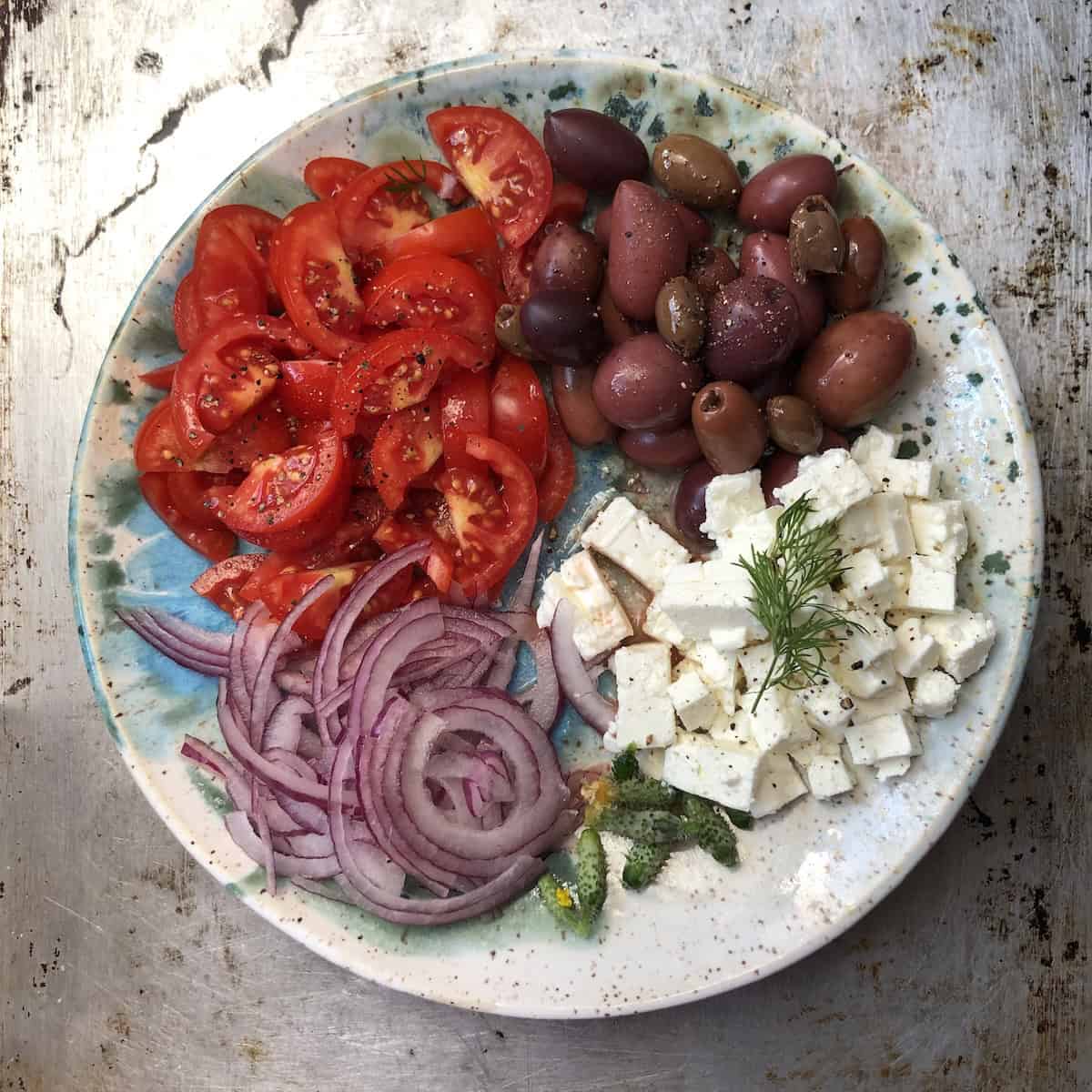
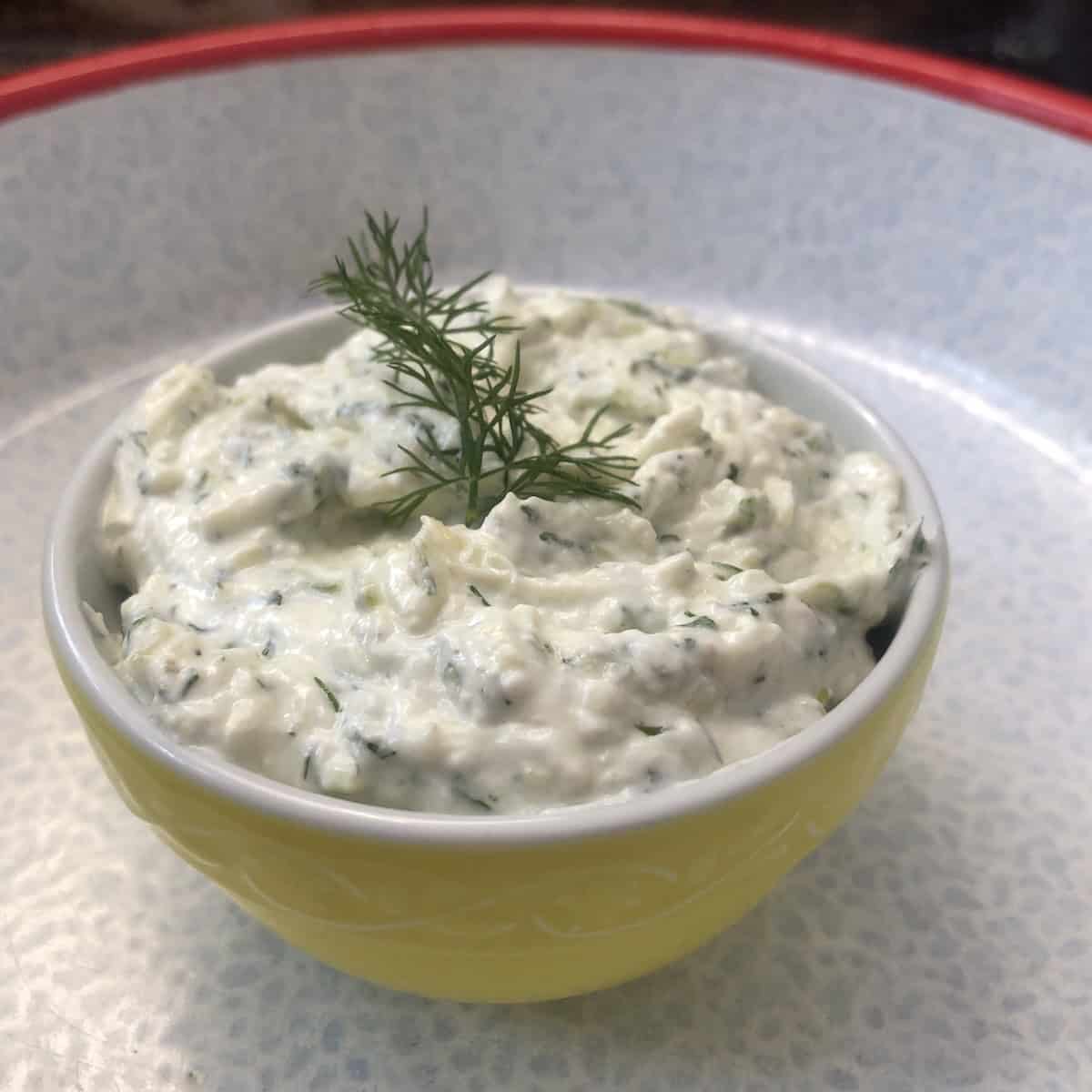
- Homemade Tzatziki sauce (Bright, tangy, cucumbery with lots of dill) (recipe coming soon)
- Greek Olives (pits removed)
- Cucumbers (small garden-fresh pickling cucumbers, Persian or English cucumbers because their flavor is more concentrated and less watery)
- Tomatoes (I prefer quartered sweet grape tomatoes over flavorless hothouse tomatoes because their natural sweetness balances the tang from tzatziki and the feta. In the summer, I also love homegrown Roma tomatoes.)
- Sliced red onions (adds flavor and crunch for extra texture)˜
- DOP Feta cheese cubes (I like to dice small cubes or crumble the feta so you can taste it in every bite without it overpowering the other flavors)
- (Optional) Romaine lettuce (I typically don't add lettuce because I pile on all the other ingredients, but you can definitely add some if you're low on any of the other ingredients)
How to Serve Pork Gyros
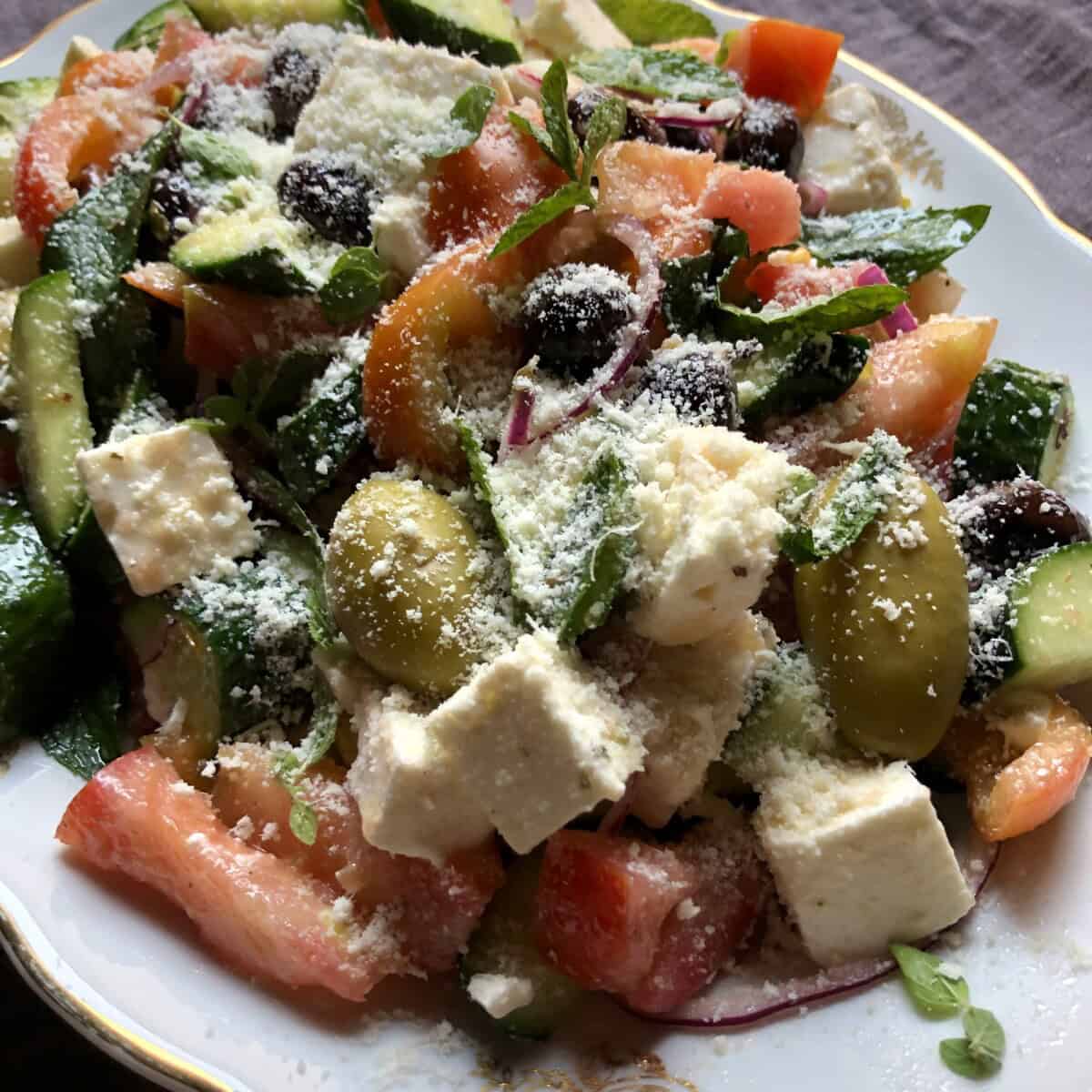
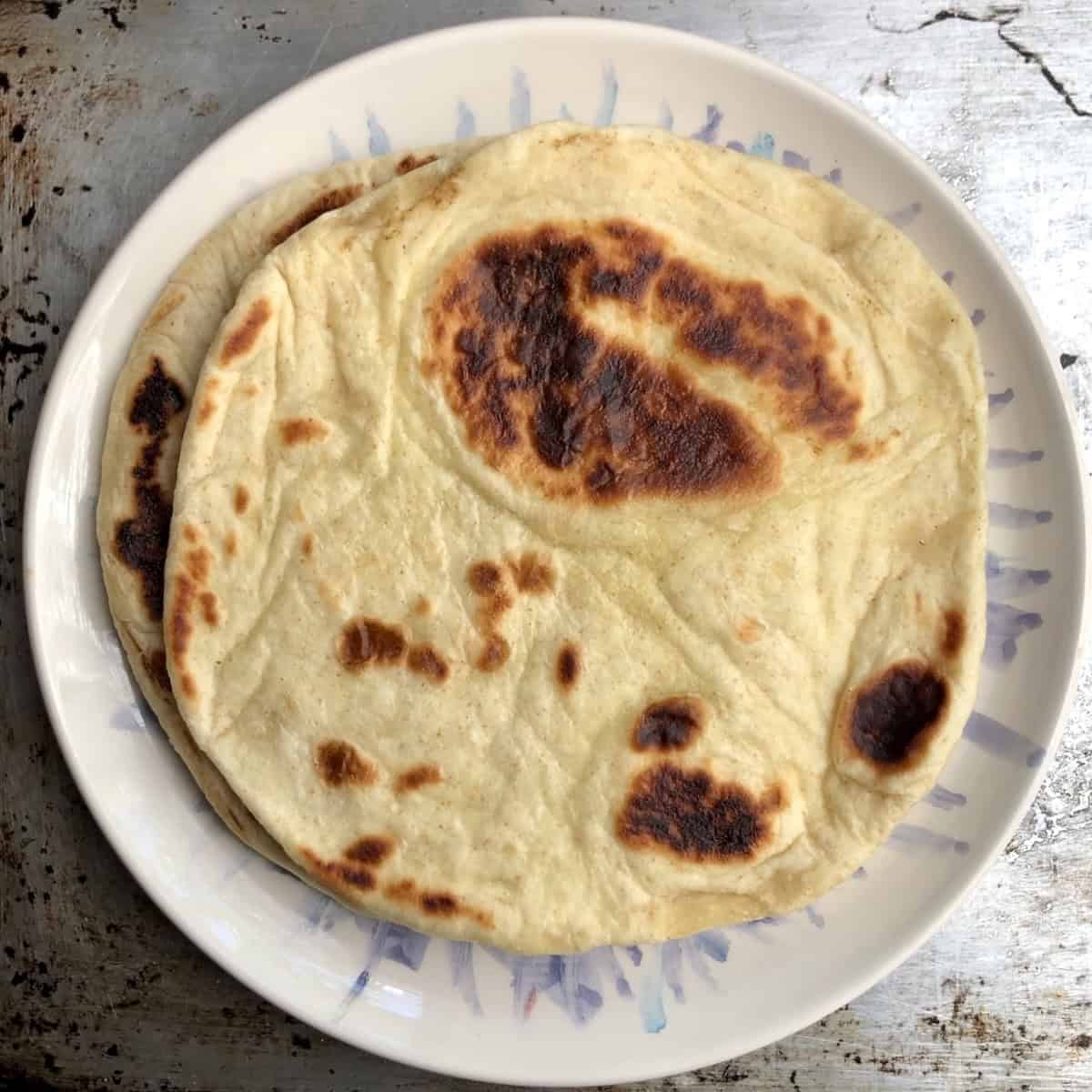
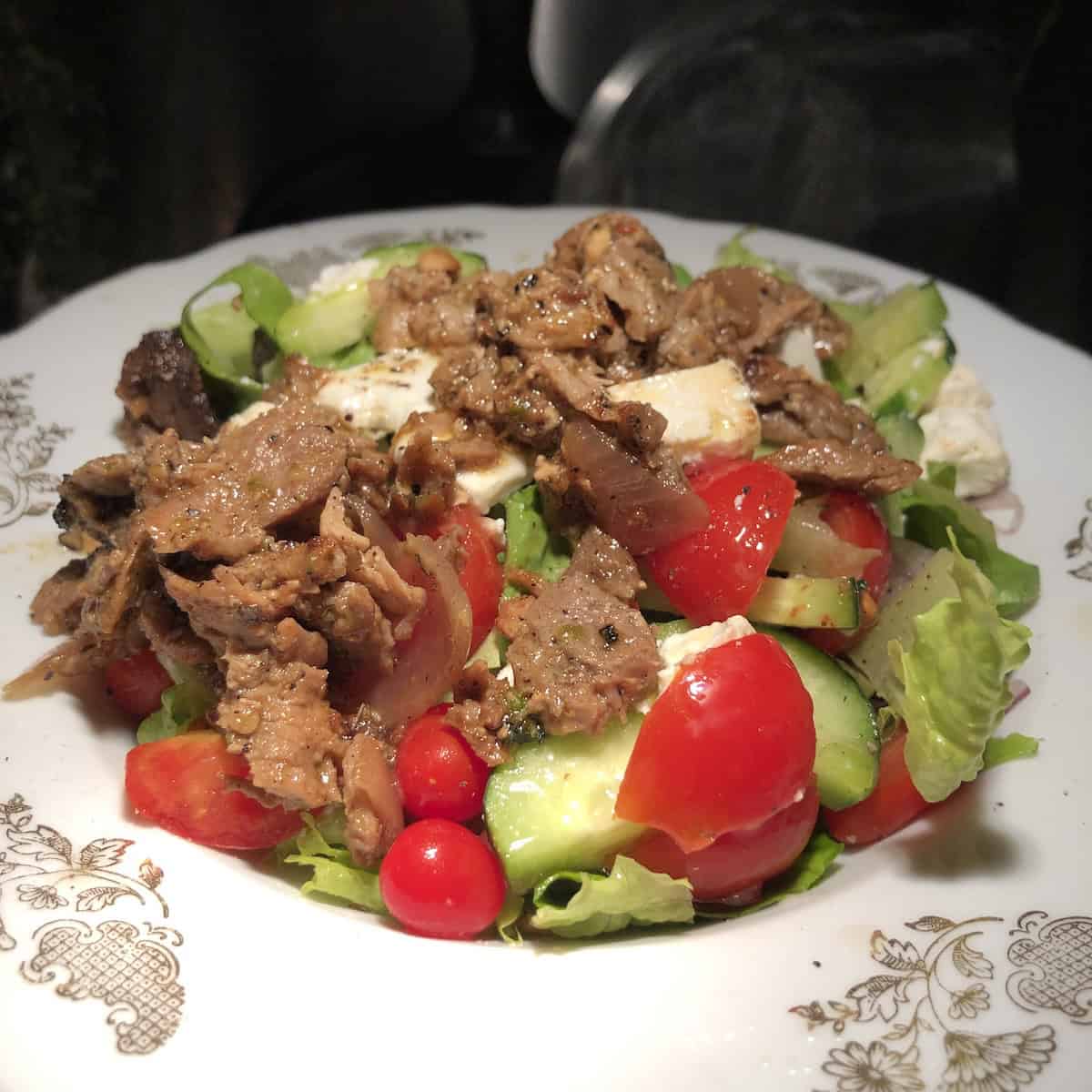

- With a homemade Greek salad. Serve a side salad with gyros.
- As a Gyro Bowl. Pile the warm gyro meat on top of a salad for a seriously delicious, protein-packed easy dinner.
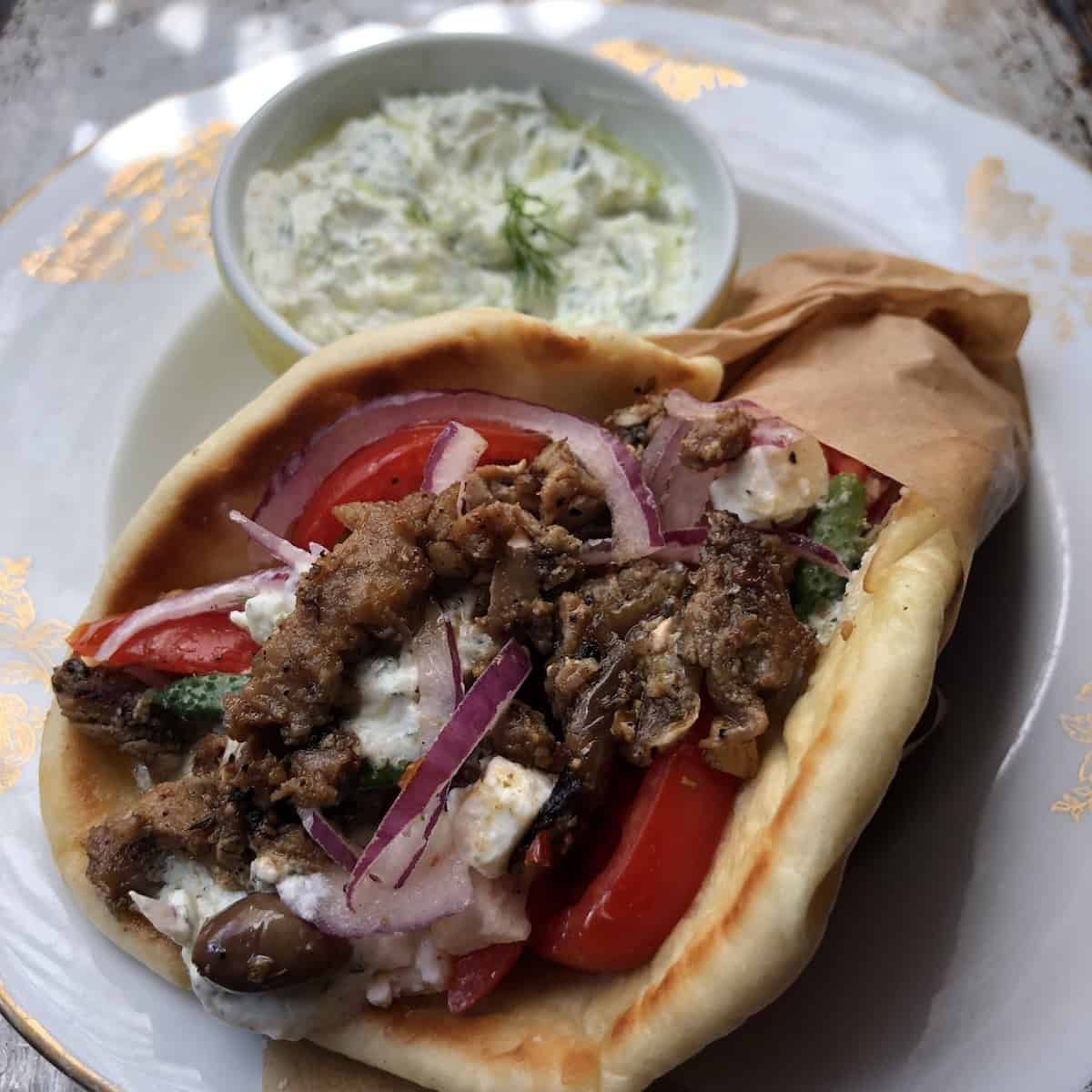
- Classic pita gyros. Warm pita (recipe coming soon) with tzatziki, tomato, red onion, and fries tucked inside, the way gyros are served in Greece.
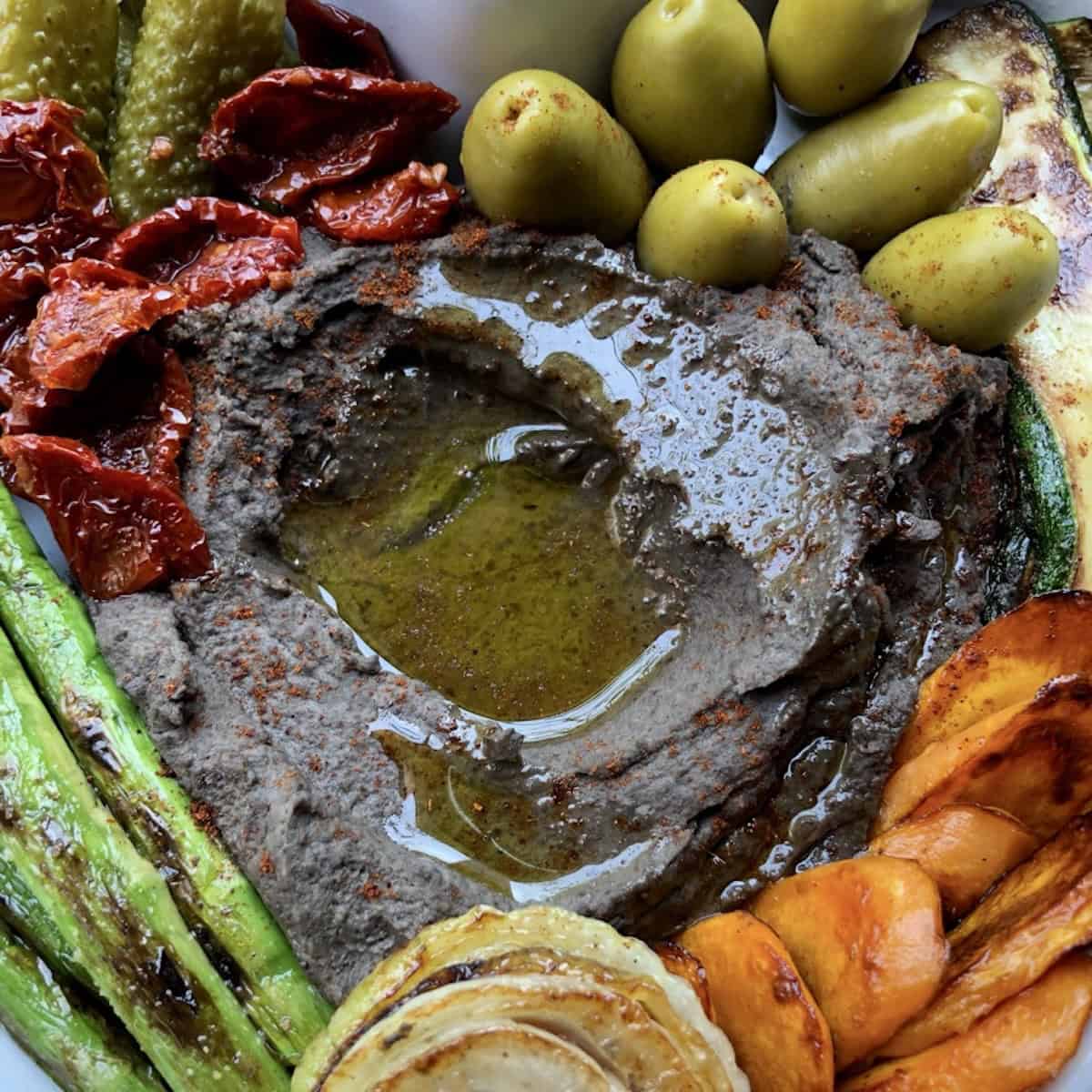
- With hummus and pita. Serve it with a side of black chickpea hummus, regular hummus, or even almond pulp hummus and Greek pita bread.
- Breakfast. Crisp leftovers in a skillet and serve them with eggs and toast.
Make-Ahead, Storage, and Reheating
- Make ahead. Marinate the pork up to 20 hours before baking.
- Refrigerate. Store cooked gyro meat in a shallow airtight container with its juices and pan drippings for 3 to 4 days.
- Freeze. Freeze for 3 to 4 months for the best quality, then thaw overnight in the refrigerator before you reheat in a skillet.
- Reheat. Crisp the slices in a hot skillet until they reach 165°F (74°C), per USDA leftovers guidance.
Pork Gyros FAQs
Greek pork gyro is made from thin slices of marinated pork, usually well-marbled cuts like pork neck, pork butt, or shoulder layered with pork belly. The slices are stacked, roasted until the outside crisps, and shaved off to serve.
In Greece, gyro meat is usually pork and sometimes chicken. In the US, gyro meat often means a ground lamb-and-beef loaf, which is a Greek-American version.
Gyros are thin slices of meat stacked together, slow-roasted, and shaved off of a gyro cone (spit or tower). Souvlaki are kebab-like cubes of meat threaded onto skewers and grilled, so they cook much more quickly.
Dried oregano, paprika, garlic, onion, and salt are the backbone of gyro seasoning. This recipe also adds sumac for a lemony tang, plus cumin and red pepper flakes.
Yes. Stack the marinated slices on skewers set in halved potatoes, wrap and bake the stack in the oven, then broil it to crisp the edges.
Yes. Pork shoulder (pork butt) is a great budget option. Choose a well-marbled piece, since lean shoulder bakes up firmer and less juicy than pork neck and belly.
A dirty style gyro is a regional, restaurant-style variation that swaps the usual tzatziki and tomatoes for yellow mustard, onions, and French fries tucked inside the pita.
Marinate the pork in the refrigerator for at least 12 hours and up to 20 hours for the best results.
More Mediterranean and Greek Recipes
- Fluffy Cast-Iron Skillet Naan Bread
- Greek Salad (Easy 15-Minute Salad With Video)
- The Mediterranean Couscous Recipe You Should Know
- Mediterranean Pasta Salad with Shrimp & Italian Ham
- Black Chickpea Hummus (using Canned Chickpeas)
- How to Make Super Smooth Black-Eyed Pea Hummus
- 10-Minute Creamy Almond Pulp Hummus (Zero Waste Hack)
- Fluffy Whole Wheat Naan Bread




Let's get started!
Made this Recipe? We'd love for you to rate ⭐️ it and tell us how it went for you!
📖 Recipe

Gyro Meat Recipe (Greek-Style Pork Gyros)
- Total Time: 3 hours 25 minutes
- Yield: 6 servings
Description
This gyro meat recipe makes authentic Greek pork gyros at home in a regular oven, no rotisserie needed. Marinated pork neck and pork belly are stacked tight on skewers, slow-baked until tender and juicy, then crisped under the broiler for gyro shop slices with golden, crispy edges.
Ingredients
For the Gyro Meat:
- 2 pounds pork neck meat, well marbled (1kg) (see note to sub fatty pork shoulder)
- ½ pound pork belly, sliced (227g)
For the Marinade:
- ¼ cup extra virgin olive oil (60g)
- ¼ cup grapeseed oil (60g) (sub canola, sunflower, or peanut oil)
- 1 tablespoon white wine vinegar (15g) (sub red wine vinegar or ACV*)
- 1 tablespoon plus ½ teaspoon honey (25g)
- 1 medium red onion (half grated with its juices, half thinly sliced)
- 1 tablespoon dried oregano (2g)
- 1 tablespoon sweet paprika (7g)
- 2 ¾ teaspoons sea salt or pink Himalayan salt (15g)
- 1 ½ teaspoons black pepper, freshly cracked (4g)
- 1 teaspoon sumac (2g) (optional but highly recommended)
- ½ teaspoon red pepper flakes, or more or less as desired (1g)
- ¼ teaspoon cumin (0.5g)
- 2 large garlic cloves, pressed or mashed into a paste (substitute 1 ½ teaspoons of garlic powder)
- fresh thyme sprigs (optional but recommended)
For Assembling the Gyro Meat Cone:
- 1 large Yukon gold potato, halved lengthwise
- 8 wooden skewers (see note on oven clearance)
- 5 cherry tomatoes (or red and green bell peppers)
For Serving the Gyros:
- 6 homemade Greek pitas, or other flatbread (recipe coming soon)
- Homemade tzatziki sauce (recipe coming soon)
- Sliced tomatoes
- Sliced cucumbers
- Sliced red onions
- Feta, diced (optional but highly recommended)
- Greek olives, pitted (optional)
- Homemade French fries (optional, and how our local Greek gyro spot serves them)
 Get Recipe Ingredients
Instructions
- Prep the pork. Pound the pork neck slices with a meat mallet to an even ¼-inch (6mm) thickness, stopping before the meat tears. Slice the pork belly about ⅛ inch (3mm) thick, similar to the thickness of thick-cut bacon, if it isn't already.
- Make the marinade. Grate half of the red onion into a large mixing bowl, juices and all, and thinly slice the other half, setting them aside. Add the remaining marinade ingredients except the thyme and sliced onion, and whisk to combine. It should taste really good at this point, almost like a Greek salad dressing.
- Marinate the pork. Add the pork neck and pork belly to the bowl and massage the marinade into the pork with your hands. Add the onions and toss to coat, and top with the thyme sprigs, cover, and refrigerate for at least 12 hours, but preferably up to 20 hours.
- Prepare the baking pan. Preheat the oven to 375°F (190°C), or in a convection oven set to 350°F (175°C). Lay one long piece of aluminum foil horizontally in a casserole dish, leaving about 1 foot of overhang on both sides. Lay a second piece vertically in the opposite direction with the same overhang. Layer two pieces of parchment paper on top of the aluminum foil the same way.
- Assemble the gyro meat cone. Set the potato halves flat side down in the center of the parchment, touching, and push 4 skewers into each half. Thread the first layer of pork neck onto the skewers, then add the sliced onion. Continue threading the pork, alternating pork belly and pork neck, and press down firmly every few layers. Once all the meat is on, press the whole stack down well so the slices compact into a tight tower. Top with the cherry tomatoes and pour any leftover marinade over the top.
- Wrap and bake. Fold the four parchment flaps up around the tower and twist them closed at the top. Then wrap the four foil flaps around the tower and crimp them tightly so it's completely sealed and no steam can escape. Bake for 2 ½ hours, until a fork slides into the center easily (175°F to 185°F / 79°C to 85°C).
- Unwrap and crisp. Remove the casserole dish from the oven. Carefully pull the foil and parchment away from the meat so all sides are exposed, then tuck the excess out of the way or cut it off with scissors. Spoon the juices over the top of the tower to baste it, then bake it for 30 minutes more (or start checking after 20 minutes in a convection oven). Finish under the broiler for 3 to 5 minutes until the edges are crisp and golden, watching closely so the meat doesn't burn.
- Rest and slice. Transfer the tower to a cutting board and let it rest for 10 minutes. Using a sharp knife, cut down each side of the stack in a sawing motion, pulling out the skewers as needed. If you like, return the shaved tower to the oven to crisp the newly exposed sides under the broiler, or sear the slices in a hot cast-iron pan, though I don't find it necessary.
- Assemble the gyros. Place a warm pita on a plate lined with a square of parchment paper. Spread 1 tablespoon of tzatziki over the pita, then add gyro meat, tomatoes, cucumbers, onions, feta, olives, and a few French fries (totally optional but delicious). Add 1 more tablespoon of tzatziki and wrap the gyro in the parchment. Repeat with the remaining pitas and serve. Enjoy!
Notes
- Doubling the recipe: This recipe easily doubles (and trust me, you'll want to). Double all the ingredients, bake the wrapped tower 30 minutes longer (3 hours total), then unwrap and bake 30 to 40 minutes more before broiling. A doubled tower is taller, so check your oven clearance before you start.
- Marinating time: Plan for at least 12 hours (but preferably up to 20 hours) of marinating before baking. Marinating time is not included in the total recipe time.
- Pork shoulder substitute: If you're on a budget or can't find pork neck or sliced pork belly, you can substitute well-marbled pork shoulder or pork butt. The texture won't have quite the tender, unctuous mouthfeel of typical gyro meat, which is made with well-marbled, fatty pieces that bind together as it slow cooks. But it'll still be super delicious (we've made it this way plenty of times), as you can see in my photos.
- Slice thickness: Pound the pork neck (or shoulder) to an even ¼ inch (6mm) and no thinner. Slices that are too thin tear, cook through long before the rest of the tower, and dry out over the long bake, so the meat turns fibrous and won't fuse into a tender, sliceable stack.
- Convection oven: Bake wrapped at 350°F (175°C) for 2 ½ hours. After unwrapping, start checking at 20 minutes, since the fan browns the edges faster.
- Oven clearance: Before you start, make sure the tower set in the casserole dish with skewers standing up fits in your oven with overhead clearance to get it in and out. I bake mine on the 2nd lowest rack from the bottom with the other racks removed. Trim the skewers if needed.
- Add 1 to 2 more potatoes: People will fight over the potatoes! They're delicious after cooking in the pork meat juices. I recommend adding one or 2 more to the bottom of the dish. They're great reheated as well.
- Don't want to make a gyro tower? Cook the marinated pork layered in a covered Dutch oven, like a Le Creuset, for 3 hours. Then remove the lid and cook 30 to 40 minutes more to crisp it up.
- Thick-cut bacon: Swap the pork belly for the same weight of thick-cut bacon for a smoky pork gyro. Bacon is already cured and salty, so the finished meat will taste saltier. You can adjust the salt in the marinade if you're substituting bacon.
- ACV = apple cider vinegar
- If using regular waxy cucumbers, peel and slice them and use a spoon to scoop out the flesh and seeds from the middle. This gives you all the great cucumber flavor without excess moisture.
- Prep Time: 20
- Cook Time: 3 hours 5 minutes
- Category: Dinner, Sandwiches + Panini + Wraps, Sandwiches + Wraps
- Method: Baked
- Cuisine: Greek, Mediterranean
Nutrition
- Serving Size: 1 Gyro (includes, pita, meat, tzatziki and vegetables)
- Calories: 924
- Sugar: 5g
- Sodium: 619mg
- Fat: 56g
- Saturated Fat: 20g
- Unsaturated Fat: 36g
- Trans Fat: 0g
- Carbohydrates: 51g
- Fiber: 2g
- Protein: 40g
- Cholesterol: 150mg

Food Safety
- Marinate in the fridge. Always marinate the pork in the refrigerator, never at room temperature.
- Cooking the leftover marinade. The marinade poured over the tower before baking cooks with the pork, so it's safe. Don't use marinade that touched raw pork as a sauce unless you boil it first.
- Safe temperature. USDA recommends cooking pork roasts to at least 145°F (63°C), then resting at least 3 minutes. This recipe goes well beyond that (175°F to 185°F / 79°C to 85°C) for tender, sliceable gyro meat.
- Avoid cross-contamination. Wash your hands, cutting boards, mallet, and knives with hot, soapy water after handling raw pork.
- Store leftovers promptly. Refrigerate leftovers within 2 hours and eat within 3 to 4 days, or freeze for 3 to 4 months.
- Reheat to 165°F (74°C). Reheat leftovers until they reach 165°F (74°C) on a food thermometer.


Kelly Leding says
These gyros are incredibly easy to make and they taste so authentic!