

The secret to thick, restaurant-style tzatziki that never turns watery is all in how you treat the cucumber. If you've ever wondered how to make tzatziki sauce from scratch, this traditional cucumber sauce is incredibly easy and uses basic ingredients. It's perfect for homemade gyros, Greek-style grilled cheese, or as a dip for vegetables and pita chips.
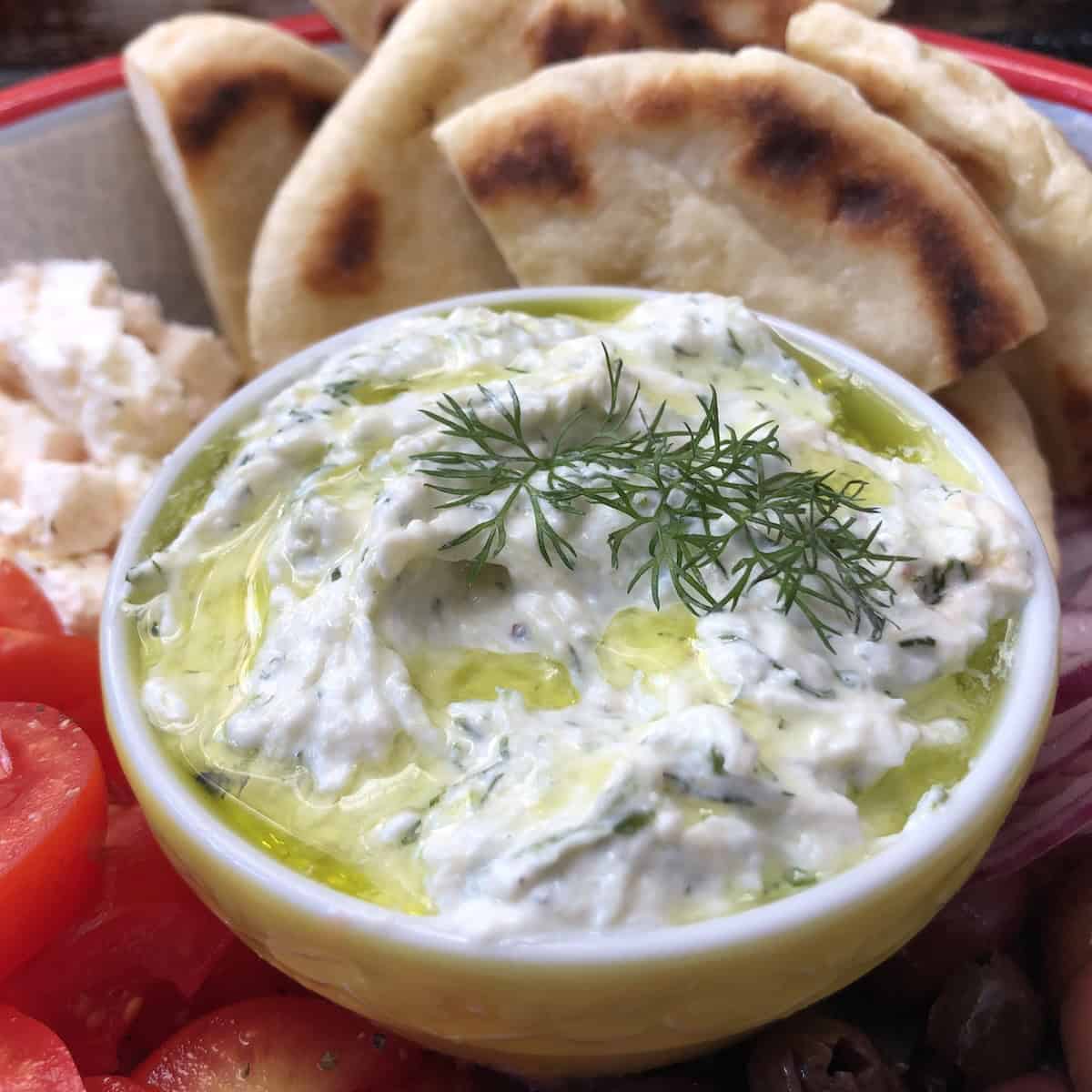
Make a big batch of this tzatziki recipe at home and turn any night into a Greek-inspired feast. Drizzle it with EVOO and smear it onto my crispy-tender pork gyros, serve it with a Greek salad, halloumi cheese salad, and homemade Greek pita, or set out pita chips and fresh vegetables for dipping. Delicious without the restaurant price tag.
Why You'll Love This Recipe
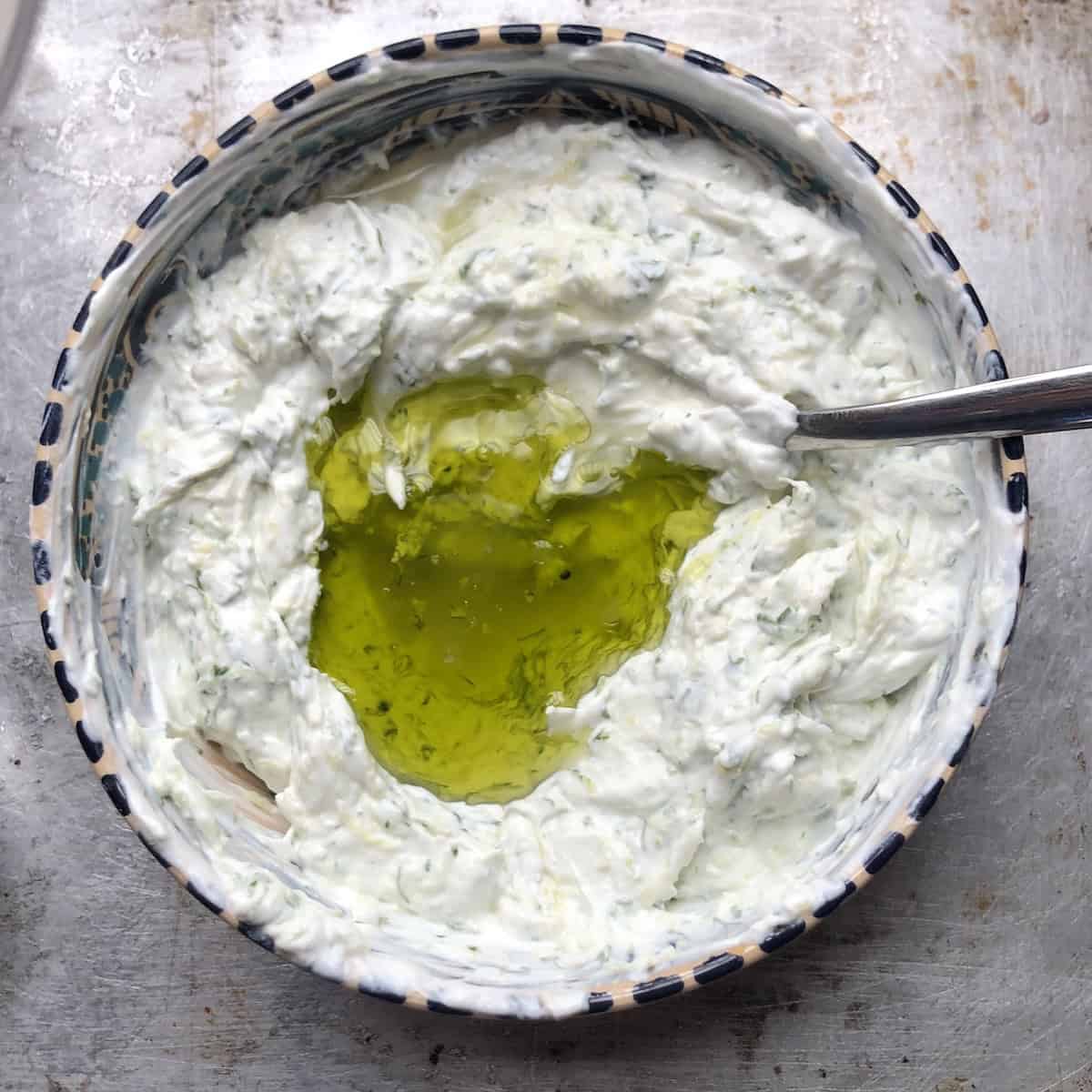
- Thick, never-watery tzatziki dip: Salting the grated cucumber, adding a splash of white wine vinegar, then squeezing it dry keeps the fresh cucumber flavor without any liquid that waters tzatziki down or makes it too runny.
- About 10 minutes hands-on: Grate, squeeze, stir, and let the fridge do the rest.
- Freezer-friendly: I've frozen it and thawed it overnight in the fridge, and it changed nothing about the texture or flavor (see before and after photos below)
- Fresh herbs: Dill is classic, and a hint of fresh mint and flat-leaf parsley are also authentic, but optional (I highly recommend them).
- Better as it rests: The flavors keep melding in the fridge, so it's an easy make-ahead sauce.
- One sauce, lots of uses: Spread it, dip it, or spoon it over grilled meats and vegetables.
Tzatziki Ingredients
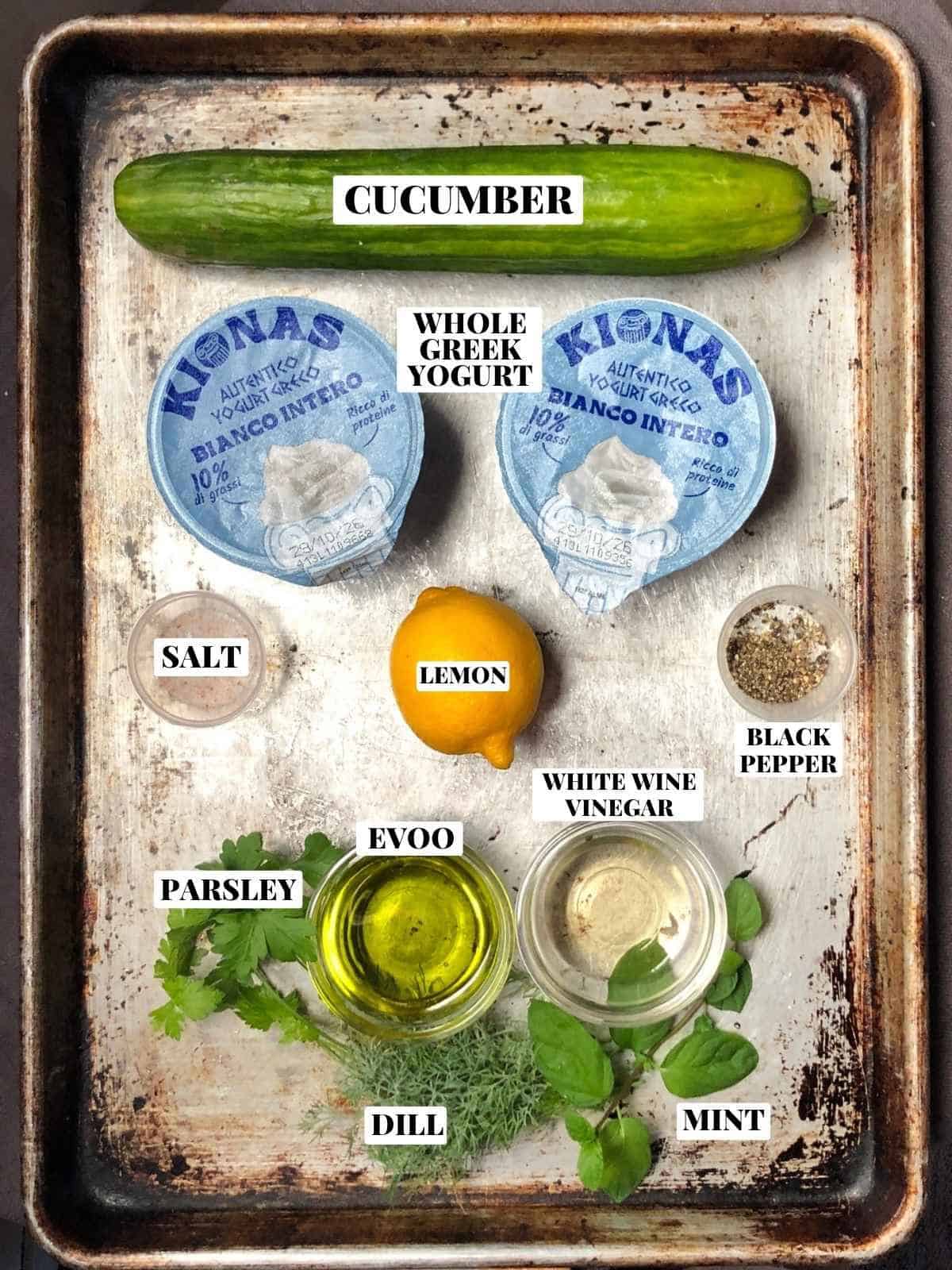
- Full-fat Greek yogurt: I use full-fat for the thickest, creamiest texture. Greek yogurt is already strained, so just pour off any liquid pooled in the container.
- Cucumber: English or Persian cucumbers both work. Use the same weight of either. If using regular waxed cucumbers, spoon out the seeds before grating.
- Kosher salt and white wine vinegar: Tossed with the grated cucumber before squeezing it all out. The salt helps draw out moisture, and the vinegar gives the cucumber a little tang without making the sauce taste vinegary.
- Garlic: Pressed or mashed into a paste using the side of a chef's knife so it blends in smoothly.
- Fresh lemon juice: Freshly squeezed and added to taste.
- Fresh dill: Finely chopped dill adds the herbaceous flavor tzatziki is known for.
- Fresh mint and flat-leaf parsley: Optional, but highly recommended because they create a more nuanced depth of flavor.
- Extra virgin olive oil: It adds to the texture of traditional tzatziki, especially after it's been refrigerated, but you can cut it in half or leave it out if you're looking for a low-fat tzatziki sauce.
- Salt and freshly cracked black pepper: To taste.
Full ingredient measurements can be found in the recipe card below.

How to Make Tzatziki Sauce
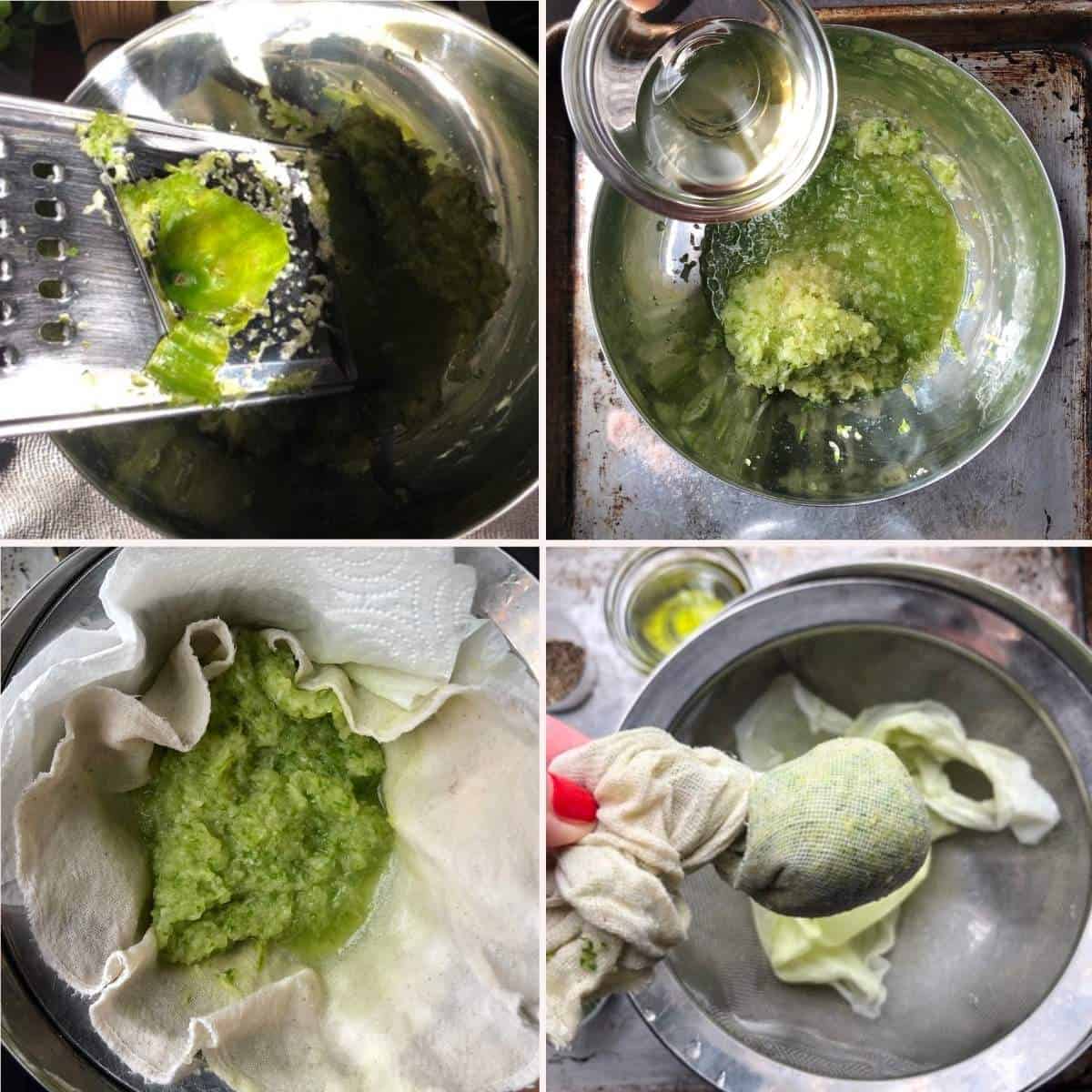
Step 1. Salt, soak, and squeeze the cucumber. Grate the cucumber on a box grater, toss it with kosher salt and the white wine vinegar, and let it rest for 15 minutes. Then squeeze it in cheesecloth or a clean, lint-free kitchen towel until it's as dry as you can get it.
Note: It will look like a very small amount of cucumber when you're done, which is normal. You want the flavor, not the liquid.
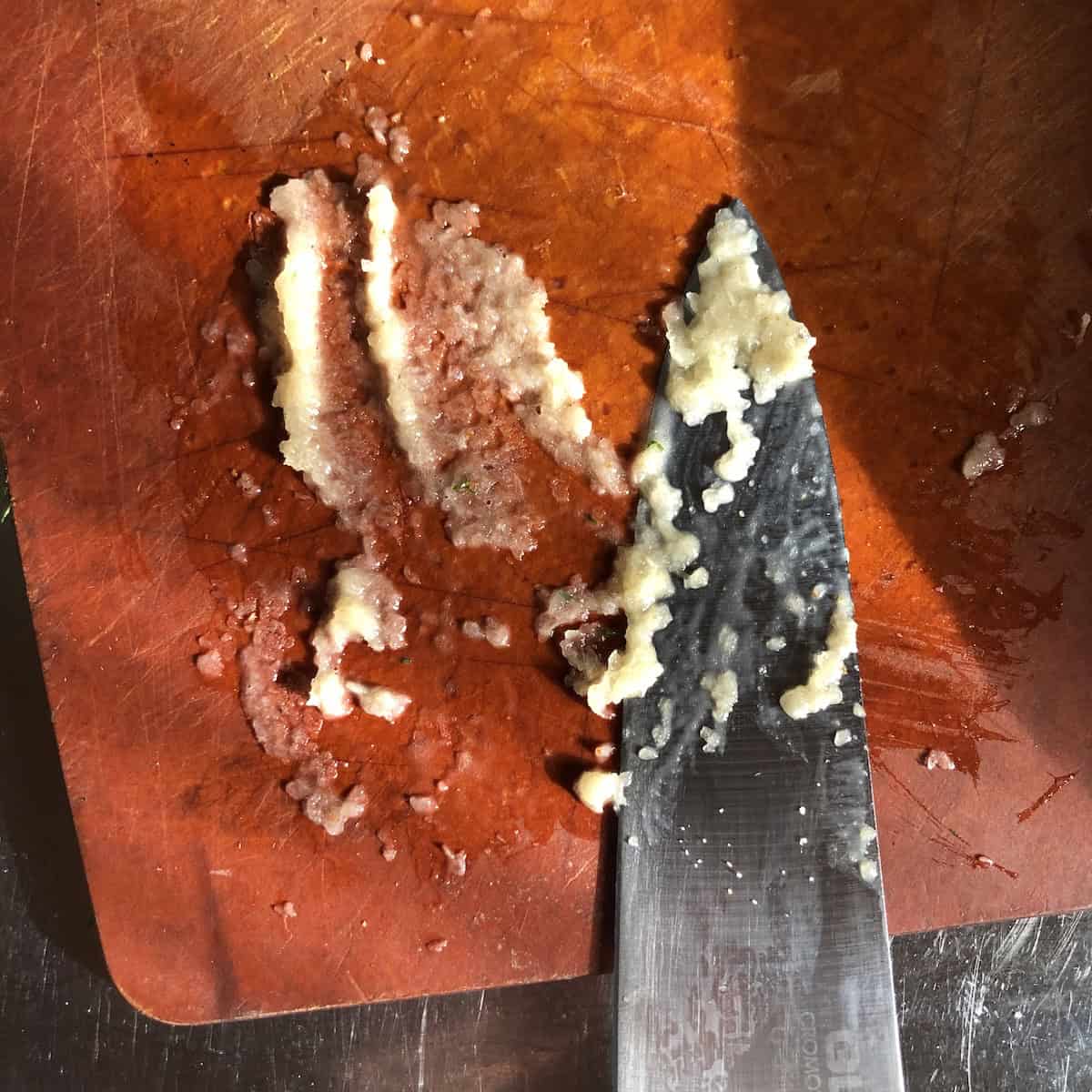
Step 2. Make the garlic paste. Press the garlic, or smash the clove with your knife, sprinkle it with a little salt, and scrape it against the cutting board into a paste.

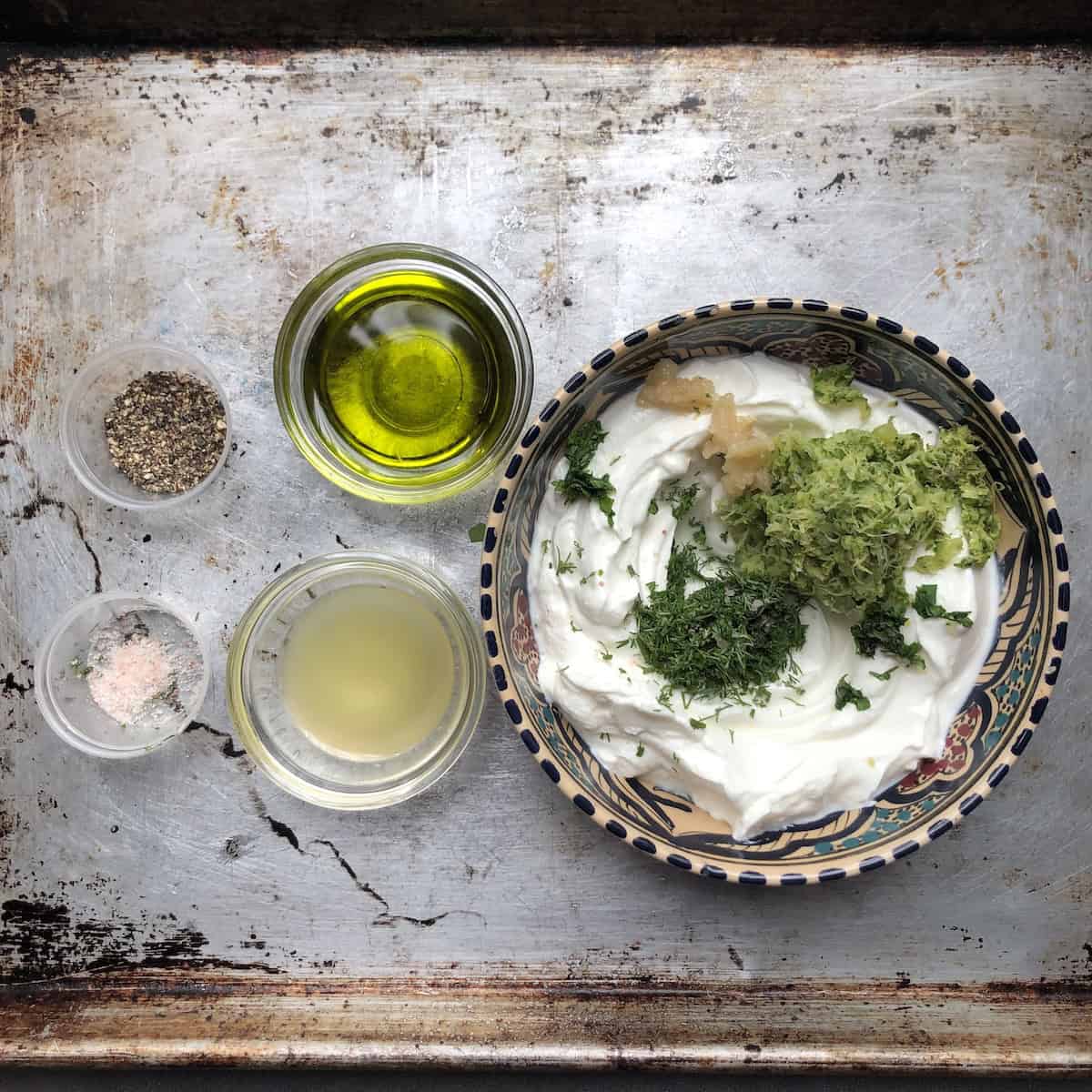
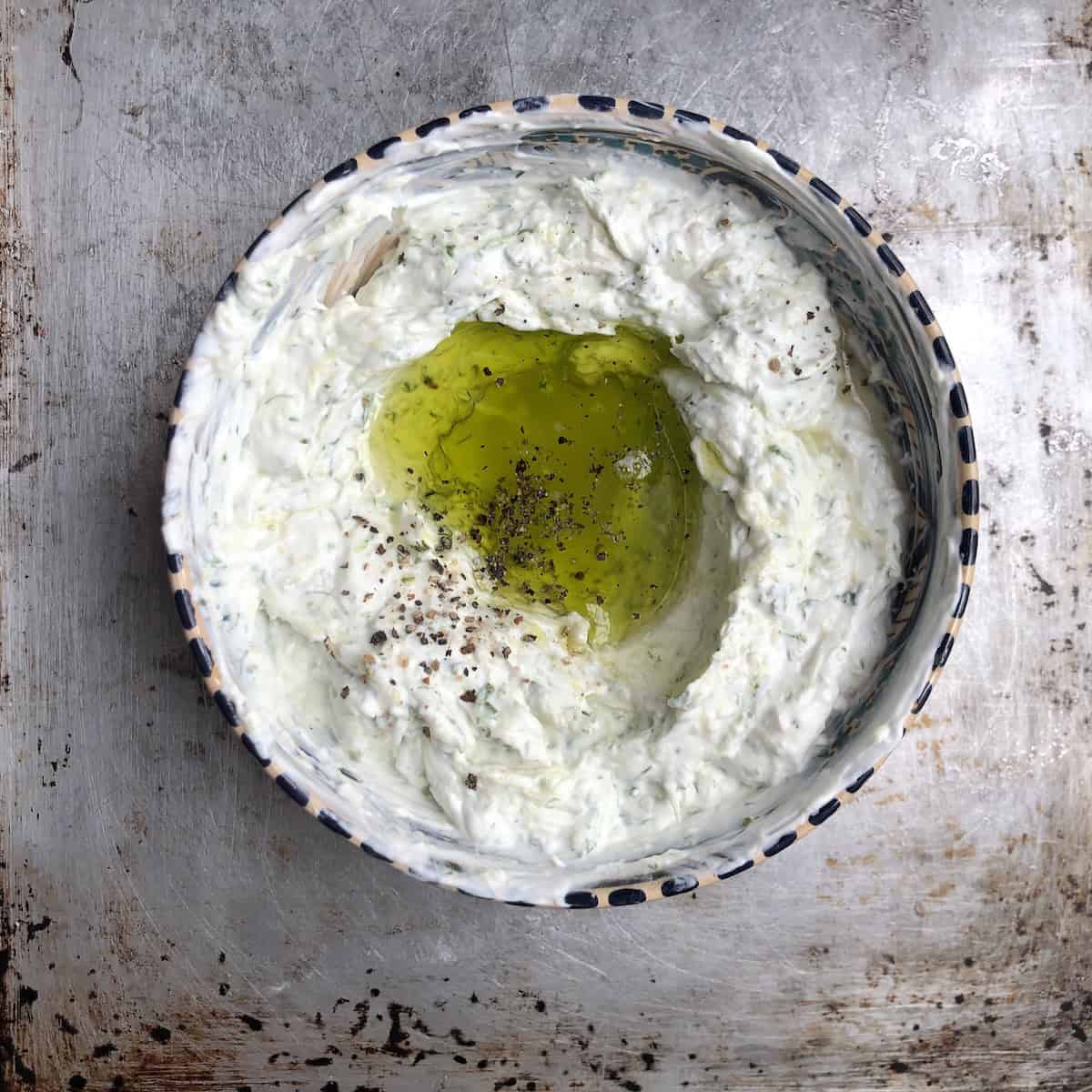
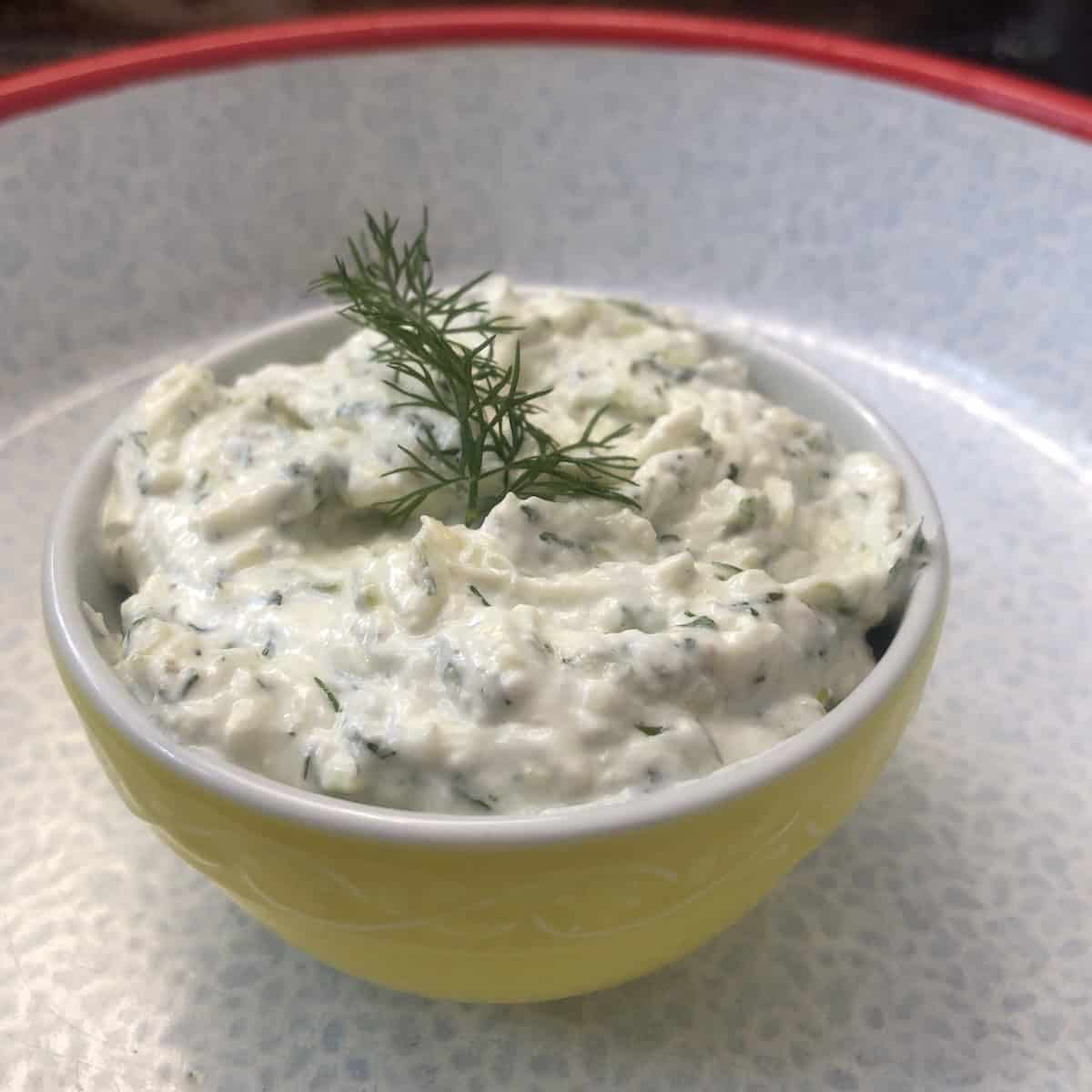
Step 3. Mix, taste, and chill. Stir together the cucumber, yogurt, half the lemon juice, olive oil, garlic, and herbs. Season with salt and pepper, taste, and add the rest of the lemon juice as you like. Cover and chill before serving.

How to Store, Make Ahead, and Freeze Tzatziki
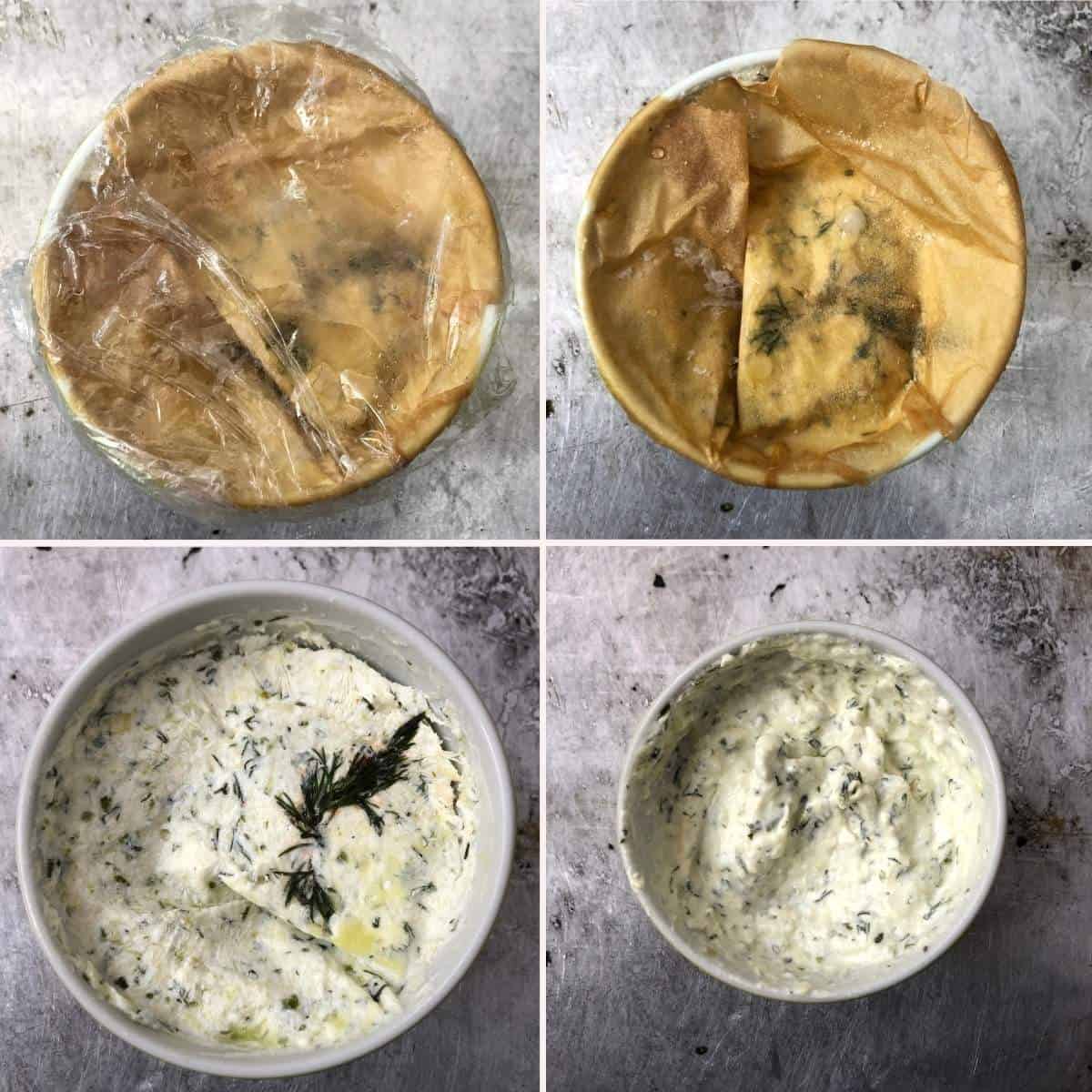
- Make ahead: Chill for at least 30 minutes so the flavors have time to mingle. It's even better after 2 hours, and at its very best after a night in the fridge, when everything has fully melded together.
- Fridge: Store it in an airtight container in the fridge for up to 4 days.
- Freezer: Freeze it for up to 2 months. Press a circle of parchment paper cut to fit over the top to prevent ice crystals from forming, then wrap in sustainable cling film or seal it in an otherwise airtight container.
- Thawing: Thaw it overnight in the fridge. I've tested this, and it changes nothing about the texture or flavor.
- Sour cream or crème fraîche version: Keep it in the fridge and skip the freezer.
Tzatziki Substitutions & Variations
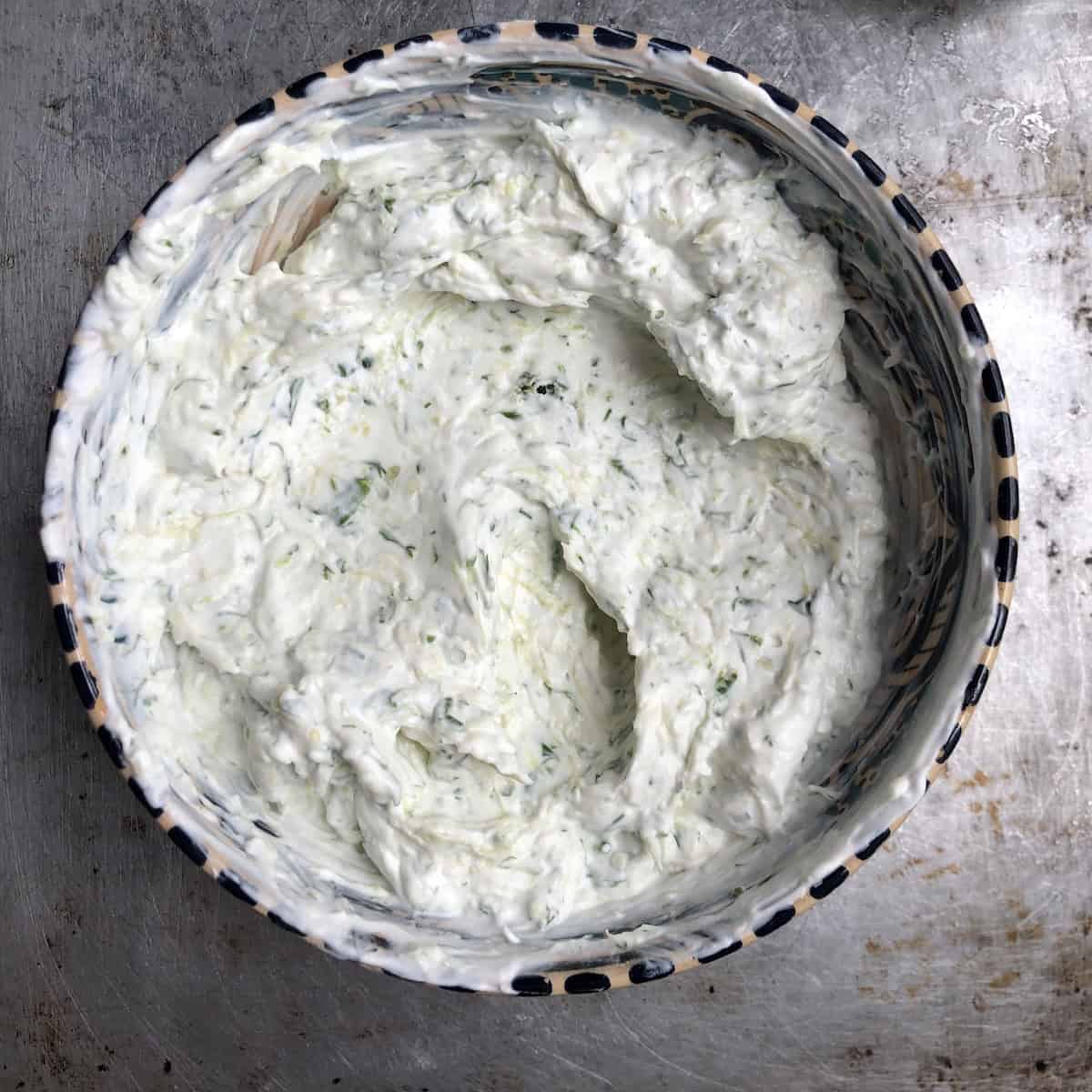
- Regular yogurt or runny Greek yogurt: Strain it first. Line a fine-mesh sieve with cheesecloth or a linen tea towel, set it over a bowl, add the yogurt, and let it drain (covered) in the fridge overnight.
- Without yogurt: Use sour cream or crème fraîche in place of the Greek yogurt. Keep this version in the fridge rather than the freezer, since it's not recommended to freeze sour cream.
- Low-fat tzatziki: Cut the olive oil in half or leave it out. It won't be traditional without it, but it still tastes really good.
- Tzatziki no dill: Simply leave it out and add more parsley and mint, or skip the herbs entirely for a really tasty cucumber sauce.
Ways to Use Tzatziki




Here are a few ways to use your tzatziki sauce.
- Gyros: Spread it on warm homemade Greek pita (recipe coming soon) to make these crispy pork gyros, or my vegetarian halloumi gyros (recipe coming soon).
- Greek-style grilled cheese: Smear a spoonful on the bread before adding a slice each of American and cheddar cheeses.
- Dip: Fresh vegetables, pita chips, or flatbreads like homemade naan.
- Greek salad night: Serve it alongside this easy Greek salad.
- Mezze board: Pair it with black chickpea hummus, olives, and warm flatbread.
- Grilled meats and vegetables: Spoon it over grilled chicken, lamb, or vegetables.
Tzatziki FAQs
Tzatziki is a Greek yogurt sauce made with thick Greek yogurt, grated and squeezed cucumber, garlic, lemon juice, olive oil, and fresh dill, often with mint or parsley. It's also called cucumber sauce or gyro sauce.
Tzatziki is pronounced tsat-SEE-kee or dzad-ZEE-kee, with the stress on the middle syllable.
Yes, you can freeze tzatziki sauce for up to 2 months with a circle of parchment paper over the top, and wrapped in sustainable cling film, or placed in an airtight container. Then thaw it overnight in the fridge. I've tested it, and the texture and flavor stay just as good as freshly made. That said, only freeze versions made with full-fat Greek yogurt, never sour cream or crème fraîche.
Up to 4 days in an airtight container.
Usually not, because Greek yogurt is already strained. Just pour off any liquid you may see in the container. If it's especially runny, or you're using regular yogurt, strain it overnight in the fridge in a fine-mesh sieve lined with cheesecloth or a linen tea towel set over a bowl.
Yes. Sour cream, crème fraîche, or panna acida (in Italy) all work in place of the Greek yogurt, although it won't have quite the same taste or texture. Don't freeze versions made with these substitutes, since freezing sour cream isn't recommended.
Cool, creamy, and tangy, with fresh cucumber, garlic, lemon, and herb flavor.
More Mediterranean Recipes You'll Love



Let's get started!
Made this Recipe? We'd love for you to rate ⭐️ it and tell us how it went for you!
📖 Recipe

Easy Tzatziki Sauce Recipe (Greek Yogurt Sauce)
- Total Time: 25 minutes
- Yield: 1 ⅔ cups (13 Servings)
- Diet: Gluten-Free, Vegan, Vegetarian
Description
This easy tzatziki sauce recipe is a thick, tangy Greek yogurt sauce made with squeezed cucumber, garlic, lemon and fresh herbs. It takes about 10 minutes of hands-on time, tastes even better after a night in the fridge, and freezes beautifully for up to 2 months.
Ingredients
- 10 ½ ounces (a scant 1 ⅓ cups) full-fat Greek yogurt (300g), pour off any liquid in the container
- 1 large English cucumber or 4 to 6 Persian cucumbers (13 to 14 ounces) (370 to 400g)
- 1 medium clove of garlic, pressed or turned into a paste (7g)
- 1 tablespoon white wine vinegar (15g)
- 2 tablespoons lemon juice, freshly squeezed, or more to taste (30g)
- ¼ bunch dill, finely chopped, or more to taste (10g)
- 9 leaves of flat leaf parsley, or more to taste (optional, but highly recommended)
- 8 medium-sized leaves of fresh mint (optional, but highly recommended)
- 2 tablespoons extra virgin olive oil (30g)
- ½ teaspoon kosher salt for the cucumber prep, plus more for seasoning the dip to taste (2g)
- Freshly cracked black pepper, to taste
For Serving
- Vegetables, Greek pita bread, pita chips, or other flatbreads like naan
- Fresh herbs (chives, mint, parsley)
- Olive oil
 Get Recipe Ingredients
Instructions
- Prep the cucumbers. Grate the cucumber using a box grater and add it to a mixing bowl. Add the ½ teaspoon of kosher salt (which helps to draw out moisture) and the white wine vinegar. Stir to combine and set aside to rest for 15 minutes. Place the cucumber in a cheesecloth (or a clean, lint-free kitchen towel) and squeeze out as much liquid as possible until the mixture is "dry." It will look like a very small amount of cucumber when you're done, which is okay. You want the flavor, not the liquid.
- Prep the garlic. Press the garlic clove. If you don't have a garlic press, make a garlic paste: smash the clove using your knife, sprinkle it with a little salt (which acts like sandpaper and helps it break down more quickly), and use a scraping motion on the cutting board to make a paste.
- Make the tzatziki. In a clean medium bowl, combine the cucumber, yogurt, half of the lemon juice, olive oil, garlic, dill, parsley, mint, and salt and pepper to taste. Taste the mixture and add the remaining lemon juice, plus more to taste. Adjust the salt and pepper as needed to find the balance that's perfect for you. Cover and chill in the fridge until ready to use.
Notes
- Why I use grams: I measured this recipe in grams because it's more accurate, produces more consistent results (even if you decide to tweak the recipe to your liking), and is easier to measure and make.
- Cucumbers: English and Persian cucumbers both work and have less water and seeds than traditional waxed cucumbers. Use the same weight of either.
- Greek yogurt: Although Greek yogurt is already strained, you can strain it further overnight in the fridge in a fine-mesh sieve lined with cheesecloth or a linen tea towel. I don't find it necessary, but it's an option if your yogurt is especially runny, or if you're using regular yogurt because you can't find Greek yogurt.
- Olive oil: The olive oil helps add to the texture of traditional tzatziki, especially after it's been refrigerated. Reduce to 1 tablespoon or leave it out to make a lower-fat tzatziki sauce. It won't be traditional without it, but it still tastes really good.
- Lemon juice: Two tablespoons is the perfect amount for us, but you may want as little as 1 tablespoon, or up to 3 tablespoons.
- Resting time: Chill for at least 30 minutes so the flavors have time to mingle. It's even better after 2 hours, and at its very best after a night in the fridge, when everything has fully melded together.
- Without yogurt: Sour cream or crème fraîche work in place of the Greek yogurt. Keep that version in the fridge; don't freeze it.
- Storage: Store in the fridge in an airtight container for up to 4 days, or freeze for up to 2 months with a circle of parchment paper cut to fit over the top to prevent ice crystals from forming, then wrapped in sustainable cling film or in an otherwise airtight container. Thaw overnight in the fridge.
- Prep Time: 25 minutes
- Cook Time: 0 minutes
- Category: Condiments + Sauces + Dips
- Method: No-Cook
- Cuisine: Greek, Mediterranean
Nutrition
- Serving Size: 2 tablespoons
- Calories: 49
- Sugar: 1.5g
- Sodium: 23mg
- Fat: 3.5g
- Saturated Fat: 1.1g
- Unsaturated Fat: 2.4g
- Trans Fat: 0g
- Carbohydrates: 2.3g
- Fiber: 0.2g
- Protein: 2.3g
- Cholesterol: 4mg

Food Safety
- Don't leave tzatziki out at room temperature for more than 2 hours, or more than 1 hour when it's above 90°F, per the USDA Food Safety and Inspection Service.
- Bacteria grow fastest between 40°F and 140°F, so keep it chilled until you're ready to serve.






Kelly Leding says
Super quick, tangy, and delicious Greek cucumber sauce!