

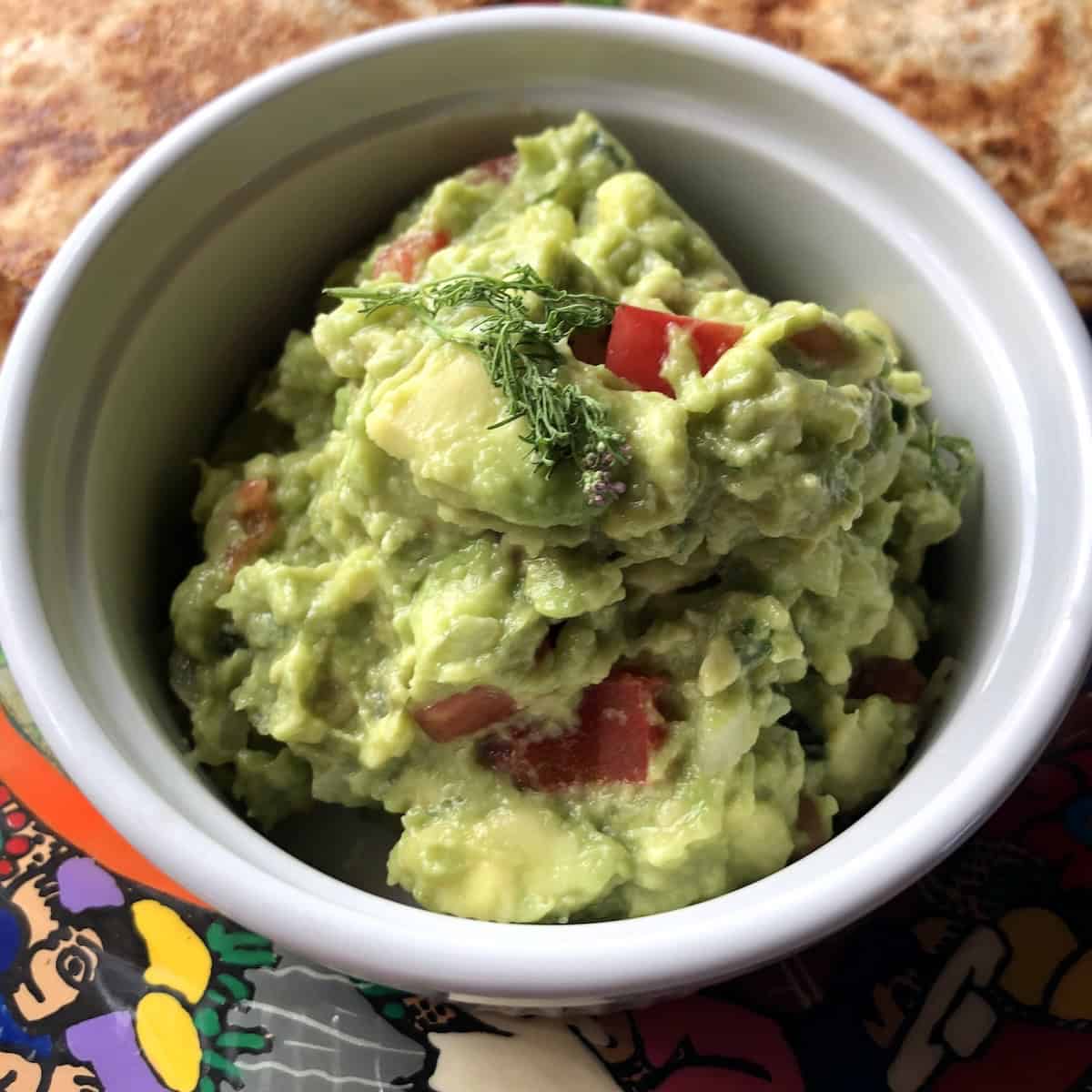
This guacamole recipe is built the same way as some of my favorite Mexican and Tex-Mex restaurants like La Esquina, Dos Caminos, and Rosa Mexicano make it, made and served table-side, customized just the way you like it! Instead of paying $12 to $19, make your own restaurant-style guacamole at home!
I'll share the number one restaurant secret for the best guacamole below. But first, here's what you won't find in this post, in case you want to pop out and find a different recipe😉.
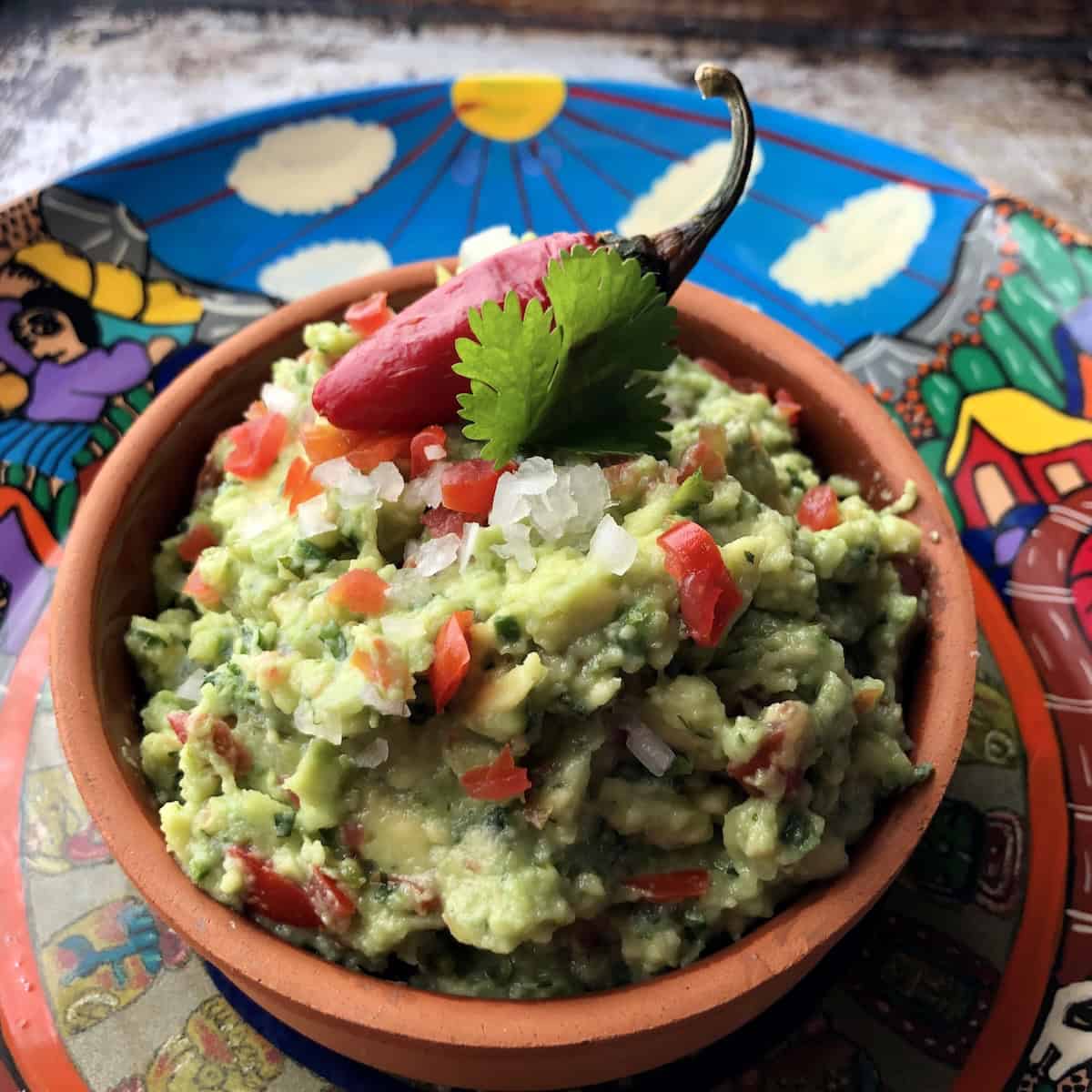
This is just like the restaurant guacamole served at some of my favorite places I grew up eating at my local Tex-Mex restaurants in Arkansas and Texas, and years later, living in NYC. It's bright, but not too bright, creamy and a little chunky (aka chunky-smooth), perfectly spicy, with just the right amount of cilantro (which can be omitted if it tastes like "soap" to you).
There's no sour cream, no oil, no vinegar, no mayonnaise. Real Mexican and Tex-Mex tradition holds that adding any of those is an absolute sacrilege and can't be called guacamole. I agree with tradition.
Jump to:
- The Original Guacamole (Just Avocado + Salt)
- Why This Tableside Guacamole Works
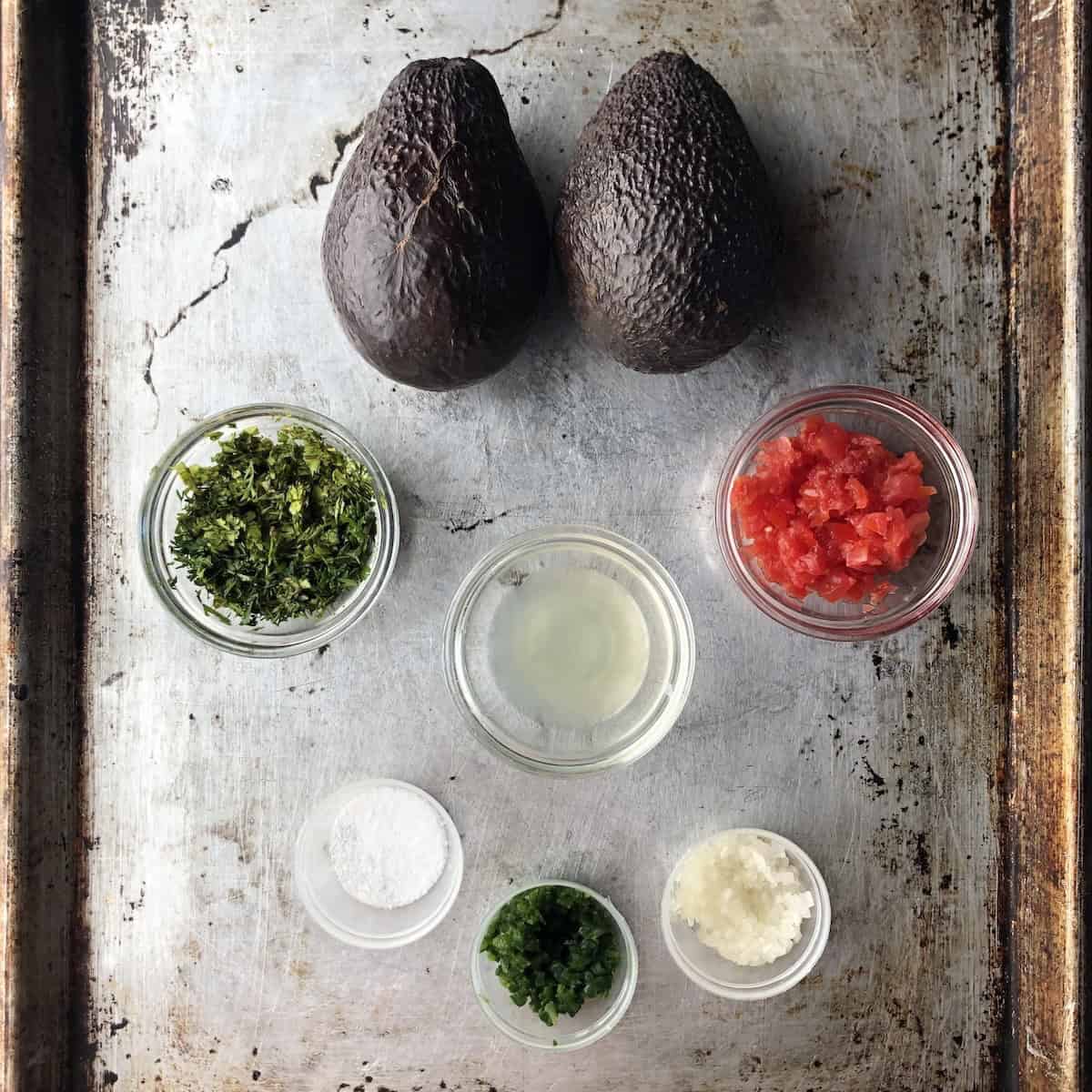
- Ingredients
- How to Make Guacamole
- How Many Avocados Do I Need?
- Best Avocados for Guacamole
- How to Choose a Ripe Avocado for Guacamole
- How to Ripen Avocados Quickly (and Slow Them Down)
- Equipment: Molcajete vs. Mortar and Pestle vs. Mixing Bowl
- Substitutions
- Variations
- Storage and Make-Ahead
- Serving
- Restaurant Tips for the Best Homemade Guacamole
- FAQ
- Related Recipes
- 📖 Recipe
- Food Safety
The Original Guacamole (Just Avocado + Salt)
The earliest version of ahuacamolli, the dish the Aztecs were making centuries before anyone called it guacamole, had two ingredients: mashed avocado and sea salt. That was it. They ground it in a molcajete carved from volcanic basalt, a tool in use across Mesoamerica since around 600 BC, and ate it scooped onto warm tortillas.
The name comes from Nahuatl. Ahuacatl meant avocado. Molli meant sauce. Same molli root you find in Mexico's other great sauces, mole negro and mole verde. Guacamole is essentially avocado mole.
Tomatoes and green chiles were the next additions, both native to Mexico and well-established in the Aztec version before contact with Europeans. Cilantro, onion, and lime came later, after the Spanish arrived in 1519.
None of those three are native to Mexico. Cilantro came from Asia. Limes traveled from Persia by way of Columbus. Onions came from Europe. The version of guacamole most American kitchens make today is essentially the Spanish-era recipe, refined.
Why This Tableside Guacamole Works
- A portion of the aromatics gets mashed and macerated first with the salt so it can better infuse every bite of the mashed avocado.
- It's restaurant-style without restaurant pricing. La Esquina charges $12. Dos Caminos charges $15. Rosa Mexicano charges $19. You'll spend a fraction of that (or whatever your local spot is charging), so you can use the leftover money to buy a better bottle of tequila for your spicy margaritas😉.
- You can build it in a molcajete, a large mortar and pestle, or a regular mixing bowl. A traditional lava stone molcajete is the gold standard, but the recipe works in all three.
- Authentic Mexican and Tex-Mex. No oil, no vinegar, no mayo, no sour cream. Just avocado, fresh lime juice, salt, and the aromatics that have been in this dish since before the Spanish arrived.
- It is naturally vegan, naturally gluten-free, and ready in about 10 minutes from cutting board to dive bombing with homemade tortilla chips!
What Is Tableside Guacamole?
Tableside guacamole is the version that higher-end Mexican and Tex-Mex restaurants (like La Esquina, NYC) build in a molcajete right in front of you at your table. They have a cart with whole fresh avocados, diced chilis, diced onions, tomatoes, cilantro, and lime juice, and you get to decide how spicy (or not) that you want it.
The version in this post is adapted from Chef Ivy Stark, the former executive chef at Dos Caminos in New York City, who published her tableside recipe in Dos Caminos Mexican Street Food (2011). I used to work in Soho, a few doors down from the original location, and have eaten this guac lots of times for work lunches, or happy hour on my way home from the office. It's delicious.
After having seen it made table-side, I began making mine using this defining technique of first mashing some of the aromatics together with the salt to release their water and oils, then mashing the avocados until chunky smooth, then folding in the remaining aromatics and lime juice.
It's a great experience. And to us, guacamole made in a well-cured and seasoned molcajete does, in fact, taste better than when it's made in a regular bowl.
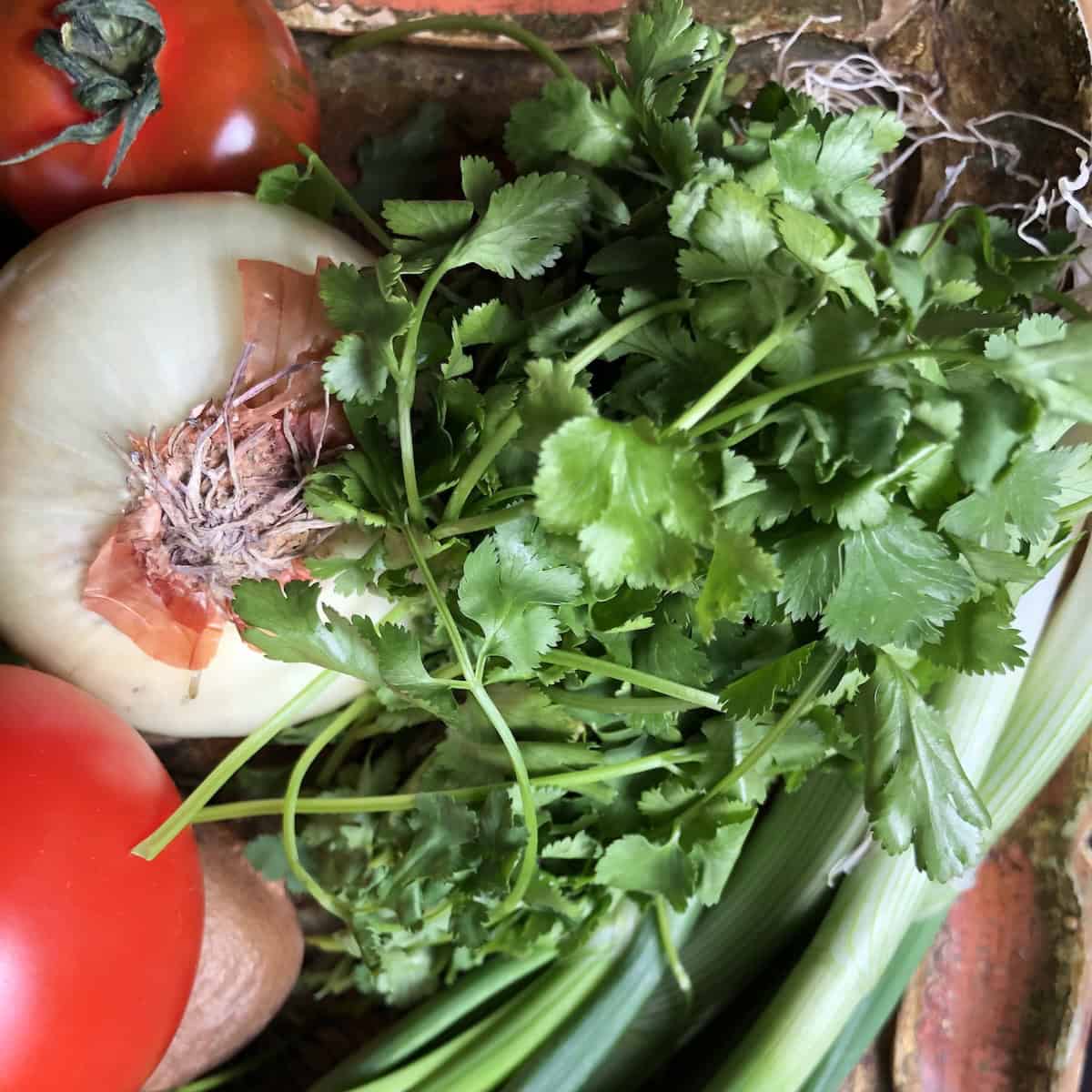
Ingredients
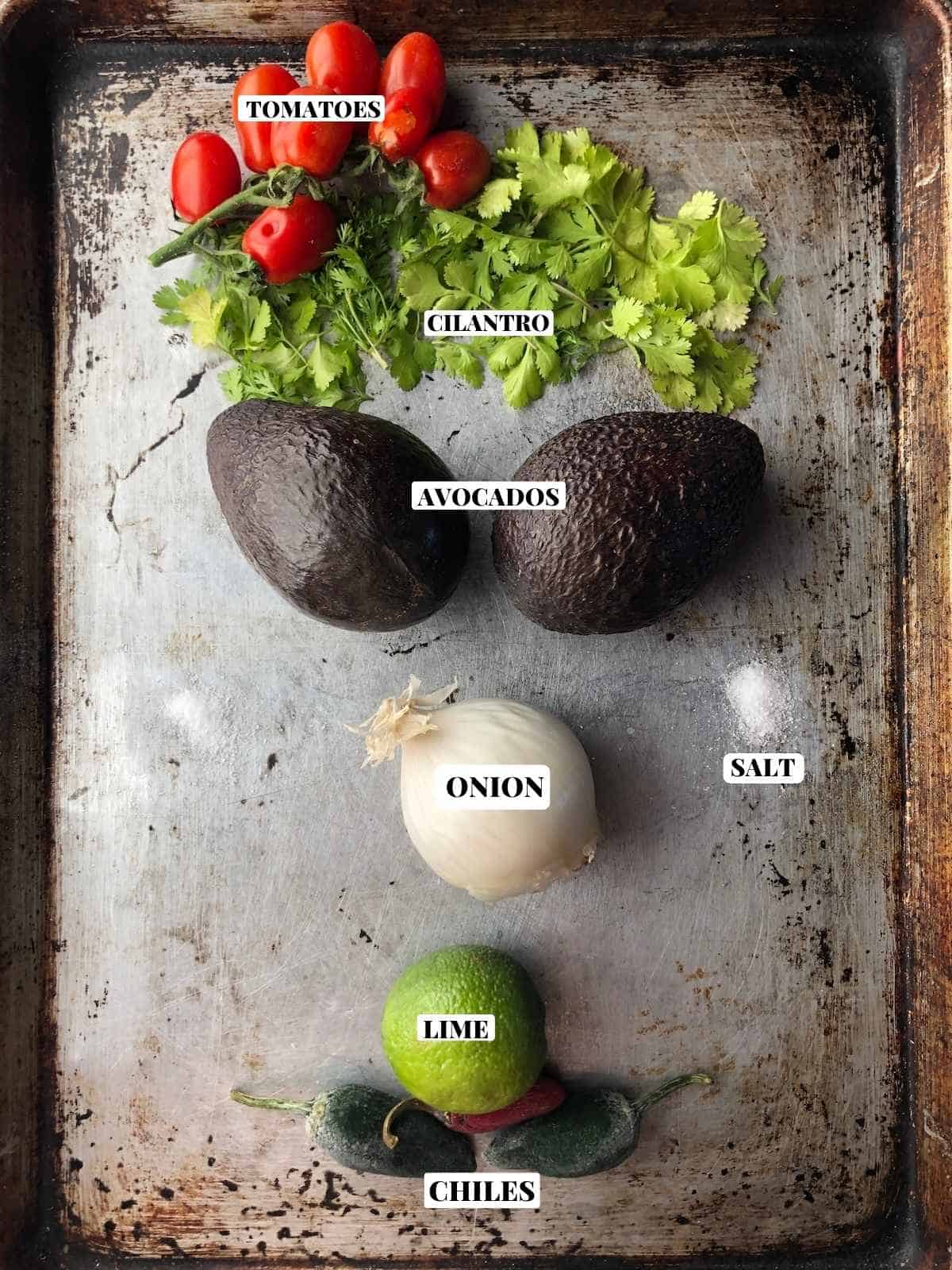
- Ripe Hass avocados
- Fresh cilantro leaves, finely diced (optional)
- White onion, finely diced
- Jalapeño or serrano chile
- Plum or grape tomatoes, hulled and seeds removed
- Lime juice, freshly squeezed
- Salt
See recipe card for quantities.
A Few Notes on the Ingredients
Avocados. Choose Hass avocados because they yield the creamiest guacamole. The skin should yield to gentle pressure but not feel hollow. An indicator of ripeness is if the small stem nub at the top pops off easily and reveals green underneath, not brown. If too firm, just give them a few days to ripen at home.
Onion. Finely diced/minced white onion is what most restaurants use and what authentic Mexican cooks call for. It has a cleaner, sharper bite than yellow and a less pronounced sweetness than red, but any onion will do (even shallots or spring onions work in a pinch). Using up to 1 tablespoon (14g) is a small amount, but it adds a lot of great flavor. Ivy's recipe calls for 2 teaspoons (9g), you decide how much you prefer.
Chile. Jalapeño and serrano are both traditional. Serrano runs hotter and more grassy. Removing the seeds and membranes drops the heat by roughly half, which is what I do when I am cooking for guests or kids. But I personally love spicy guacamole.
Tomatoes. Optional ingredient. Use ripe plum or sweet grape tomatoes, although any variety will technically work. Standard slicing tomatoes tend to taste like nothing, but use them if it's all you've got. Authentic Mexican guacamole is made without tomatoes at all. Leave them out, and the recipe is still delicious. I go back and forth because I love it either way.
Lime. Fresh-squeezed only. The bottled stuff does not taste like fresh lime juice. Use about 1 teaspoon (4.5g) of juice for every avocado you use. It's usually the perfect amount, but taste and add more if desired at the end.
Salt. Kosher. Salt does more than just season guac. As you mash it with the aromatics, it draws moisture out of the chile, onion, and cilantro, breaking the cells down and pulling their flavors into the paste so the avocado picks up seasoning all the way through, not just on the surface. Use a half teaspoon, then taste and add a couple of pinches more if needed. If using regular table salt, use ¼ teaspoon to start.
How to Make Guacamole
Step 1. Mash the aromatics first.
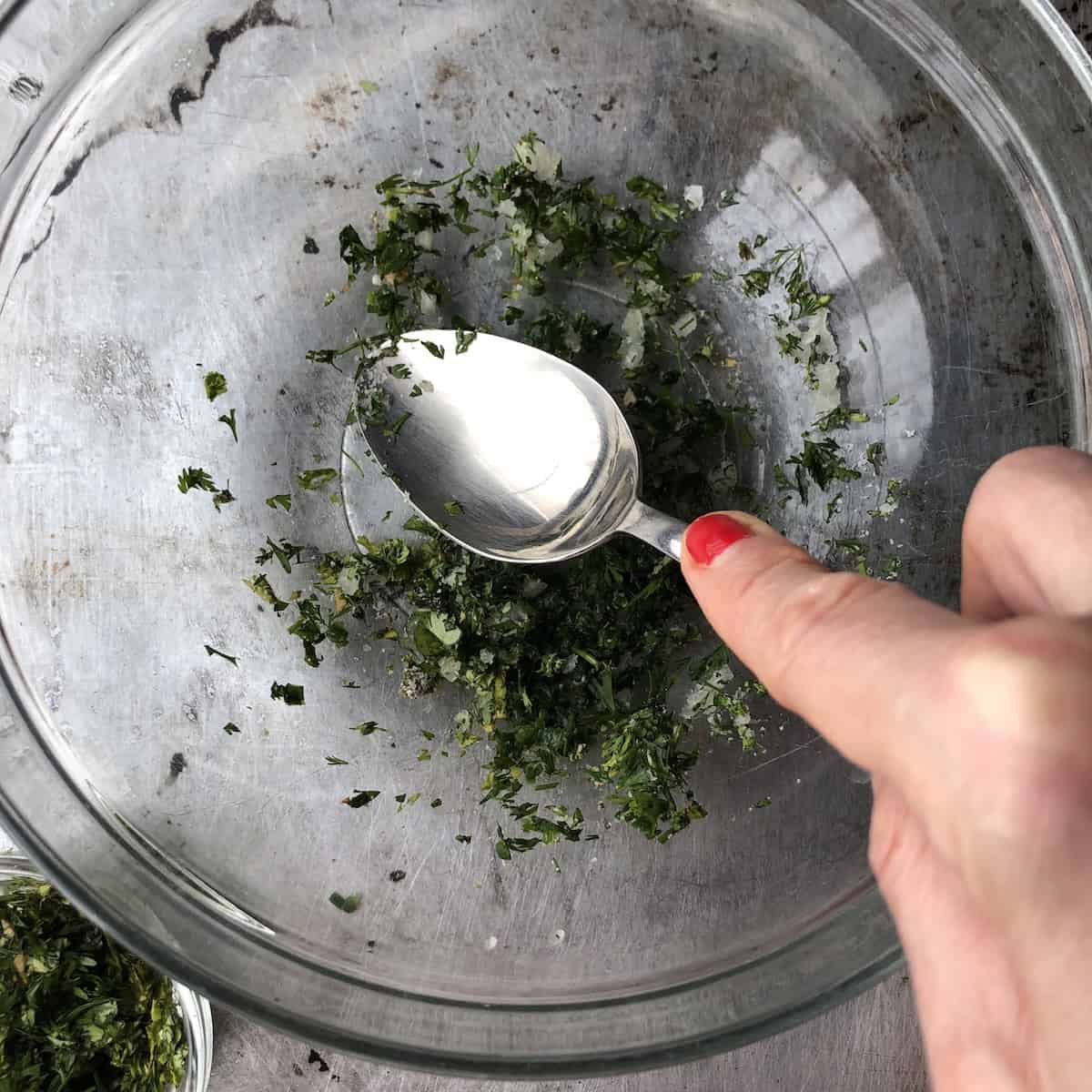
Add half of each of the cilantro, onion, and chile, plus all the salt, into the bottom of the molcajete or mixing bowl. Press and grind them with the back of a spoon or the pestle until they break down into a wet, fragrant paste. You will smell the chili oils almost immediately.
Step 2. Add the avocados.
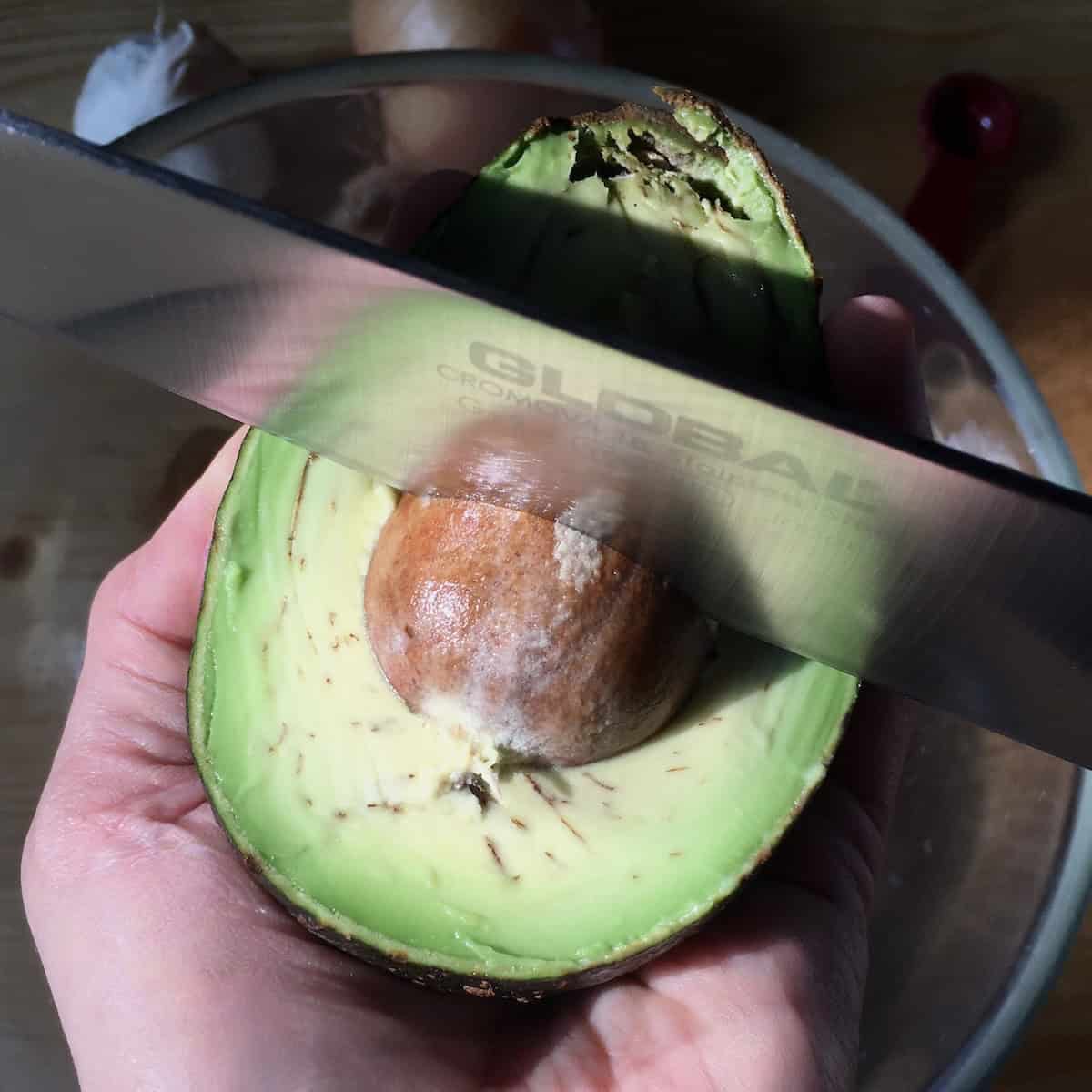
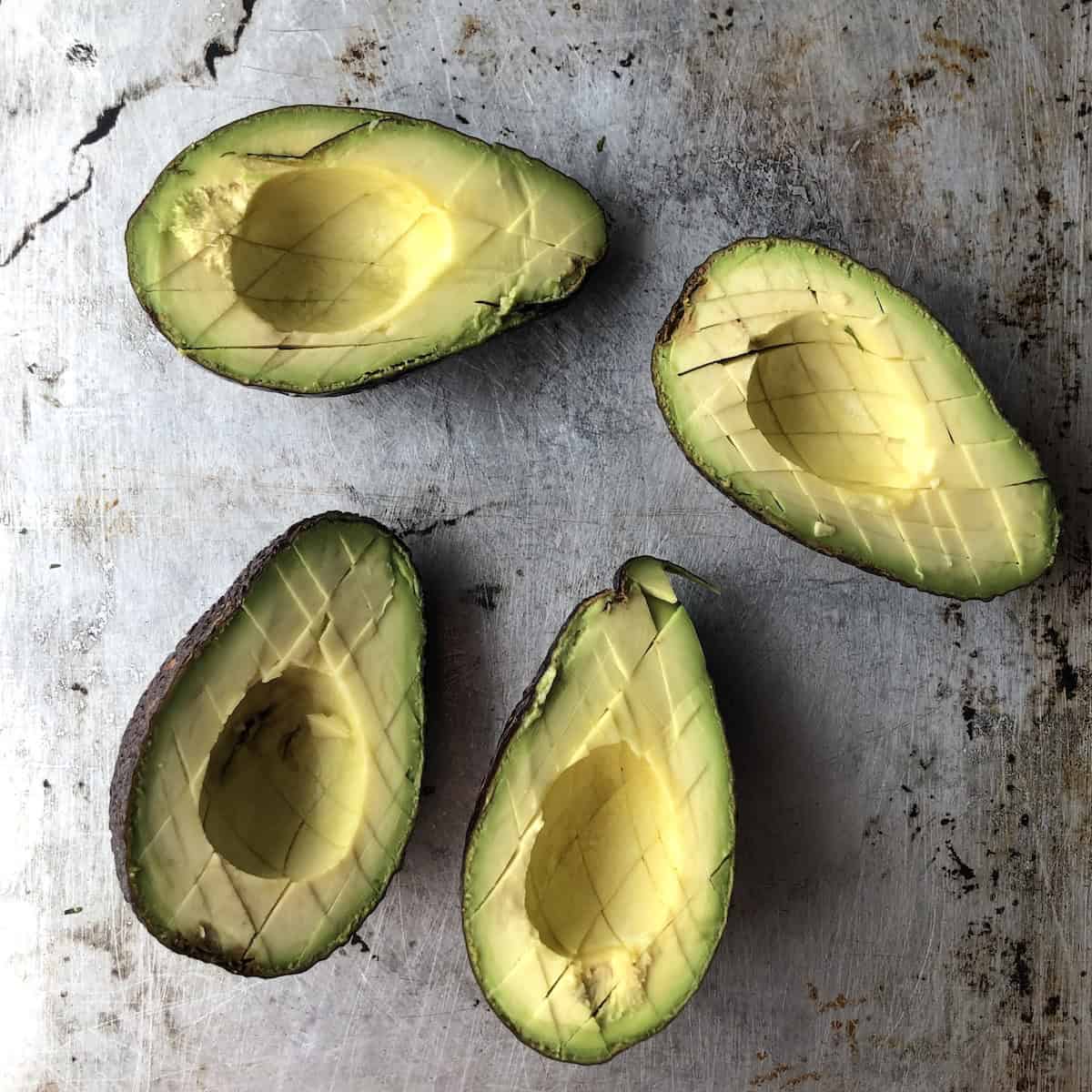
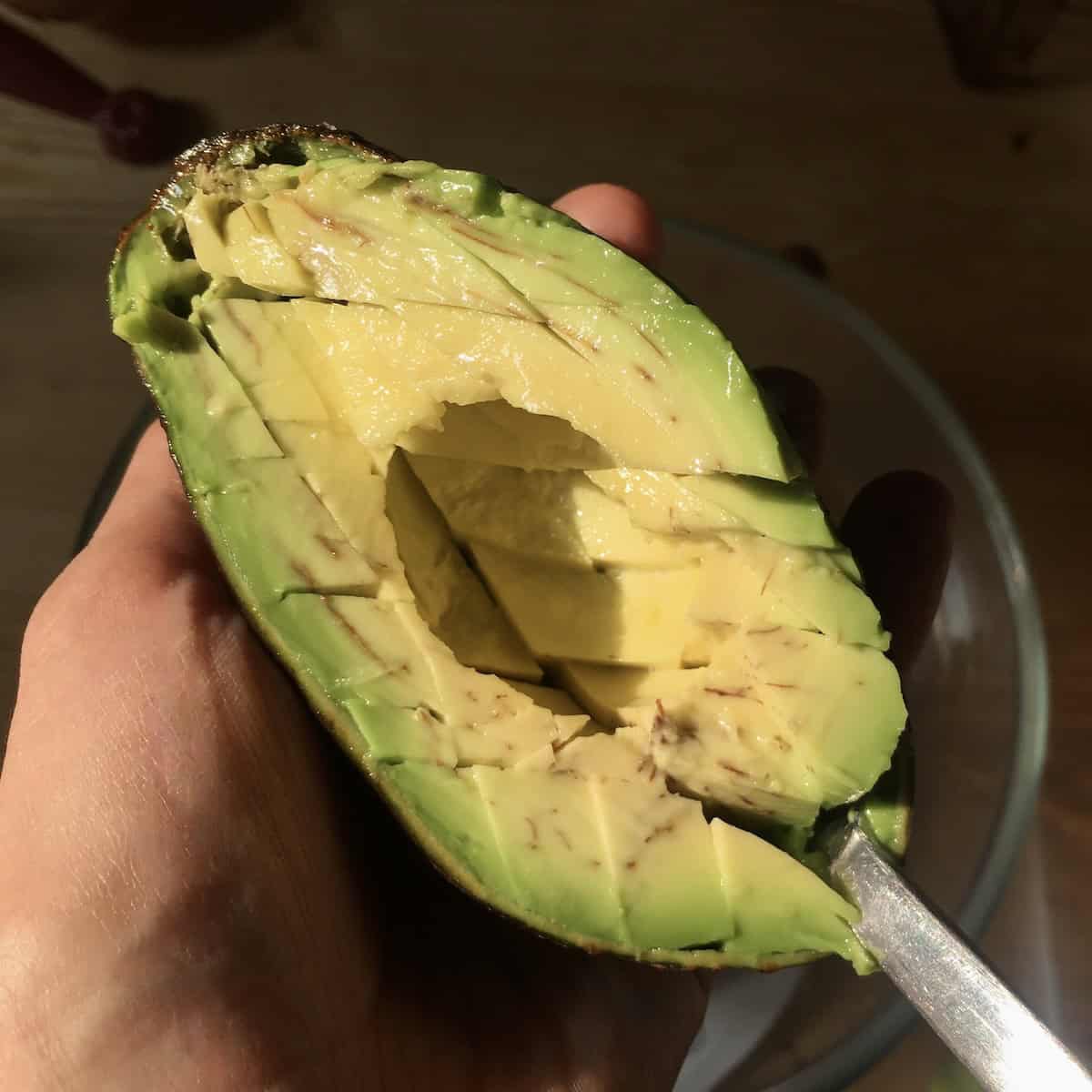
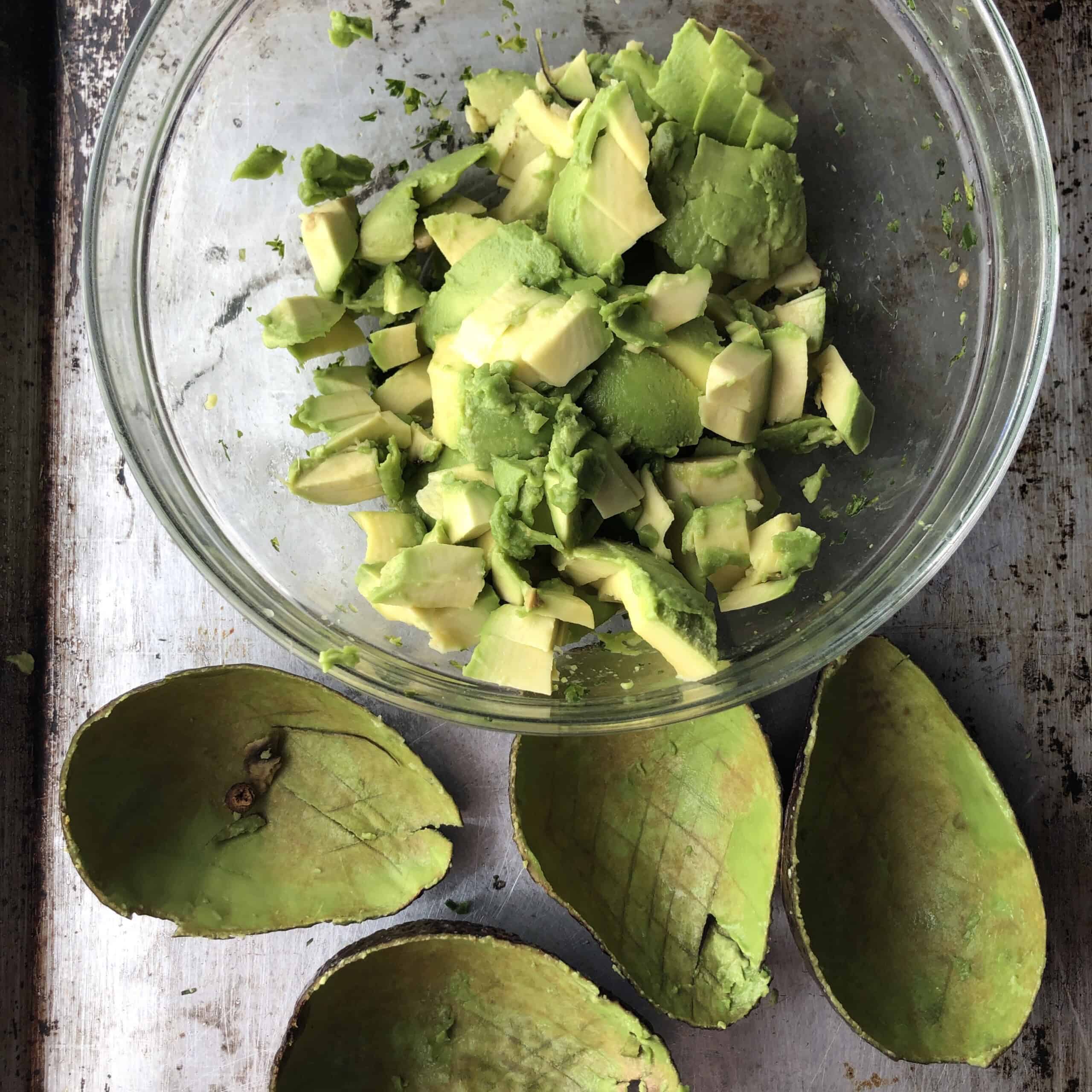
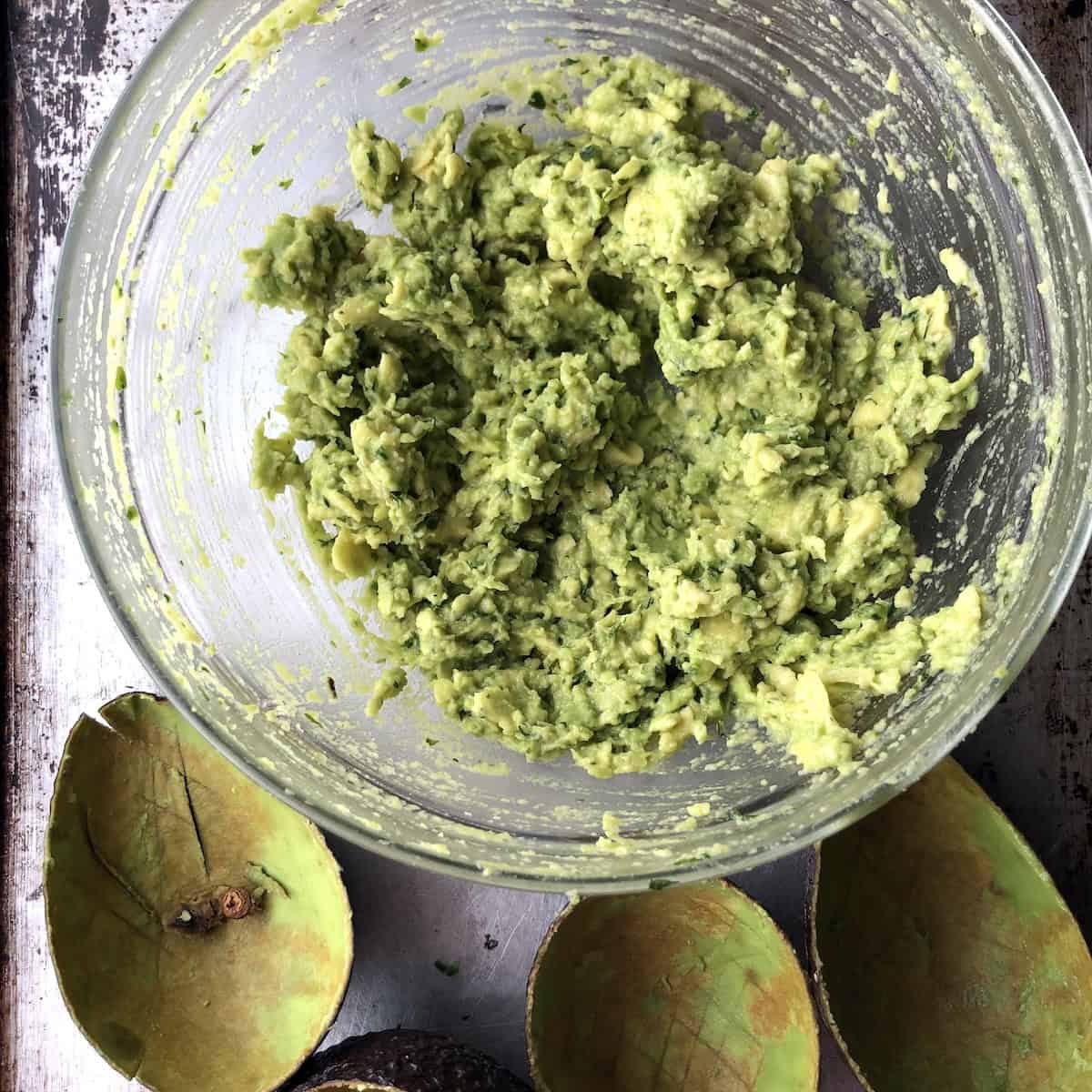
Halve them, twist apart, pop out the pits using the heel of a knife, score them if you want, and then scoop the flesh into the bowl. Mash with a fork to get a chunky-smooth texture or as smooth as you'd like.
Step 3. Fold in remaining ingredients.
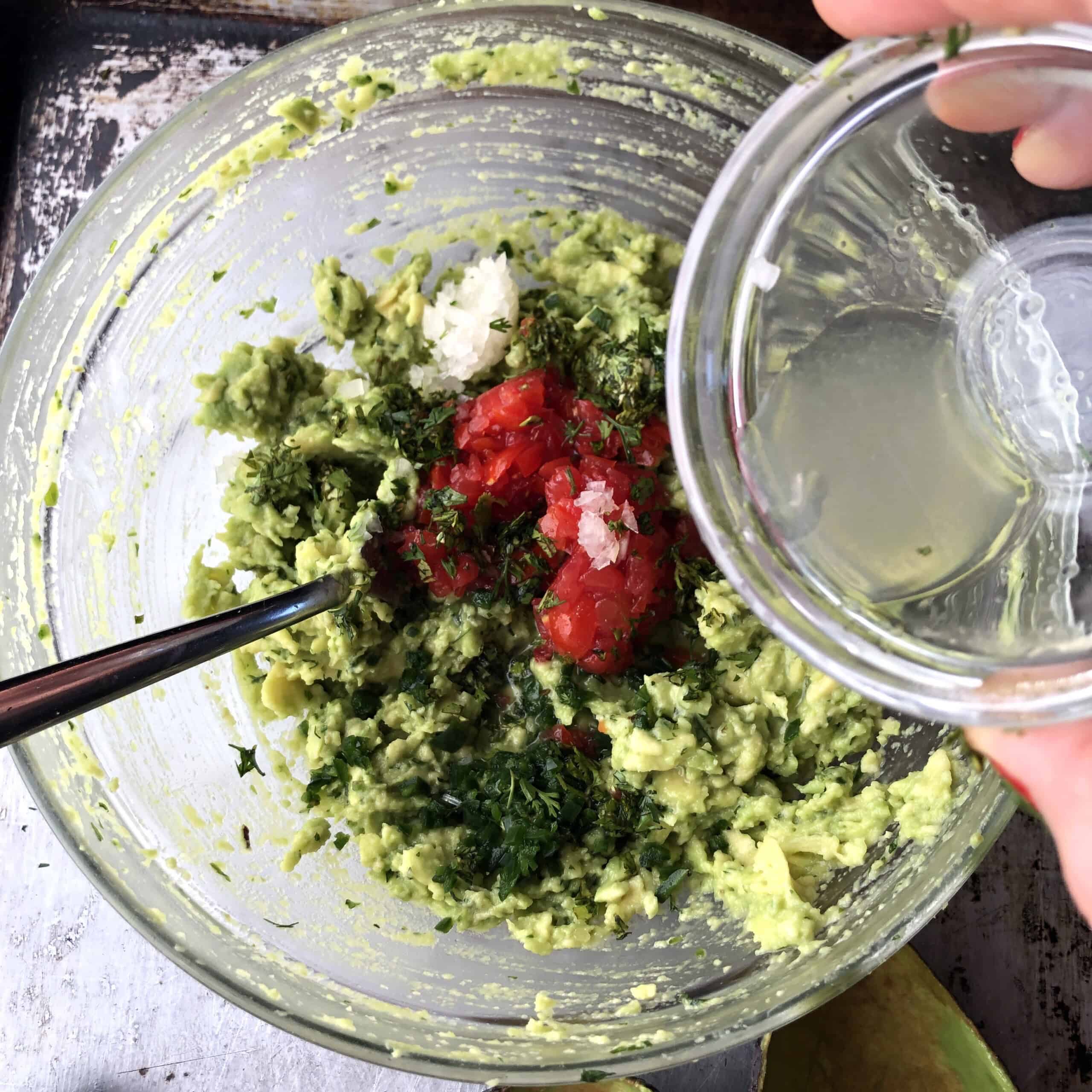
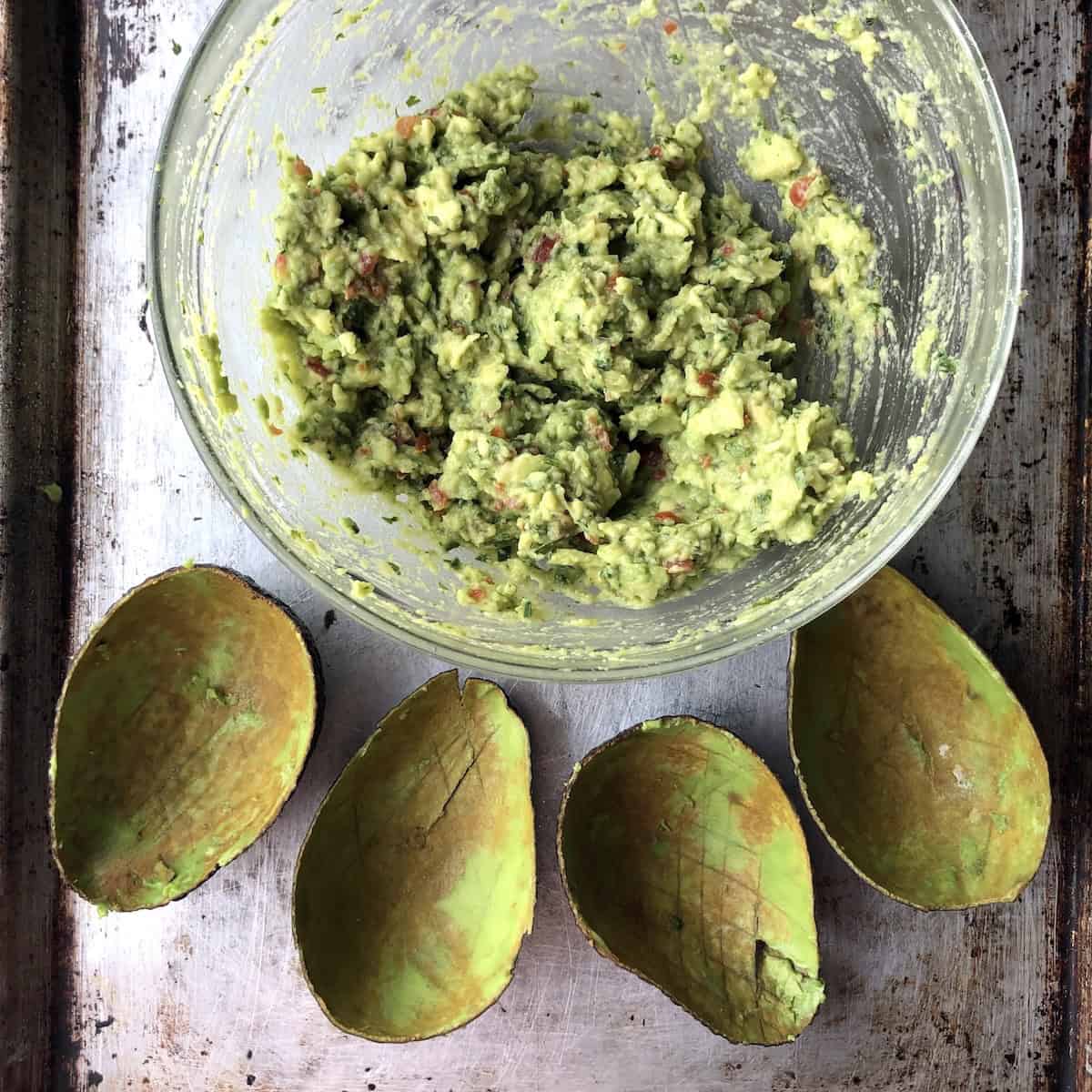
Stir in the remaining onion, tomatoes, and lime juice. Taste and adjust seasonings if needed, adding as much of the remaining cilantro as desired. Serve immediately with warm chips.
Hint: Add Cilantro to Taste, Save the Rest
Cilantro can be divisive even among people who like it, depending on how strong it is. You can fold in all of it or just enough to suit you. If you have leftover cilantro and tomato, don't throw them out. Combine with a little extra chopped onion, a pinch of salt, and a squeeze of lime, and you have a quick pico de gallo to serve along with the guac.
Find detailed instructions in recipe card.
How Many Avocados Do I Need?
If you're planning a Cinco de Mayo or Day of the Dead party (or any Mexican-themed fiesta) use the following guidelines to buy the right amount of avocados for making guacamole.
| People served | Avocados needed |
|---|---|
| 2 people | 1 avocado |
| 4 to 6 people | 2 avocados |
| 6 to 8 people | 3 avocados |
| 10 to 12 people | 4 to 5 avocados |
The recipe below is built around two avocados, which is the batch size I make most often. Multiply the rest of the ingredients in the same proportion as you scale up.
Best Avocados for Guacamole
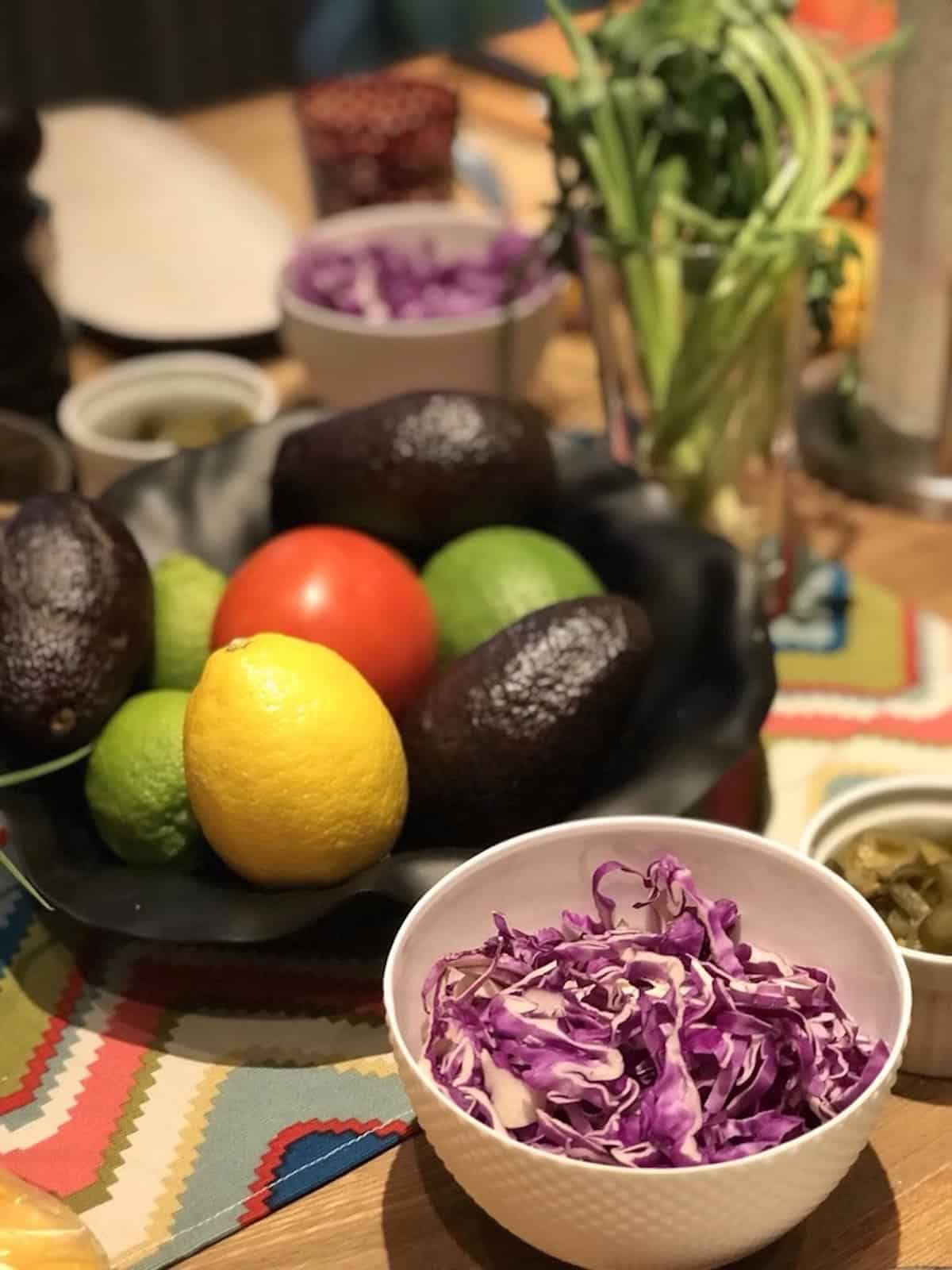
Choose the smaller, pebbled-skin Hass variety with its deep green-to-black color when you can. It's the one with the highest fat content and creamiest density. If you can't find Hass, Pinkerton is the closest substitute. It's a Hass × Rincon hybrid sometimes labeled "pseudo-Hass," with similar oil content and a creamy texture.
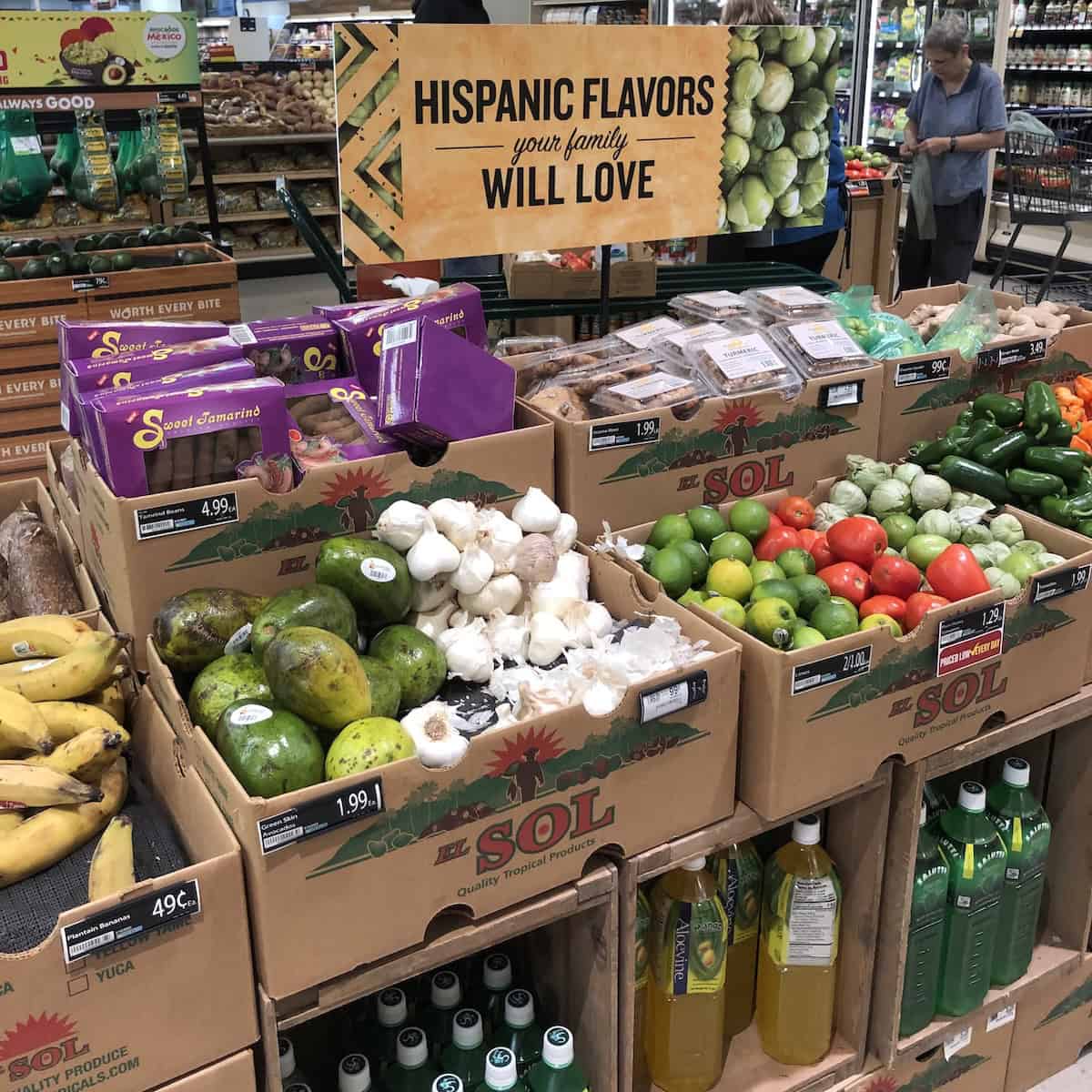
Skip the lower-fat green-skin varieties for guacamole if you can. Florida avocados (also called green-skin or "slimcado") have roughly half the fat and a watery, fibrous texture that makes loose, pale guacamole. Fuerte, Bacon, Zutano, and Ettinger (commonly sold across Europe and especially in Italy) have similar issues. They're fine for slicing onto toast or salads, but they'll let you down in a molcajete.
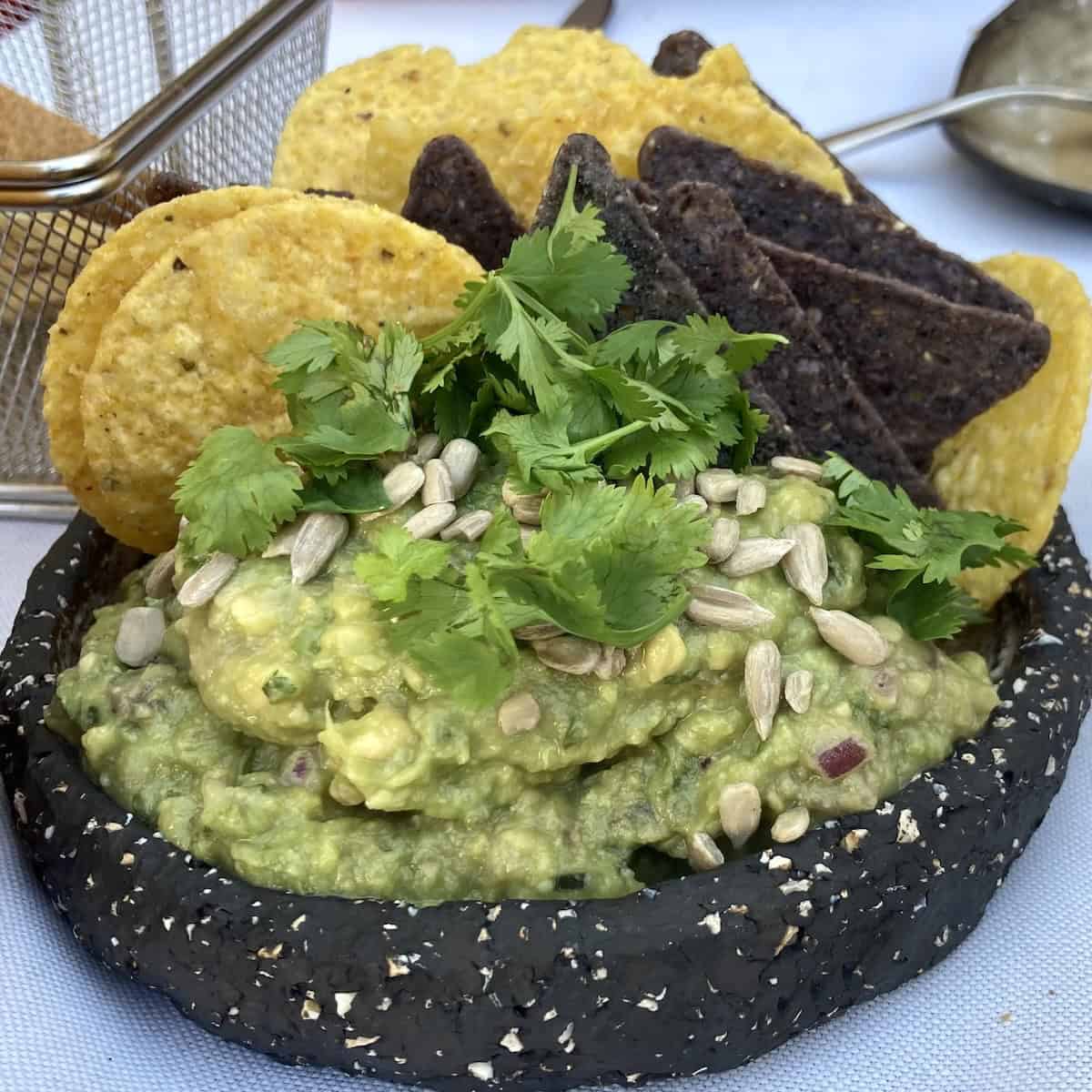
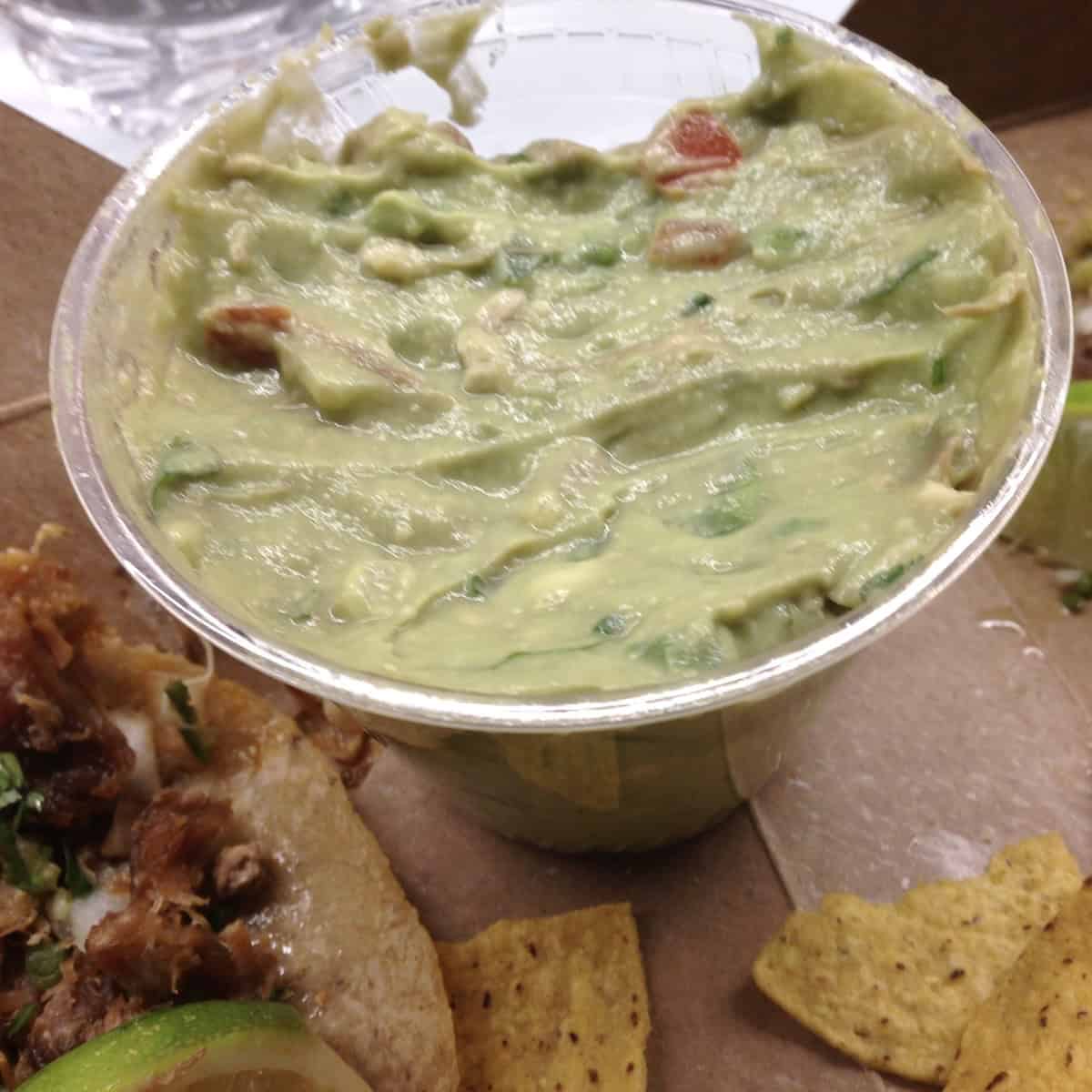
Living in northern Italy, I rely on Hass avocados grown in Sicily and Pinkerton when I can't find them. If you're in Europe and only have green-skinned varieties available, your guacamole will still work. Just expect a thinner, watery result with less creamy body, as seen in the photograph below:
How to Choose a Ripe Avocado for Guacamole
For picking a ripe one, use these three checks:
- The squeeze. The skin should yield to gentle pressure but not feel hollow or mushy, nor should it be hard. If your thumb leaves a dent, it's overripe. If it doesn't budge at all, it needs another day or two.
- The stem. The small brown stem nub at the top should pop off cleanly, revealing green flesh underneath. Yellow-green is perfect. Brown means the avocado is overripe inside, even if the outside still feels firm. If the stem is already missing at the store, use the squeeze test on it.
- The skin color. Hass avocados turn from green to nearly black as they ripen. Dark, slightly bumpy skin is what you want for same-day guacamole. Bright green firm avocados need a few more days on the counter.
| Variety | Fat content | Texture | Best for |
|---|---|---|---|
| Hass | High (about 20%) | Creamy, dense | Guacamole, the gold standard |
| Pinkerton | High | Creamy, dense | Guacamole, closest Hass substitute |
| Fuerte | Medium | Creamy but lighter | Slicing, salads |
| Ettinger | Lower | Slightly watery | Slicing, salads |
| Bacon | Lower | Watery, light | Slicing, sandwiches |
| Zutano | Lower | Watery, light | Slicing, salads |
| Florida (Slimcado) | Low (about half of Hass) | Watery, fibrous | Skip for guacamole |
How to Ripen Avocados Quickly (and Slow Them Down)
If your avocados are rock hard and you need guacamole asap, you have options. If they've ripened all at once and you can't use them yet, you have options for that, too. Here's the quick-reference guide:
| Situation | What to do | How long it takes |
|---|---|---|
| Hard, unripe avocados, no rush | Leave on the counter at room temperature | 2 to 5 days |
| Hard avocados, need them tomorrow | Place in a paper bag with a banana or apple | 1 to 2 days |
| Hard avocados, need them today | Place in a paper bag with a banana or apple in a warm spot (top of fridge, near a sunny window) | 12 to 24 hours + a prayer to the avocado gods |
| Perfectly ripe, not ready to use | Refrigerate whole and uncut to slow ripening. | Holds 3 to 5 days |
| Overripe but not brown inside | Use immediately, or scoop out and freeze the flesh | Use same day, or freeze 6 months |
| Already cut, want to save half | Brush cut surface with lemon or lime juice, wrap and refrigerate | 1 to 2 days |
Why the bag-with-banana trick works: Bananas and apples release ethylene gas as they ripen. Ethylene is the natural plant hormone that triggers ripening in many fruits, including avocados. Trapping it in a paper bag concentrates the gas around the avocado and speeds the process. Whereas refrigerating perfectly ripe avocados suppresses the ethylene process.
The microwave hack you may have seen online (heating an avocado for 30 seconds) doesn't actually ripen it. Rather, it cooks the avocado. The heat denatures the cell walls and gives you a soft outer layer, but the starches never convert to sugars, and the flavor compounds never develop. The result is a mushy, flat-tasting avocado that often stays hard near the pit. Skip it.
Equipment: Molcajete vs. Mortar and Pestle vs. Mixing Bowl
If you have a molcajete, the volcanic stone gives you a faint mineral character and a beautiful presentation. If you don't, it's no big deal. A large mortar and pestle or a mixing bowl works just fine. The sequence matters more than the vessel. Mash half of the aromatics first, regardless of what you are working in.
- Molcajete (lava stone, traditional)
- Large mortar and pestle (similar effect)
- Medium mixing bowl with the back of a spoon for the aromatics
- Large spoon, fork or potato masher for the avocado
- Sharp knife (to remove the avocado pit)
- Citrus press or reamer
Substitutions
- No cilantro: Leave it out entirely. Do not substitute parsley. Some people taste cilantro as soap because of the OR6A2 gene, and parsley will not deliver the same flavor. The recipe tastes great without it.
- No tomato: Skip them. This is closer to authentic Mexican guacamole than the Tex-Mex version that includes them.
- Lemon for lime: Use lime if at all possible. Lemon works in a real pinch, but the flavor profile shifts.
- Serrano for jalapeño or vice versa: Serrano runs hotter. Use slightly less if swapping in. Leave the seeds and membranes intact if you want a really spicy guacamole.
Variations
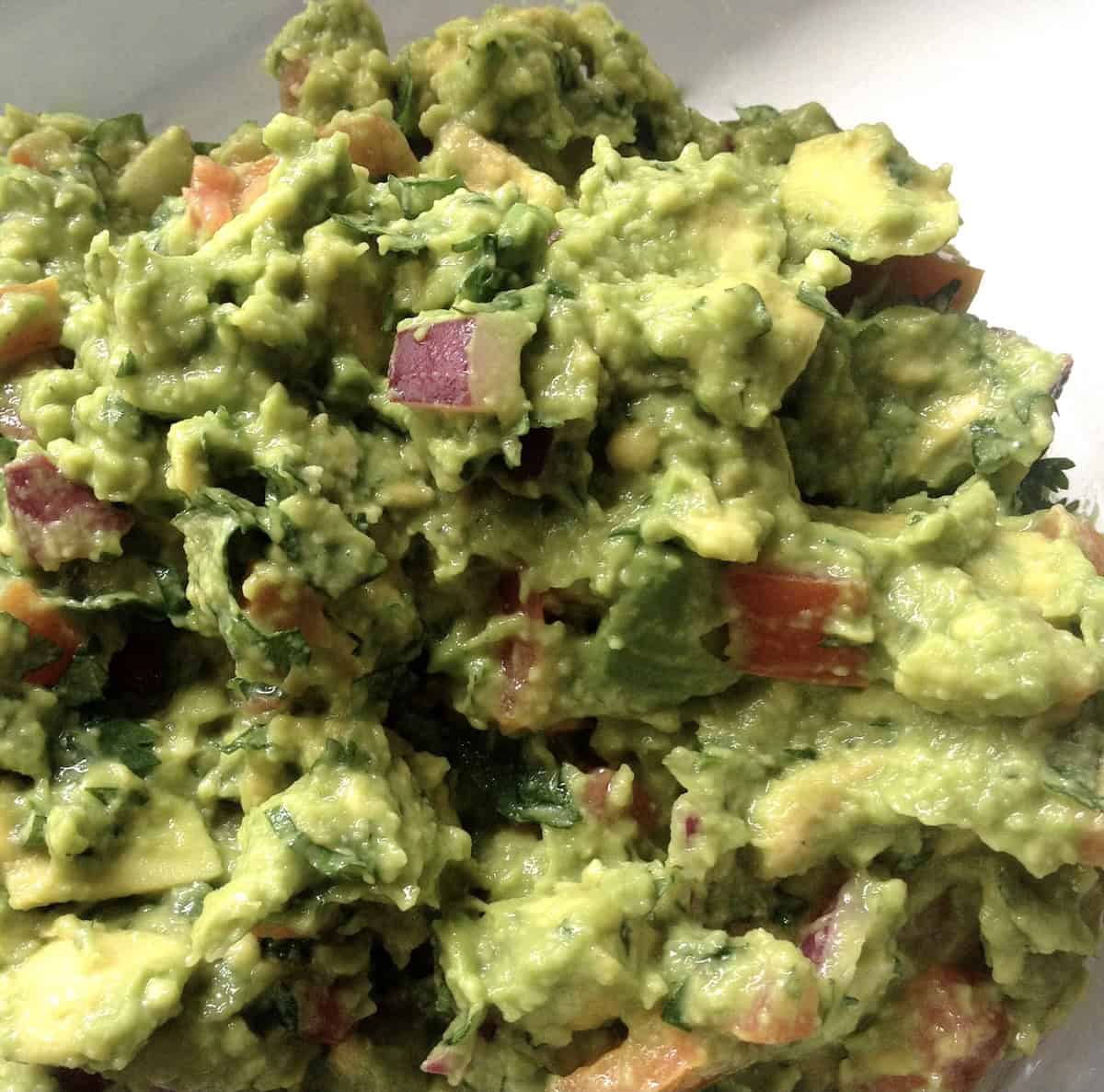
- Chunky Red Onion Guac: Use red onion and dice the tomatoes and onion larger for a chunkier guacamole sauce with more texture.
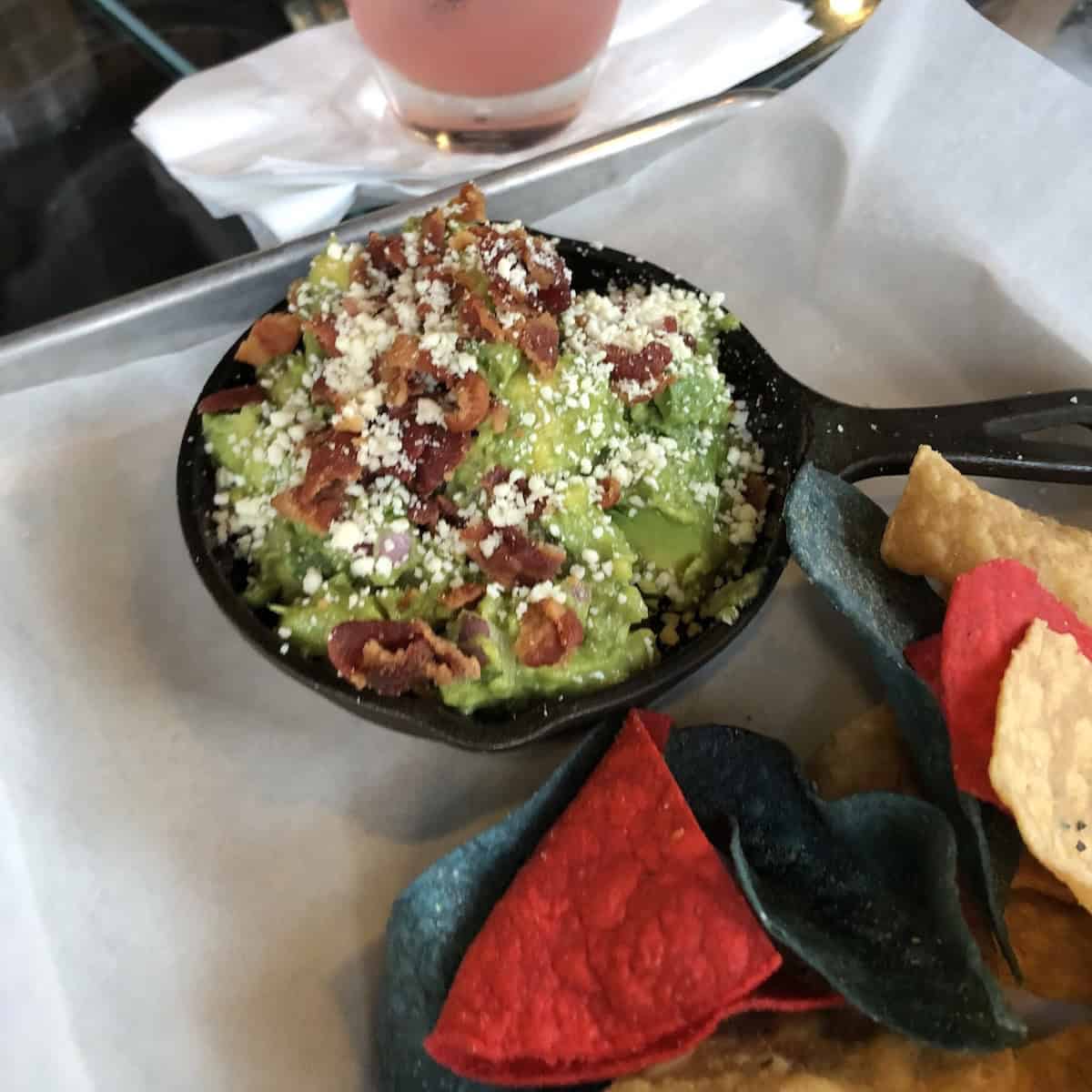
- Guacamole with cotija cheese and bacon: For a smoky, cheese finish top your guac with crumbled cotija cheese and fried, crumbled bacon bits.
- Smoother: Mash and mix the guac until you reach a smooth consistency if you enjoy a less chunky guacamole.
- Spicier: Leave the seeds and membranes in the chile, or use serrano instead of jalapeño.
- Milder: Use milder jalapeños or cut the chile in half, or remove seeds and membranes completely. The aromatic mash still gives you flavor without the heat.
Storage and Make-Ahead
Guacamole tastes best the moment it's made, but it stores better than most people give it credit for. The browning that worries most people is oxidation. The flesh is fine to eat, just less pretty. There are a few things you can do to keep your guacamole as green as the day you made it:
To Refrigerate:
Option 1: Press a piece of parchment paper cut to fit or sustainable cling film directly against the surface of the guacamole, eliminating all air pockets, then give it another wrap with cling film and seal the container with a lid on top. It holds beautifully for one to two days.
Option 2: The classic restaurant trick of pouring about a half-inch of cold water over the smoothed surface of guacamole is one of the best tricks. And in food testing, it ranks among the most effective methods. Pour it off and stir before serving.
To freeze:
Yes, you can freeze guacamole, and it comes out remarkably close to fresh. Two methods work well:
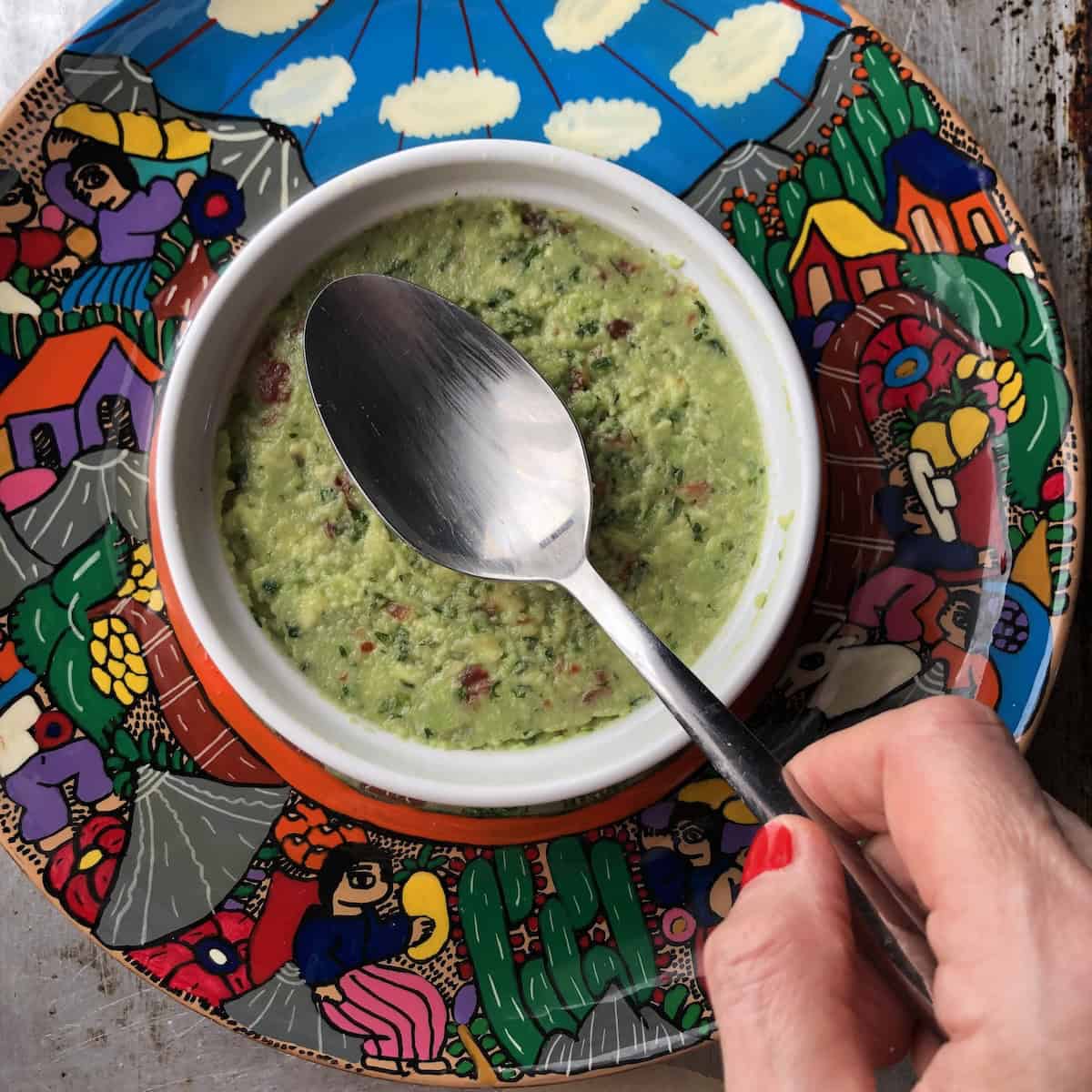
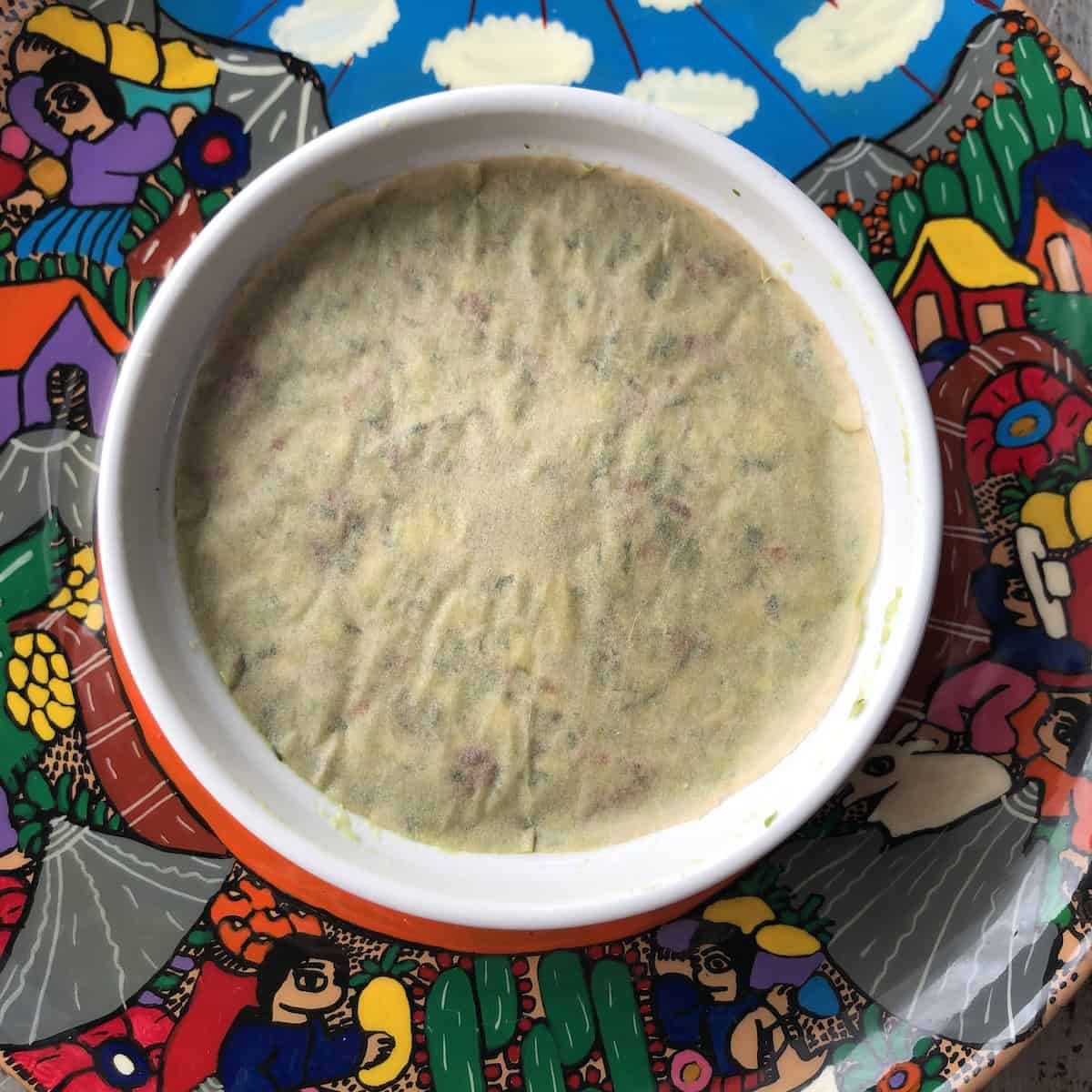
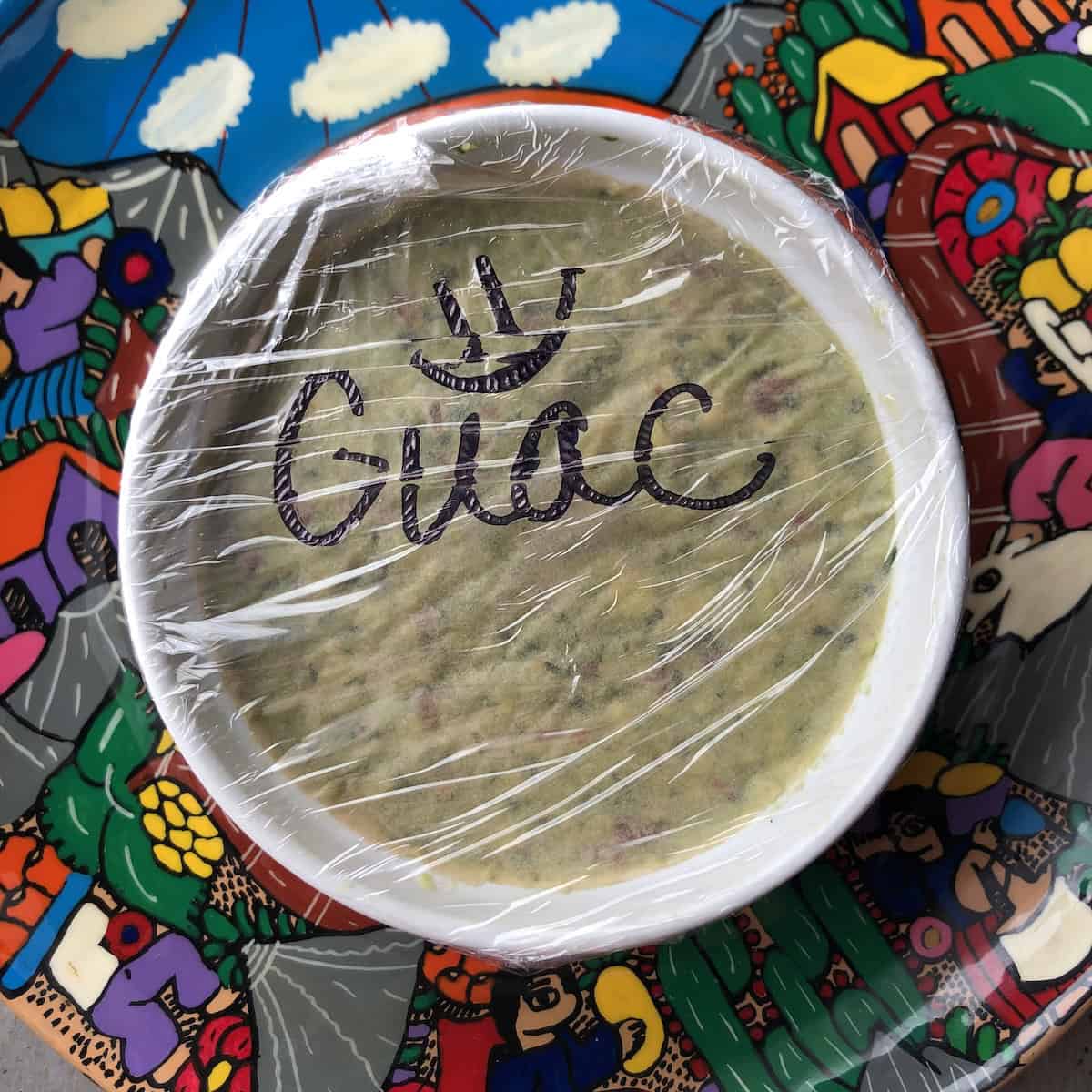
Option 1: My preferred method (reduced-plastic use). Spoon the guacamole into a ceramic freezer-safe dish and smooth the surface completely flat. Cut a piece of parchment paper to fit and press it directly onto the guacamole, smoothing out any air pockets between the parchment and the surface. Wrap the dish tightly with sustainable cling film.
I prefer this method because I'm constantly working to reduce plastic use and microplastic contamination in my kitchen (and home) wherever I can. A freezer-safe ceramic dish with parchment beats a single-use freezer bag every time.
Option 2: Freezer bag method. Spoon the guacamole into a freezer bag, press out all the air, flatten the bag, and freeze.
Either way, freeze guac for up to two months. Thaw overnight in the refrigerator, stir well, and add a fresh squeeze of lime if needed before serving. This is the move if you are prepping for a Cinco de Mayo or Day of the Dead party and want one less thing to handle in the days leading up to the event.
Serving
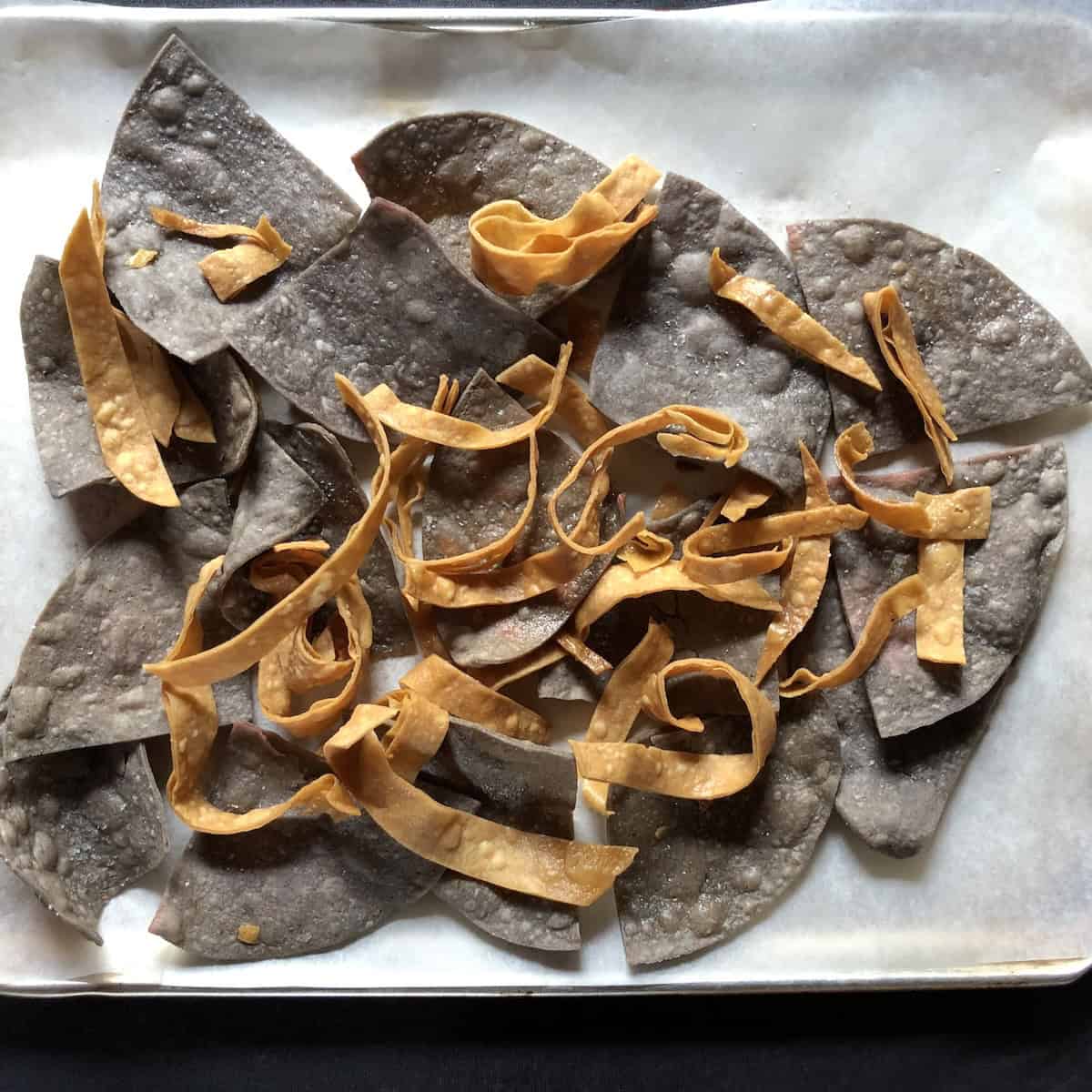
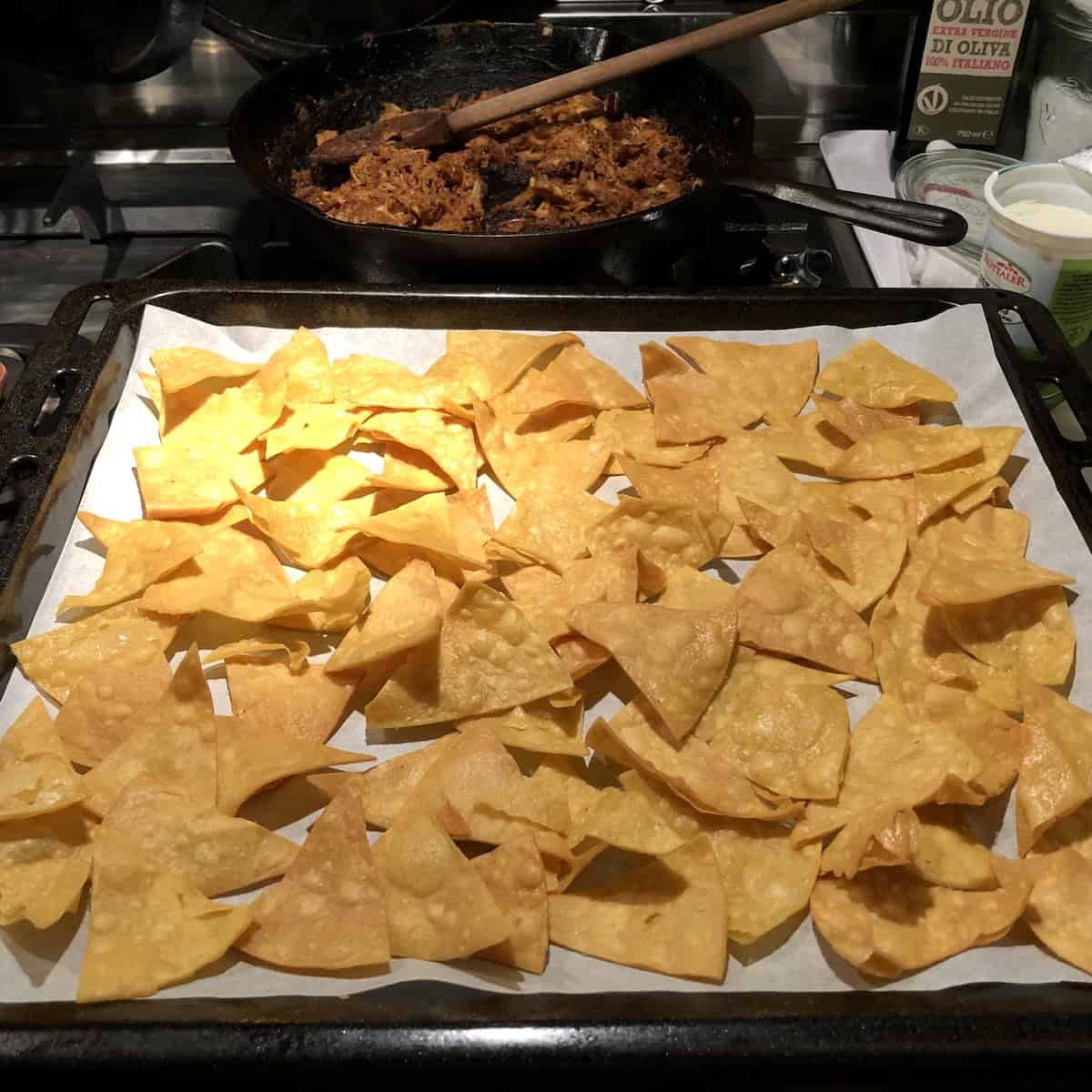
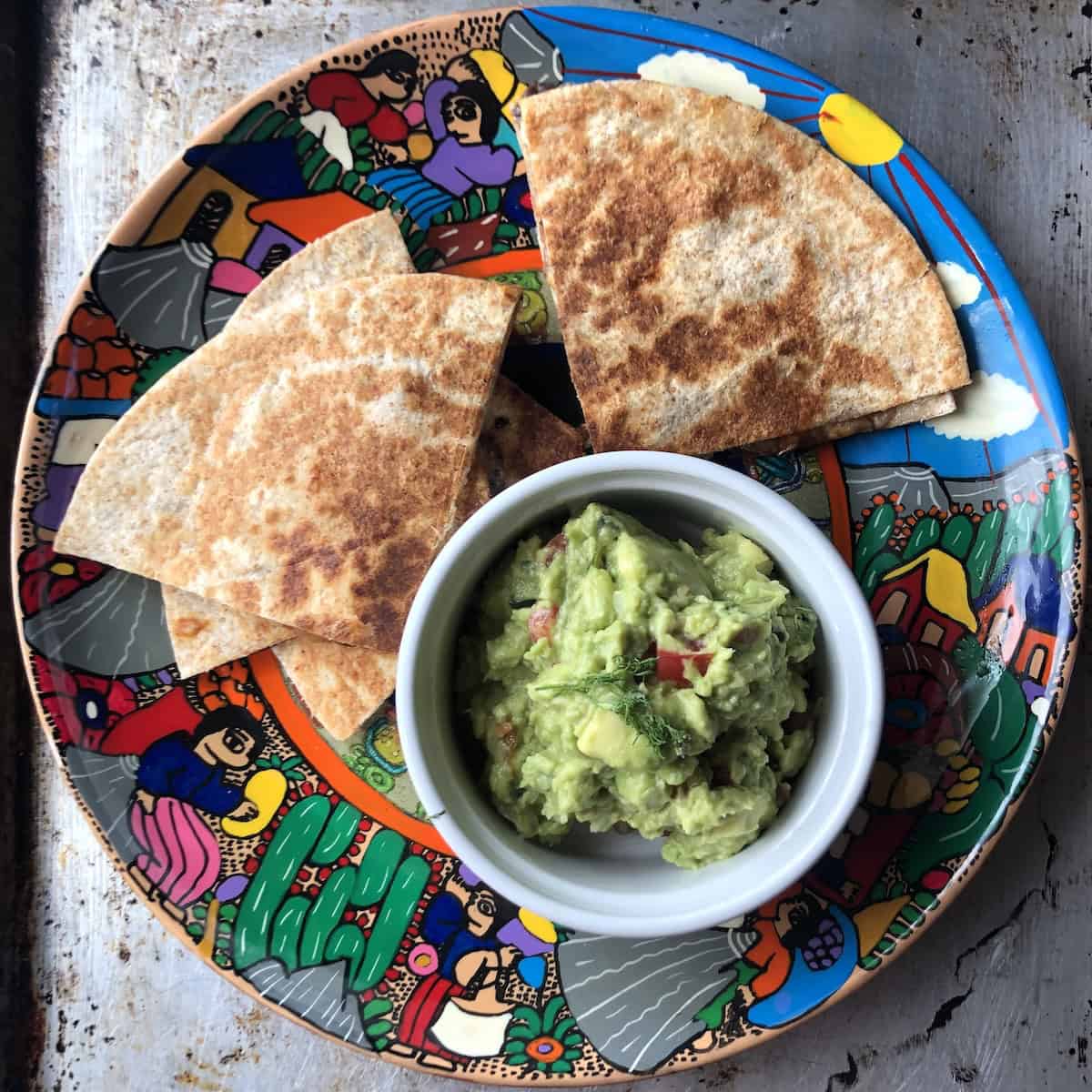
Freshly fried warm corn tortilla chips are traditional and the best tasting. But any good bag of high-quality store-bought chips is great too.
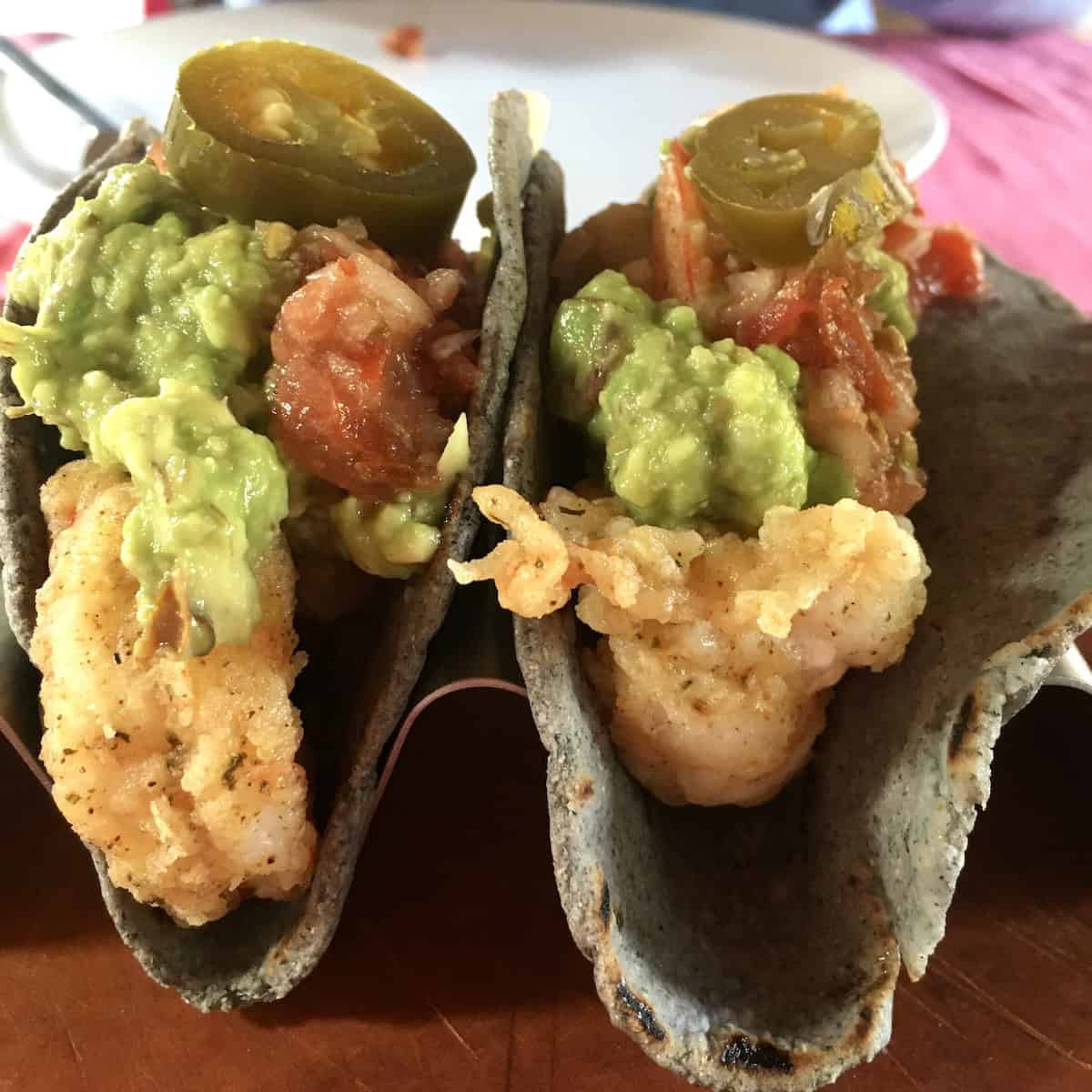
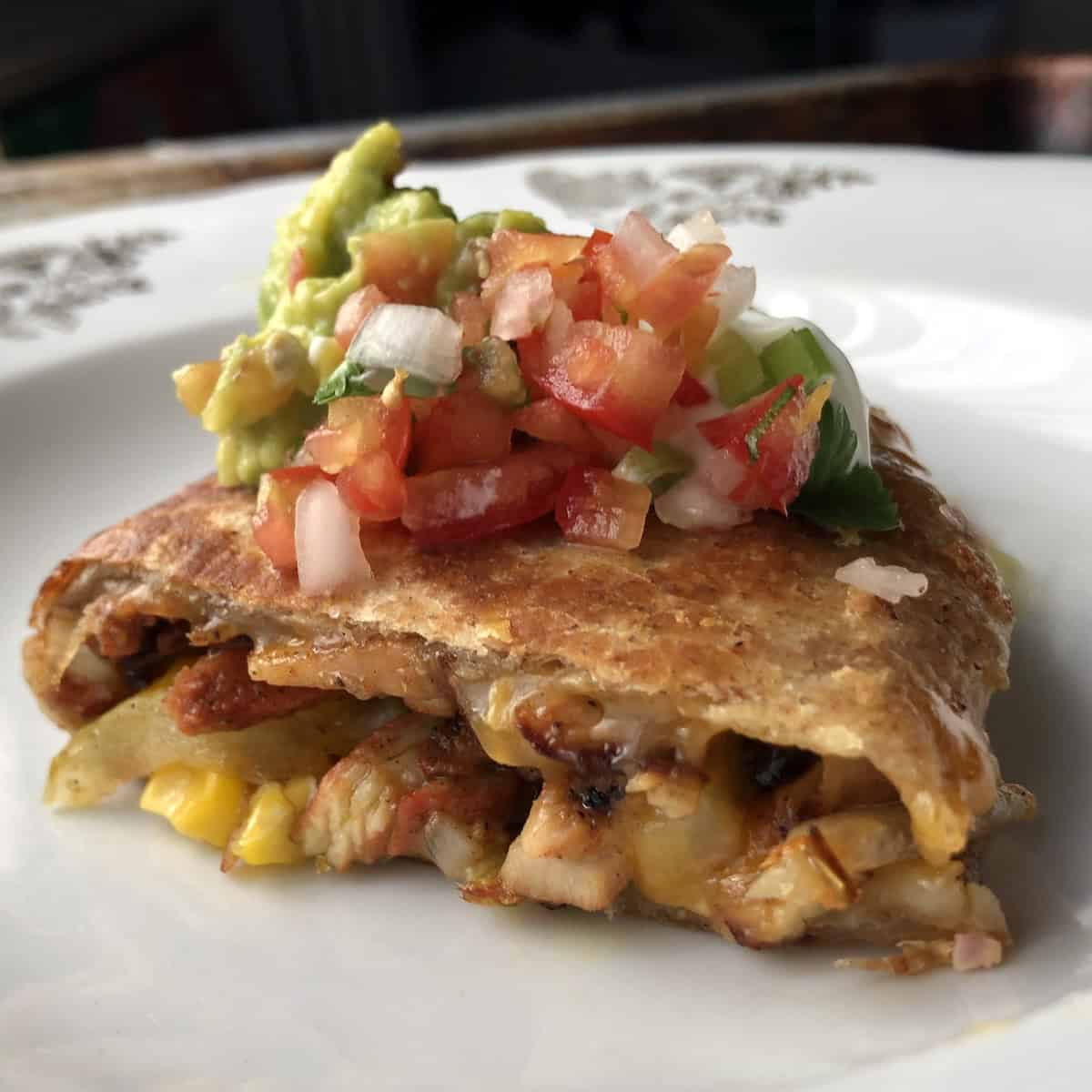
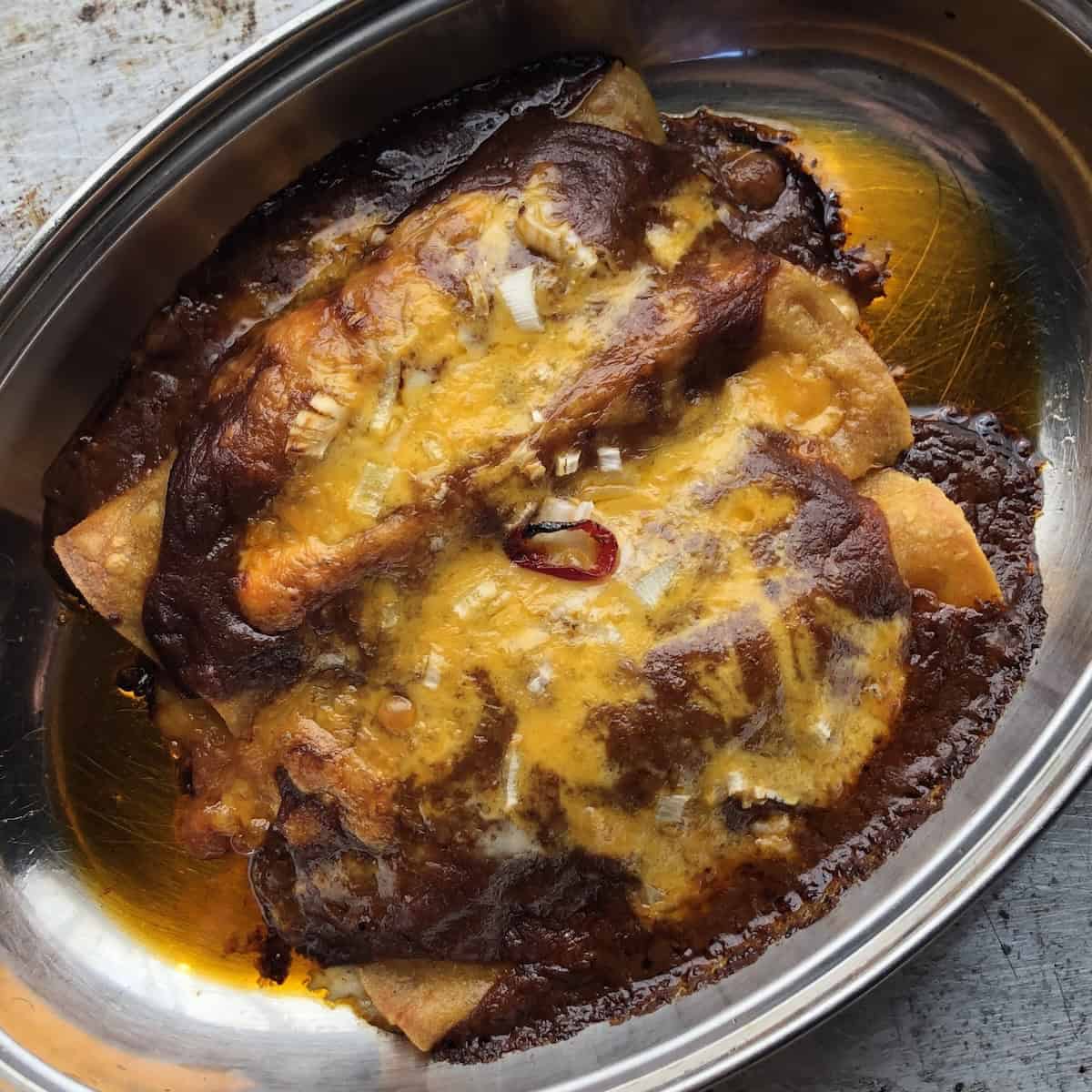
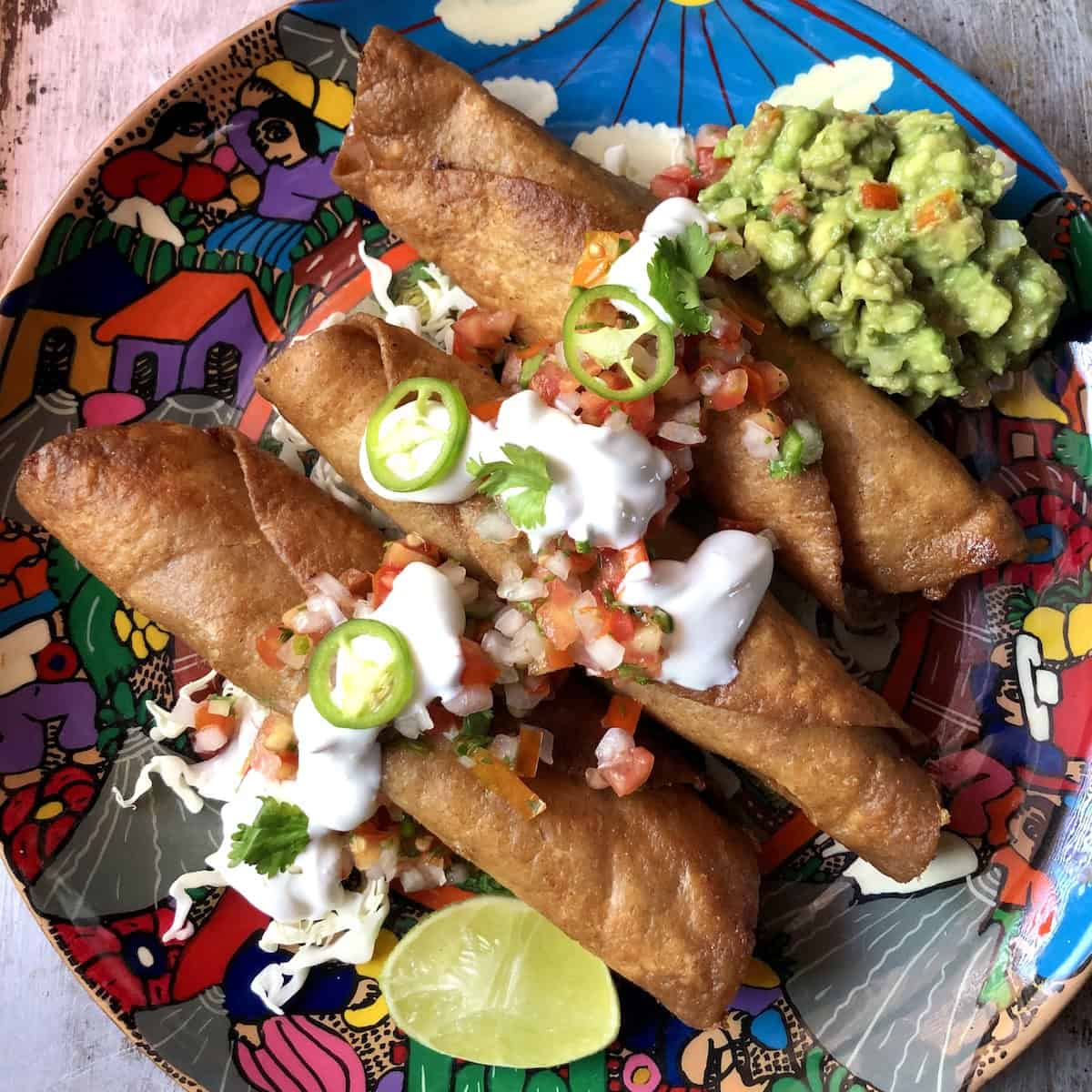
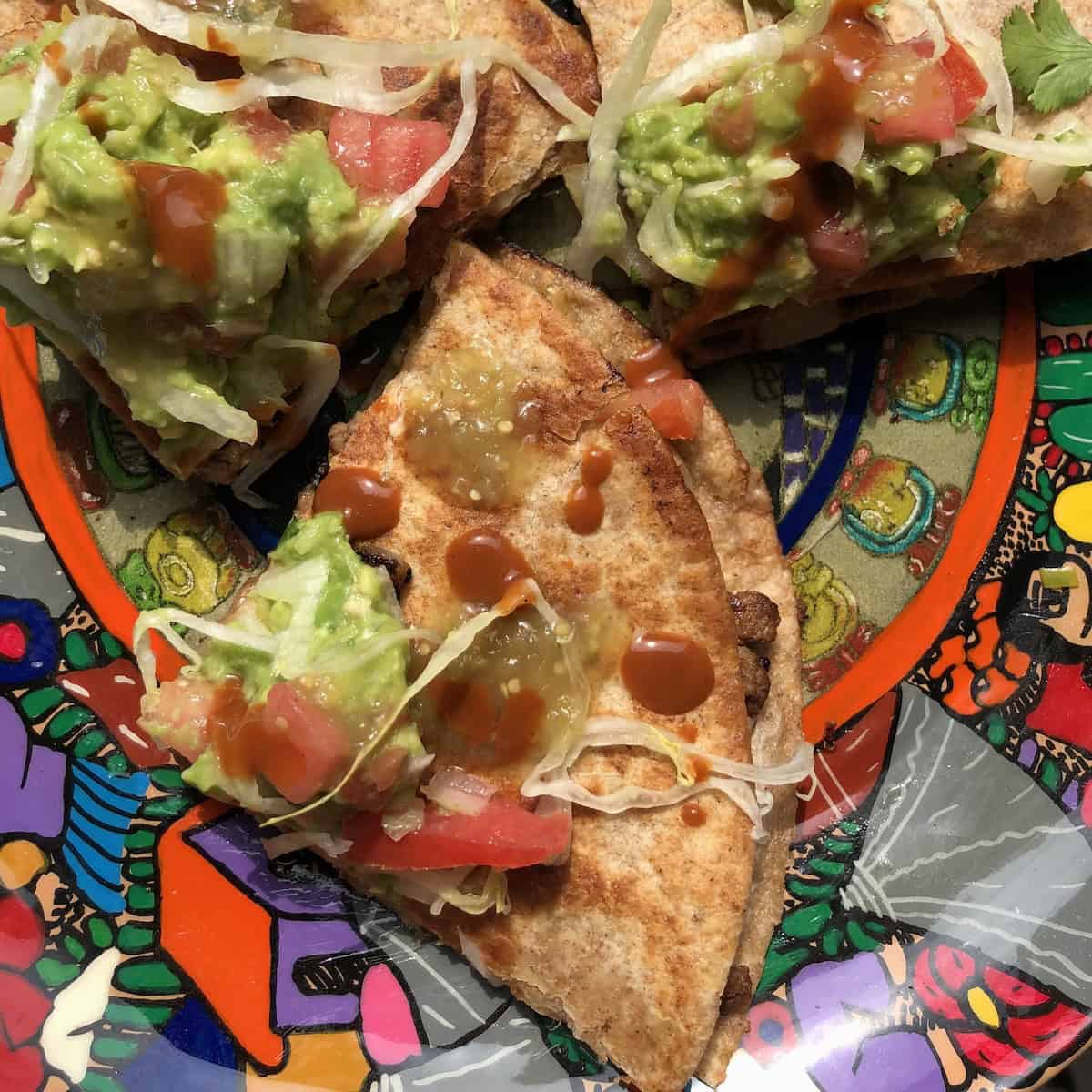
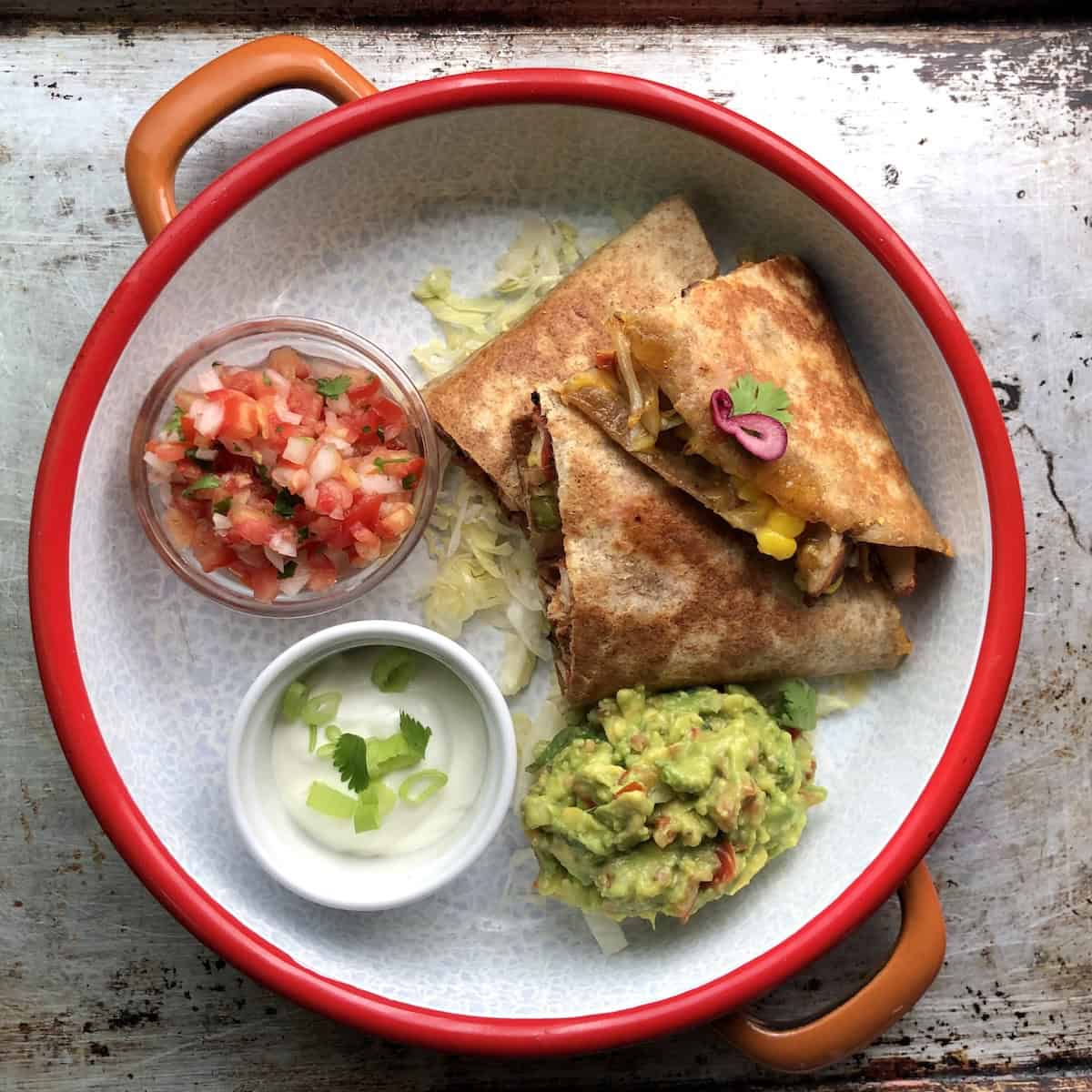
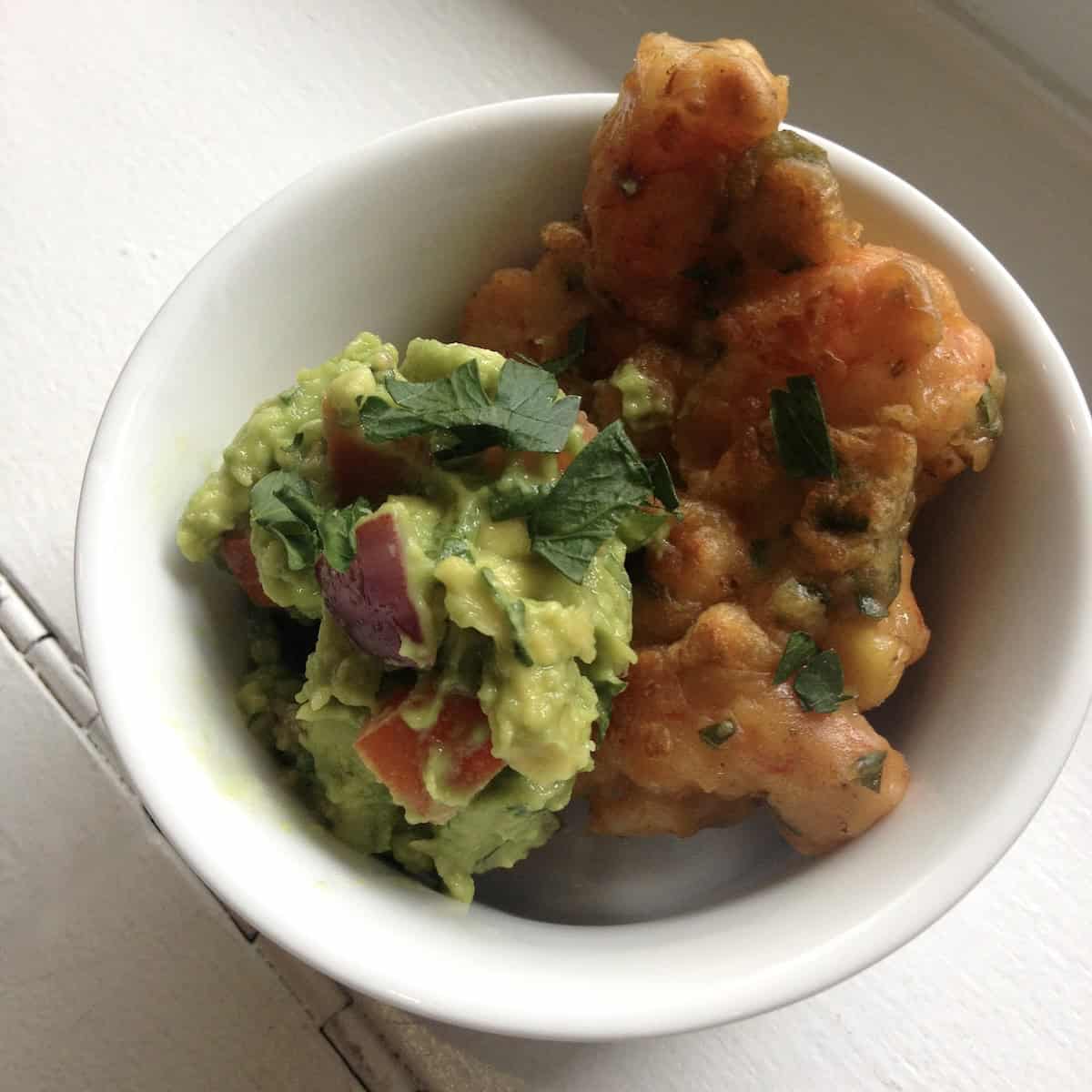
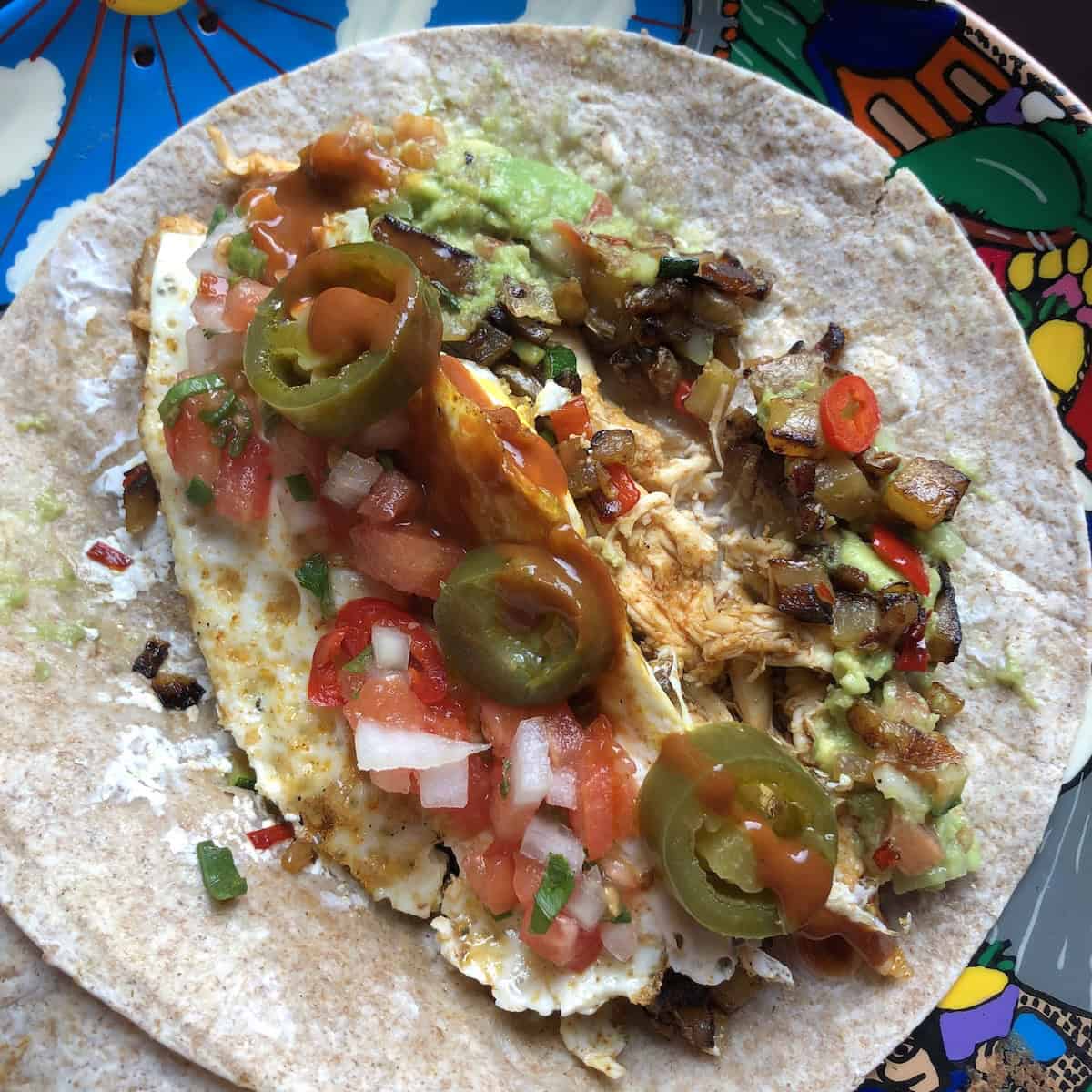
Beyond chips, this guacamole sits on top of shrimp tacos, chicken quesadillas, chicken enchiladas, carne asada quesadillas or tacos, flautas, or sheet-pan nachos, and sizzling fajitas.
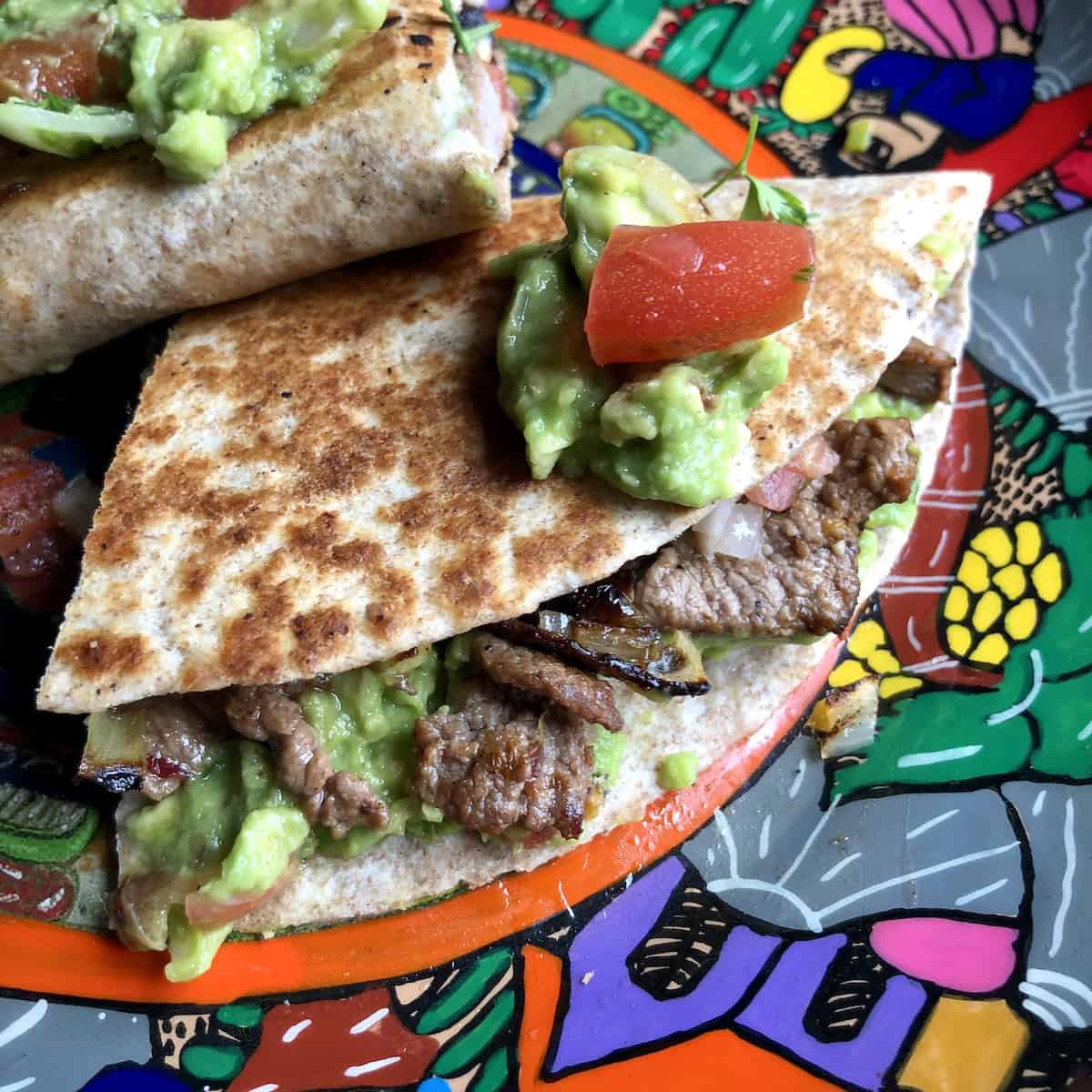
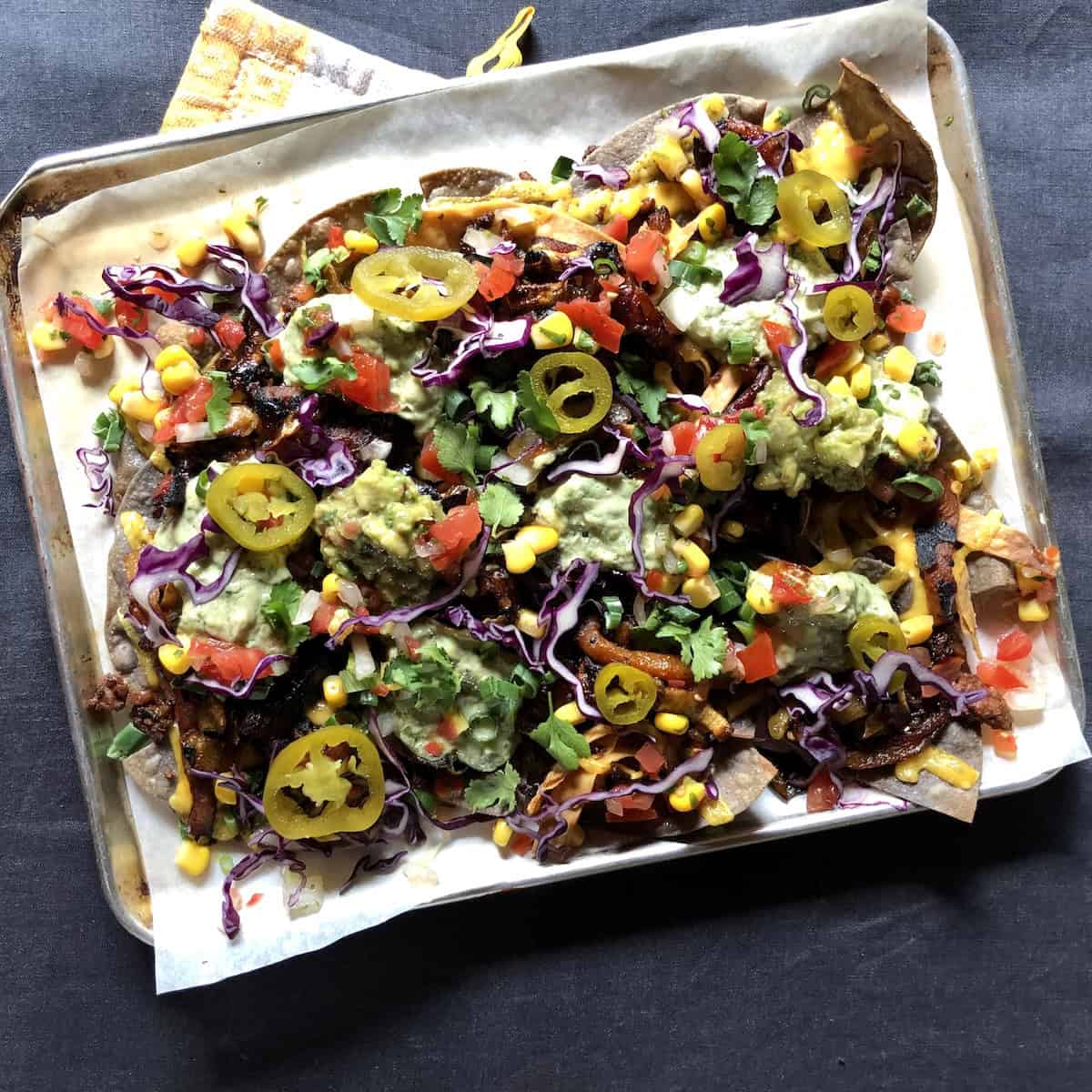
You can spoon it into breakfast tacos with eggs and chorizo, add it to a build-your-own taco bar, or round out a Tex-Mex spread with rice, beans, cheese enchiladas, and a pitcher of margaritas. For a lower-carb option, jicama sticks, cucumber rounds, and carrot and bell pepper strips all work well.

Restaurant Tips for the Best Homemade Guacamole
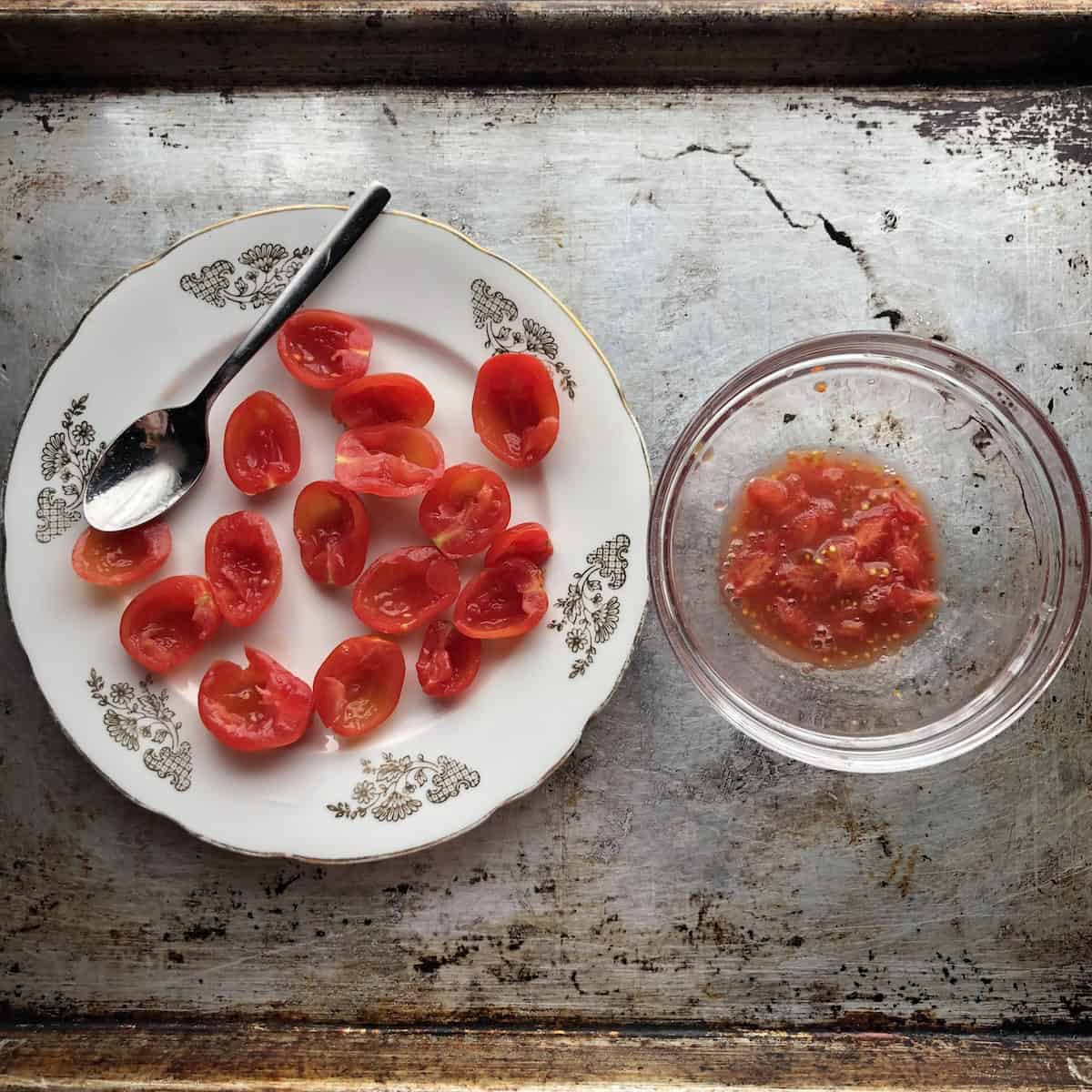
- Very finely mince the onion so that it harmoniously incorporates into every bite without biting down into chunks that can taste sharp.
- Macerate/mash half of the aromatics first. This is the second technique that separates restaurant guacamole from home guacamole. Skip it, and you have flat dip with chunks. Do it, and the flavor is layered all the way through.
- Very finely and evenly dice the tomatoes. Remove the seeds and pulp, which will dilute your guacamole, then finely dice (see photo above).
- Salt to taste, twice. Once with the aromatic mash, then again at the end after the avocado is in. Avocado absorbs salt fast, and underseasoned guacamole is a common home cook mistake.
- Use room-temperature avocados. Cold avocados from the fridge mash unevenly, and the flavor is muted. Pull them out an hour before if you can.
- Do not overmash unless you love super creamy guacamole. Chunky-smooth means you can still see some pieces. The texture is part of the dish and adds more nuance.
- Skip the oil, vinegar, mayo, and sour cream. Real Tex-Mex tradition leaves them out for a reason. That's not to say you can't make a homemade guacamole-mayonnaise or avocado sour cream, but they are not ingredients found in guacamole.
FAQ
No. The pit only protects the patch of guacamole directly underneath it from air exposure. The acidity from lime juice and a tight seal of parchment paper cut to fit or sustainable cling film are what actually slow the browning.
Properly stored with parchment paper or sustainable cling film pressed against the surface, guacamole holds for one to two days in the refrigerator. After that, browning becomes harder to scrape off, and the texture starts to break down. Frozen, it keeps for up to two months.
Generally, yes, if it has been refrigerated and only the surface has discolored. The browning is oxidation, not spoilage. Scrape off the brown layer, and the green flesh underneath is fine. Throw it out if it smells off or has visible mold.
No. Authentic Mexican guacamole is often made without them. The Tex-Mex version that came up through Texas and the American Southwest typically includes them. Both are super tasty. Skip the tomatoes if you want a more traditional Mexican result.
Yes, and a meaningful percentage of people genetically taste cilantro as soap. Leave it out entirely. Do not substitute parsley, which will not deliver the same flavor. The recipe is still super delicious without cilantro.


Let's Get Started!
Made this Recipe? We'd love for you to rate ⭐️ it and tell us how it went for you!
📖 Recipe
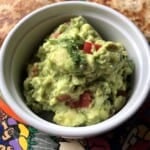
Easy Guacamole Recipe (Restaurant Table-side Guacamole)
- Total Time: 10 minutes
- Yield: 4 to 6 Servings
- Diet: Dairy-Free, Gluten Free, Gluten-Free, Keto, Kosher, Low Calorie, Low-Carb, Paleo, Vegan, Vegetarian
Description
Restaurant-style tableside guacamole adapted from Chef Ivy Stark's recipe for Dos Caminos in New York City, the same way La Esquina and Rosa Mexicano serve theirs. Aromatics mashed first, avocado folded in chunky-smooth, finished with the remaining aromatics, tomatoes (if using), and fresh lime. Authentic Tex-Mex with no oil, no vinegar, no mayonnaise, and no sour cream. Ready in ten minutes.
Ingredients
2 tablespoons finely chopped fresh cilantro leaves, separated (8 grams)
3 teaspoons finely chopped white onion, separated (14 grams)
2 teaspoons finely minced jalapeño or serrano chile, seeds and membranes removed for less spicy guacamole (9 grams), about 1 ½ medium jalapeños
½ teaspoon kosher salt, plus more to taste
2 large ripe Hass avocados, peeled and pitted
2 tablespoons cored, seeded, and finely diced grape or plum tomatoes (30 grams), about 5 grape tomatoes
2 teaspoons freshly squeezed lime juice (9 grams), plus more to taste
 Get Recipe Ingredients
Instructions
- Mash the aromatics first. Add half of the cilantro, half of the onion, half of the chile, and all the salt into the bottom of the molcajete, mortar and pestle, or medium mixing bowl. Press and grind them with the back of a spoon or the pestle until they break down into a wet, fragrant paste, about 30 to 60 seconds. You will smell the chile oils almost immediately.
- Add the avocados. Halve them, twist apart, pop out the pits using the heel of a knife, score the flesh if you want, and scoop it into the bowl. Mash with a fork to a chunky-smooth texture or desired consistency.
- Fold in the remaining ingredients. Stir in the remaining onion, diced tomatoes, and the lime juice. Taste and adjust seasonings if needed, adding as much of the remaining cilantro as desired. Serve immediately with warm tortilla chips.
Notes
If you do not use all of the cilantro, save the rest along with any leftover diced onion and tomato to make a quick pico de gallo. Combine, add a squeeze of lime, a pinch of salt, and you have a second dip for the same table.
Scaling for a crowd: 1 avocado serves 2, 2 avocados serve 4 to 6, 3 avocados serve 6 to 8, 4 to 5 avocados serve 10 to 12. Multiply the rest of the ingredients in the same proportion.
For lower carbs: This guacamole is naturally keto and low-carb at roughly 2 to 3 grams of net carbs per serving. To drop it even lower, leave out the tomatoes (which is closer to authentic Mexican guacamole anyway) and/or reduce or omit the onion. Pair with jicama sticks, cucumber rounds, carrot sticks, or bell pepper strips instead of tortilla chips to keep the whole snack low-carb.
To make ahead: Prepare up to 1 day in advance, press parchment paper cut to fit directly onto the surface to avoid contact with air, and refrigerate. Stir it well before serving, and add a fresh squeeze of lime if desired, before serving.
To freeze: Smooth into a ceramic freezer-safe dish, press parchment paper directly onto the surface to remove air, and wrap tightly with sustainable cling film. Or use a freezer bag with all air pressed out. Freeze up to 2 months. Thaw overnight in the refrigerator, stir, and refresh with lime juice and a pinch of salt before serving.
- Prep Time: 10 minutes
- Cook Time: 0 minutes
- Category: Appetizer, Dips
- Method: Mash and Stir
- Cuisine: Mexican, Mexican & Latin, Mexican + Tex-Mex, Tex-Mex
Nutrition
- Serving Size: ¼ recipe
- Calories: 140
- Sugar: 1g
- Sodium: 203mg
- Fat: 12.5g
- Saturated Fat: 2g
- Unsaturated Fat: 10.5g
- Trans Fat: 0g
- Carbohydrates: 8g
- Fiber: 6g
- Protein: 2g
- Cholesterol: 0g

Food Safety
- Wash all produce thoroughly under running water before cutting, including the outside of the avocado before slicing into it.
- Wash hands with soap and water after handling raw chiles. The capsaicin transfers easily to eyes and skin.
- Do not leave guacamole at room temperature for more than 2 hours. Refrigerate any leftovers promptly in an airtight container with sustainable cling film pressed onto the surface.
- Discard guacamole that smells off, has visible mold, or has been refrigerated for longer than 2 days.



Arnie_ghst says
Great guac recipe😻!
Kelly Leding says
Delicious, creamy, and chunky-smooth, this guac is made like Rosa Mexicano, Dos Caminos, and La Esquina! Three of my favorite made-to-order tableside guac ever!