

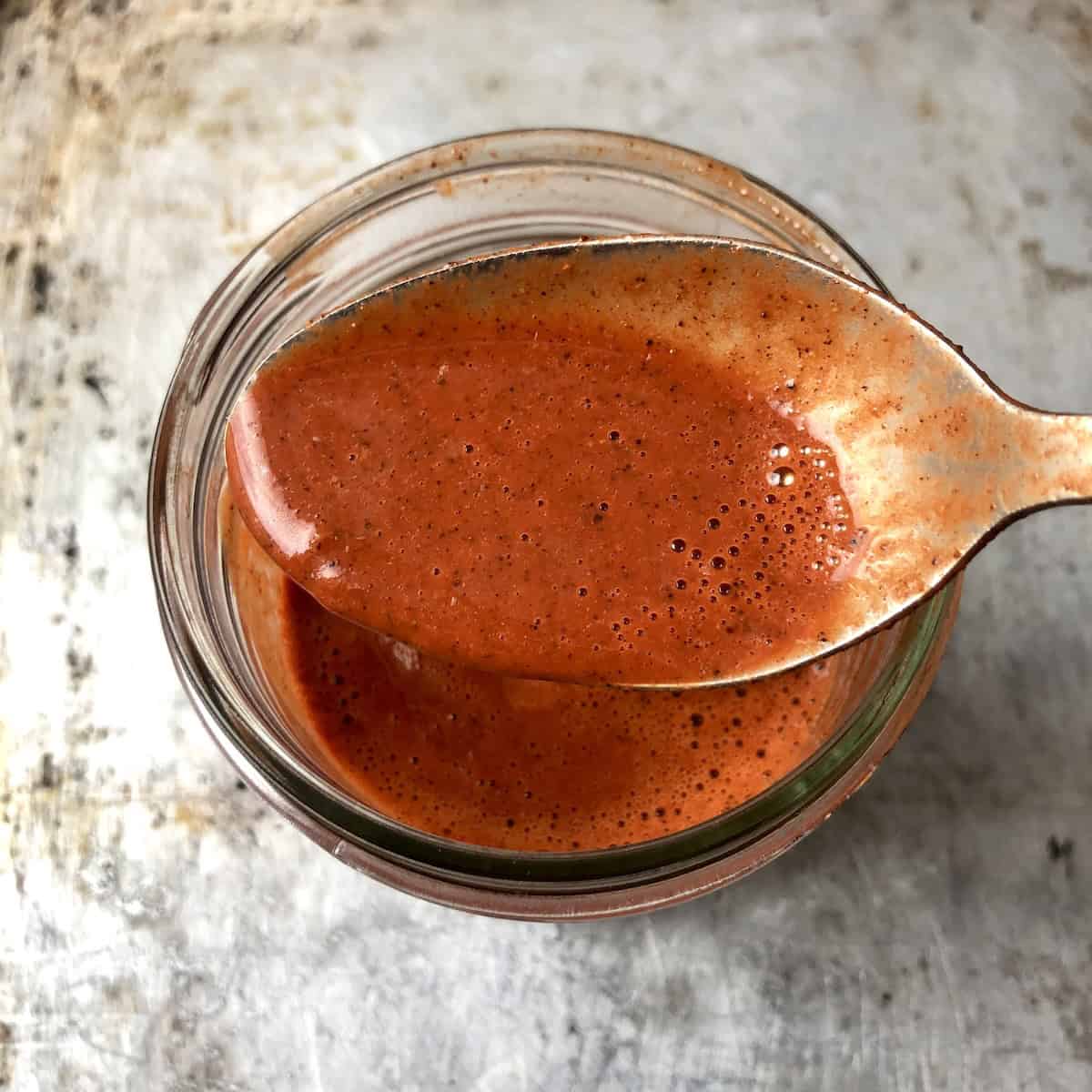
This pollo asado marinade is made with achiote and fresh sour orange, the two things that make grilled Mexican chicken taste like a taqueria instead of like chicken with lime on it. Everything goes in the blender at once, and it's done in about five minutes!
Jump to:
- Why You Can Trust This Recipe
- Why You'll Love This Pollo Asado Marinade
- Pollo Asado Marinade Ingredients
- How to Make Pollo Asado Marinade
- Secrets to the Best Pollo Asado Marinade
- Substitutions
- Variations
- Equipment
- How to Store
- Pollo Asado Marinade FAQ
- Troubleshooting
- What Is Pollo Asado?
- More Easy Mexican Recipes
- 📖 Recipe
- Pollo Asado Marinade Food Safety
Why You Can Trust This Recipe
I grew up in the South eating delicious Mexican and Tex-Mex and have eaten pollo asado at traditional Mexican restaurants and taquerias from coast to coast. But living in Italy now means I have to make it myself when I have a craving for it.
And while I definitely prefer it cooked over charcoal, it's possible to make a downright excellent version right on your stovetop (or in your oven)!
It all starts with this simple, easy pollo asado marinade that can be used on so much more than just chicken!
Why You'll Love This Pollo Asado Marinade
- One blender, five minutes, zero chopping
- It's a marinade and a finishing sauce. One batch does both jobs
- It's cheap to make
- It's a flavor bomb for otherwise boring, blandly flavored meat
- Built on real achiote and fresh citrus
- No special purchase of Maggi needed (but you can substitute it 1:1 if you already have it in your pantry)
- It works well with other proteins and even vegetables
Looking for a 3-ingredient chicken marinade? This isn't it, but it's just easy and more delicious than you can imagine! lt comes together in the blender in five minutes.
Pollo Asado Marinade Ingredients
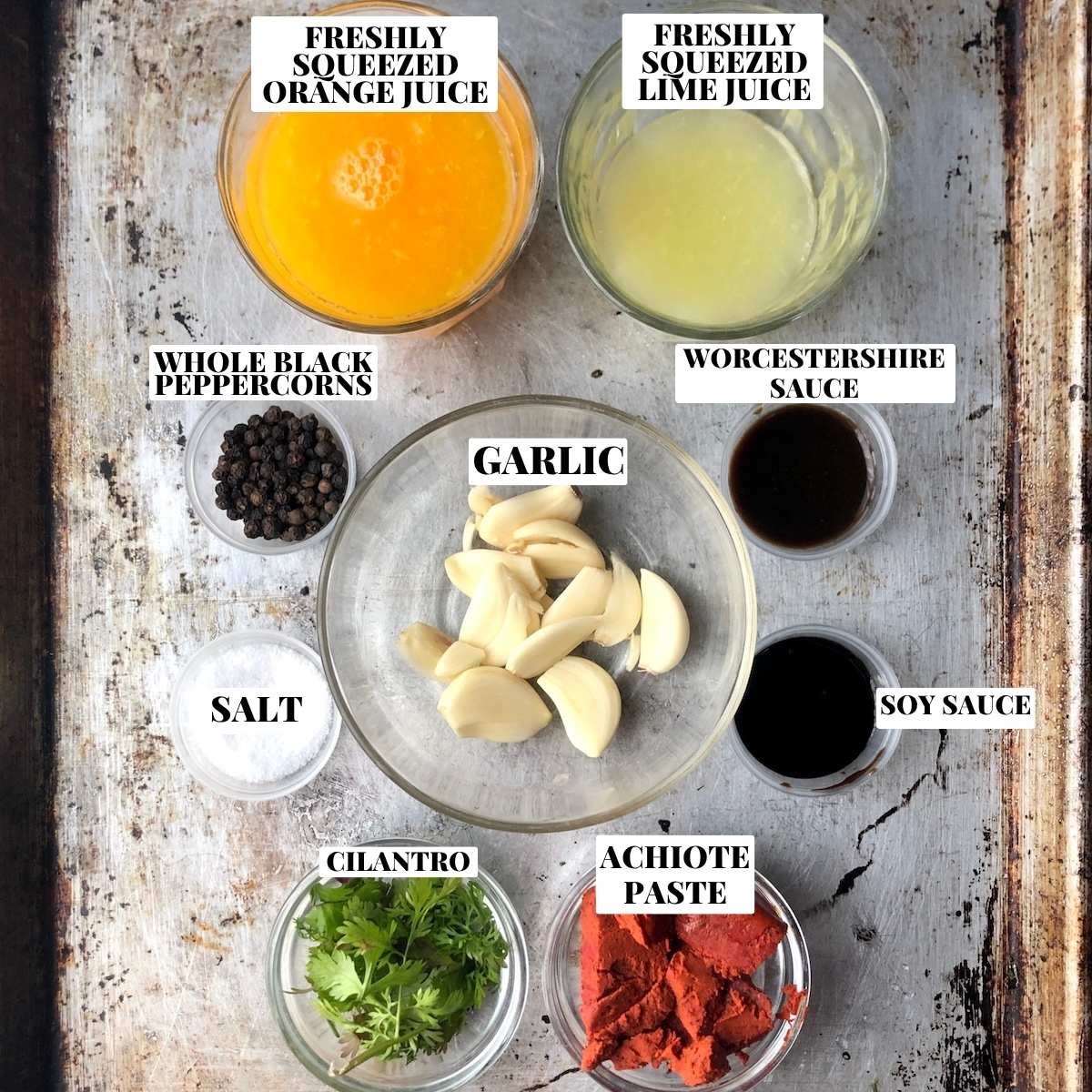
You'll find more details about achiote paste, sour orange, and Maggi (and where to buy them) below.
- Sour Orange (or Orange juice + lime juice when you can't find sour orange). Freshly squeezed, 2 parts orange to 1 part lime. This is the stand-in for sour orange I use when they're not in season here, which is the traditional ingredient. More on that below.
- Achiote paste (Homemade or Store-bought). The heart of the recipe. It's where the color and the earthy, peppery flavor come from, and there's no real substitute. More on that below.
- Soy sauce and Worcestershire. Equal parts. These replace the Maggi seasoning most pollo asado recipes call for. More on that below.
- Whole black peppercorns. They go in whole, and the blender does the work.
- Garlic. Whole cloves, no chopping.
- Cilantro. Stems and all.
- Jalapeños. Optional, for a spicier version.
- Kosher salt. I use Diamond Crystal brand.
Full ingredient measurements can be found in the recipe card.
Sour orange is the authentic ingredient and a Yucatán staple. Real pollo asado is built on naranja agria, the sour or bitter orange (Citrus aurantium), not the sweet orange in your fruit bowl. It's sharply acidic and faintly bitter.
In the US, you'll find it as Seville orange or bitter orange. Here in Italy it's arancia amara, or melangolo, and it turns up in my markets and local grocery stores usually around January and February.
Almost nobody can get it fresh year-round. So this recipe is written with the substitute Mexican kitchens often use when sour oranges aren't around: fresh orange juice and fresh lime juice, 2 parts to 1. You can also substitute the lime juice with grapefruit juice, which lends bitter notes. When sour orange is in season, I swap it in to replace the orange and lime combo.
What about bottled Badia Brand "Sour Orange" Juice in the Latin aisle? Ingredients include: orange and grapefruit juice from concentrate, xanthan gum, citric acid, and three preservatives. There is NO sour orange in it. It's not genuine, and more importantly, it's not fresh. Squeeze your own. And don't use bottled lime juice.
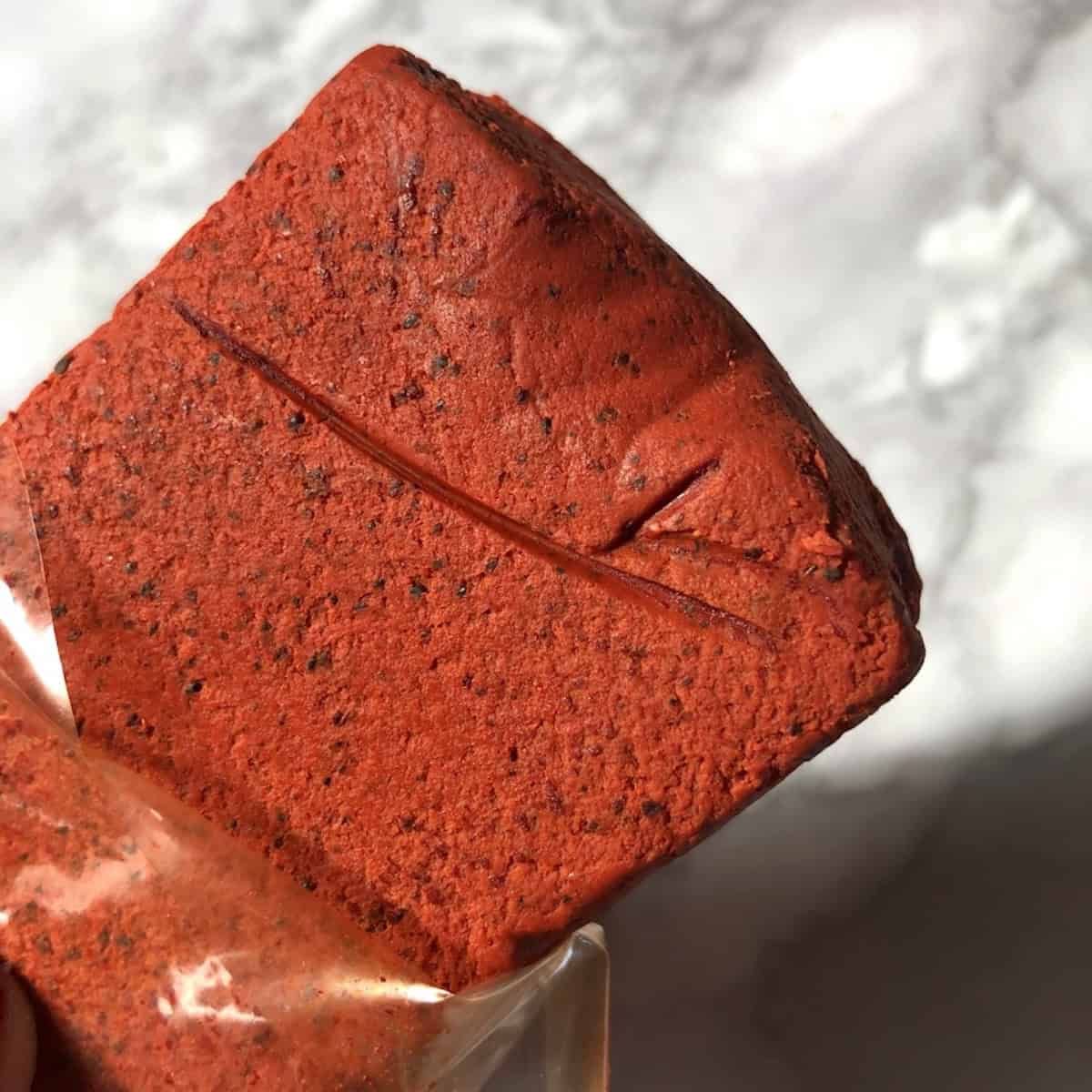
Achiote Paste
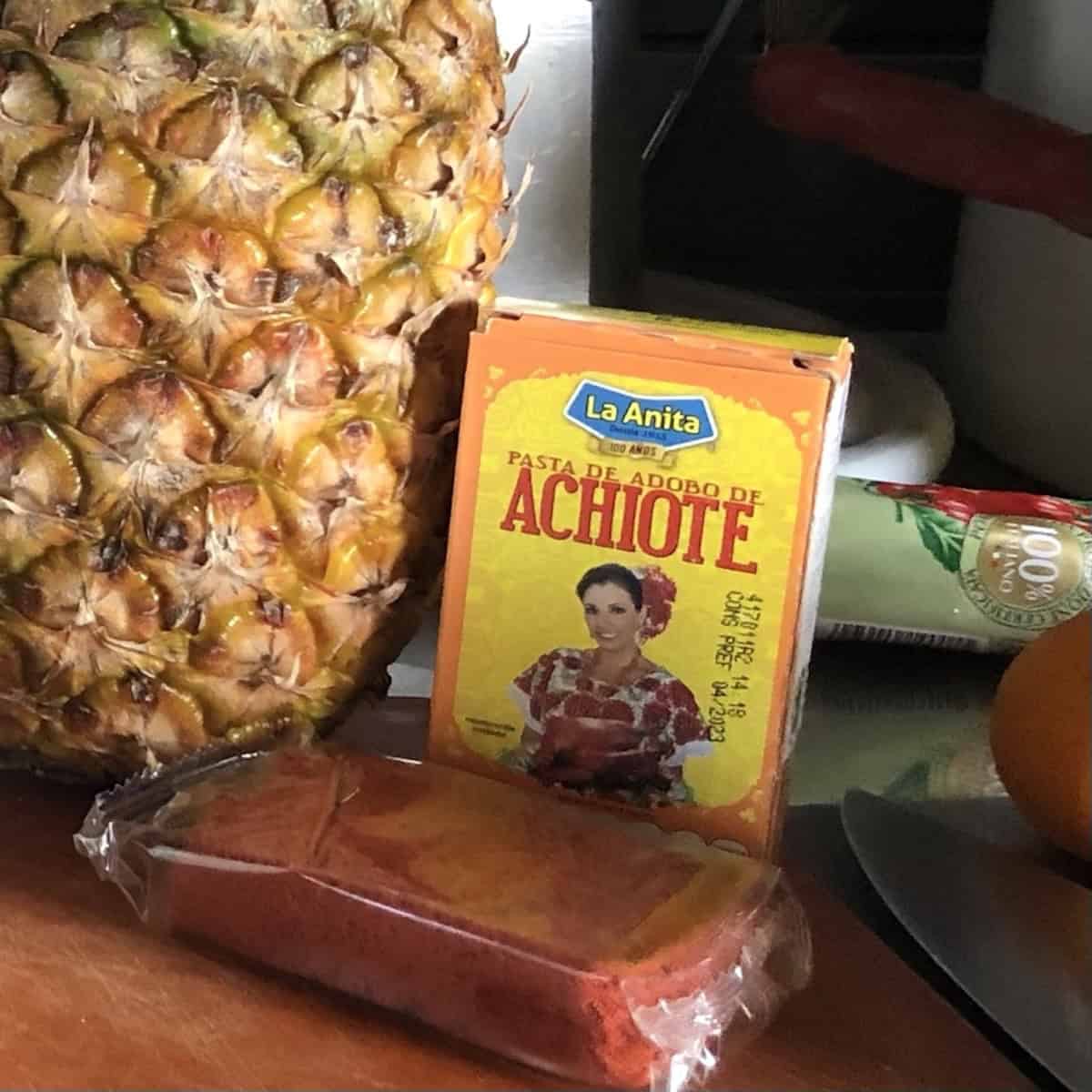
This is a staple in Mexican and Latin cuisine and is easy to find at your local Hispanic/Latin/Mexican/Caribbean markets or in the Hispanic food aisle of a well-stocked mass grocery store. You can also find it online at Amazon.
Achiote is the foundation for pollo asado and tacos al pastor. You can't make it without either buying the paste OR without grinding your own annatto seeds and making your own achiote paste. It's where the color and the earthy, peppery flavor come from.
A block of achiote keeps for months in the refrigerator (I like to keep it in a sealed glass jar) and much longer in the freezer, and you can use it for lots of other Mexican and Caribbean dishes. Buy it once and use it all year, or longer if you store it properly.
Where to Buy Achiote Paste
Not all achiote paste is made equal. Some versions are just annatto seed and spices, while the most common ones stretch it with corn flour, hold it together with binders, and keep it shelf-stable with preservatives. Two of them add food dye to a product that's already supposed to naturally be fire-alarm-bright red.
| Brand | What's In It | Where to Find It | All Natural |
|---|---|---|---|
| Los Chileros | Annatto seed, oregano, cumin, salt, garlic powder, black pepper, vinegar. Nothing else. | Specialty stores, online | ✅ |
| D'Alessandro Premium | Vinegar, annatto seed, spices, salt, garlic. | Specialty stores, Amazon | ✅ |
| Fresh & Wild | Annatto seeds, vinegar, spices. | Specialty stores, Amazon | ✅ |
| Goya | Annatto and spices, but with corn flour as filler plus sodium benzoate and potassium sorbate. No artificial dyes. | Almost anywhere | ❌ |
| El Yucateco | Same as above, plus artificial colors. | Almost anywhere | ❌ |
| La Anita | Same as above, with Yellow 5, Blue 1, and Red 40. | Almost anywhere | ❌ |
I used La Anita in this recipe, which is what I could find here in Italy at the time I was taking photos for this post. But it's also easy to make from scratch, which is what I'll do from now on. Homemade achiote paste recipe coming soon!
Maggi (Why This Pollo Asado Marinade Doesn't Need It)
Maggi is a staple in Mexican home kitchens and restaurants. But it's not one many of you may keep on hand. So, instead of buying a bottle you'll use once or twice and then watch sit in your pantry for three years, it's easier to substitute soy sauce and Worcestershire sauce.
They're the perfect substitute: equal parts light (or regular) soy sauce and Worcestershire sauce, which you likely already have. Together they cover what Maggi is adding to the marinade: salt, fermented depth, and a savory umami backbone without all of the unnecessary ingredients.
If you already keep Maggi in the pantry, use it (2 tablespoons total).
What's actually in Maggi Sauce: Here's the US Maggi label. Water, salt, wheat gluten, wheat flour, sugar, caramel color, acetic acid, wheat bran, disodium guanylate, disodium inosinate, artificial flavor, dextrose, potassium iodate. No MSG on that list, but two added flavor enhancers doing the same job.
Now compare Kikkoman light soy sauce: water, soybeans, wheat, salt, spirit vinegar, alcohol, sugar. And Lea & Perrins Worcestershire: vinegar, molasses, anchovies, tamarind, onions, garlic, cloves, chili pepper extract. Both routes land in the same savory place and are made with ingredients I recognize.
This is a preference, not a health warning. But if you're trying to eat fewer ultra-processed ingredients, this is the perfect swap.
How to Make Pollo Asado Marinade
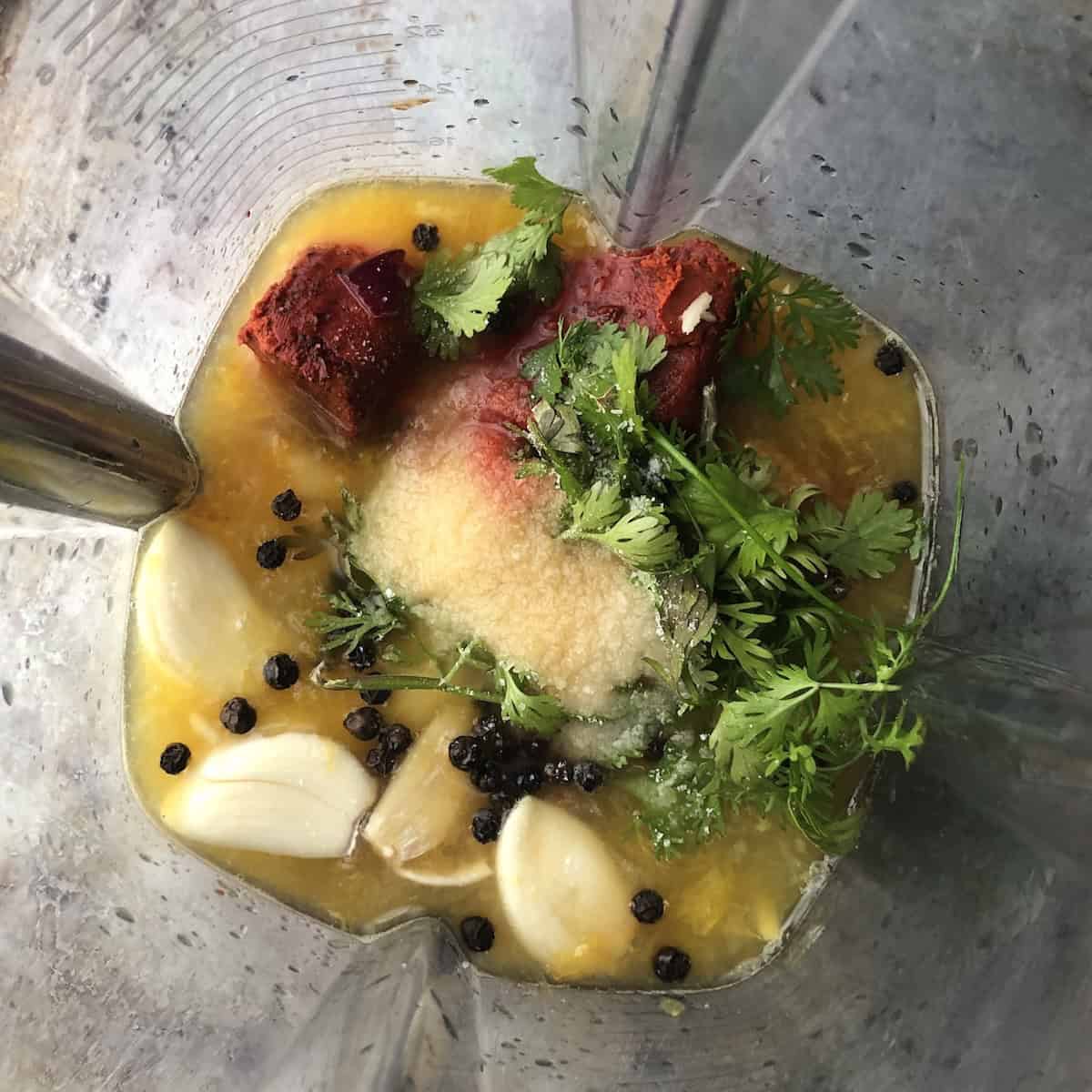
Step 1. Add all the ingredients to the blender at once. Peppercorns whole, garlic cloves whole, cilantro stems, etc. No chopping, no toasting, no separate steps.
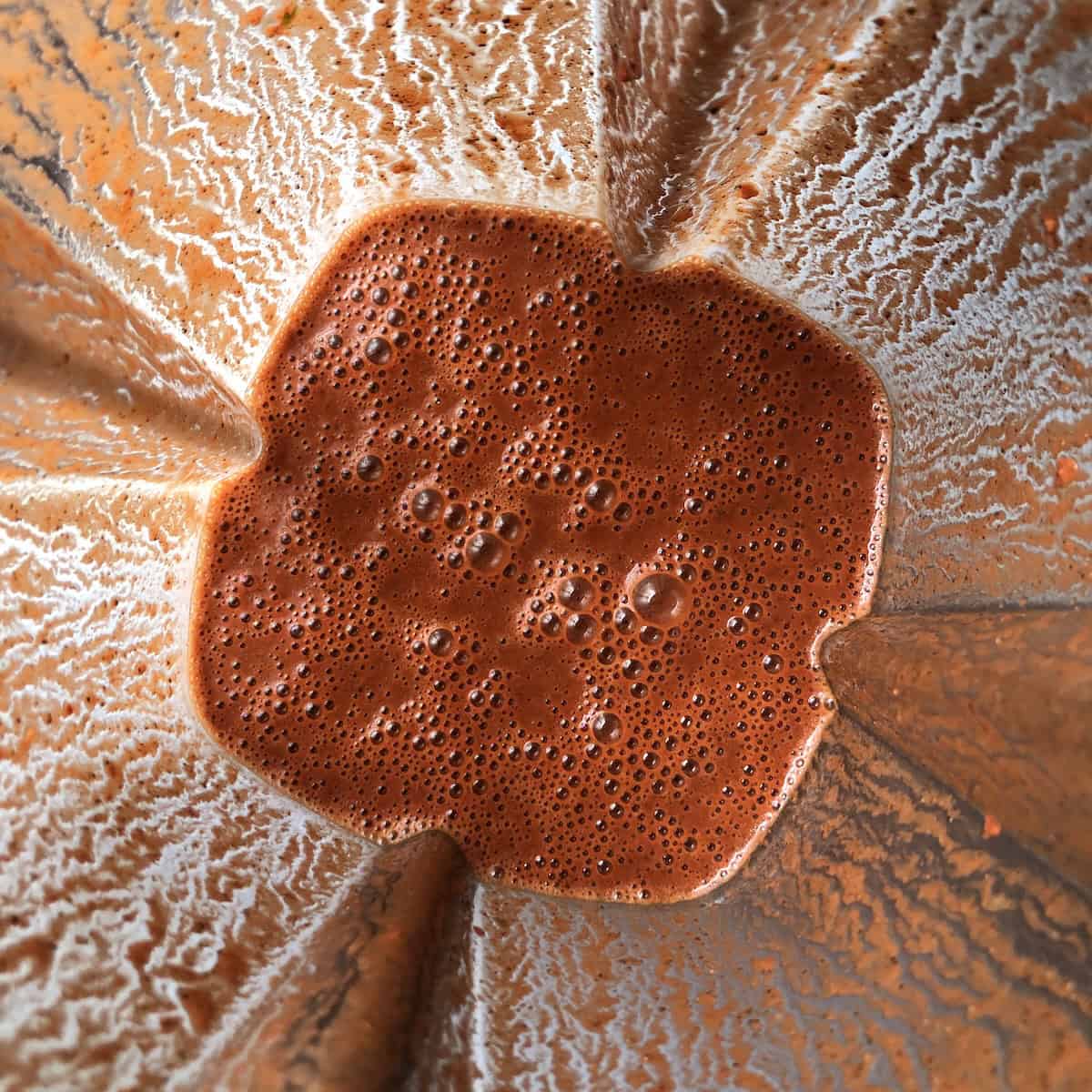
Step 2. Purée until it's completely smooth and the peppercorns have broken down.
Decide how you're going to use it before it touches anything. Pour off what you need to use for marinating chicken (or another meat) into a separate container. If you have more marinade than your recipe calls for, don't let it come into contact with raw meat or other ingredients. This way, it can be refrigerated and used for other recipes or frozen for later use.
Secrets to the Best Pollo Asado Marinade
Besides achiote paste, the secret to homemade pollo asado marinade that tastes like a taqueria is fresh ingredients. Freshly squeezed sour orange (or orange + lime juice as a substitute) beats bottled juice every single time.
Whole peppercorns hold onto their oils until you crack them, while pre-ground pepper loses them sitting on the shelf. Add fresh jalapeño if you like a little heat, and it brings an earthy, grassy flavor that dried chile powder doesn't have.
Substitutions
Freshly squeezed grapefruit juice for the lime. Swap the lime for fresh grapefruit juice, and you get a slightly more bitter flavor, closer to what real sour orange does on its own. Fresh is always best.
Gluten-Free Swaps
Maggi is out either way; it's made with wheat gluten. For the substitute, swap the soy sauce for tamari, since regular soy sauce contains wheat. Then check your Worcestershire, because this one depends on where you live. In the US, Lea & Perrins is made with distilled white vinegar and is certified gluten-free. In the UK, Europe, and Canada, the same bottle is made with barley malt vinegar and is not.
Variations

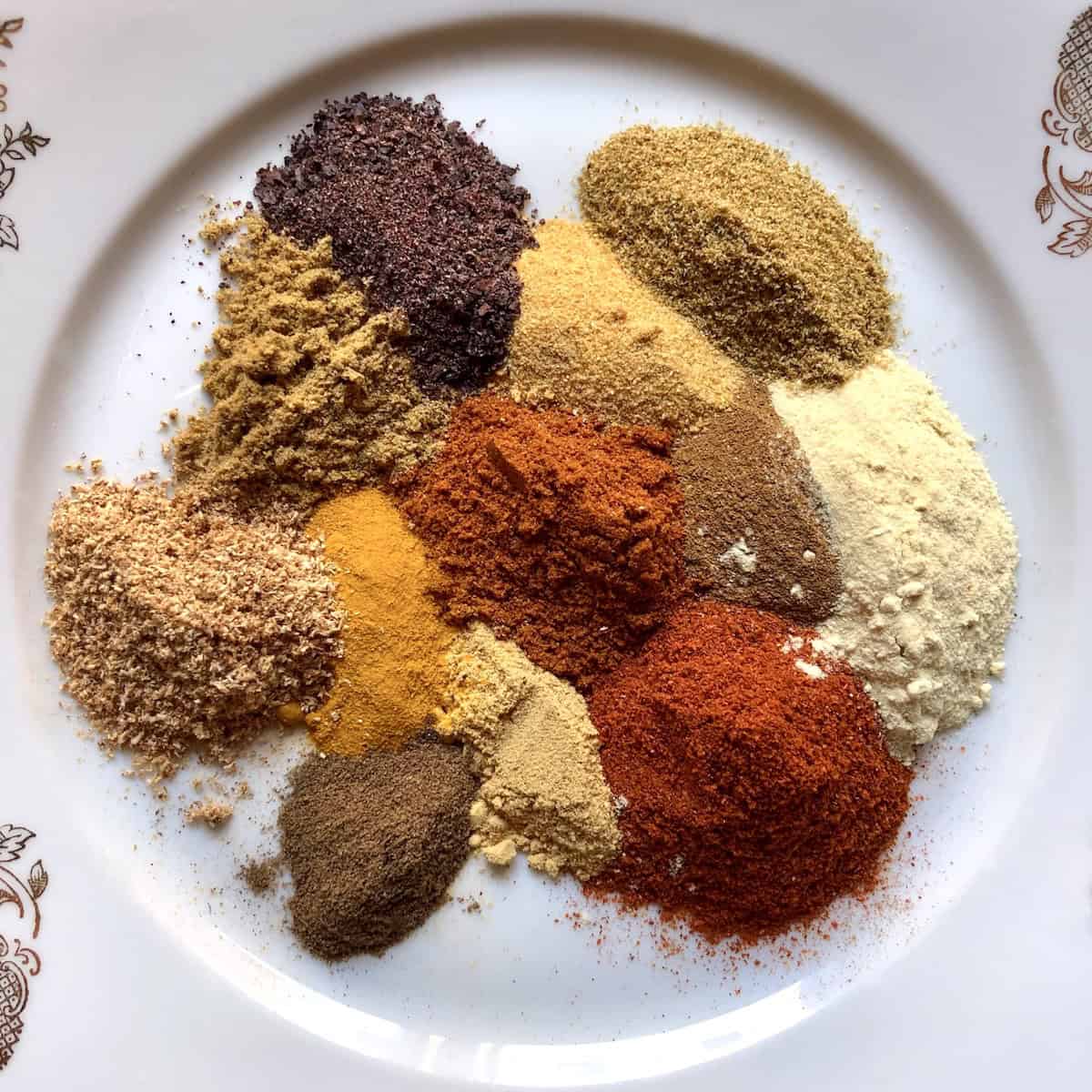
Extra Herbs and Spices You Can Add
All of these are optional but complementary. The marinade is perfect as is, but these spices are still authentic and will change up the flavor a bit according to your mood.
- Smoked paprika (1 to 2 teaspoons). Gives it a smoky flavor. Especially good if you're cooking on a grill pan or in the oven instead of over charcoal, since it puts back some of what live fire would have given you.
- Mexican oregano (2 to 3 teaspoons). Citrusy and earthy with a very faint licorice note. FYI, it isn't the same plant as the Mediterranean oregano found in Italian seasoning. Mexican oregano is in the verbena family (a cousin of lemon verbena), which is where the citrus notes come from. Mediterranean oregano is in the mint family and leans sweeter.
- Cumin (½ teaspoon). If you love cumin, don't be afraid to add it here.
- Onion powder (1 teaspoon). This is a really complementary flavor to add.
How to Use It
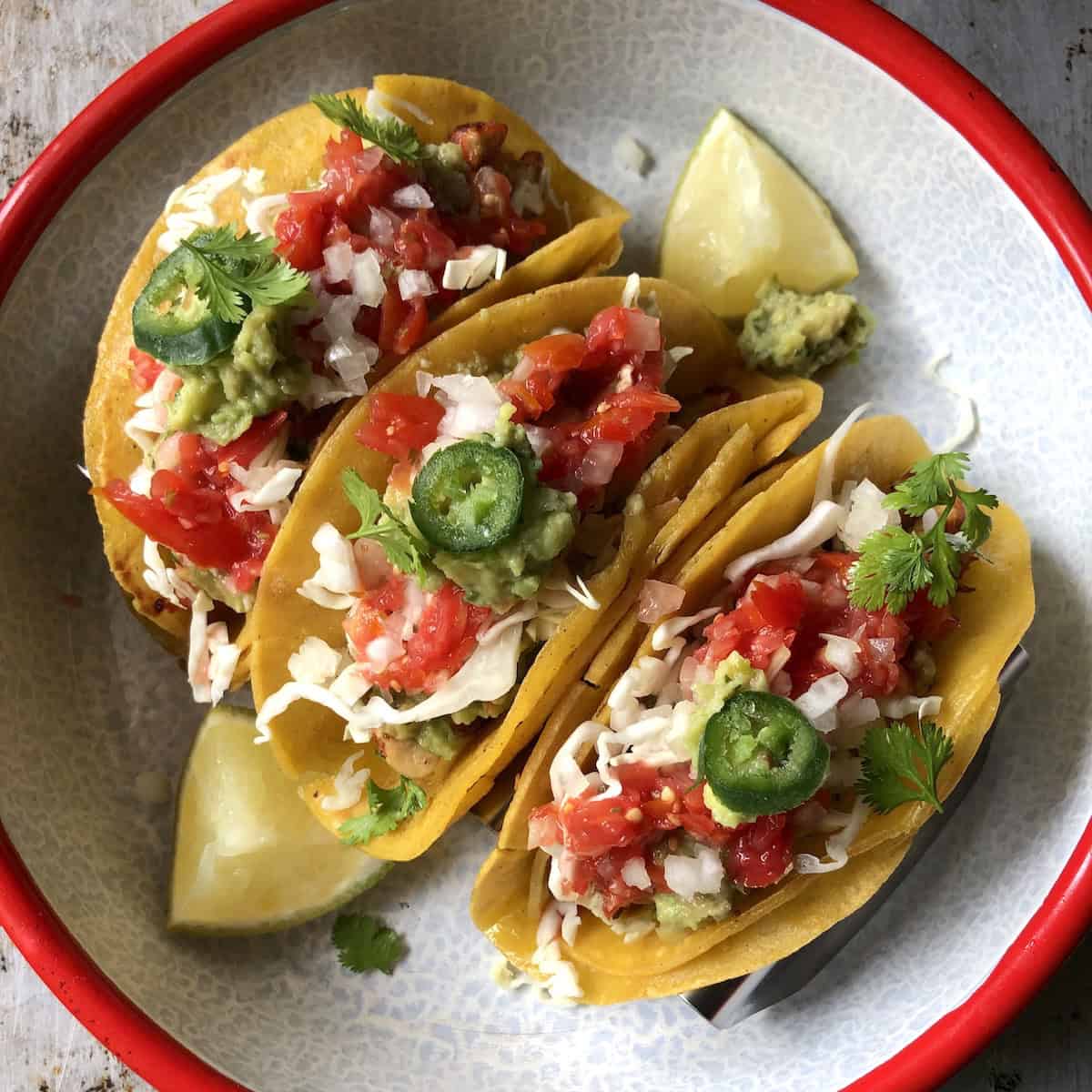
Chicken is the obvious choice since it's what this recipe is named for. But this can be used as a marinade or a finishing sauce for chicken tacos, inside quesadillas, tortilla soup, fajitas, flautas, and nachos. It also works as a dipper for chicken tenders. And it makes a delicious turkey asado recipe as well!
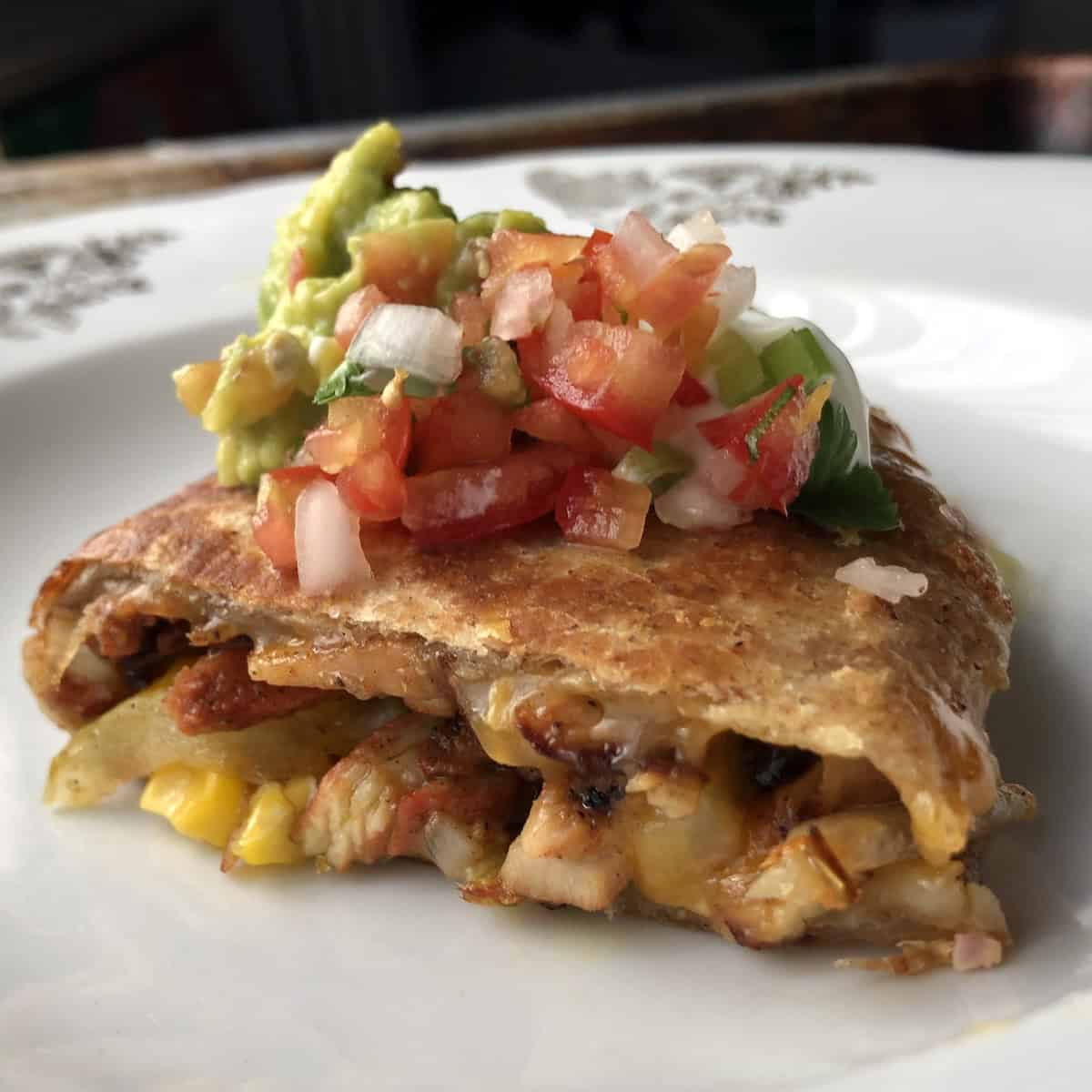
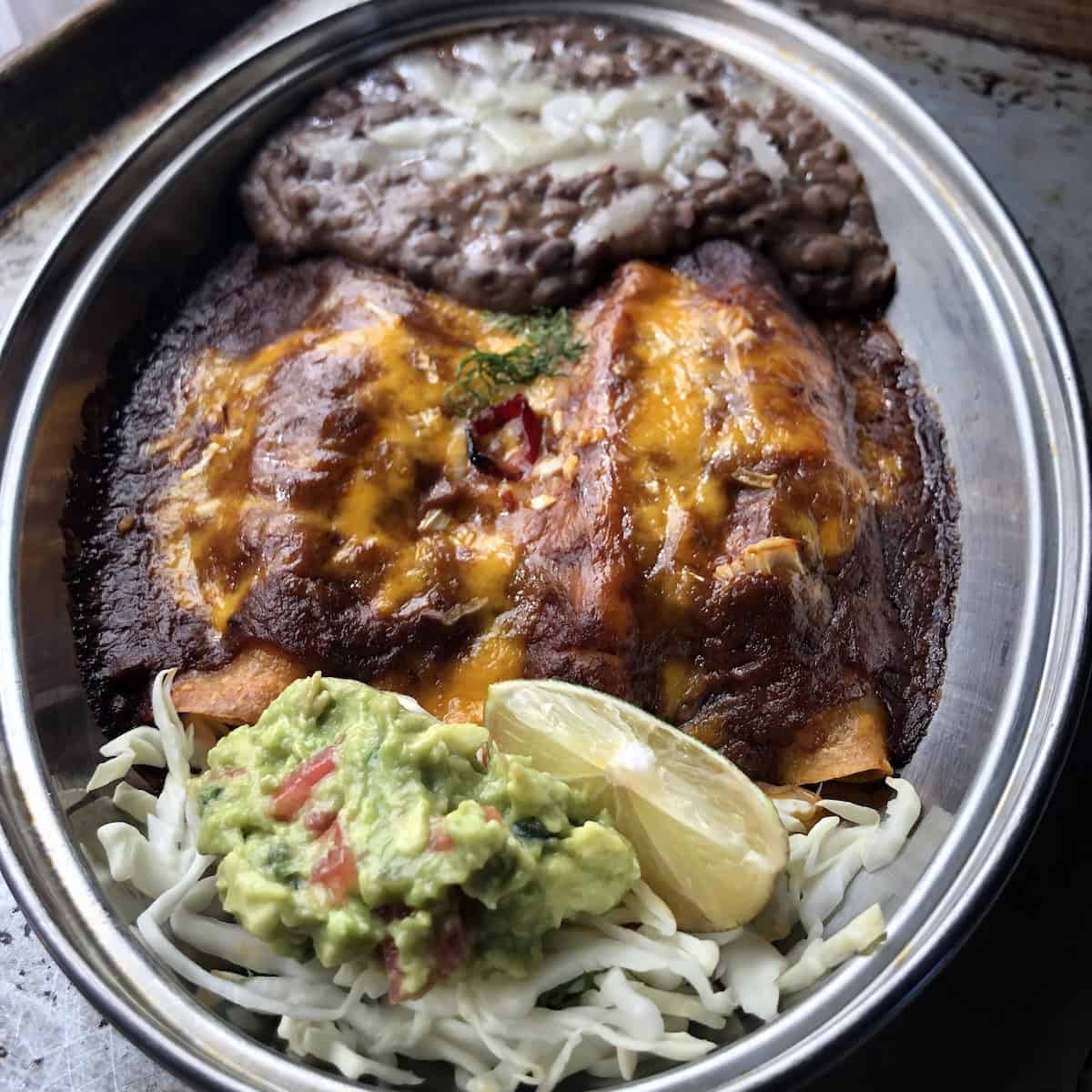

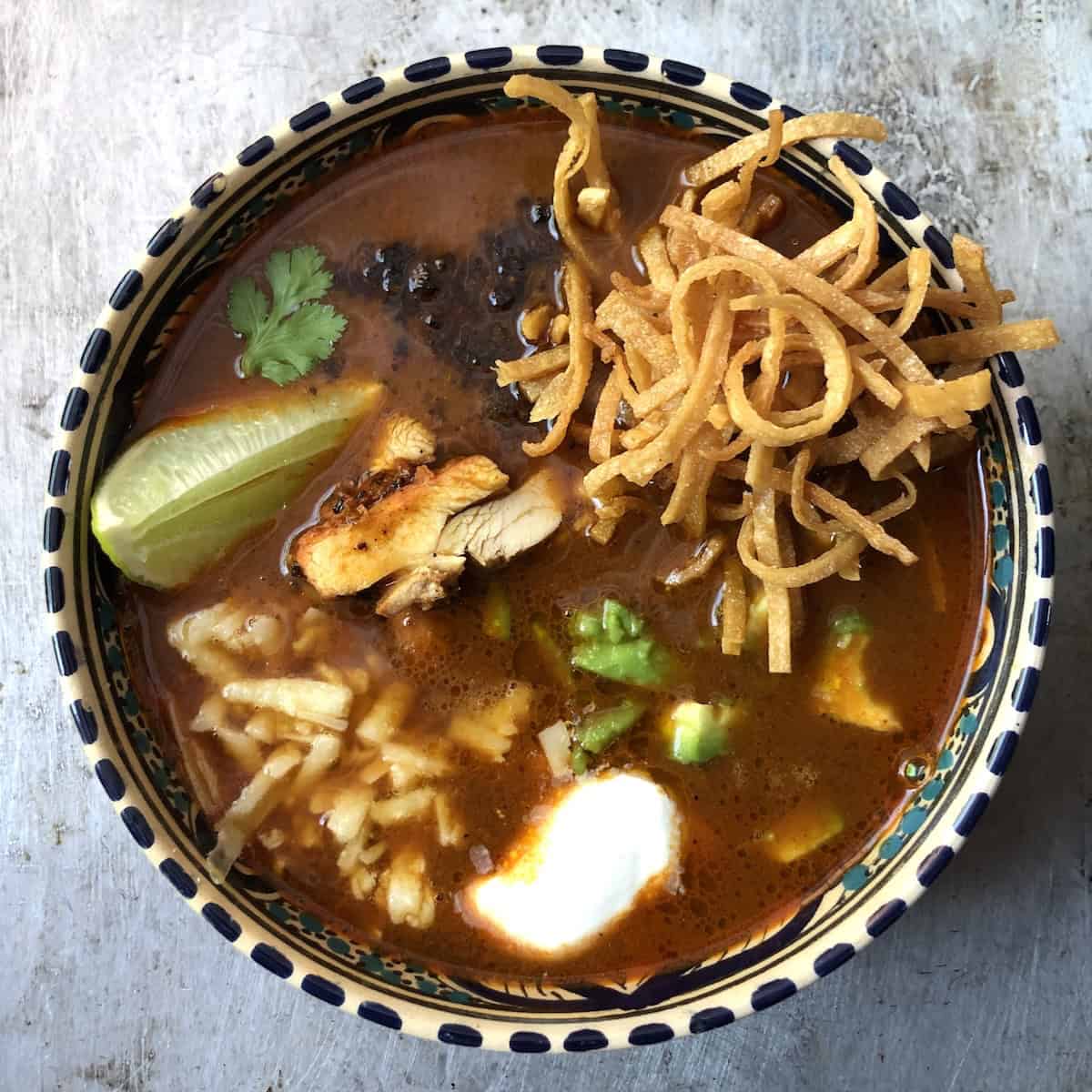
Vegetarian and Other Proteins
This marinade was built for chicken, but it works on far more than that. It's excellent on pork, turkey, duck, fish, and shrimp. For vegetarian cooking, try it on fried tofu, roasted cauliflower or cauliflower steaks, carrots, sweet potato, corn on the cob, portobello or king oyster mushrooms, halloumi or paneer, or jackfruit. Anything that takes well to char and citrus takes well to this.
Equipment
A blender or a food processor is all you really need. It helps to have a high-powered blender like a Vitamix or Ninja to fully puree the peppercorns, but if yours isn't up to it, see the troubleshooting section for how to crush them first.
How to Store
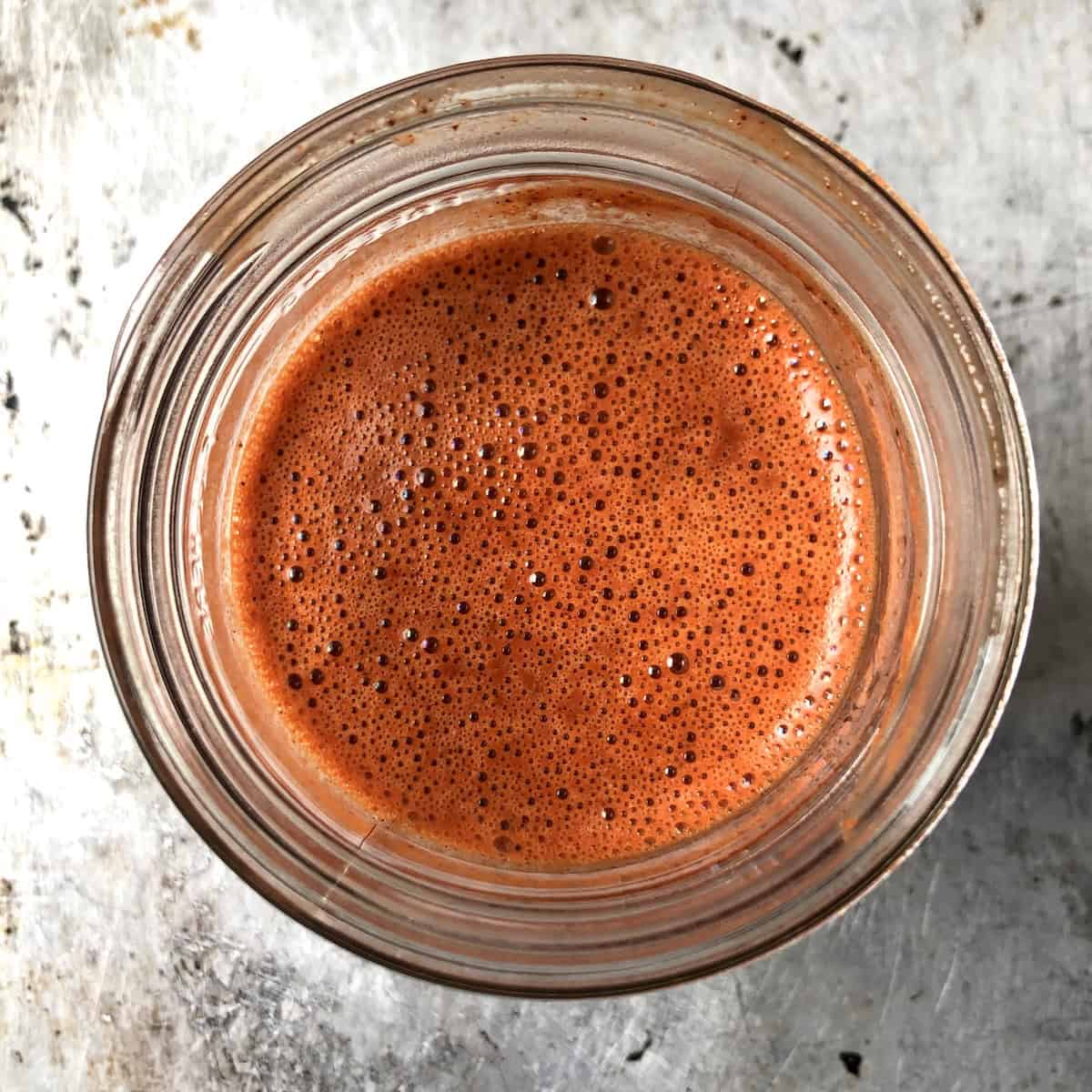
In the refrigerator, up to 5 days. The fresh garlic is what sets the limit here, not the citrus or the achiote. Keep it in an airtight container and give it a stir before you use it. Store it on a shelf toward the back rather than in the door, where the temperature varies every time you open it.
In the freezer, up to a year. This freezes beautifully, and it's what I do with the leftover sauce every time. I use a glass canning jar with at least ½ inch of headspace so it has room to expand, then label and date it. Thaw it overnight in the refrigerator.
A note on plastic. In general, I avoid using as much plastic in the kitchen as I can. I don't refrigerate or freeze anything in plastic if I can help it, especially not long-term and never acidic foods. But especially because this marinade is both acidic and brightly colored, it can easily ruin a plastic dish. Glass and stainless steel don't hold onto garlic and achiote, and you don't have to worry about microplastics.
Marinade that has already had raw chicken in it is a different situation altogether. See the food safety notes below the recipe card.
Pollo Asado Marinade FAQ
Achiote paste and sour orange juice plus a handful of herbs and spices are often used for marinating chicken. Achiote brings the bright red-orange color and the earthy, peppery flavor. Sour orange adds flavor and acidity to help tenderize it. Garlic, cilantro, and black pepper (sometimes smoked paprika, oregano, or cumin as well) round it out. And for an extra savory umami flavor, Maggi or a Maggi substitute (soy sauce and Worcestershire like this recipe uses instead) is added.
Start with a marinade that's freshly made. For this recipe, anywhere from 1 hour to overnight works. A full overnight marinade imparts the best and most flavor and texture, but even 1 hour will still be tasty if you're in a major hurry. What you don't want to do is leave it for too much longer than 12-18 hours. This is an acidic marinade built on lime and orange juice, and acid works fast on the surface of the meat. Push it too far past overnight, and that texture turns soft and chalky instead of tender. I've gone as long as 18 hours (for thick chicken thigh meat), and it still came out great, but overnight (around 12-14 hours) is my usual default.
Fresh orange juice and fresh lime juice, 2 parts to 1. That is how this recipe is written. Skip the bottled versions, including the ones labeled sour orange, because most of them are sweet orange and grapefruit juice from concentrate with preservatives added.
You can, and people look for it. But the bottled ones lean on concentrate and preservatives to survive years on the shelf, and the whole point of this marinade is bright, fresh citrus. This takes five minutes in a blender, so it's easy to make!
It starts here. Get the marinade right, and the chicken mostly takes care of itself. Use real achiote paste, squeeze your citrus fresh, and give the chicken time in the marinade. Get the full pollo asado recipe here!
Yes, and it freezes beautifully. Use a glass canning jar, which is tempered and can handle the temperature change. Fill it with at least half an inch of headspace so the marinade has room to expand as it freezes. Label and date it. It keeps well for up to 6 months. Thaw it overnight in the refrigerator. Only freeze marinade that hasn't touched raw meat.
Yes. It works on pork, turkey, duck, fish, and shrimp, and it's excellent on vegetables and tofu. See the section above for the full list.
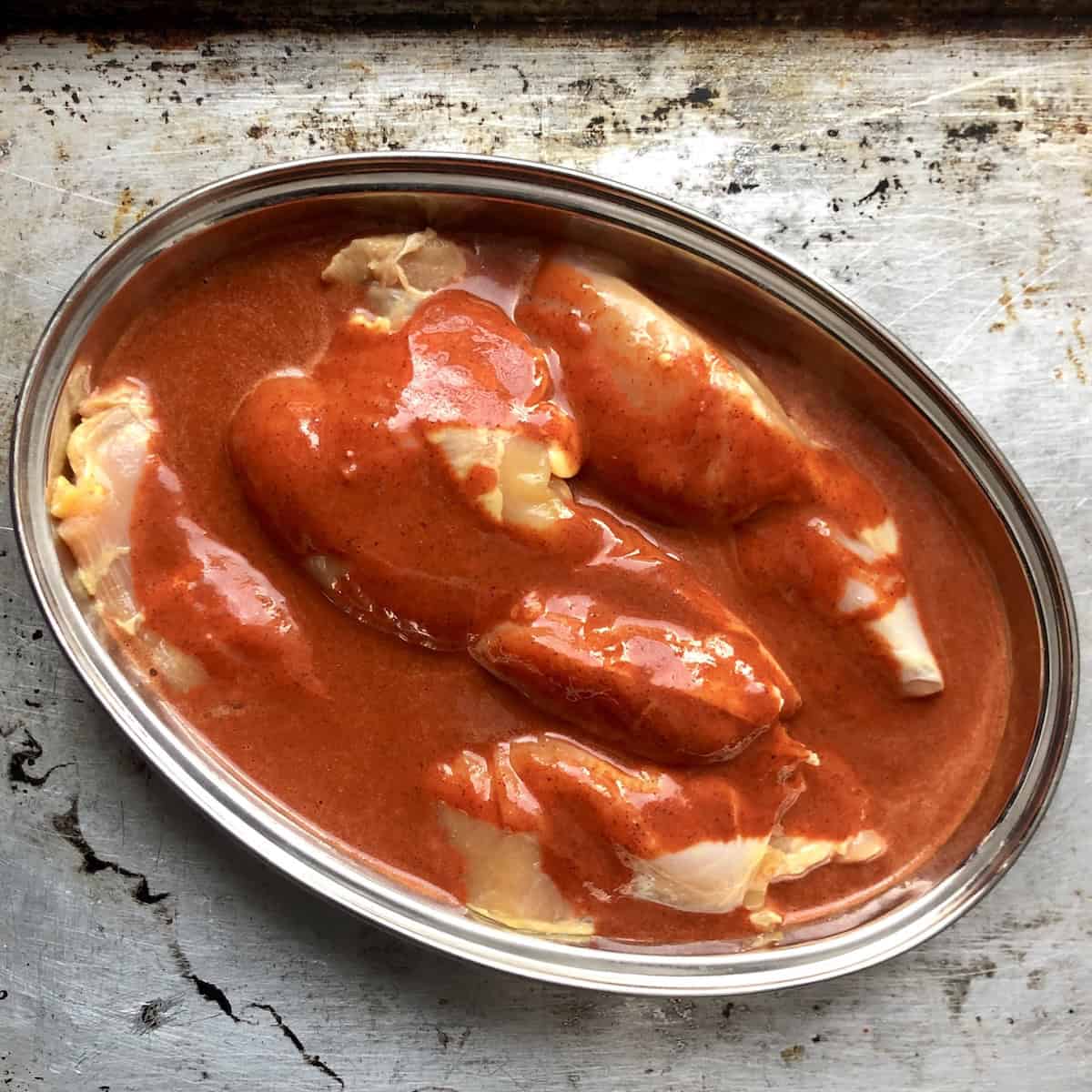
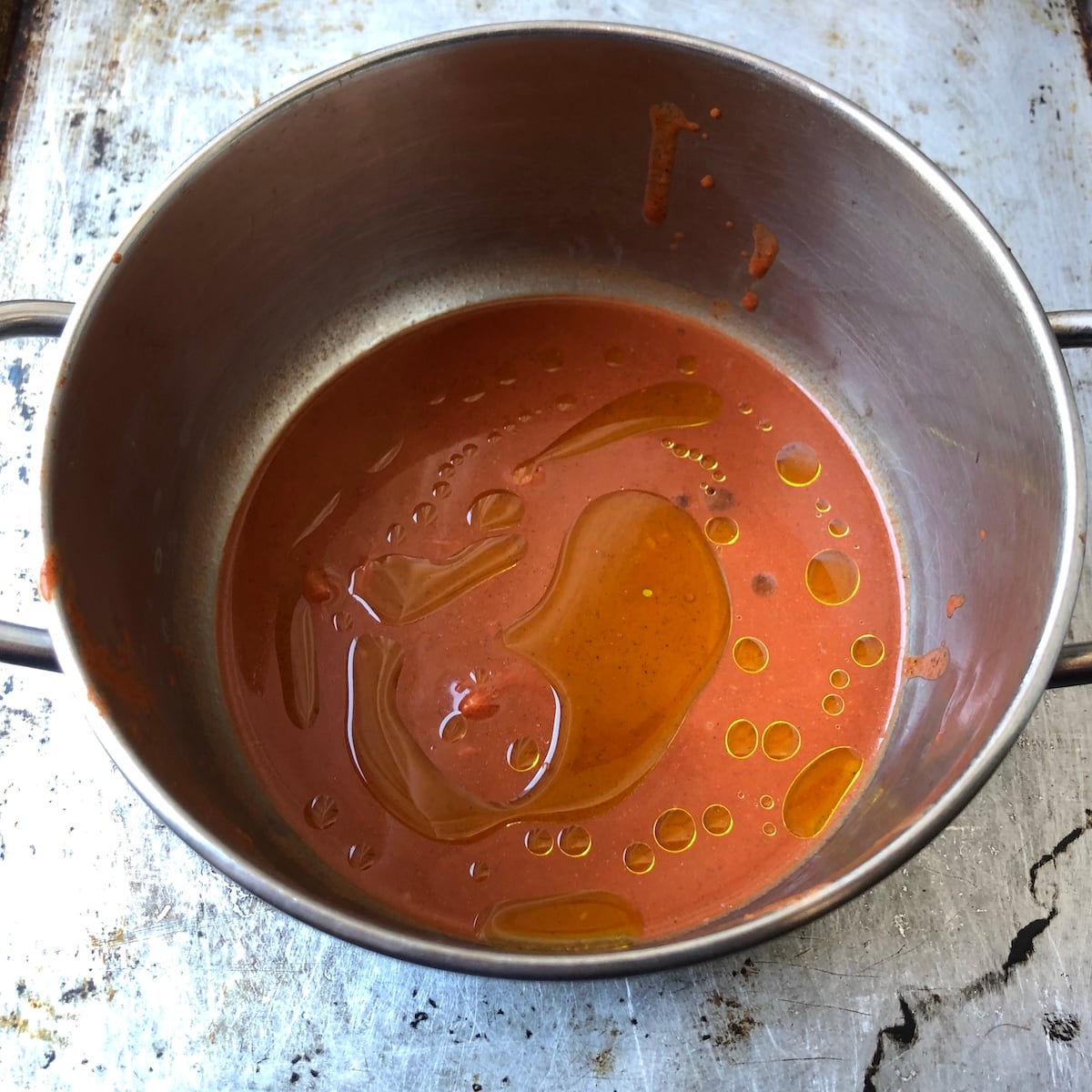
Yes, but with caveats. Once it has touched raw chicken, you can't use it as is without cooking it first because it would make you sick. Put it in a saucepan with a little EVOO and boil it first for a few minutes (I like to go a full 10 minutes, which also reduces the marinade to more of a sauce) and then use it (see below photo). The best route is to first pour off only what you need for marinating the chicken and keep the remaining marinade in a completely separate storage container without ever being in contact with the meat. This avoids any cross-contamination and allows you to use the sauce for multiple dishes if you choose. See the food safety notes below.
Troubleshooting
- It tastes bitter. If you follow my recipe, the marinade shouldn't be bitter at all. But if you do end up with a bitter taste, it could be because:
- you ground up the bitter pith (the white part just under the skin) from the orange or lime in the marinade instead of just adding the juice.
- It won't blend smoothly no matter what I do. If you don't have a high-powered blender like the Vitamix I used, you can do one of the following things to ensure the peppercorns are ground or at least cracked before you blend everything together:
- crush and grind the peppercorns using a mortar and pestle
- grind the peppercorns in a spice grinder
- It's too salty. Check which salt you're using. This recipe is written for Diamond Crystal kosher salt, which has large, hollow flakes that pack loosely. Morton kosher is denser, so the same tablespoon carries noticeably more salt, and fine table salt or sea salt is denser still. If you're using anything other than Diamond Crystal, start with about half the salt the recipe calls for, blend, taste, and add from there. Better yet, weigh it: salt is salt on a scale, so this recipe's 1 tablespoon Diamond Crystal is about 10 grams of any salt you have.
What Is Pollo Asado?
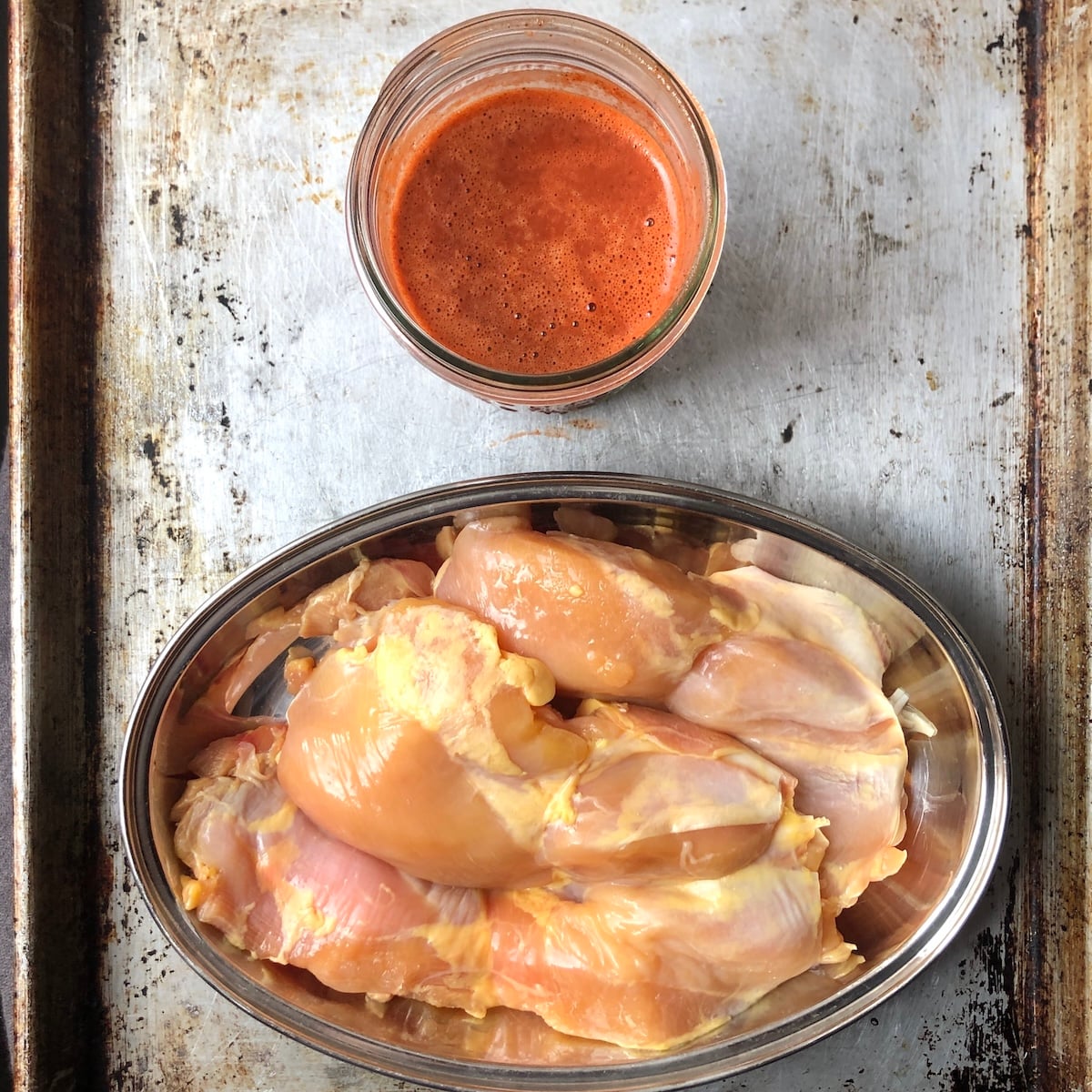
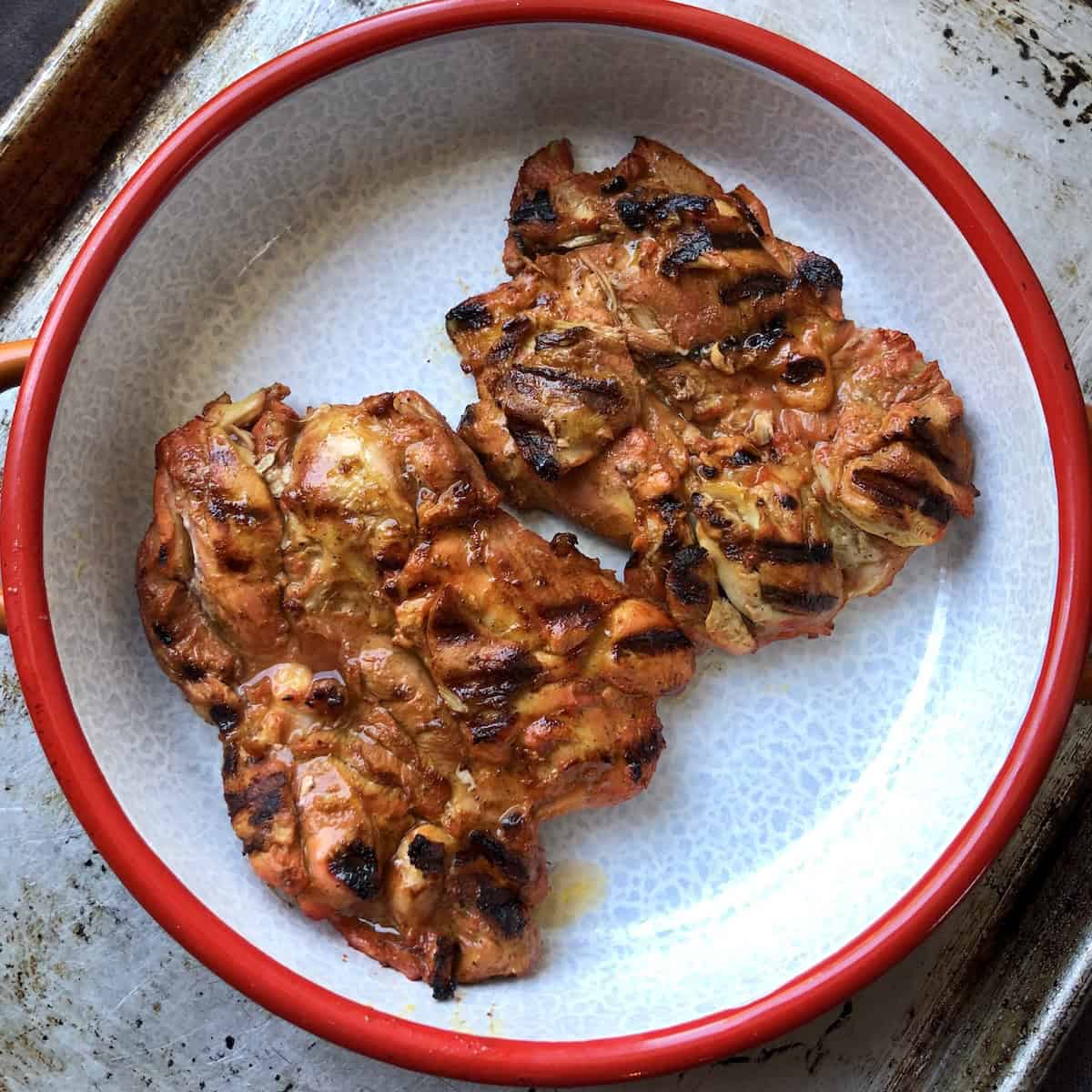
Pollo asado means grilled or roasted chicken in Spanish. In Mexican cooking, it often means chicken (whole or pieces, boneless or skinless) marinated in a mixture of achiote, sour orange, garlic, and spices, then grilled over charcoal until the edges char. The marinade is what makes it so much better than plain grilled chicken!
Get the full pollo asado recipe here!
More Easy Mexican Recipes
- Cheese Enchiladas with Red Enchilada Sauce Recipe (+Video)
- Red Enchilada Sauce Recipe (Authentic Tex-Mex w/Video)
- How to Make Tacos al Pastor at Home
- Restaurant-Style Carne Asada Steak (For Two or a Crowd)
- Easy Authentic Refried Beans Recipe (From Scratch or Canned w/Video)
- Restaurant-Style Cilantro Lime Rice (Better Than Chipotle w/Video)
- Chipotle in Adobo Substitute (Easy 4-Ingredient Recipe)
- Easy Guacamole Recipe (Restaurant-Style Tableside Guacamole)





Made this Recipe? We'd love for you to rate ⭐️ it and tell us how it went for you!
Let's get started!
📖 Recipe
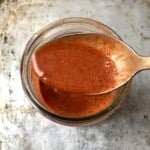
Pollo Asado Marinade (Mexican Al Carbon Sauce)
- Total Time: 5 minutes
- Yield: Approximately 1 ½ cups (¾ pint)
- Diet: Dairy-Free, Low Calorie, Low Fat, Low-Carb, Vegan, Vegetarian
Description
An easy authentic pollo asado marinade made with real achiote paste and fresh citrus. This Mexican chicken marinade doubles as a finishing sauce and comes together in one blender in five minutes!
Ingredients
- ⅔ cup freshly squeezed orange juice (from about 1 ½ medium oranges) (155g)
- ⅓ cup freshly squeezed lime juice (70g) (avoid bottled)
- ¼ cup achiote paste (60g)
- 1 tablespoon light (or regular) soy sauce (15g)
- 1 tablespoon Worcestershire sauce (15g)
- 1 tablespoon whole black peppercorns (7g)
- A few cilantro sprigs, stems included, about 2 tablespoons chopped (3g), or more to taste (see notes)
- 8 garlic cloves
- 2 to 3 fresh jalapeños (optional, for a spicier version - see notes)
- 1 tablespoon Diamond Crystal kosher salt (10g)
 Get Recipe Ingredients
Instructions
- Add all the ingredients to a blender or food processor and puree until completely smooth and the peppercorns have broken down.
- Decide how you're using it before it touches anything. To marinate chicken or another protein, pour off what you need for the recipe into a separate container. I use about ½ cup (115g) for 1.5 pounds of chicken thighs. Everything left behind never touches raw meat, so it stays a sauce you can refrigerate or freeze.
Notes
- Cilantro: It's typical to use up to an entire small bunch for a more cilantro-forward flavor. Start with the amount called for, taste, and add more from there if desired.
- Jalapeños: For a milder or kid-friendly version, remove the seeds and membranes before blending, or leave the jalapeños out altogether.
- Salt: Written for Diamond Crystal brand salt. If using Morton kosher, table, or sea salt, start with about half the amount and adjust, since those are denser. By weight, 1 tablespoon Diamond Crystal is about 10g.
- Marinating time:4 hours and up to overnight. Overnight (around 12-14 hours) is my default. Don't go much past that, as the acid will soften the meat's texture. If you're in a HUGE hurry, you can even marinate for just 1 hour. It won't be quite as delicious, but it will still taste great!
- Never use marinade that has touched raw chicken as a sauce unless you boil it first. See the food safety section below the card.
- Prep Time: 5 minutes
- Cook Time: 0 minutes
- Category: Condiments + Sauces + Dips, Dips
- Method: Blender
- Cuisine: Mexican, Mexican + Tex-Mex
Nutrition
- Serving Size: ¼ cup
- Calories: 61
- Sugar: 3g
- Sodium: 693mg
- Fat: 1.4g
- Saturated Fat: 0.3g
- Unsaturated Fat: 1.1g
- Trans Fat: 0g
- Carbohydrates: 11g
- Fiber: 0.8g
- Protein: 1.5g
- Cholesterol: 0mg

Pollo Asado Marinade Food Safety
This marinade does two jobs, and the order matters. One batch makes far more than you need for a single batch of chicken, so you can do both without ever putting yourself at risk.
- Pour off what you need to marinate before the chicken goes anywhere near the bowl. I use ½ cup (115g) for 1.5 pounds of chicken thighs. That leaves a full cup that never touched raw poultry, so it's still a sauce.
- Sauce that never touched raw chicken needs no special handling. Drizzle it, dip in it, refrigerate it in a sealed container.
- Never use marinade that has touched raw chicken as a drizzling sauce. Not on the cooked chicken, not on tacos, not as a dipper. USDA FSIS is direct about this: don't use marinade from raw poultry as a sauce unless it's boiled first.
- If you want to use the marinade that touched the chicken, boil it. Remove the chicken, bring the marinade to a full boil for a few minutes, and it's safe to brush on or serve. (See the above FAQ for a photo of how to cook the marinade to make it safe to eat).
- Marinate in the refrigerator, never on the counter. FSIS says poultry can stay in a marinade in the fridge for up to 2 days, though for texture I recommend no more than 12-18 hours; see the FAQ above.
- Don't reuse a marinating bag or container without washing it in hot soapy water first.
Source: USDA FSIS, Poultry: Basting, Brining, and Marinating


Kelly Leding says
This 5-minute Mexican chicken marinade will change how you grill, sauté, and bake chicken from now on!