

Carrot cake lovers, hold on to your hats! This truly best carrot cake recipe makes a seriously tender, super moist carrot cake from scratch! It's perfectly spiced, loaded with freshly grated purple or orange carrots, made with toasted walnuts or pecans, with or without raisins, and finished with your choice of two frostings: classic vanilla bean cream cheese frosting or a spring-green matcha cream cheese mascarpone frosting!
In this post, I show you both carrot cakes so you can choose your favorite add-ins and frosting!
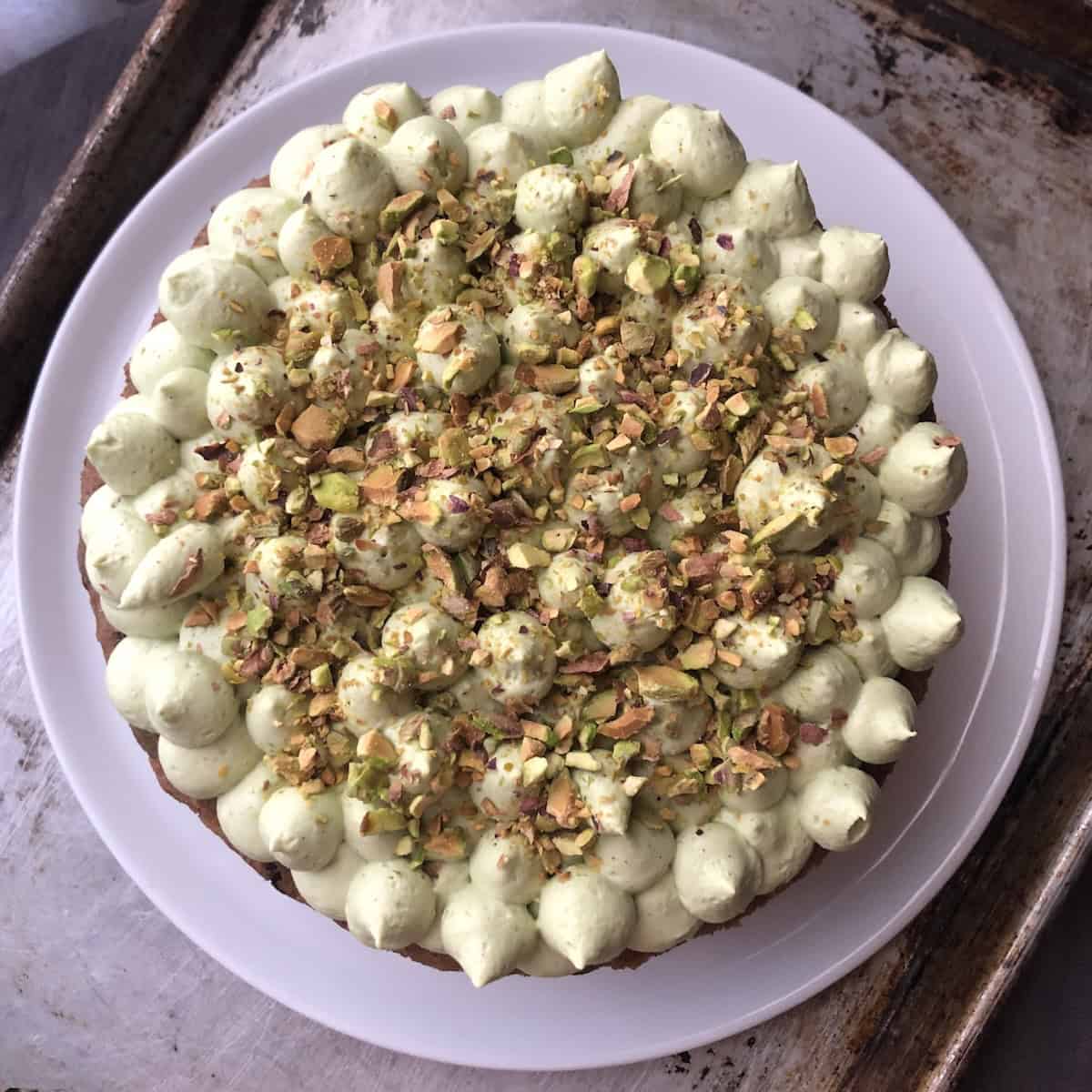
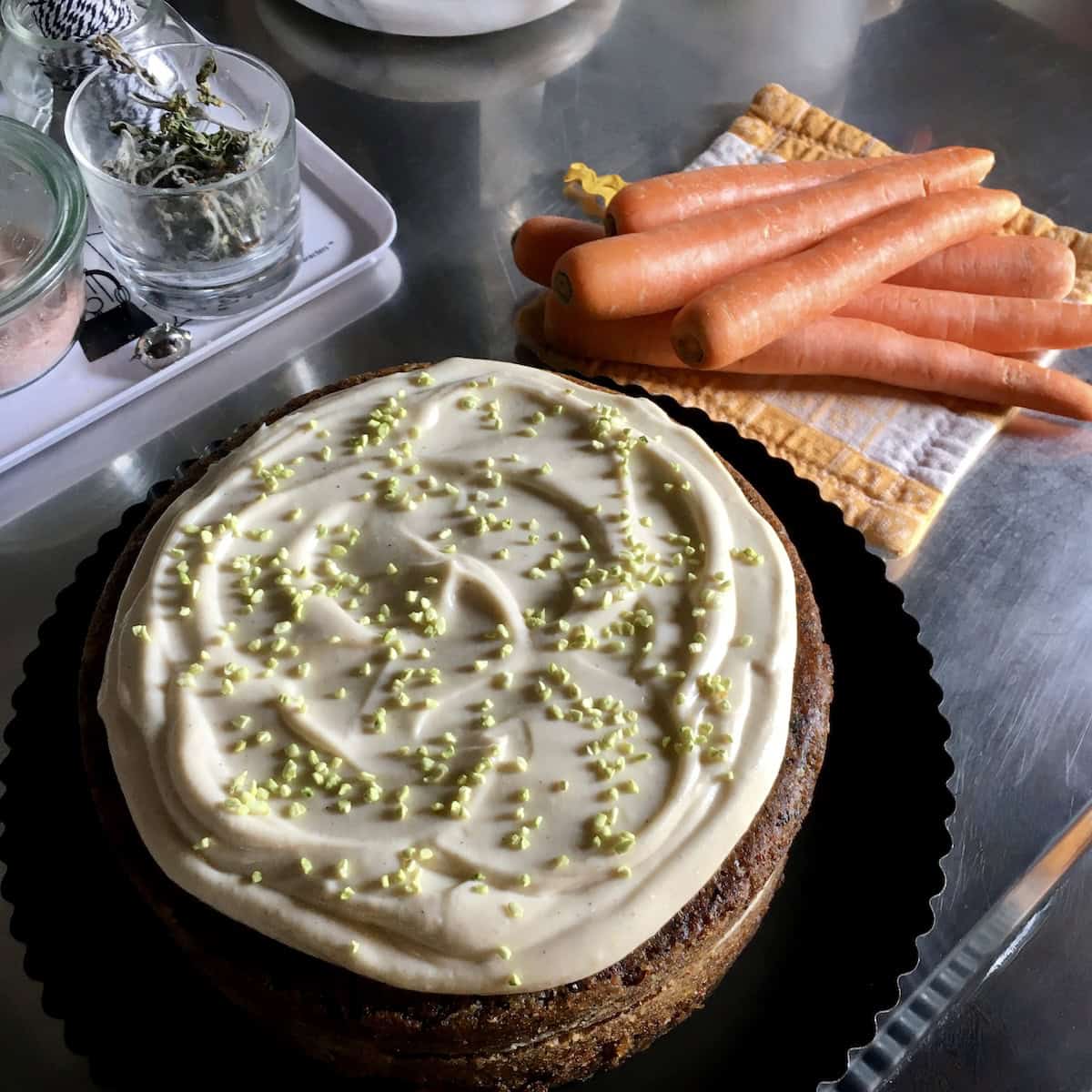
This has been my go-to simple carrot cake recipe for years. It's based on my all-time favorite carrot cake from Whole Foods Market. You know the ones - those perfect chilled rectangles of single-layer carrot cake goodness in the refrigerated dessert case! And you can also forget about Costco's carrot bar cake!
This homemade carrot cake beats both of these recipes by miles, and costs a fraction to make from scratch. Growing up in Arkansas in a family of excellent Southern bakers and working as an assistant pastry chef has given me an appreciation for what separates a good cake from a genuinely extraordinary one. And this recipe delivers! Every. Single. Time.
If you're looking for more easy cake recipes from scratch, you might also enjoy this Super Moist Devil's Food Cake (Vintage Recipe) (also no mixer needed) or this Really Easy Apple Rum Cake with Pecan Crunch.
Jump to:
- Why This Carrot Cake Recipe Works
- Why You'll Love This Carrot Cake Recipe
- Choose Your Version
- Carrot Cake Ingredients
- How to Make Carrot Cake (Super Moist, from Scratch)
- How to Toast Walnuts or Pecans for Carrot Cake
- Carrot Cake Frosting Options
- Can You Freeze Carrot Cake?
- Using Purple Carrots in Carrot Cake
- Substitutions
- Variations
- Equipment
- How to Store Carrot Cake
- How to Serve Carrot Cake
- Carrot Cake Mistakes & Top Tips For How to Avoid Them
- FAQ
- Why You Should Never Use Pre-Shredded Bagged Carrots for Carrot Cake
- Looking for More Easy Cake Recipes?
- 📖 Recipe
Why This Carrot Cake Recipe Works
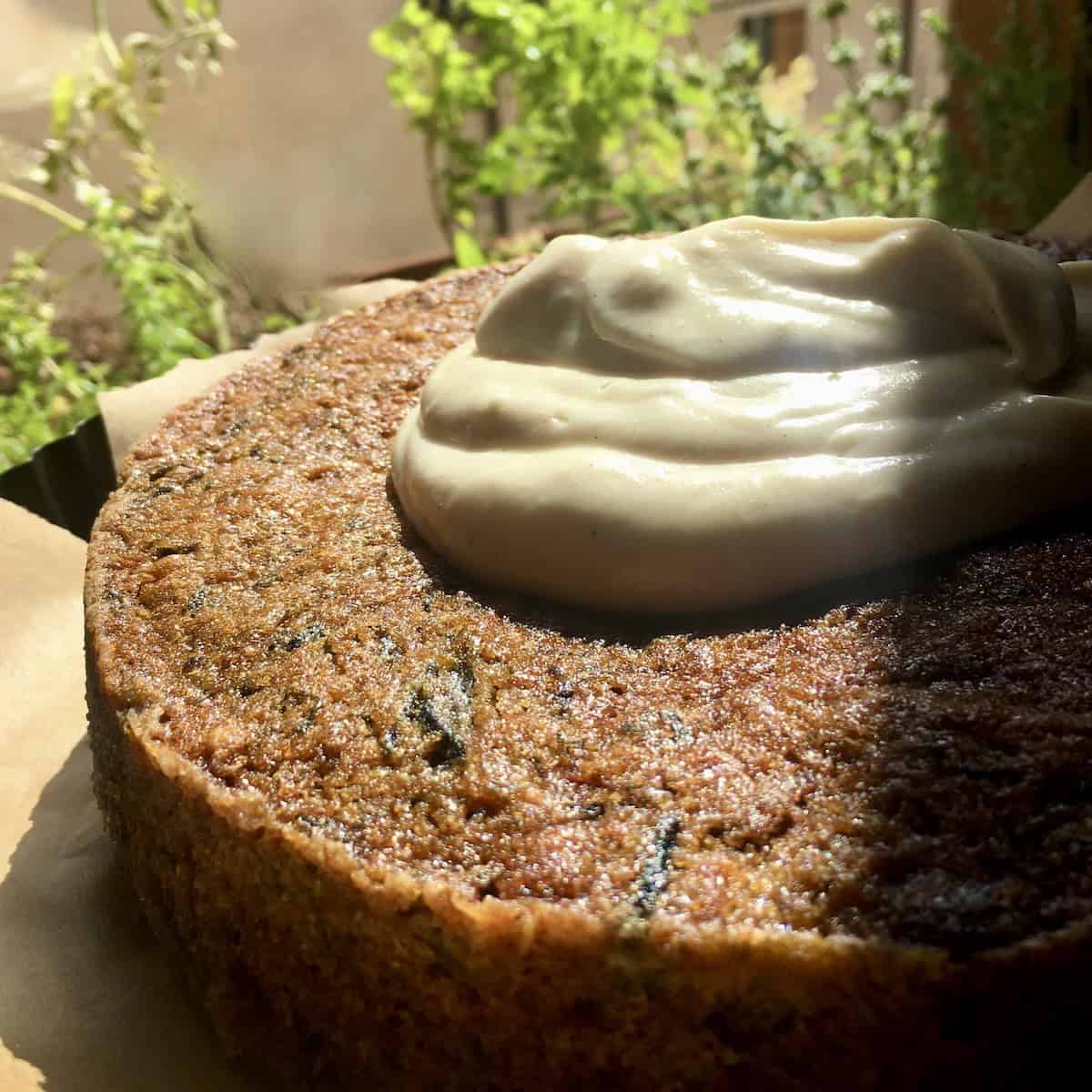
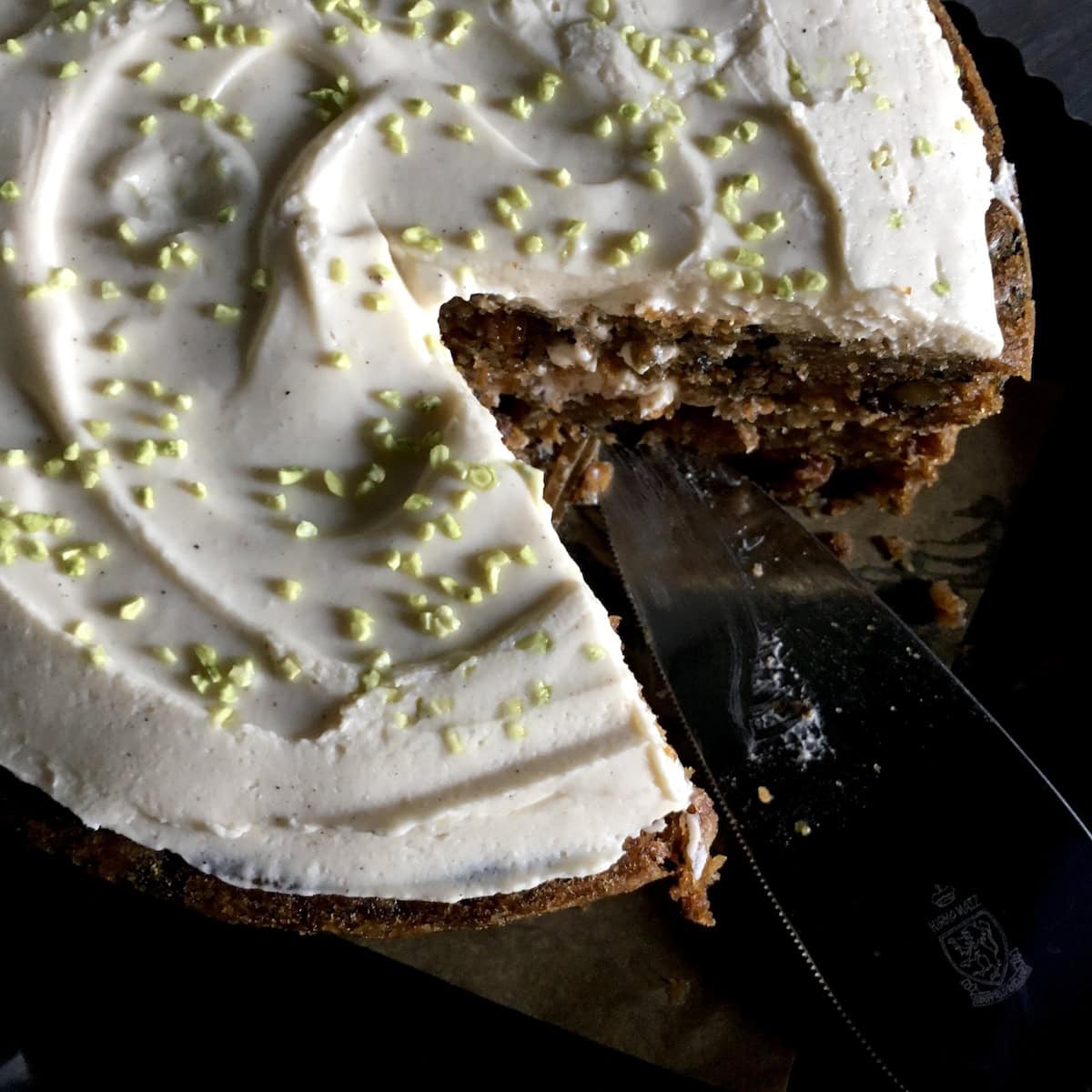
If you're here because you're looking for a carrot cake recipe that tastes as good as grandma's (or like the one at Whole Foods), you've found it. Forget the ultraprocessed box mix carrot cakes and Costco's carrot bar cake. This homemade carrot cake tastes better, and is way less expensive too! And look at just how moist it is↑!
Use it to make carrot cake cupcakes, a 9x13 carrot cake sheet cake, simple carrot cake loaves, or mini carrot cakes for gifting. Did I mention this is a genuinely easy carrot cake recipe? So easy that you don't even need to use a mixer if you don't have one😉!
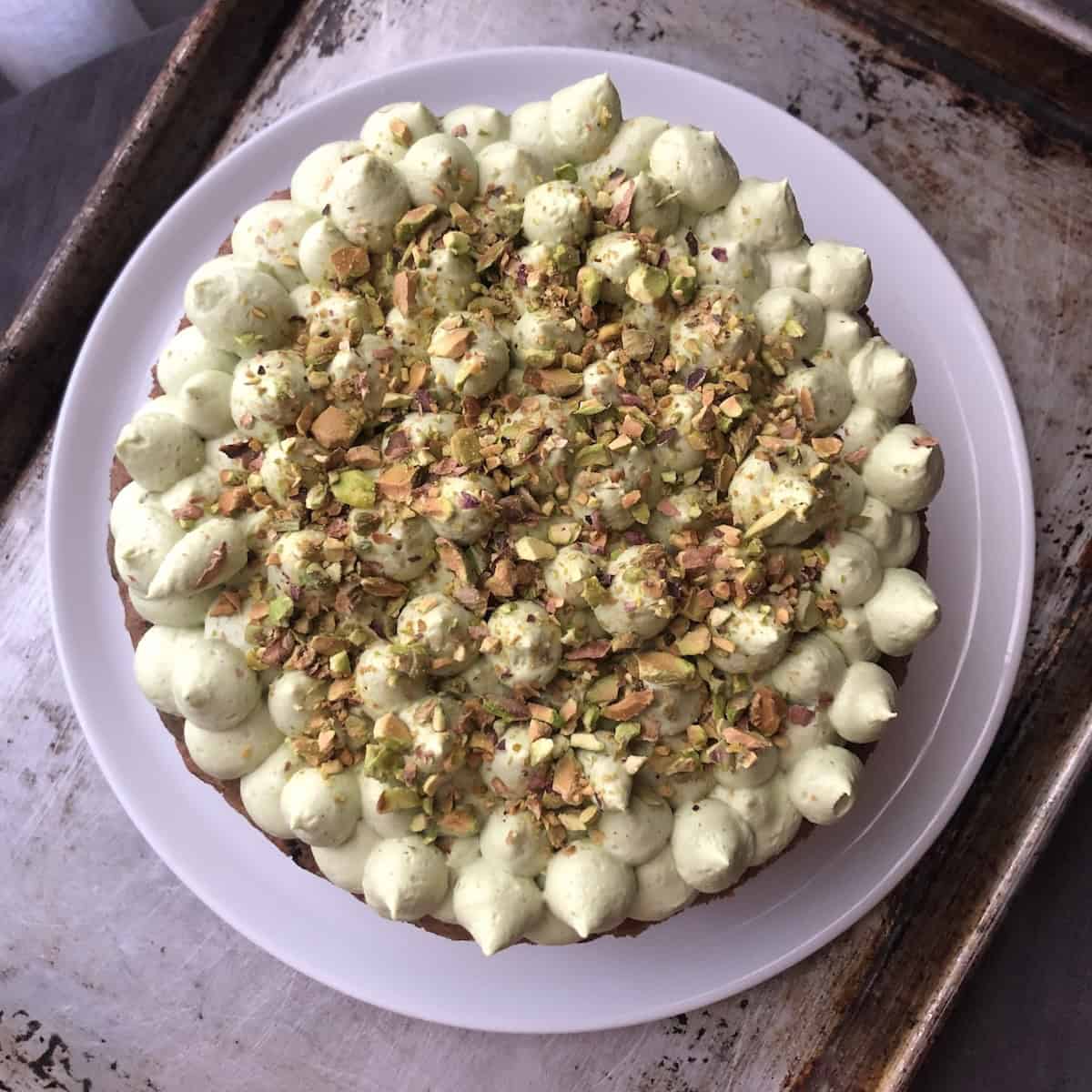
Plus, it freezes beautifully (so well, it's almost too good to be true)! And whether you go classic (orange carrots, toasted walnuts, raisins, vanilla bean cream cheese frosting) or elevated (purple carrots, toasted pecans, matcha cream cheese mascarpone frosting, toasted pistachios), its simple carrot cake recipe base underneath is the same!
You can switch up the add-ins (use pineapple instead of raisins, pecans instead of walnuts) depending on what's in your pantry, and the recipe holds up every time. For us, this is the best carrot cake in the world.
Why You'll Love This Carrot Cake Recipe
- 100% carrot cake from scratch with simple, natural ingredients you probably already have
- Two frosting options: classic vanilla bean cream cheese frosting or a spring-green matcha cream cheese mascarpone frosting (sooo good!)
- Super moist crumb that stays moist for days (butter + oil + applesauce - each one doing a different job)
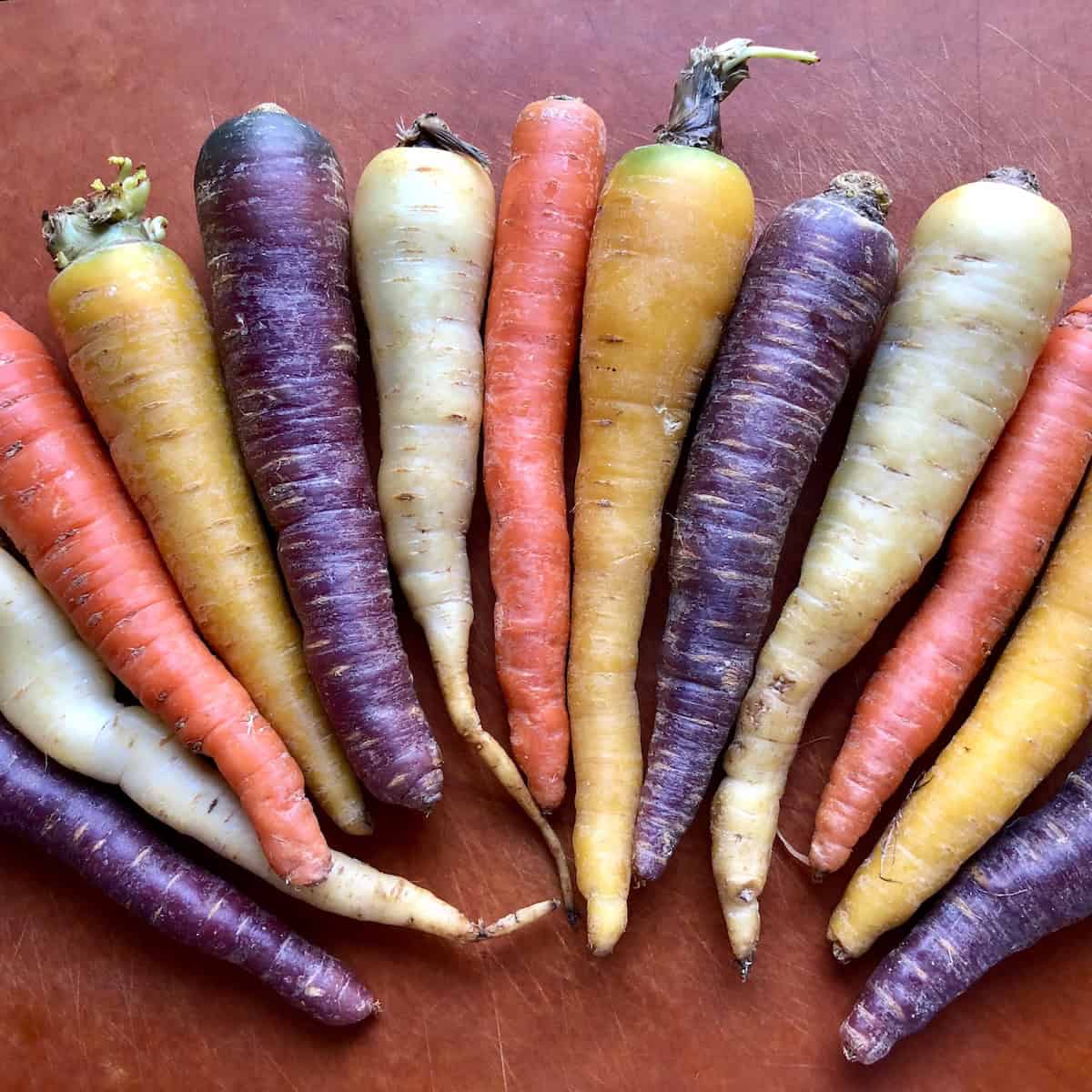
- Works beautifully with any carrots: use purple carrots, orange carrots, white carrots or a mix
- Freezes perfectly frosted or unfrosted for up to 6 months when really well wrapped (I've done it!)
- Easy enough for a weekday, beautiful enough for Easter, Mother's Day, or a birthday celebration
- Makes whatever shape you need: one batter makes one 8-inch double-layer cake (9-inch pans work too for slightly thinner layers), or 18-24 carrot cake cupcakes, or a 9x13 sheet cake, or two 8-inch carrot cake loaves (not super tall, perfect for breakfast or Easter Brunch bar).
Choose Your Version
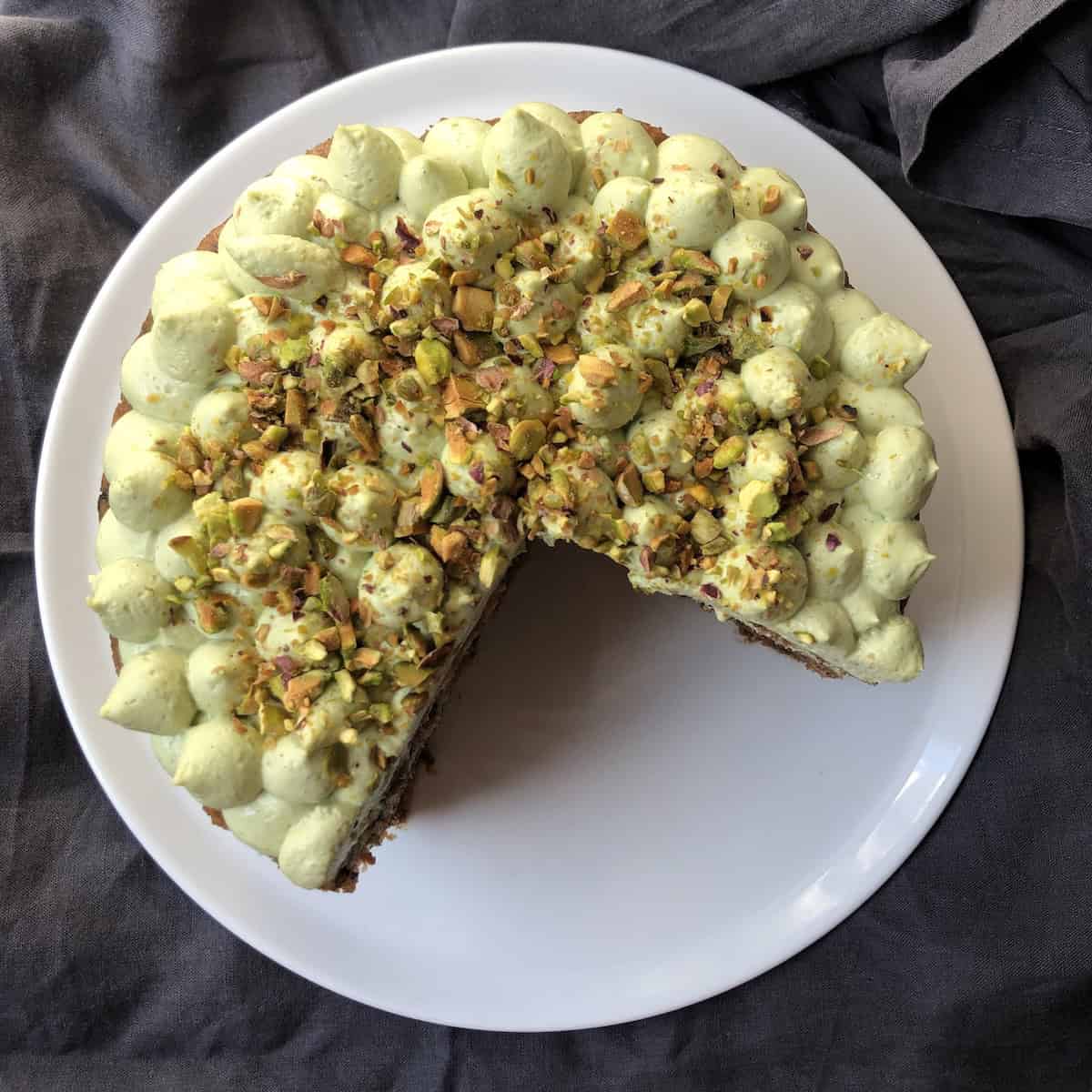
This is one carrot cake recipe that makes two completely different-looking celebratory cakes! The batter is identical. Everything else is up to you.
Version 1: The Classic Carrot Cake:
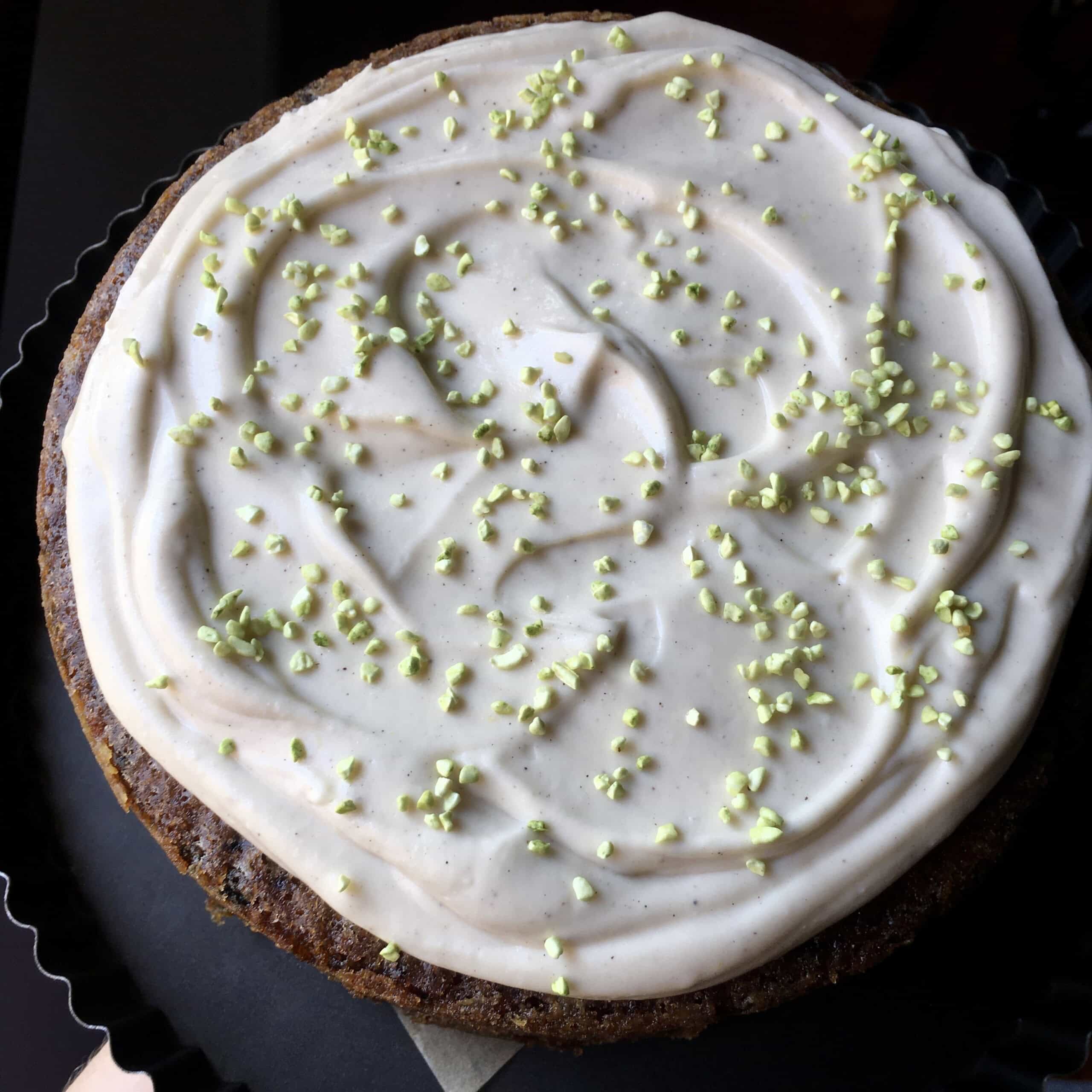
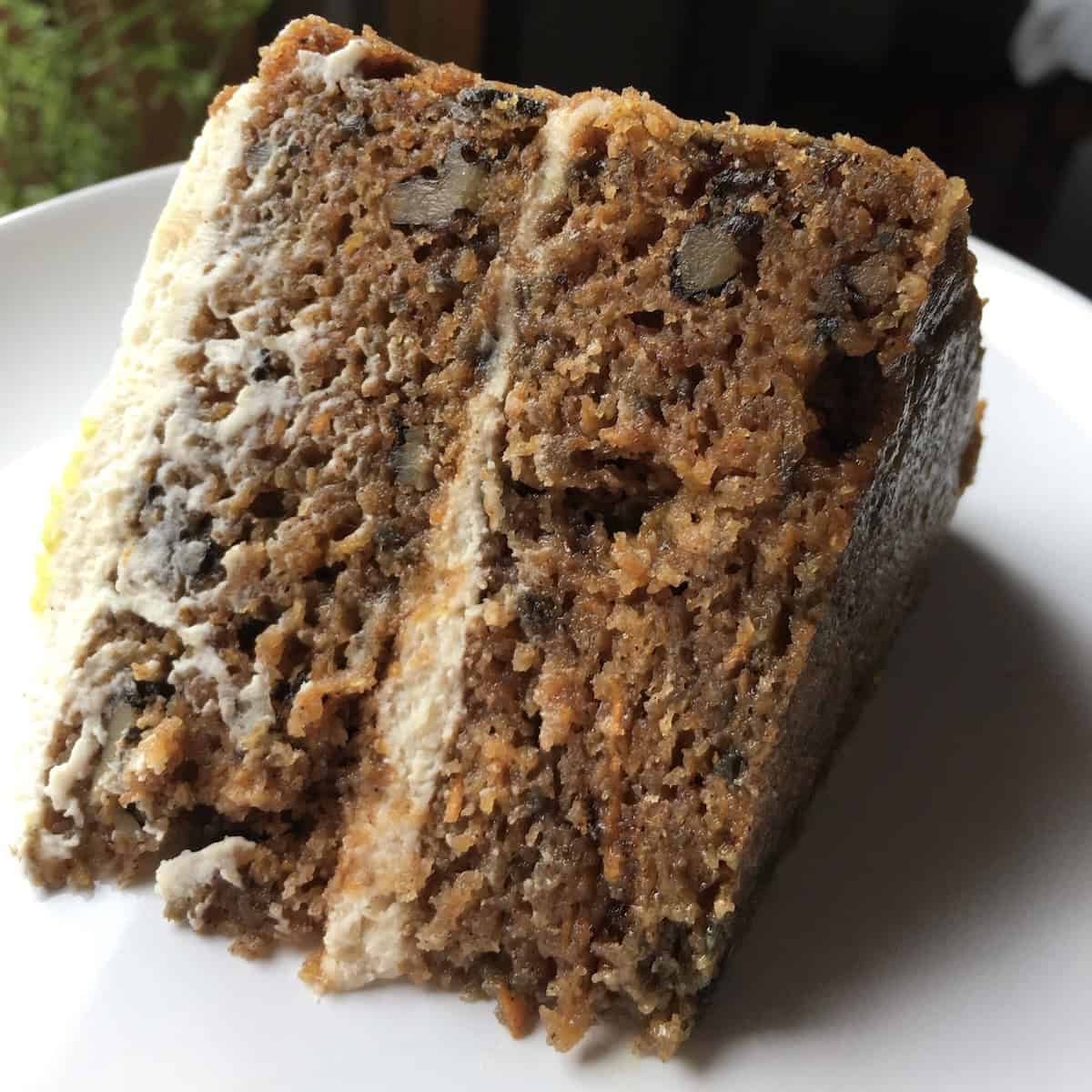
Purple and orange carrots (or whatever carrots you have), toasted walnuts, golden raisins (or regular black raisins), cane sugar, and vanilla bean cream cheese frosting.
The purple carrots streak the crumb with deep violet ribbons and give the whole cake a slightly darker, dramatically beautiful color with the same classic taste. I make this whenever I can find purple carrots.
Version 2: The Elevated Carrot Cake:
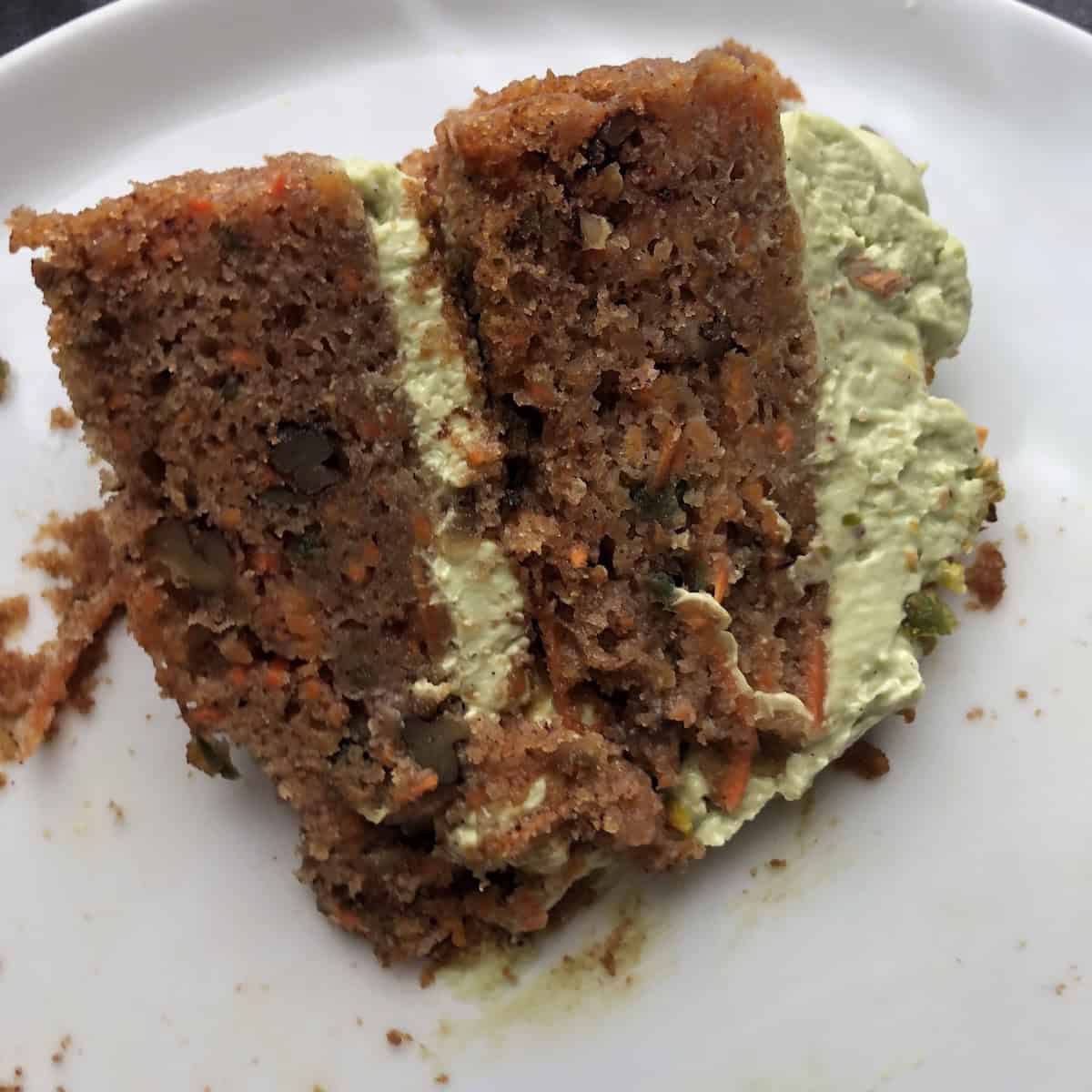
Orange carrots (or purple), toasted pecans, no raisins, granulated sugar and a spring-green matcha cream cheese mascarpone frosting finished with toasted pistachios for extra crunch.
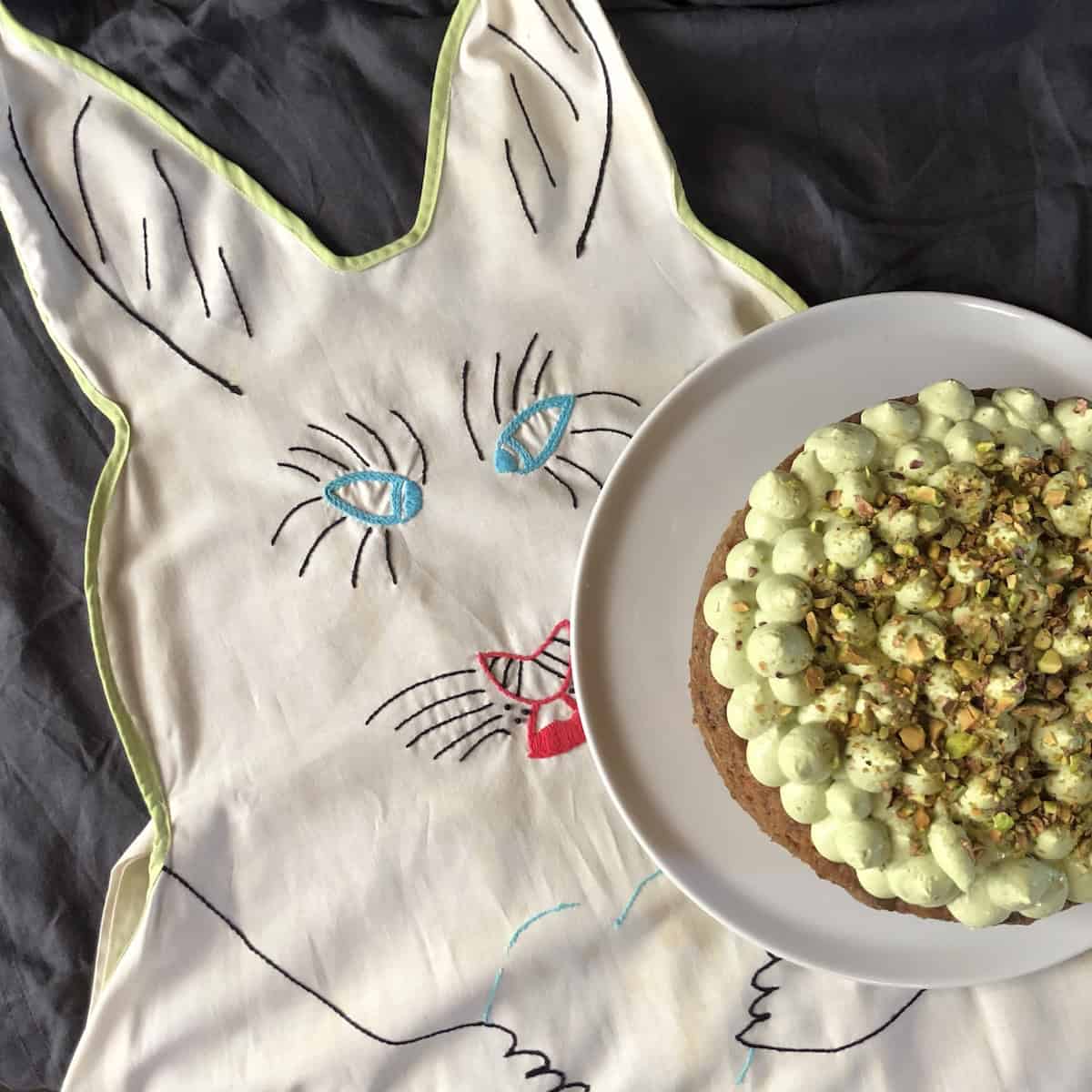
This is the Easter showstopper. The matcha frosting color is stunning against the warm brown spiced crumb, and the flavor has a familiar but slightly more mellow cream cheese tang (because of the creamy-dreamy mascarpone) with very delicate matcha notes.
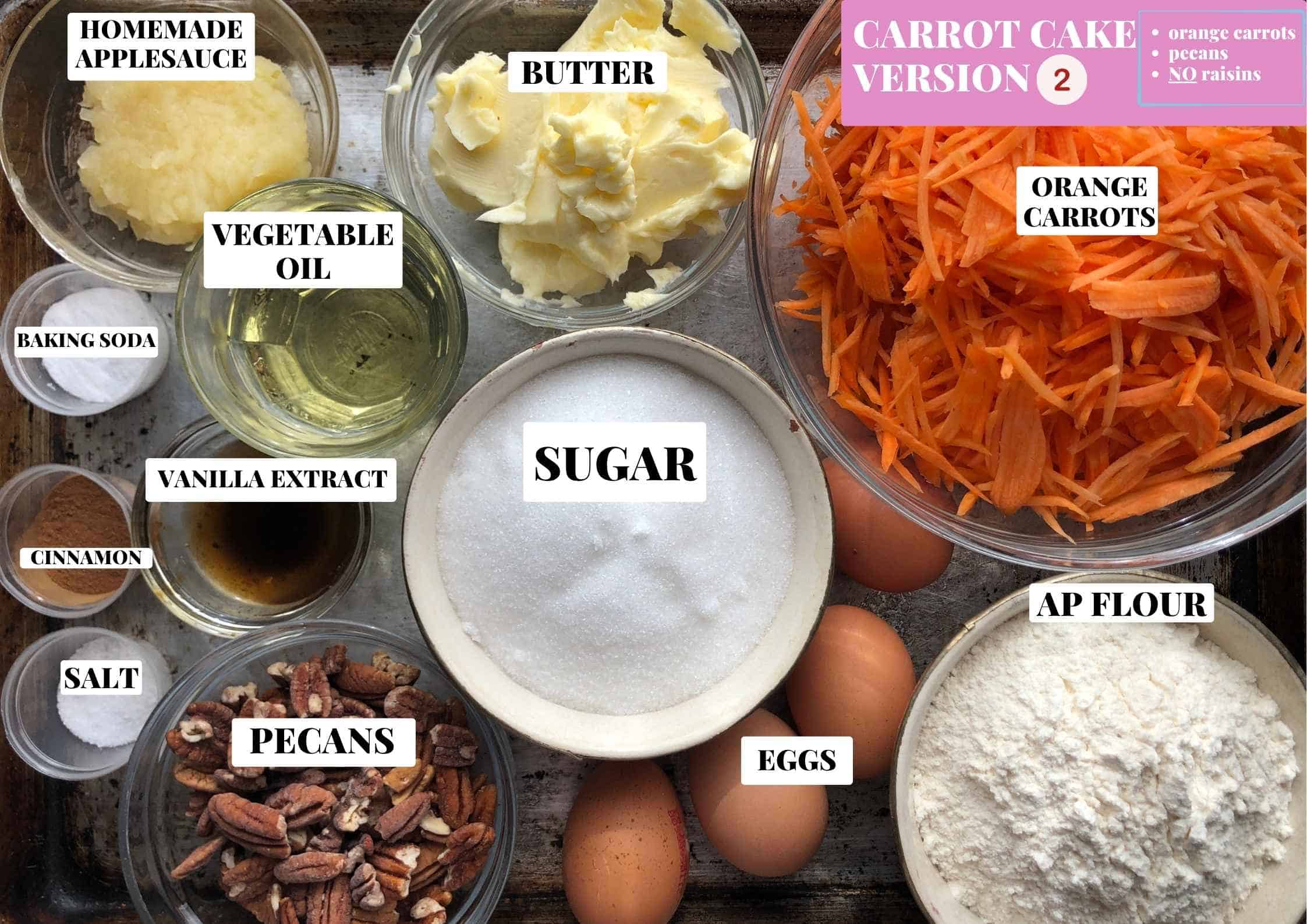
Carrot Cake Ingredients
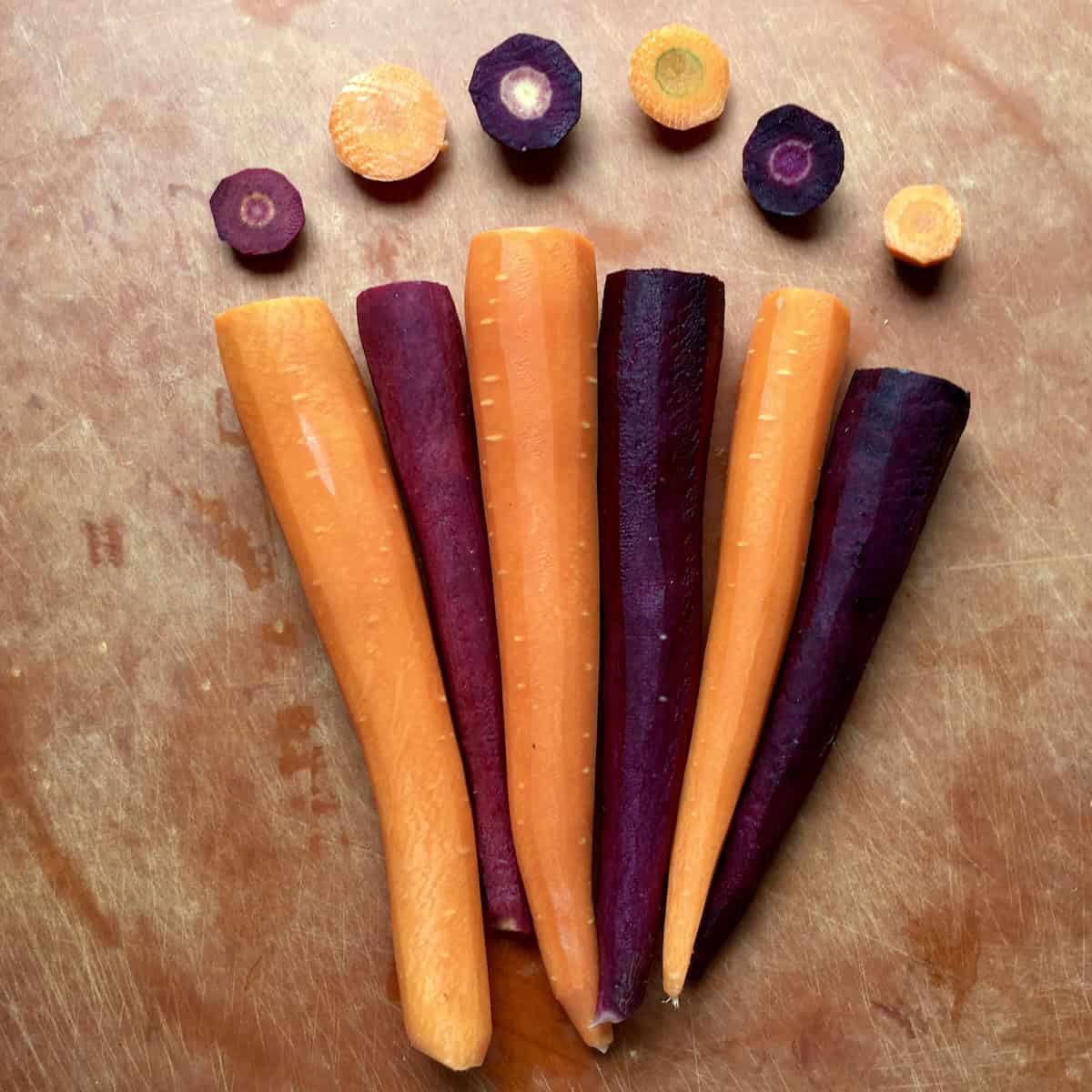
This carrot cake uses all-natural ingredients, some of which can be switched up to suit your own tastes. For this post, I've used a combination of purple carrots and orange carrots in one of the cakes and only orange carrots in the other. The purple carrot version is laced with strands of deep purple, and overall, the cake is a bit darker in color, but tastes the same.
Always Use Freshly Grated Carrots
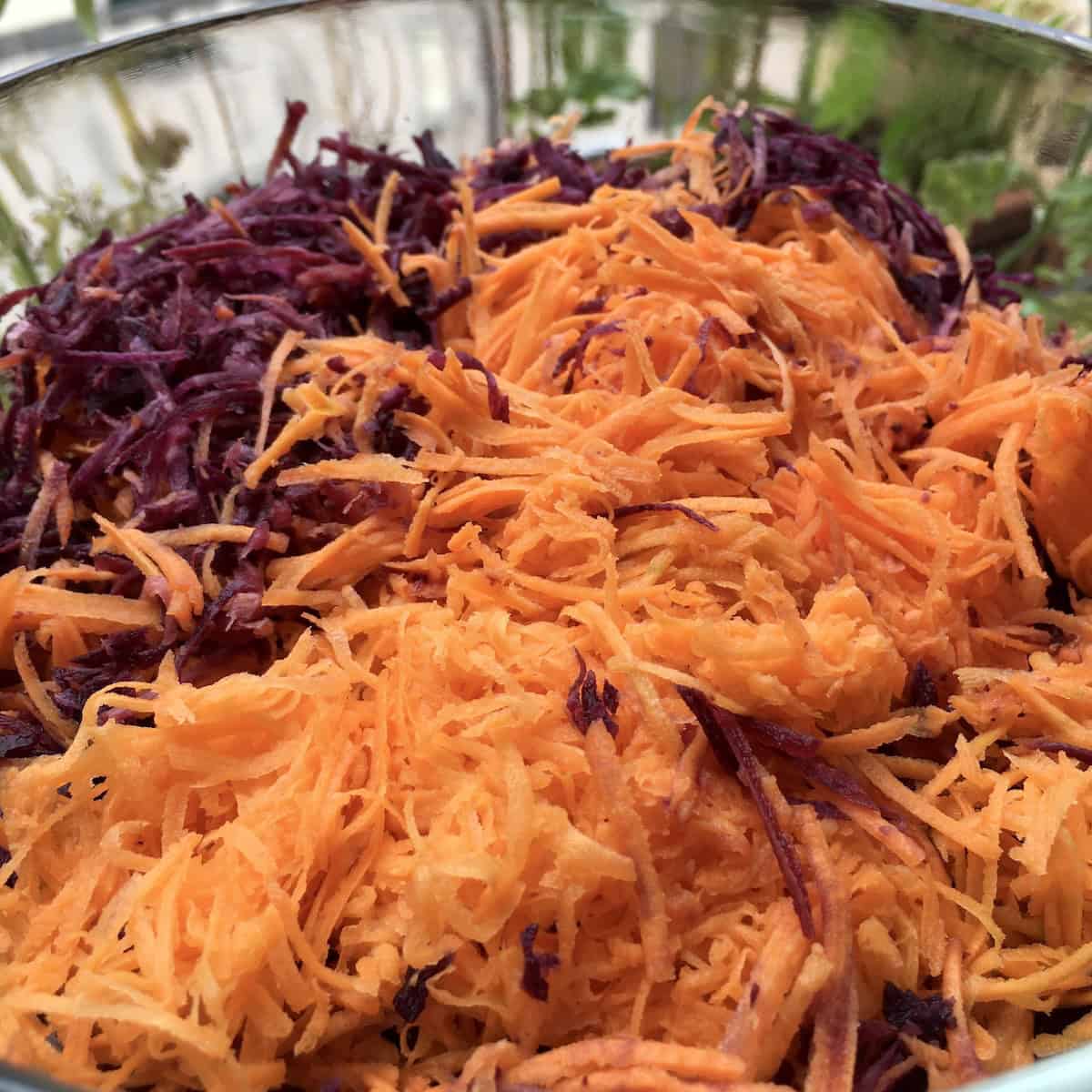
This is the single most important tip for a super-moist carrot cake is to finely grate whole carrots yourself, right before baking. Pre-shredded bagged carrots have been cut, exposed to air, and dried out. They release almost no moisture into the batter. Freshly-grated carrots are visibly wet as you shred them.
That released moisture is what helps create a tender crumb. Smaller carrots are usually sweeter and less bitter than large carrots, but any carrots work well. A box grater gives you control over the shred size. Finer shreds melt into the batter while slightly coarser shreds give you more visible texture.
Skip down past the FAQs to learn more about what chemical processes bagged, shredded carrots go through. You'll never want to buy another bag again!
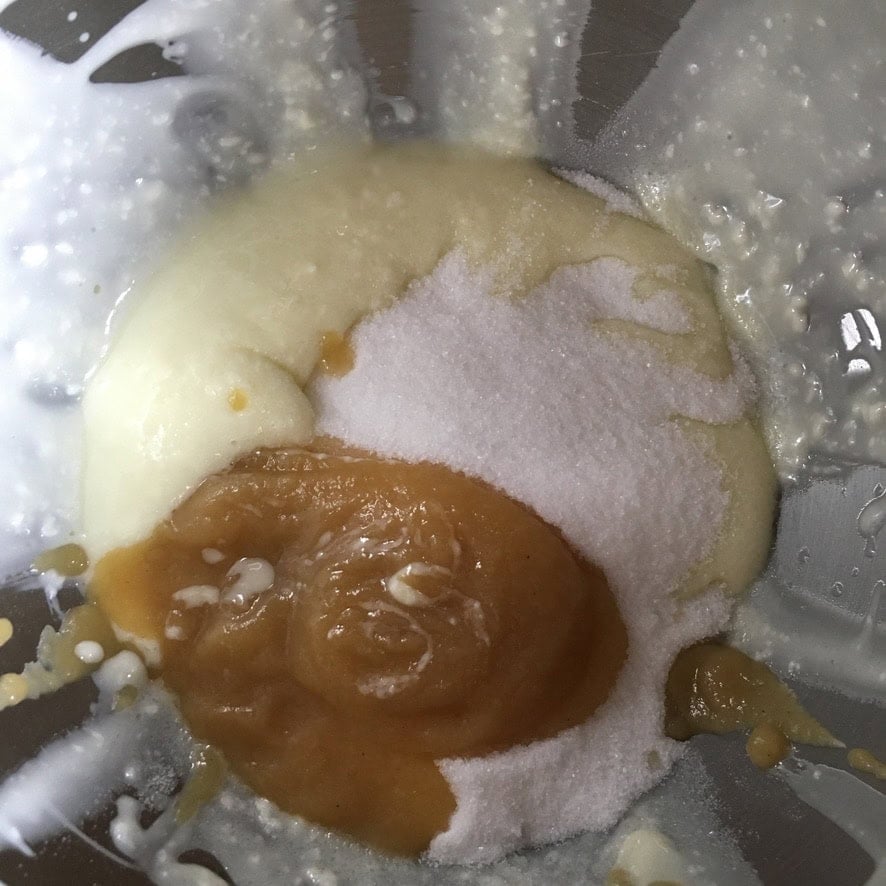
Why This Recipe Uses Butter, Oil, and Applesauce
Many carrot cake recipes use only oil. This recipe uses butter, oil, and applesauce, with each one doing a different job. Butter adds flavor. Oil keeps the crumb moist for days after baking (butter-only cakes dry out faster).
Applesauce adds a little extra body and additional moisture without making the cake taste wet or oily. Once baked, you taste none of these individually, just a deeply moist, well-balanced cake that holds its texture for days.
Quick Homemade Applesauce (Optional)
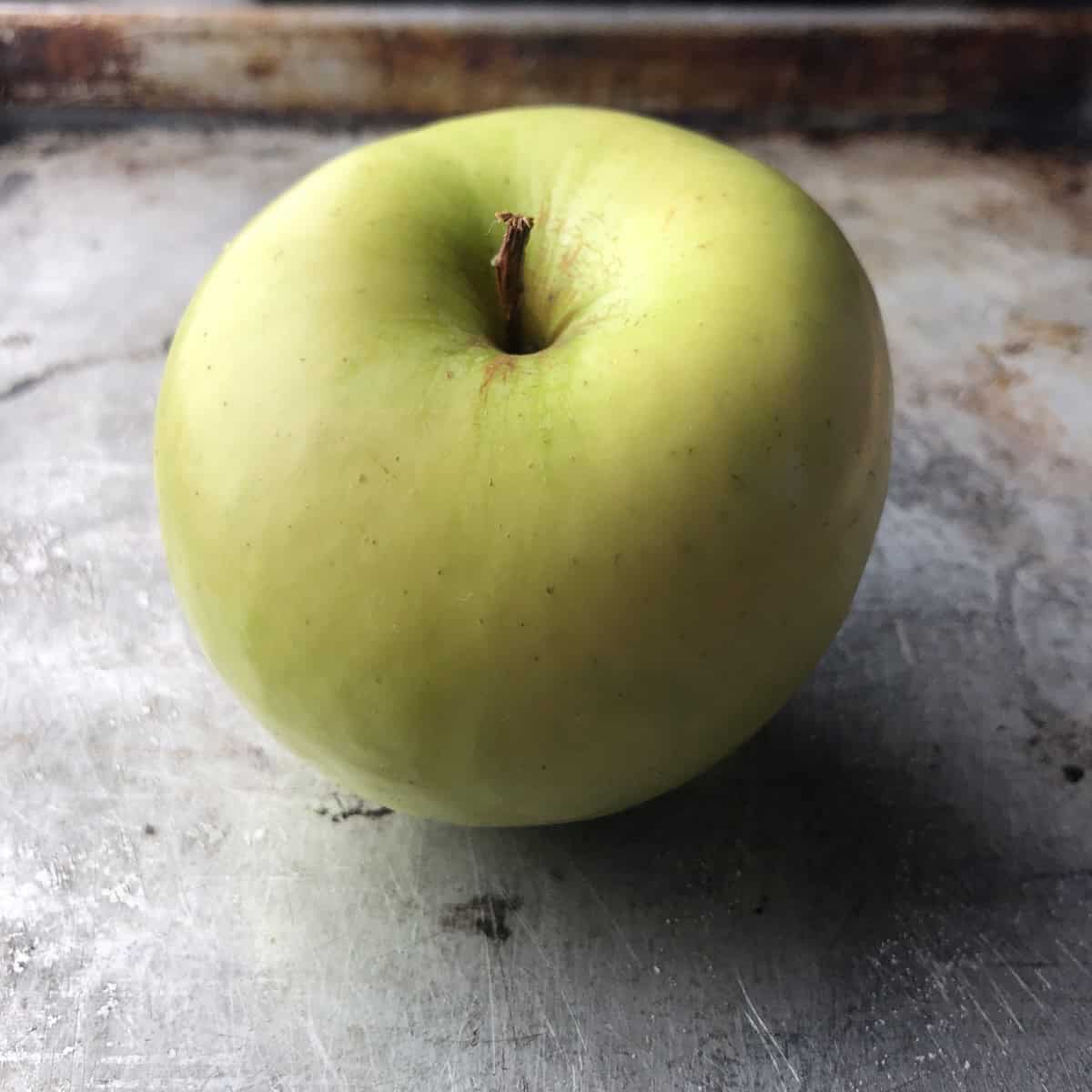
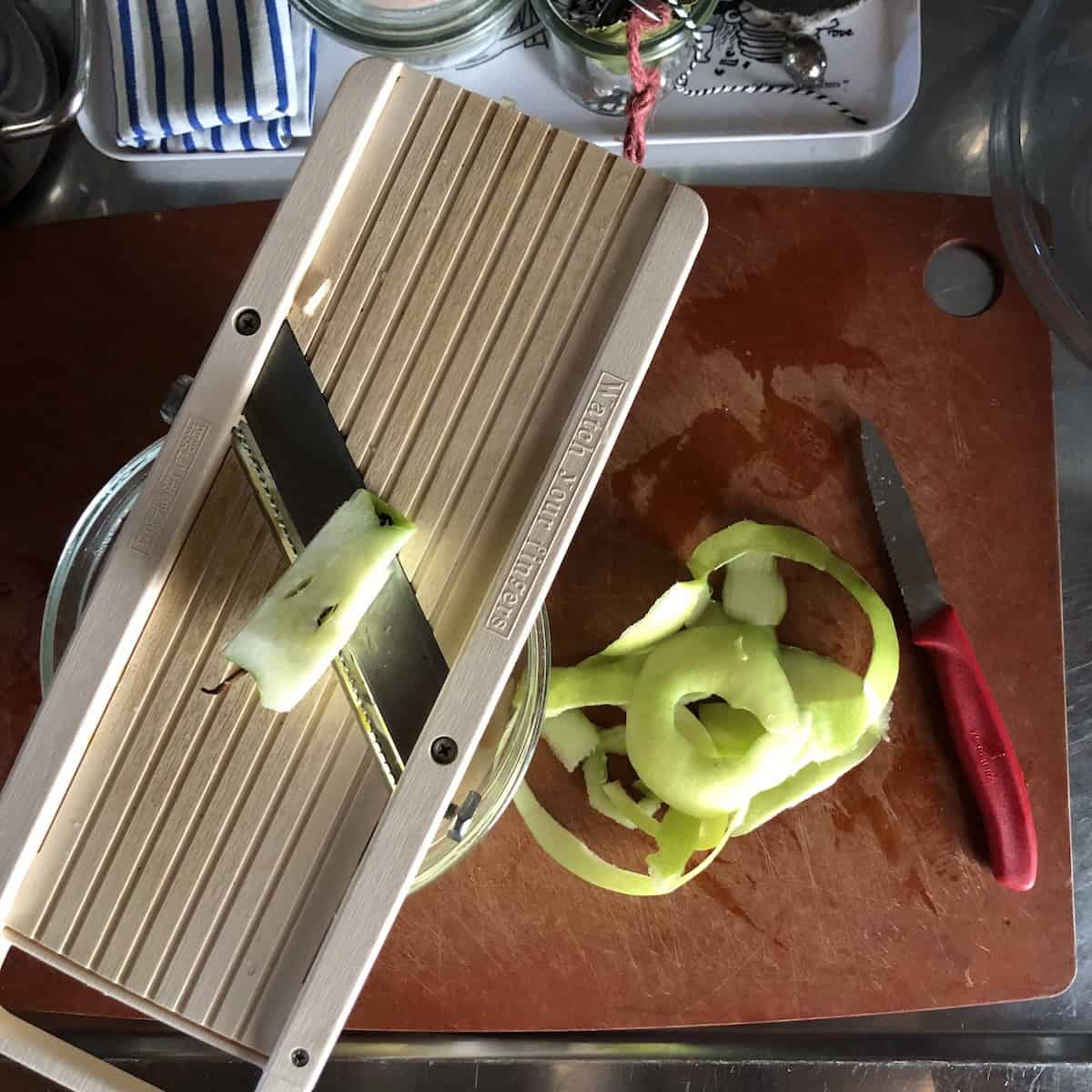
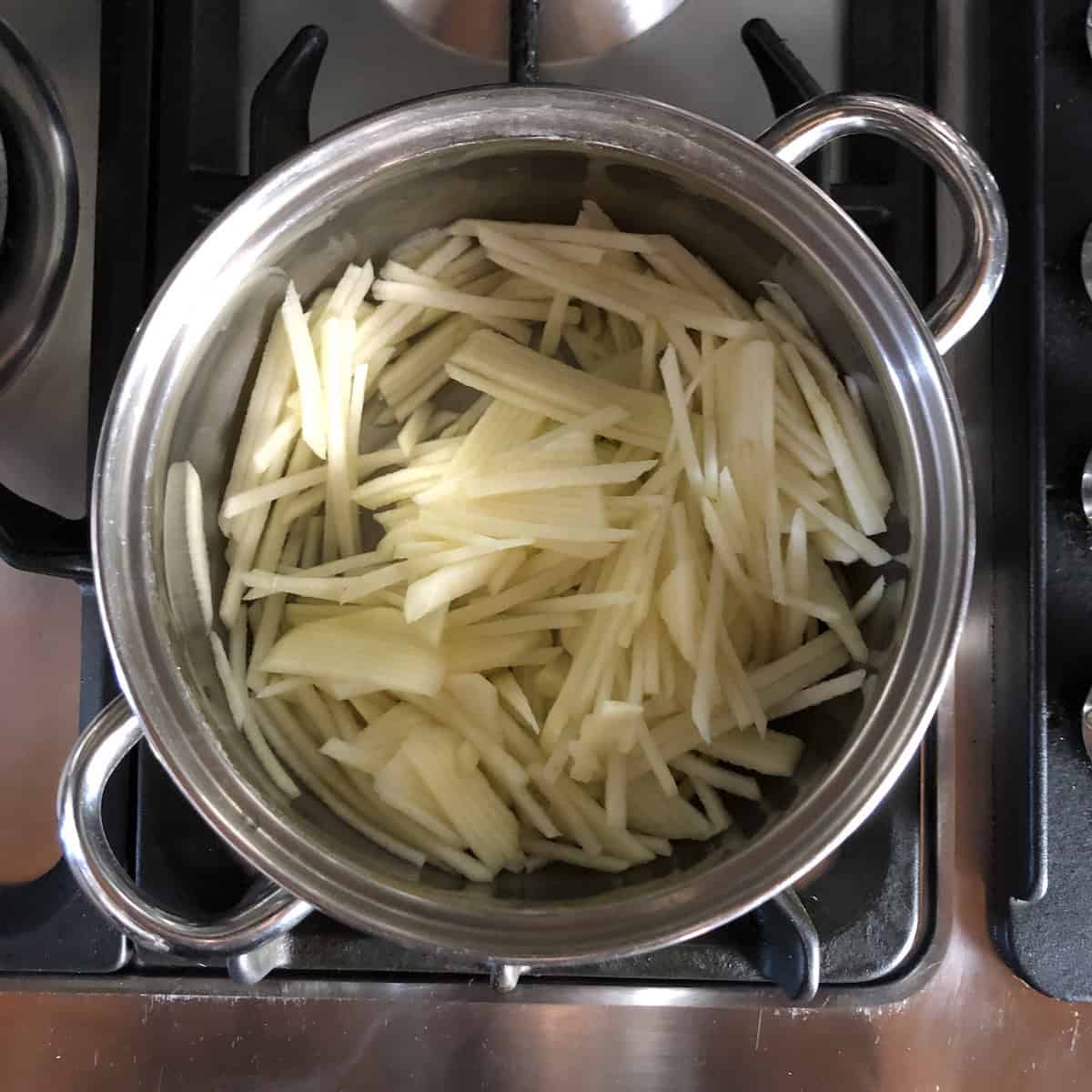
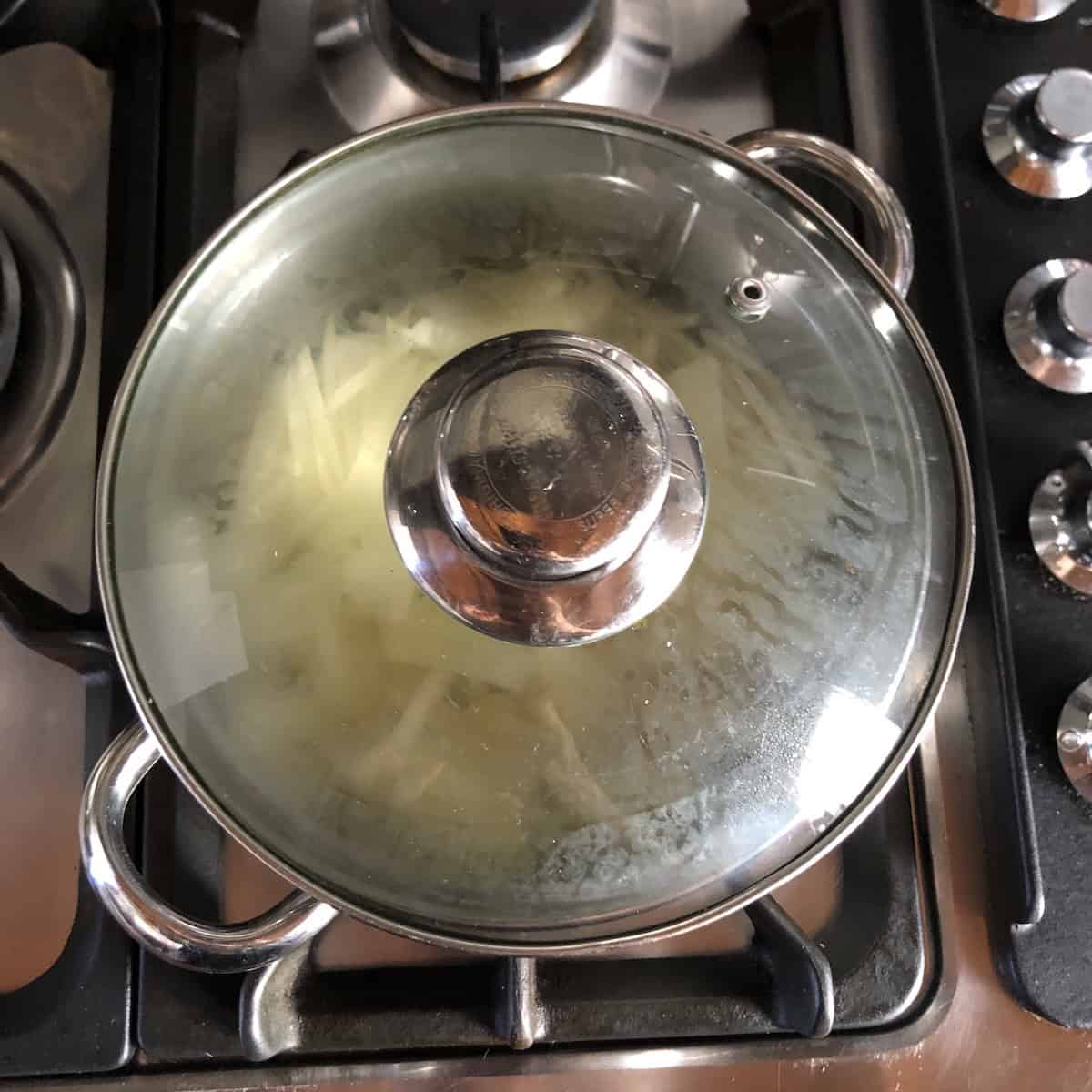
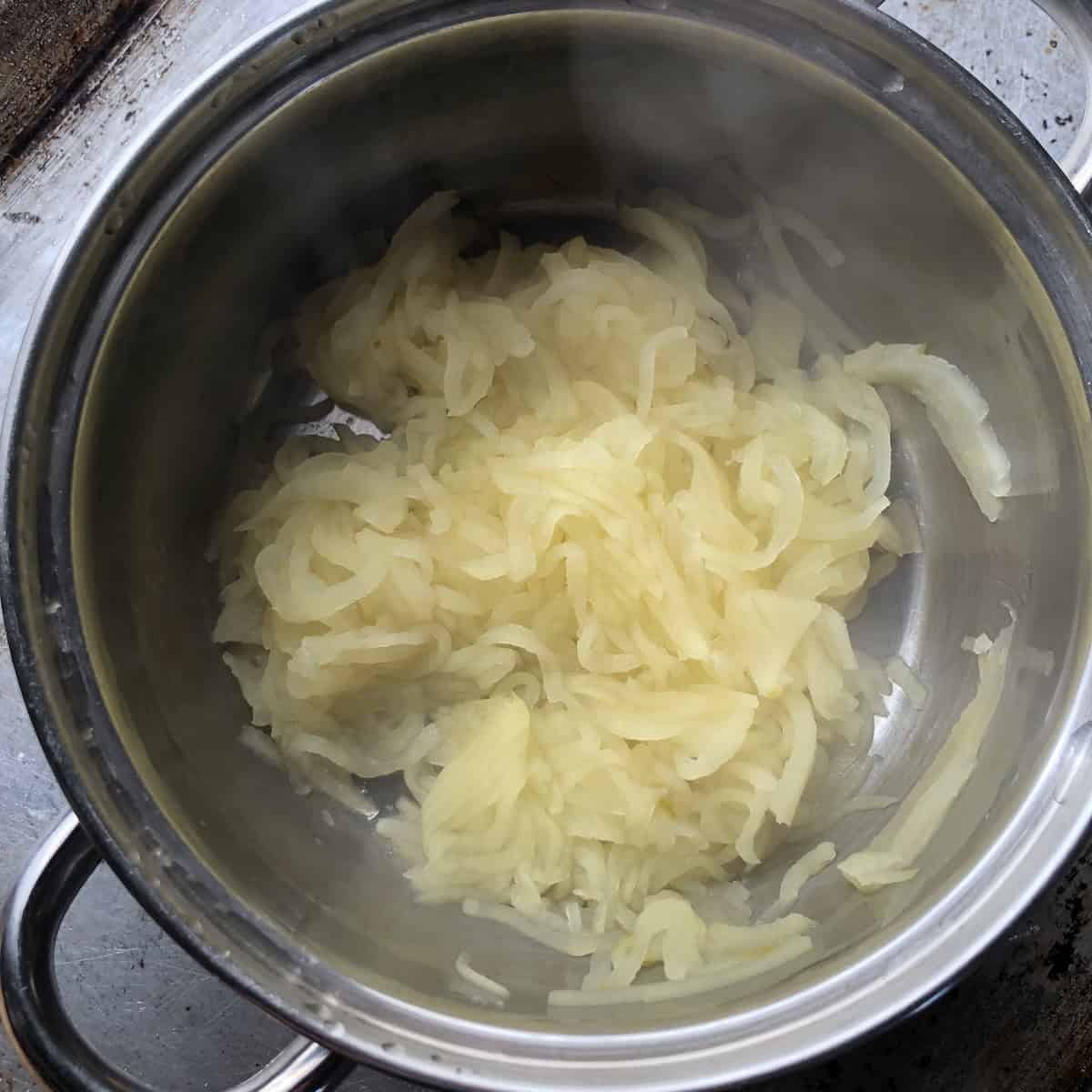
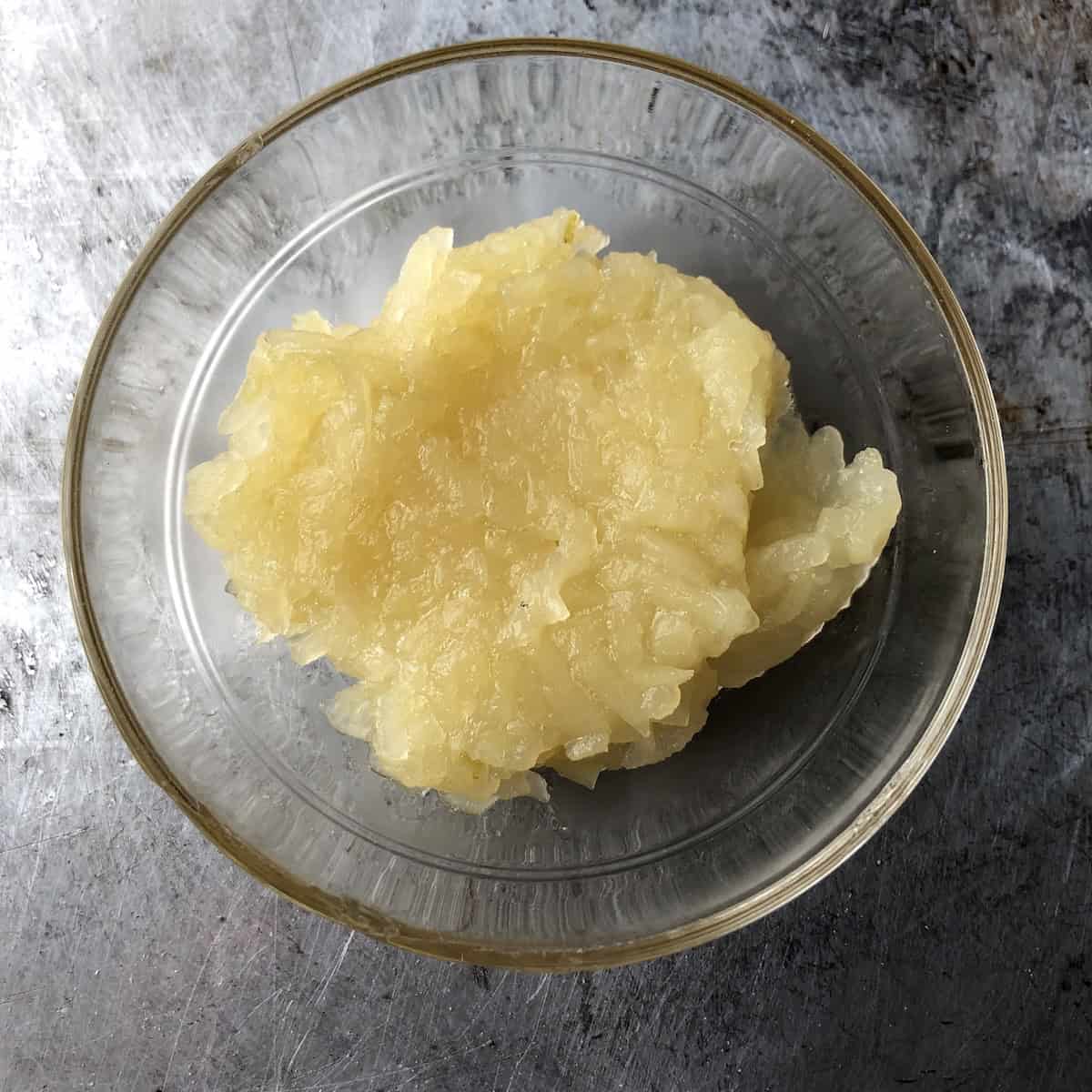
No applesauce on hand? Make it in 10 minutes. Finely chop one large apple (any variety works). I've used Granny Smith because it's what I had, but any variety works. Add 2 to 4 tablespoons of water and cook in a small saucepan over medium heat, stirring occasionally, until the apple is completely soft and easy to mash.
You can make the applesauce looser (similar to commercial varieties) or leave it less watery as I did below (for more flavor) - both options work great! That's it! This also works well for anyone wanting to avoid more ultra-processed ingredients or a trip to the grocery store just to pick up applesauce. No store-bought jar needed!
Natural Cane Sugar vs. White Sugar
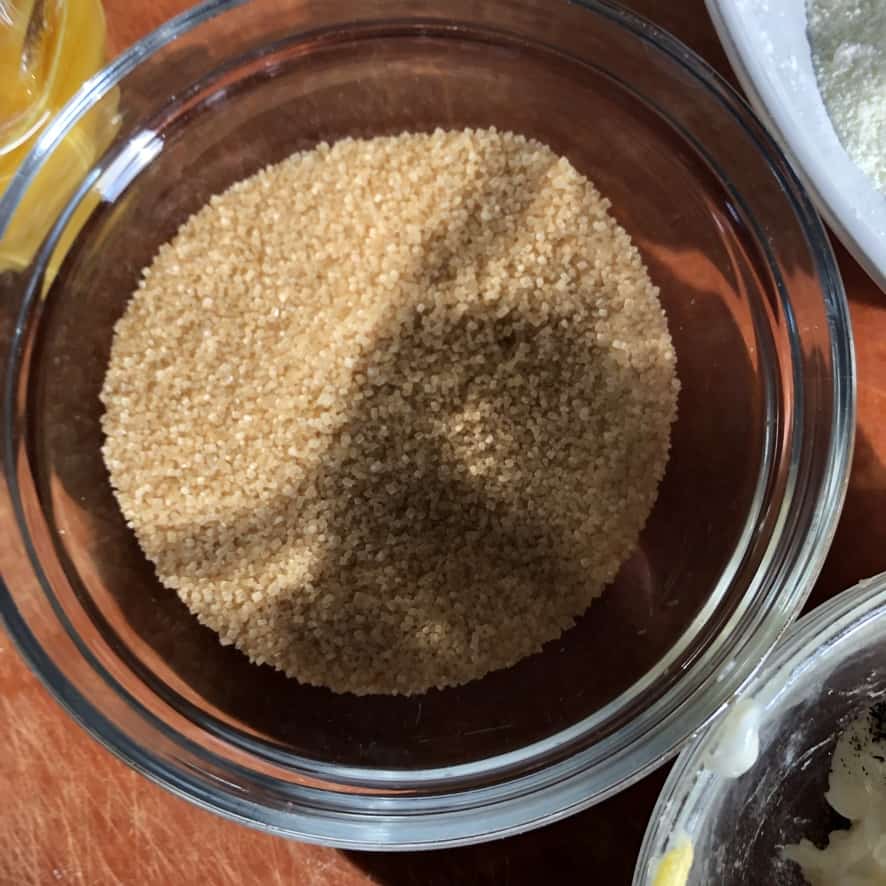
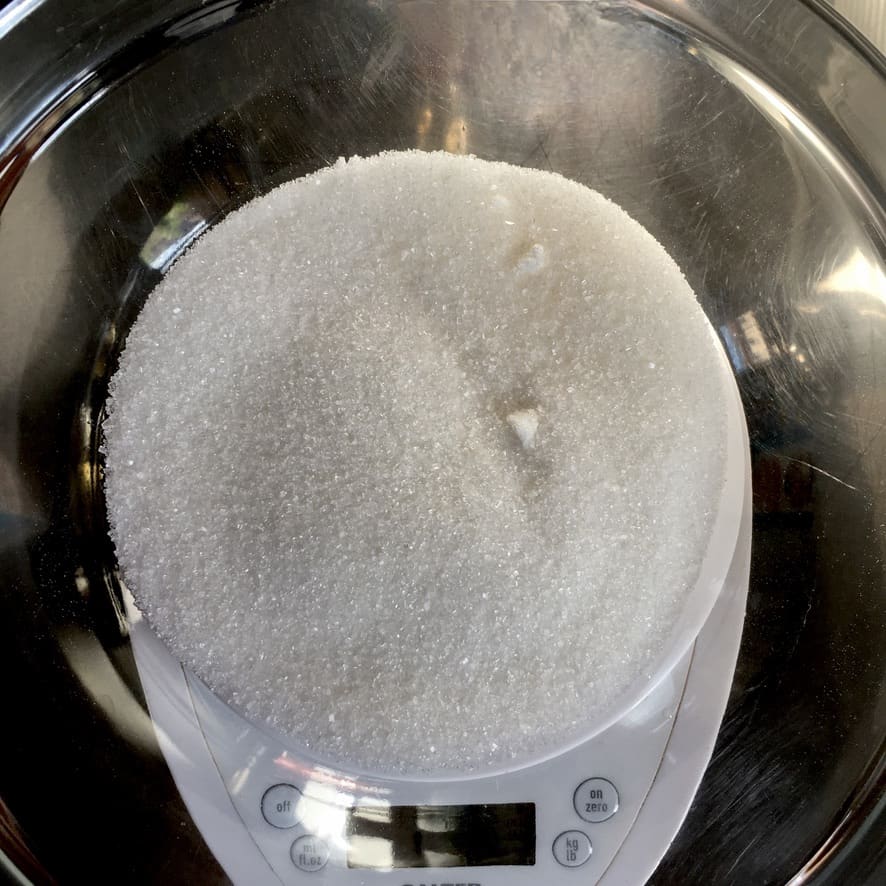
In my Version 1 carrot cake, I've used natural cane sugar rather than refined white sugar. It retains a trace of natural molasses that adds subtle warmth and depth. Skip light or dark brown sugar entirely: its higher molasses content pushes the flavor toward caramel and makes the crumb denser than what we're going for here.
In my Version 2 carrot cake, I've used white granulated sugar, which works perfectly, too. Either one works, but cane sugar is less refined. Use what you have!
Walnuts vs. Pecans & Raisins vs. No Raisins
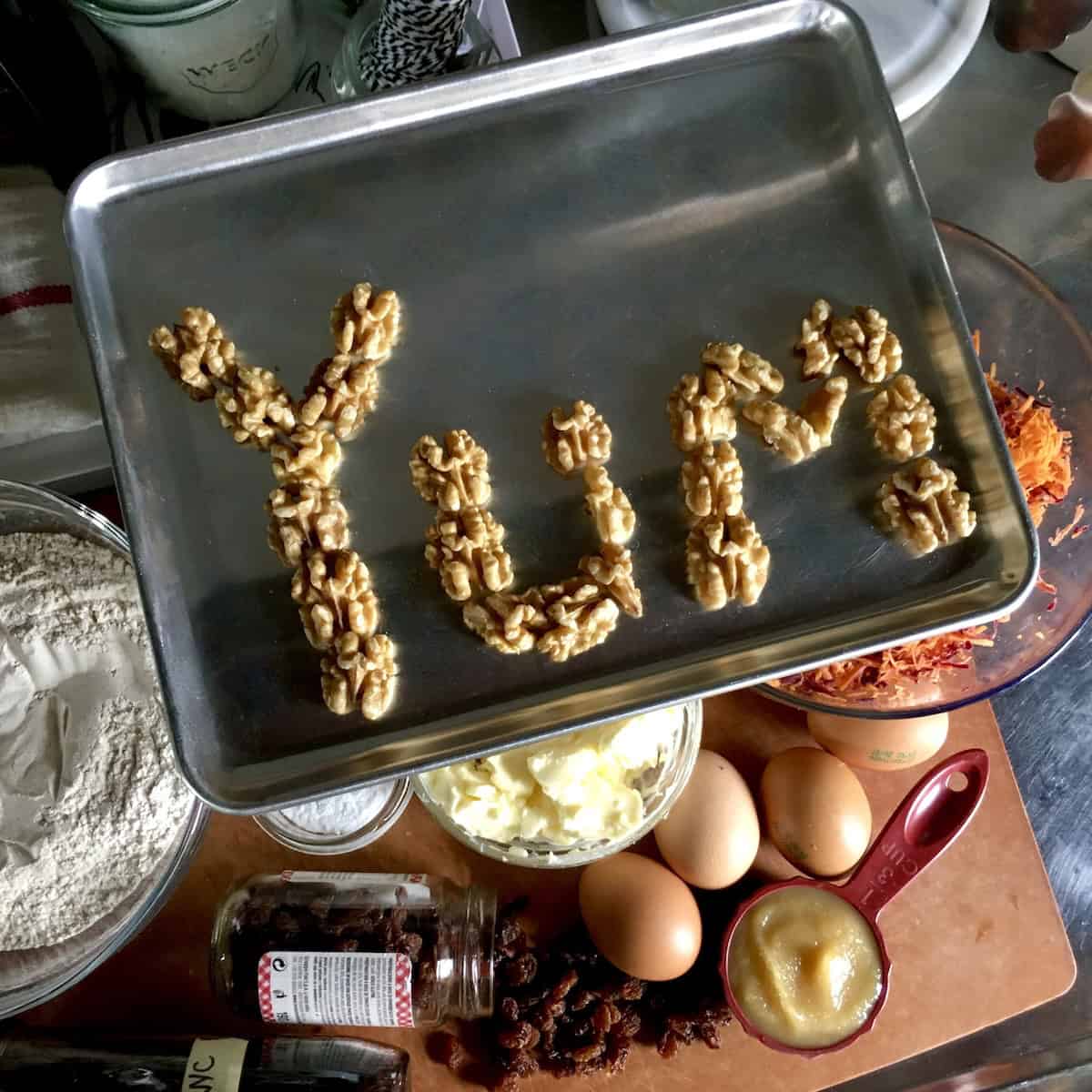
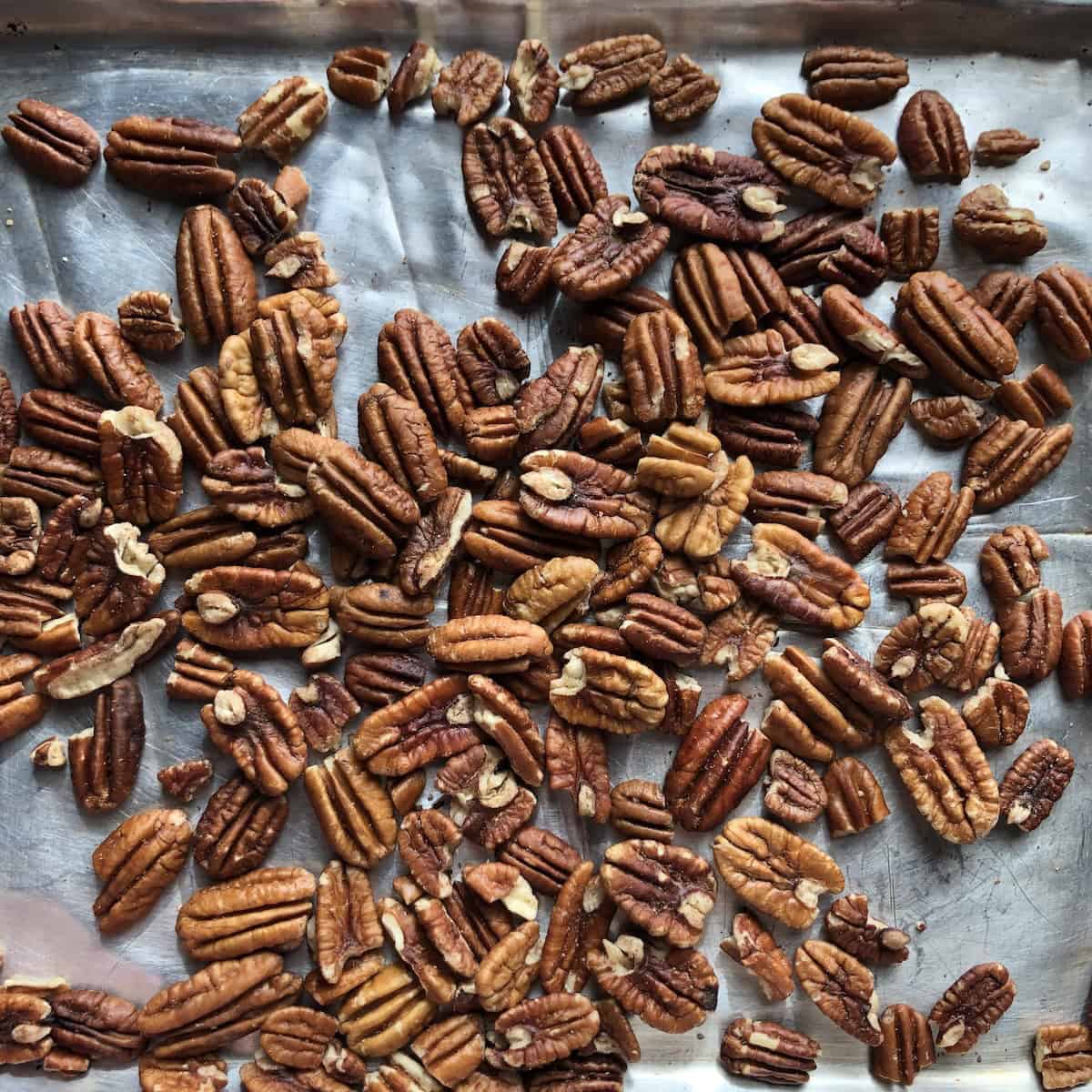
Toasted walnuts or pecans give the cake just the right nuttiness in perfect contrast to the cream cheese frosting. If you're in the no-raisin camp, leave them out entirely (like version 2) or substitute with well-drained crushed pineapple tidbits.
I don't always add raisins, but when I do, I prefer golden raisins (which have proved harder to find here in Northern Italy than standard black raisins). No matter what you add or leave out on the nuts and raisins front, this is a super delicious carrot cake that holds its own.
NOTE: I use Italian 00 flour when baking here in Northern Italy, which is more finely milled and produces a slightly more delicate crumb than all-purpose flour. If you're using all-purpose flour and not using a scale to weigh it, always use the scoop-and-level method. Never pack the flour into the cup. Too much flour is a common cause of dry, dense carrot cake.
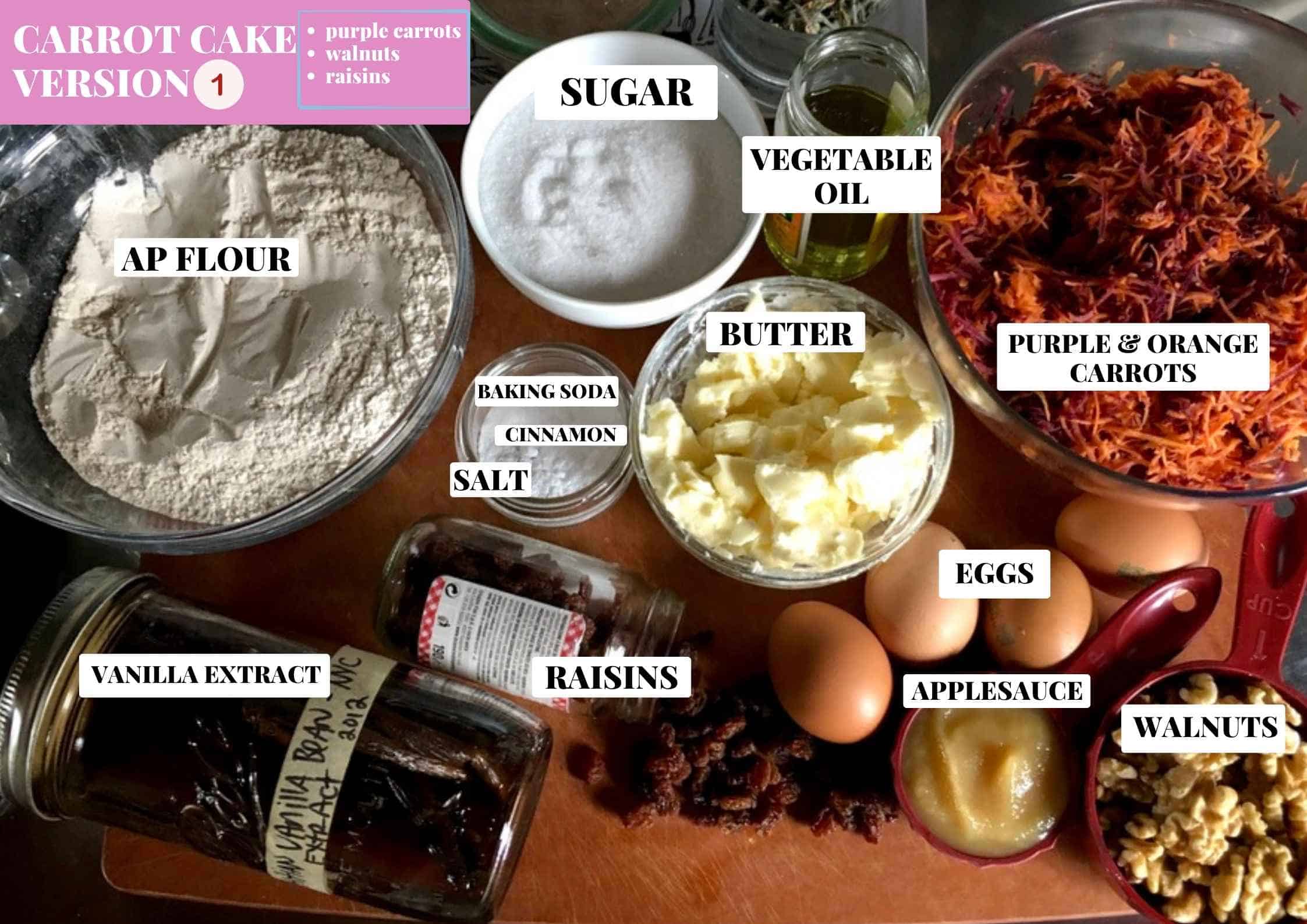
CAKE INGREDIENTS
- unsalted butter, room temperature
- grapeseed oil, or other neutral vegetable oil
- unsweetened applesauce (or quick homemade applesauce see above)
- natural cane sugar, or regular white sugar
- all-purpose flour
- baking soda
- cinnamon
- kosher salt (or sea salt or Himalayan salt, but reduced quantity)
- eggs, room temperature
- pure homemade vanilla extract (or favorite brand like Nielsen-Massey)
- freshly grated carrots, purple or orange, or rainbow carrots
- toasted walnuts or pecans
- golden or regular raisins, optional (or substitute pineapple)
NOTE: I use 00 flour when I'm in Italy, and the weight of different flours varies based on the humidity content and absorption potential of the flour you're working with. If you don't have a scale, just be sure to use the 'scoop and level' method to measure your flour into measuring cups and spoons.
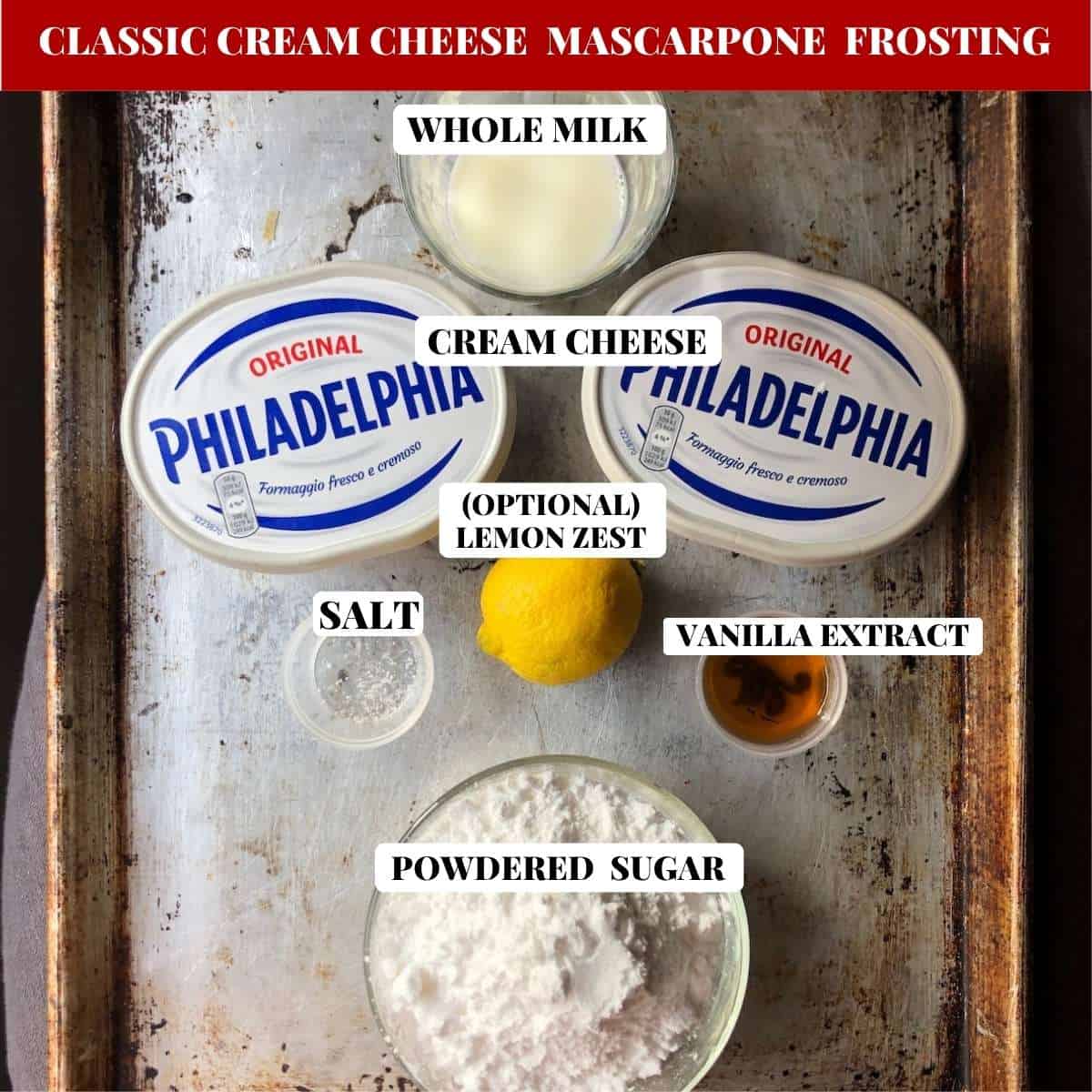
CLASSIC VANILLA BEAN CREAM CHEESE FROSTING (*to cover the entire cake, double this recipe)
- cream cheese, room temperature
- powdered sugar
- whole milk
- pure vanilla extract
- vanilla bean powder or vanilla bean split and seeded (optional but recommended)
- lemon zest to taste (optional)
- salt for balance
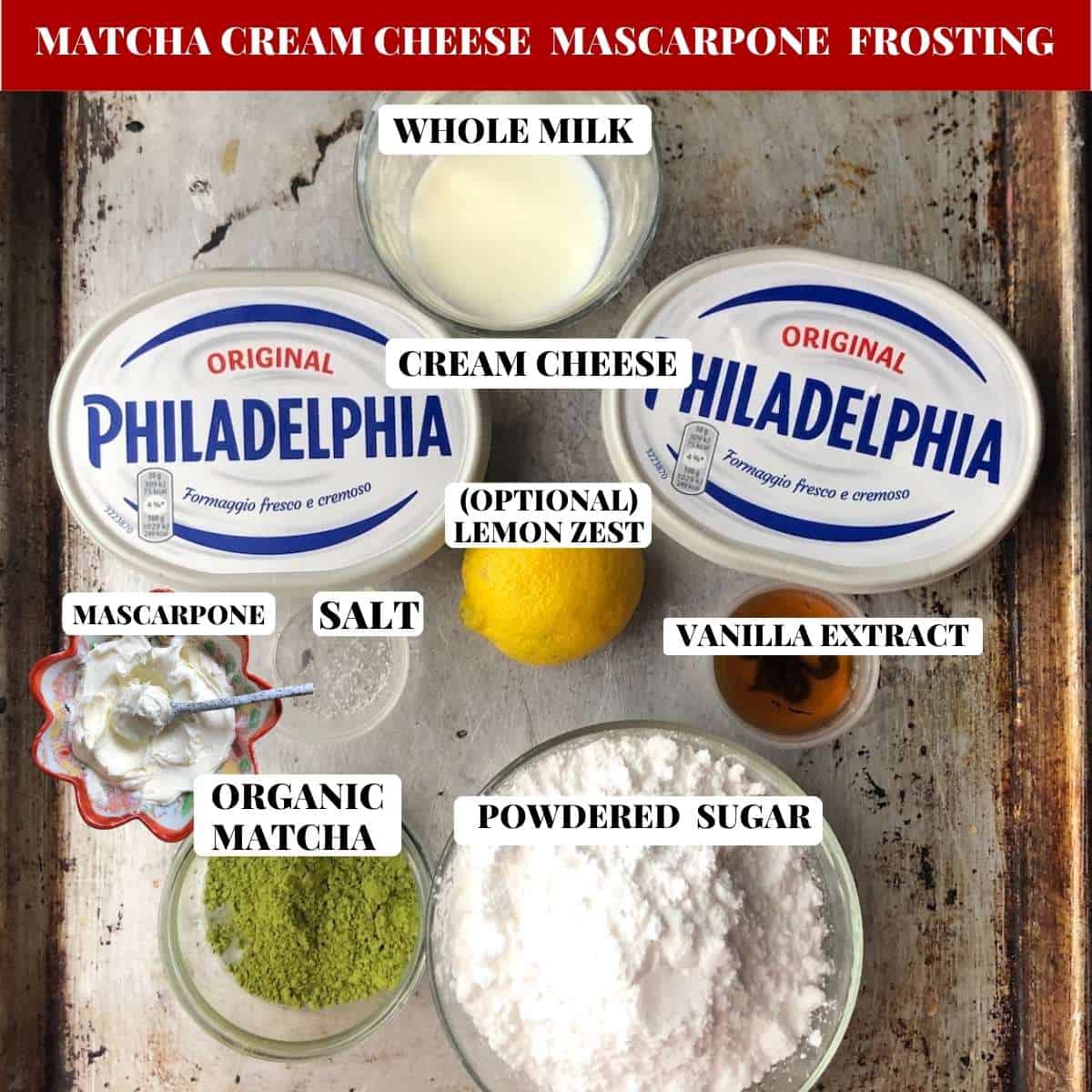
MATCHA CREAM CHEESE MASCARPONE FROSTING (*to cover the entire cake, double this recipe)
- cream cheese, room temperature
- mascarpone cheese, room temperature
- powdered sugar
- whole milk
- pure vanilla extract
- organic matcha powder
How to Make Carrot Cake (Super Moist, from Scratch)
This carrot cake recipe is simple to make. The key technical moment is adding the dry ingredients to the wet ingredients just until no flour streaks remain without overbeating them into the batter. Overworking the batter at that stage activates the gluten in the flour, turning what should be a tender crumb into a tough one.
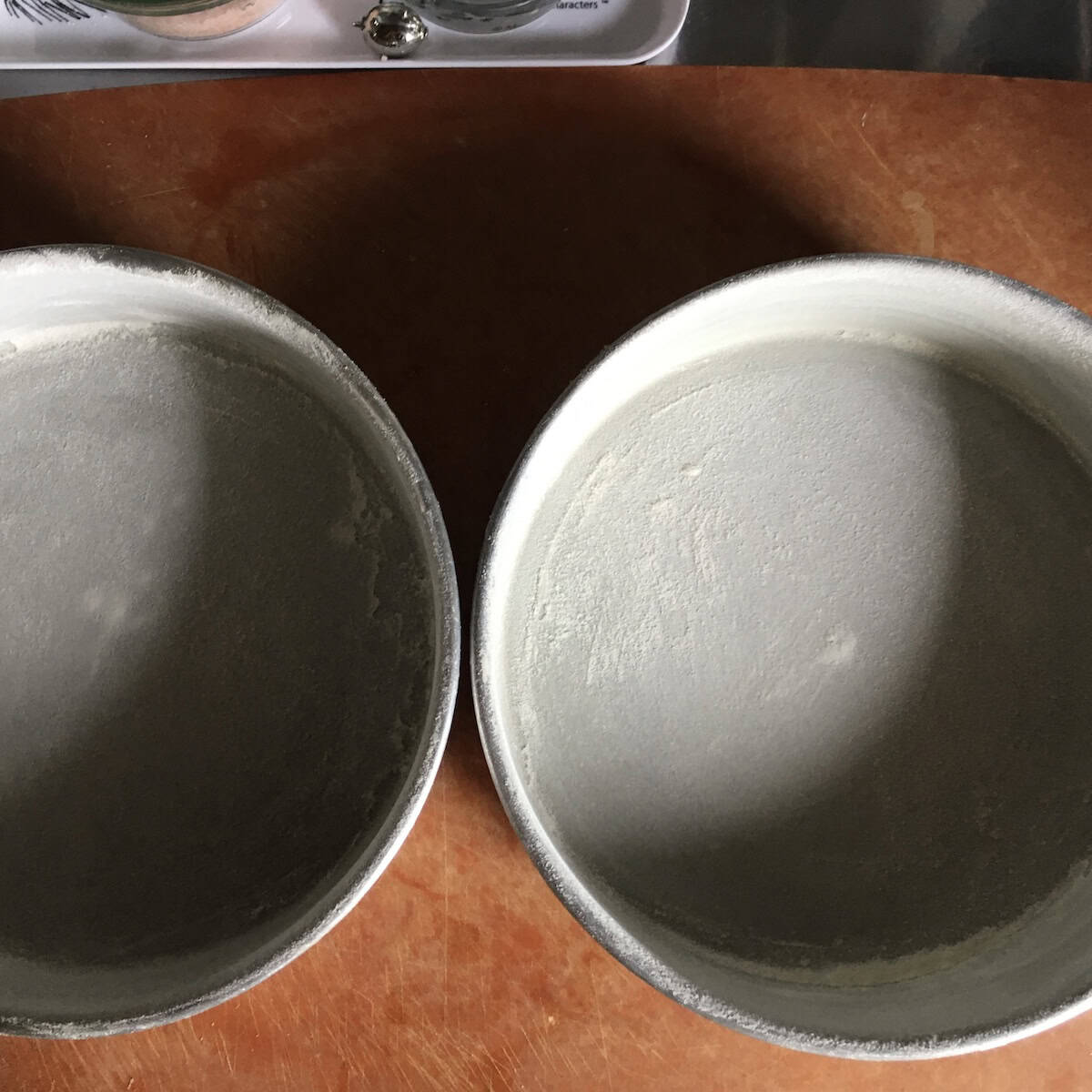
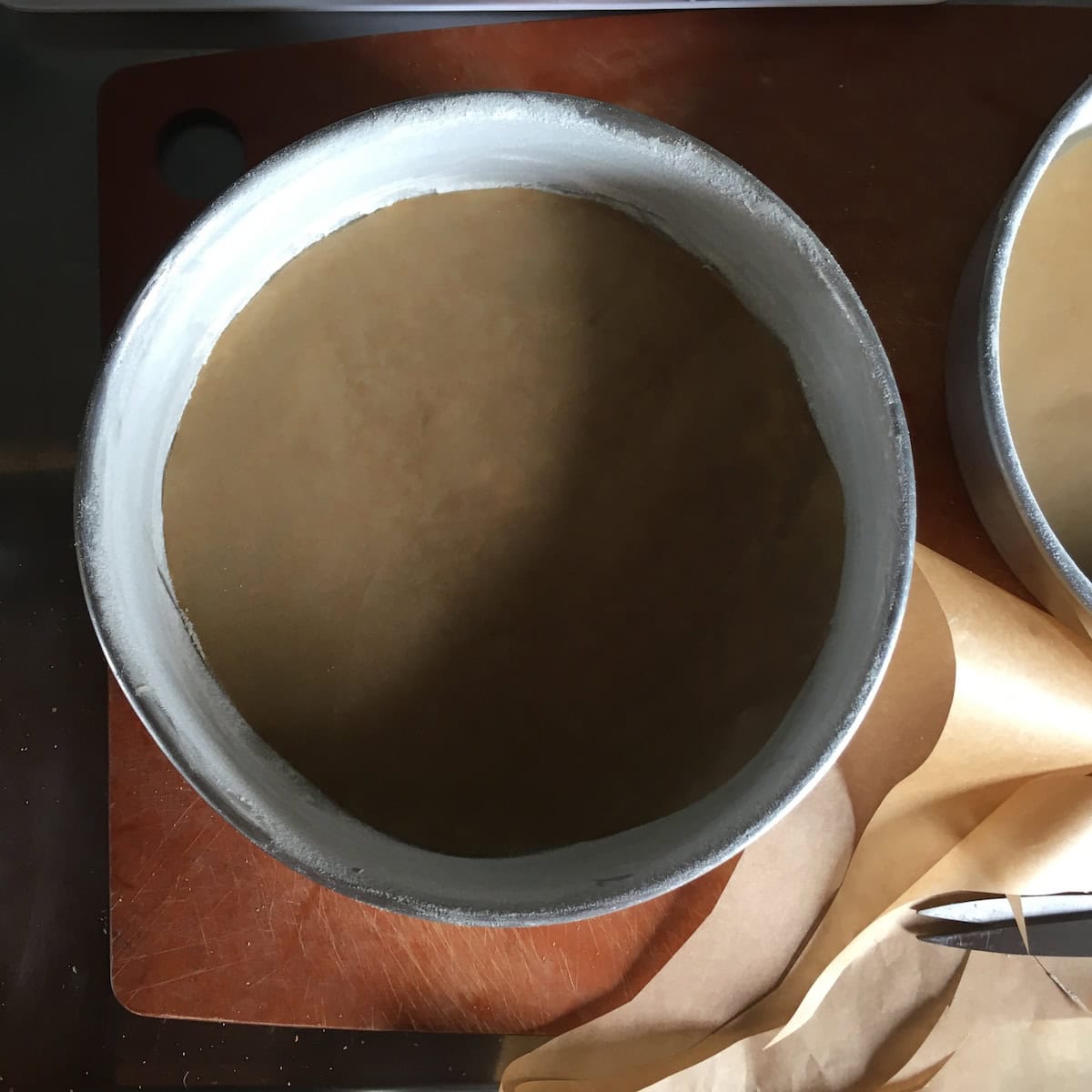
Step 1. Prep pans and preheat the oven: Buttering and flouring the pans thoroughly, and lining the bottoms with parchment, is a simple step that guarantees a clean release. Don't skip the parchment if you want a fail-proof release every time.
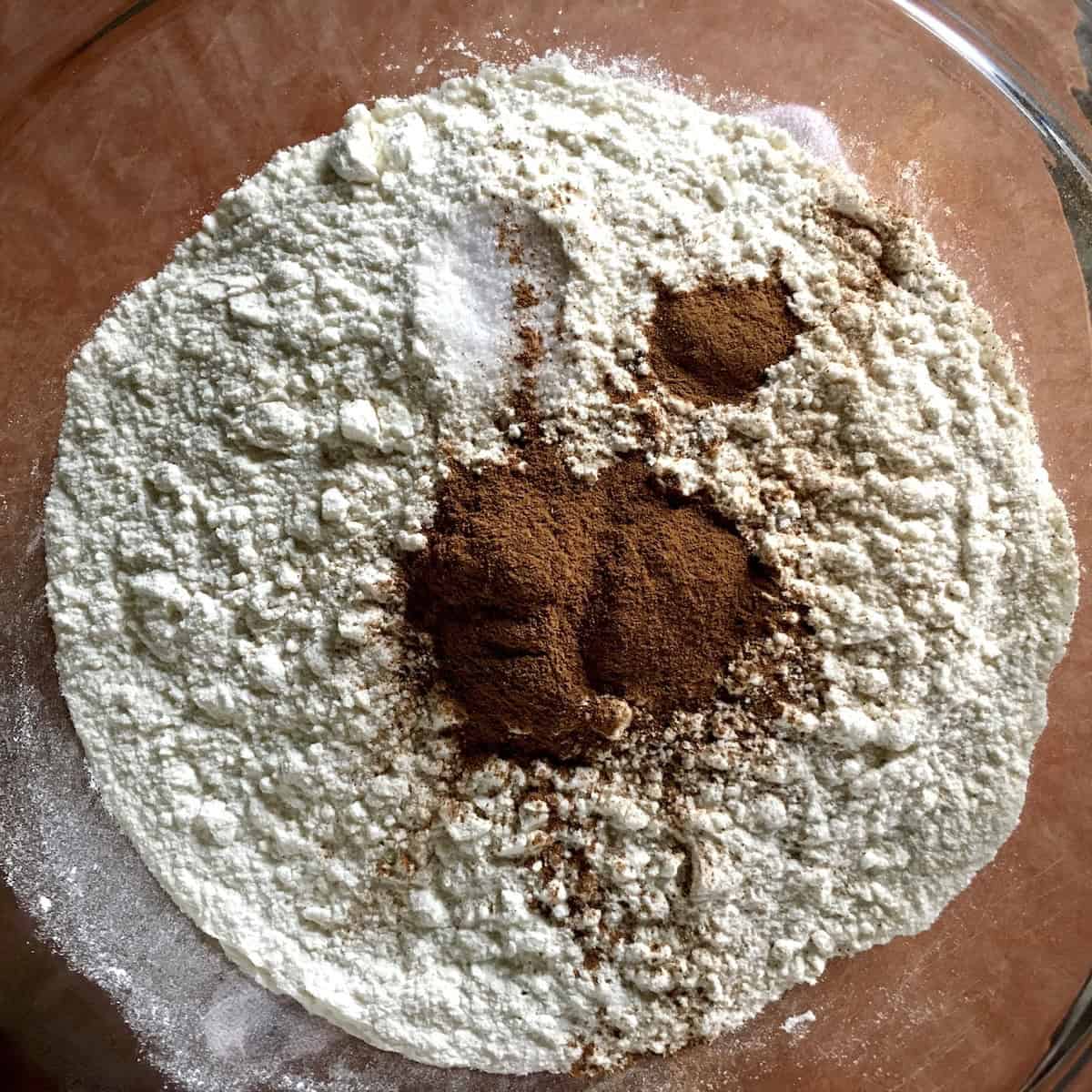
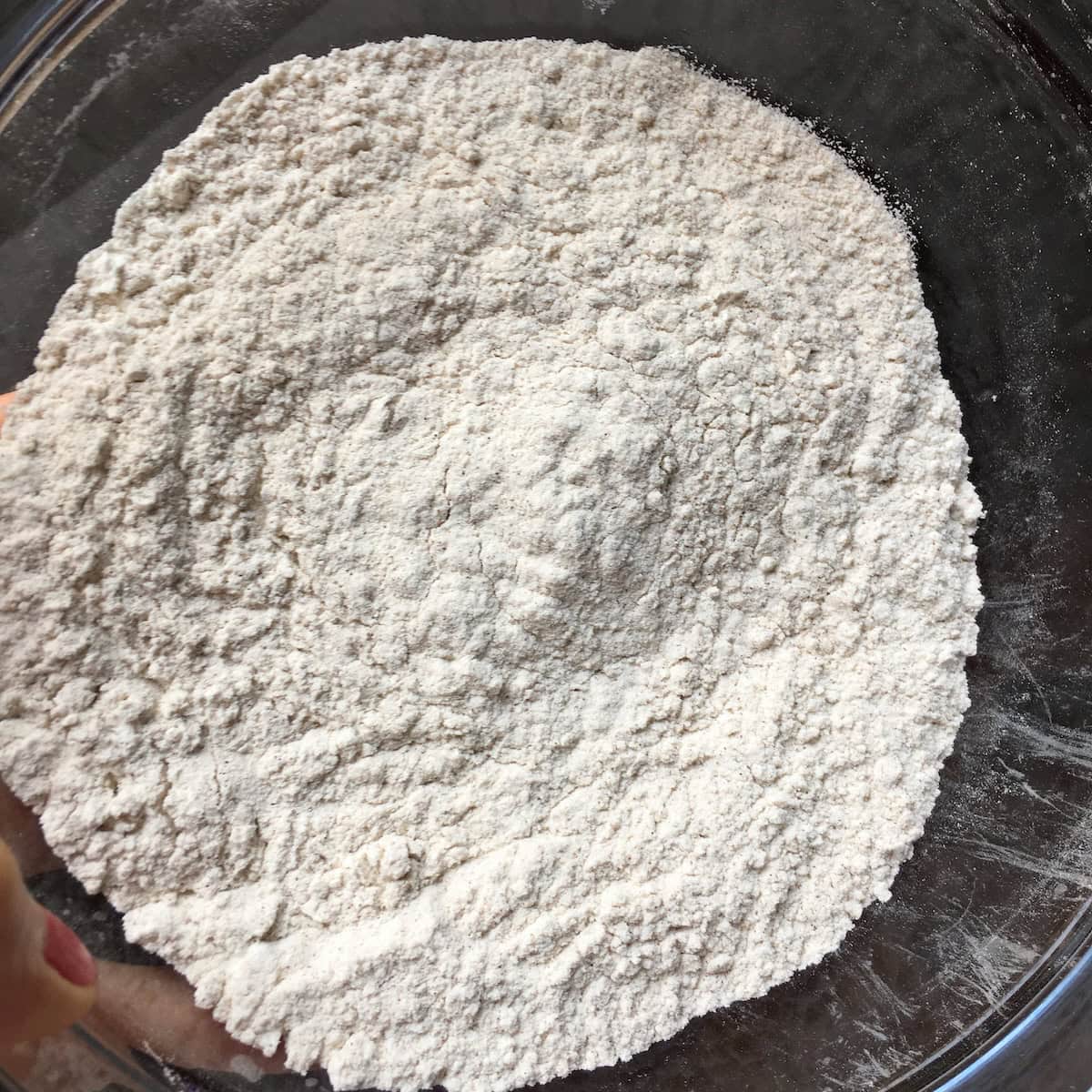
Step 2. Combine the dry ingredients: Whisk together the flour, baking soda, salt, and cinnamon until well combined. Set aside.
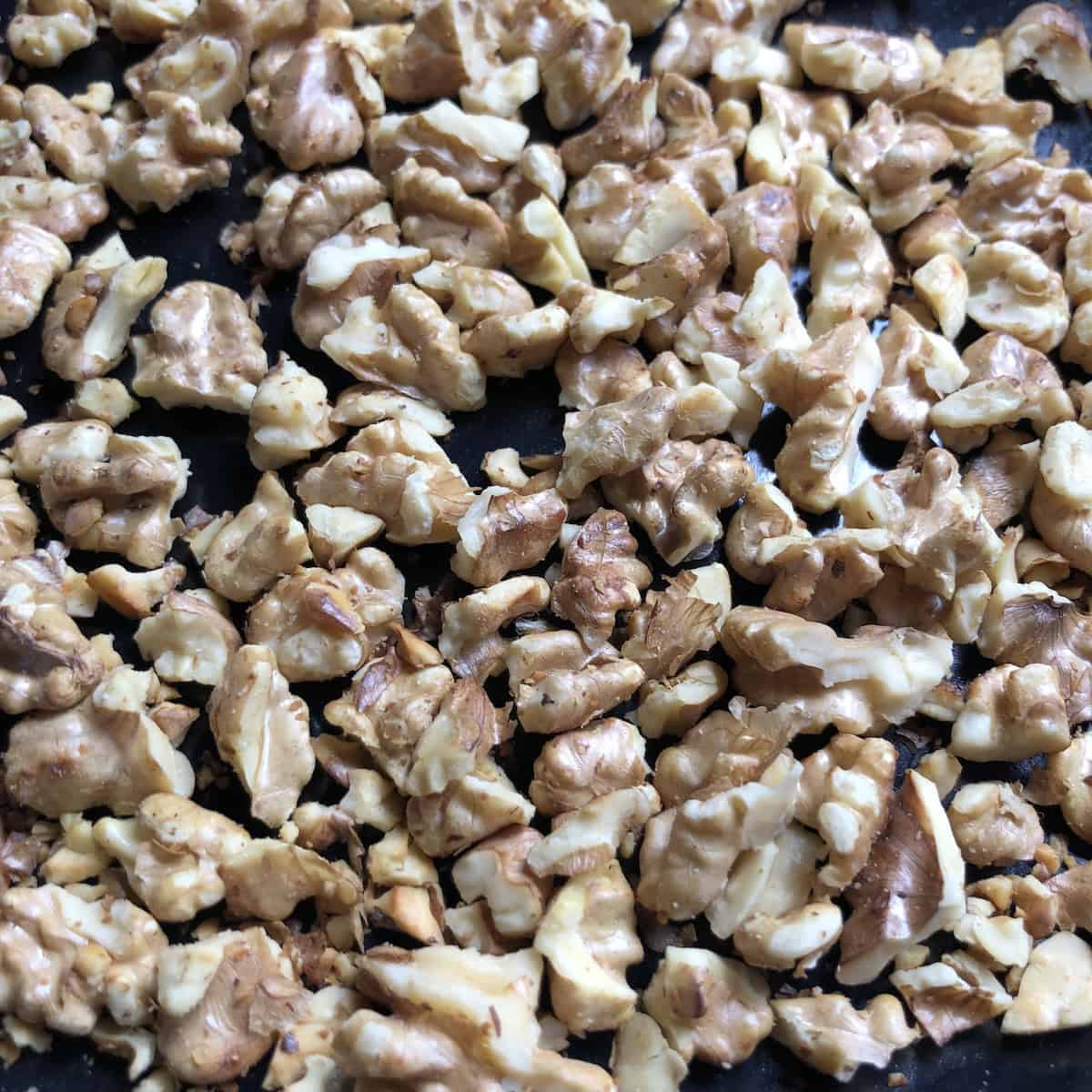
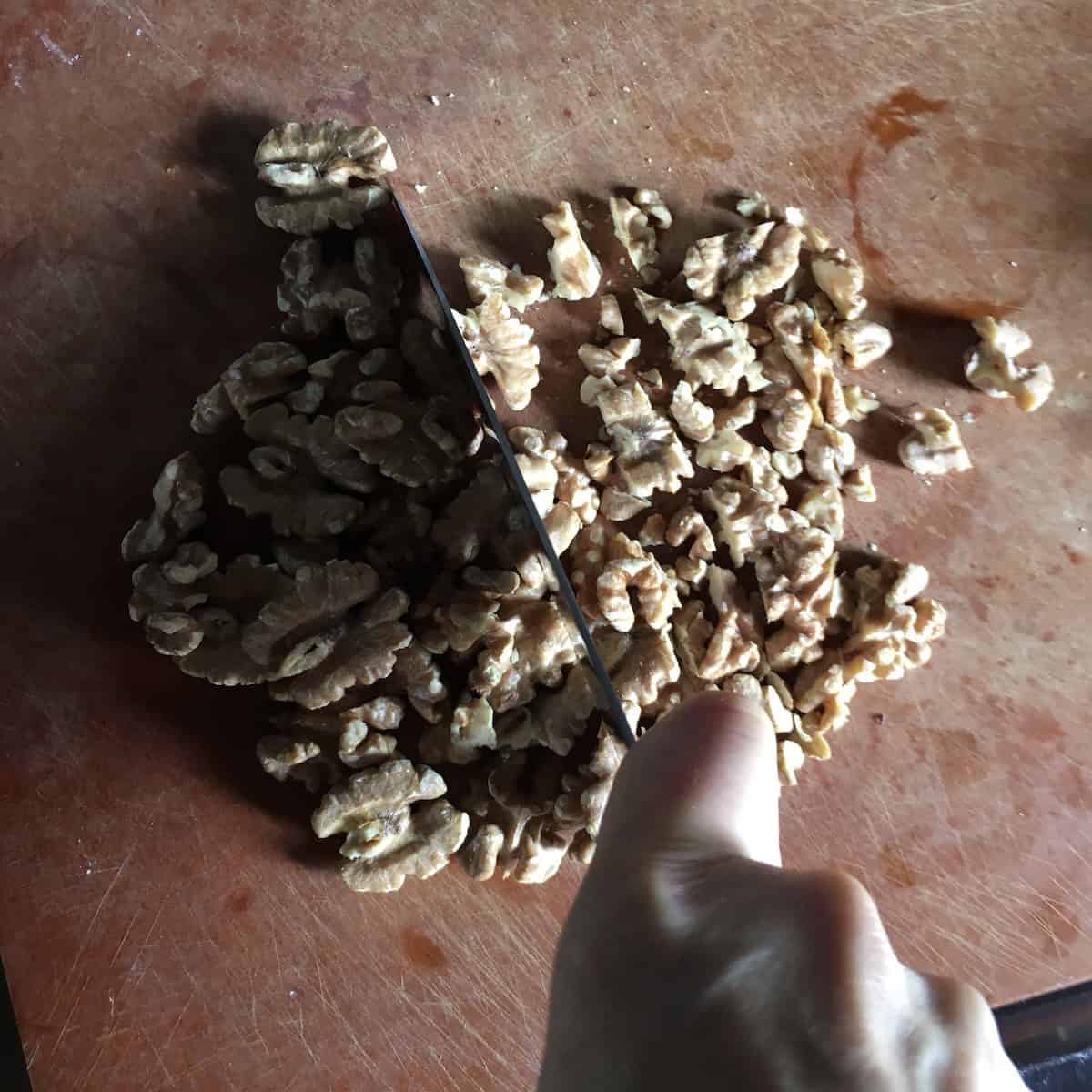
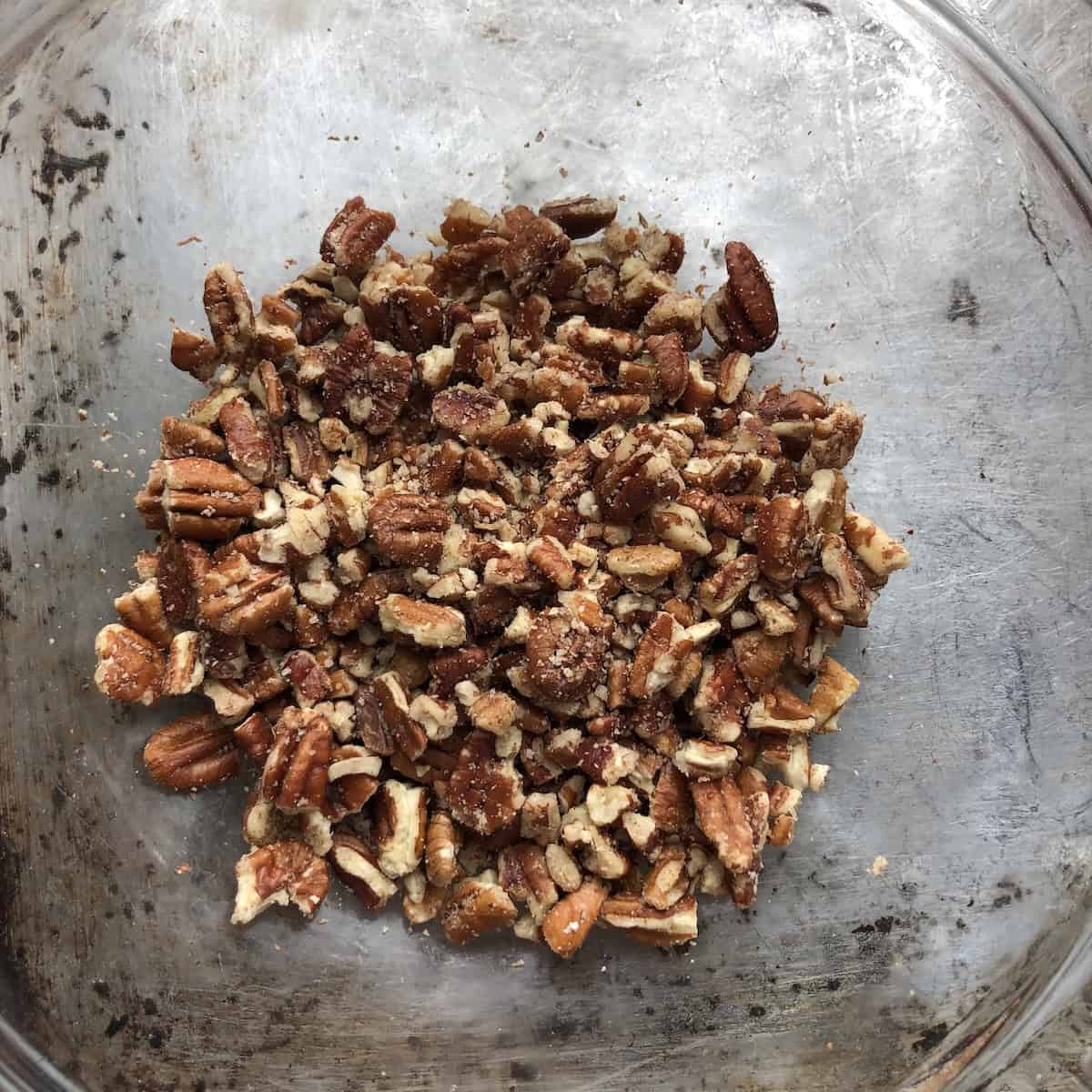
Step 3. Toast the nuts. Toast walnuts OR pecans in the preheated oven, remove to cool, and chop.
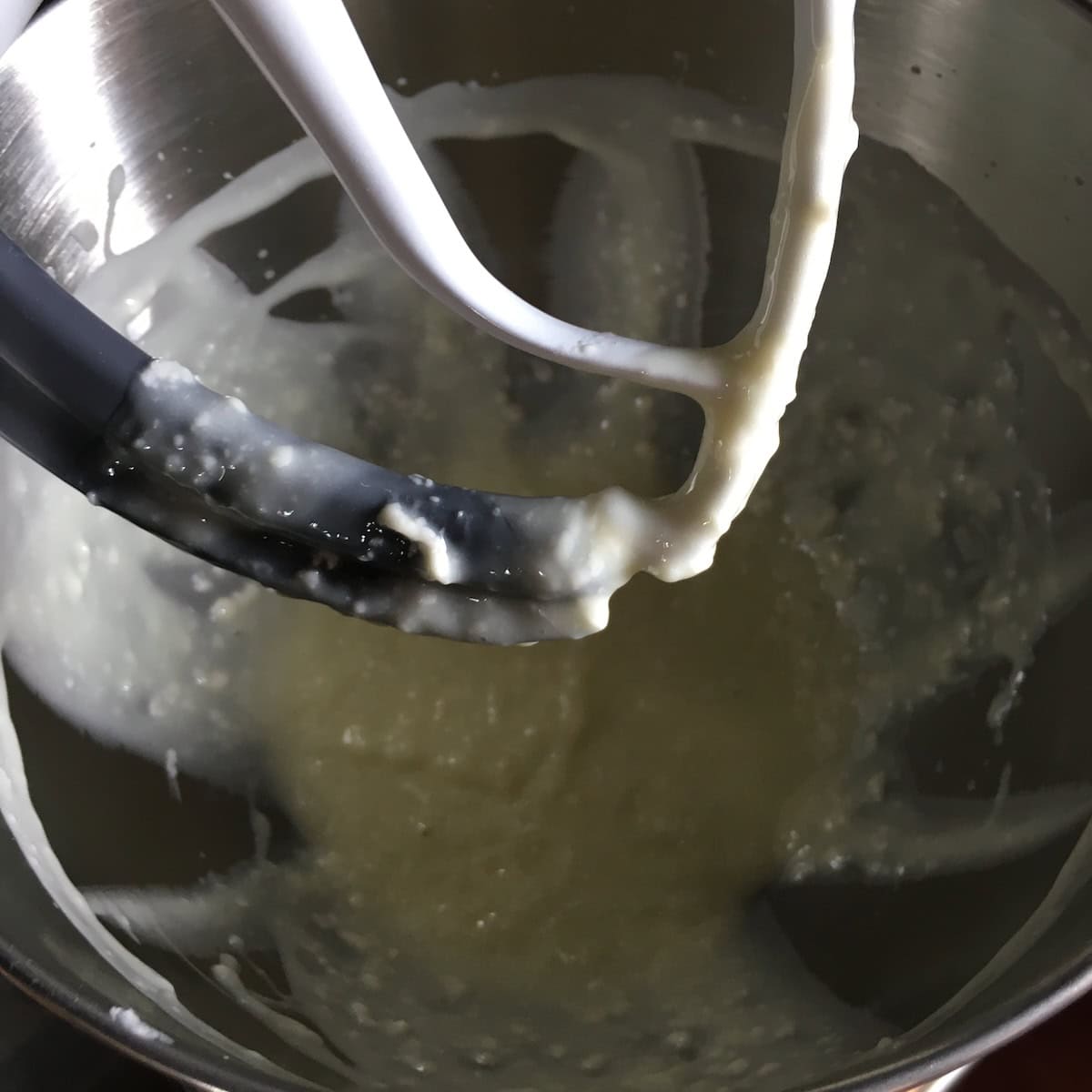
Step 4. Cream the butter, oil, and applesauce: Cream the butter and oil together. The mixture will look slightly broken and greasy at first, but that's normal. Once the sugar and applesauce are added, it will smooth out into a pale, cohesive base.
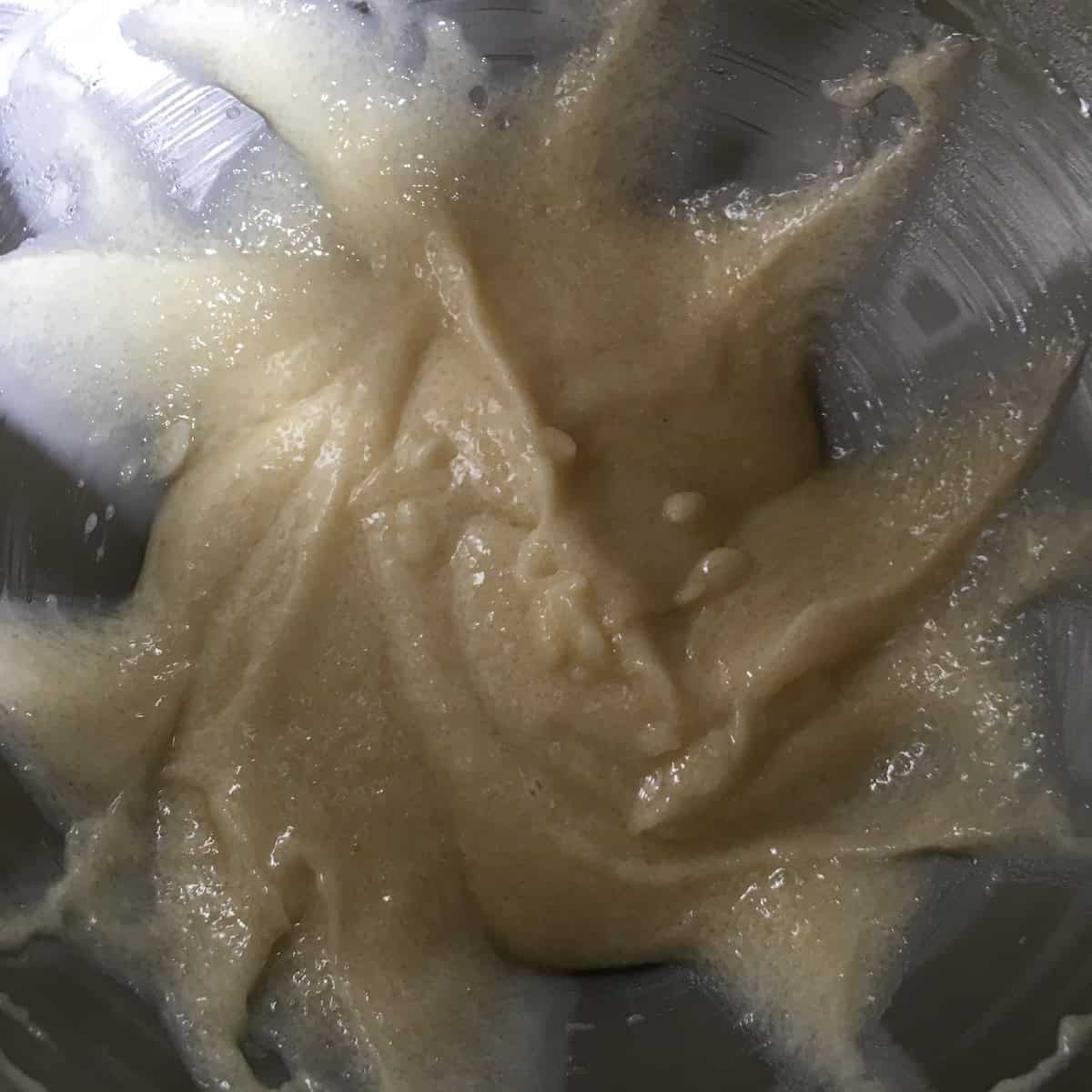
Step 5. Combine wet and dry ingredients: Add the whisked flour mixture in three to four additions, alternating with the eggs. The batter will smell warm and spiced at this point (almost like a snickerdoodle before it's been baked). Add the flour gently and stop mixing the moment it's incorporated.
If you're concerned about over-beating the batter, leave the mixer off after you've added the last of the flour and use a rubber spatula to gently fold it in until no flour streaks remain.
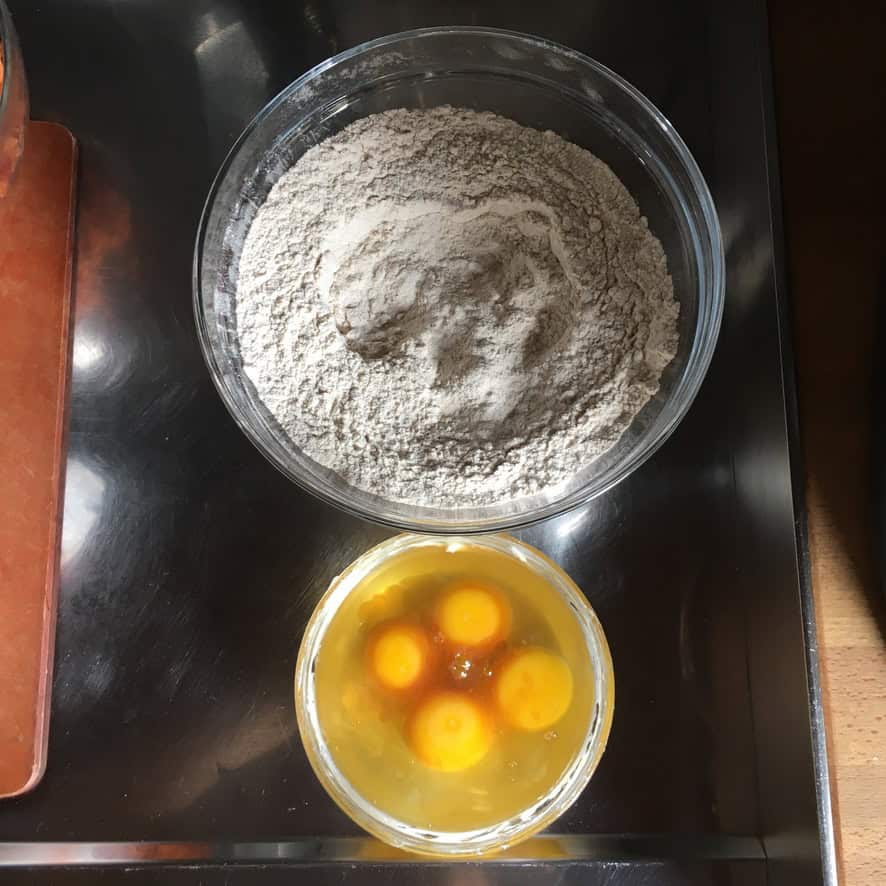
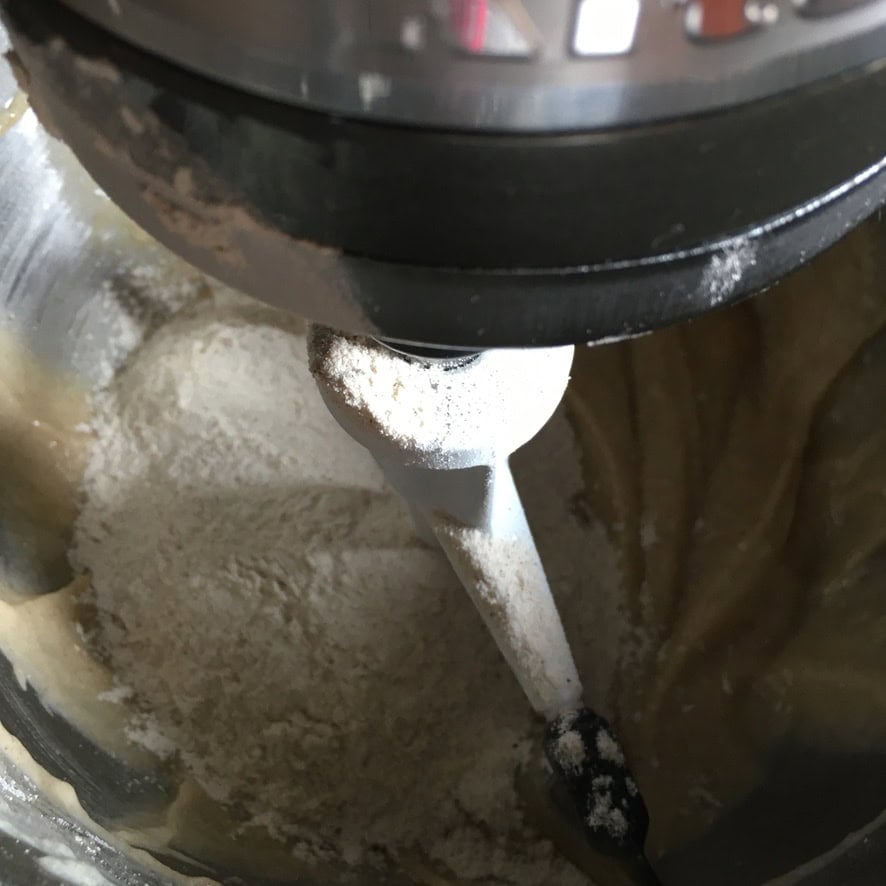
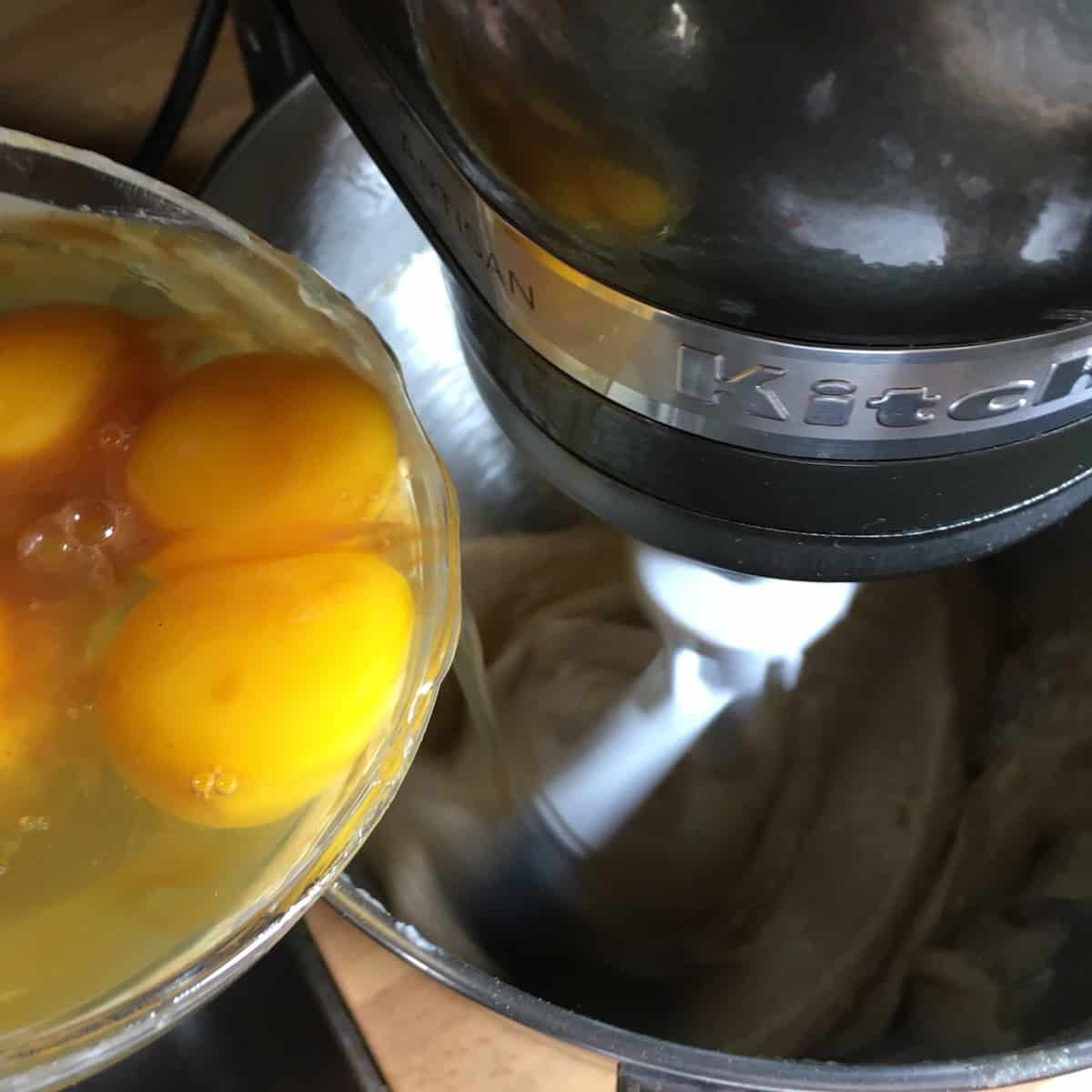
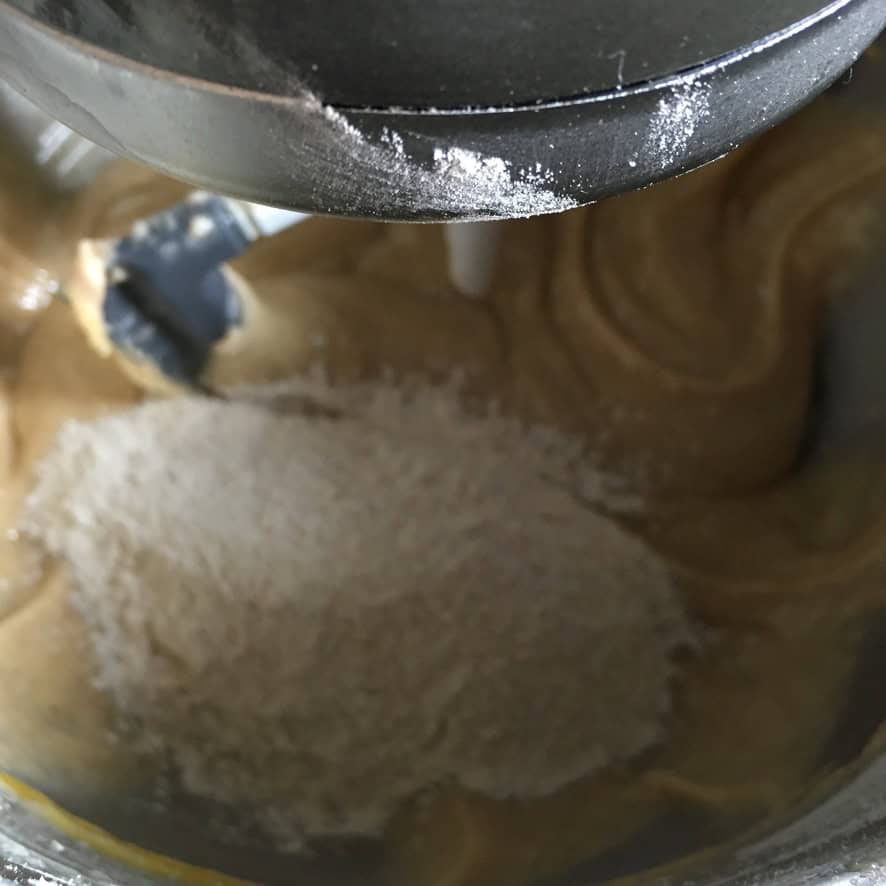
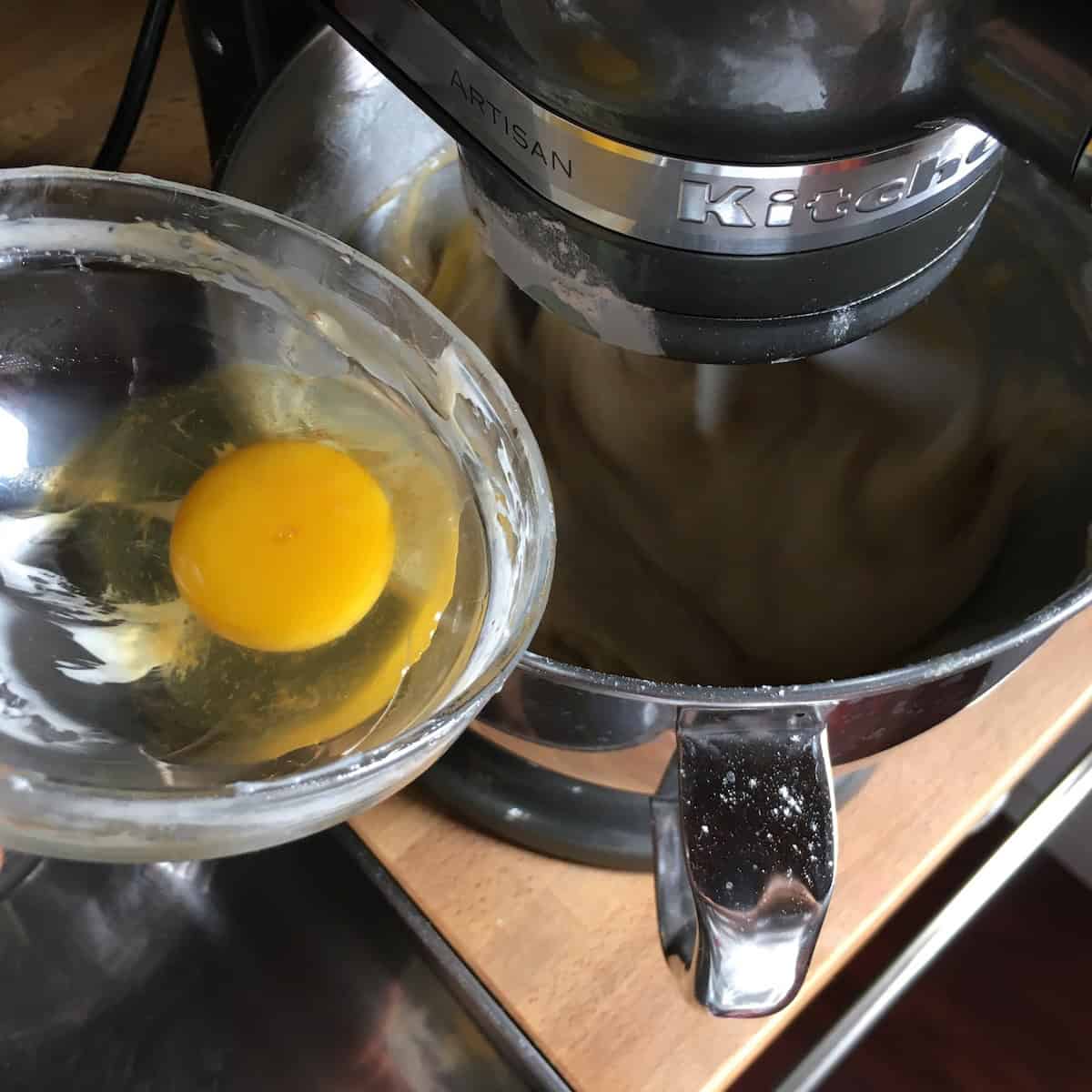
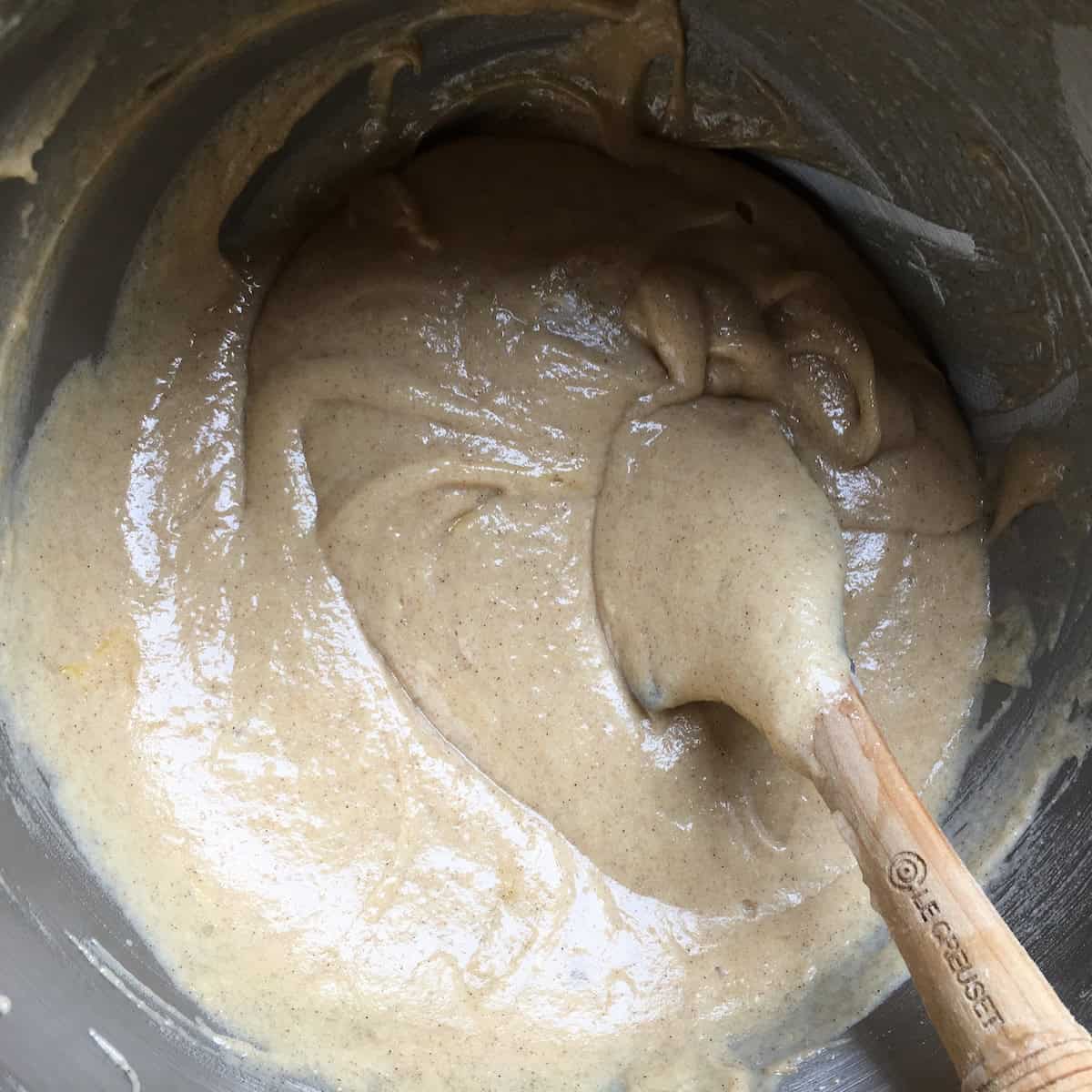
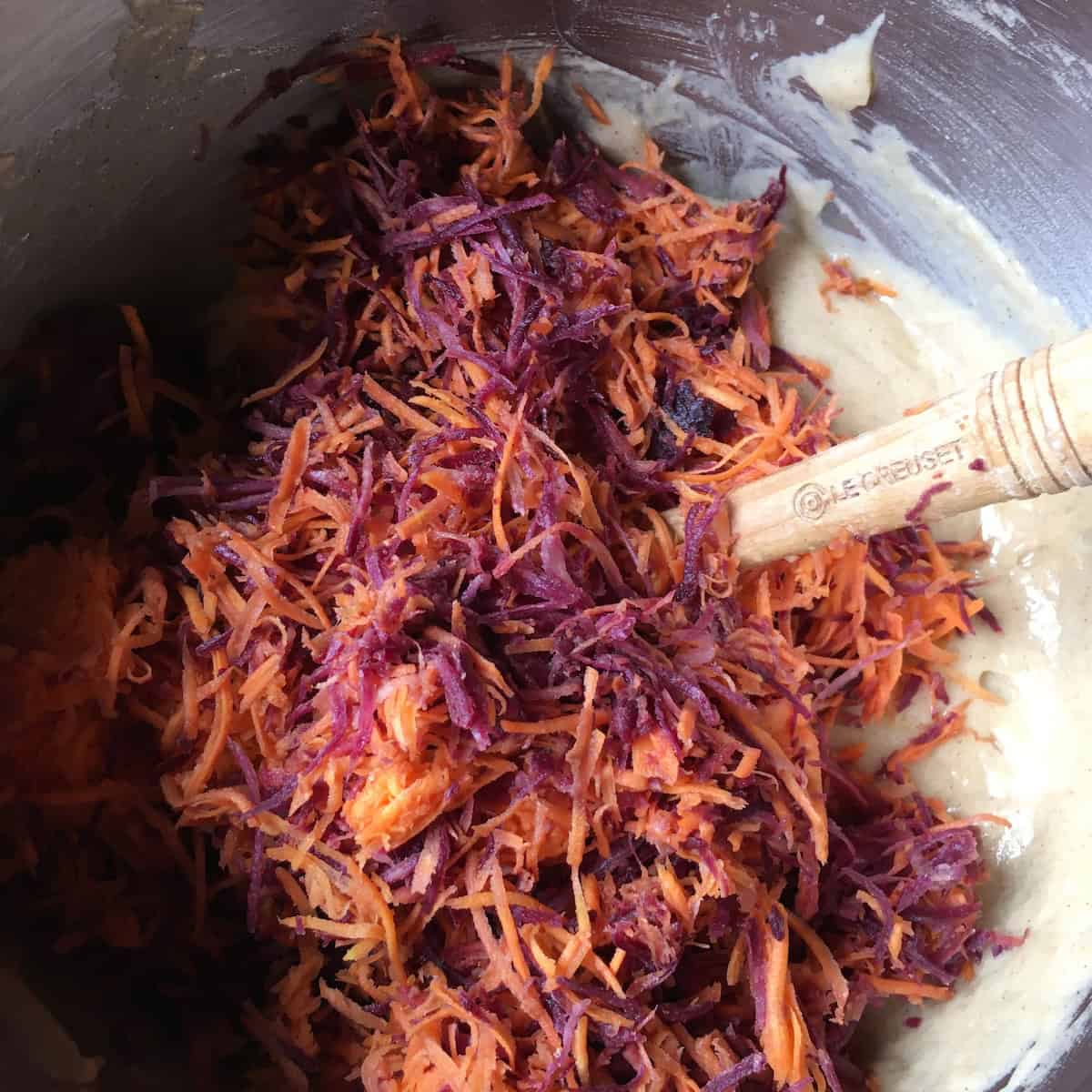
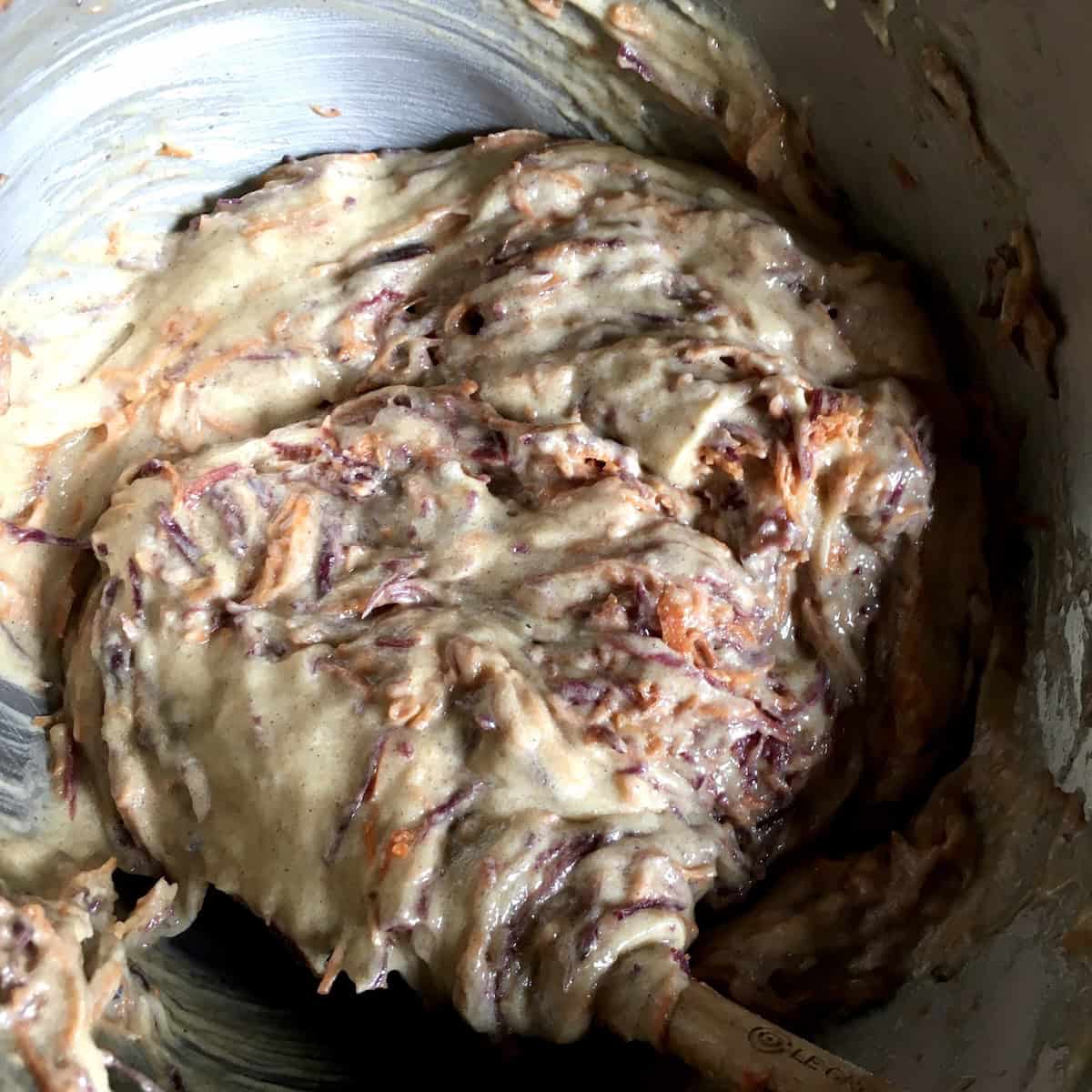
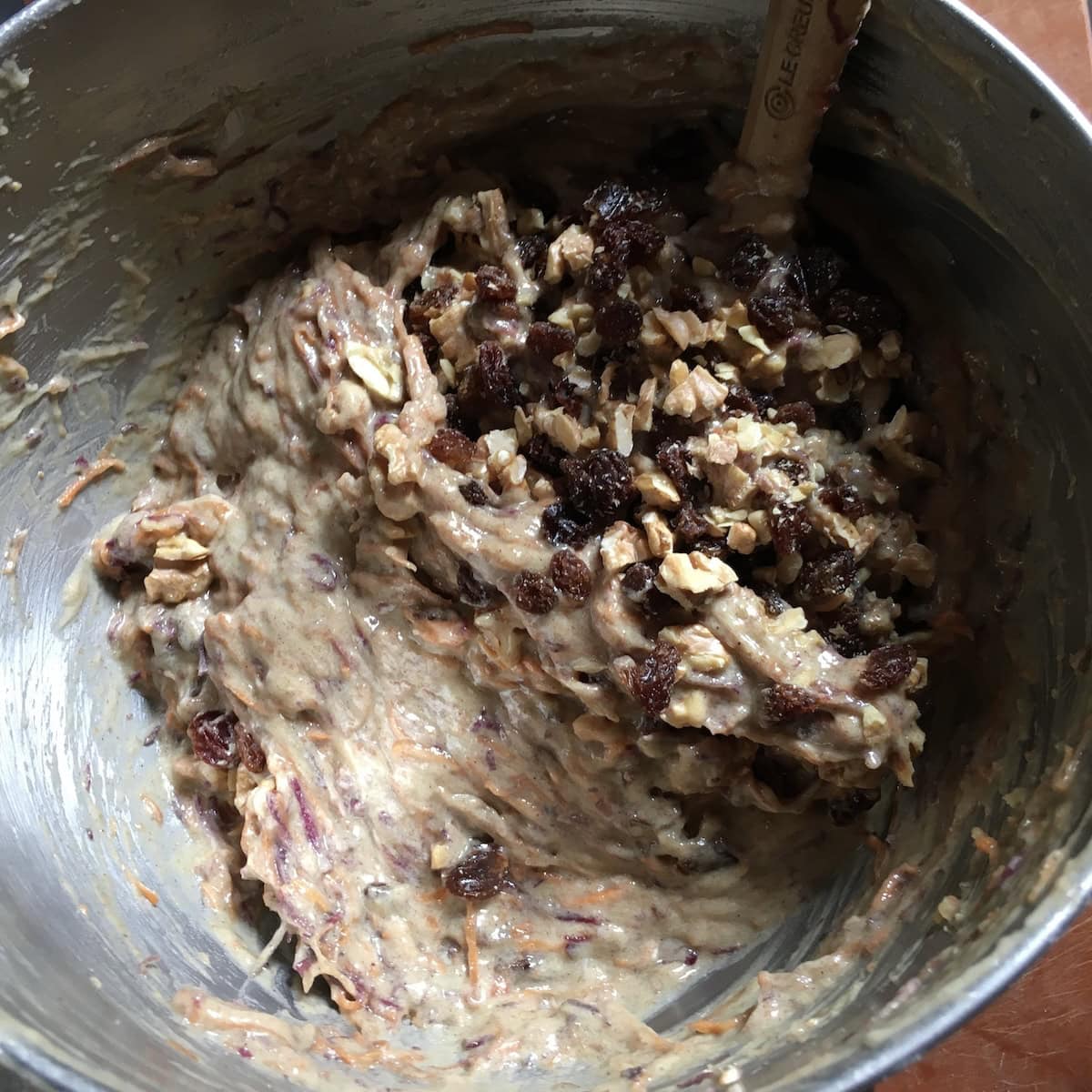
Step 6. Fold in the carrots, nuts, and raisins (if using): Switch to a rubber spatula here, not the mixer. Fold in purple or orange carrots until evenly distributed throughout the batter. It will look shaggy and slightly lumpy, and that's exactly right. Add the nuts and raisins (if using), fold gently, and stop.
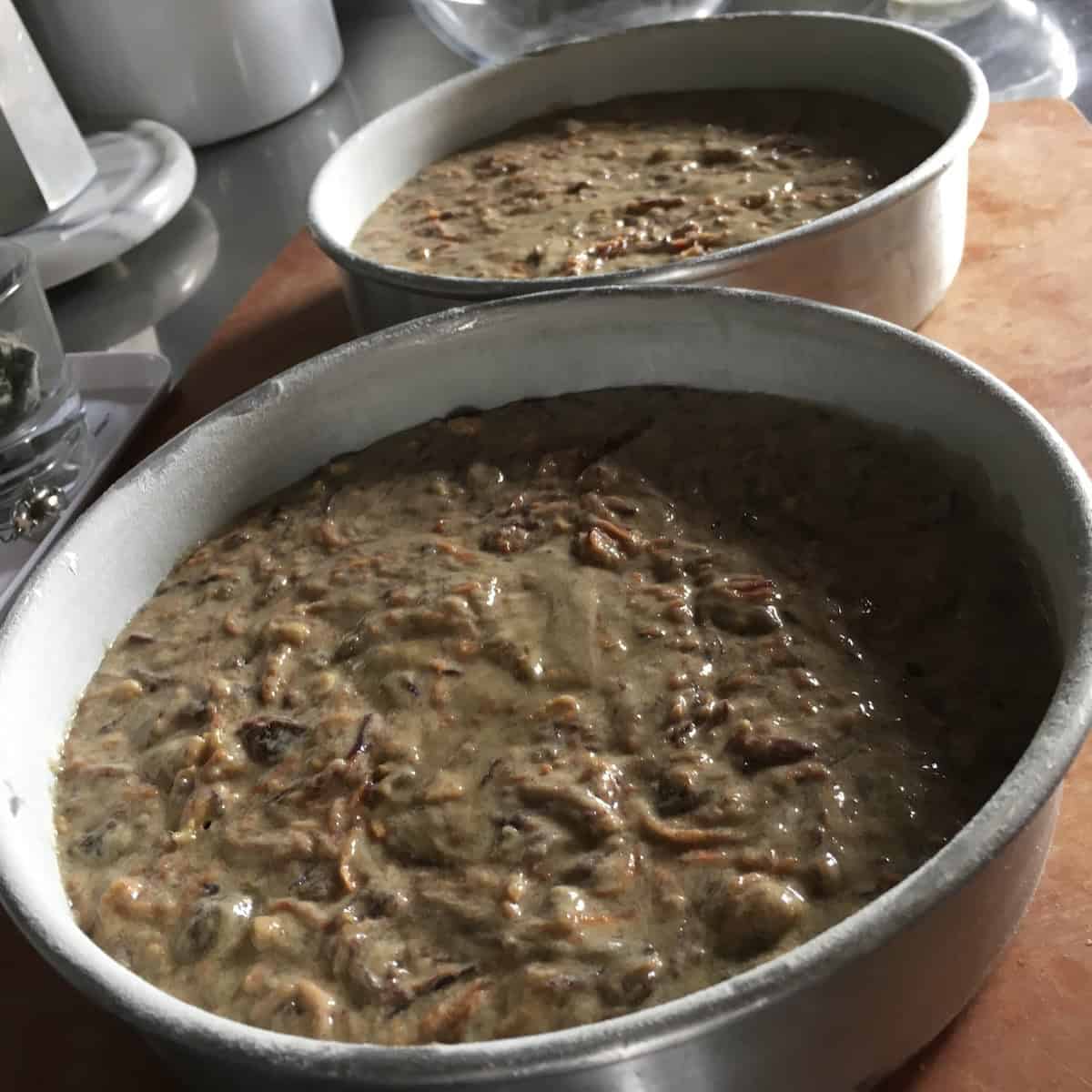
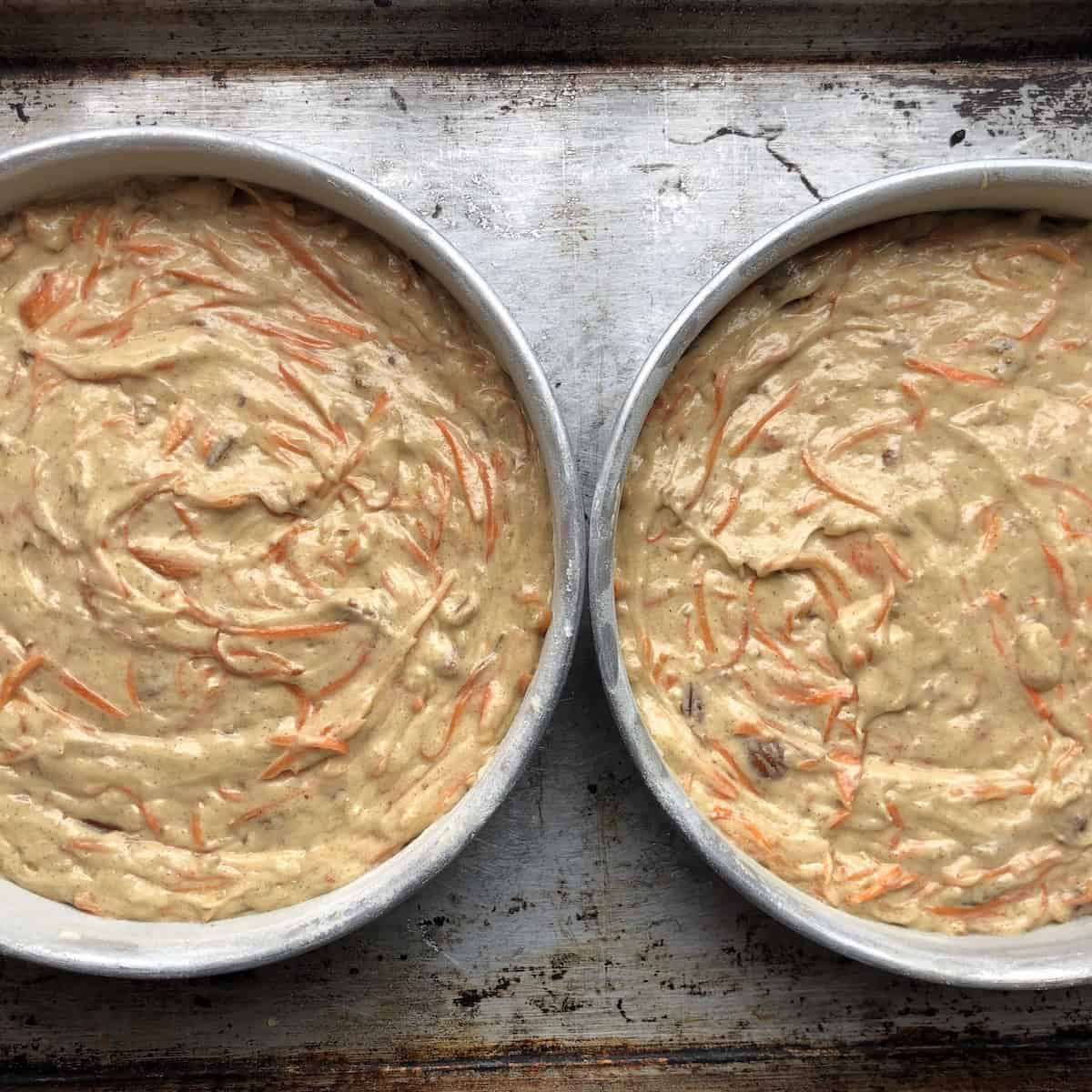
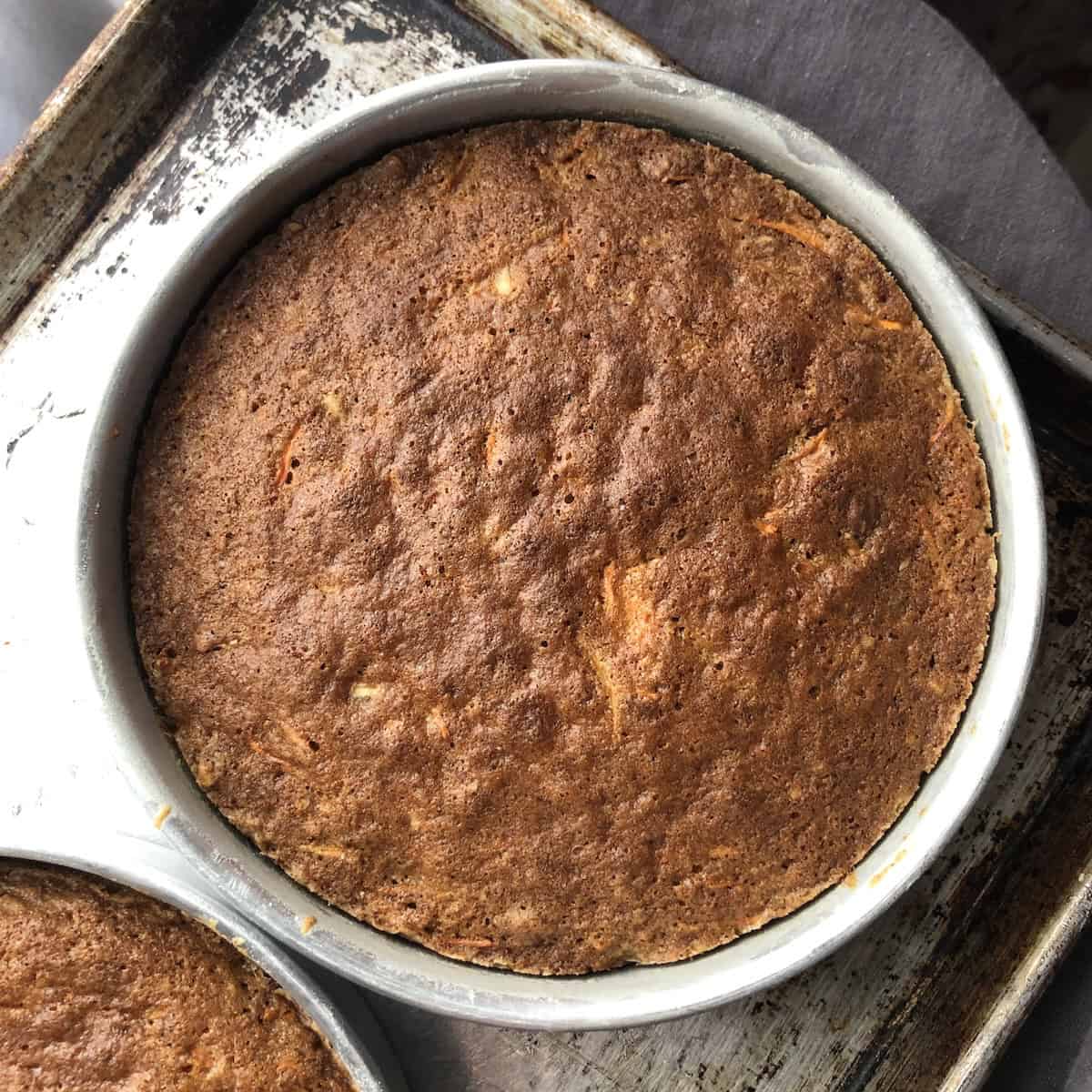
Step 7. Bake: Pour equal amounts of batter into the pans. Gently tap the pans on the countertop about 6-8 times each to release any air bubbles in the crumb. Resist opening the oven in the first 30 minutes. A temperature drop, or slamming the oven door closed too hard during the rise, can cause the center to sink. Let the oven do its work undisturbed. (*See how both the purple carrot variety and the orange carrot varieties look below)
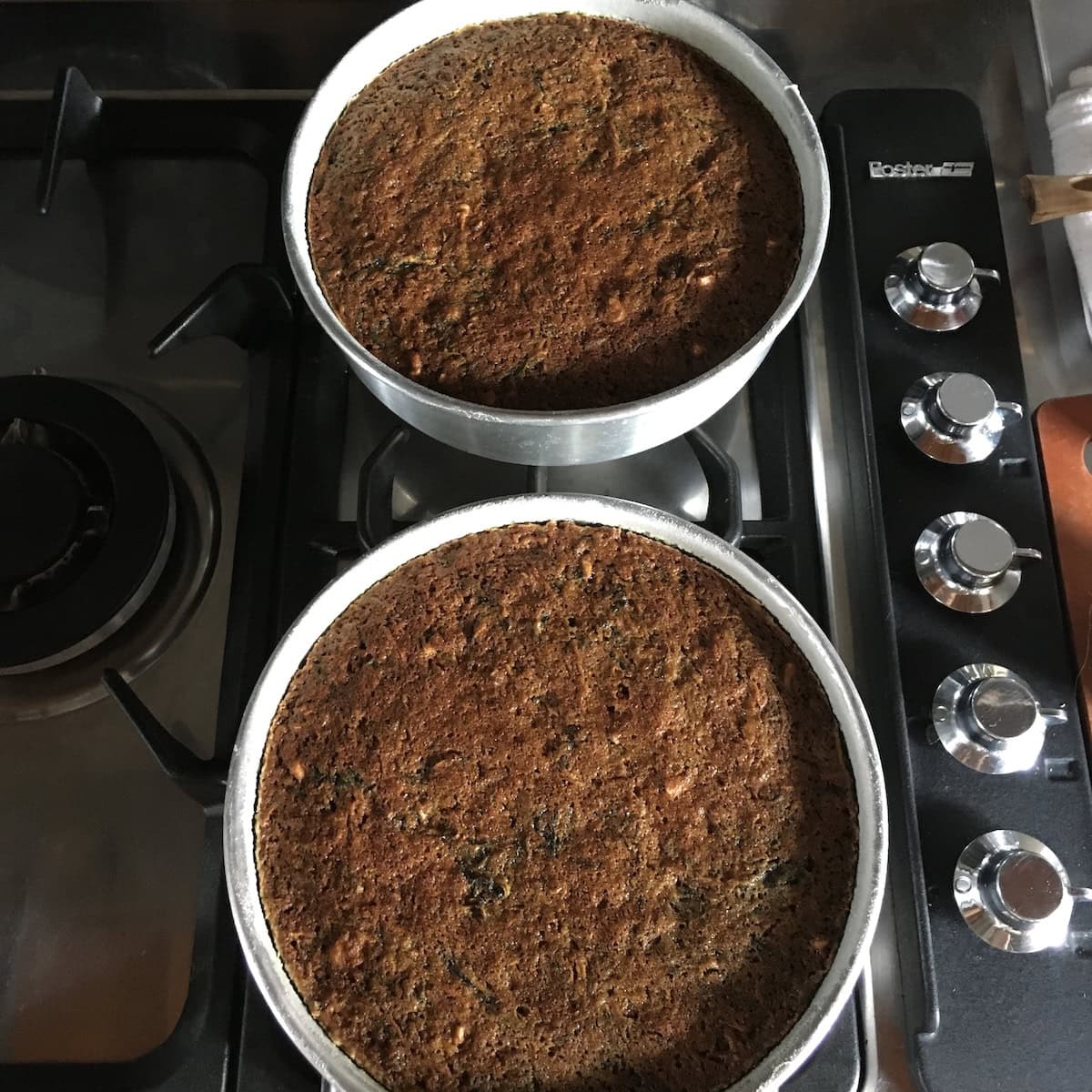
Step 8. Cool: 10 minutes in the pan on a wire rack, run a knife around the edges to ensure they release, then invert and cool completely on the rack to room temperature before frosting. The cake pulls away from the sides slightly when it's ready to release; you'll feel it give.
Step 9. Make your frosting of choice. Sift the powdered sugar through a fine-mesh sieve, then blend all of the frosting ingredients together using the whisk attachment until well combined. Don't over-beat the mixture.
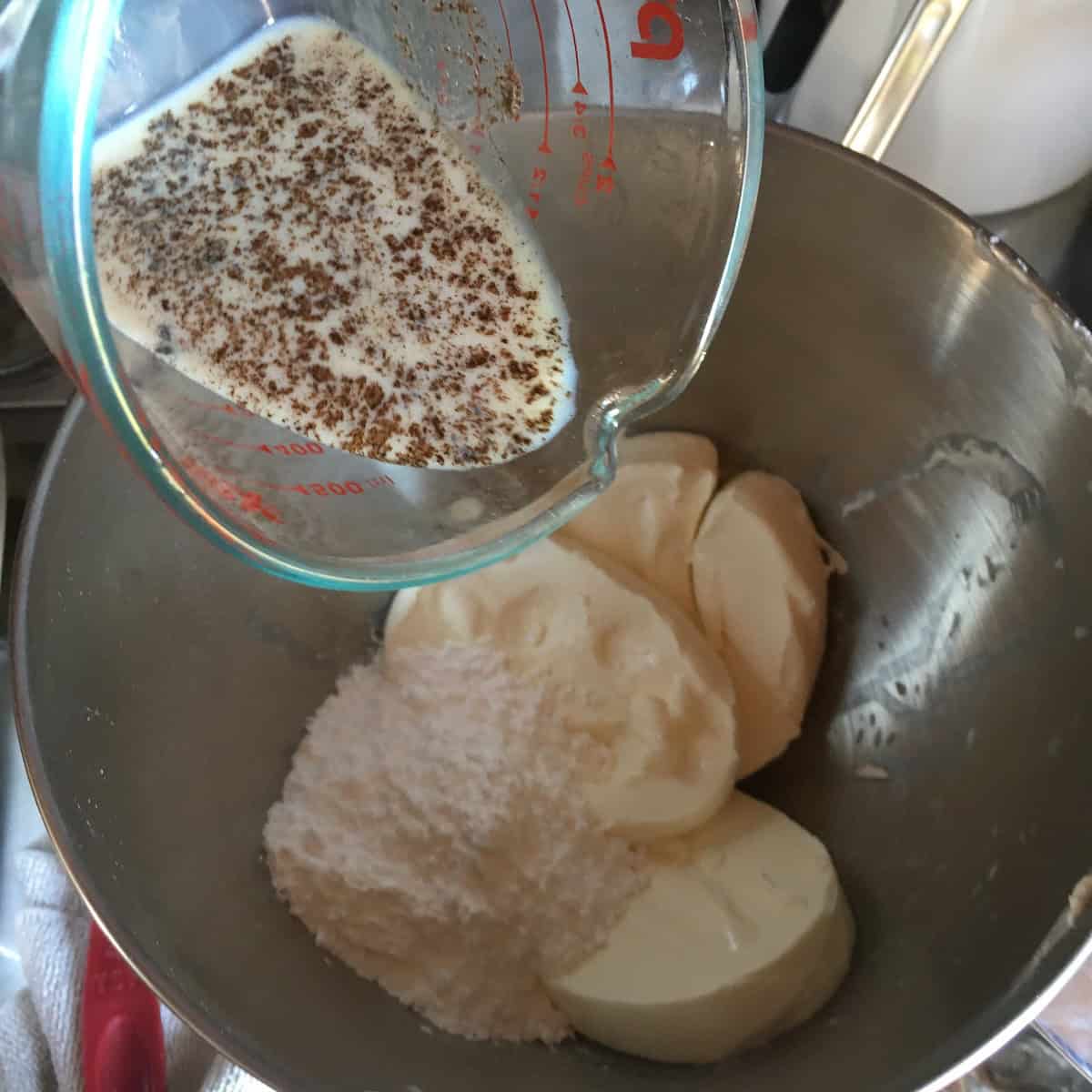
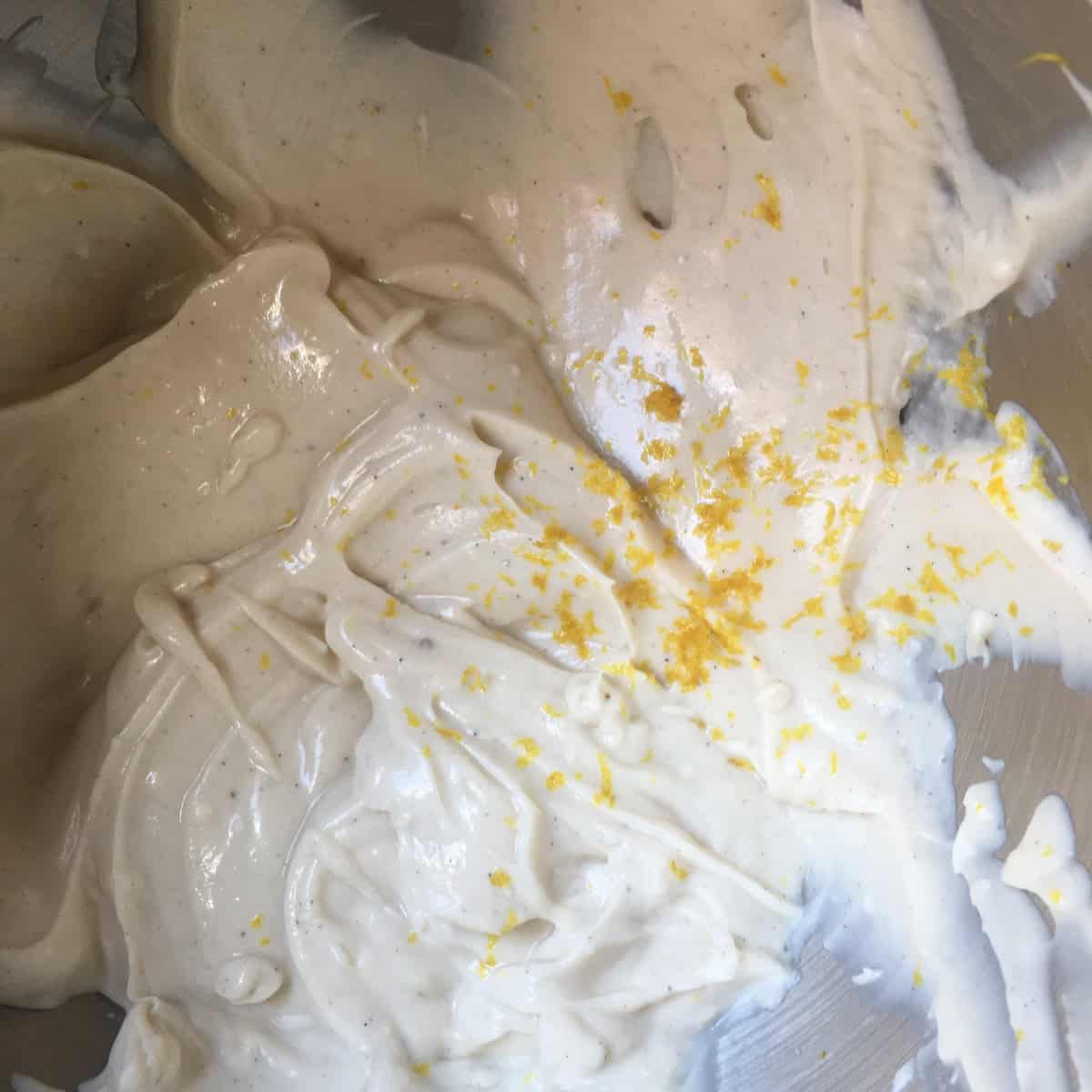
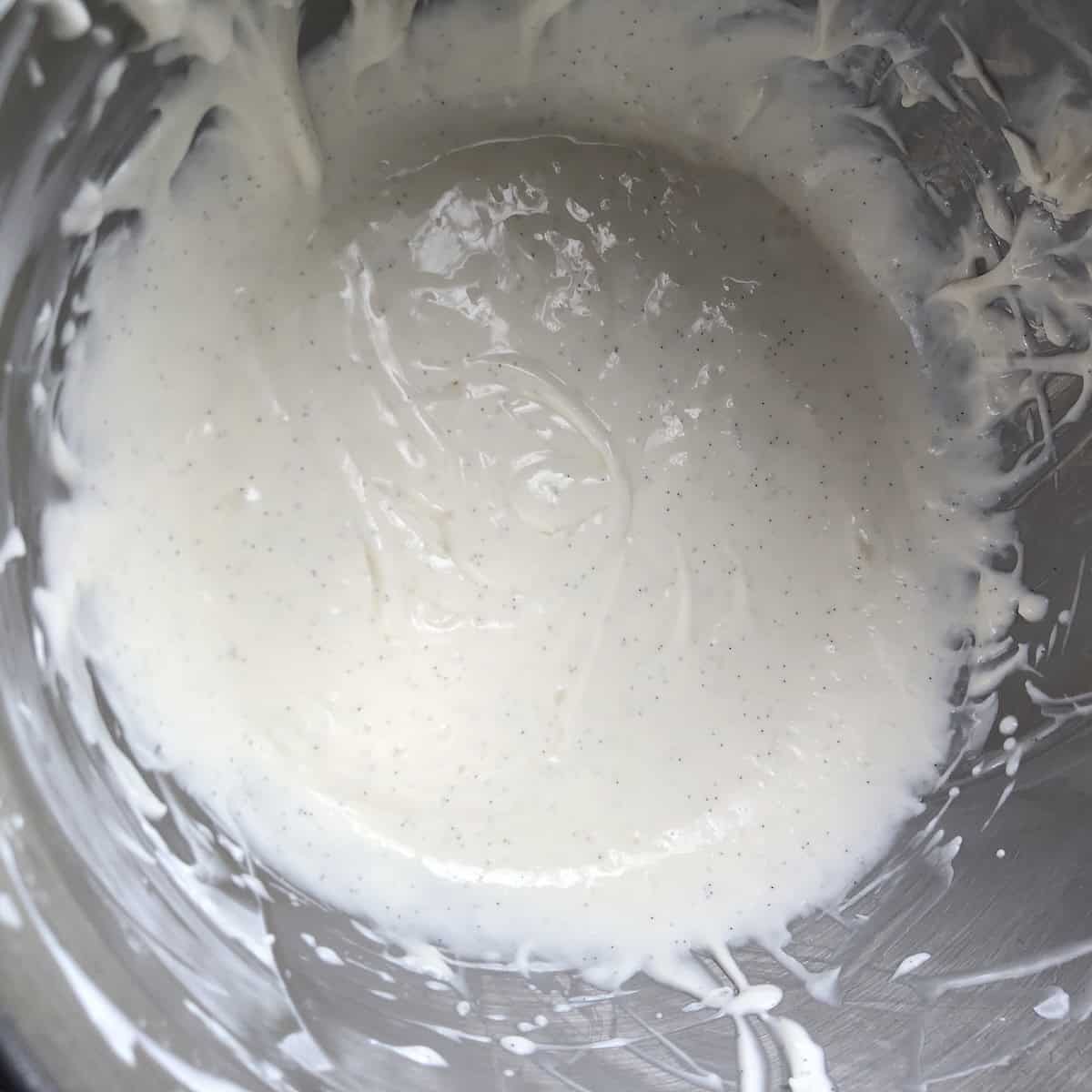
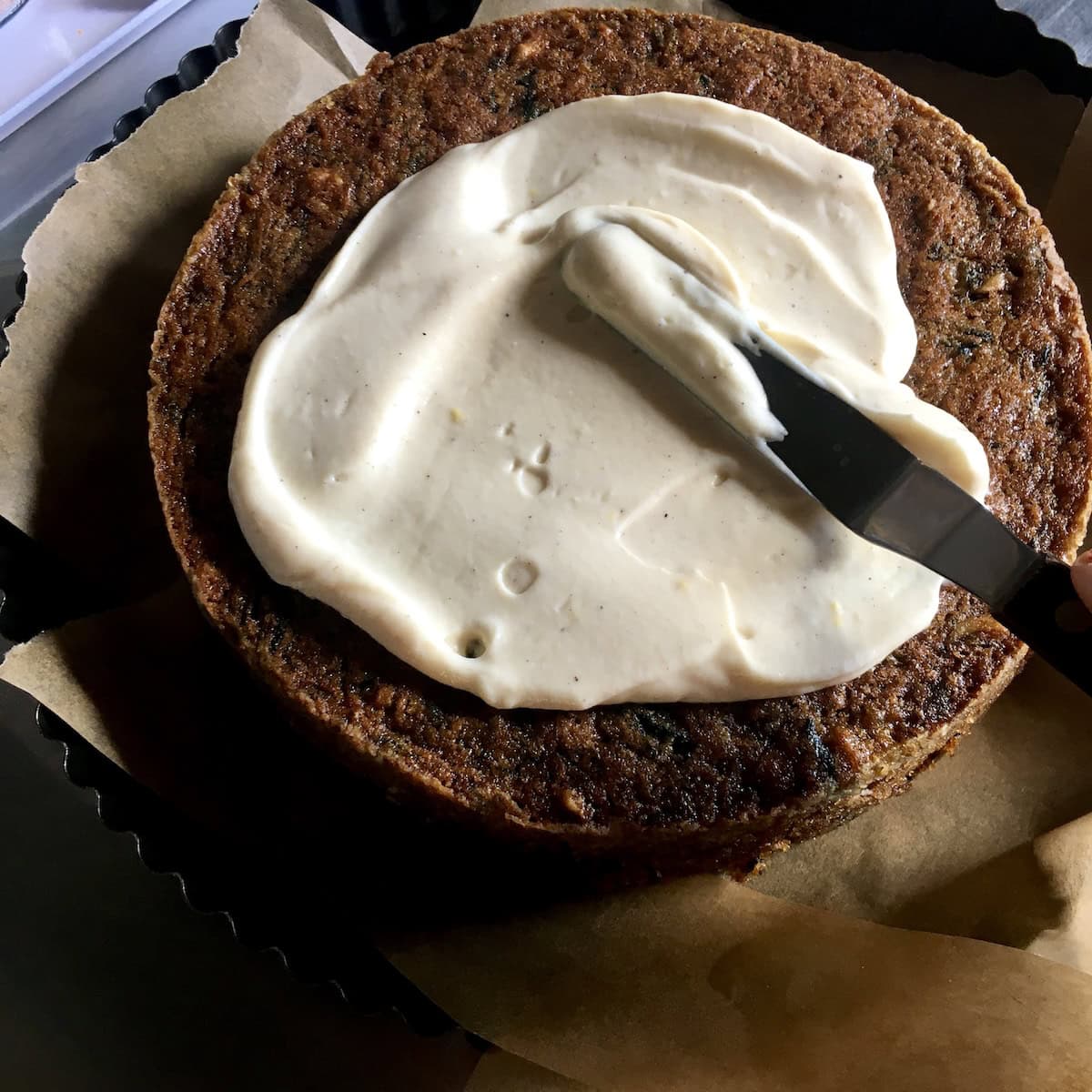
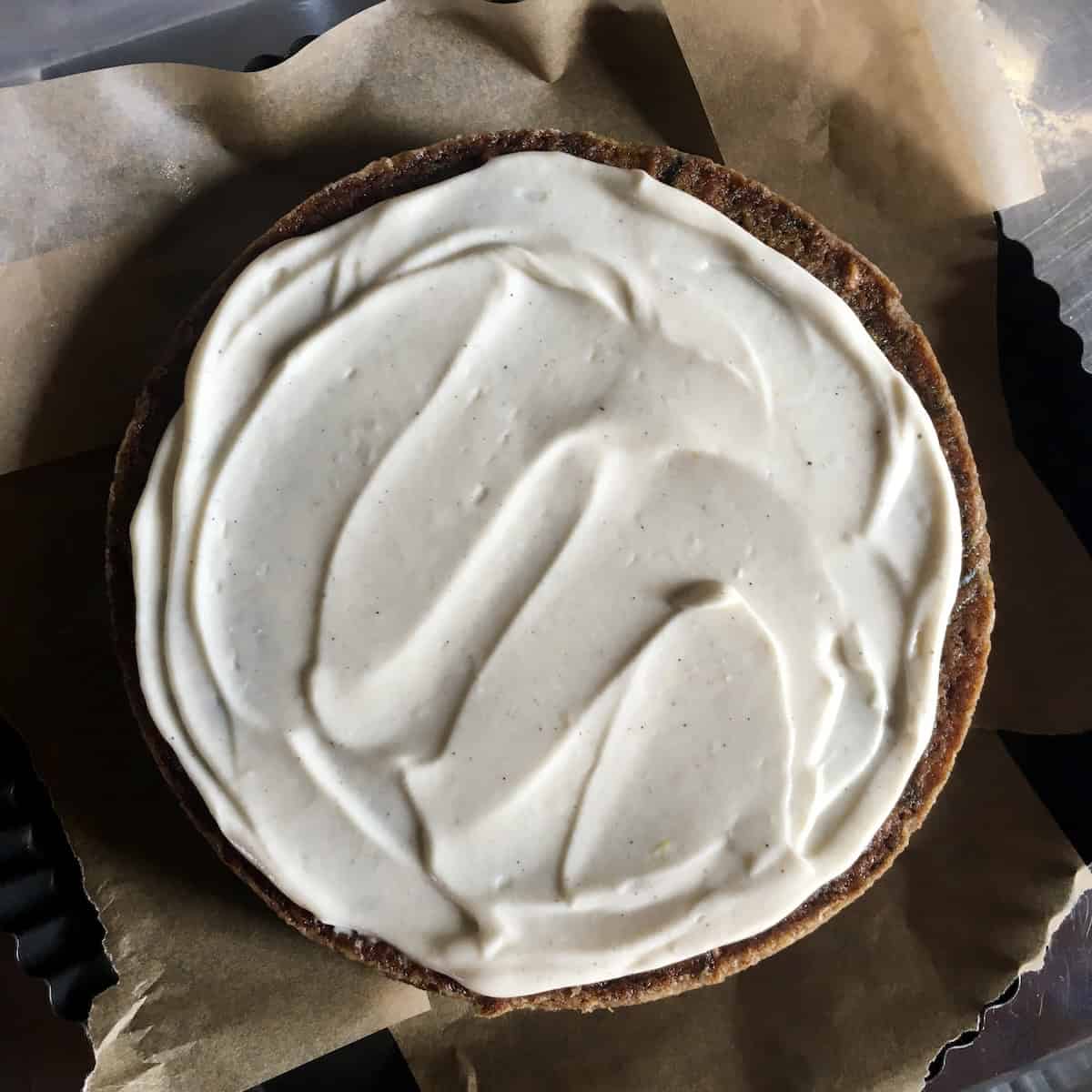
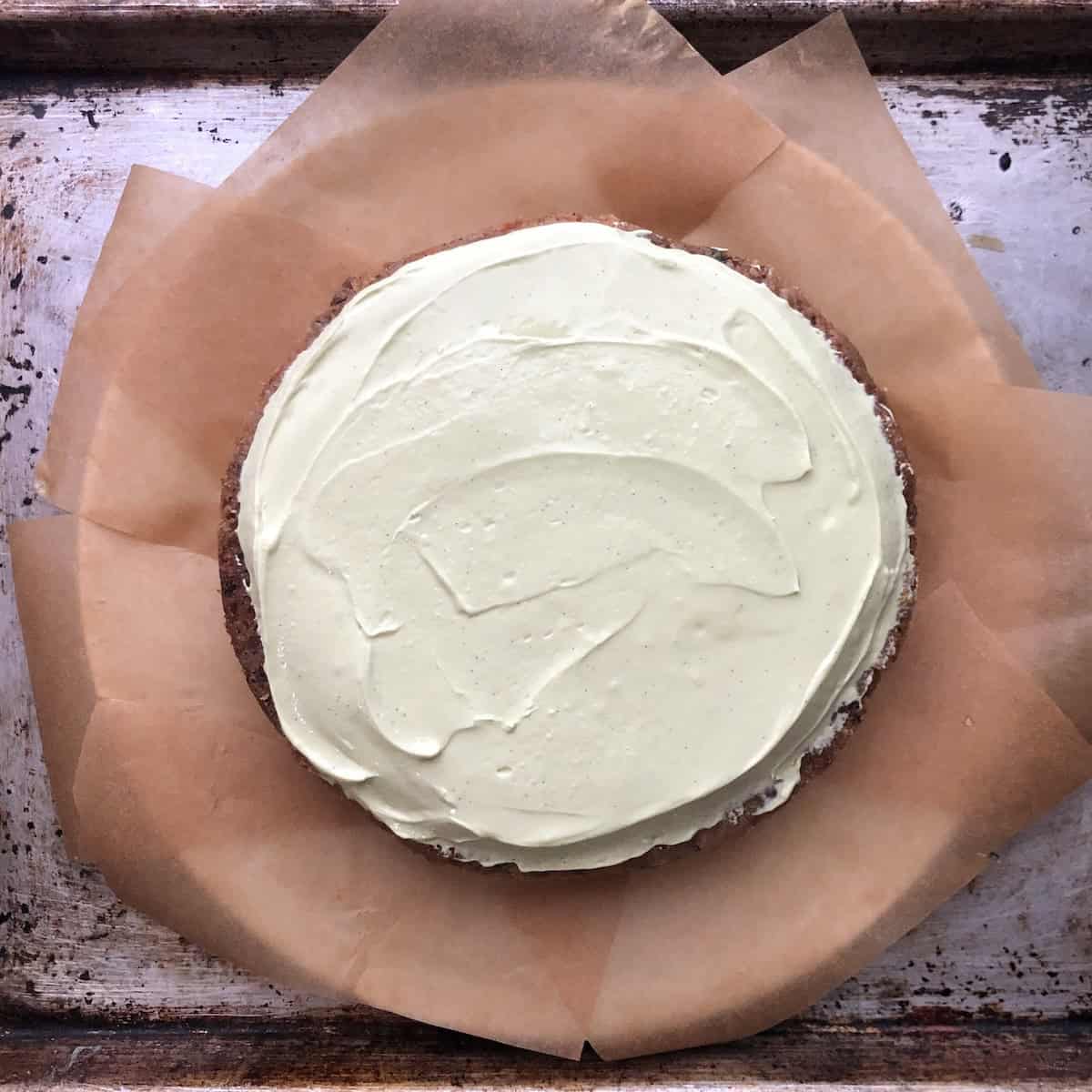
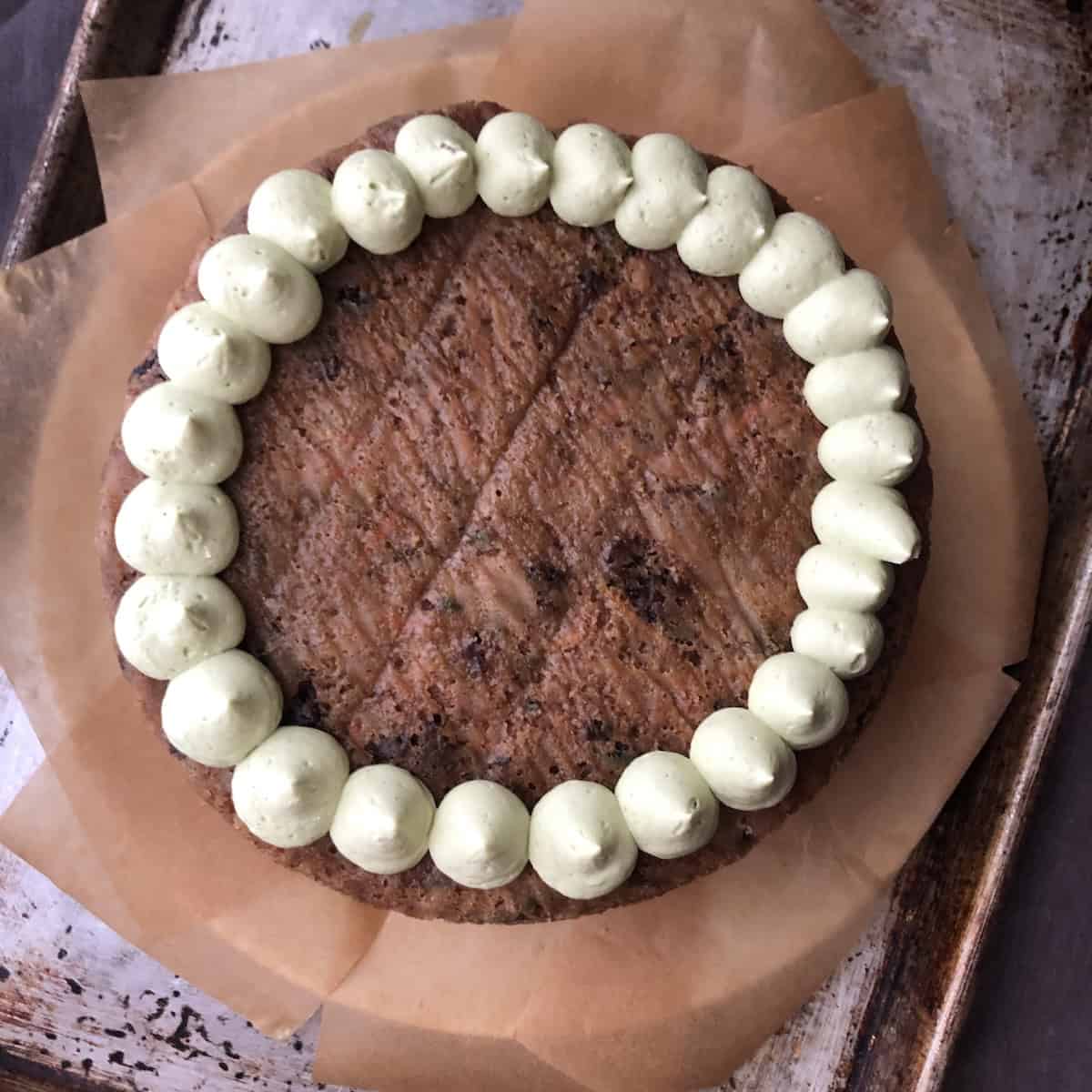
Step 10. Frost the cake: Place a dab of frosting in the middle of the cake plate to keep the cake from moving around. Place 4 strips of parchment paper around the plate to cover the outer edges of the plate, to keep it free of crumbs and frosting as you ice the cake.
Add one cake layer, and half of the frosting (or your desired amount), smoothing it to about ½ inch from the edges, then add the other cake layer (turned upside down to give you a flat top) and pipe on a design on top, or smooth it out using an offset spatula, creating swirls. Sprinkle with freeze-dried pistachio granules, chopped toasted pistachios, or more pecans or walnuts. Remove the parchment pieces and serve.
To cover the entire cake with cream cheese frosting, double the frosting recipe.
How to Tell When Carrot Cake is Done
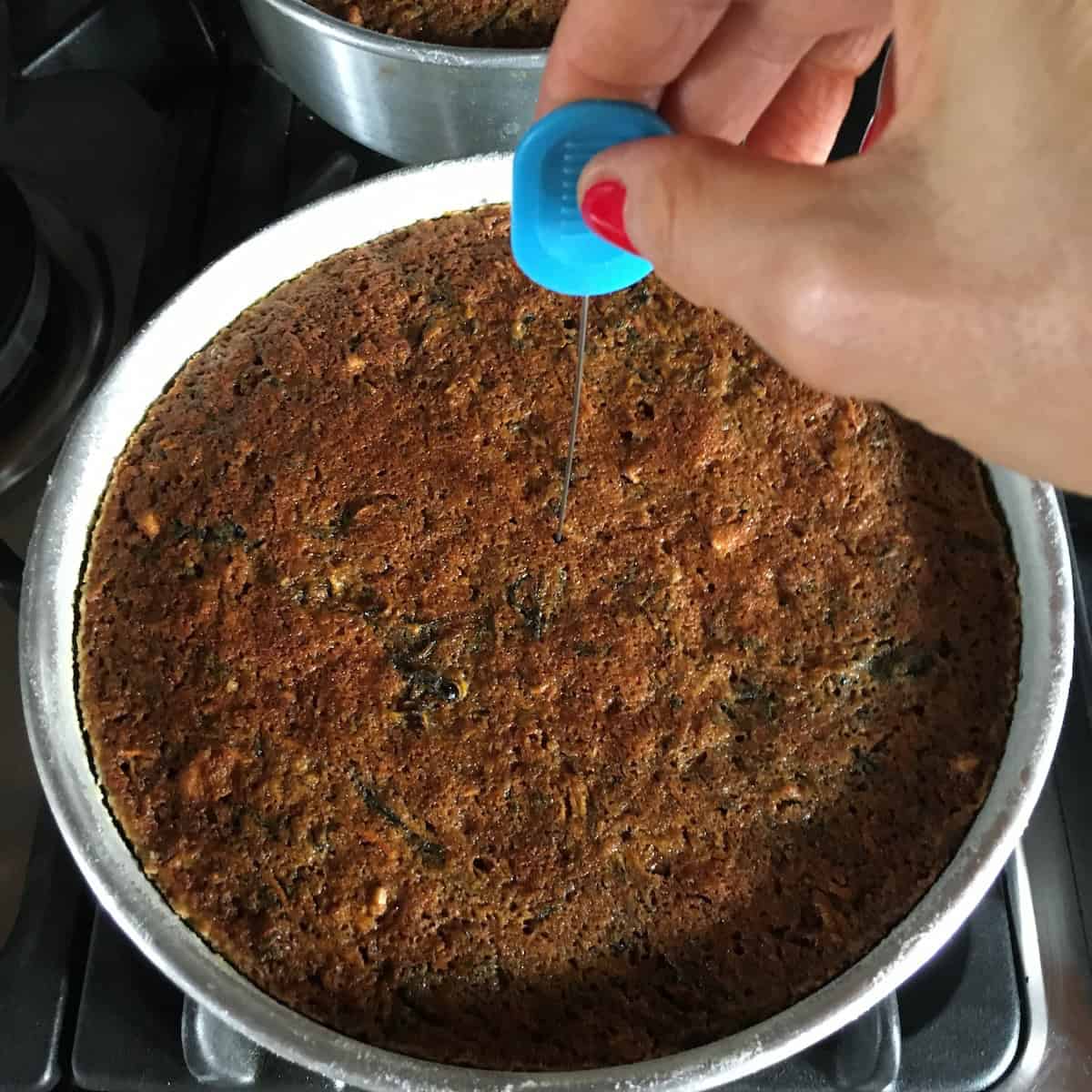
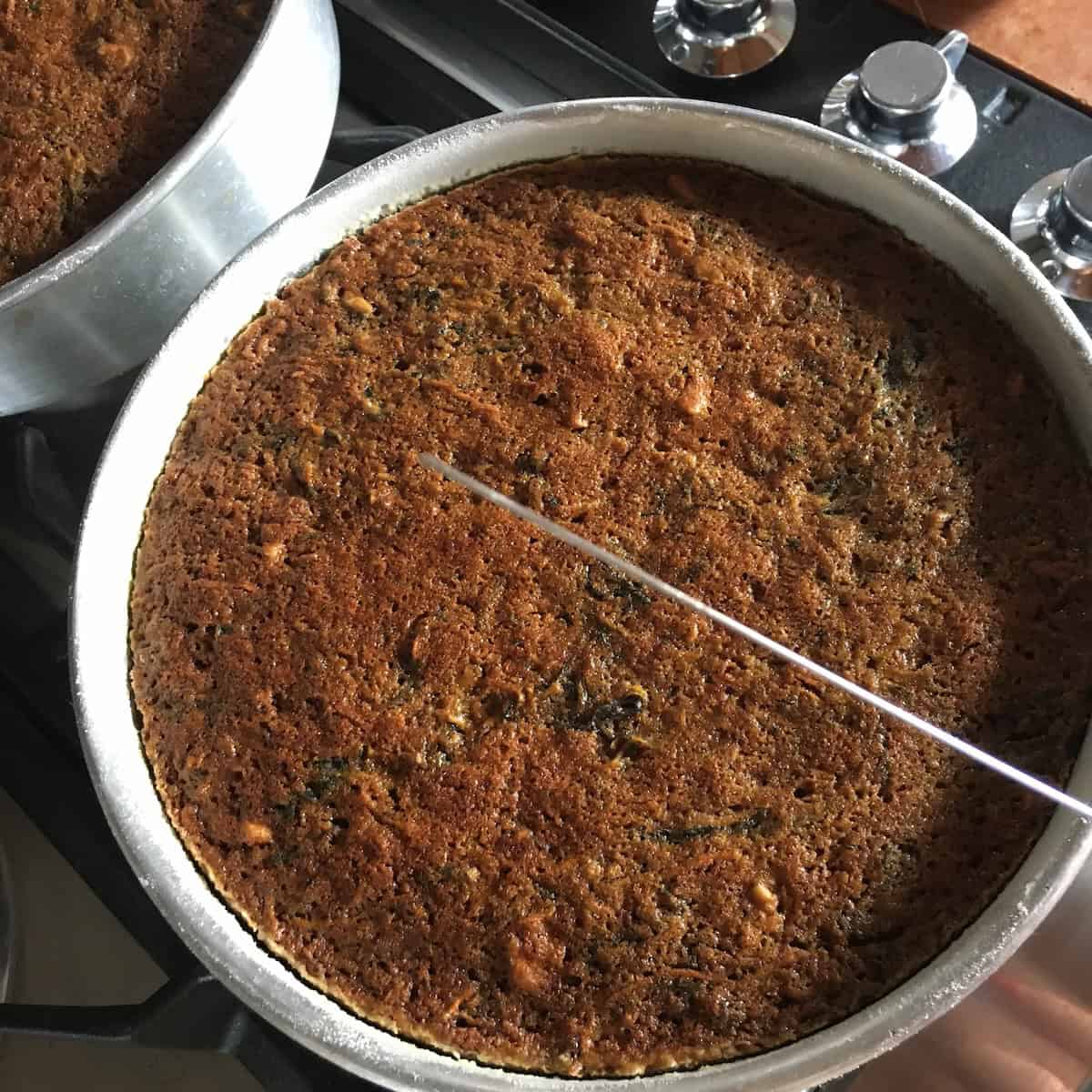
The top of the cake should spring back when you press it very gently in the center. If you press and it leaves a dent, it needs more time. A toothpick or cake tester inserted in the center should come out clean with no wet batter clinging to it.
The cake will smell intensely of warm cinnamon and caramelized sugar when it's close - that's your first signal to start checking. Check at 40 minutes for 8-inch pans, or 30 to 35 minutes for 9-inch pans.
Find detailed instructions in the recipe card.
How to Toast Walnuts or Pecans for Carrot Cake
Spread your chopped nuts on a dry baking sheet and bake at 350°F (175°C) for 5 to 7 minutes, until they smell deeply nutty and fragrant. Let them cool for 10 minutes before chopping and adding to the batter. Toasting activates the natural oils in the nut and mellows any raw bitterness. This step takes 8 minutes and is worth every one of them.
Carrot Cake Frosting Options
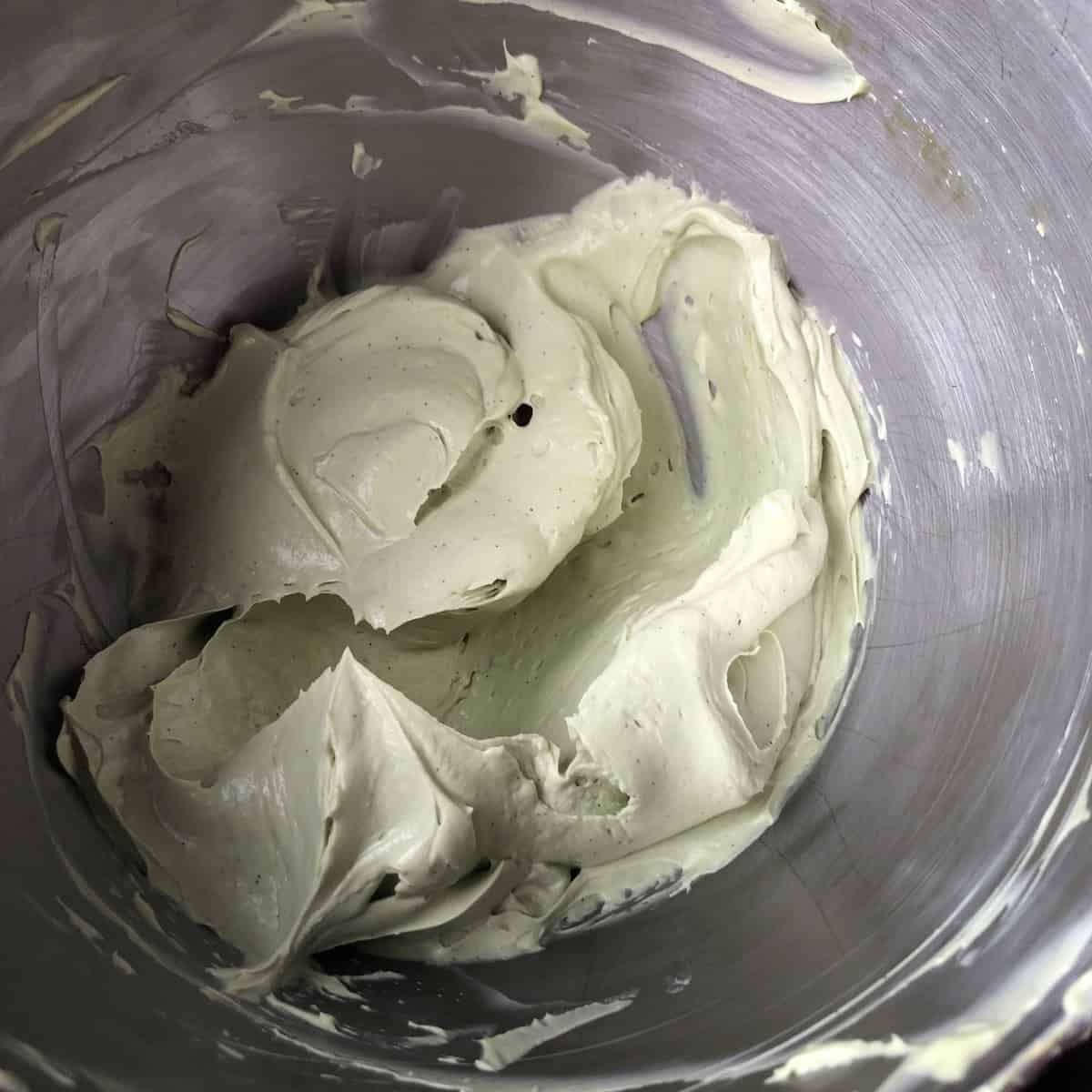
Both frostings use the same simple technique: blend everything together until smooth and creamy. No sifting required, no stand mixer needed -- a hand mixer works perfectly for both. The key is room-temperature cream cheese. Cold cream cheese won't blend smoothly and leaves lumps that won't mix out no matter how long you beat them.
Classic Vanilla Bean Cream Cheese Frosting
This is the original carrot cake icing that I've used for this recipe since the beginning! Cream cheese, powdered sugar, whole milk, pure homemade vanilla extract, vanilla bean powder (or vanilla bean seeds), fresh lemon zest (optional), and a pinch of salt for balance.
The vanilla bean powder or vanilla bean seeds are optional, but they add depth and tiny vanilla bean flecks that pure extract alone can't replicate. The lemon zest is optional if you want to add a little brightness without it tasting full-on citrusy. You taste the cream cheese, the vanilla, and a hint of lemon, which is a great combination.
NOTE: European Philadelphia cream cheese vs. American Philadelphia Cream Cheese: Sadly, European Philadelphia cream cheese has a completely different list of ingredients, and it isn't even naturally cultured; instead, it opts for carrageenans, citric acid, etc. It's a completely different recipe from American Philadelphia cream cheese, which is naturally cultured using live bacteria.
It's one of the few things that's made here in the EU that is less healthy than its American counterpart😂, and doesn't taste as good either! It has a higher moisture content (so it's not as firm as American cream cheese), a different fat structure, and less tang.
NOTE for European Bakers, you have two cheese options: Use a substitute that's closer to American Philadelphia Cream Cheese, like Italian "formaggio spalmabile" made using a live culture, or substitute the ¼ cup whole milk with 1 tablespoon (15g) whole milk and 1 tablespoon fresh lemon juice (15g). The lemon juice provides the tang that American cream cheese delivers naturally. Your frosting will not be as firm as a cream cheese frosting made using American Philadelphia Cream Cheese.
Matcha Cream Cheese Mascarpone Frosting
This frosting has been tested and shared with friends and family across multiple continents, and it's one of my most loved recipes. Cream cheese and mascarpone together create a richer, less full-on-tangy base than using cream cheese alone.
The mascarpone adds a nice, sweet cream flavor with luxurious texture. While the matcha adds both a beautiful spring-green color and a delicate depth of flavor that works in contrast to the warm cinnamon spice of the cake.
1 tablespoon (6g) of organic matcha gives this frosting a pastel pale green color with a very delicate flavor that complements rather than overpowers the cream cheese. For a deeper, darker green and more pronounced matcha flavor, increase the matcha to 2-3 tablespoons, or your desired amount.
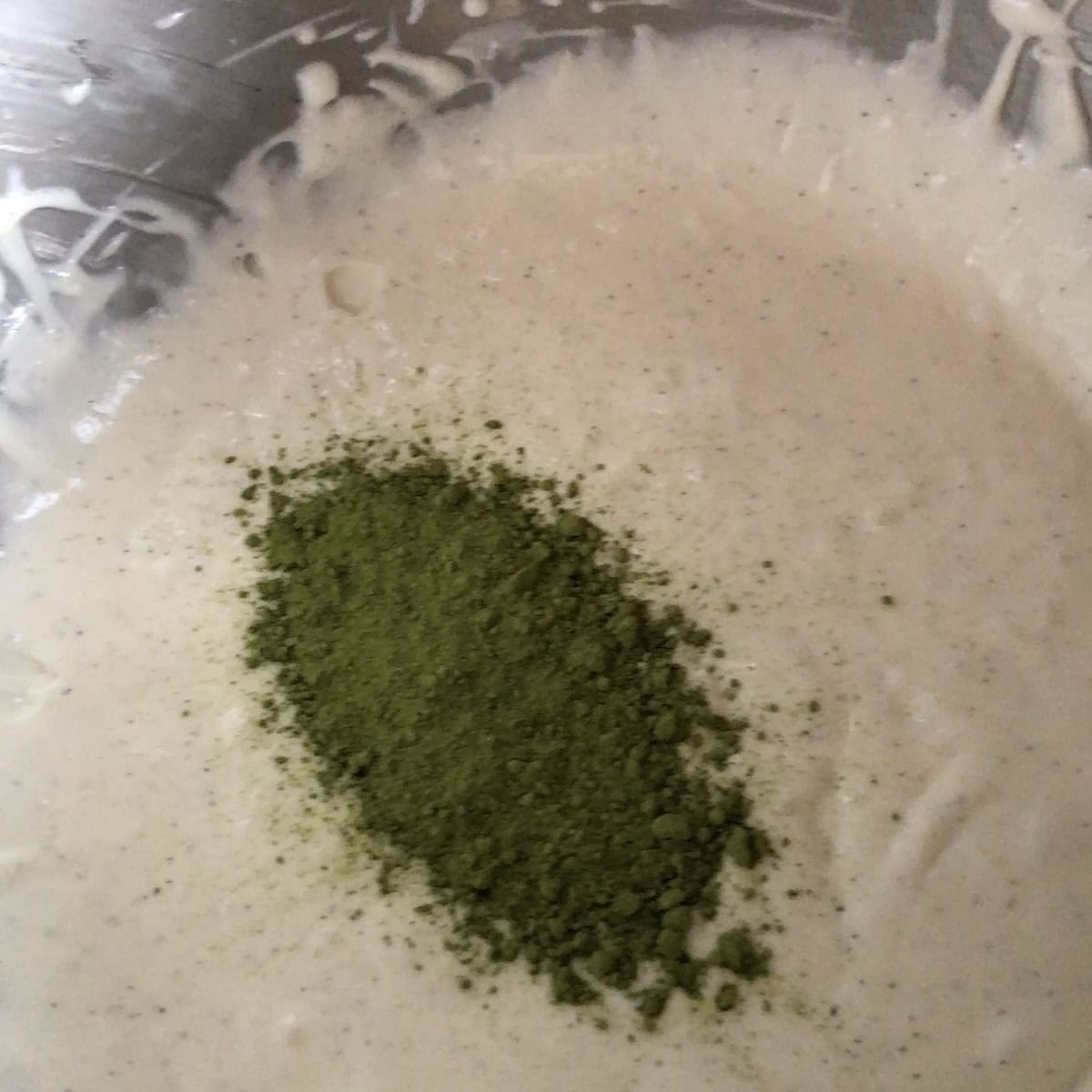
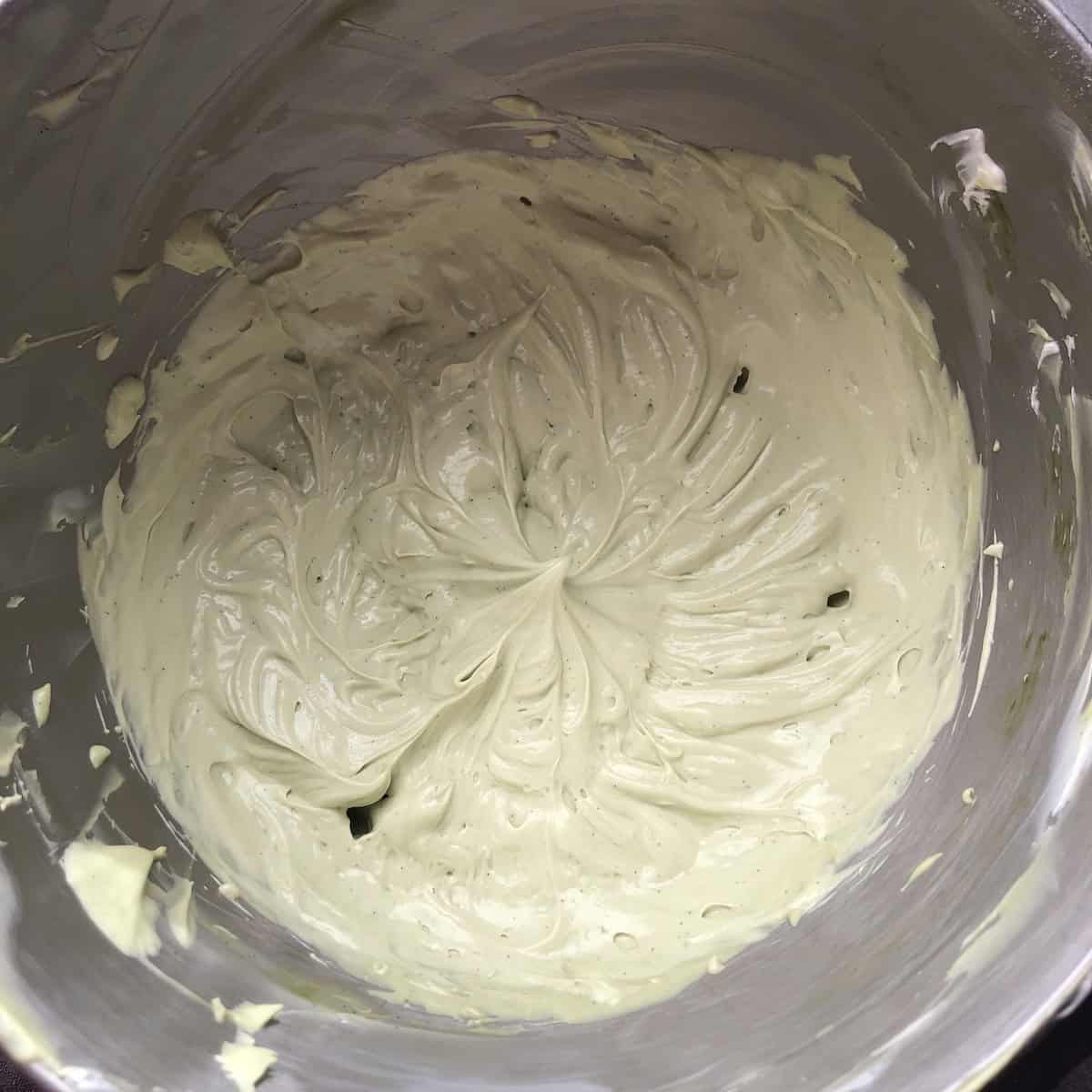
I've used ORIGEENS, Matcha Blend Tsuru, a JAS-certified organic blend of green teas from Shizuoka and Kagoshima - two of Japan's most celebrated matcha-producing regions. Ceremonial-grade matcha would work, but its delicate nuances would be largely wasted in a frosting.
Opt for a trusted organic culinary or latte-grade matcha from a Japanese origin, which gives you the same vivid color and flavor at a fraction of the price. Whatever you buy, color is part of the quality test: vibrant and deeply green means fresh. Dull, yellowish, or khaki means old, and it will show in the finished frosting.
Same European Philadelphia Cream Cheese note from above applies to this matcha frosting.
Frosting too runny? You may have added too much milk, or your cream cheese is too warm, or the frosting was overbeaten. Refrigerate for 20 to 30 minutes, then beat again briefly. Never overbeat cream cheese frosting -once it goes loose, refrigeration is the only way back.
Can You Freeze Carrot Cake?
Yes! This carrot cake freezes exceptionally well, frosted or unfrosted, sliced or whole, for up to 6 months when wrapped and stored extremely well. I know because I've tested it!
To freeze unfrosted cake layers: Add a pre-cut parchment round to the top and bottom of each cake round, wrap them tightly in sustainable cling film multiple times to completely cover, then place in an airtight container or zip-top freezer bag. Label with the date.
To freeze frosted cake slices: Chill the frosted cake slices in the refrigerator for 30 minutes or longer so the frosting firms up completely, then wrap individual pieces with parchment paper, then wrap tightly with sustainable cling film, then place them into a zip-top bag and/or into an airtight container and freeze.
To freeze whole frosted cakes: Place the frosted cake onto a cake board and chill it in a cake carrier in the refrigerator for 1 hour first, so the frosting firms up completely. Place a piece of cut round parchment paper on top of the frosted cake (to keep ice crystals from forming). Wrap well with sustainable cling film, and place it in a brining bag and seal (or a layer of aluminum foil, plus another layer of sustainable cling film) and freeze.
To thaw: Transfer to the refrigerator overnight, or leave at room temperature for 30 minutes to 1 hour. Both the classic cream cheese frosting and the matcha cream cheese mascarpone frosting hold up beautifully through the freezing and thawing process.
Does carrot cake have to be refrigerated? Once frosted with cream cheese frosting, you should always refrigerate carrot cake. You can refrigerate it for up to 5 days, covered or in an airtight container, to avoid taking on odors from other foods.
Unfrosted cake layers wrapped tightly keep at room temperature for up to 2 days, but I like to keep them in the fridge (especially in warmer climates or in the summertime).
The texture and flavor after thawing are indistinguishable from the day it was baked. This is a much-loved make-ahead dessert for Easter, Mother's Day, dinner parties, and holiday gatherings. Carrot cake isn't just for holidays!
Using Purple Carrots in Carrot Cake
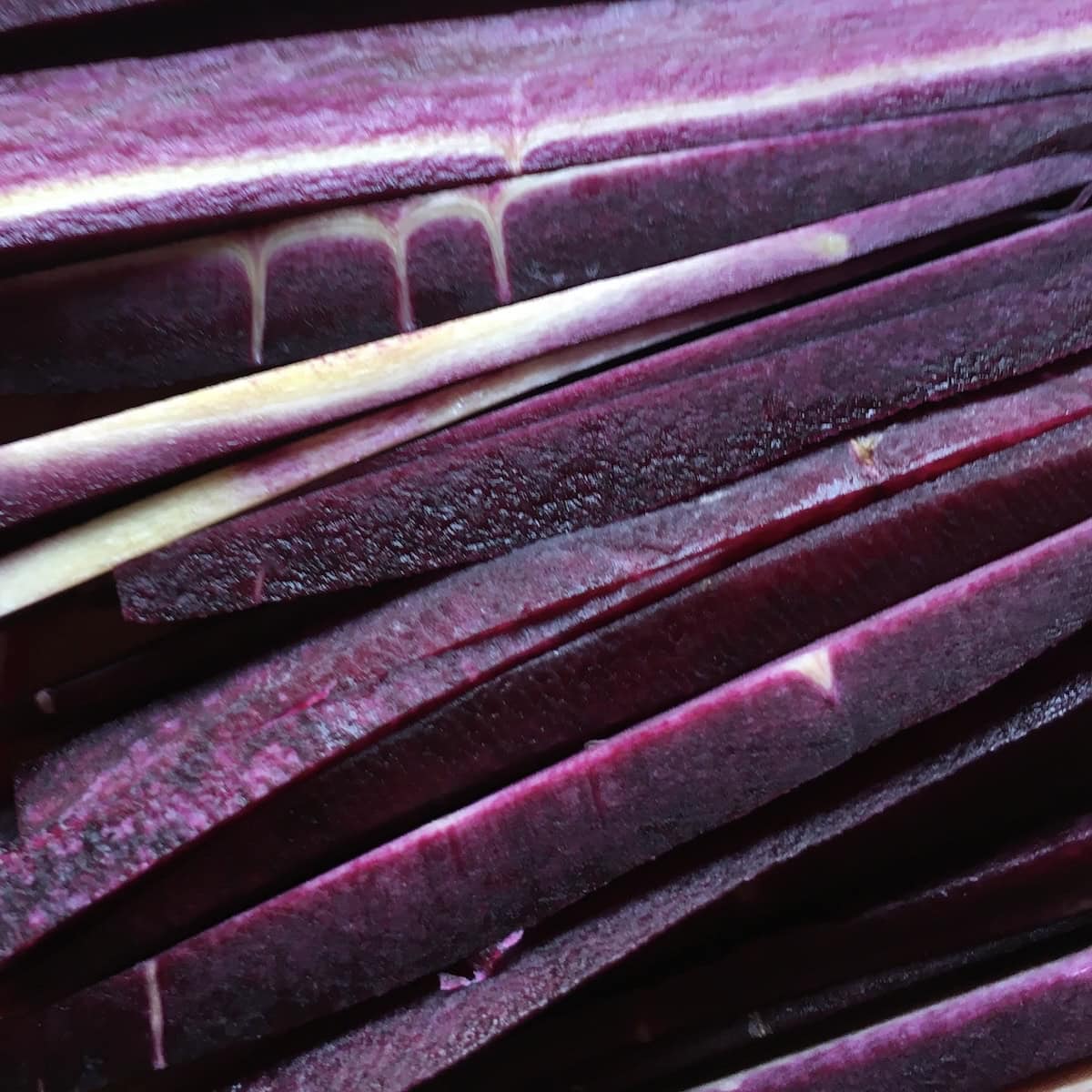
Purple carrots are a real carrot variety. They're not dyed or genetically modified. They're among the original carrot colors that predate the familiar orange variety, which was developed and popularized in the Netherlands in the 17th century. Most food historians agree that wild carrots were originally white or purple before selective cultivation made orange the dominant commercial variety.
What do purple carrots taste like? Raw, they're slightly earthier with a touch more bitterness than orange carrots. Once grated into carrot cake batter and baked, the flavor difference is essentially undetectable. They have the same sweetness, same moisture, the same familiar carrot flavor, but create a slightly darker visual result.
The purple pigment (anthocyanin, the same compound found in blueberries and red cabbage) is released from the grated cells and transfers directly into the batter, streaking the crumb with little violet carrot ribbons.
Can you use purple carrots for carrot cake? Absolutely! Use them exactly as you would orange carrots (the same weight, same grating method, same baking technique). Use all purple, all orange, or a combination of both. I find them at the weekly farmers' market here in Northern Italy in late spring and summer, and I use them when I can find them.
Where to buy purple carrots: Farmers' markets are usually the most reliable source, especially in spring and summer. Whole Foods and Trader Joe's often carry rainbow carrot bundles that include purple carrots. Natural food stores and well-stocked supermarkets carry them with increasing frequency. Look for them labeled as purple, rainbow, or heirloom carrots.
If you want to explore more ways to cook with purple carrots, they taste great in this purple carrot and fresh tomato pasta sauce.
Can I Add Pineapple to This Carrot Cake?
Carrot cake with pineapple is delicious! For that matter, carrot cake with pineapple and raisins is also great if you enjoy these ingredients. You can add pineapple to this recipe without throwing off the balance by doing one of two things:
- Substitute all of the raisins called for with the same amount of strained, crushed pineapple tidbits (sweetened or unsweetened).
- Substitute half of the raisins with strained, crushed pineapple tidbits (sweetened or unsweetened) to use both.
Substitutions
- Gluten-free carrot cake: Substitute with Bob's Red Mill 1-to-1 Gluten-Free Baking Flour (blue bag) or King Arthur Measure for Measure - both contain xanthan gum, which is essential for proper structure. Do not use a GF flour blend that lacks xanthan gum, or the cake will likely crumble.
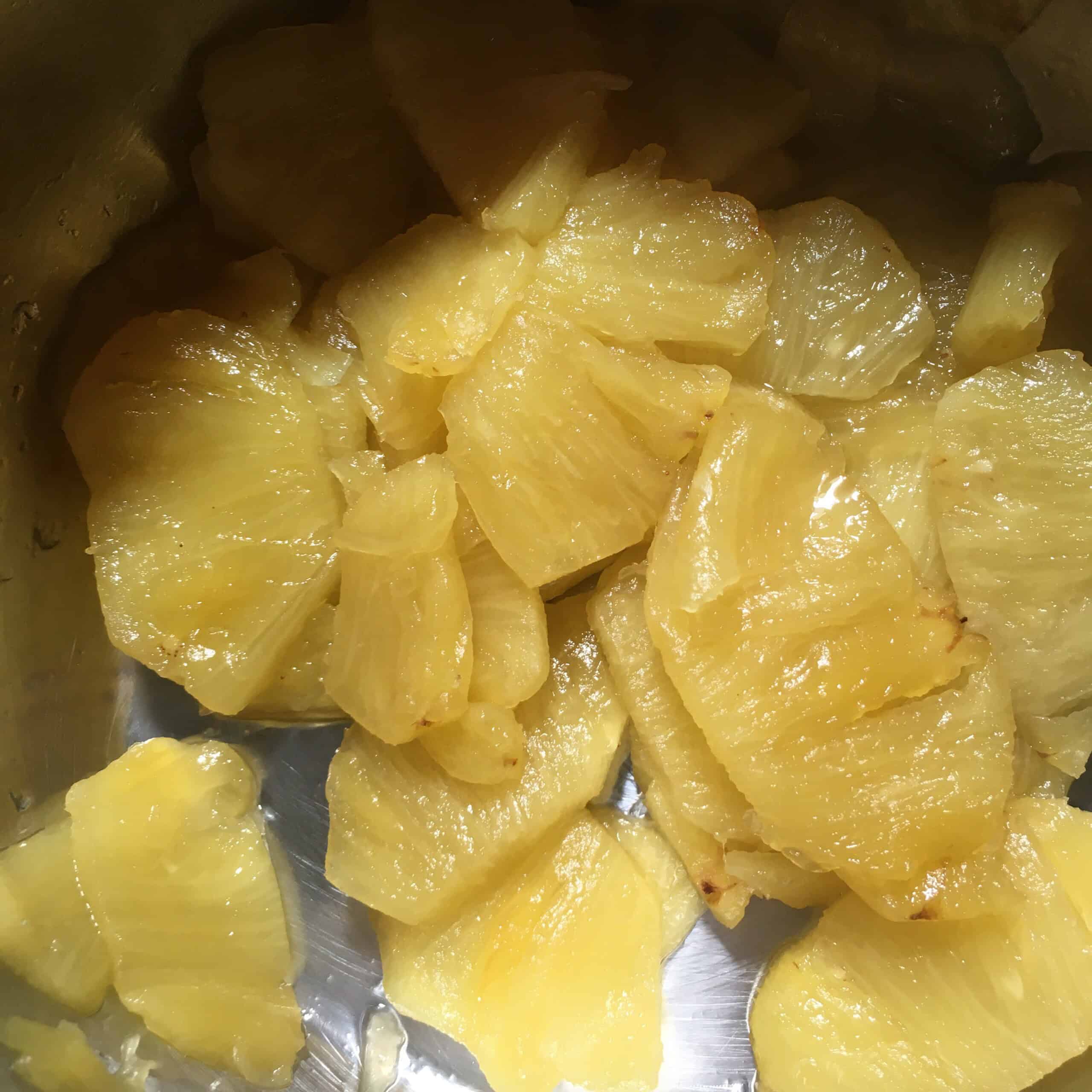
- Pineapple instead of raisins: Substitute black or golden raisins with ½ cup well-drained crushed pineapple or make your own cooked pineapple (above photo). This is a classic American variation that adds sweetness and a subtle tropical note that makes the ultimate carrot cake recipe with pineapple. Increase bake time by 5 minutes if needed.
- Carrot cake without nuts: Leave out the walnuts or pecans entirely. The texture will be less varied, but the cake is equally delicious and moist and it makes perfect carrot cake muffins!
- Oil substitution: Grape-seed, vegetable, avocado, or melted coconut oil all work in place of the stated oil. Coconut oil adds a very slight coconut undertone to the finished cake.
- No applesauce: Make your own using the instructions above, or substitute an equal amount of plain whole-milk yogurt or well-drained homemade or crushed pineapple. Both contribute similar moisture and a gentle tang.
- Carrot cake without cream cheese frosting. This cake is also delicious with a simple vanilla buttercream, a Swiss meringue, a homemade 7-minute frosting, a brown butter glaze, or eaten completely unfrosted. The cake is rich and delicious enough to stand alone.
Variations
- Carrot cake cupcakes: Fill cupcake liners ⅔ full and bake at 350°F (176°C) for 20 to 22 minutes. This recipe makes approximately 24 cupcakes. Cool for 10 minutes in the pan before removing them to a wire rack to finish cooling completely, then frosting with either frosting option.
- Carrot cake in a 9x13 pan: Pour all the batter into a greased 9x13-inch pan and bake for 40 to 50 minutes or until a toothpick inserted in the middle comes out clean. At the 10 to 15 minute mark, run a knife around the edges and invert onto a wire rack to cool completely. Leaving it in the pan traps steam underneath and can lead to a soggy bottom or sticking. Once fully cooled, slide it back into the pan for the easiest frosting and serving presentation.
- Single layer carrot cake: For a single-layer carrot cake, the 9x13 sheet cake option above is your best path - it handles the full batter volume without risk of overflow and bakes evenly from edge to center. Or bake one 8 or 9-inch cake round to use as the single-layer cake and make cupcakes out of any remaining batter.
- Carrot cake loaf: Pour all the batter into two prepared standard 8-inch loaf pans and bake for 55 to 65 minutes. A beautiful option for gifting, and the loaves slice cleanly even when fully frosted. You may need to tent the loaves with aluminum foil if you notice the top browning too much. Start checking them around 30 minutes.
- Mini Egg-shaped Easter carrot cake: Pour the batter into a prepared egg-shaped silicone or aluminum baking mold and bake until a toothpick comes out clean, checking for doneness at 20 minutes. The matcha cream cheese mascarpone frosting on an egg-shaped cake is an Easter centerpiece that requires almost no decorating skill and is fun for kids to help make.
- Easter decoration: For a simple piped Easter finish, reserve ¼ cup of frosting, tint it orange, and pipe small carrot shapes across the top. Add tiny green frosting fronds. For Version 2 with the matcha frosting, the spring-green color already does the visual work - finish with toasted pistachios and, if you want to go all the way, a few edible flowers such as pansies or violets or candy Easter eggs (Jellybelly jelly beans or Whoppers Robin Eggs, Brach's Malted Milk Gggs.
- Spiced variation: Add ¼ teaspoon each of freshly grated nutmeg and ground ginger to the dry ingredients for a more complex, warmly spiced cake (closer to a ginger cake). Optional but excellent, especially for fall and Christmas cakes
Equipment
- Box grater, food processor with shredding disc, or mandoline slicer - A box grater gives you control over shred size - medium-fine to medium shreds are the sweet spot, releasing maximum moisture into the batter while keeping the texture of the crumb smooth and even. Coarse shreds stay more visible in the crumb, and if too big, they can turn chewy or fibrous.
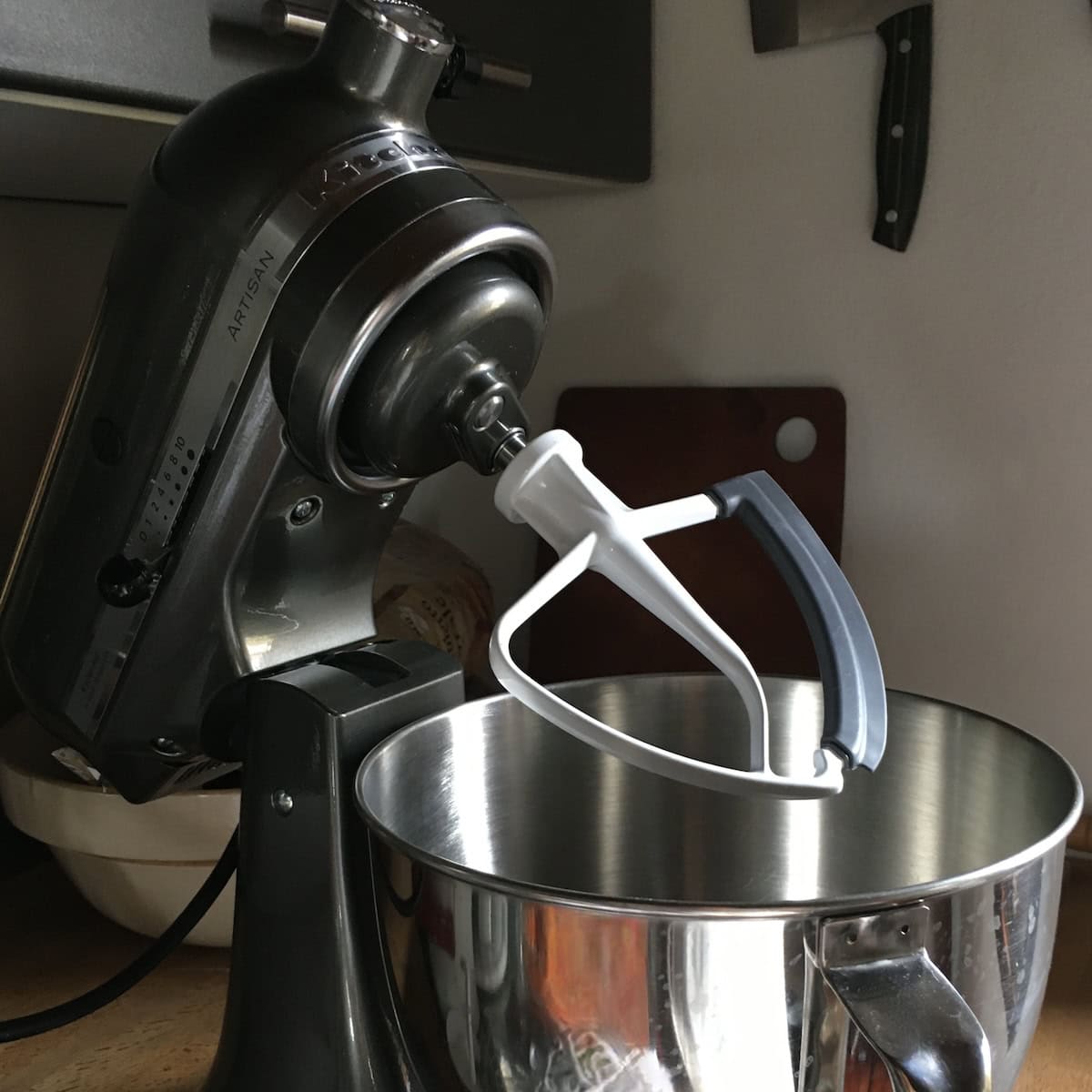
- Stand mixer or hand mixer - fitted with the paddle attachment. A hand mixer works perfectly. A stand mixer is more convenient for the creaming step, but neither is required. You can also make this with a bowl and a whisk for the dry ingredients and a separate bowl and a whisk plus some arm strength for creaming the oil, butter, and sugar together!
- Two 8-inch or 9-inch round aluminum cake pans - aluminum conducts heat more evenly than dark nonstick pans, which tend to over-brown the exterior edges of cakes and can cause them to dry out (I avoid dark pans for baking, especially non-stick surfaces because of PFAS, but also because they don't bake up as well as standard aluminum).
- Parchment paper or pre-cut parchment rounds - Cut to fit the bottom of each pan. This is the step that, when coupled with buttering and flouring your pans, guarantees a clean, intact release every single time. In pastry kitchens, we also cut pieces for the sides of the cake pan, but for home baking you don't need to do it unless you want to. Just be sure to butter and flour the pans well.
- Wire cooling rack - essential. The cakes must cool completely before frosting (Make a DIY cooling rack out of one or two of the racks in your oven. Just be sure to remove it from the oven before baking the cake and have it ready to go).
- Offset spatula - for spreading frosting smoothly and evenly over layered carrot cake. A regular butter knife works, but an offset spatula gives you significantly more control and a cleaner finish.
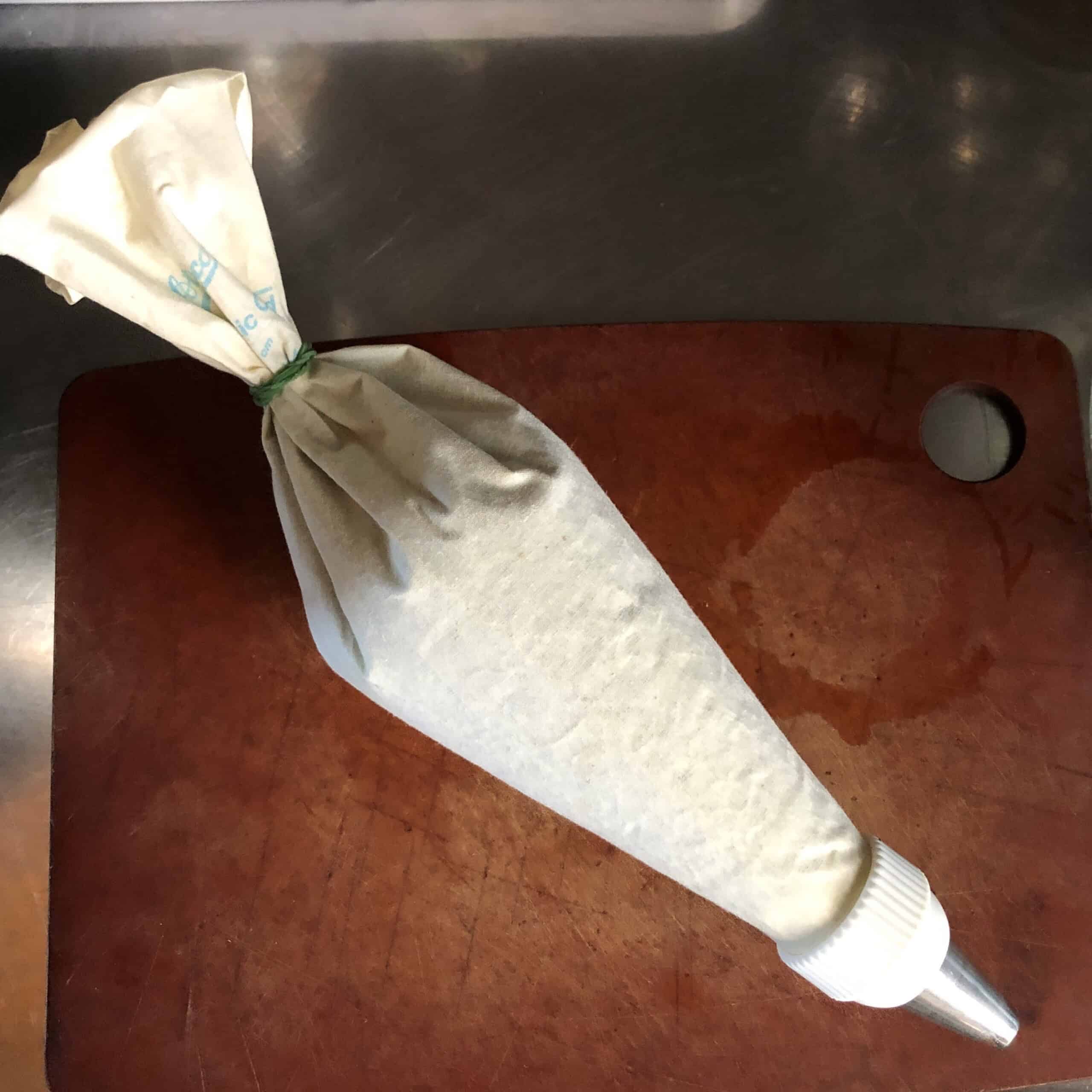
- Piping bag fitted with a large round tip - Optional but recommended if you want a polished frosting finish. An Ateco 809 or similar large round tip gives you clean, substantial swirls or dollops on cupcakes or a professional-looking border on a layer cake. A zip-top bag with the corner snipped works in a pinch too.
- Toothpick, cake tester, or wooden skewer - to test the cake for doneness


What Size Pan Should I Use?
Whatever baking pan you decide to use, be sure to butter and flour it first. I also always add a piece of cut-to-fit parchment paper to the bottom of any baking pan I'm using for an easy release.
- Two 8-inch round pans - The standard for this layered carrot cake recipe. Produces two tall, even layers that stack beautifully. Bake 40 to 45 minutes.
- Two 9-inch round pans - Works perfectly, just produces slightly thinner layers. Bake 30 to 35 minutes and start checking early.
- 9x13 sheet cake pan - The easiest option for a crowd. Pour all the batter in, frost directly in the pan, no assembly required. Bake 40 to 50 minutes.
- Standard 9x5-inch loaf pans - This batter fills two loaves. Beautiful for gifting. Bake 55 to 65 minutes, checking with a toothpick at 55.
- Standard 12-cup muffin pan - Fills liners ⅔ full, makes approximately 24 carrot cake cupcakes. Bake 20 to 22 minutes. Cool completely in the pan before removing.
- Egg-shaped mold - Silicone or aluminum. A stunning Easter presentation. Bake time varies by mold size and depth - start checking at 20 minutes with a toothpick. The matcha frosting on an egg-shaped cake requires almost no decoration skill and still looks like a showstopper, and it's easy for kids to help decorate.
- Aluminum pans over dark nonstick - Regardless of shape, aluminum conducts heat more evenly and prevents the edges from over-browning before the center is done. If you only have dark nonstick pans, reduce oven temperature by 25°F and check early.
Can I Make This Carrot Cake Without a Stand Mixer?
Yes, and it's easier than you'd think. Because this recipe uses oil alongside butter, the creaming step is more forgiving than in a butter-only cake. Use a large bowl and a sturdy whisk: beat the softened butter with the sugar vigorously until pale and slightly fluffy, then whisk in the oil and applesauce until smooth.
From there, alternate adding the flour mixture and eggs exactly as you would with a mixer, stirring just until each addition disappears. Switch to a rubber spatula when you fold in the carrots, nuts, and raisins. The whole thing comes together in one bowl with no special equipment.
How to Store Carrot Cake
Refrigerator: Store frosted carrot cake covered in the refrigerator for up to 5 days. The cream cheese frosting requires refrigeration. This cake is excellent when eaten at room temperature, but we also really love eating it chilled straight out of the refrigerator. This, of course, is up to you😉!
Room temperature: Unfrosted cake layers, tightly wrapped, keep at room temperature for up to 2 days. I still prefer to refrigerate the cake layers because it makes them easier to ice/frost. This is especially important if you plan to cover the entire cake (including the sides) with frosting.
Freezer: Most recipes say you can only store carrot cake for up to 3 months, frosted or unfrosted, but if it's wrapped and stored properly, you can store it up to 6 months without any change in texture or flavor (I've tested it)! See the full freezing section above for detailed step-by-step instructions.
Make ahead: Bake the cake layers 1 to 2 days in advance, once cooled, wrap tightly, and store in the fridge (my preference) or at room temperature. The frosting can be made up to 2 days ahead and refrigerated, but allow for time to temper it slightly before frosting the cake so it's not too stiff. Frost it on the day you serve for the best-looking presentation.
How to Serve Carrot Cake
This carrot cake is a year-round recipe that shines at Easter and Mother's Day. But works equally well if you're looking for a carrot cake wedding cake or a carrot cake birthday cake!
Serve at room temperature for the best flavor and texture. For clean, even slices, use a sharp knife dipped in warm water and wiped clean between each cut. This is an old trick I learned working in a pastry kitchen.
The matcha cream cheese mascarpone version is particularly striking for spring celebrations of any kind (including St. Patrick's day). Finish with toasted pistachios for extra texture and flavor, and/or a few edible flowers. You can also save a portion of the carrot cake icing and tint it orange and green to pipe on little carrots.
If decorating isn't your thing, decorate the top of the iced carrot cake with candy easter eggs, jelly beans, or anything that looks Easter-inspired.
Carrot Cake Mistakes & Top Tips For How to Avoid Them
- Always grate carrots fresh. Pre-shredded bagged carrots are dry and chemically treated, and will produce a drier cake. Freshly grated carrots are visibly wet. And that moisture is what helps make a super-moist carrot cake.
- Cool the cakes completely before frosting. Even slightly warm cake will melt cream cheese frosting on contact. Cool at room temperature for at least 2 hours, or refrigerate the layers for 30 minutes to speed it up.
- Don't overmix the batter after adding the flour. Overworking the gluten makes the cake dense and tough. Mix just until the flour disappears and stop -- the batter should look slightly rough at this stage, not smooth and silky.
- Toast the nuts first. It takes 5-7 minutes in the oven. Raw nuts in baked goods taste flat compared to toasted nuts. The flavor difference and texture in the finished cake is worth it
- Use a scale for accuracy/consistency or the scoop-and-level method for measuring the flour -never pack it or use the measuring cup to scoop flour directly from the bag. Too much flour is one of the most common causes of dry, dense carrot cake. When in doubt, weigh it on a scale.
- Check that your baking soda is fresh. Baking soda loses potency after being open for 6 months. Old baking soda equals a flat, dense cake that won't rise properly. Add a small amount to a prep bowl and squeeze a little lemon juice or vinegar over it to see if it bubbles. If it does, it means it's active, and you're all set! If not, buy a new box.
- Run a knife or offset spatula around the edge of the cake about 10 minutes after removing it from the oven. Use a straight-up-and-down motion as you move the knife around the cake, not. a dragging motion that can tear the sides of the cake.
- Room temperature cream cheese is non-negotiable for smooth lump-free frosting. Pull it from the fridge 1 to 2 hours before making the frosting. Cold cream cheese leaves lumps that won't beat out no matter how long you try.
FAQ
Three things work together: freshly grated (never pre-shredded) carrots, a combination of butter and oil, and applesauce. Fresh carrots release moisture directly into the batter as they bake. Oil keeps the crumb moist for days longer than butter alone. Applesauce adds body and moisture without making the cake taste wet or oily. Room temperature ingredients also form a better emulsion that traps air and produces a lighter, more tender crumb.
Applesauce is the carrot cake secret ingredient most home bakers skip. It makes the difference between a good carrot cake and a truly super moist and tender carrot cake! It adds moisture (whether you use a commercial applesauce with sugar and added water, or you make homemade applesauce with just apples and water). I've used both types in two different carrot cakes in this post, and as you can see, they create equally delicious, tender results. They also balance the warm spices and add body to the batter without contributing any apple flavor to the finished cake. The vanilla bean powder in the frosting is the other secret flavor-boosting addition, as it adds pure vanilla flavor and tiny flecks of vanilla bean seeds that pure extract alone can't replicate.
The five most common: using pre-shredded bagged carrots (which are chemically treated, dried to preserve shelf life, and release almost no moisture), overmixing the batter after adding the flour (activates gluten and makes the cake dense and tough), slamming the oven door closed after opening it to check on rising cakes (which can make carrot cake collapse in the middle), frosting a warm cake (melts cream cheese frosting completely), and not toasting the nuts. Raw nuts in baked goods taste flat, and the texture isn't the same. Toast them at 350°F/175°C for 5 to 7 minutes before adding them to the batter.
Walnuts and pecans are both excellent in carrot cake, but they do slightly different things. Walnuts are slightly more bitter and earthy, which creates a nice contrast with the sweetness of the cake. Pecans are a bit sweeter and more buttery. Version 1 of this recipe uses toasted walnuts. Version 2 uses toasted pecans. Try both and decide which one becomes yours.
Yes, as you can see by this purple carrot cake recipe! Use them exactly as you would orange carrots - same weight, same grating method. There is zero flavor difference once baked, but you'll get the added health benefits (antioxidants) and a darker crumb from the purple carrots releasing their anthocyanin pigment into the batter, streaking it with deep violet ribbons and giving the cake a slightly darker overall color. It's visually stunning, especially for Easter.
Raw, purple carrots are slightly earthier and have a touch more bitterness than orange carrots. Once grated into batter and baked, the flavor difference is undetectable. Same sweetness, same moisture, same familiar carrot flavor - just a bit more dark, dramatic crumb in the finished cake.
Use freshly grated purple carrots. The more purple carrots relative to orange, the deeper the violet color in the crumb. For maximum purple impact, use only purple carrots with no orange at all. The natural anthocyanin pigment releases from the grated cells directly into the batter - no food coloring needed. While ube powder is sometimes suggested for additional color, at the amounts needed to make a visible difference it introduces ube's distinctive earthy, vanilla-nutty flavor which changes the character of the cake. If maximum purple is the goal, more purple carrots are the cleanest answer. And if you do experiment with ube, use ube paste rather than the powder, which may make your crumb grainy.
Farmers markets are the most reliable source, especially in spring and early summer. Whole Foods, Trader Joe's, and natural food stores often carry rainbow carrot bundles that include purple carrots. Well-stocked supermarkets carry them with increasing frequency. Look for them labeled as purple, rainbow, or heirloom carrots.
Yes! Frosted carrot cake freezes well for up to 3 months. Chill the frosted cake or slices uncovered in the refrigerator for at least 30 minutes (and up to overnight) first to firm up the frosting, then place a parchment paper round on top of the whole cake (or around each portioned slice), then wrap tightly with sustainable cling film (at least 2 layers). For slices, place into a zip-top bag. For a whole cake, a large turkey brining bag works perfectly. For extra protection, place into an airtight container. Thaw overnight in the refrigerator or at room temperature for 30 to 60 minutes. The texture and flavor are indistinguishable from fresh.
Room temperature butter, eggs, cream cheese, and milk combine to form a smooth emulsion that traps air inside the mixture. That trapped air expands during baking, which produces a lighter, fluffier, more tender crumb. Cold ingredients don't emulsify properly - they can cause the batter to curdle and result in a denser, uneven texture.
Overmixing after adding flour develops gluten - the protein network in flour that gives bread its chew. In cake, that chew is unwanted. Mix just until the flour disappears and no dry streaks remain, then stop. The batter should look slightly rough at this stage. Once you fold in the carrots, put down the spatula.
This carrot cake recipe contains significant amounts of sugar and refined carbohydrates and is not appropriate as a regular part of a diabetic diet. This is a conversation to have with your doctor or a registered dietitian, who can advise based on your individual health situation. For a lower-sugar alternative, there are sugar-free carrot cake recipes available that use sugar substitutes - search specifically for those rather than modifying this recipe.
It depends on the recipe and who's making it. Traditional American carrot cake often includes raisins. Black raisins are classic, but golden raisins are prettier in my opinion. This recipe shows you both options and gives you the choice: Version 1 includes raisins for that classic carrot cake flavor, and Version 2 skips them entirely. If you're firmly in the no-raisin camp, leave them out. The cake is equally delicious either way. You can also subsitute strained crushed pineapple for the raisins if you'd like!
Yes, it does, once it's frosted with cream cheese frosting. Cream cheese is a perishable dairy product, and the frosting should not sit at room temperature for more than 2 hours. Store frosted carrot cake covered in the refrigerator for up to 5 days. Unfrosted cake layers, tightly wrapped, can be kept at room temperature for up to 2 days - but I still prefer to refrigerate them, especially in warm weather.
Classic carrot cake frosting is cream cheese frosting - tangy, creamy, and the perfect contrast to the warm spices in the cake. This recipe offers two versions: a classic vanilla bean cream cheese frosting, and a spring-green matcha cream cheese mascarpone frosting that is stunning for Easter or any spring celebration like Mother's Day or St. Patrick's Day. If you'd prefer to skip cream cheese entirely, a simple vanilla buttercream, Swiss meringue, 7-Minute Frosting, or brown butter glaze all work beautifully with this cake.
This is a real cake made with butter, oil, sugar, and cream cheese frosting - it is not a health food, and I won't pretend otherwise. That said, it is made entirely from scratch with natural ingredients: no artificial colors, no preservatives, no box mix. It uses homemade applesauce in place of some of the oil, and freshly grated whole carrots. If you're looking for a lower-sugar version, search specifically for sugar-free carrot cake recipes rather than modifying this one, which is designed for flavor and texture first.
Yes - and this recipe doesn't use pineapple at all but it does show you how to use pineapple. The moisture comes from freshly grated carrots, applesauce, butter, and oil, so pineapple isn't needed for a super moist crumb. If you do want to add it, see the "Can I Add Pineapple?" section above for exactly how to do it without throwing off the batter balance.
Why You Should Never Use Pre-Shredded Bagged Carrots for Carrot Cake
This is the single most important ingredient decision in this entire recipe. Pre-shredded bagged carrots are not a shortcut. Instead, they actively work against everything that makes a carrot cake moist, sweet, and flavorful. Here's what's actually happening inside that bag:
- They've been chlorine-washed. Factory-processed shredded carrots go through a sanitizing chlorinated water bath to extend shelf life. That process leaves behind a faint metallic or chemical aftertaste that transfers directly into your batter. The same reason, I won't touch a bag of baby carrots!
- They're already dehydrated on purpose. The moment a carrot is peeled and shredded, it begins losing moisture rapidly. That white powdery coating you often see on bagged carrots - called "blush", is visible (forced) dehydration, which helps manufacturers keep the carrots shelf stable for longer. Those carrots have already surrendered the moisture that your cake crumb desperately needs.
- They taste bitter and soapy. Damaged or aging carrot tissue produces higher levels of terpenoids, which are naturally occurring compounds that create a soapy, bitter flavor. Factory-shredded carrots, processed and stored for days or weeks before you open the bag, have significantly elevated terpenoid levels compared to a freshly grated whole carrot.
- They typically come from older, woodier carrots. Bagged shredded carrots are typically produced from larger, older carrots past their peak sweetness and with a more fibrous, woody texture. Younger, whole carrots grated fresh are measurably sweeter and more tender, and perfect for making carrot cake!
- Their natural sugars have already broken down. Shredding exposes an enormous amount of surface area. The longer shredded carrots sit, the more their natural sugars wash away or oxidize, leaving you with a muted, less sweet base ingredient in a cake where the carrot is supposed to be doing flavor work.
If you genuinely don't have time to grate carrots yourself, look for freshly shredded carrots in the produce/salad section of a well-stocked grocery store. The kind where the store itself shreds whole carrots, cabbage, and broccoli for grab-and-go salad-making options.
These haven't traveled through a chemical processing facility and haven't been sitting in a bag for days. They're a legitimate shortcut. The factory-bagged kind is not.
Looking for More Easy Cake Recipes?
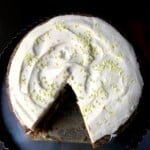
Photographed above are a few of our favorite cake recipes we think you might also enjoy.


Let's get started!
Made this Recipe? We'd love for you to rate ⭐️ it and tell us how it went for you!
Print📖 Recipe
Best Carrot Cake Recipe (Super Moist, Made from Scratch)
- Total Time: 2 hours
- Yield: One 8 inch double layer cake (10-12 Servings)
- Diet: Kosher, Vegetarian
Description
The best carrot cake recipe you'll ever make - and yes, it rivals the Whole Foods version. Super moist, perfectly spiced, made 100% from scratch with the warm toasted crunch of walnuts or pecans, and finished with your choice of classic vanilla bean cream cheese frosting or a spring-green matcha cream cheese mascarpone frosting. No box mix, no compromise, no hefty price tag.
Ingredients
CAKE INGREDIENTS
- ¾ cup (1 ½ sticks) unsalted butter, room temperature (160g)
- ½ cup vegetable oil (grapeseed, sunflower, etc.) (118g)
- ⅓ cup unsweetened applesauce (83g)
- 1 ½ cups raw cane sugar or regular white sugar (300g)
- 2 cups all-purpose flour (240g)
- 2 teaspoons baking soda (10g)
- 2 teaspoons cinnamon (4g)
- ½ teaspoon Diamond Crystal kosher salt (2g)
- 4 large eggs, room temperature (200g)
- 1 ½ tablespoons vanilla extract (20g)
- 3 cups grated purple or orange carrots (400g)
- 1 cup toasted pecans or walnuts, chopped (100g)
- up to ⅔ cup golden or regular raisins(optional) (50-100g)
CREAM CHEESE FROSTING INGREDIENTS
- 1 pound (16oz) cream cheese, room temperature (453g)
- ¾ cup to 1 cup powdered sugar (130g) *I use slightly less than 1 cup
- ¼ cup whole milk (60g)
- 1 tablespoon pure vanilla extract (14g)
- ¼ teaspoon vanilla bean powder or seeds from one vanilla bean (optional but recommended)
- pinch of salt
- optional lemon zest to taste (from organic lemon)
OR...
MATCHA CREAM CHEESE MASCARPONE FROSTING INGREDIENTS
- 1 pound (16oz) cream cheese, room temperature (453g)
- ¾ cup to 1 cup powdered sugar (130g) *I use slightly less than 1 cup
- ¼ cup whole milk (60g)
- 1 tablespoon pure vanilla extract (14g)
- ¼ teaspoon vanilla bean powder OR seed from 1 vanilla bean (optional but recommended)
- 1 tablespoon organic matcha powder, or more to taste (6g)
- pinch of salt
- optional lemon zest to taste (from organic lemon)
 Get Recipe Ingredients
Instructions
- Preheat the oven and prep the cake pans. Heat the oven to 350°F/175°C. Butter or spray two 8-inch (or 9-inch) aluminum cake pans. Lightly flour the pans, making sure to cover the inside well. Tap out any remaining flour. Line the bottoms of the cake pans with parchment paper and set them aside until ready to fill.
- Cream the butter and the oil. Using a handheld or stand mixer fitted with the paddle attachment, gently cream the butter with the oil until mostly combined. Add the applesauce and the sugar and beat until well combined and smooth-looking.
- Prepare the dry ingredients. Add flour, cinnamon, baking soda, and salt to a medium bowl and whisk well to combine; set aside
- Combine the wet and dry ingredients. Crack the eggs into a small bowl and add vanilla extract. With the mixer on low, add the flour mixture in 3 to 4 additions, alternating with adding the eggs one at a time (flour, eggs, flour eggs, flour), mixing just to incorporate each addition. Do not overmix. Turn off the mixer.
- Fold the nuts, carrots & raisins (if using) into the batter. With the mixer off, add the carrots and gently fold them into the batter using a rubber spatula until well incorporated. Next, add the walnuts (or pecans) and raisins (if using) and gently fold them into the batter. Do not over-mix the cake batter, which will result in a dense, tough cake crumb.
- Portion the cake batter. Split the cake batter evenly between two cake pans. Tap them on the counter 6-8 times to remove any air bubbles.
- Bake the cakes. Bake the cakes for 40-45 minutes for 8-inch pans (or 30-35 minutes for 9-inch pans), or until a cake tester (or toothpick) comes out clean.
- Cool the cakes. Remove the cakes from the oven and place them onto a cooling rack for 10 minutes to slightly cool. Remove the cakes from the pans by inverting onto a cooling rack, and cool to room temperature. When cakes are completely cooled, they may be frosted.
- Prepare the cream cheese frosting of your choice. Using a stand mixer or handheld mixer, whisk all of the frosting ingredients together until well combined. Frost the cakes and, Enjoy!
Notes
No Mixer Needed: Beat softened butter and sugar vigorously by hand with a whisk until pale, then whisk in the oil and applesauce. Alternate adding the flour and eggs and whisking each just to combine. Fold in the carrots, nuts, raisins (or pineapple) if using, with a rubber spatula.
If you've got a scale, use it! Using a scale to measure ingredients produces more consistent, reliable results than measuring cups. Plus, it makes measuring ingredients quicker, and there's less mess to clean up.
Substitute sea salt or pink Himalayan salt for the kosher salt, but reduce it by about half, or to taste.
Use room temperature ingredients. Room temperature ingredients like eggs and butter in this recipe, when combined, form an emulsion that traps air inside the mixture. This trapped air expands and rises during the baking process, which ultimately produces fluffier and more tender baked goods. Room temperature ingredients = tender, moist cake crumb and cupcakes.
Gently incorporate the dry ingredients with the wet ingredients. Stirring the dry and wet ingredients in the cake batter for too long or too aggressively can activate the gluten in the flour too much. This can ruin your otherwise perfect cake crumb by making it dense. If the wet and dry ingredients are incorporated gently and just until they're all well combined (and no more), you'll end up with a lighter crumb, allowing your cake to be very moist and spongy.
Make ahead and freeze carrot cake. Carrot cake freezes beautifully for 3 to 6 months. I've done it! This cake (even after being frosted and frozen) tastes just as great when thawed in the fridge overnight or left at room temperature for 30 minutes to 1 hour as it does the day you baked it. See the main post for details and options for freezing (frosted, unfrosted, sliced or whole).
For my European Audience. See the main post for how to make the cream cheese frosting taste more like American Cream Cheese Frosting. This is because Philadelphia Cream Cheese in the EU is not the same as American Cream cheese (in terms of ingredients, texture, or flavor). But I have a great workaround to make it taste more authentic, like it's meant to taste.
*I use 00 flour when I'm in Italy, and the weight of different flours varies based on the humidity content and absorption potential of the flour you're working with. Just be sure to use the 'scoop and level' method to measure your flour into measuring cups and spoons, and the recipe works perfectly every time.
- Prep Time: 20 minutes
- Cake Cooling Time: 1 hour
- Cook Time: 40 minutes
- Category: Cakes + Tortes
- Method: Baked
- Cuisine: American
Nutrition
- Serving Size: 1/12 of the cake
- Calories: 648g
- Sugar: 43g
- Sodium: 455mg
- Fat: 42g
- Saturated Fat: 17g
- Unsaturated Fat: 25g
- Trans Fat: 0g
- Carbohydrates: 63g
- Fiber: 2.7g
- Protein: 8g
- Cholesterol: 105mg

Food Safety
- Refrigerate any cake frosted with cream cheese frosting within 2 hours of serving. Cream cheese frosting left at room temperature for longer than 2 hours should be discarded.
- Store frosted carrot cake covered in the refrigerator for up to 5 days.
- Eggs should always be sourced from a reputable supplier. Use the freshest eggs available for the best emulsification and rise.
- When freezing, ensure the cake is completely cooled before wrapping to prevent condensation and ice crystals from forming inside the packaging.
- Thaw frozen cake in the refrigerator overnight rather than at room temperature for more than 2 hours if the cake is frosted.
See more guidelines at USDA.gov.



Scarlett says
OMG! This totally is the Whole Foods carrot cake (maybe a little better) especially because it's so much cheaper to make! Super easy to follow and came out perfectly tender. I baked it in a 9x13 pan so I could portion and freeze the pieces easier. I'm not much of a baker but this recipe made me look like a pro. Used regular carrots since that's what I had on hand..it was still amazing.
Robin says
Made this delicious Carrot Cake for an early Easter gathering. It was a really big hit. Super moist & so easy to make. Would highly recommend to try this!!!